Transformation of Education in
the Era of Openness and
Flexibility
9-10 November 2017, Kaunas, Lithuania
Gard Titlestad, Secretary General
International Council for Open and Distance Education
Member of the Governing Board
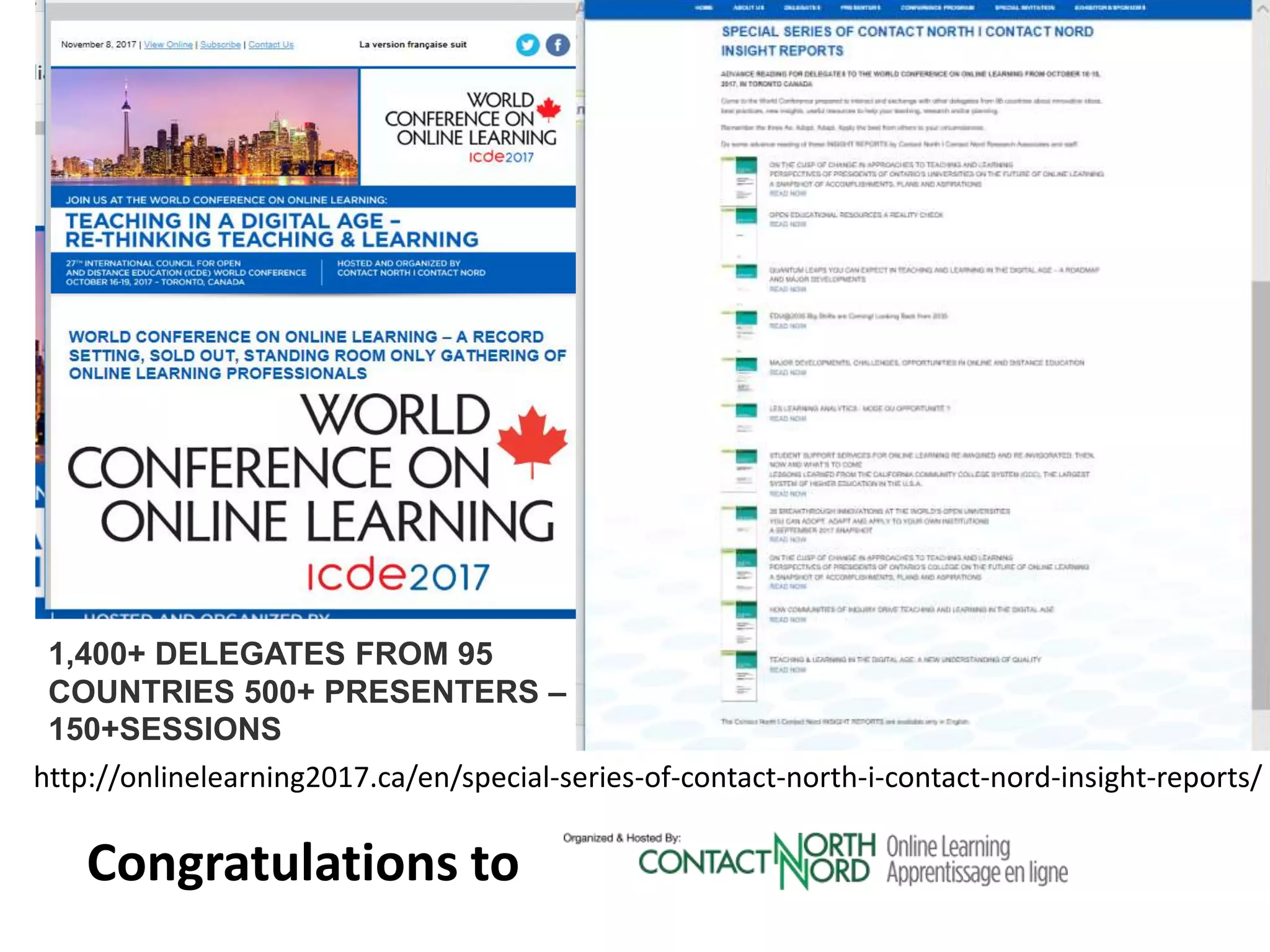
http://onlinelearning2017.ca/en/special-series-of-contact-north-i-contact-nord-insight-reports/
Congratulations to
1,400+ DELEGATES FROM 95
COUNTRIES 500+ PRESENTERS –
150+SESSIONS
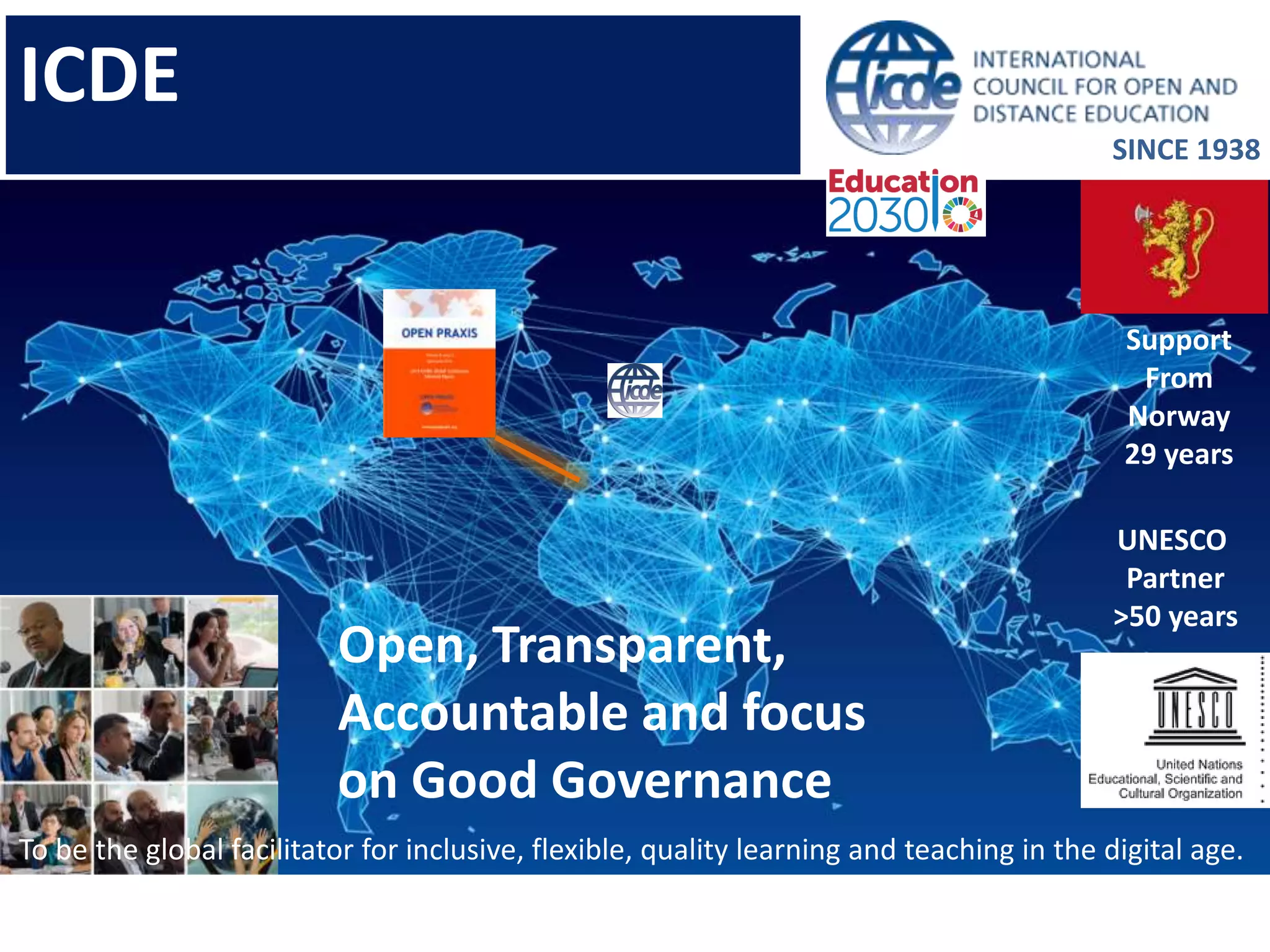
Open, Transparent,
Accountable and focus
on Good Governance
Support
From
Norway
29 years
UNESCO
Partner
>50 years
SINCE 1938
To be the global facilitator for inclusive, flexible, quality learning and teaching in the digital age.
ICDE
Transformation of Education in the Era of
Openness and Flexibility
WHY Transform Education?
Learners and societal needs
The big shift
The global risks and SDGs
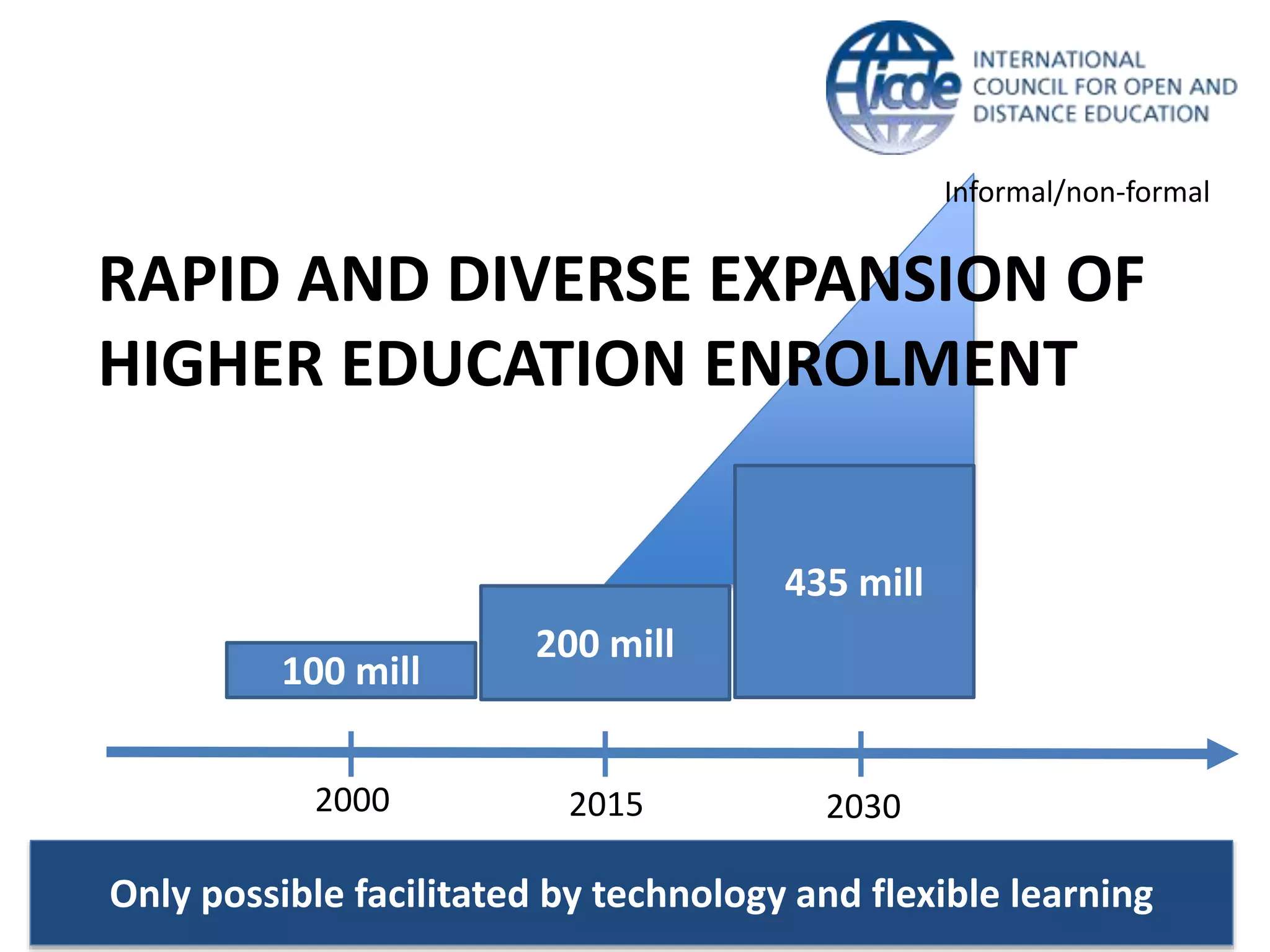
Informal/non-formal
RAPID AND DIVERSE EXPANSION OF
HIGHER EDUCATION ENROLMENT
100 mill
200 mill
2000 2015 2030
435 mill
Only possible facilitated by technology and flexible learning
The vision is that for the first time
in human history it is possible to
achieve inclusive and equitable
quality education and lifelong
learning for all.
(Sustainable Development Goal 4)
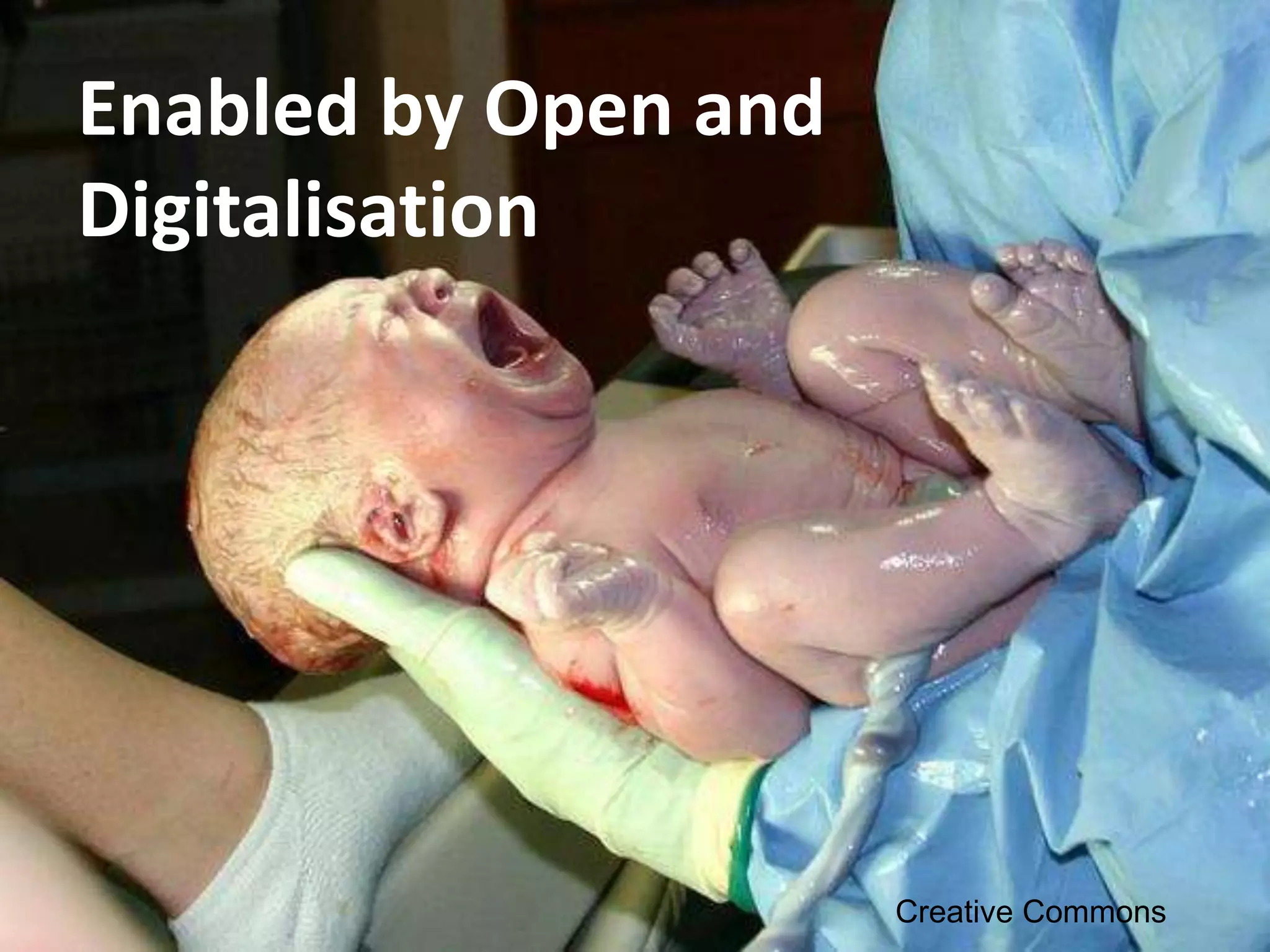
Enabled by Open and
Digitalisation
Creative Commons
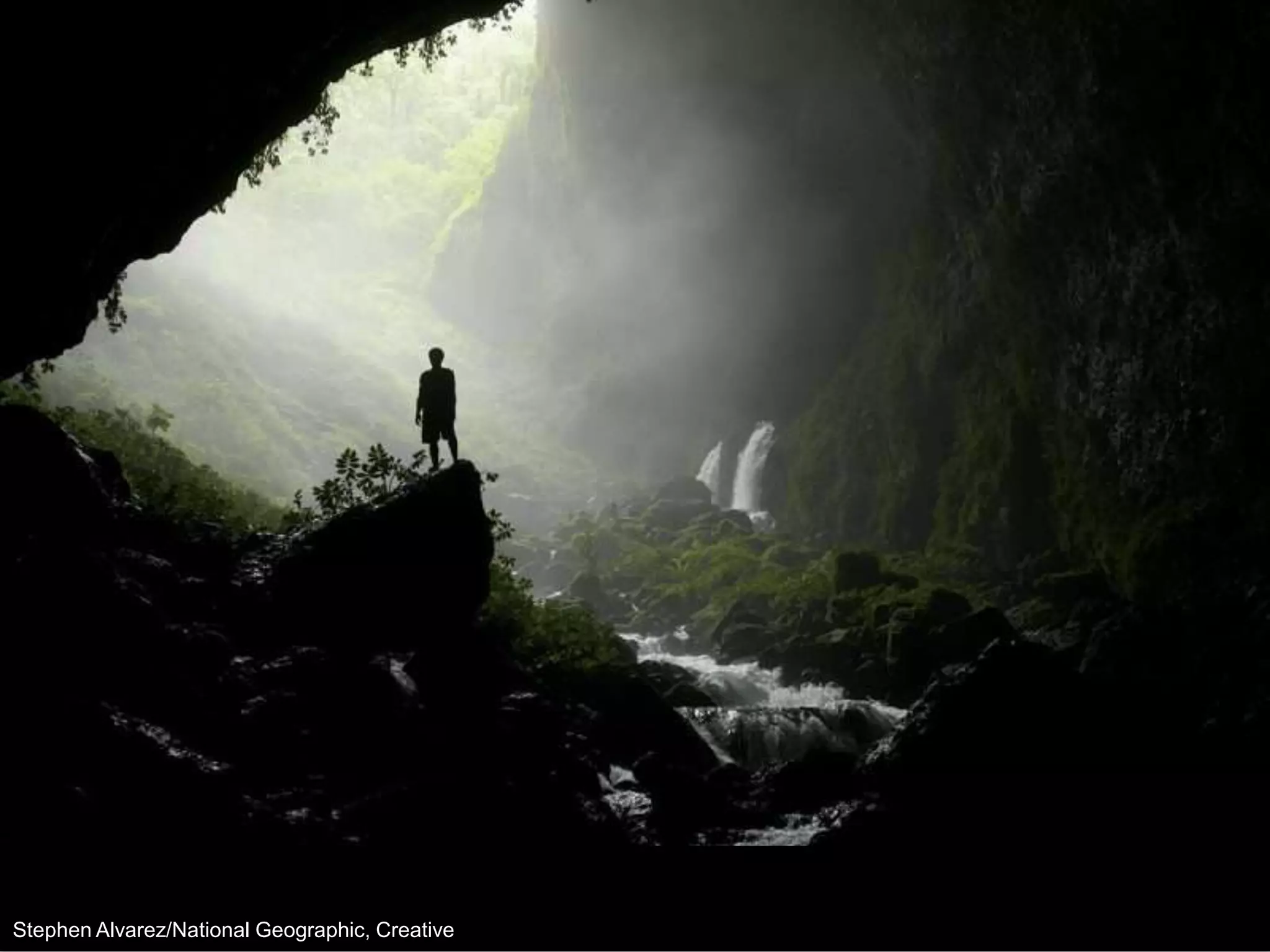
Stephen Alvarez/National Geographic, Creative
“Financing is one of the greatest
challenges faced by the low
income and middle income
countries in achieving SDG 4 by
2030,”
said H.E. Mr Nurul Islam Nahid, Minister
of Education of Bangladesh
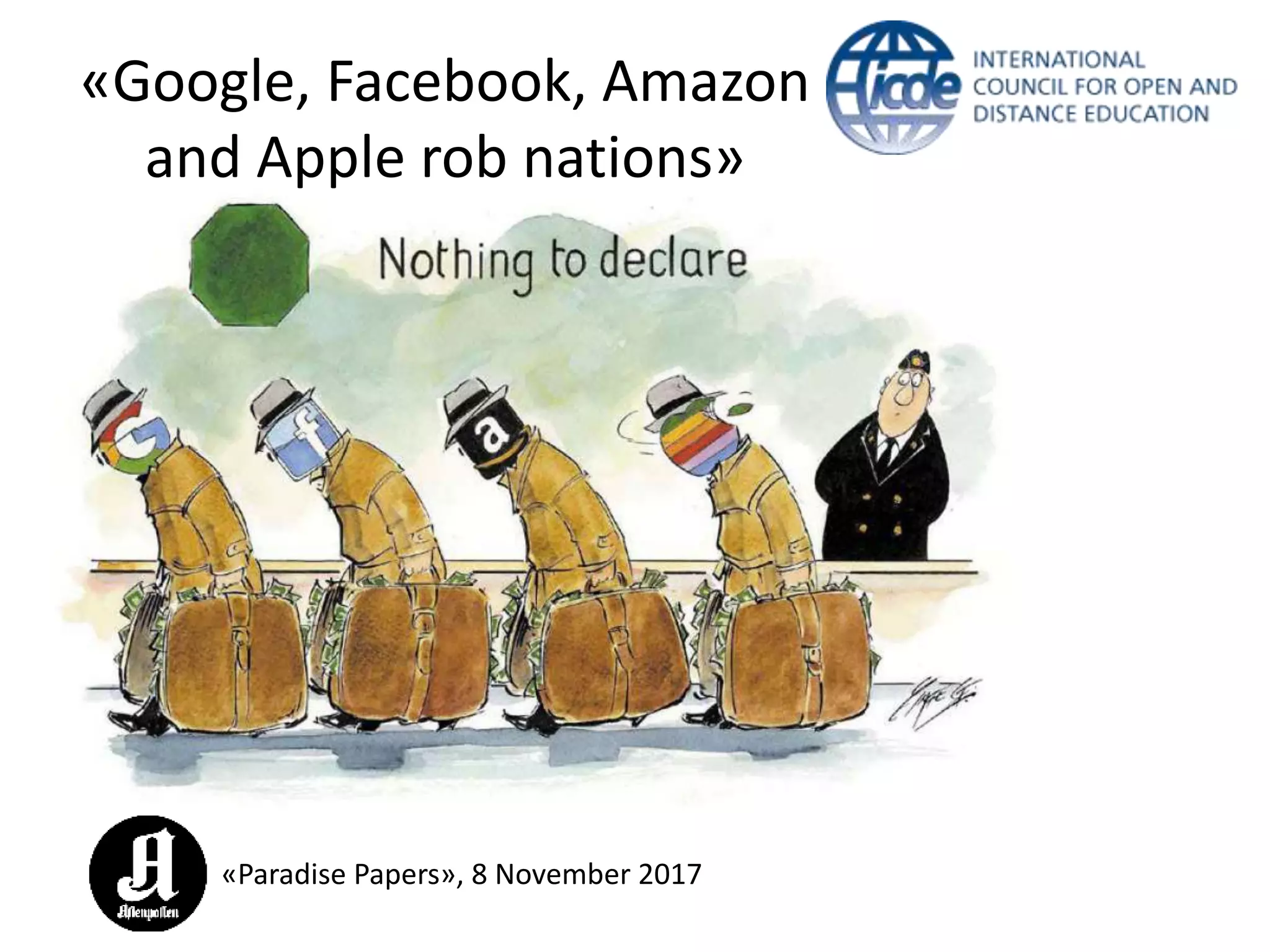
«Google, Facebook, Amazon
and Apple rob nations»
«Paradise Papers», 8 November 2017
The bigshift
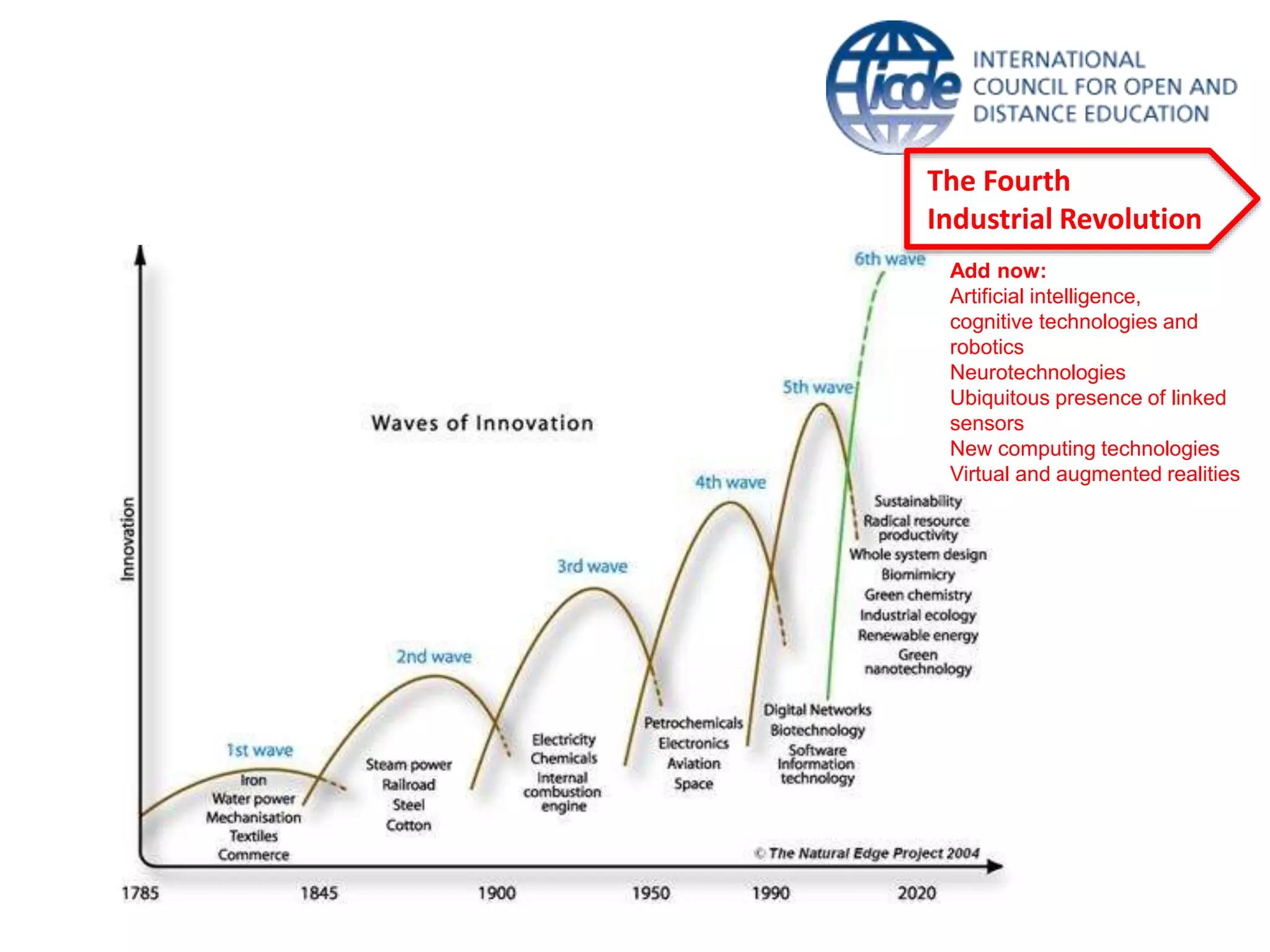
The Fourth
Industrial Revolution
Add now:
Artificial intelligence,
cognitive technologies and
robotics
Neurotechnologies
Ubiquitous presence of linked
sensors
New computing technologies
Virtual and augmented realities
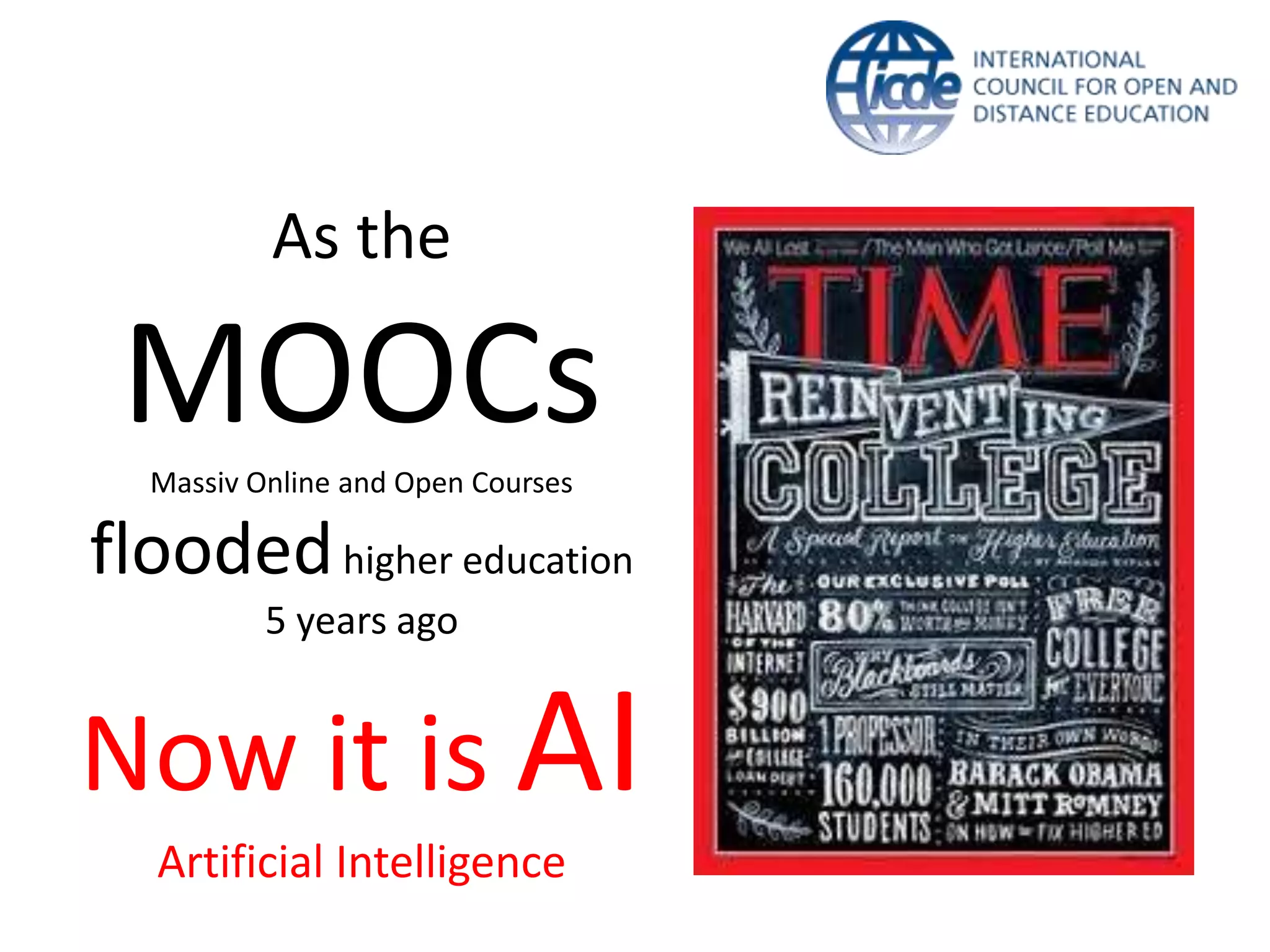
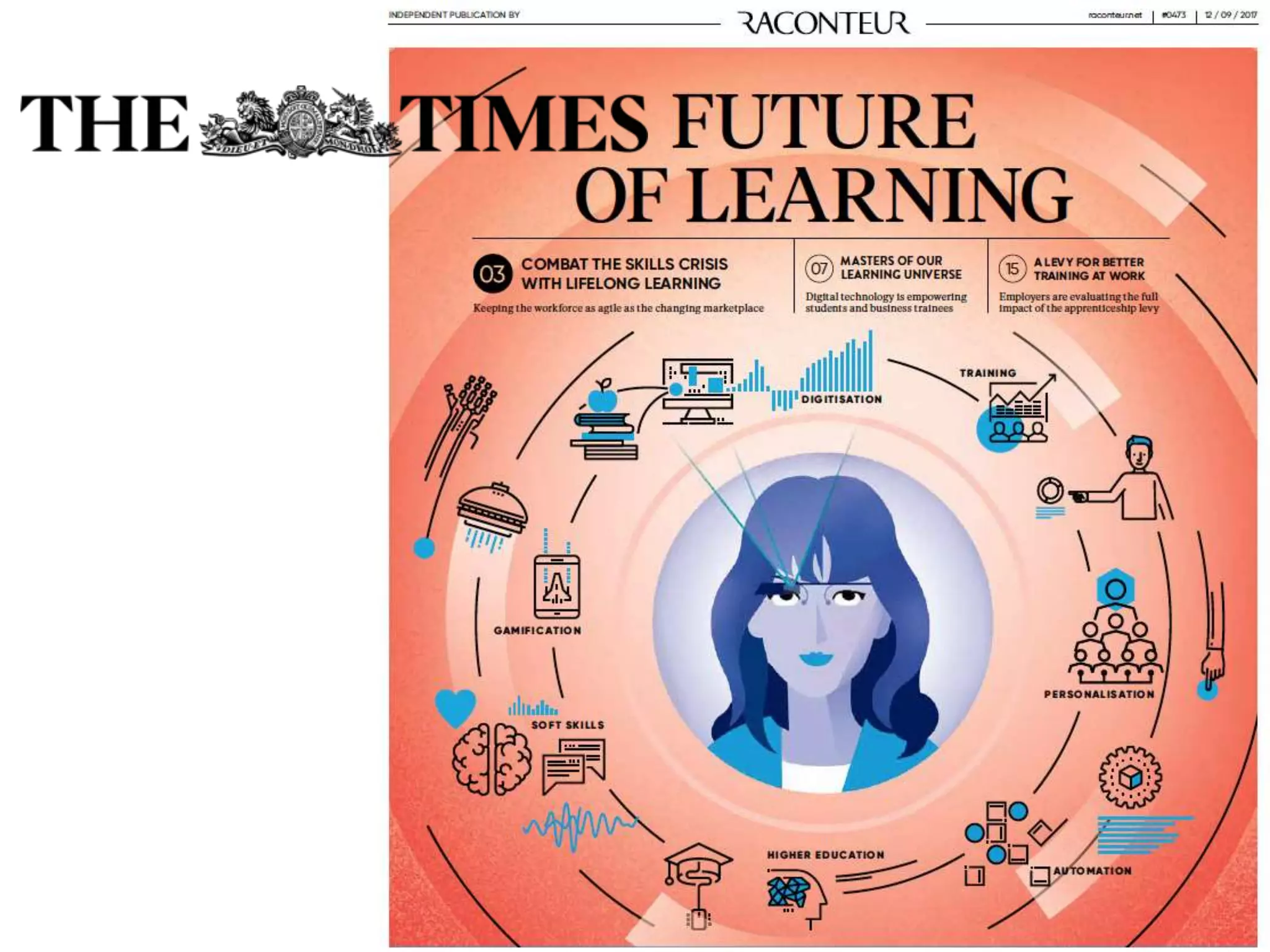
As the
MOOCsMassiv Online and Open Courses
floodedhigher education
5 years ago
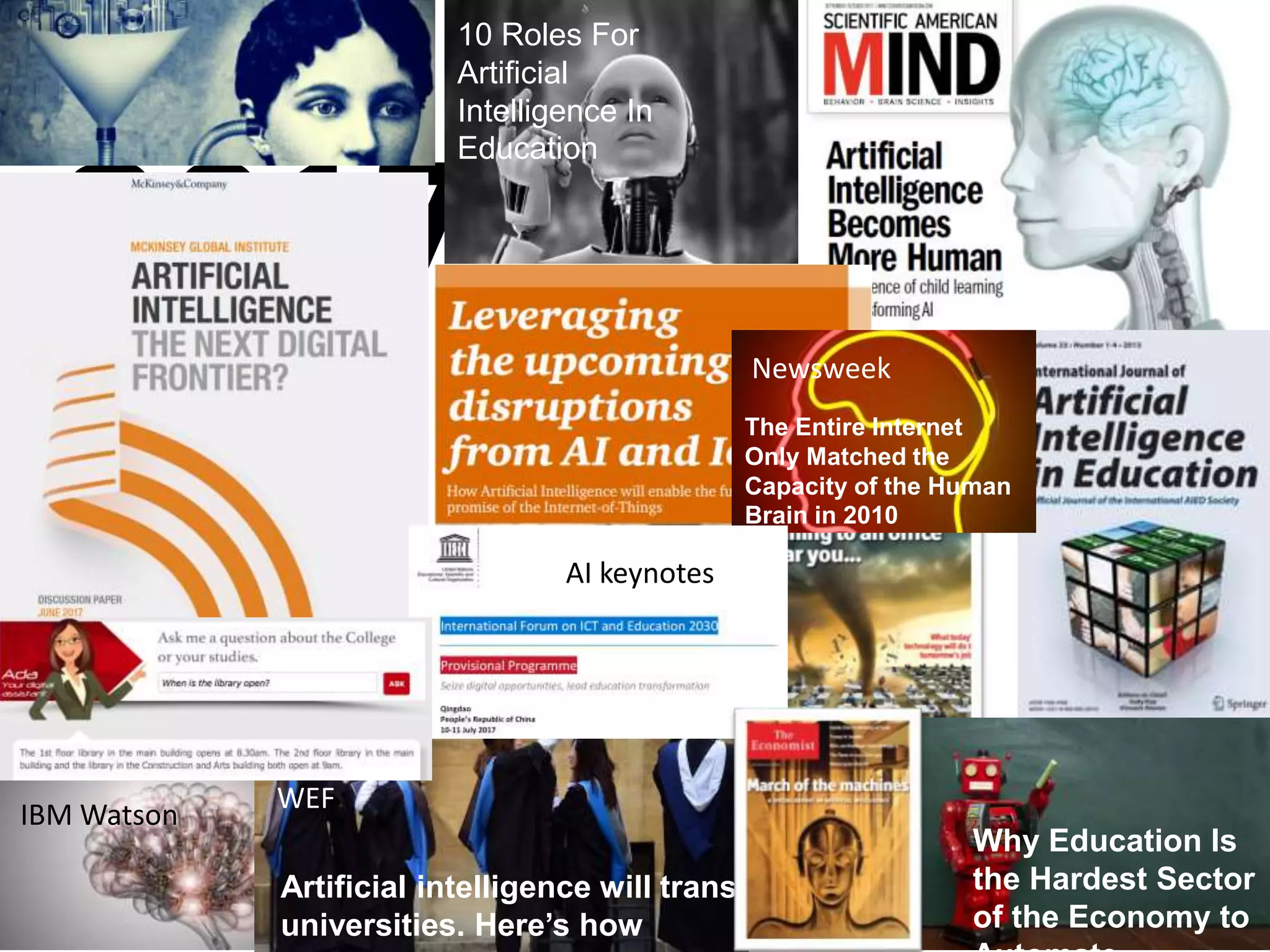
Now it is AI
Artificial Intelligence
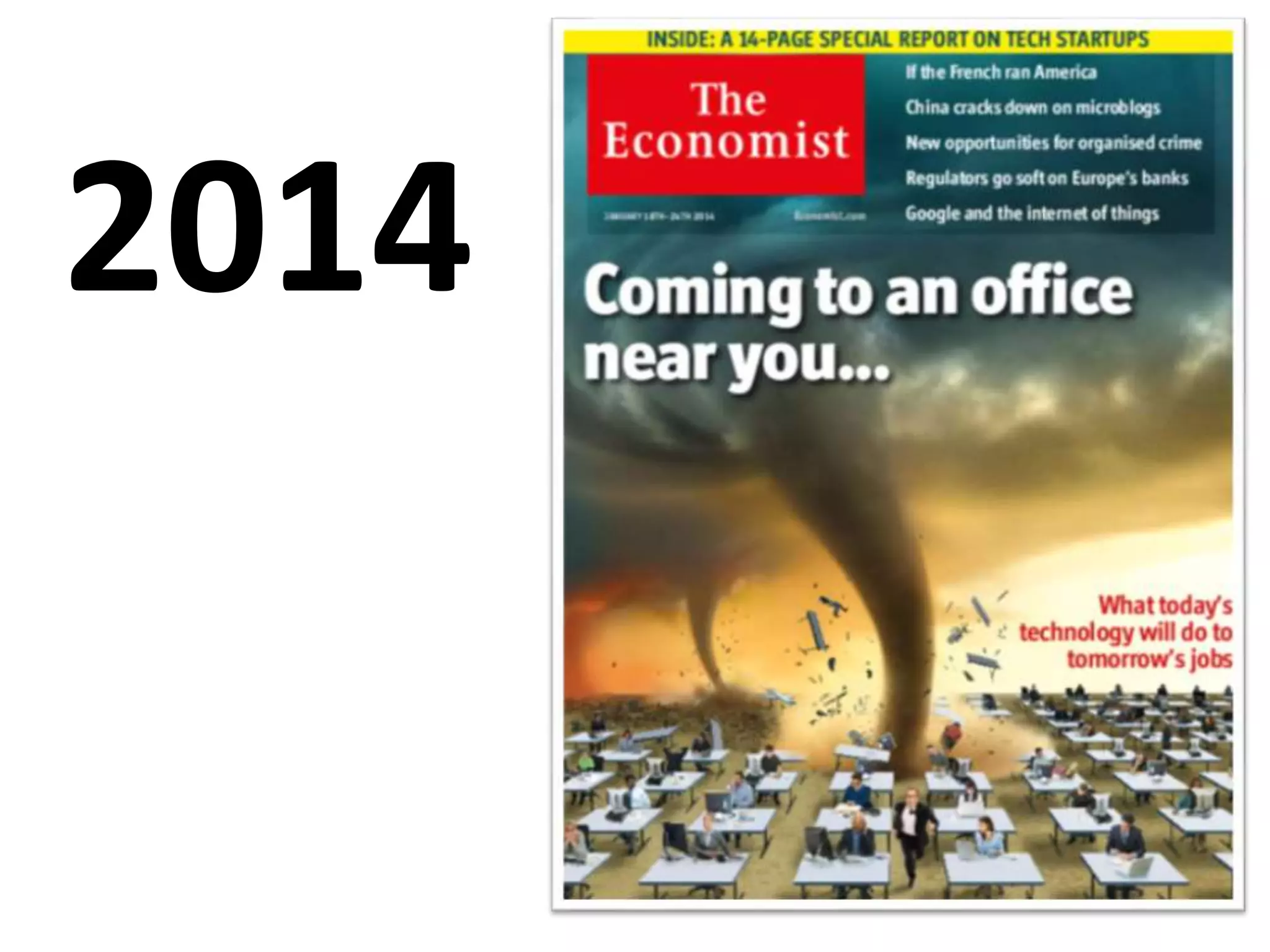
2014
2017
2017
Why Education Is
the Hardest Sector
of the Economy to
10 Roles For
Artificial
Intelligence In
Education
IBM Watson
Artificial intelligence will transform
universities. Here’s how
WEF
Newsweek
The Entire Internet
Only Matched the
Capacity of the Human
Brain in 2010
AI keynotes
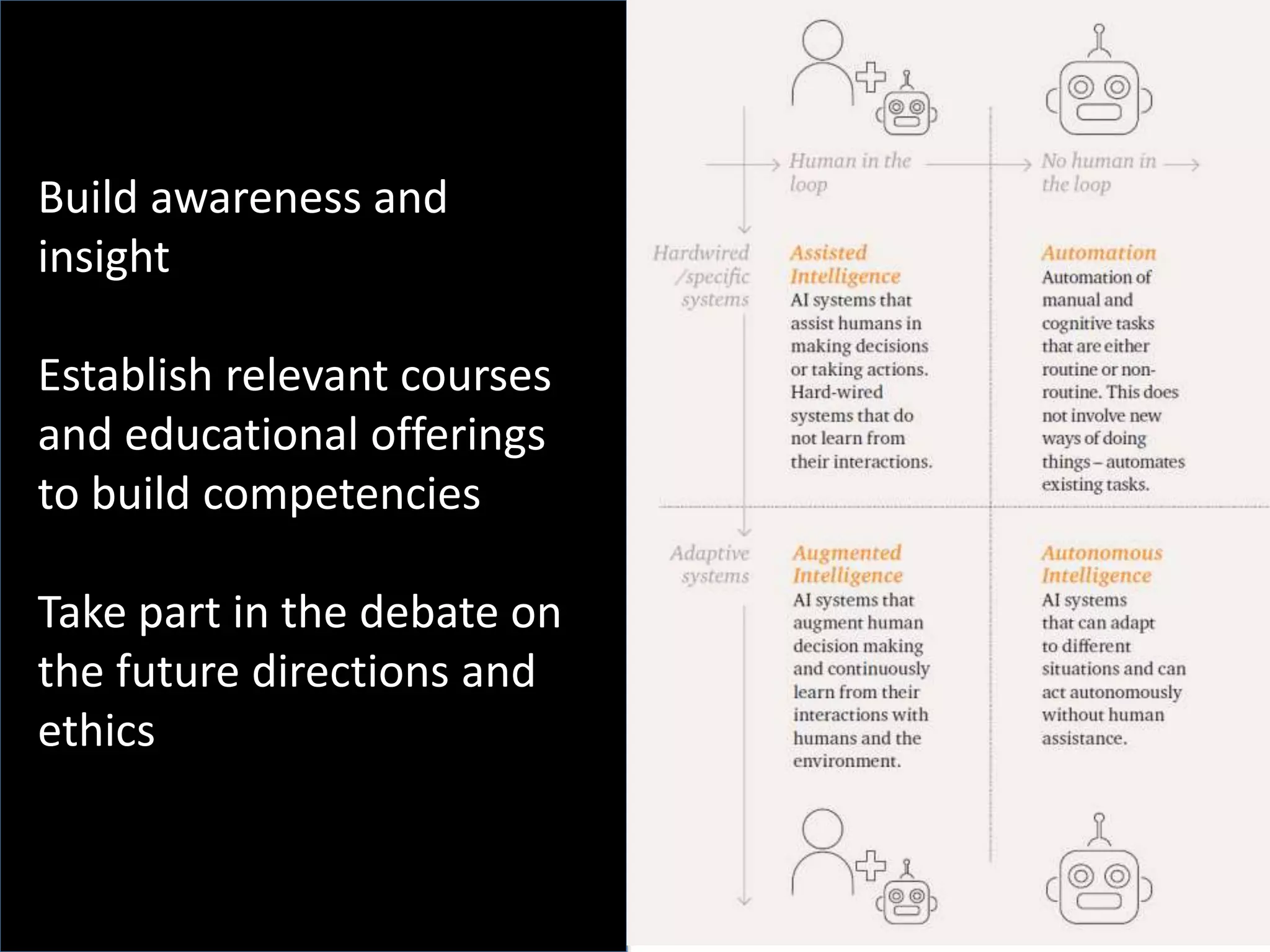
Build awareness and
insight
Establish relevant courses
and educational offerings
to build competencies
Take part in the debate on
the future directions and
ethics
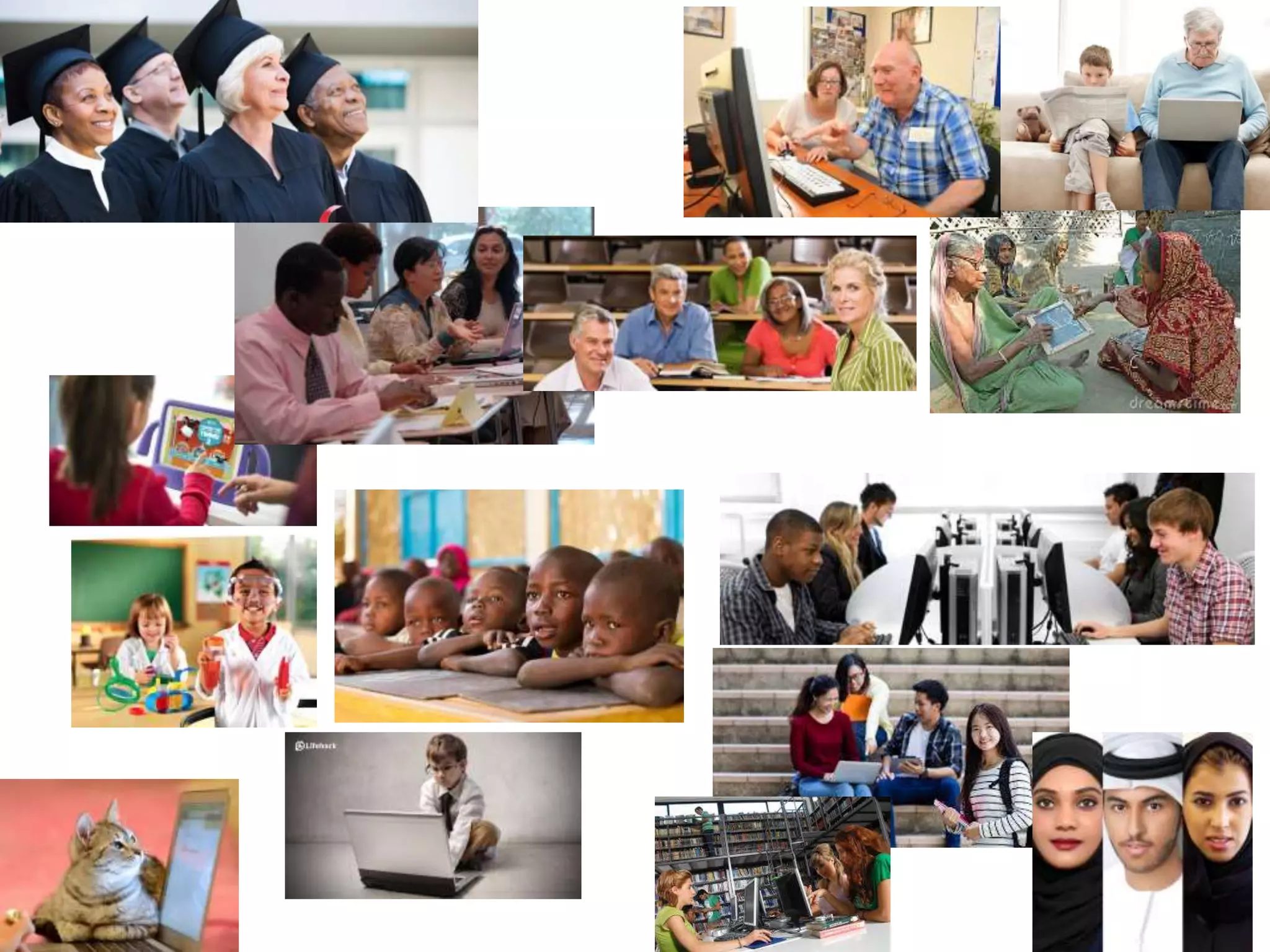
The Learners
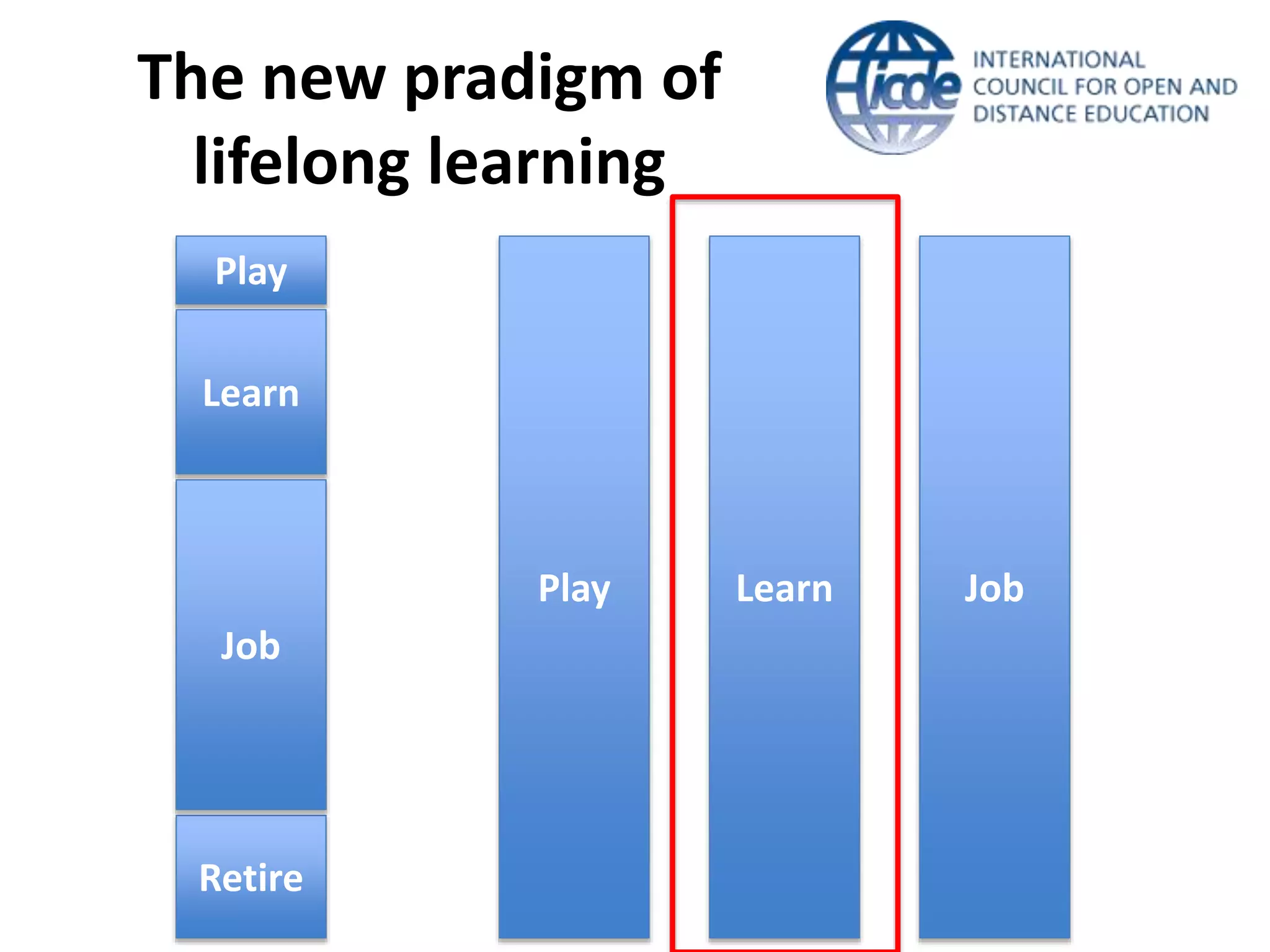
Play
Retire
Learn
Job
Play Learn Job
The new pradigm of
lifelong learning
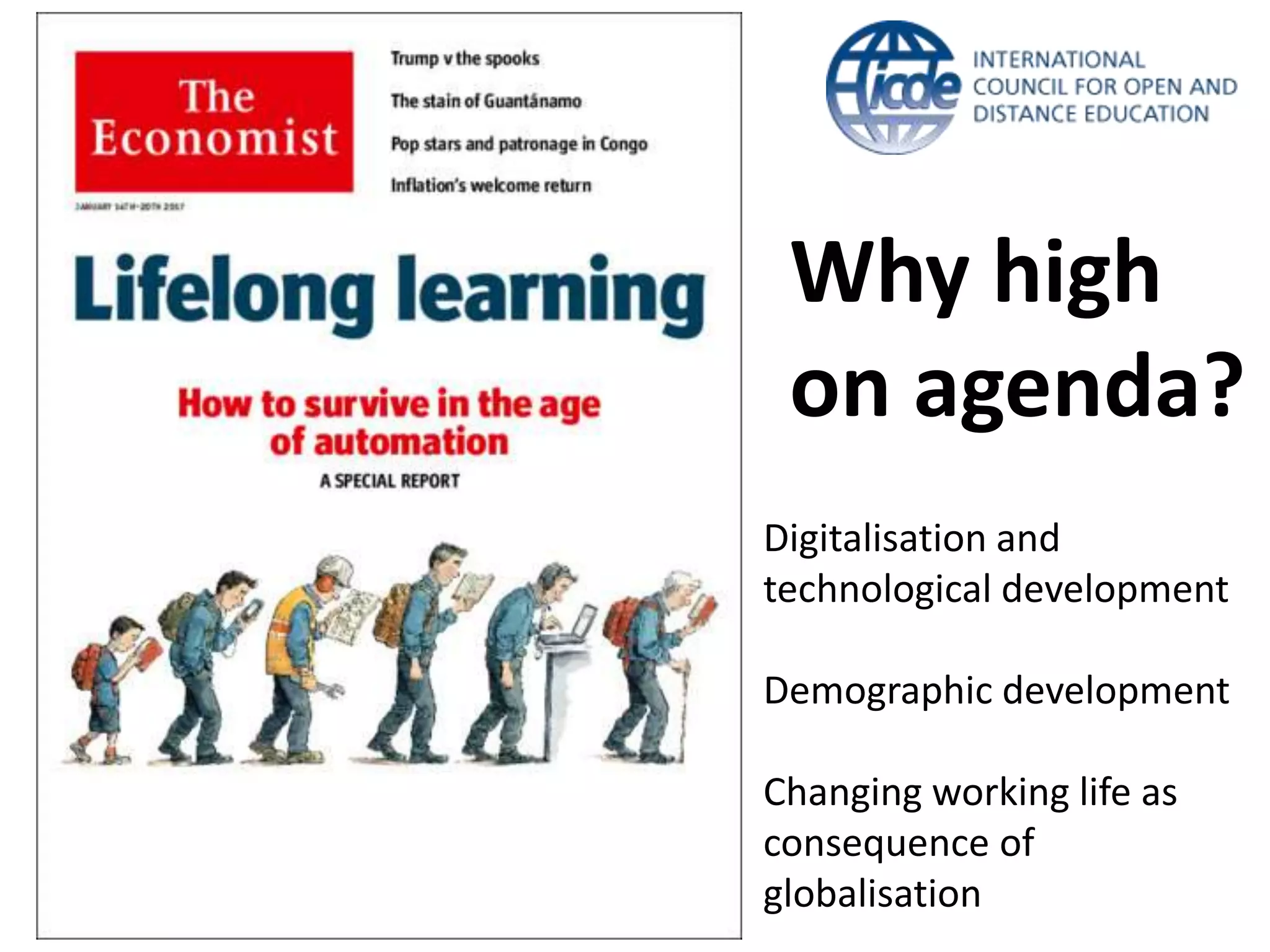
Digitalisation and
technological development
Demographic development
Changing working life as
consequence of
globalisation
Why high
on agenda?
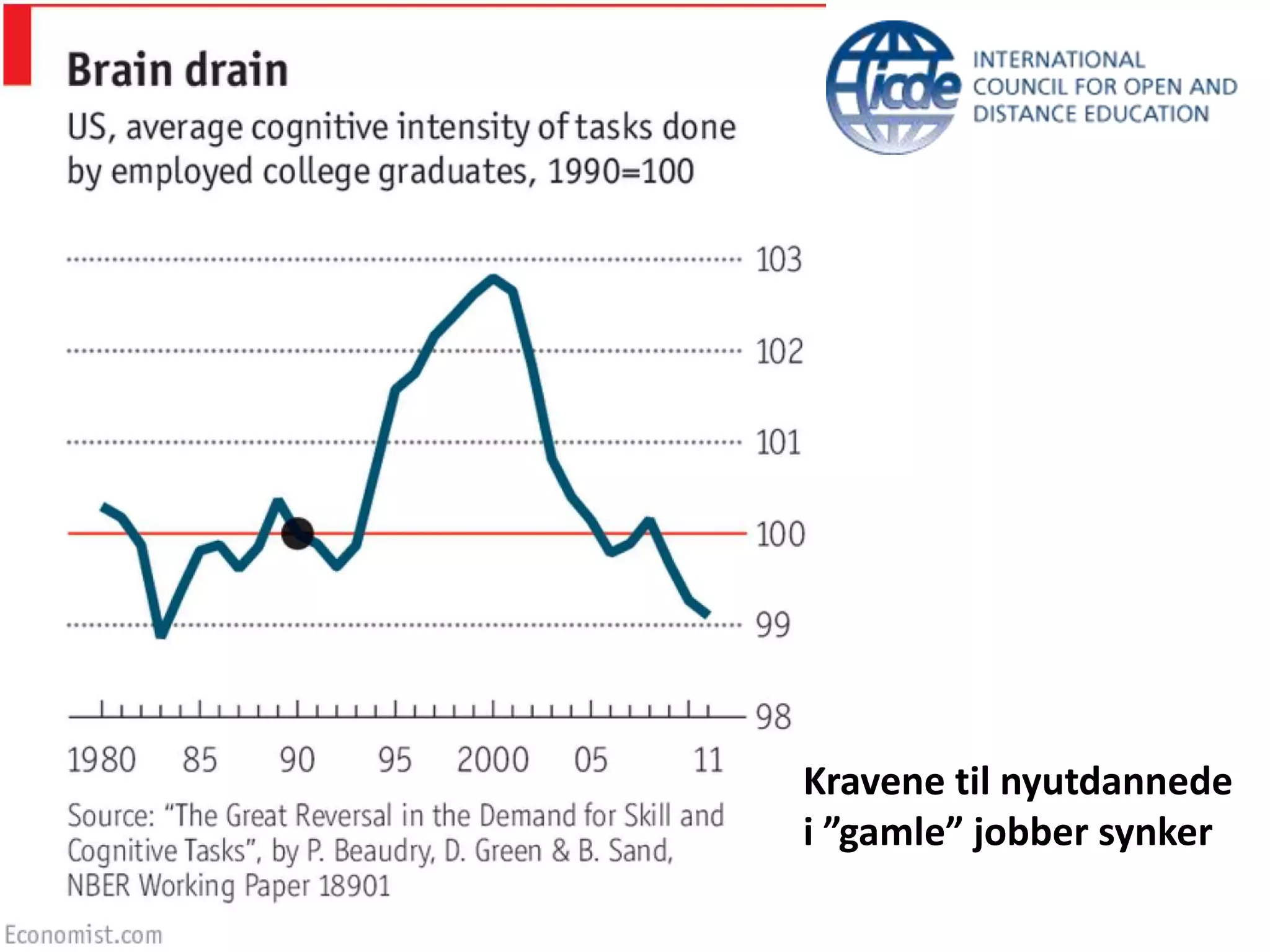
Kravene til nyutdannede
i ”gamle” jobber synker
WHY
LIFELONG
LEARNING?
The paper concludes that the
globally converging discourse
of LLL tends to serve the
interests of the market ahead
of those of the community,
and argues that an alternative
characterization of LLL,
anchored in social justice, is
necessary in the light of the
2030 Agenda for Sustainable
Development, and especially
Sustainable Development Goal
4,
which aims to ensure inclusive
and equitable quality
education and to promote
lifelong learning opportunities
for all.
ICDE Lillehammer
Lifelong Learning Summit,
February 11. – 13. 2019
Transformation of Education in the Era of
Openness and Flexibility
Transform through?
Through online, open, flexible and
technology enhanced
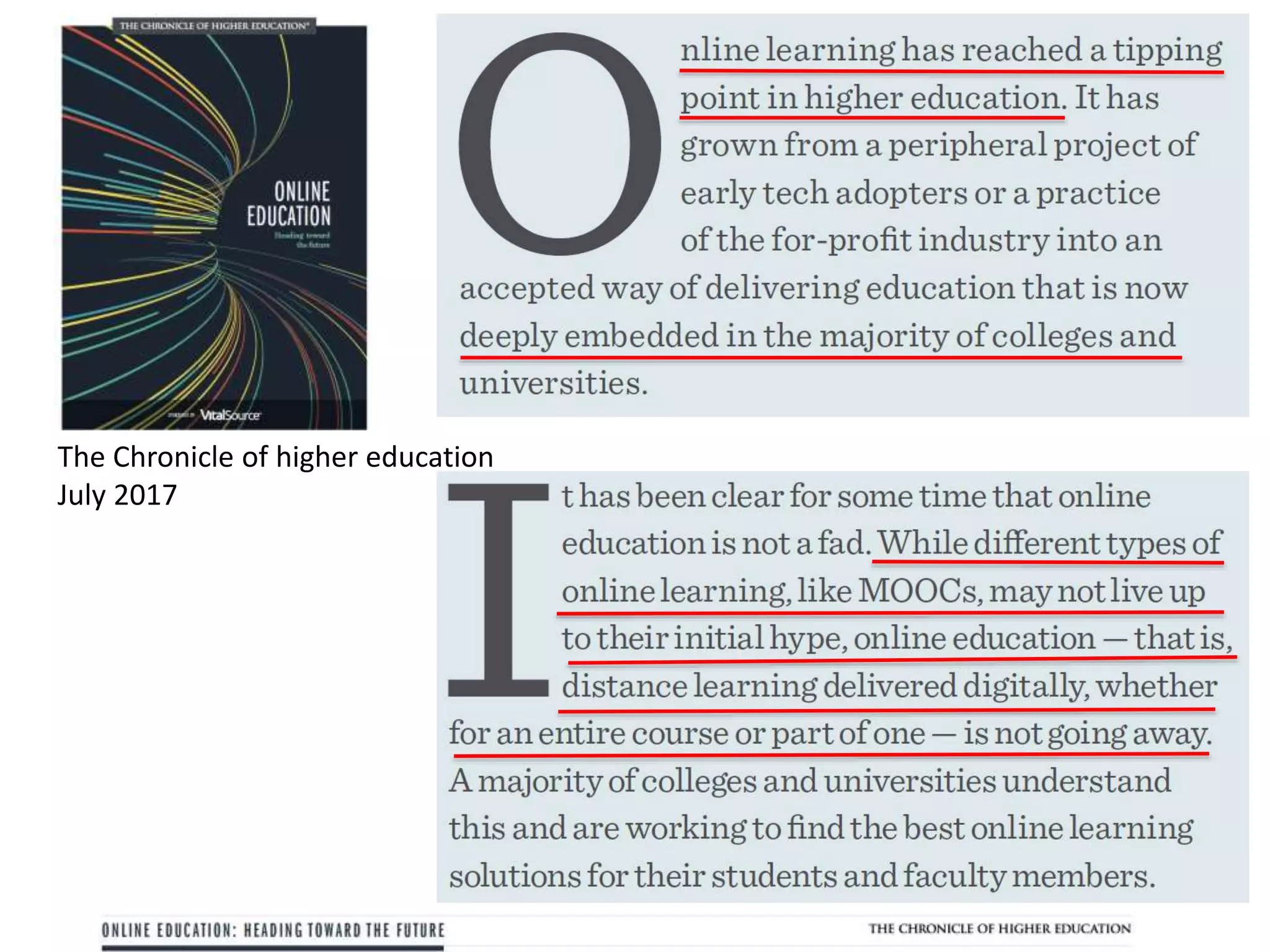
The Chronicle of higher education
July 2017
Innovate and transform the
learning process
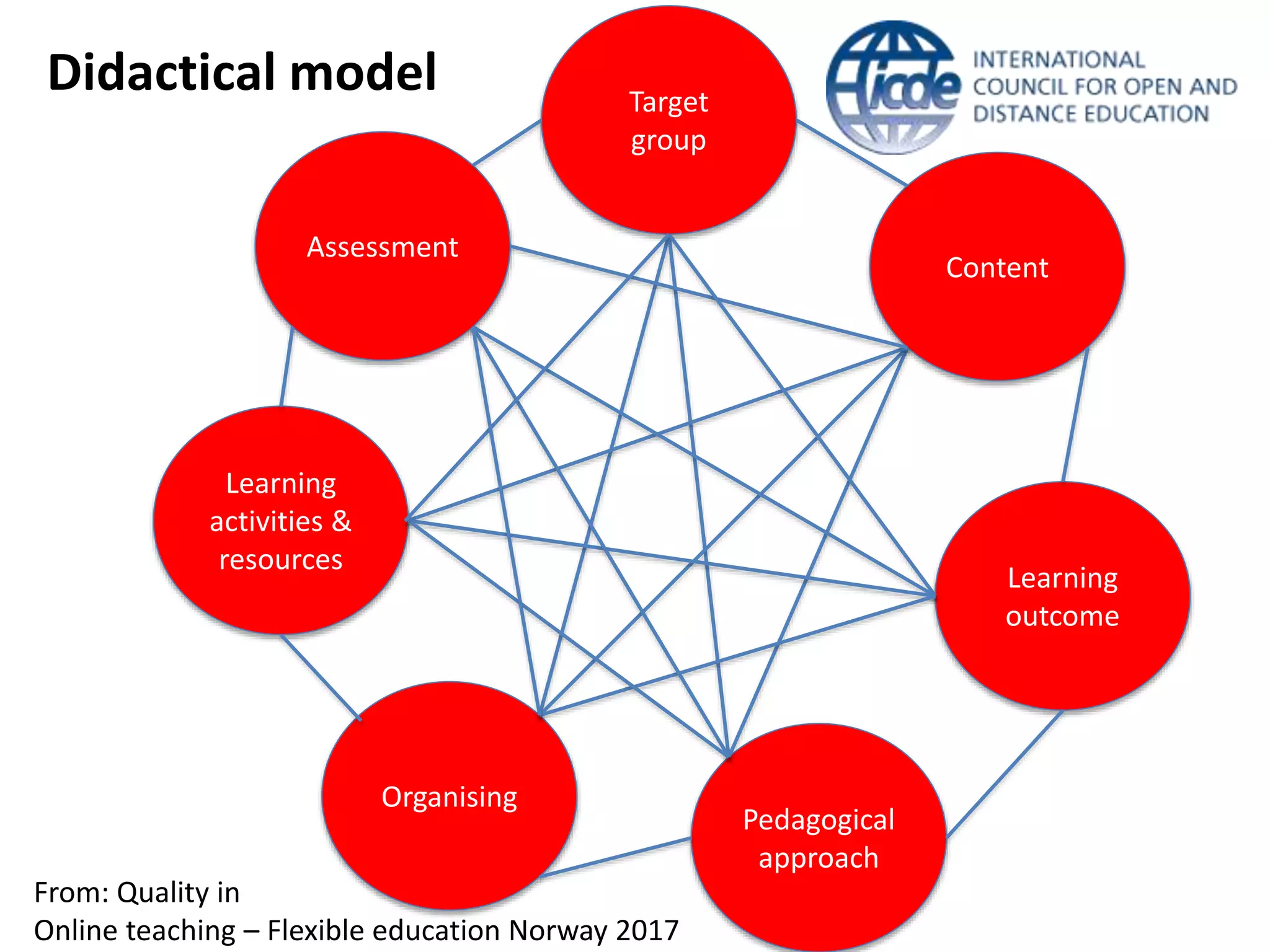
Learning
activities &
resources
Organising
Pedagogical
approach
Learning
outcome
Assessment
Content
Target
group
Didactical model
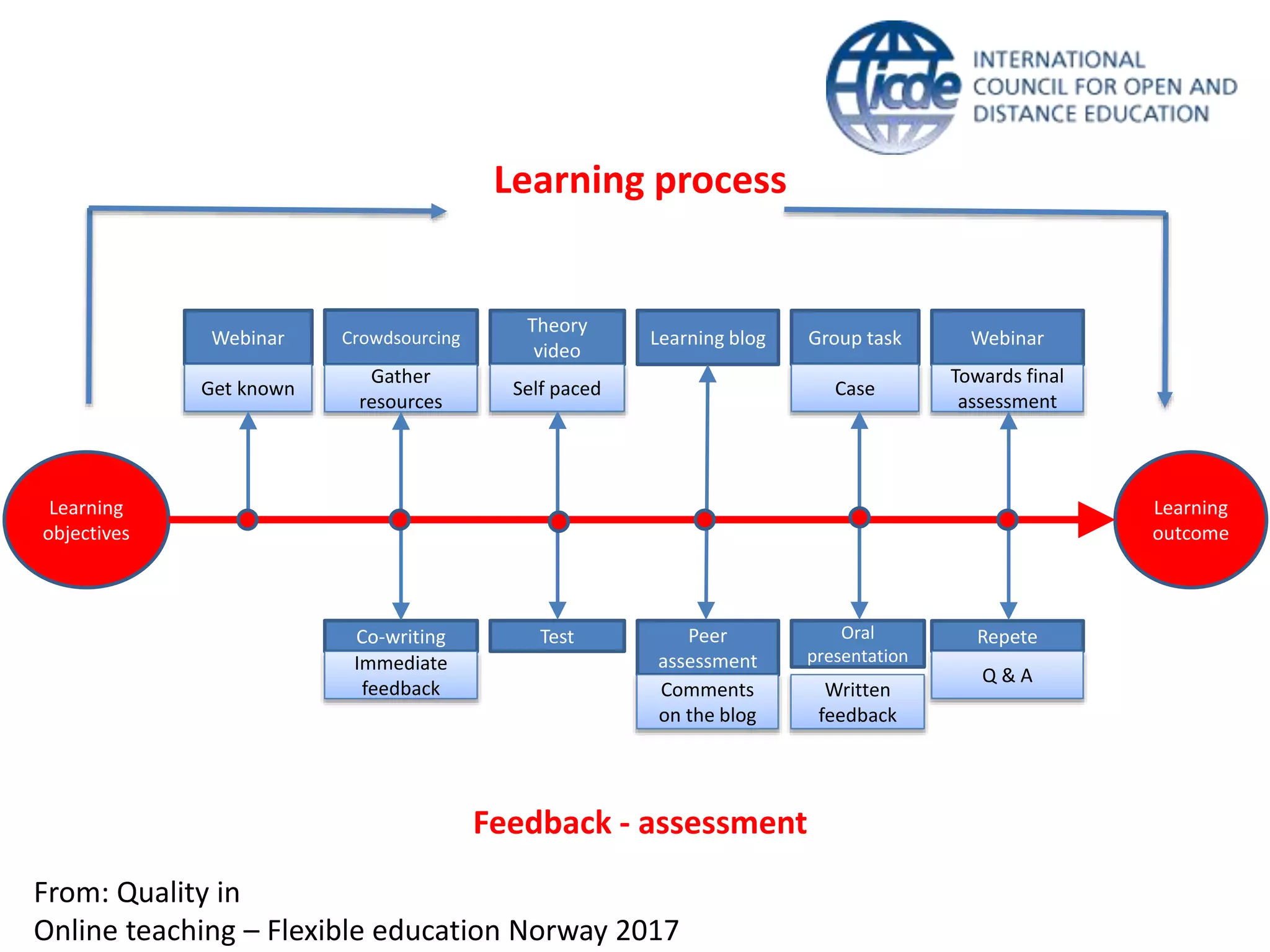
From: Quality in
Online teaching – Flexible education Norway 2017
Webinar
Get known
Theory
video
Self paced
Learning blog Webinar
Towards final
assessment
Crowdsourcing
Gather
resources
Group task
Case
Learning
objectives
Learning
outcome
Test Peer
assessment
Comments
on the blog
Repete
Q & A
Co-writing
Immediate
feedback
Oral
presentation
Written
feedback
Learning process
Feedback - assessment
From: Quality in
Online teaching – Flexible education Norway 2017
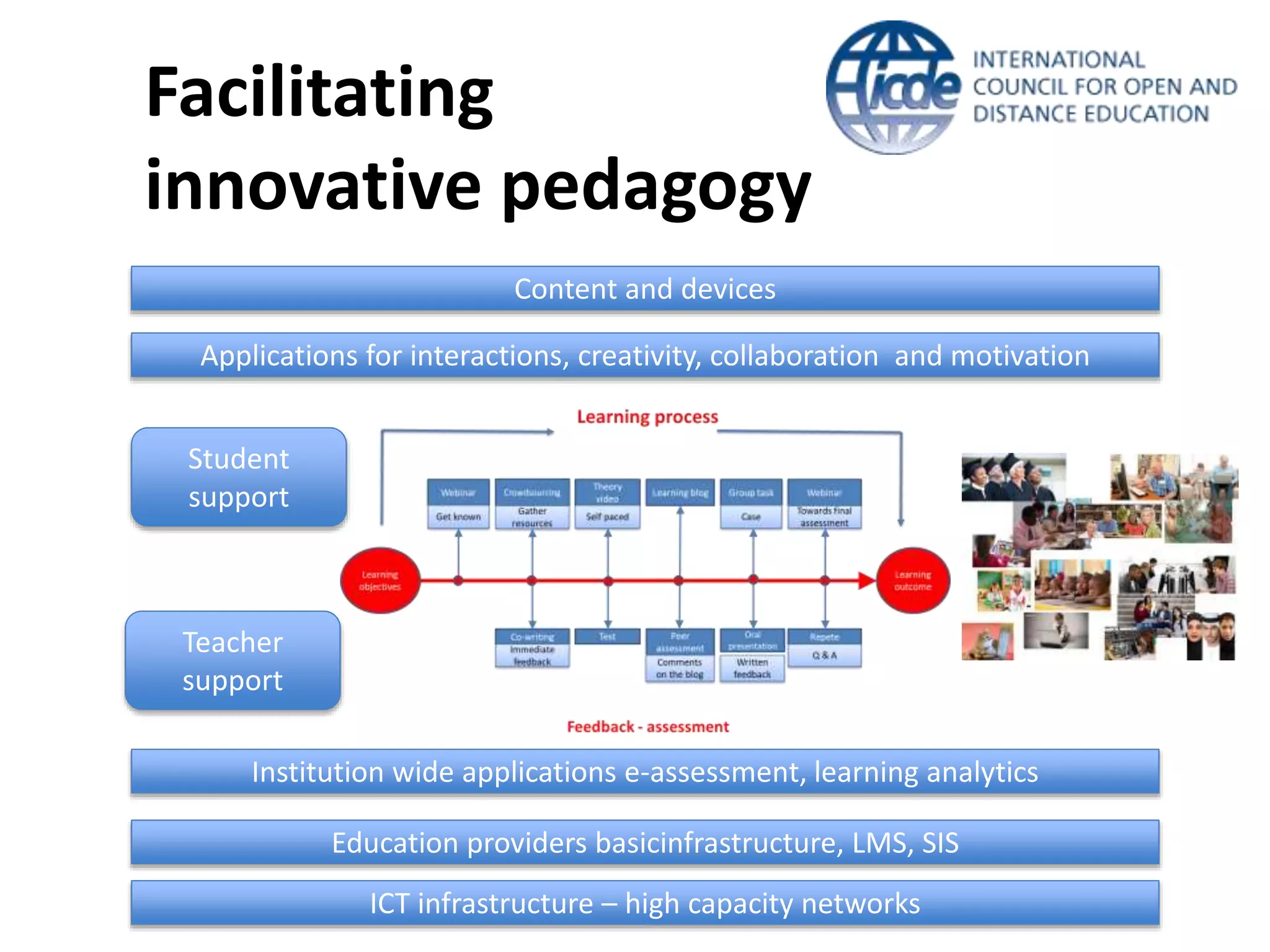
ICT infrastructure – high capacity networks
Education providers basicinfrastructure, LMS, SIS
Institution wide applications e-assessment, learning analytics
Applications for interactions, creativity, collaboration and motivation
Student
support
Teacher
support
Content and devices
Facilitating
innovative pedagogy
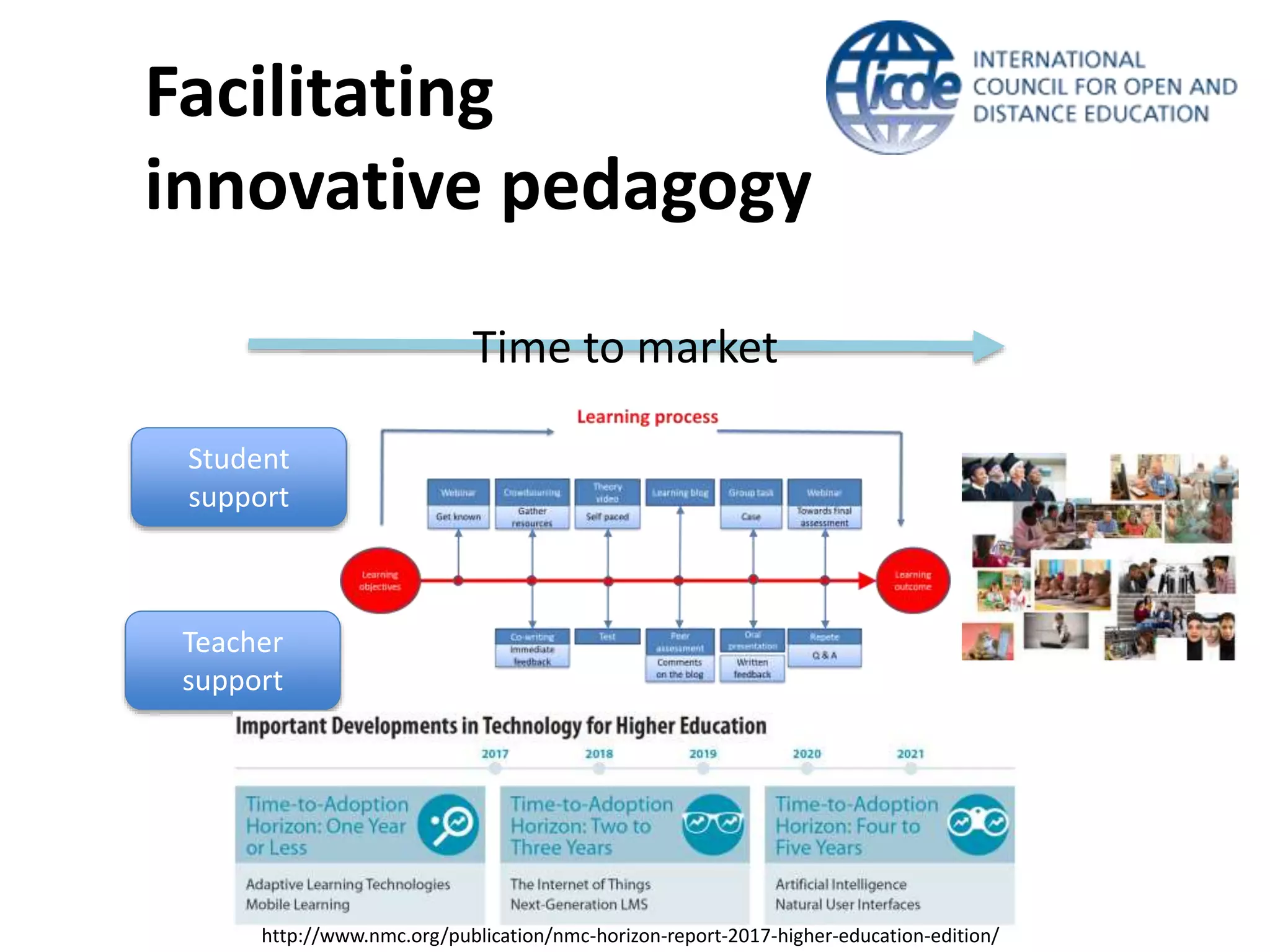
Student
support
Teacher
support
Facilitating
innovative pedagogy
Time to market
http://www.nmc.org/publication/nmc-horizon-report-2017-higher-education-edition/
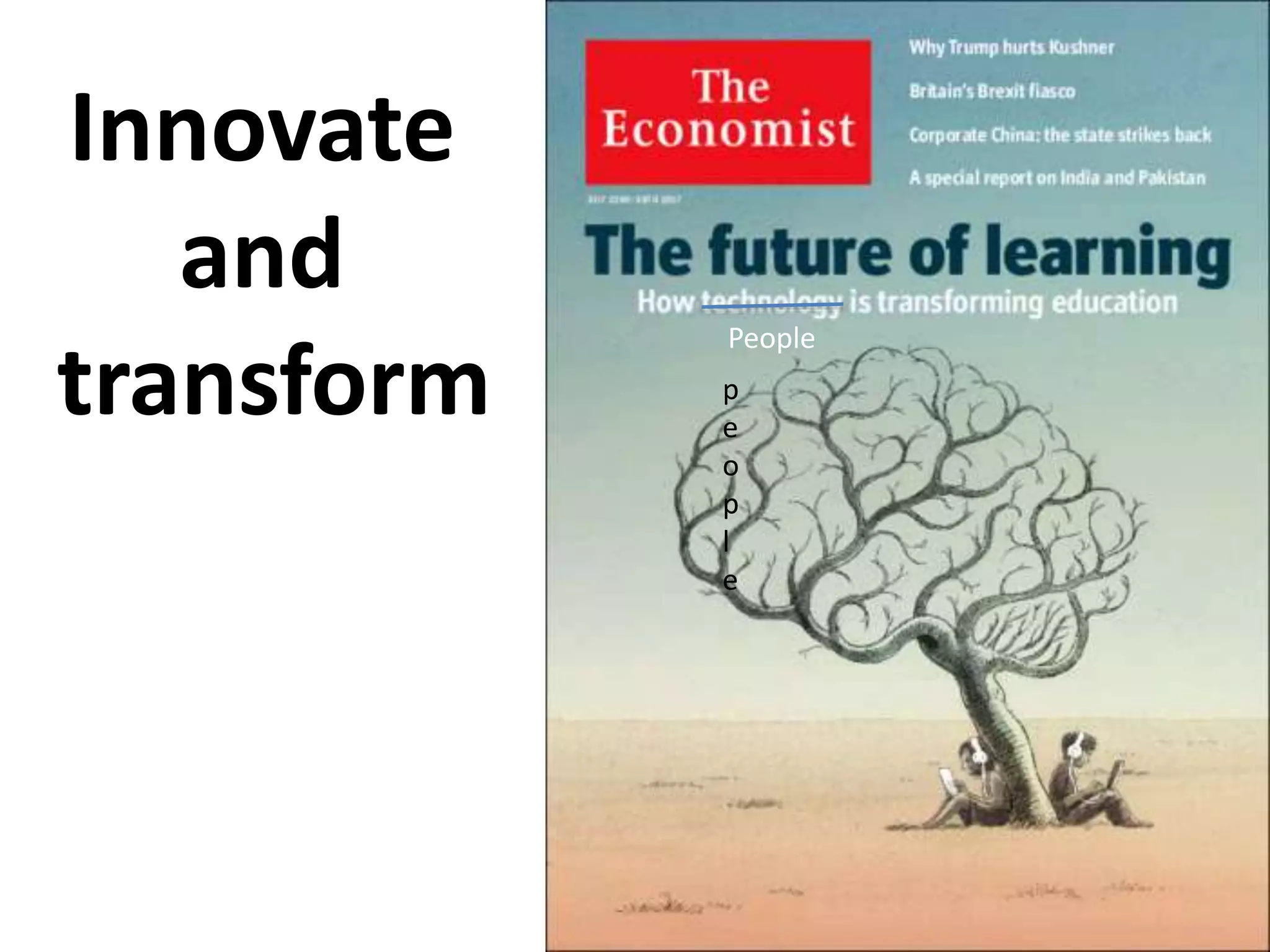
Innovate
and
transform p
e
o
p
l
e
People
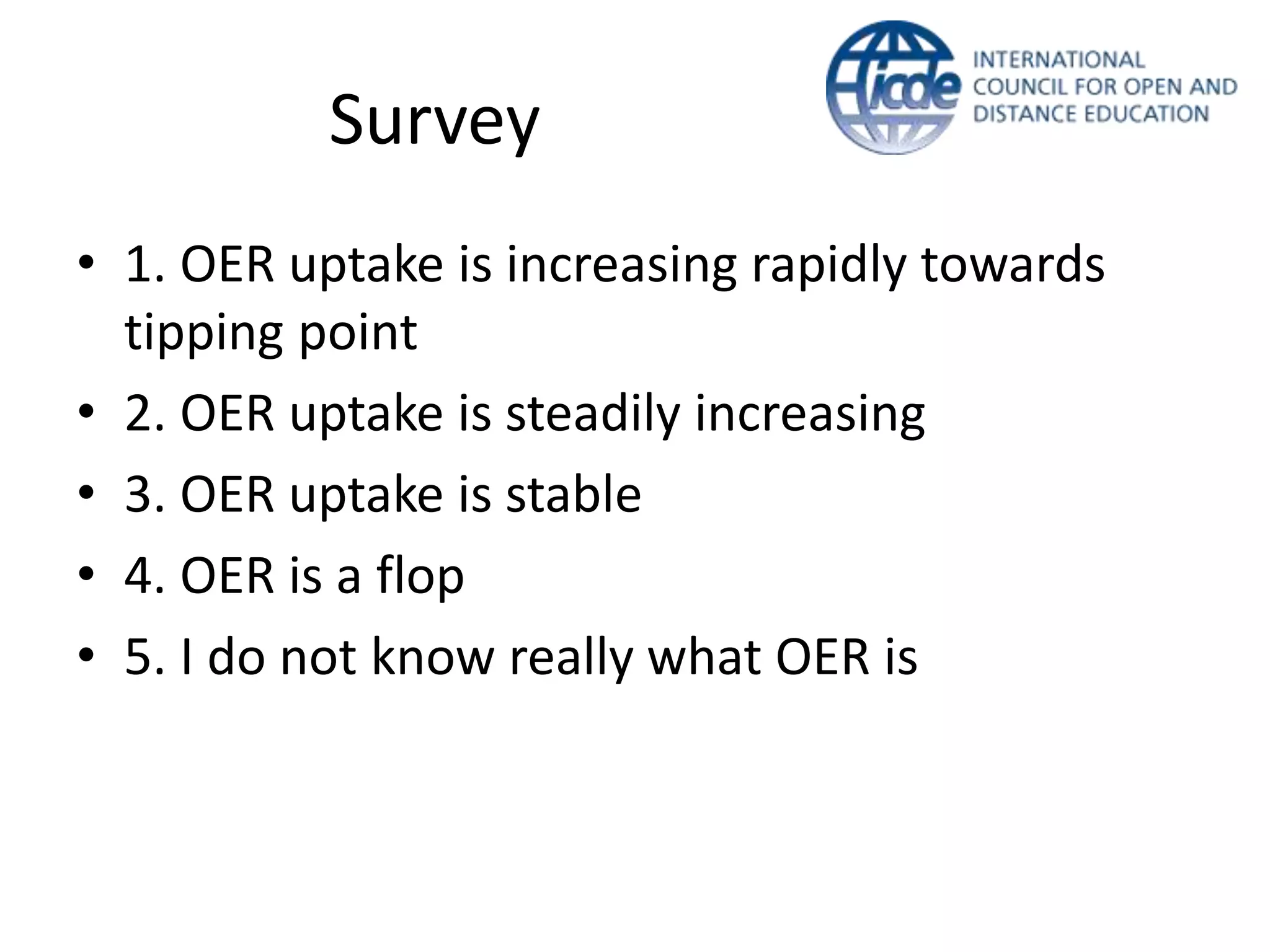
Survey
• 1. OER uptake is increasing rapidly towards
tipping point
• 2. OER uptake is steadily increasing
• 3. OER uptake is stable
• 4. OER is a flop
• 5. I do not know really what OER is
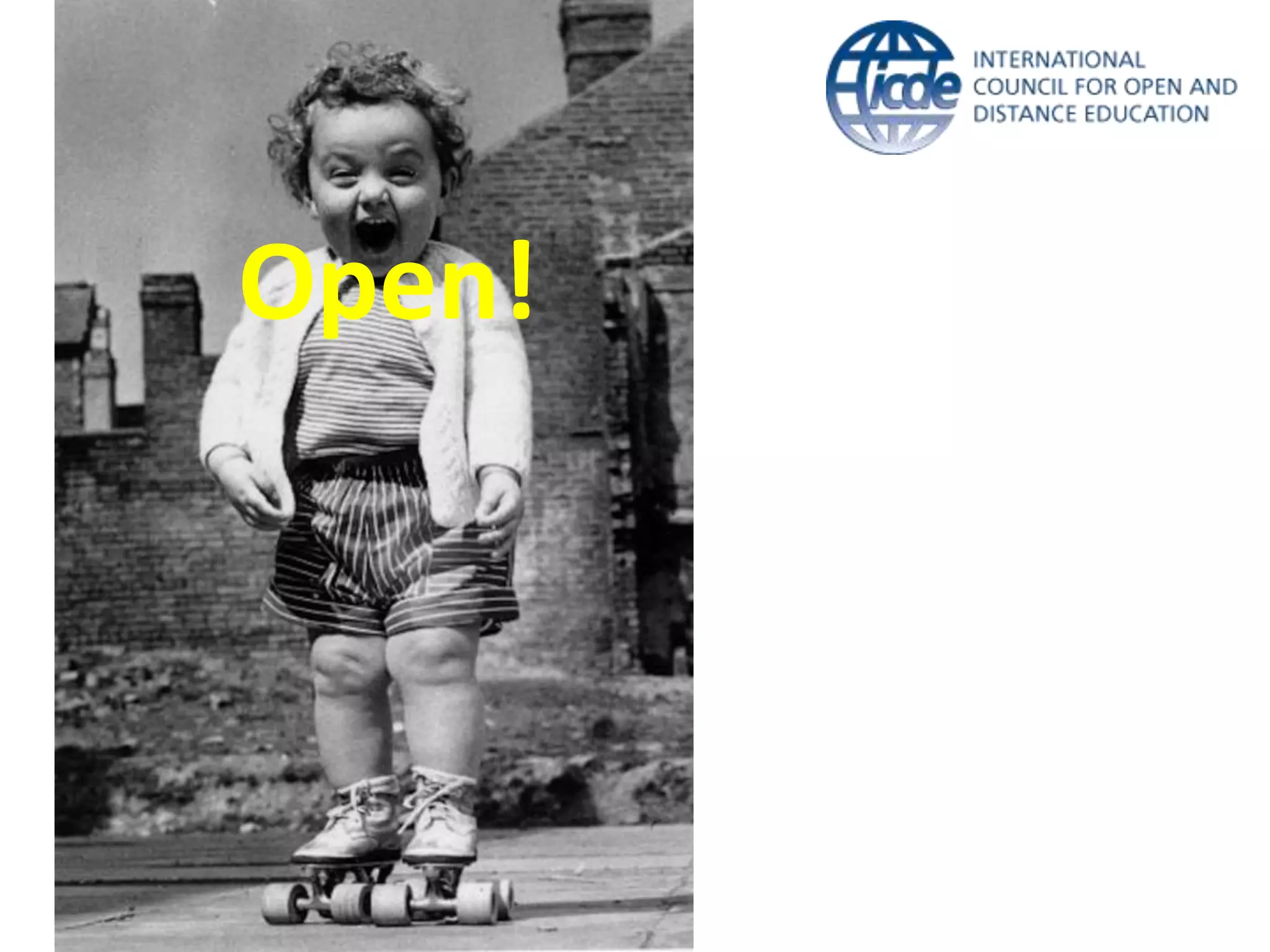
Open!
1.3 Contribute to
successful
development and
utilisation of Open:
• Open Education Resources
• Open Licensing
• Open Access
• Open Learning and
Education
• Open Knowledge
• Open Source
• Open Innovation
• Open Policy
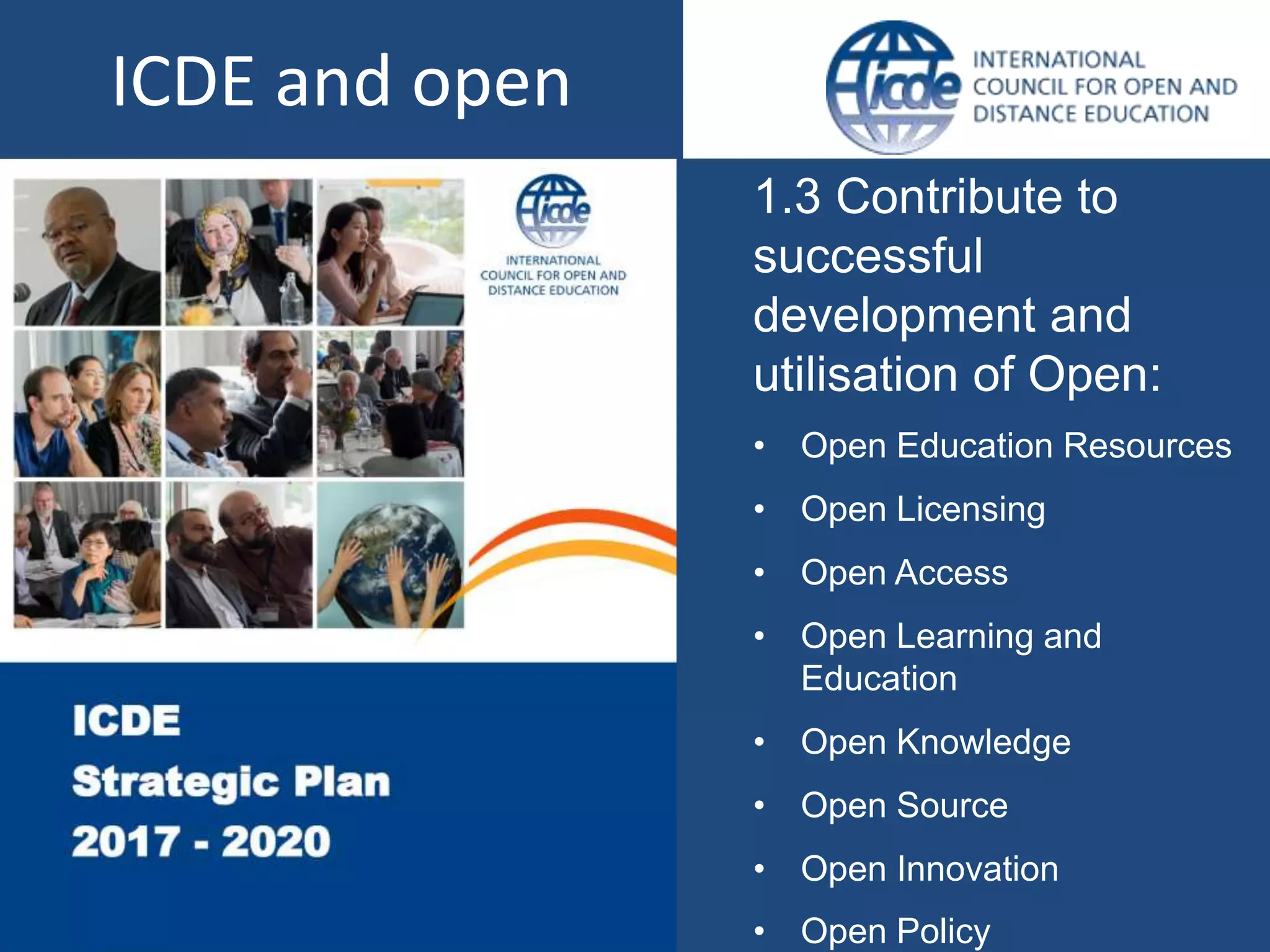
ICDE and open
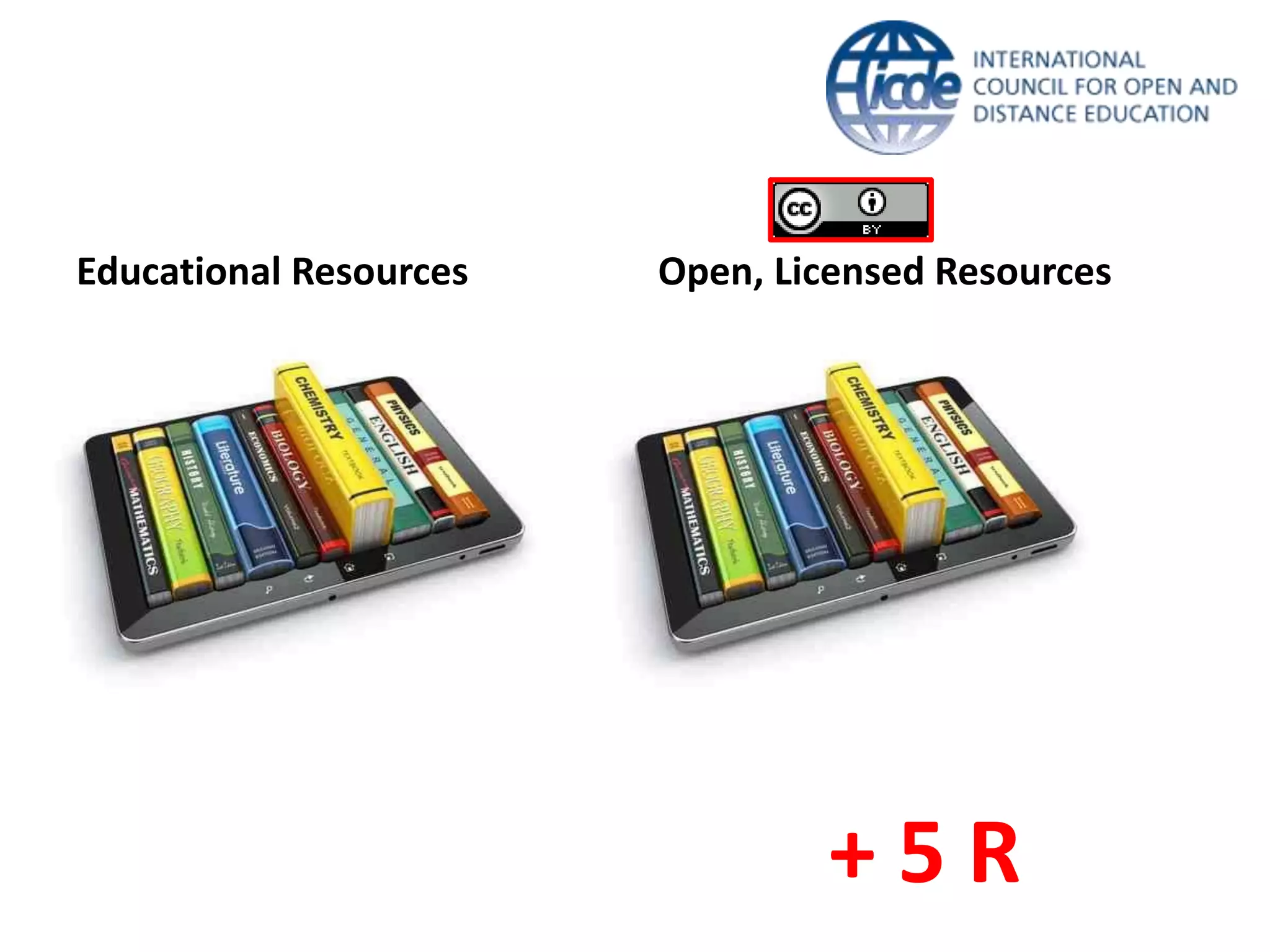
Educational Resources Open, Licensed Resources
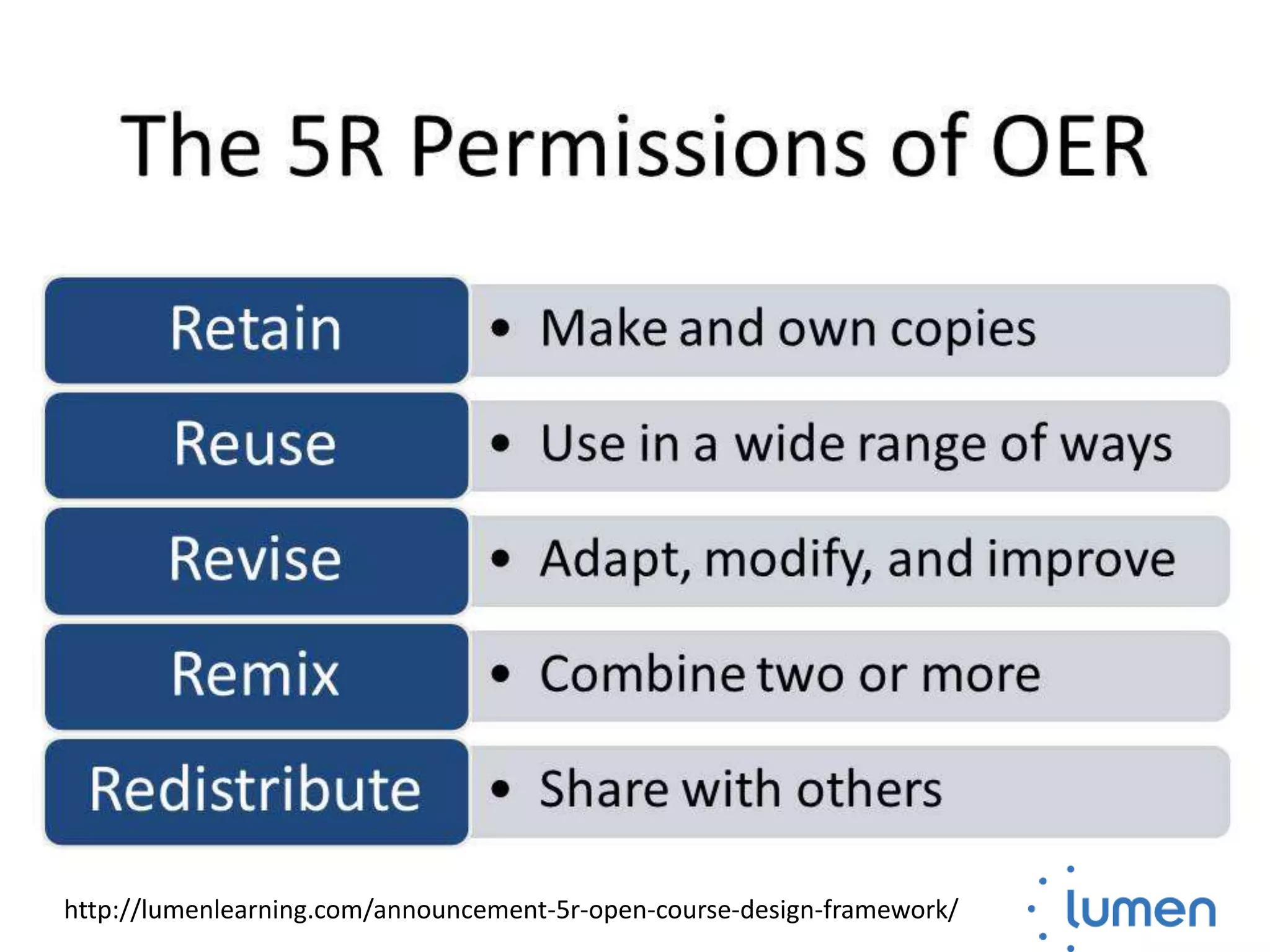
+ 5 R
http://lumenlearning.com/announcement-5r-open-course-design-framework/
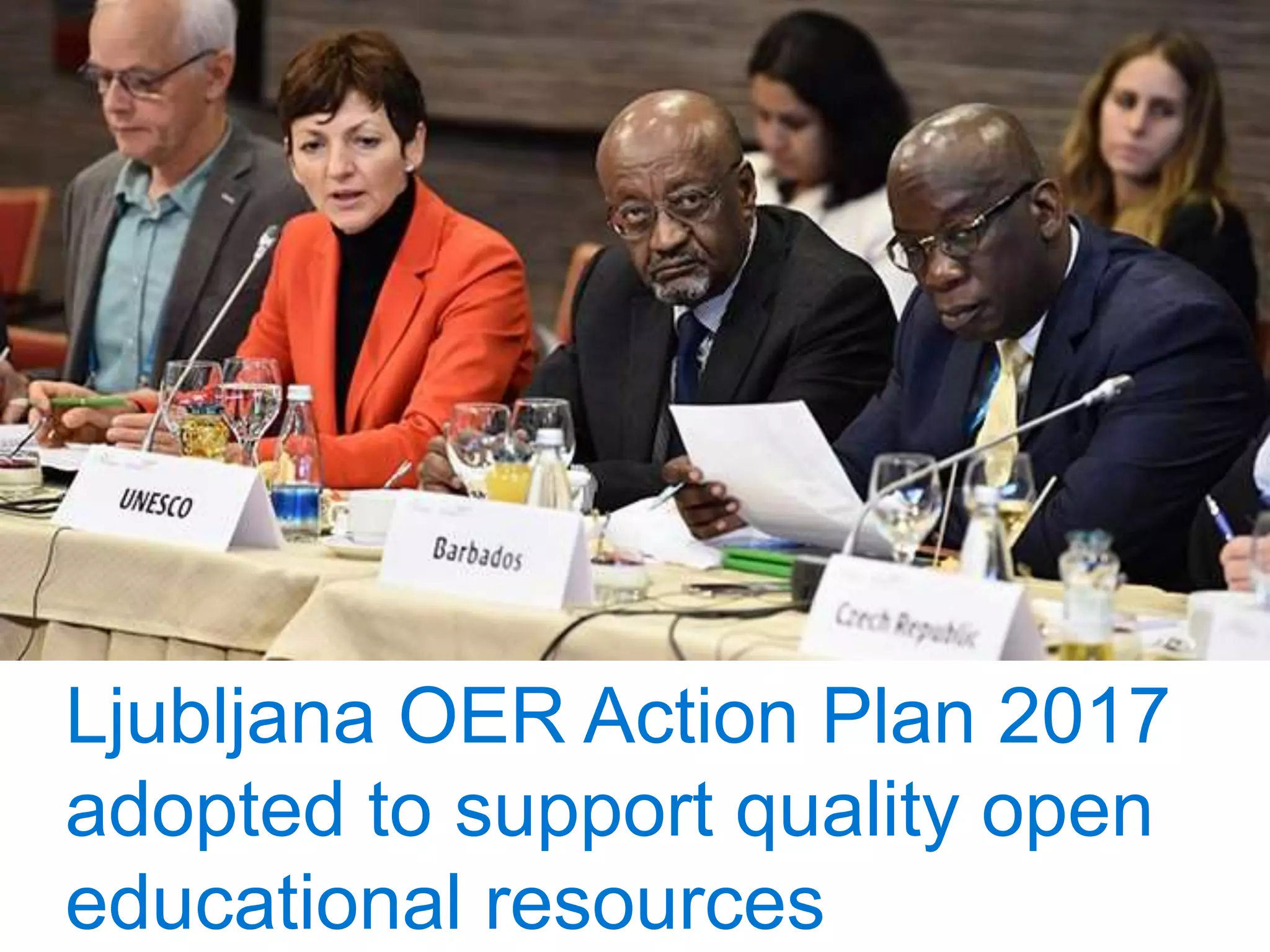
Ljubljana OER Action Plan 2017
adopted to support quality open
educational resources
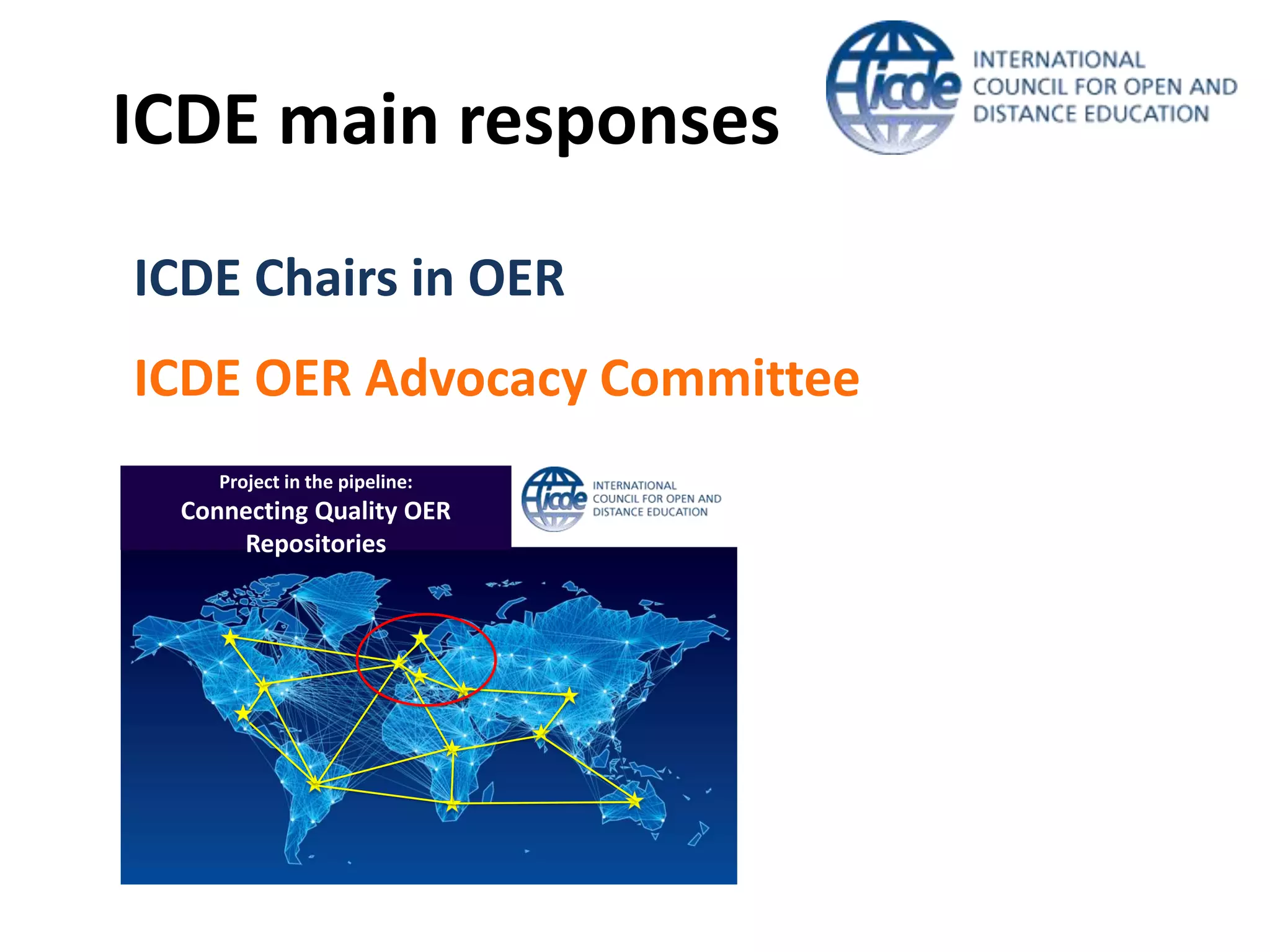
ICDE main responses
Project in the pipeline:
Connecting Quality OER
Repositories
ICDE OER Advocacy Committee
ICDE Chairs in OER
To Come in 2019
UNESCO Recommendation for
Future International Collaboration
in the field of Open Educational
Resources (OER)
UNESCO General Conference Decision 8 November 2017:
Transformation of Education in the Era of
Openness and Flexibility
Transform for the future?
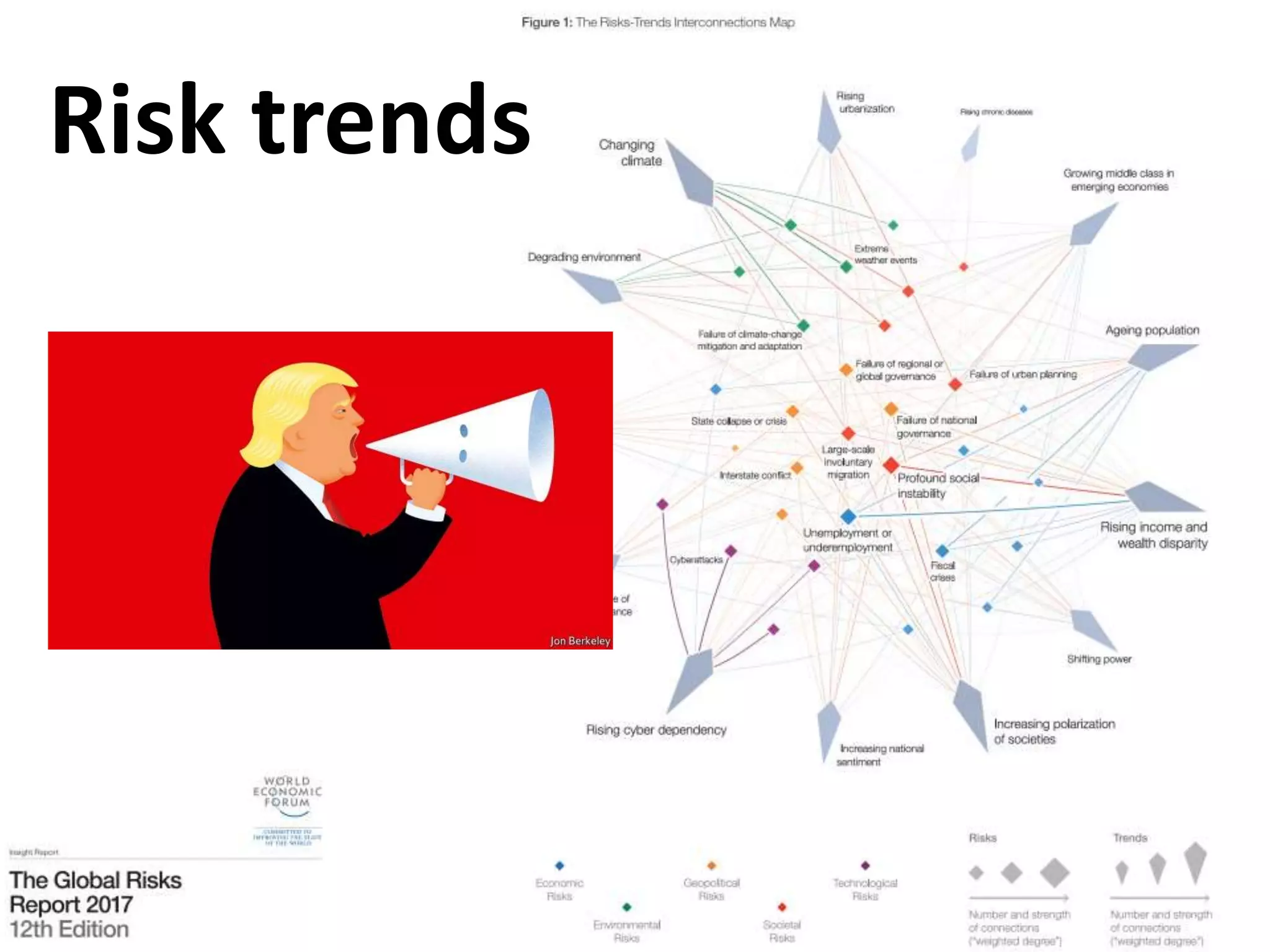
Risk trends
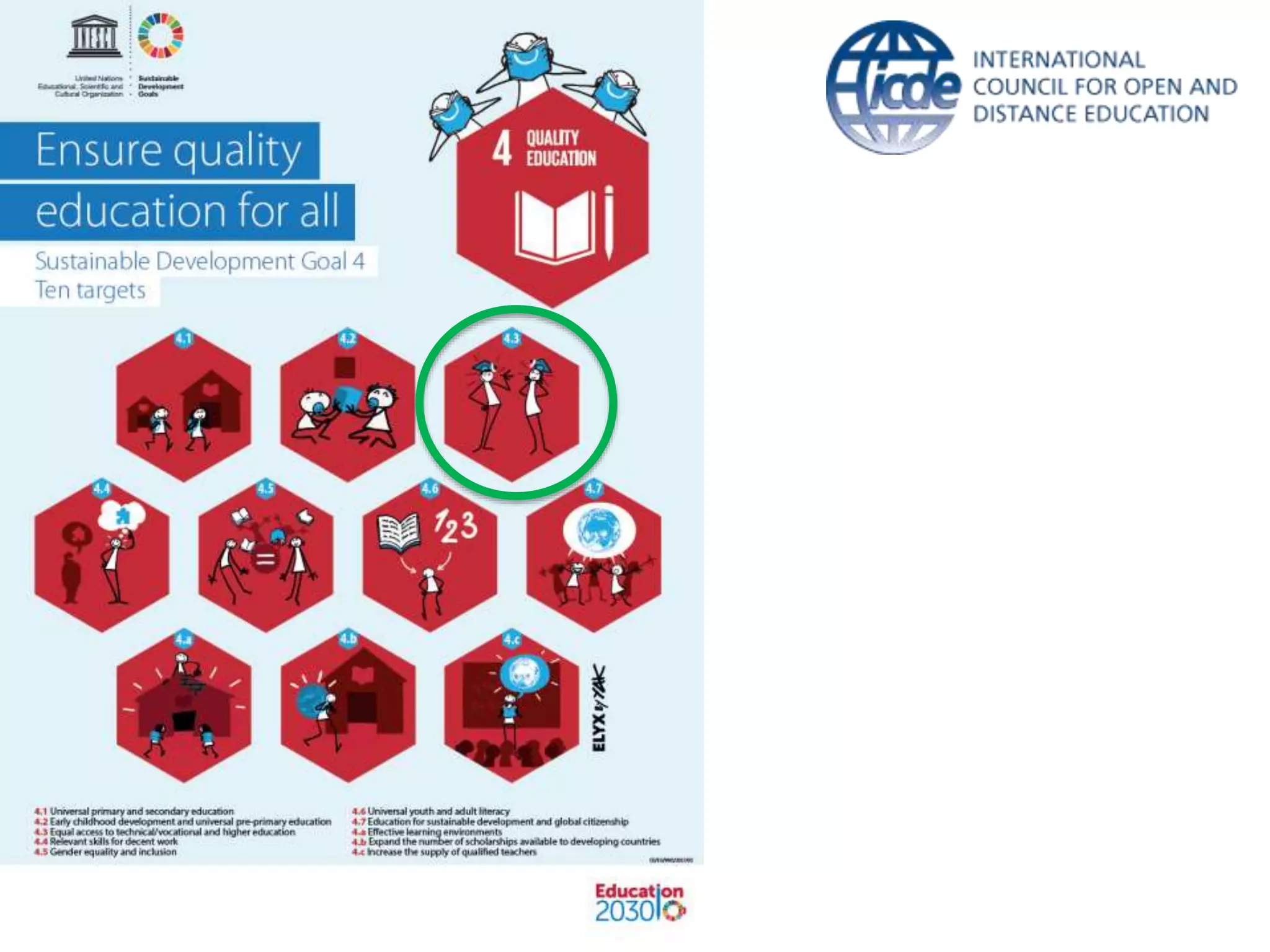
• On 25 September 2015, the United Nations
General Assembly formally adopted the
universal, integrated and transformative 2030
Agenda for Sustainable Development, along
with a set of 17 Sustainable Development
Goals and 169 associated targets.
Main principles
• Education is a fundamental human right and
an enabling right.
• Education is a public good, of which the state
is the duty bearer.
• Gender equality is inextricably linked to the
right to education for all.
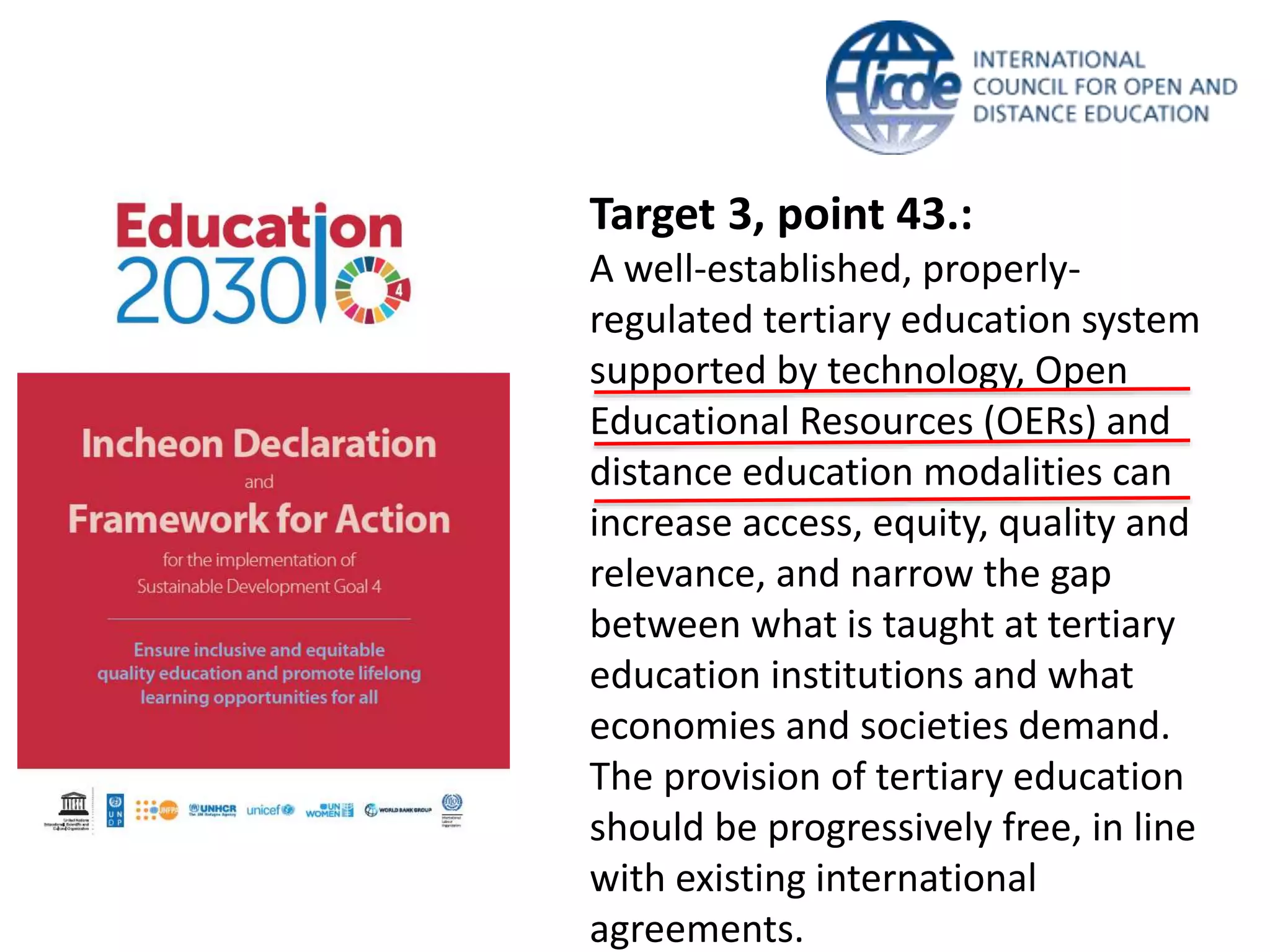
Target 3, point 43.:
A well-established, properly-
regulated tertiary education system
supported by technology, Open
Educational Resources (OERs) and
distance education modalities can
increase access, equity, quality and
relevance, and narrow the gap
between what is taught at tertiary
education institutions and what
economies and societies demand.
The provision of tertiary education
should be progressively free, in line
with existing international
agreements.
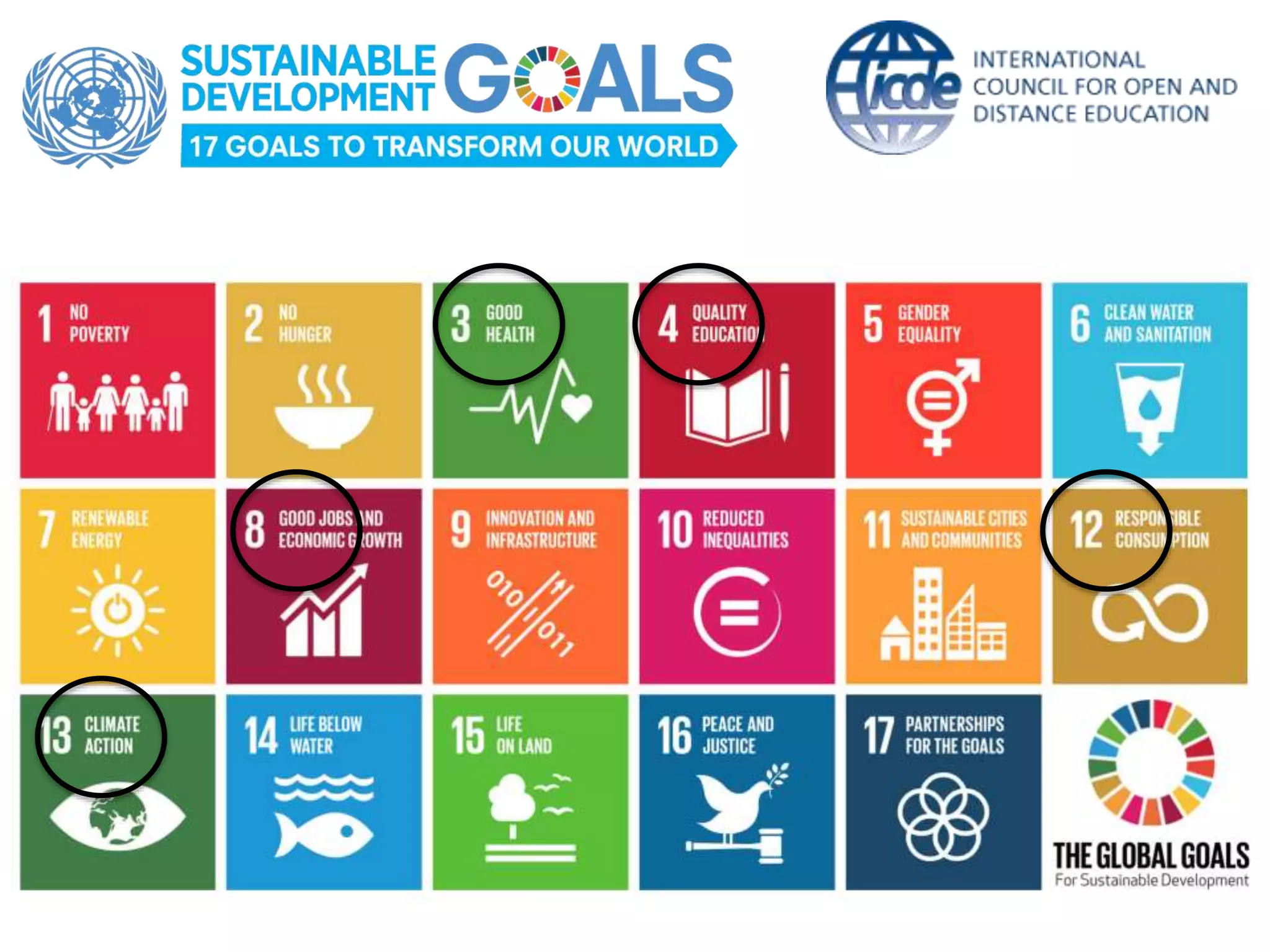
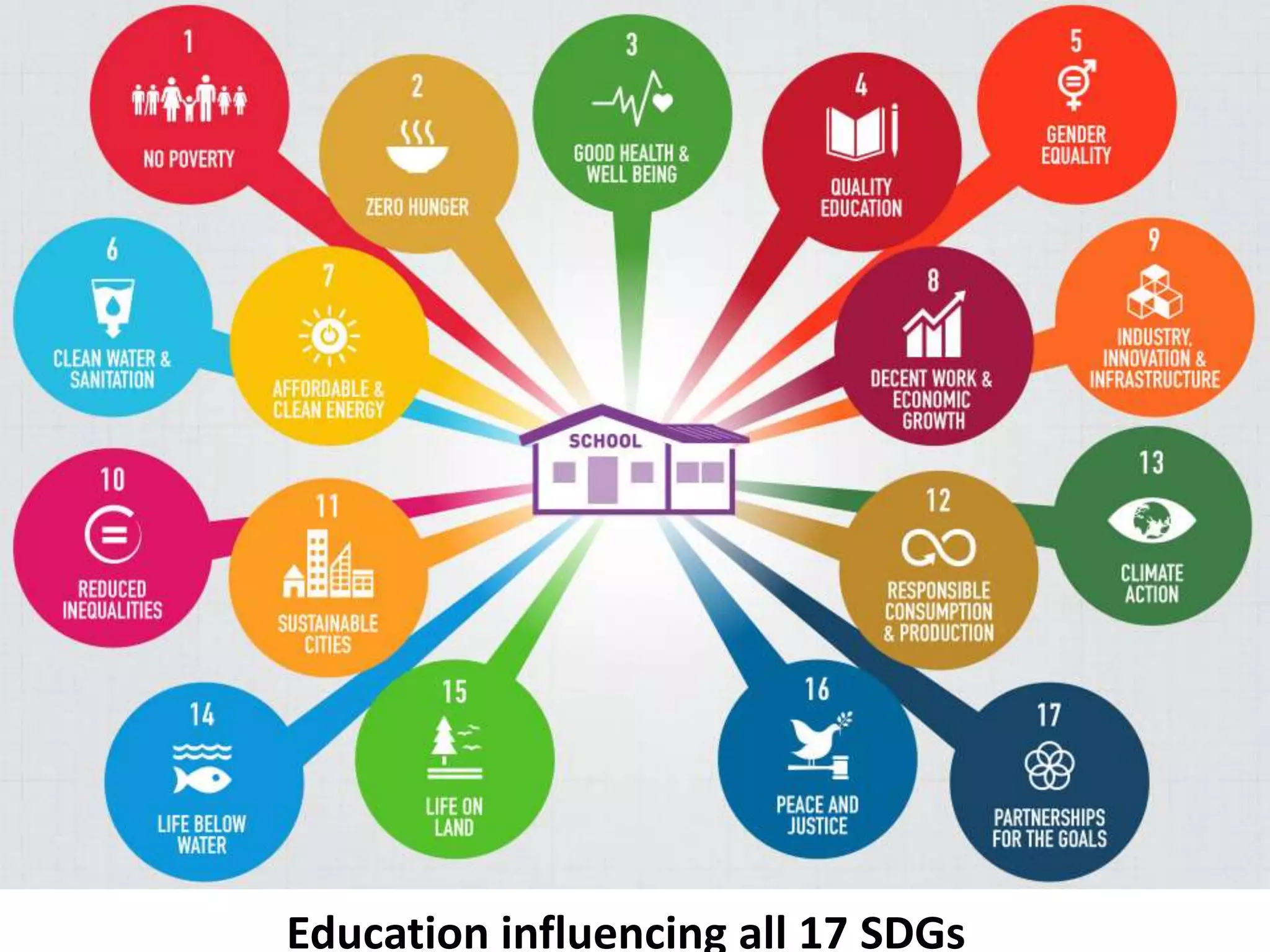
Education influencing all 17 SDGs
Prof. Dae Joon Hwang, Sungkyunkwan University, Seoul, Korea, djwang@skku.edu
UNESCO IITE Governing Board Member, Moscow
The 2017 Dujiangyan International Forum: Ensuring the Quality of Education and Lifelong Learning through ICT, 13-14
July2017, Chengdu, China
Technology Transformation
for Pedagogy Innovation
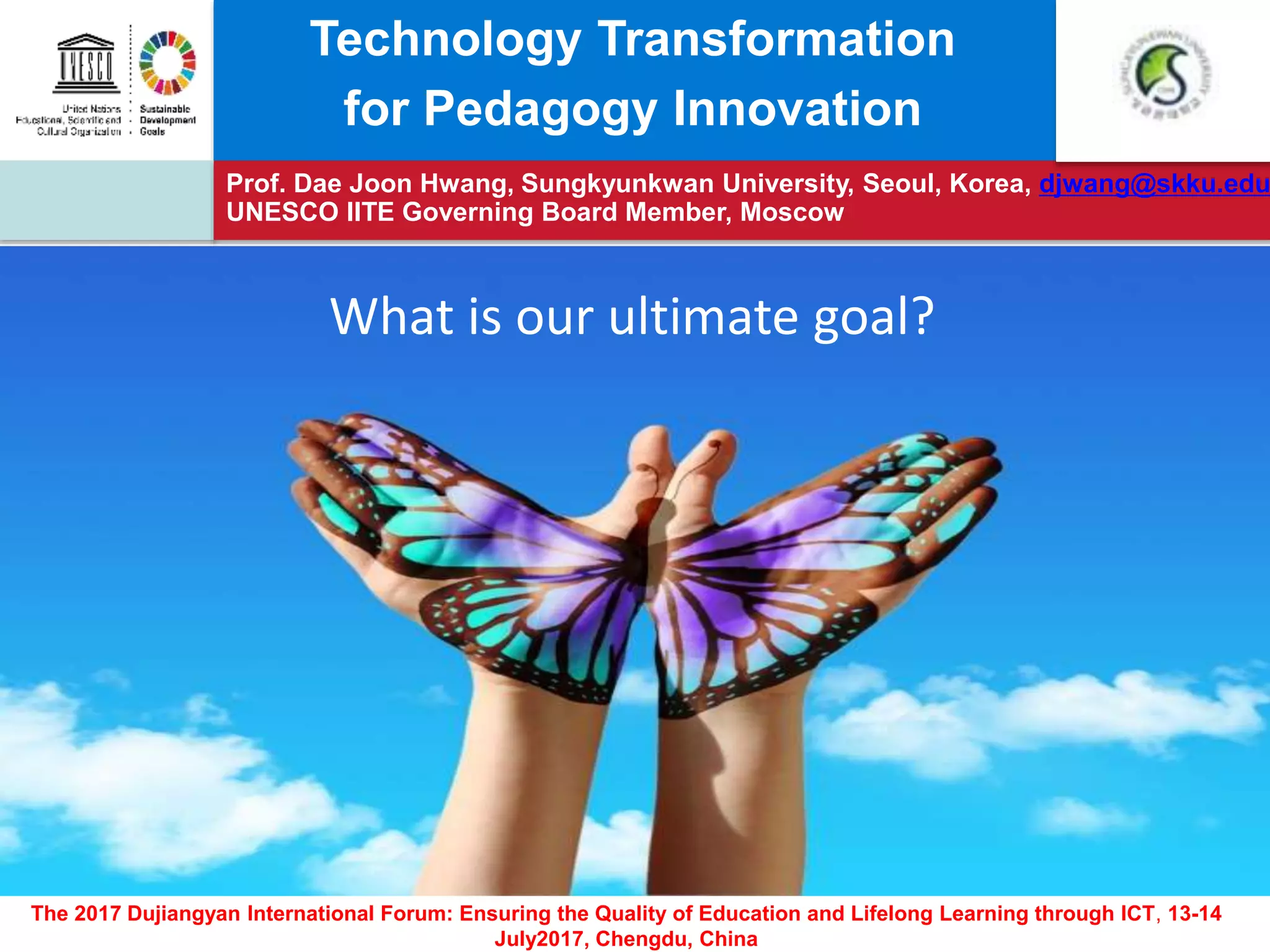
What is our ultimate goal?
Transform for:
• Affordable access to job relevant,
quality higher education.
• SDG 4: “Ensure inclusive and quality
education for all and promote
lifelong learning.”
• Transform education for all 17 SDGs
”TOWARDS INCLUSIVE AND EQUITABLE
QUALITY EDUCATION AND LIFELONG
LEARNING FOR ALL”
Sustainable Development Goal 4: Education 2030
THANK YOU!
titlestad@icde.org
www.icde.org
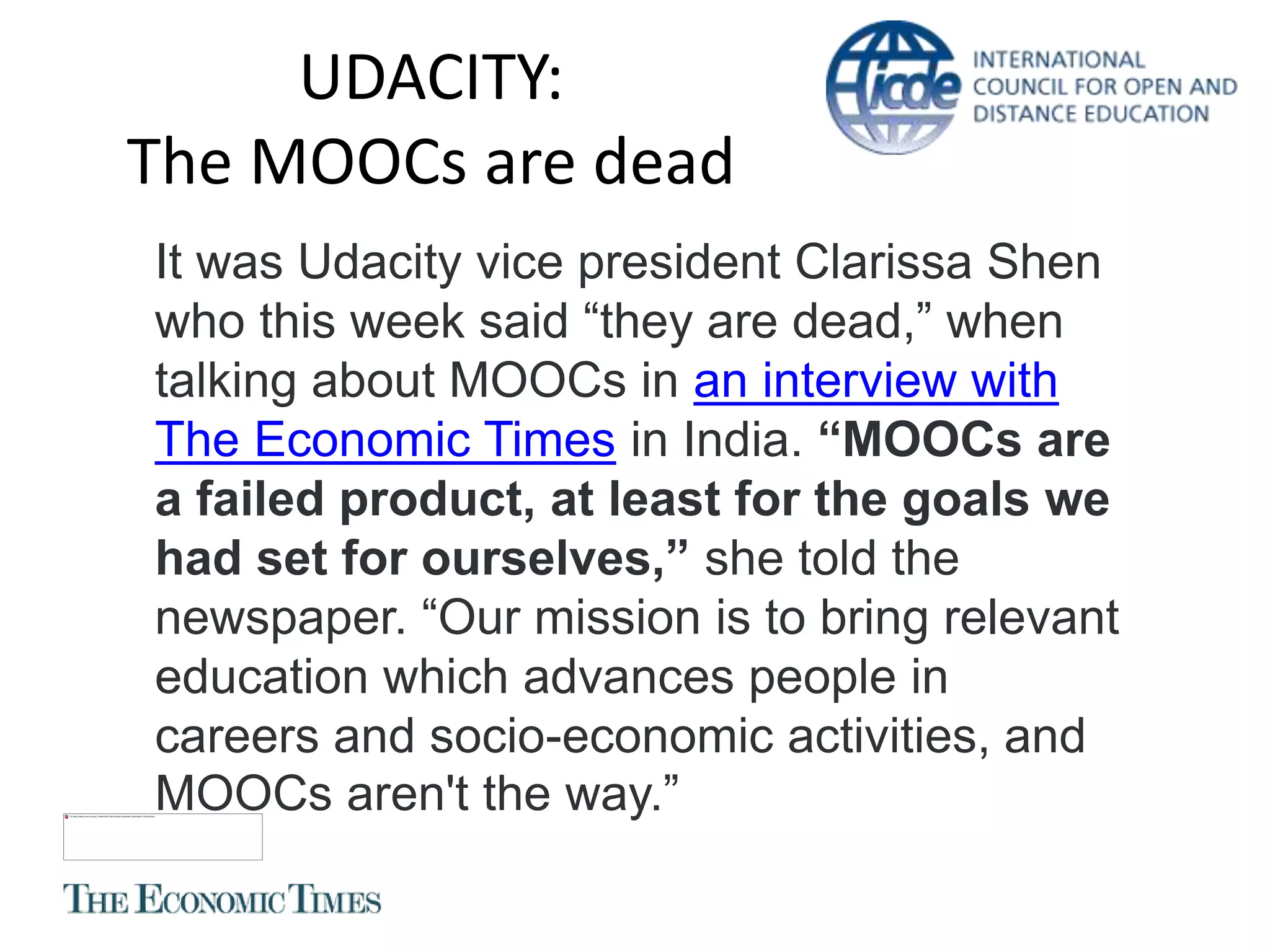
UDACITY:
The MOOCs are dead
It was Udacity vice president Clarissa Shen
who this week said “they are dead,” when
talking about MOOCs in an interview with
The Economic Times in India. “MOOCs are
a failed product, at least for the goals we
had set for ourselves,” she told the
newspaper. “Our mission is to bring relevant
education which advances people in
careers and socio-economic activities, and
MOOCs aren't the way.”
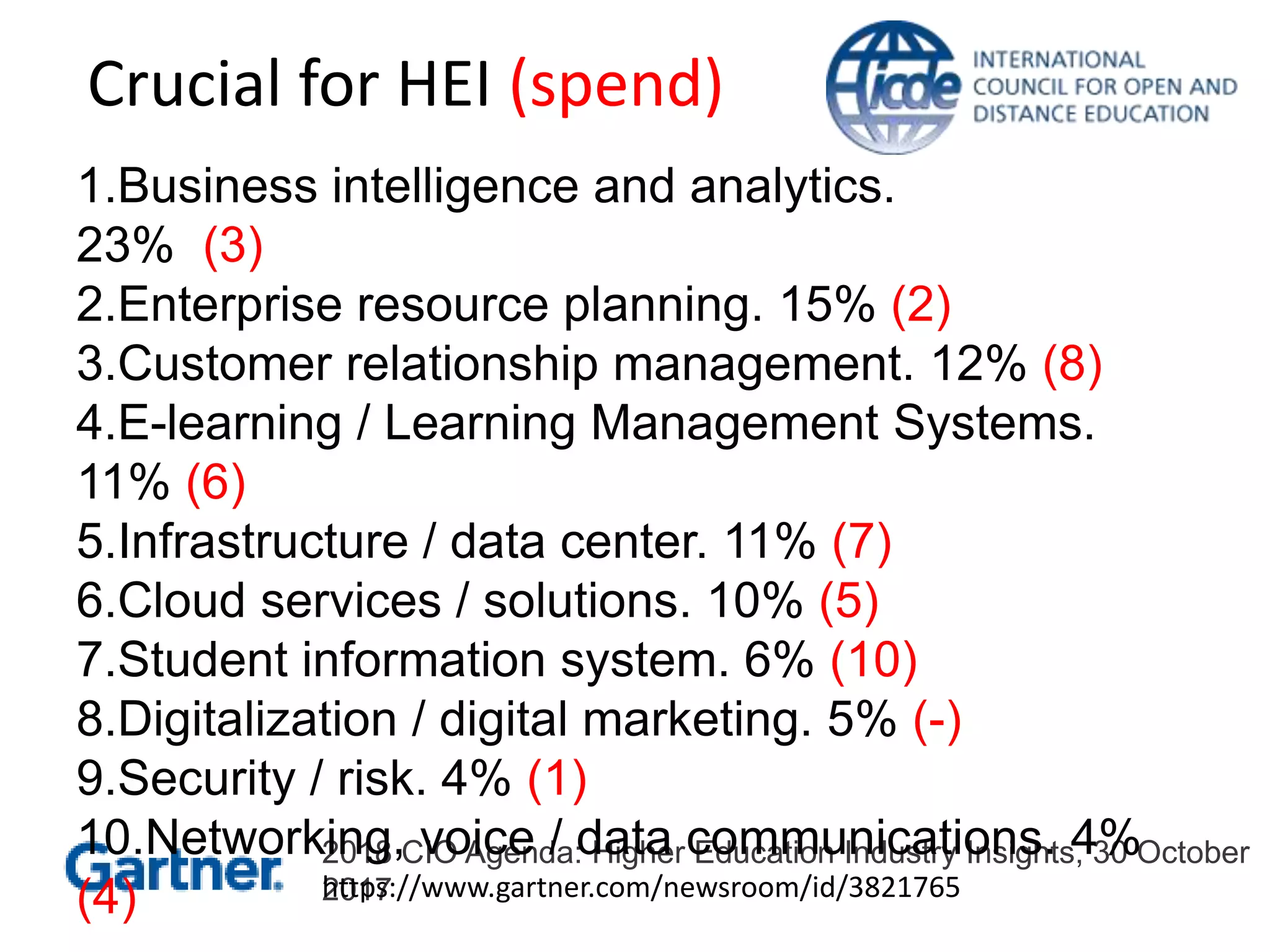
Crucial for HEI (spend)
2018 CIO Agenda: Higher Education Industry Insights, 30 October
2017
1.Business intelligence and analytics.
23% (3)
2.Enterprise resource planning. 15% (2)
3.Customer relationship management. 12% (8)
4.E-learning / Learning Management Systems.
11% (6)
5.Infrastructure / data center. 11% (7)
6.Cloud services / solutions. 10% (5)
7.Student information system. 6% (10)
8.Digitalization / digital marketing. 5% (-)
9.Security / risk. 4% (1)
10.Networking, voice / data communications. 4%
(4) https://www.gartner.com/newsroom/id/3821765
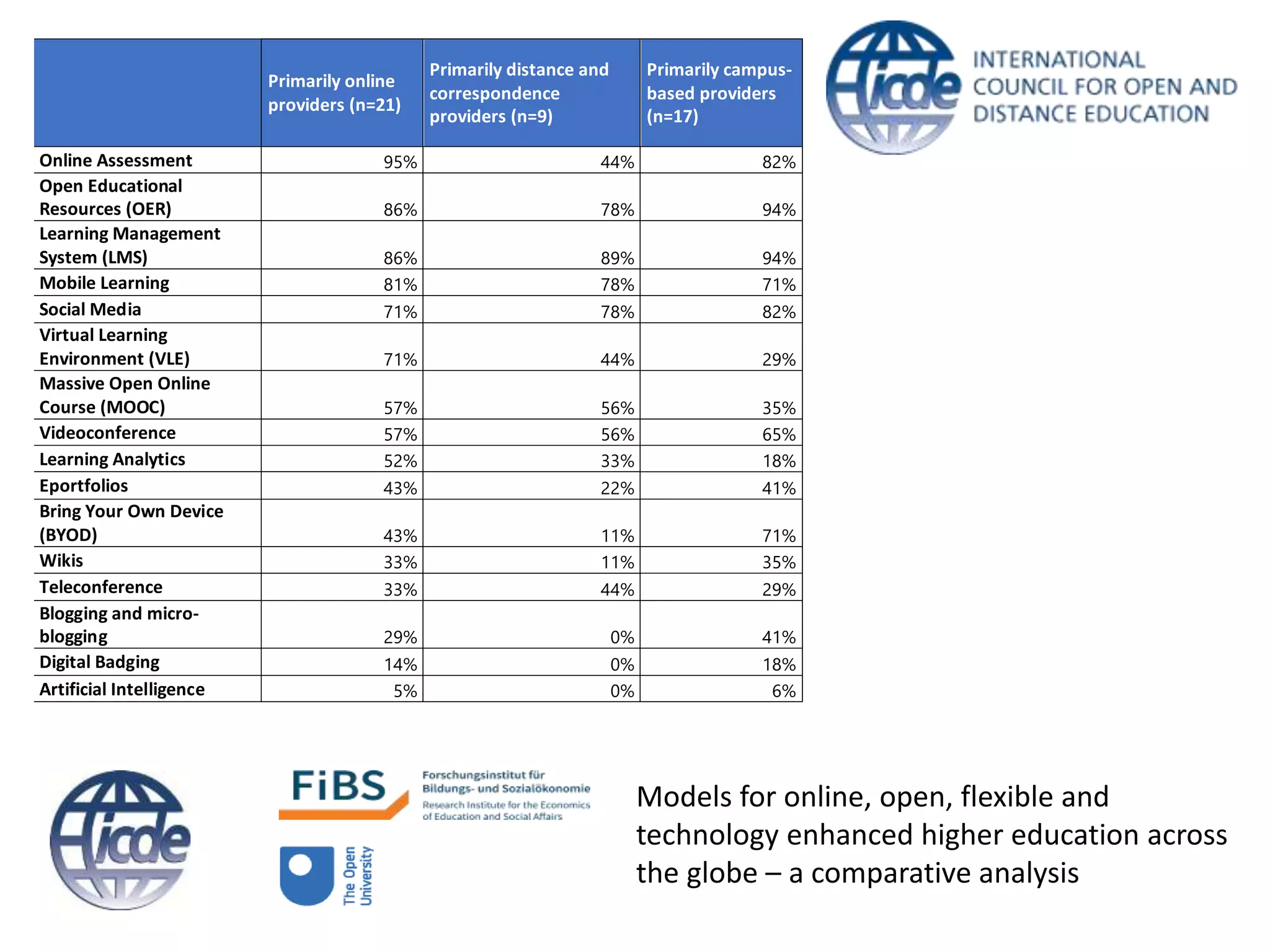
Models for online, open, flexible and
technology enhanced higher education across
the globe – a comparative analysis
Primarily online
providers (n=21)
Primarily distance and
correspondence
providers (n=9)
Primarily campus-
based providers
(n=17)
Online Assessment 95% 44% 82%
Open Educational
Resources (OER) 86% 78% 94%
Learning Management
System (LMS) 86% 89% 94%
Mobile Learning 81% 78% 71%
Social Media 71% 78% 82%
Virtual Learning
Environment (VLE) 71% 44% 29%
Massive Open Online
Course (MOOC) 57% 56% 35%
Videoconference 57% 56% 65%
Learning Analytics 52% 33% 18%
Eportfolios 43% 22% 41%
Bring Your Own Device
(BYOD) 43% 11% 71%
Wikis 33% 11% 35%
Teleconference 33% 44% 29%
Blogging and micro-
blogging 29% 0% 41%
Digital Badging 14% 0% 18%
Artificial Intelligence 5% 0% 6%
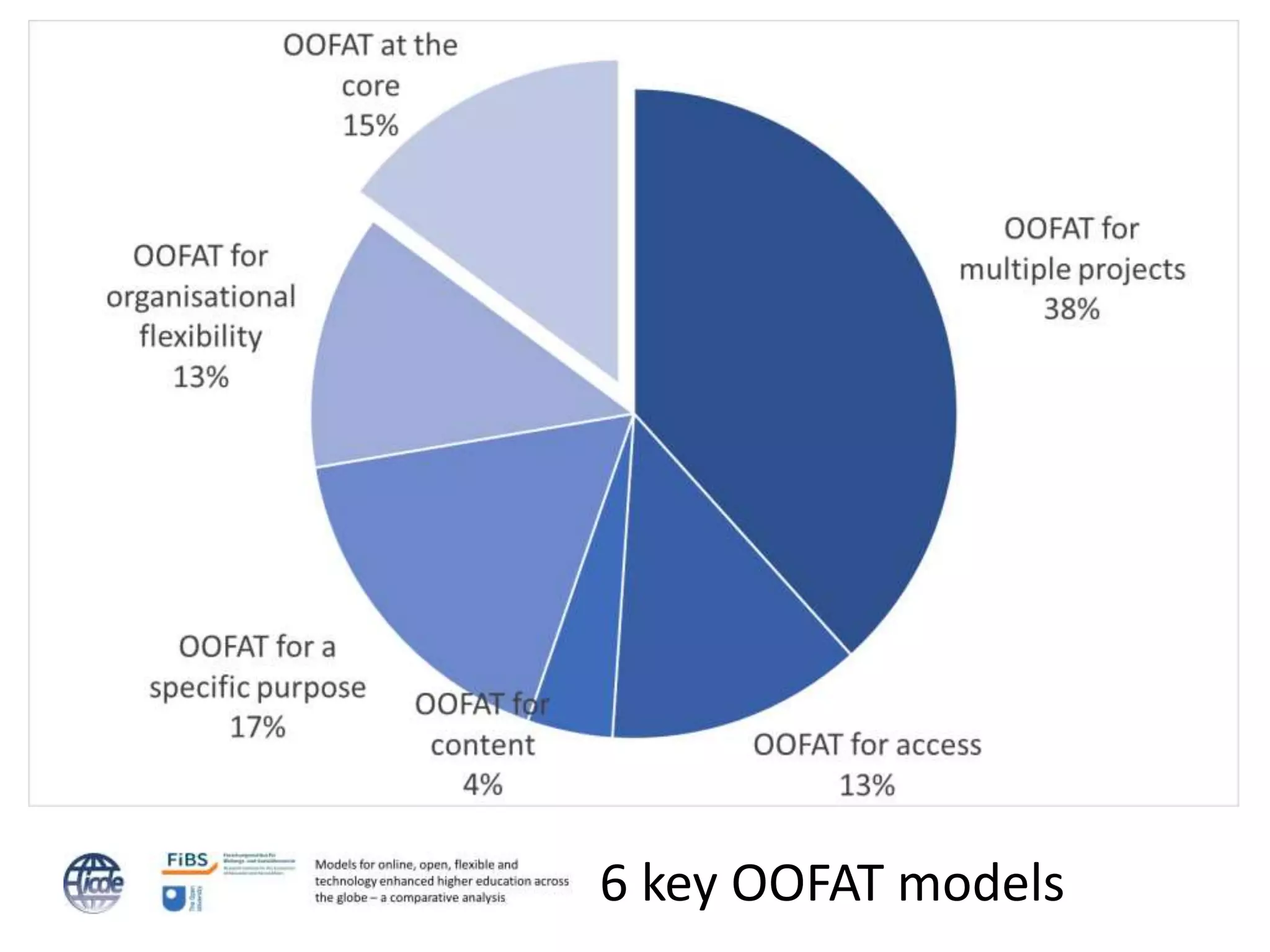
6 key OOFAT models
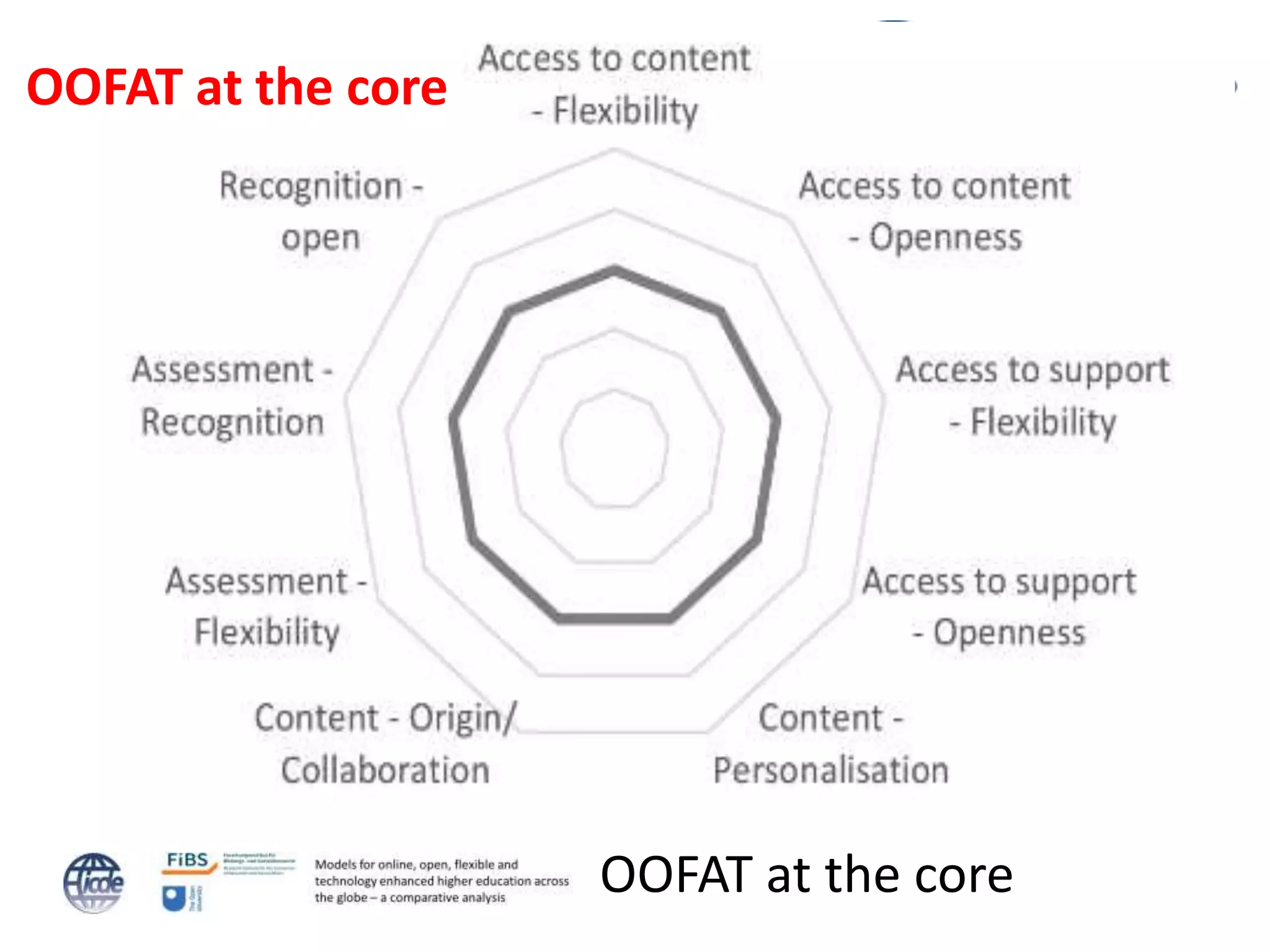
OOFAT at the core
OOFAT at the core
Transformation of Education in the Era of Openness and Flexibility

Transformation of Education in the Era of Openness and Flexibility

  • 1.
    Transformation of Educationin the Era of Openness and Flexibility 9-10 November 2017, Kaunas, Lithuania Gard Titlestad, Secretary General International Council for Open and Distance Education Member of the Governing Board
  • 2.
  • 3.
    Open, Transparent, Accountable andfocus on Good Governance Support From Norway 29 years UNESCO Partner >50 years SINCE 1938 To be the global facilitator for inclusive, flexible, quality learning and teaching in the digital age. ICDE
  • 4.
    Transformation of Educationin the Era of Openness and Flexibility WHY Transform Education? Learners and societal needs The big shift The global risks and SDGs
  • 6.
    Informal/non-formal RAPID AND DIVERSEEXPANSION OF HIGHER EDUCATION ENROLMENT 100 mill 200 mill 2000 2015 2030 435 mill Only possible facilitated by technology and flexible learning
  • 7.
    The vision isthat for the first time in human history it is possible to achieve inclusive and equitable quality education and lifelong learning for all. (Sustainable Development Goal 4)
  • 8.
    Enabled by Openand Digitalisation Creative Commons
  • 9.
  • 10.
    “Financing is oneof the greatest challenges faced by the low income and middle income countries in achieving SDG 4 by 2030,” said H.E. Mr Nurul Islam Nahid, Minister of Education of Bangladesh
  • 11.
    «Google, Facebook, Amazon andApple rob nations» «Paradise Papers», 8 November 2017
  • 12.
  • 13.
    The Fourth Industrial Revolution Addnow: Artificial intelligence, cognitive technologies and robotics Neurotechnologies Ubiquitous presence of linked sensors New computing technologies Virtual and augmented realities
  • 14.
    As the MOOCsMassiv Onlineand Open Courses floodedhigher education 5 years ago Now it is AI Artificial Intelligence
  • 15.
  • 16.
  • 17.
    2017 Why Education Is theHardest Sector of the Economy to 10 Roles For Artificial Intelligence In Education IBM Watson Artificial intelligence will transform universities. Here’s how WEF Newsweek The Entire Internet Only Matched the Capacity of the Human Brain in 2010 AI keynotes
  • 20.
    Build awareness and insight Establishrelevant courses and educational offerings to build competencies Take part in the debate on the future directions and ethics
  • 21.
  • 23.
    Play Retire Learn Job Play Learn Job Thenew pradigm of lifelong learning
  • 25.
    Digitalisation and technological development Demographicdevelopment Changing working life as consequence of globalisation Why high on agenda?
  • 27.
    Kravene til nyutdannede i”gamle” jobber synker
  • 29.
  • 30.
    The paper concludesthat the globally converging discourse of LLL tends to serve the interests of the market ahead of those of the community, and argues that an alternative characterization of LLL, anchored in social justice, is necessary in the light of the 2030 Agenda for Sustainable Development, and especially Sustainable Development Goal 4, which aims to ensure inclusive and equitable quality education and to promote lifelong learning opportunities for all.
  • 31.
    ICDE Lillehammer Lifelong LearningSummit, February 11. – 13. 2019
  • 32.
    Transformation of Educationin the Era of Openness and Flexibility Transform through? Through online, open, flexible and technology enhanced
  • 33.
    The Chronicle ofhigher education July 2017
  • 34.
    Innovate and transformthe learning process
  • 35.
  • 36.
    Webinar Get known Theory video Self paced Learningblog Webinar Towards final assessment Crowdsourcing Gather resources Group task Case Learning objectives Learning outcome Test Peer assessment Comments on the blog Repete Q & A Co-writing Immediate feedback Oral presentation Written feedback Learning process Feedback - assessment From: Quality in Online teaching – Flexible education Norway 2017
  • 37.
    ICT infrastructure –high capacity networks Education providers basicinfrastructure, LMS, SIS Institution wide applications e-assessment, learning analytics Applications for interactions, creativity, collaboration and motivation Student support Teacher support Content and devices Facilitating innovative pedagogy
  • 38.
    Student support Teacher support Facilitating innovative pedagogy Time tomarket http://www.nmc.org/publication/nmc-horizon-report-2017-higher-education-edition/
  • 39.
  • 40.
    Survey • 1. OERuptake is increasing rapidly towards tipping point • 2. OER uptake is steadily increasing • 3. OER uptake is stable • 4. OER is a flop • 5. I do not know really what OER is
  • 41.
  • 42.
    1.3 Contribute to successful developmentand utilisation of Open: • Open Education Resources • Open Licensing • Open Access • Open Learning and Education • Open Knowledge • Open Source • Open Innovation • Open Policy ICDE and open
  • 43.
    Educational Resources Open,Licensed Resources + 5 R
  • 44.
  • 45.
    Ljubljana OER ActionPlan 2017 adopted to support quality open educational resources
  • 46.
    ICDE main responses Projectin the pipeline: Connecting Quality OER Repositories ICDE OER Advocacy Committee ICDE Chairs in OER
  • 47.
    To Come in2019 UNESCO Recommendation for Future International Collaboration in the field of Open Educational Resources (OER) UNESCO General Conference Decision 8 November 2017:
  • 48.
    Transformation of Educationin the Era of Openness and Flexibility Transform for the future?
  • 49.
  • 50.
    • On 25September 2015, the United Nations General Assembly formally adopted the universal, integrated and transformative 2030 Agenda for Sustainable Development, along with a set of 17 Sustainable Development Goals and 169 associated targets.
  • 53.
    Main principles • Educationis a fundamental human right and an enabling right. • Education is a public good, of which the state is the duty bearer. • Gender equality is inextricably linked to the right to education for all.
  • 55.
    Target 3, point43.: A well-established, properly- regulated tertiary education system supported by technology, Open Educational Resources (OERs) and distance education modalities can increase access, equity, quality and relevance, and narrow the gap between what is taught at tertiary education institutions and what economies and societies demand. The provision of tertiary education should be progressively free, in line with existing international agreements.
  • 56.
  • 57.
    Prof. Dae JoonHwang, Sungkyunkwan University, Seoul, Korea, djwang@skku.edu UNESCO IITE Governing Board Member, Moscow The 2017 Dujiangyan International Forum: Ensuring the Quality of Education and Lifelong Learning through ICT, 13-14 July2017, Chengdu, China Technology Transformation for Pedagogy Innovation What is our ultimate goal?
  • 58.
    Transform for: • Affordableaccess to job relevant, quality higher education. • SDG 4: “Ensure inclusive and quality education for all and promote lifelong learning.” • Transform education for all 17 SDGs
  • 59.
    ”TOWARDS INCLUSIVE ANDEQUITABLE QUALITY EDUCATION AND LIFELONG LEARNING FOR ALL” Sustainable Development Goal 4: Education 2030 THANK YOU! titlestad@icde.org www.icde.org
  • 60.
    UDACITY: The MOOCs aredead It was Udacity vice president Clarissa Shen who this week said “they are dead,” when talking about MOOCs in an interview with The Economic Times in India. “MOOCs are a failed product, at least for the goals we had set for ourselves,” she told the newspaper. “Our mission is to bring relevant education which advances people in careers and socio-economic activities, and MOOCs aren't the way.”
  • 61.
    Crucial for HEI(spend) 2018 CIO Agenda: Higher Education Industry Insights, 30 October 2017 1.Business intelligence and analytics. 23% (3) 2.Enterprise resource planning. 15% (2) 3.Customer relationship management. 12% (8) 4.E-learning / Learning Management Systems. 11% (6) 5.Infrastructure / data center. 11% (7) 6.Cloud services / solutions. 10% (5) 7.Student information system. 6% (10) 8.Digitalization / digital marketing. 5% (-) 9.Security / risk. 4% (1) 10.Networking, voice / data communications. 4% (4) https://www.gartner.com/newsroom/id/3821765
  • 62.
    Models for online,open, flexible and technology enhanced higher education across the globe – a comparative analysis Primarily online providers (n=21) Primarily distance and correspondence providers (n=9) Primarily campus- based providers (n=17) Online Assessment 95% 44% 82% Open Educational Resources (OER) 86% 78% 94% Learning Management System (LMS) 86% 89% 94% Mobile Learning 81% 78% 71% Social Media 71% 78% 82% Virtual Learning Environment (VLE) 71% 44% 29% Massive Open Online Course (MOOC) 57% 56% 35% Videoconference 57% 56% 65% Learning Analytics 52% 33% 18% Eportfolios 43% 22% 41% Bring Your Own Device (BYOD) 43% 11% 71% Wikis 33% 11% 35% Teleconference 33% 44% 29% Blogging and micro- blogging 29% 0% 41% Digital Badging 14% 0% 18% Artificial Intelligence 5% 0% 6%
  • 63.
  • 64.
    OOFAT at thecore OOFAT at the core

Editor's Notes

  • #7 • What before was in the margins, open and distance learning, is now going mainstream in large parts of the world, materialised as online, blended, open, flexible, technology enhanced and e-Learning. Convergence is here, followed by increasing competition (and collaboration) and diversity in higher education. While this is the main trend, the situation in some regions will provide a different picture, e.g. in parts of the south.