Dr. K. P. Malathi Shiri,
M.Com, M.Phil, MBA,MHRM, Ph.D
Principal-Collegiate Education
Aachi Educational & Research Foundation
• Human behaviour is affected by perception,
learning, personality and motivation
• Individual behaviour affects and is affected by
others’ behaviour
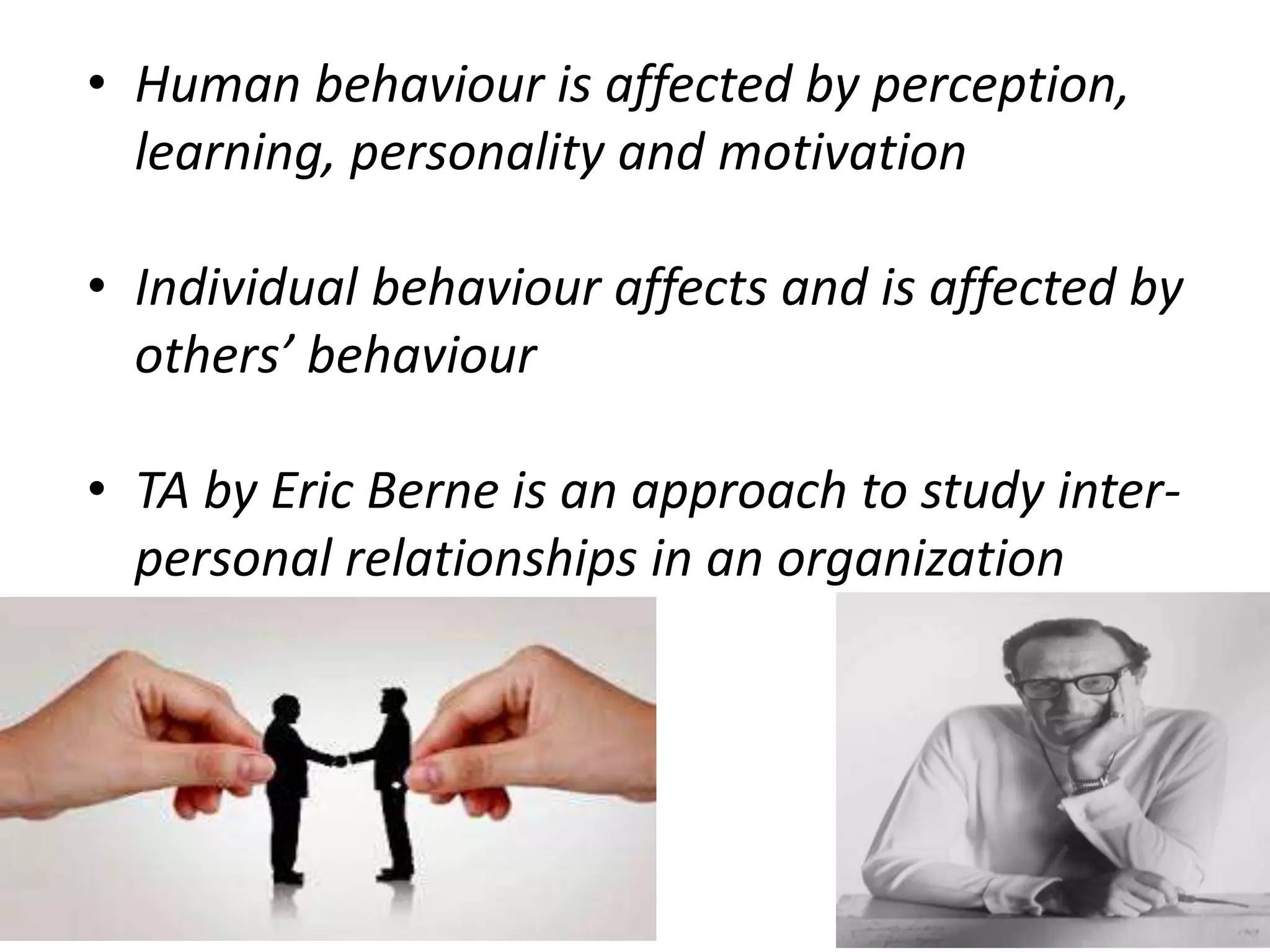
• TA by Eric Berne is an approach to study inter-
personal relationships in an organization
• Helps to understand own and other’s
behaviour in interpersonal relationship
• Gives clarity on self and others in a
relationship
Aspects of TA
• Analysis of self- awareness
• Analysis of ego states
• Analysis of transactions
• Script Analysis
• Games Analysis
• Analysis of life positions
• Stroking
Johari’s Window
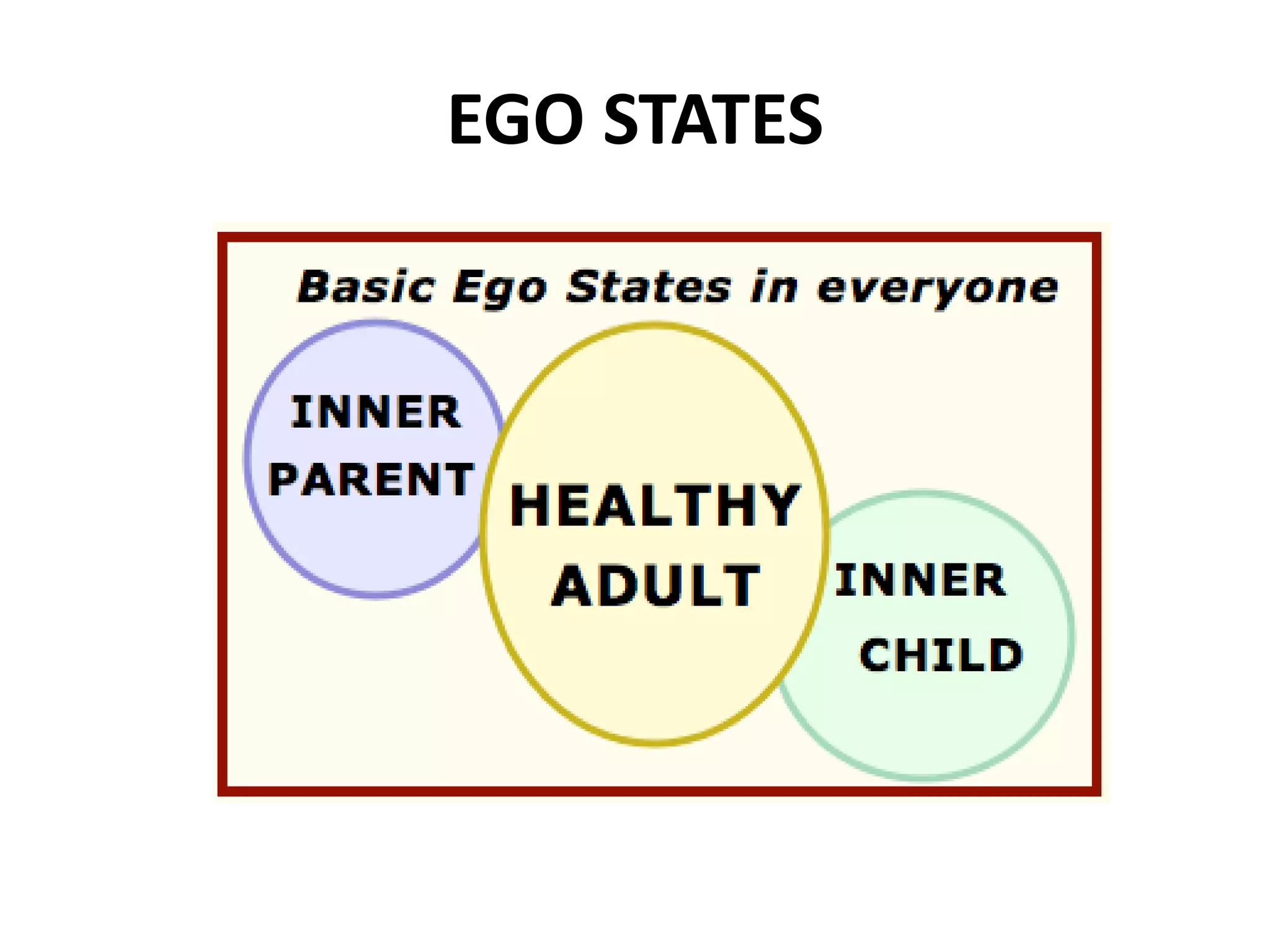
EGO STATES
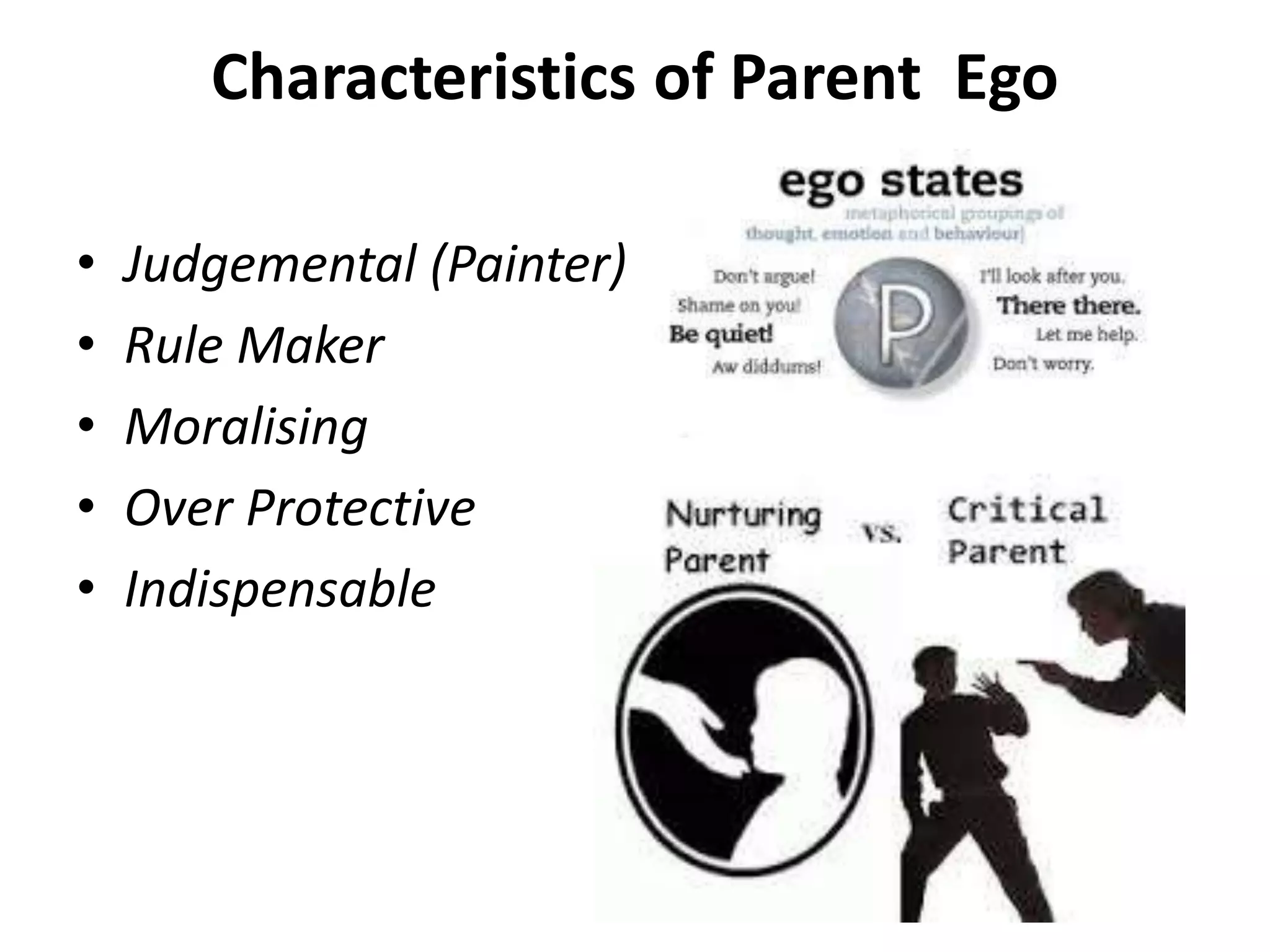
Characteristics of Parent Ego
• Judgemental (Painter)
• Rule Maker
• Moralising
• Over Protective
• Indispensable
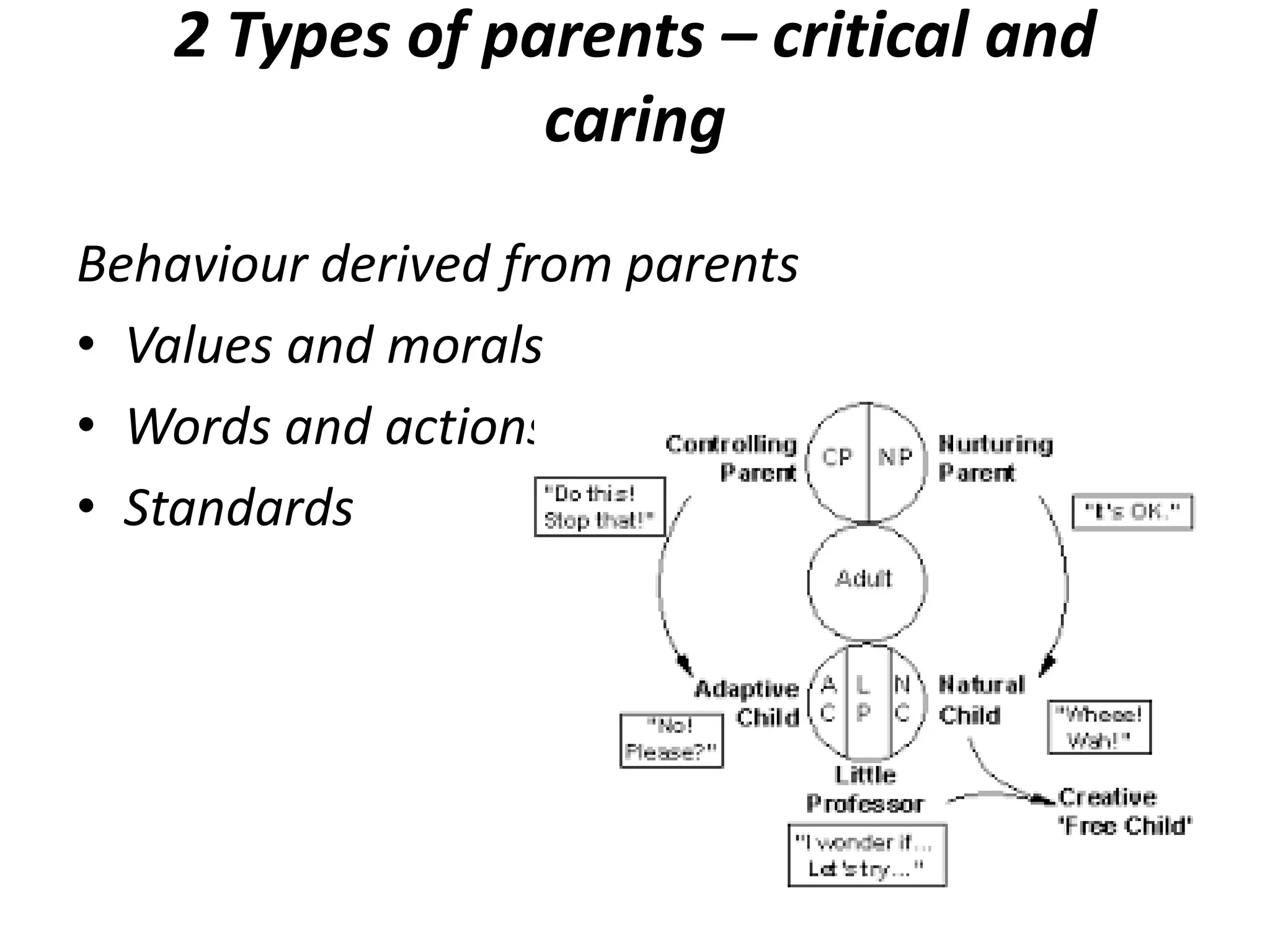
2 Types of parents – critical and
caring
Behaviour derived from parents
• Values and morals
• Words and actions
• Standards
Adult Ego State- characteristics
• Based on reality-Fact finding and problem
solving
• Reliving life’s experiences and updating
attitudes
• Logical decision making backed by
information, reasoning, analysing, skilling and
then choosing from alternatives
Child Ego State – characteristics
• Immature behaviour
• Creativity
• Depression
• Anxiety
• Dependence
• Fear
• Joy
• Attention seeking
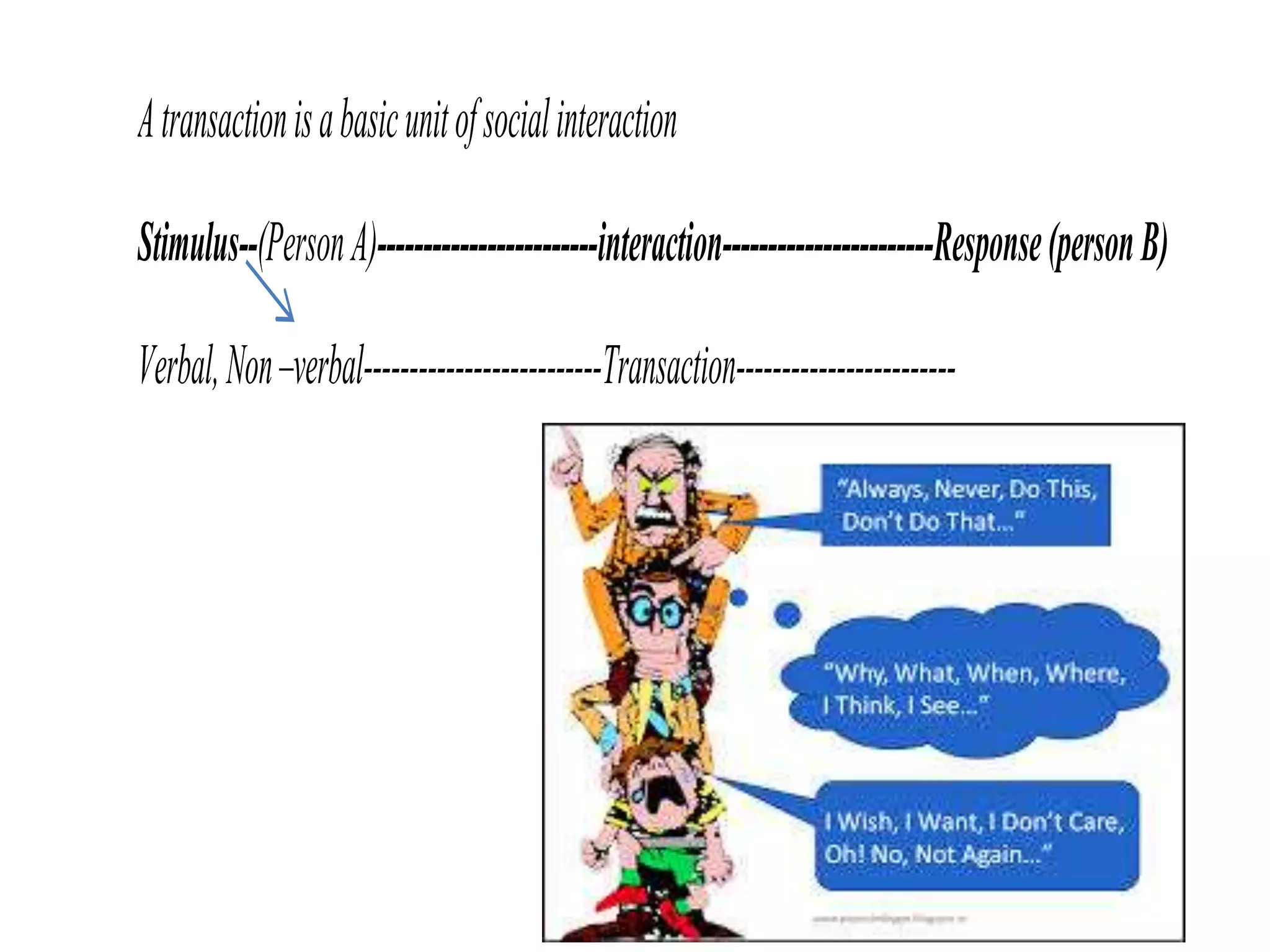
Atransactionisabasicunitofsocialinteraction
Stimulus--(PersonA)------------------------interaction-----------------------Response(personB)
Verbal,Non–verbal--------------------------Transaction------------------------
• TA – helps to determine which ego state
influences our behaviour heavily and the
behaviour of others
• Ego States determine the 3 types of
transaction – complementary
transaction, crossed transaction and
ulterior transaction
Complementary Transaction
Both people operate from the same ego state-
between parent, adult and child
• 9 different transactions like
 parent- parent
adult –adult
child –child
parent –child etc.
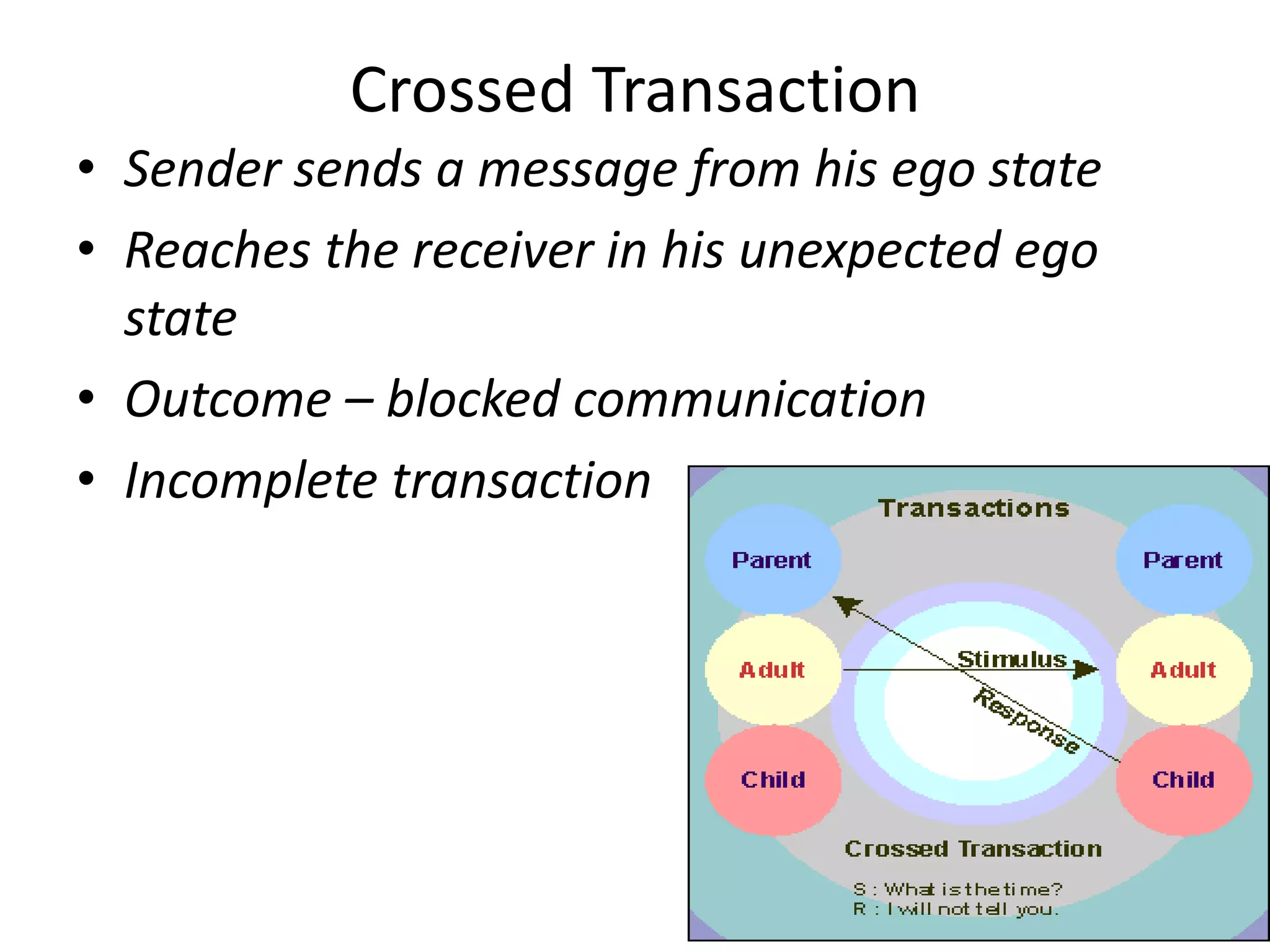
Crossed Transaction
• Sender sends a message from his ego state
• Reaches the receiver in his unexpected ego
state
• Outcome – blocked communication
• Incomplete transaction
Ulterior Transaction
• 2 ego states with the same person but one
disguises the other
Script Analysis-Complete plan of living
Winner
Loser
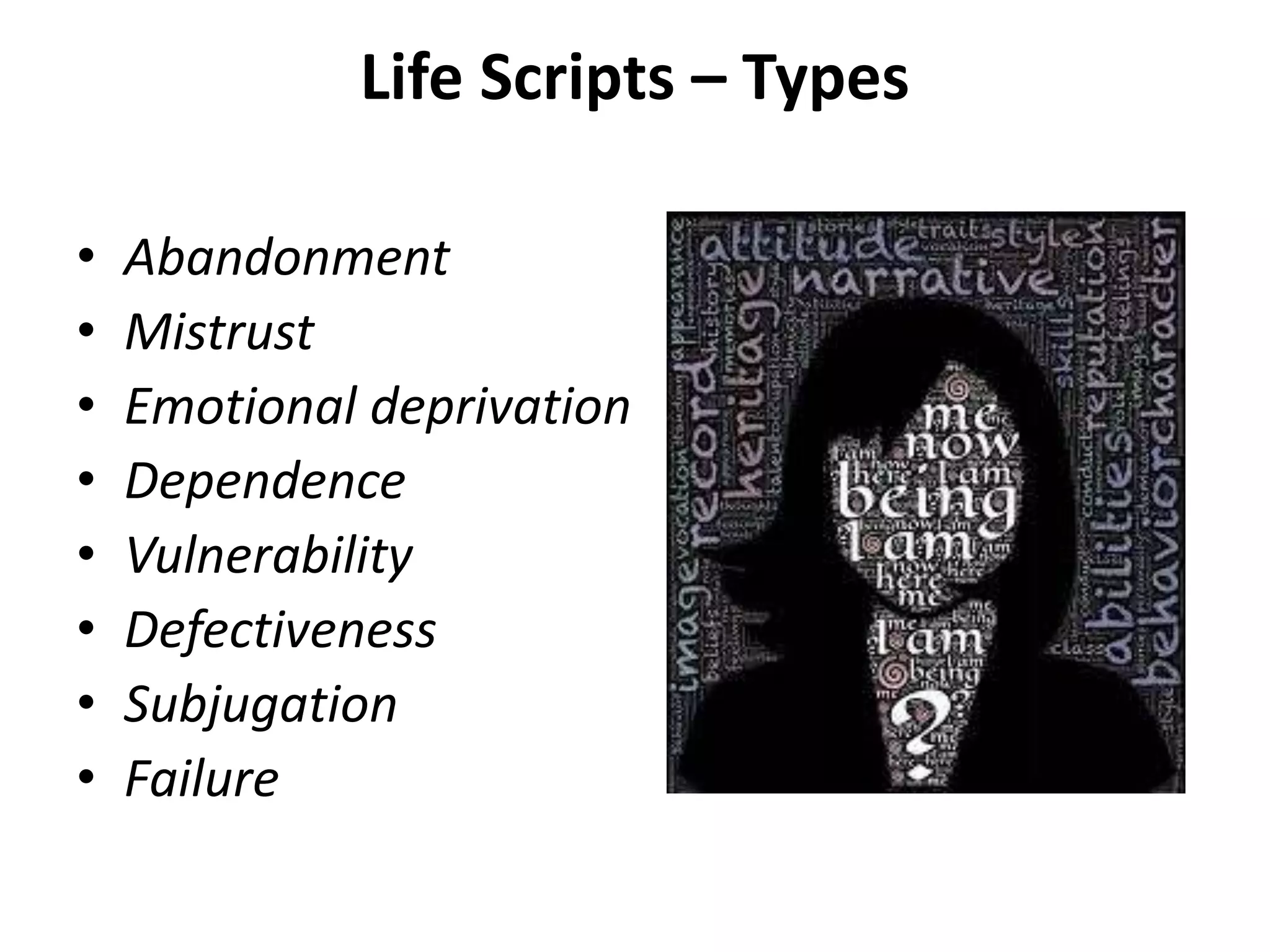
Life Scripts – Types
• Abandonment
• Mistrust
• Emotional deprivation
• Dependence
• Vulnerability
• Defectiveness
• Subjugation
• Failure
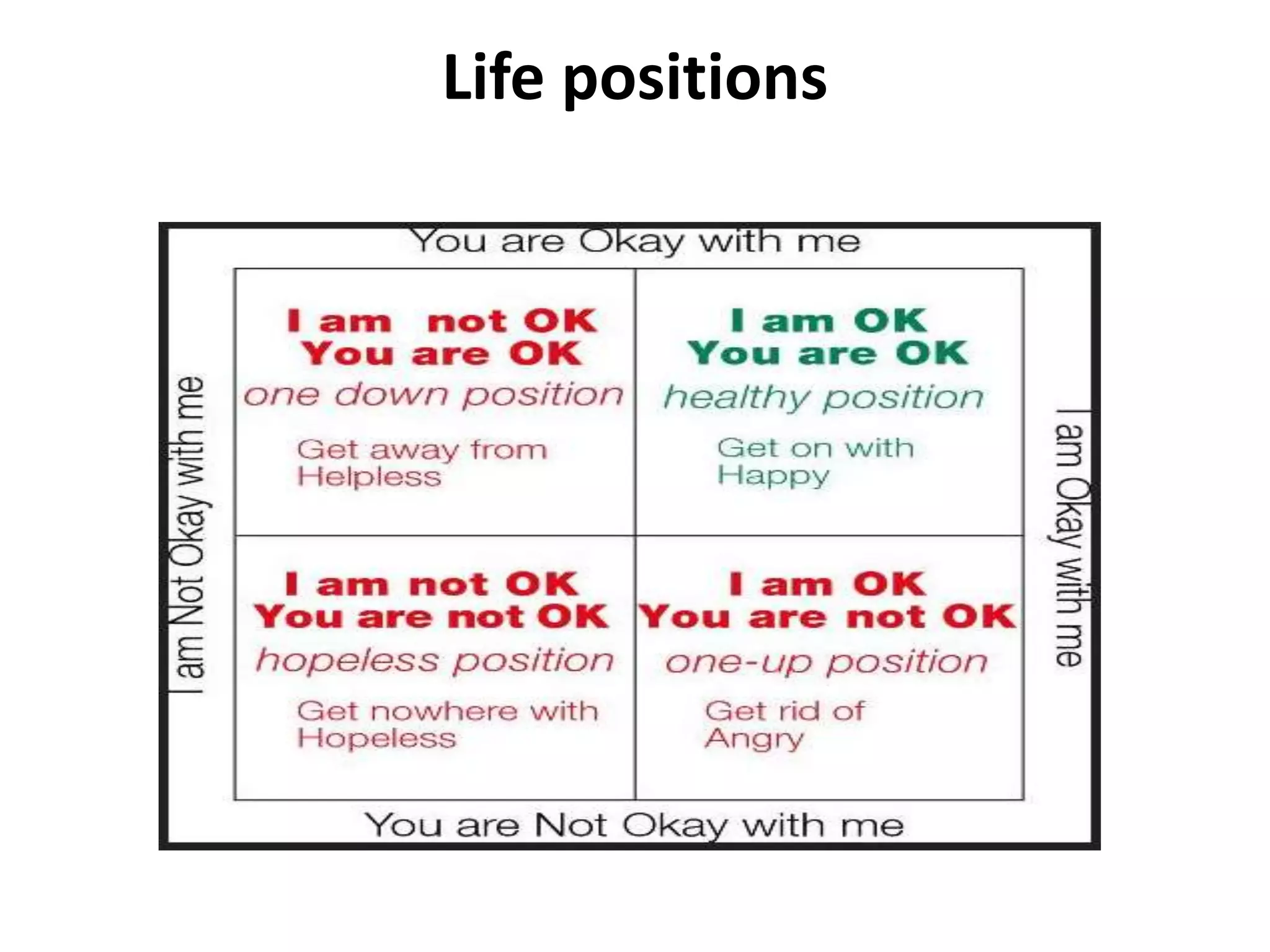
Life positions
Stroking
• Giving some kind of recognition to others
Types of Strokes
• Positive Strokes – recognition, approval
• Negative Strokes – hurting physically or
psychologically
• Mixed Strokes – sounds positive first but
hides a negative shade(Dress and colour;
mobile cost and model)
I love you
I hate you
You are a good person
You are a bad person
You are OK when you are
happy and pleasant
You are not OK when you
are angry and mean
You cooperate well and do
your chores well
You create trouble and
mess up your chores
You do OK when you take
the garbage out
You don’t do OK when you
don’t take the garbage out
Unconditional Conditional
Strokesfor
being
Strokes
for
doing
Game Analysis
Playing psychological
games when one does
not get enough strokes in
workplace
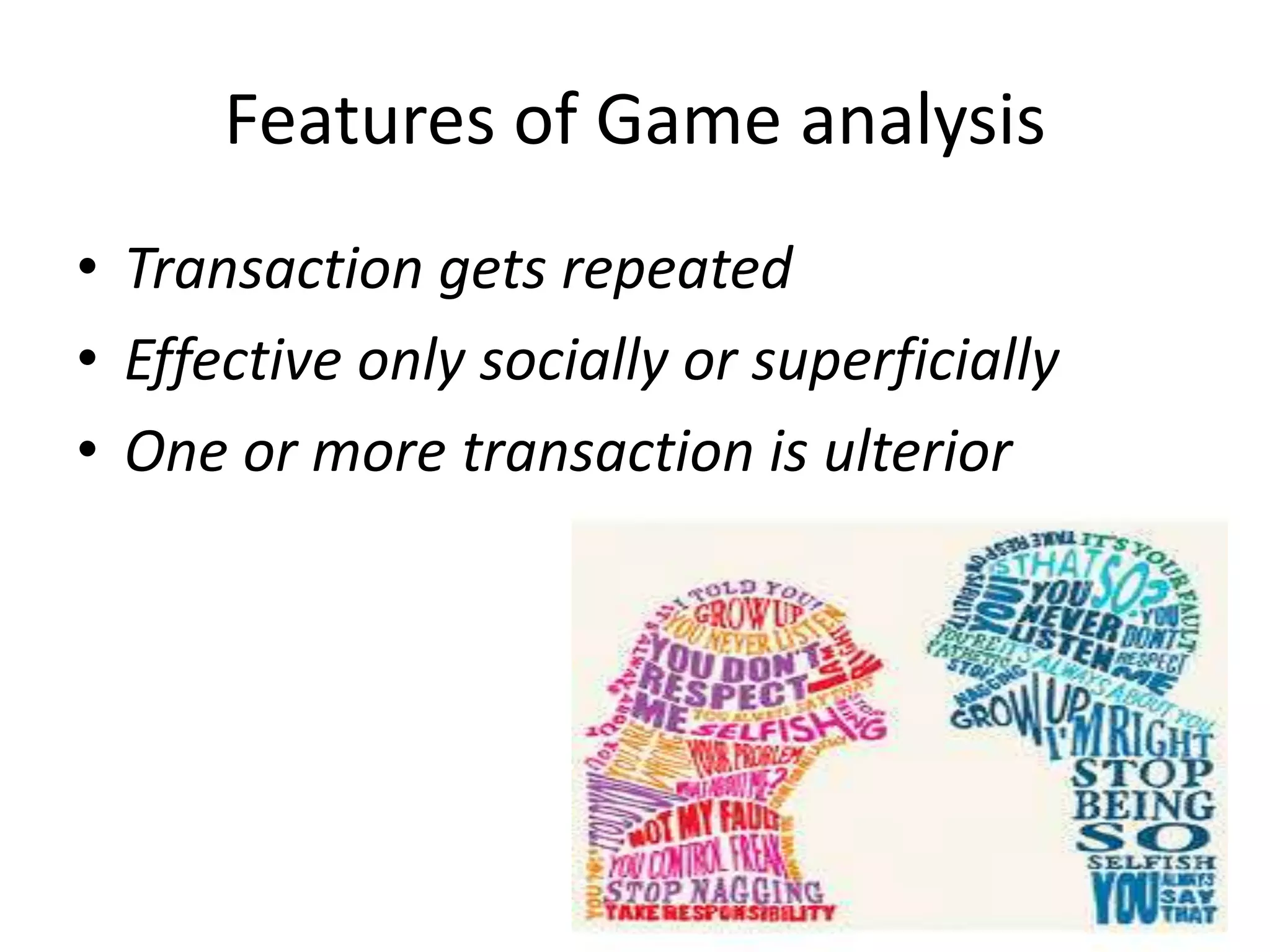
Features of Game analysis
• Transaction gets repeated
• Effective only socially or superficially
• One or more transaction is ulterior
• Games people play
• Greeting
• Camouflage –indirect hints
• Meeting
• Wooden leg- using excuses for gaining
sympathy (no patience because I am short
tempered)
Types of games
• Socially acceptable -1st degree
• Intimacy is high but has a bad end up – 2nd
degree
• Physical injury -3rd degree
Theories governing Behaviour
• Game theory – I am made that way
• Make me feel Theory – You make me feel
• You owe me theory – If only you change
• Subconscious theory – suddenly you got hold
of me and I could do nothing
• The fate theory – It was willed by HIM
Benefits of TA
• Better interpersonal communication
• Understanding ego states
• Better motivation
• Overall organizational Development
Transactional Analysis

Transactional Analysis

  • 1.
    Dr. K. P.Malathi Shiri, M.Com, M.Phil, MBA,MHRM, Ph.D Principal-Collegiate Education Aachi Educational & Research Foundation
  • 3.
    • Human behaviouris affected by perception, learning, personality and motivation • Individual behaviour affects and is affected by others’ behaviour • TA by Eric Berne is an approach to study inter- personal relationships in an organization
  • 4.
    • Helps tounderstand own and other’s behaviour in interpersonal relationship • Gives clarity on self and others in a relationship
  • 6.
    Aspects of TA •Analysis of self- awareness • Analysis of ego states • Analysis of transactions • Script Analysis • Games Analysis • Analysis of life positions • Stroking
  • 7.
  • 8.
  • 10.
    Characteristics of ParentEgo • Judgemental (Painter) • Rule Maker • Moralising • Over Protective • Indispensable
  • 11.
    2 Types ofparents – critical and caring Behaviour derived from parents • Values and morals • Words and actions • Standards
  • 12.
    Adult Ego State-characteristics • Based on reality-Fact finding and problem solving • Reliving life’s experiences and updating attitudes • Logical decision making backed by information, reasoning, analysing, skilling and then choosing from alternatives
  • 13.
    Child Ego State– characteristics • Immature behaviour • Creativity • Depression • Anxiety • Dependence • Fear • Joy • Attention seeking
  • 14.
  • 15.
    • TA –helps to determine which ego state influences our behaviour heavily and the behaviour of others • Ego States determine the 3 types of transaction – complementary transaction, crossed transaction and ulterior transaction
  • 16.
    Complementary Transaction Both peopleoperate from the same ego state- between parent, adult and child • 9 different transactions like  parent- parent adult –adult child –child parent –child etc.
  • 17.
    Crossed Transaction • Sendersends a message from his ego state • Reaches the receiver in his unexpected ego state • Outcome – blocked communication • Incomplete transaction
  • 18.
    Ulterior Transaction • 2ego states with the same person but one disguises the other
  • 19.
    Script Analysis-Complete planof living Winner Loser
  • 20.
    Life Scripts –Types • Abandonment • Mistrust • Emotional deprivation • Dependence • Vulnerability • Defectiveness • Subjugation • Failure
  • 21.
  • 22.
    Stroking • Giving somekind of recognition to others
  • 23.
    Types of Strokes •Positive Strokes – recognition, approval • Negative Strokes – hurting physically or psychologically • Mixed Strokes – sounds positive first but hides a negative shade(Dress and colour; mobile cost and model)
  • 24.
    I love you Ihate you You are a good person You are a bad person You are OK when you are happy and pleasant You are not OK when you are angry and mean You cooperate well and do your chores well You create trouble and mess up your chores You do OK when you take the garbage out You don’t do OK when you don’t take the garbage out Unconditional Conditional Strokesfor being Strokes for doing
  • 25.
    Game Analysis Playing psychological gameswhen one does not get enough strokes in workplace
  • 26.
    Features of Gameanalysis • Transaction gets repeated • Effective only socially or superficially • One or more transaction is ulterior
  • 27.
    • Games peopleplay • Greeting • Camouflage –indirect hints • Meeting • Wooden leg- using excuses for gaining sympathy (no patience because I am short tempered)
  • 28.
    Types of games •Socially acceptable -1st degree • Intimacy is high but has a bad end up – 2nd degree • Physical injury -3rd degree
  • 29.
    Theories governing Behaviour •Game theory – I am made that way • Make me feel Theory – You make me feel • You owe me theory – If only you change • Subconscious theory – suddenly you got hold of me and I could do nothing • The fate theory – It was willed by HIM
  • 30.
    Benefits of TA •Better interpersonal communication • Understanding ego states • Better motivation • Overall organizational Development