Training Evaluation Models
Various Evaluation Models
1. Kirkpatrick's Model
2. Jack J Phillips Training Model
3. CIPP Model
4. COMA Model
Kirkpatrick Model
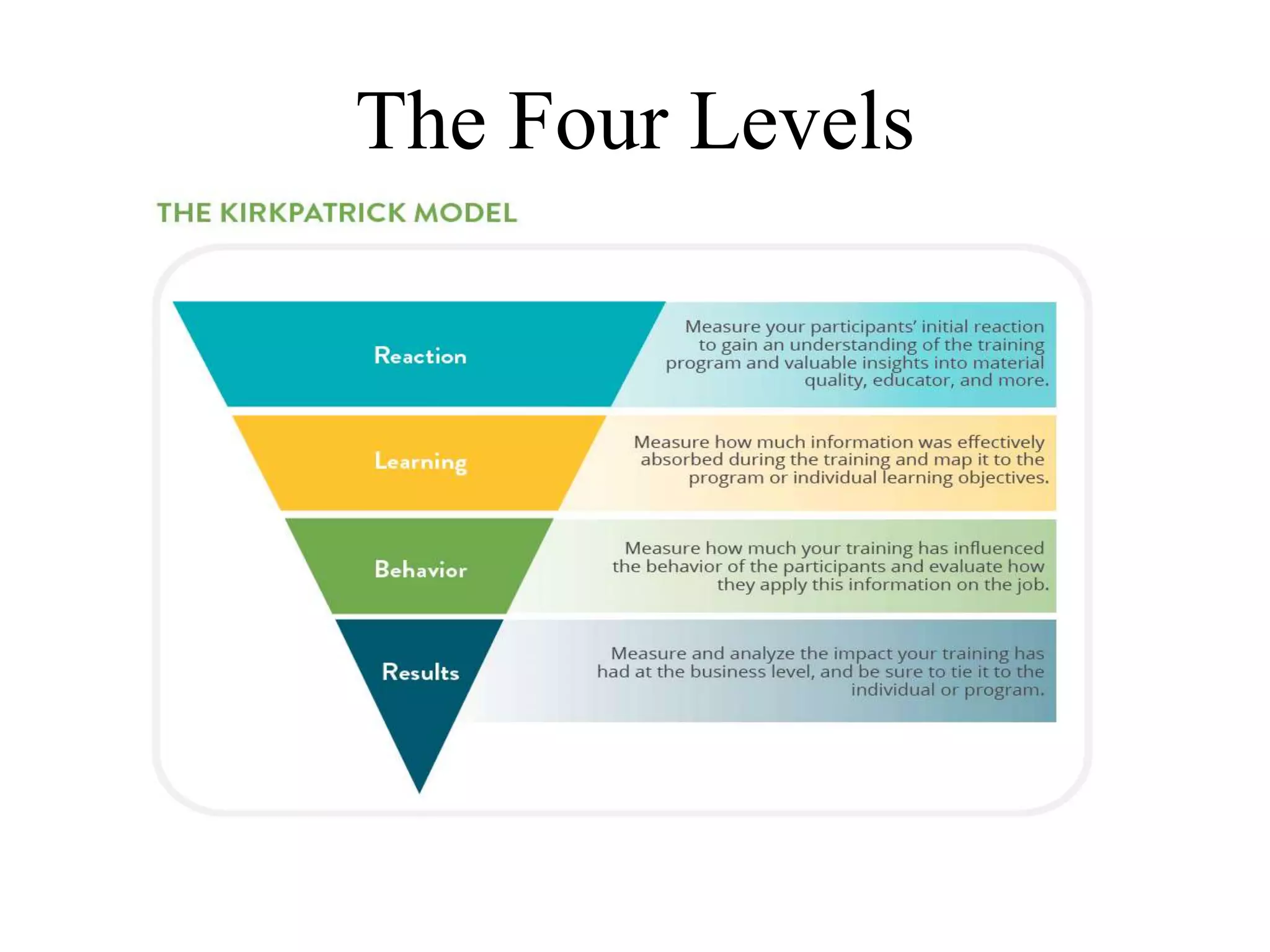
• The Four Levels of Evaluation, also referred to as the Kirkpatrick
Evaluation Model, was created by Donald Kirkpatrick, Ph.D. to define
the four levels of training evaluation. The four levels of evaluation are:
• Level 1: Reaction measures how participants react to the training (e.g.,
satisfaction).
• Level 2: Learning analyzes if they truly understood the training (e.g.,
increase in knowledge, skills or experience).
• Level 3 :Behavior looks at if they are utilizing what they learned at
work (e.g., change in behaviors).
• Level 4 :Results determines if the material had a positive impact on the
business / organization.
The Four Levels
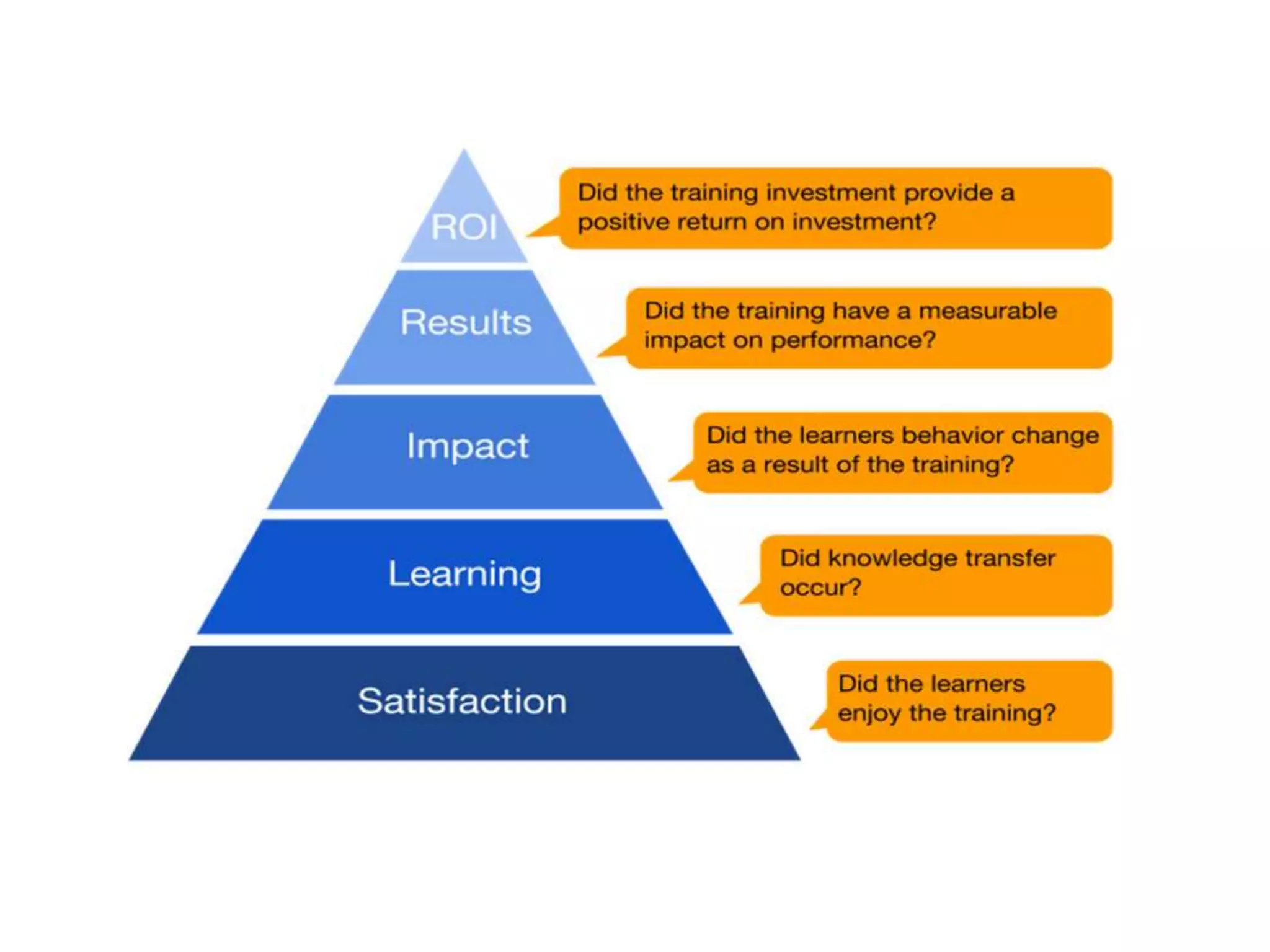
Phillips ROI Model
• One of the most frequently quoted aspects of Phillips' model is the addition
of a fifth level of evaluation to Kirkpatrick's Learning Evaluation Model
which is return on investment (ROI).
• Phillip’s model states that after determining a learning program’s business
impact at Kirkpatrick’s Level 4, we can translate that impact into monetary
terms and compare it to the total cost of the program to calculate ROI.
These costs include program development and delivery, plus the labor cost
of time for learners to complete the training.
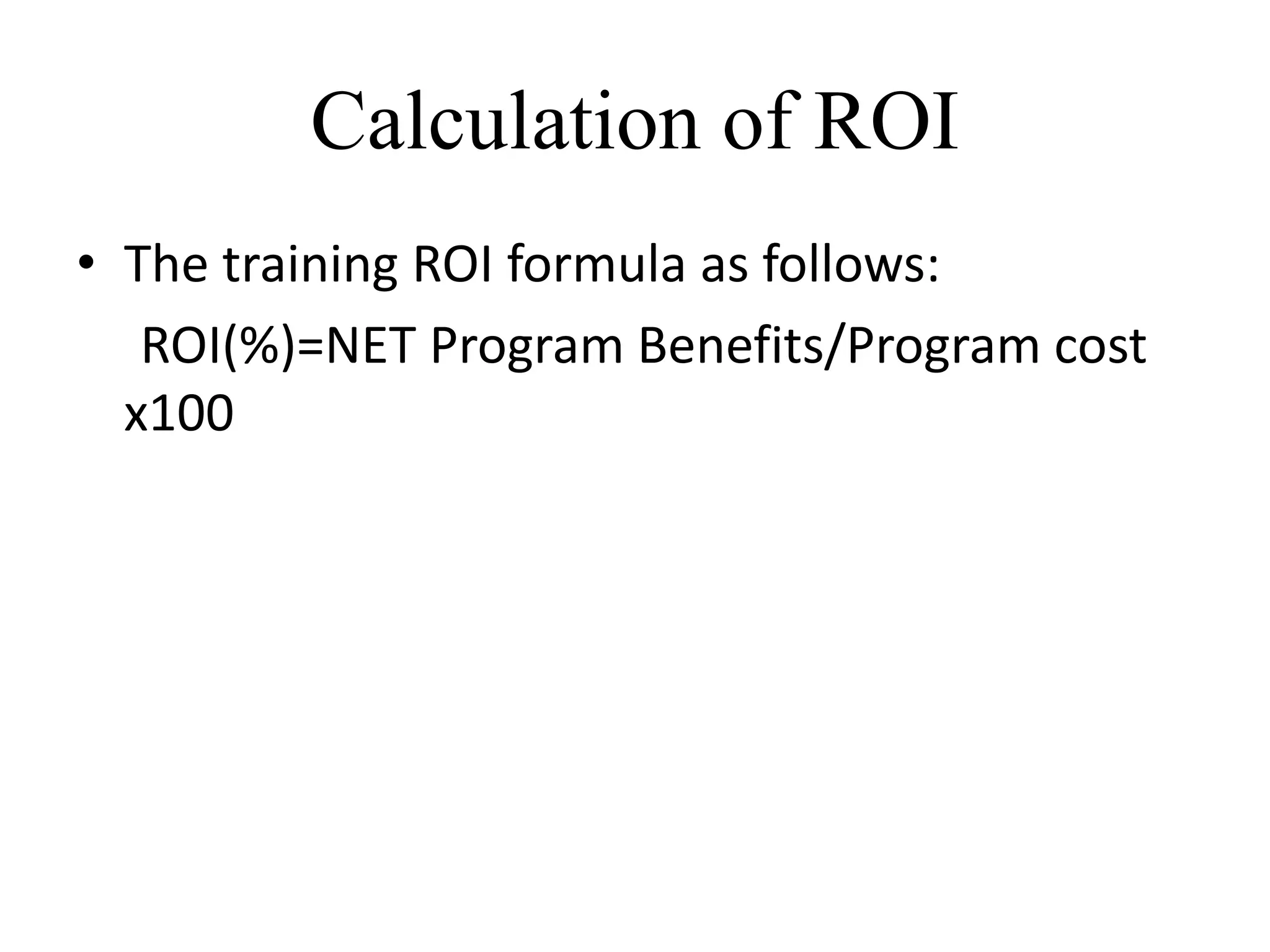
Calculation of ROI
• The training ROI formula as follows:
ROI(%)=NET Program Benefits/Program cost
x100
CIPP Model
• CIPP evaluation model is a Program evaluation model which was
developed by Daniel Stufflebeam and colleagues in the 1960s.
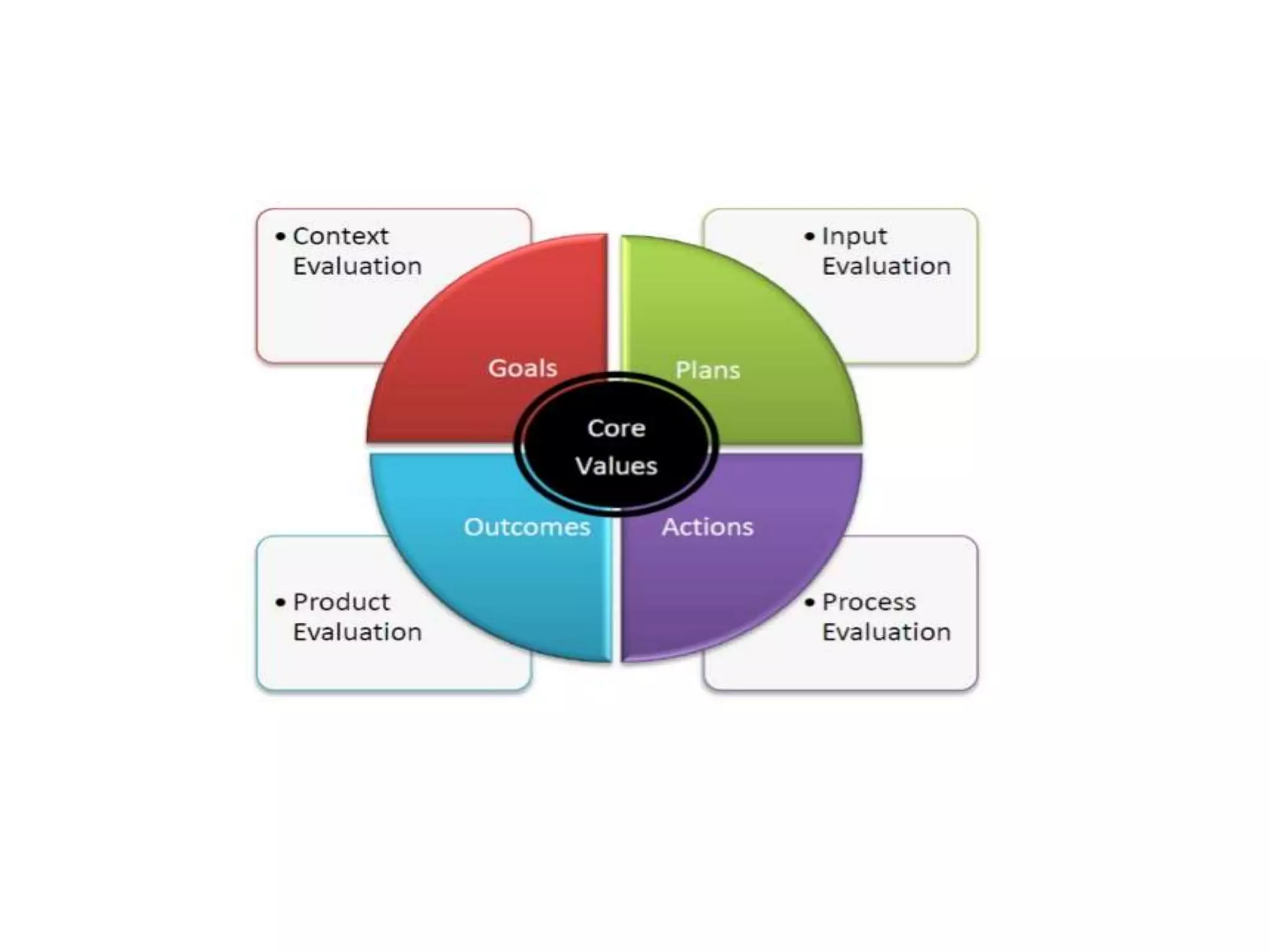
• CIPP is an acronym for Context, Input, Process and Product.
• CIPP is an evaluation model that requires the evaluation
of context, input, process and product in judging a program me's value.
• CIPP is a decision-focused approach to evaluation and emphasizes the
systematic provision of information for program management and
operation.
Four aspects of CIPP Model
The four aspects are:
• Context
• inputs
• process
• product
• These four aspects of CIPP evaluation assist a decision-maker
to answer four basic questions:
o Context: What should we do?
This involves collecting and analyzing needs assessment data to determine goals, priorities
and objectives.
o Inputs: How should we do it?
This involves the steps and resources needed to meet the new goals and objectives and might
include identifying successful external programs and materials as well as gathering information.
o Process :Are we doing it as planned?
This provides decision-makers with information about how well the program me is being
implemented. By continuously monitoring the program, decision-makers learn such things as
how well it is following the plans and guidelines, conflicts arising, staff support and morale,
strengths and weaknesses of materials, delivery and budgeting problems.[
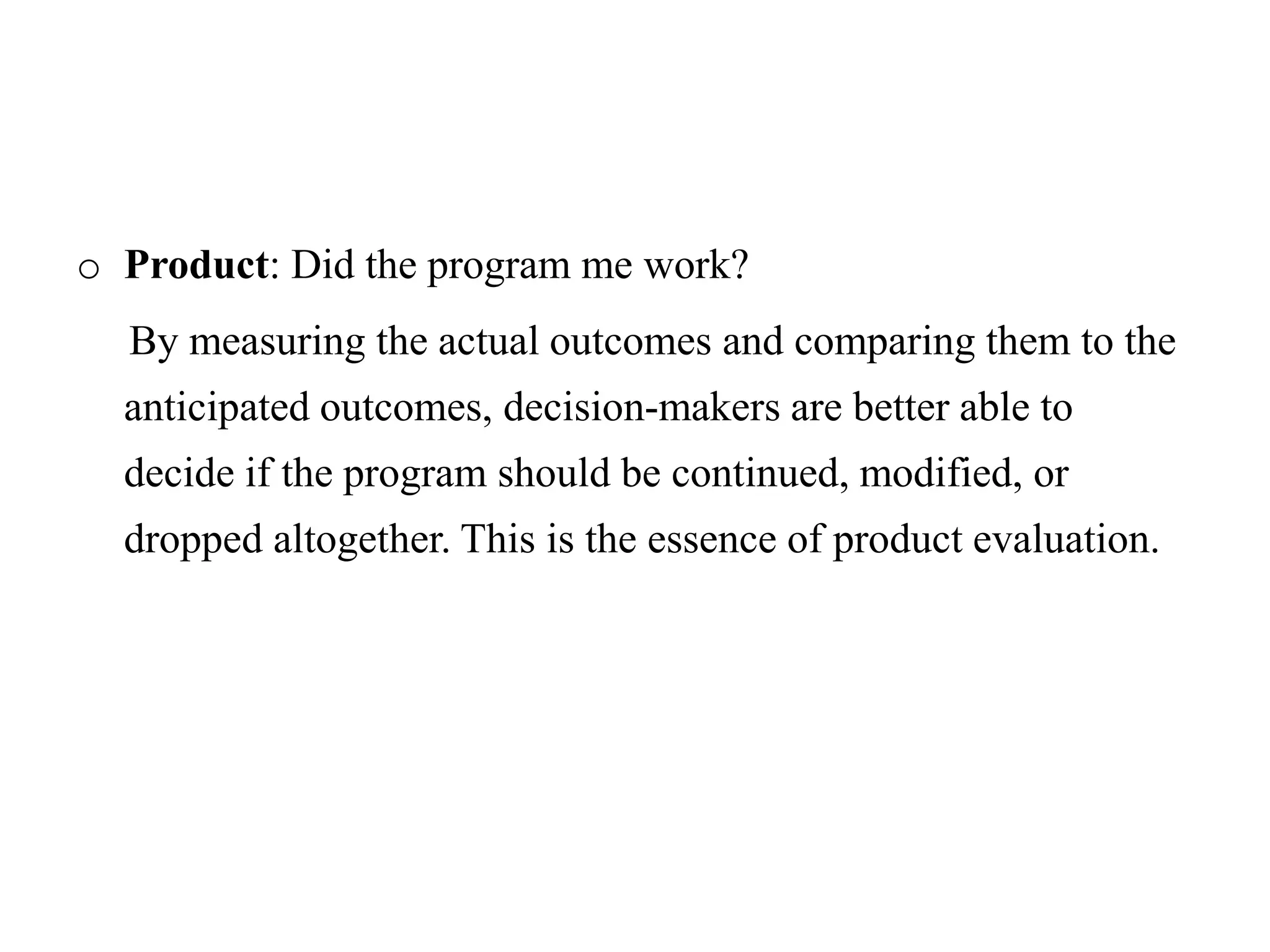
o Product: Did the program me work?
By measuring the actual outcomes and comparing them to the
anticipated outcomes, decision-makers are better able to
decide if the program should be continued, modified, or
dropped altogether. This is the essence of product evaluation.
COMA Model
A training evaluation model that involves the measurement of
four types of variables
 Cognitive
 Organizational Environment
 Motivation
 Attitudes
The COMA Model improves on
Kirkpatrick's model in four ways
1. Transforms the typical reaction by incorporating greater
number of measures
2. Useful for formative evaluations
3. The measures are known to be causally related to
training success
4. Defines new variables with greater precision
THANK YOU

Training evaluation models

  • 1.
  • 2.
    Various Evaluation Models 1.Kirkpatrick's Model 2. Jack J Phillips Training Model 3. CIPP Model 4. COMA Model
  • 3.
    Kirkpatrick Model • TheFour Levels of Evaluation, also referred to as the Kirkpatrick Evaluation Model, was created by Donald Kirkpatrick, Ph.D. to define the four levels of training evaluation. The four levels of evaluation are: • Level 1: Reaction measures how participants react to the training (e.g., satisfaction). • Level 2: Learning analyzes if they truly understood the training (e.g., increase in knowledge, skills or experience). • Level 3 :Behavior looks at if they are utilizing what they learned at work (e.g., change in behaviors). • Level 4 :Results determines if the material had a positive impact on the business / organization.
  • 4.
  • 5.
    Phillips ROI Model •One of the most frequently quoted aspects of Phillips' model is the addition of a fifth level of evaluation to Kirkpatrick's Learning Evaluation Model which is return on investment (ROI). • Phillip’s model states that after determining a learning program’s business impact at Kirkpatrick’s Level 4, we can translate that impact into monetary terms and compare it to the total cost of the program to calculate ROI. These costs include program development and delivery, plus the labor cost of time for learners to complete the training.
  • 7.
    Calculation of ROI •The training ROI formula as follows: ROI(%)=NET Program Benefits/Program cost x100
  • 8.
    CIPP Model • CIPPevaluation model is a Program evaluation model which was developed by Daniel Stufflebeam and colleagues in the 1960s. • CIPP is an acronym for Context, Input, Process and Product. • CIPP is an evaluation model that requires the evaluation of context, input, process and product in judging a program me's value. • CIPP is a decision-focused approach to evaluation and emphasizes the systematic provision of information for program management and operation.
  • 9.
    Four aspects ofCIPP Model The four aspects are: • Context • inputs • process • product • These four aspects of CIPP evaluation assist a decision-maker to answer four basic questions:
  • 10.
    o Context: Whatshould we do? This involves collecting and analyzing needs assessment data to determine goals, priorities and objectives. o Inputs: How should we do it? This involves the steps and resources needed to meet the new goals and objectives and might include identifying successful external programs and materials as well as gathering information. o Process :Are we doing it as planned? This provides decision-makers with information about how well the program me is being implemented. By continuously monitoring the program, decision-makers learn such things as how well it is following the plans and guidelines, conflicts arising, staff support and morale, strengths and weaknesses of materials, delivery and budgeting problems.[
  • 11.
    o Product: Didthe program me work? By measuring the actual outcomes and comparing them to the anticipated outcomes, decision-makers are better able to decide if the program should be continued, modified, or dropped altogether. This is the essence of product evaluation.
  • 13.
    COMA Model A trainingevaluation model that involves the measurement of four types of variables  Cognitive  Organizational Environment  Motivation  Attitudes
  • 14.
    The COMA Modelimproves on Kirkpatrick's model in four ways 1. Transforms the typical reaction by incorporating greater number of measures 2. Useful for formative evaluations 3. The measures are known to be causally related to training success 4. Defines new variables with greater precision
  • 15.