   Conducted internally and externally
   Needs of personal and demands of situation
   Inefficient training program may create loss to
    organization
   Serve the identified purposes
 Difficulty in meeting objectives
 Change management is problematic
 Demotivated staff
 Underdeveloped staff
 Evaluation involves the assessment
  of the effectiveness of the training
  programs.
 How well the training inputs are serving
  the intended purpose
3 kinds of training outputs

   Relating to course
    planning, relevance, comprehension and
    whatever goes on in the teaching programme
    and the environment.

   The utilisation of what is learnt on the
    job, i.e. transferring the classroom learning
    to the job in terms of
    skills, competencies, decision
    making, problem-solving abilities and
    relationships and the like.

   The changes in the mind set such as work
    related attitudes, values,interpersonal
    competencies and personal attributes.
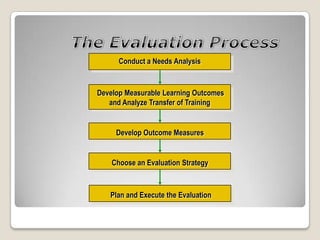
Conduct a Needs Analysis


Develop Measurable Learning Outcomes
   and Analyze Transfer of Training


     Develop Outcome Measures


    Choose an Evaluation Strategy


   Plan and Execute the Evaluation
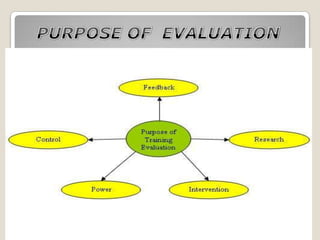
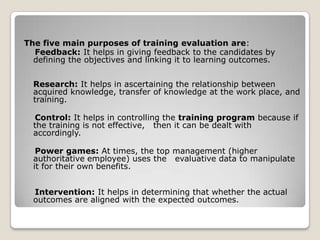
The five main purposes of training evaluation are:
  Feedback: It helps in giving feedback to the candidates by
  defining the objectives and linking it to learning outcomes.


  Research: It helps in ascertaining the relationship between
  acquired knowledge, transfer of knowledge at the work place, and
  training.

  Control: It helps in controlling the training program because if
  the training is not effective, then it can be dealt with
  accordingly.

   Power games: At times, the top management (higher
  authoritative employee) uses the evaluative data to manipulate
  it for their own benefits.


  Intervention: It helps in determining that whether the actual
  outcomes are aligned with the expected outcomes.
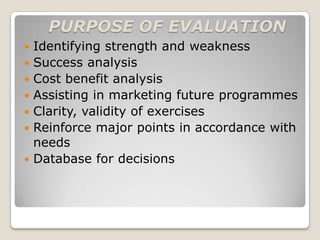
PURPOSE OF EVALUATION
   Identifying strength and weakness
   Success analysis
   Cost benefit analysis
   Assisting in marketing future programmes
   Clarity, validity of exercises
   Reinforce major points in accordance with
    needs
   Database for decisions
 Personal expectations and learning
  objectives
 Assessing effectiveness
 Value of time spent in developing
  knowledge and skills.
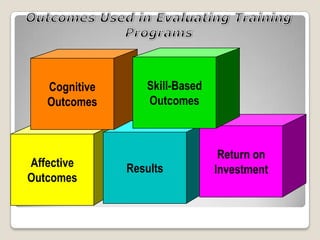
Cognitive      Skill-Based
   Outcomes       Outcomes


                                 Return on
Affective      Results          Investment
Outcomes
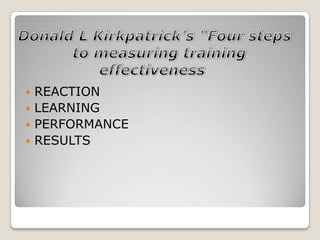
 REACTION
 LEARNING
 PERFORMANCE
 RESULTS
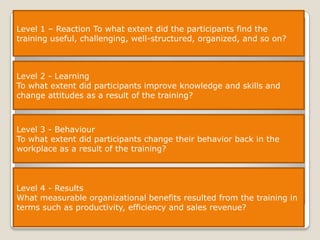
Level 1 – Reaction To what extent did the participants find the
training useful, challenging, well-structured, organized, and so on?


Level 2 - Learning
To what extent did participants improve knowledge and skills and
change attitudes as a result of the training?


Level 3 - Behaviour
To what extent did participants change their behavior back in the
workplace as a result of the training?


Level 4 - Results
What measurable organizational benefits resulted from the training in
terms such as productivity, efficiency and sales revenue?
Hrd ppt

Hrd ppt

  • 2.
    Conducted internally and externally  Needs of personal and demands of situation  Inefficient training program may create loss to organization  Serve the identified purposes
  • 3.
     Difficulty inmeeting objectives  Change management is problematic  Demotivated staff  Underdeveloped staff
  • 4.
     Evaluation involvesthe assessment of the effectiveness of the training programs.  How well the training inputs are serving the intended purpose
  • 5.
    3 kinds oftraining outputs   Relating to course planning, relevance, comprehension and whatever goes on in the teaching programme and the environment.  The utilisation of what is learnt on the job, i.e. transferring the classroom learning to the job in terms of skills, competencies, decision making, problem-solving abilities and relationships and the like.  The changes in the mind set such as work related attitudes, values,interpersonal competencies and personal attributes.
  • 6.
    Conduct a NeedsAnalysis Develop Measurable Learning Outcomes and Analyze Transfer of Training Develop Outcome Measures Choose an Evaluation Strategy Plan and Execute the Evaluation
  • 8.
    The five mainpurposes of training evaluation are: Feedback: It helps in giving feedback to the candidates by defining the objectives and linking it to learning outcomes. Research: It helps in ascertaining the relationship between acquired knowledge, transfer of knowledge at the work place, and training. Control: It helps in controlling the training program because if the training is not effective, then it can be dealt with accordingly. Power games: At times, the top management (higher authoritative employee) uses the evaluative data to manipulate it for their own benefits. Intervention: It helps in determining that whether the actual outcomes are aligned with the expected outcomes.
  • 9.
    PURPOSE OF EVALUATION  Identifying strength and weakness  Success analysis  Cost benefit analysis  Assisting in marketing future programmes  Clarity, validity of exercises  Reinforce major points in accordance with needs  Database for decisions
  • 10.
     Personal expectationsand learning objectives  Assessing effectiveness  Value of time spent in developing knowledge and skills.
  • 11.
    Cognitive Skill-Based Outcomes Outcomes Return on Affective Results Investment Outcomes
  • 12.
     REACTION  LEARNING PERFORMANCE  RESULTS
  • 13.
    Level 1 –Reaction To what extent did the participants find the training useful, challenging, well-structured, organized, and so on? Level 2 - Learning To what extent did participants improve knowledge and skills and change attitudes as a result of the training? Level 3 - Behaviour To what extent did participants change their behavior back in the workplace as a result of the training? Level 4 - Results What measurable organizational benefits resulted from the training in terms such as productivity, efficiency and sales revenue?