ASSEMBLE COMPUTER HARDWARE
TLE 10 - css
LESSON 1.1: PLAN UNIT ASSEMBLY
• Identify the different types of computer.
• Classify the different types of computers according to various ways.
• List the different types of computers.
• Identify the different factors to consider in planning and designing a personal
computer (PC).
• Plan and design a personal computer.
• Give importance with the essential components when designing a PC.
LOOKING BACK TO YOUR LESSON:
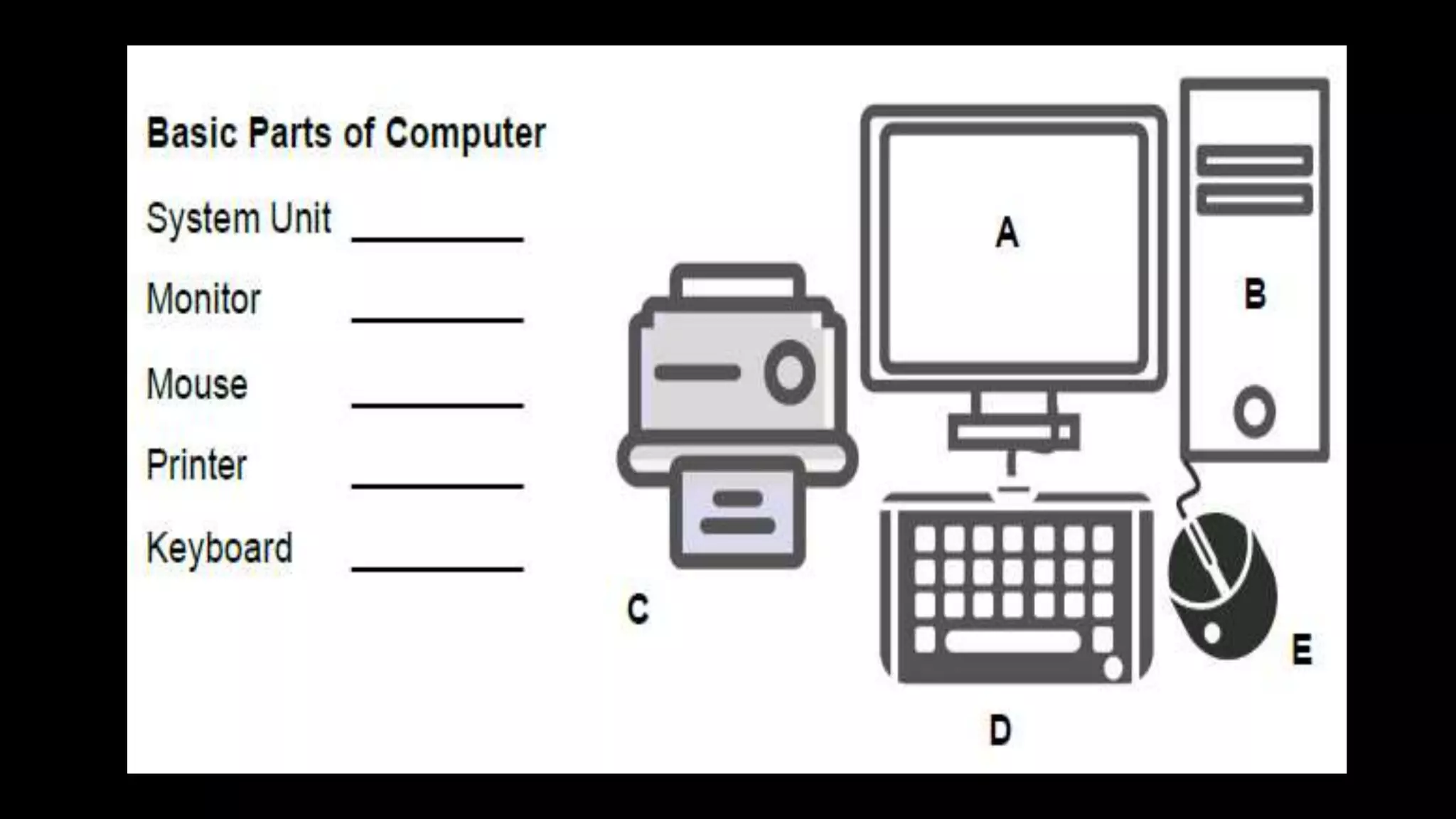
•Computers are often made from different
parts. Listed below are the basic parts of
computer. Match these parts with the
correct image. Write the letter of your
answer on the space provided.
TYPES OF COMPUTERS
A. Based on Principles of Operation:
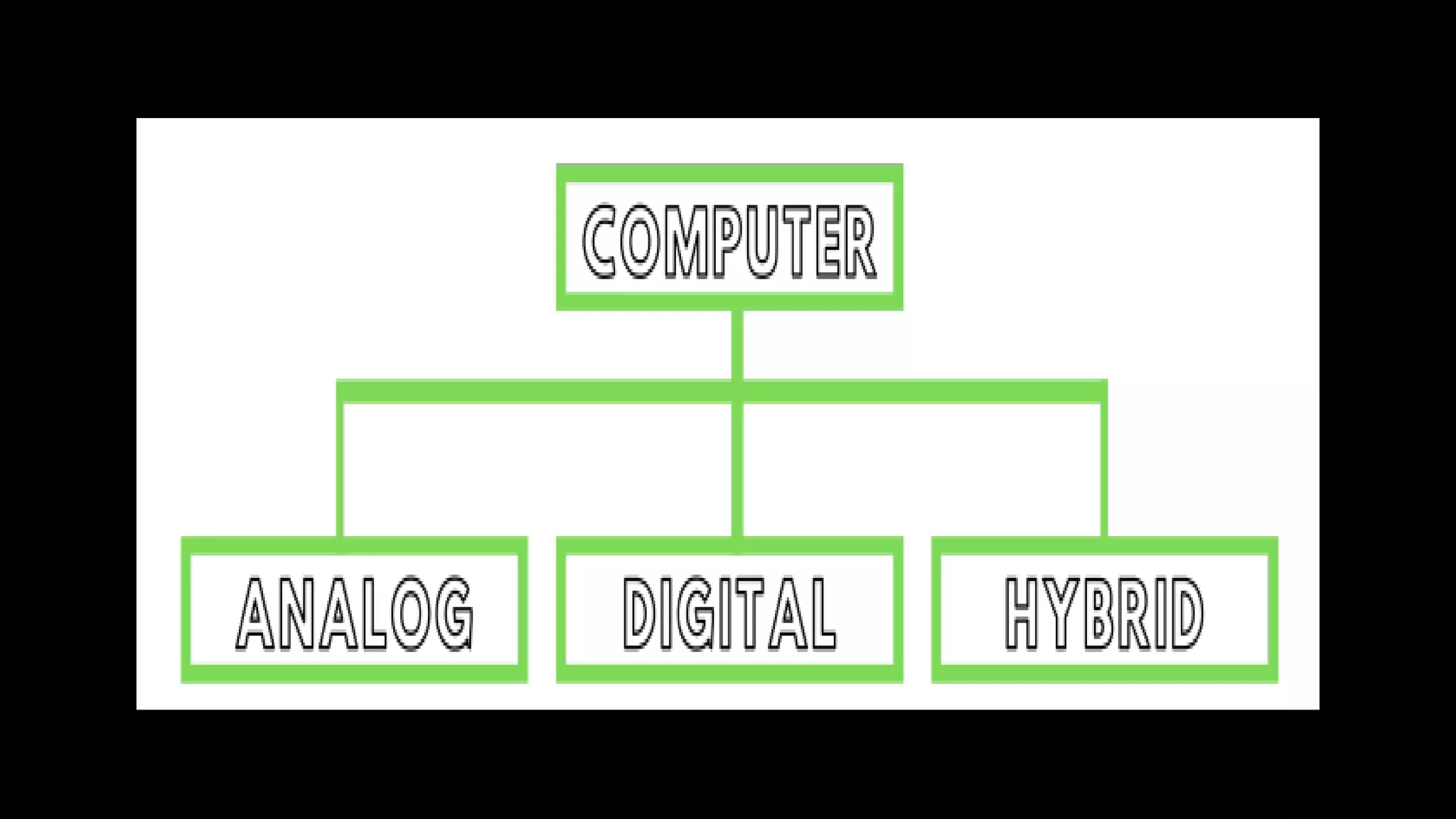
There are three different types of computers according to the
structure, speed and architecture. Those three types of computers are:
• Analog Computers
•Digital Computers
• Hybrid Computers
Types of Computers
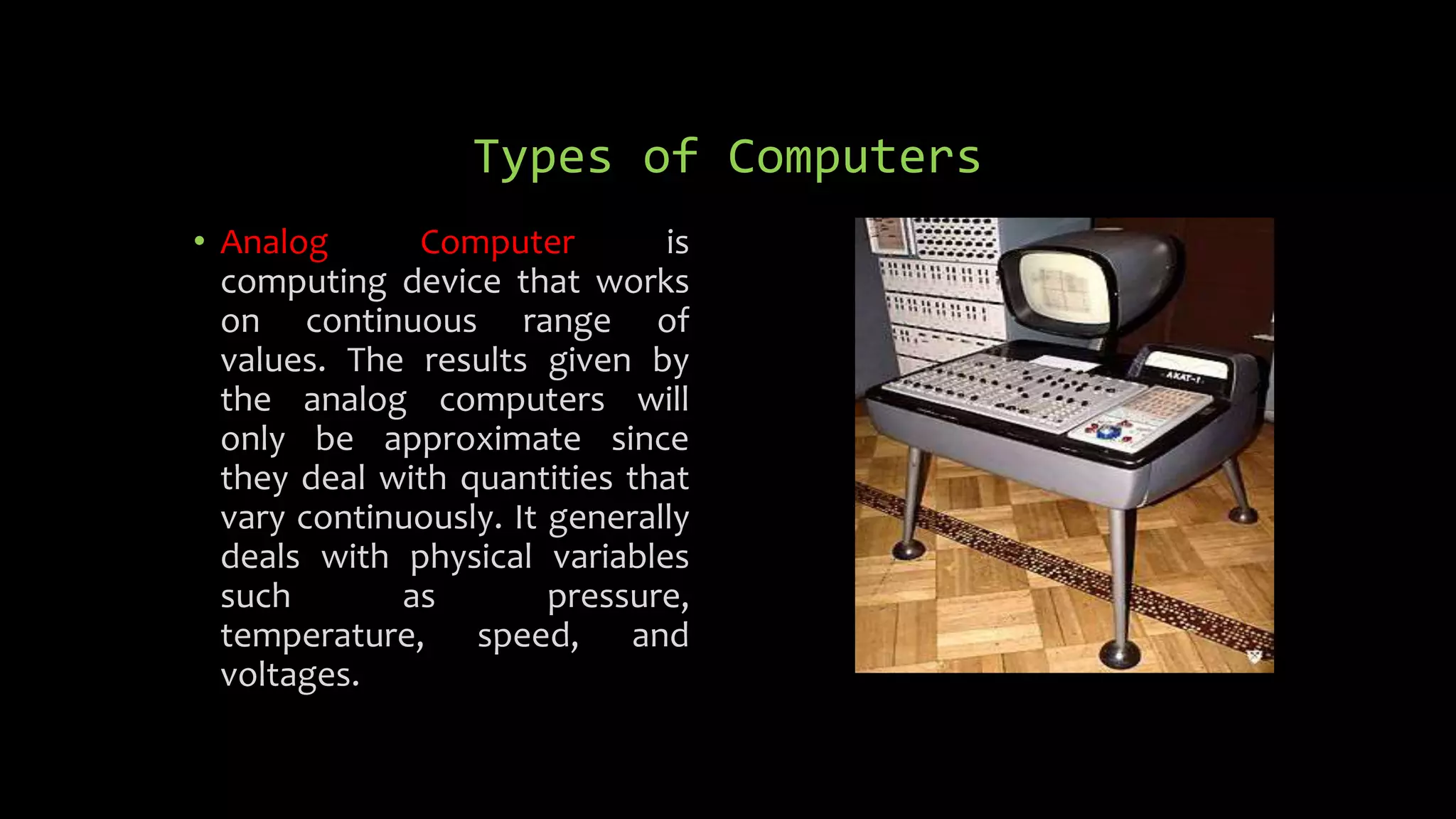
• Analog Computer is
computing device that works
on continuous range of
values. The results given by
the analog computers will
only be approximate since
they deal with quantities that
vary continuously. It generally
deals with physical variables
such as pressure,
temperature, speed, and
voltages.
•Examples:
• Thermometer – it measures the length of a
mercury column continuously.
• Traditional Clock – the needle of clock
covers the distance
Types of Computers
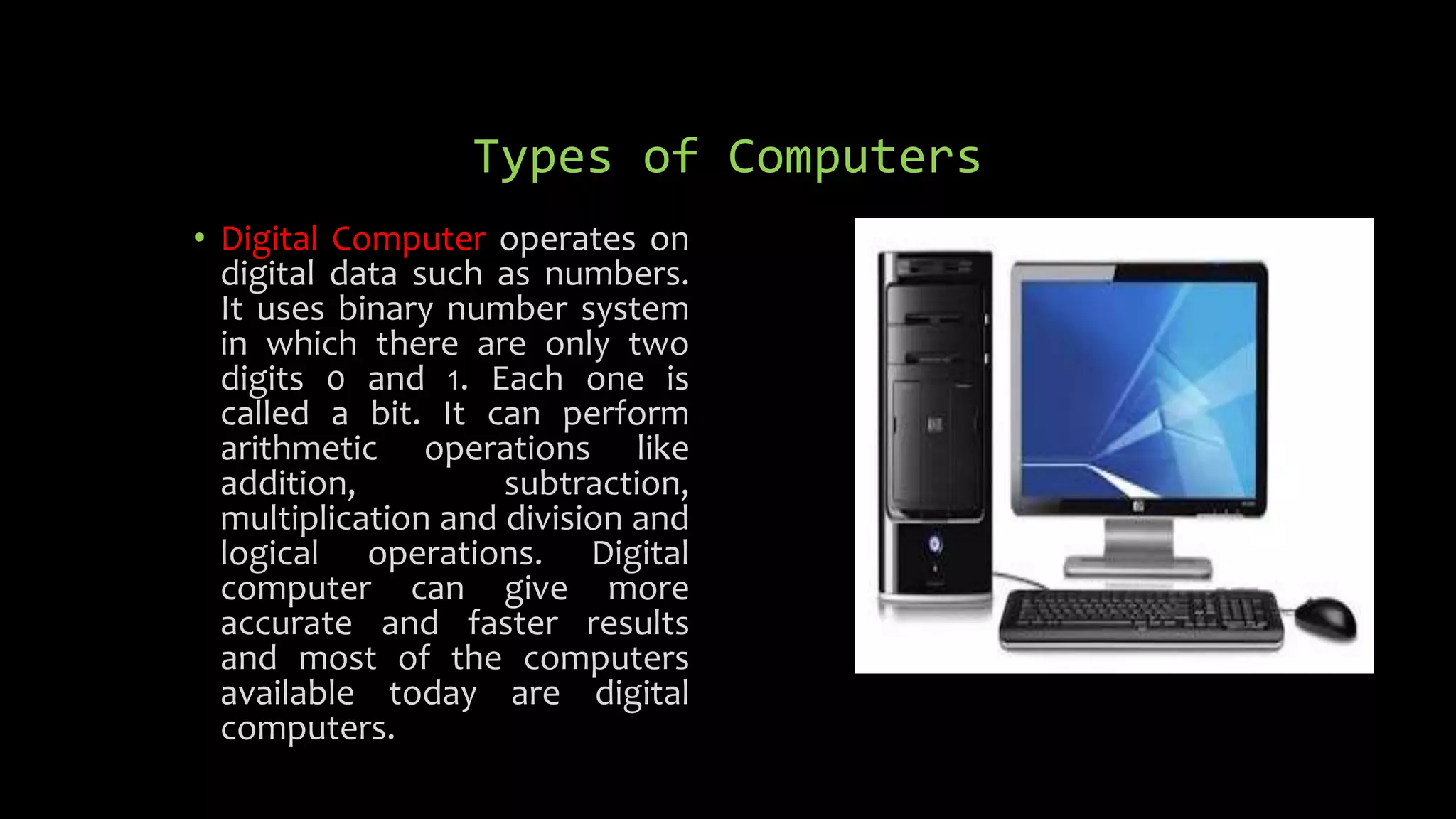
• Digital Computer operates on
digital data such as numbers.
It uses binary number system
in which there are only two
digits 0 and 1. Each one is
called a bit. It can perform
arithmetic operations like
addition, subtraction,
multiplication and division and
logical operations. Digital
computer can give more
accurate and faster results
and most of the computers
available today are digital
computers.
•Examples:
•• Accounting machines
•• Calculators
Types of Computers
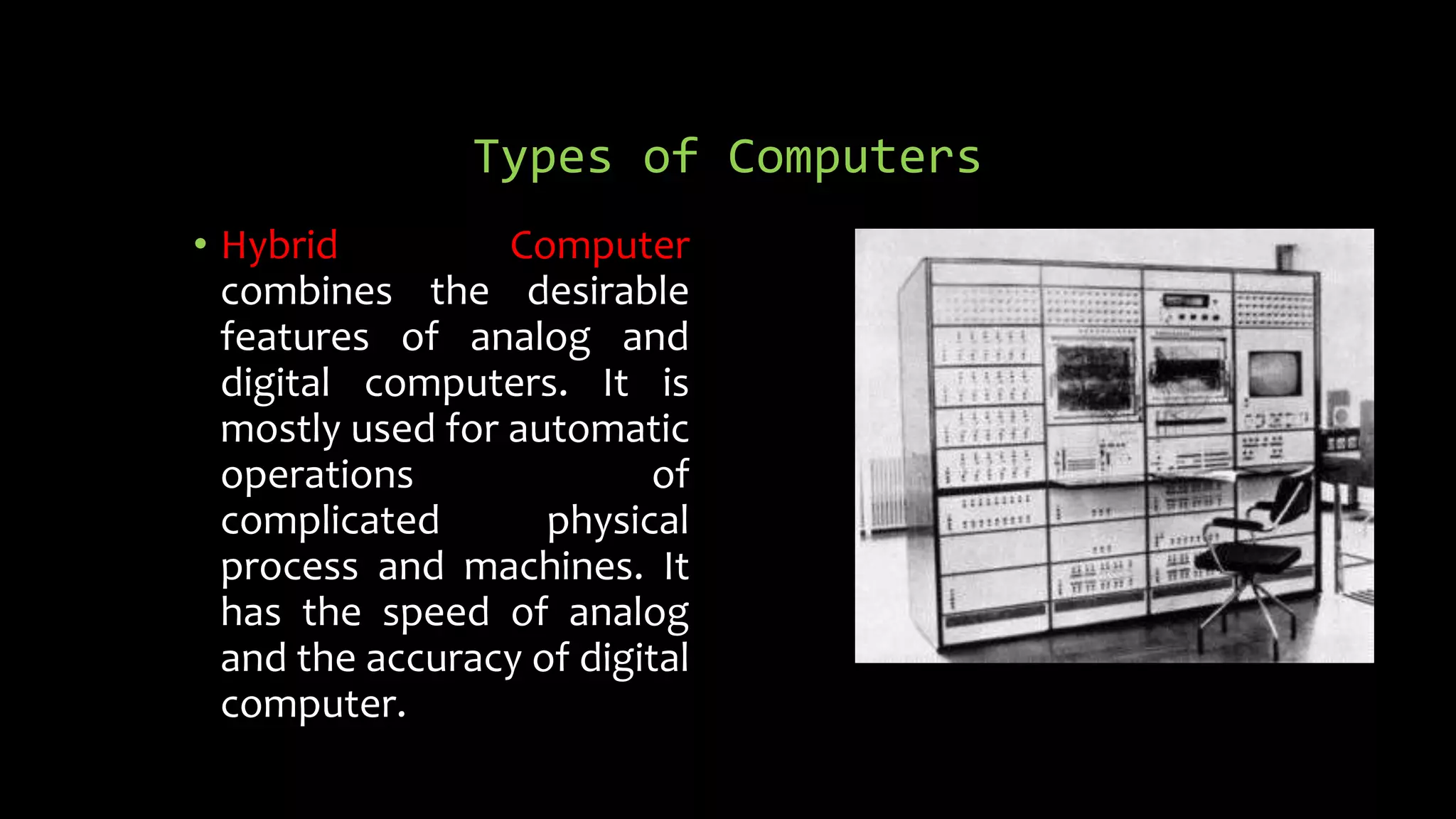
• Hybrid Computer
combines the desirable
features of analog and
digital computers. It is
mostly used for automatic
operations of
complicated physical
process and machines. It
has the speed of analog
and the accuracy of digital
computer.
•Examples:
•• In the hospital’s ICU (Intensive Care Unit),
analog quality controls the temperature of
the room, digital quality informs the doctor
about the patient’s temperature, blood
pressure and other vital signs.
•• Devices used in petrol pump.
B. Based on Configuration (Size and
Capability)
Computers are classified in various ways. First,
they differ according to size and power.
Computers can be supercomputers, mainframes,
minicomputers and microcomputers.
Supercomputers
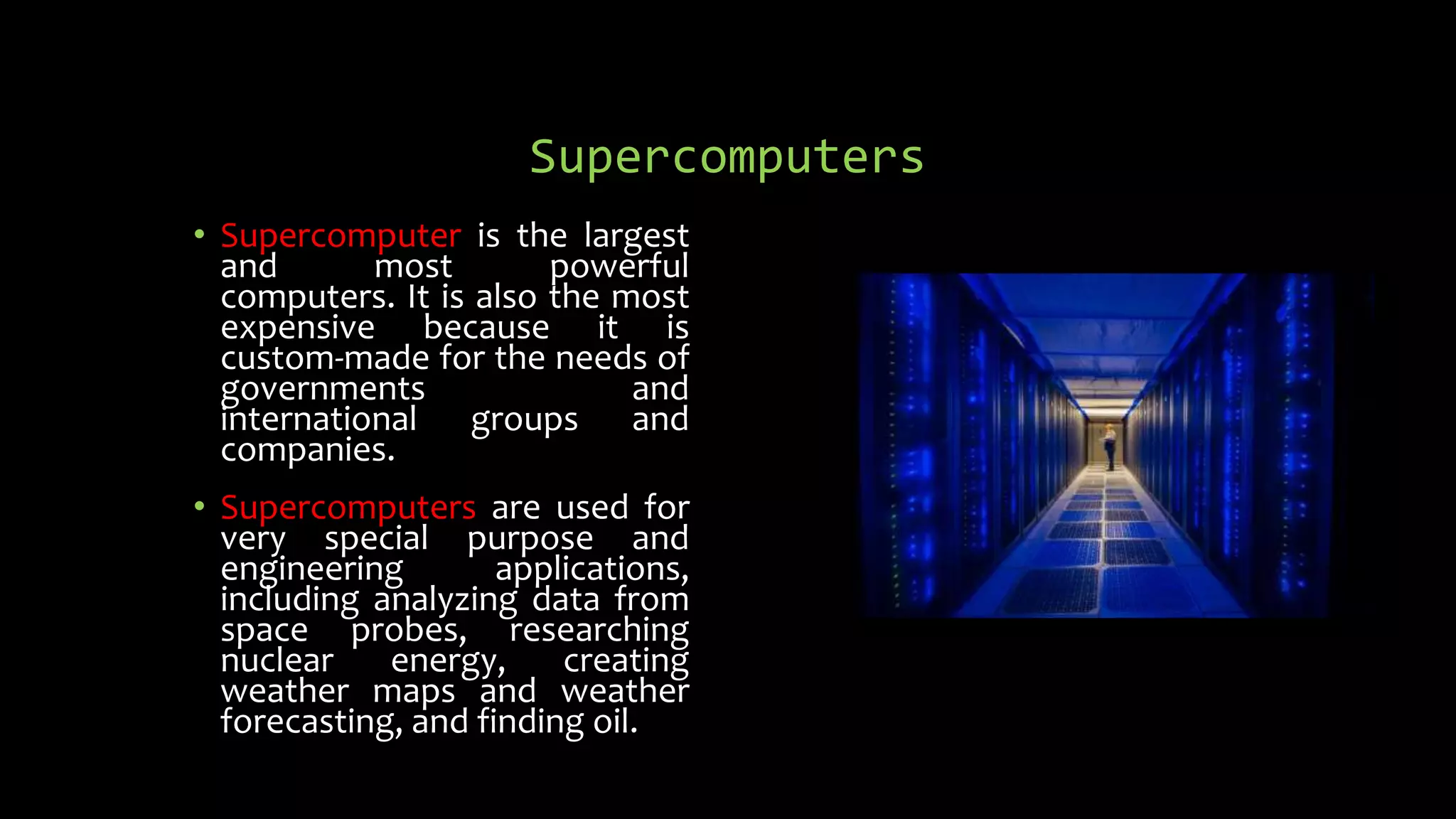
• Supercomputer is the largest
and most powerful
computers. It is also the most
expensive because it is
custom-made for the needs of
governments and
international groups and
companies.
• Supercomputers are used for
very special purpose and
engineering applications,
including analyzing data from
space probes, researching
nuclear energy, creating
weather maps and weather
forecasting, and finding oil.
• Examples:
• GRAPE (Gravity Pipe) – used for gravitational
computations
• Anton – used for studying molecular dynamics:
• Cray XT5 – used for various applications that
need great ability to process information. One of
the world’s most powerful supercomputers.
Mainframe computers
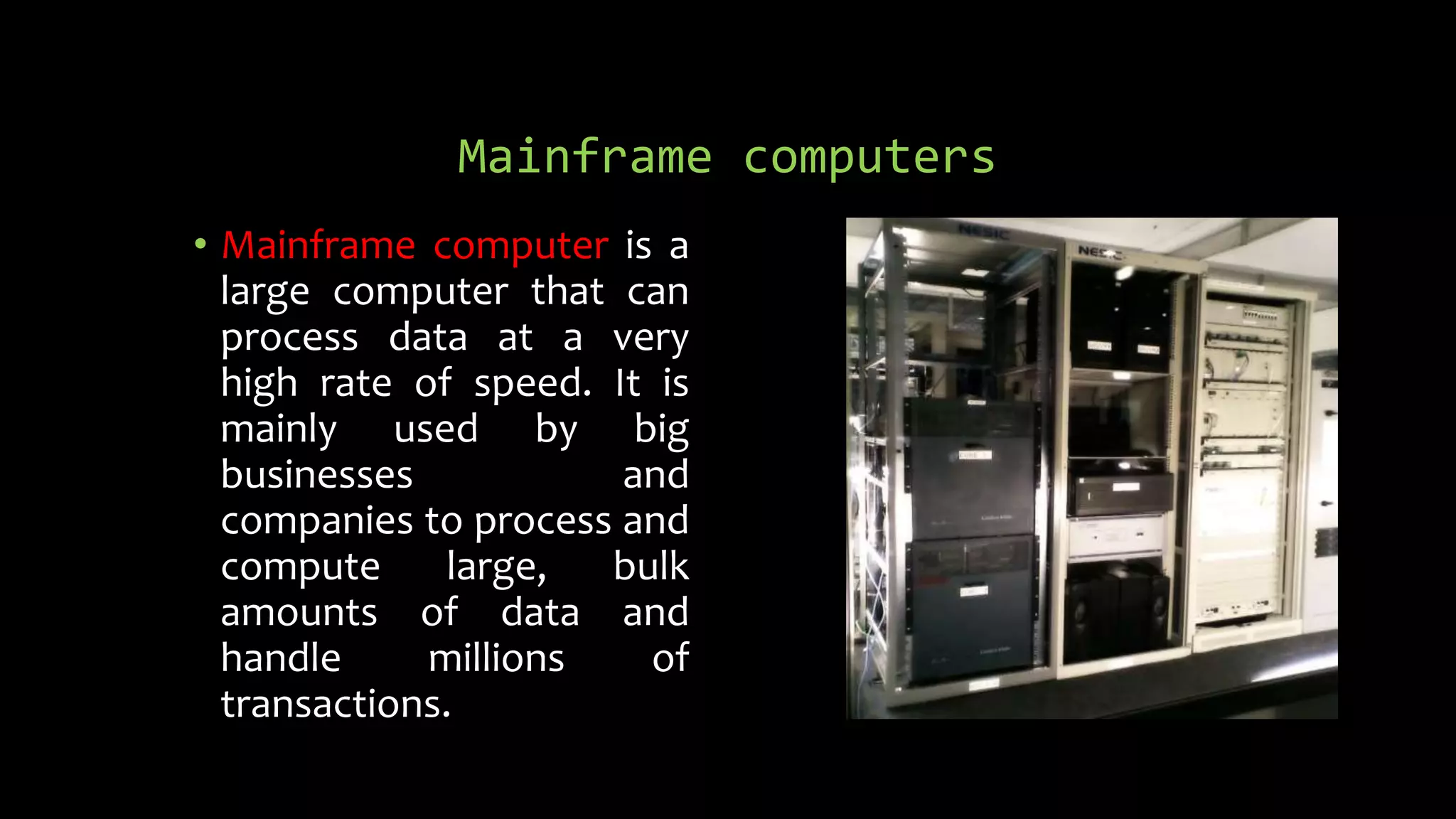
• Mainframe computer is a
large computer that can
process data at a very
high rate of speed. It is
mainly used by big
businesses and
companies to process and
compute large, bulk
amounts of data and
handle millions of
transactions.
•Examples:
• Bank transactions
• Census and consumer statistics
• Airline ticketing
• Large management and payroll needs
Minicomputer
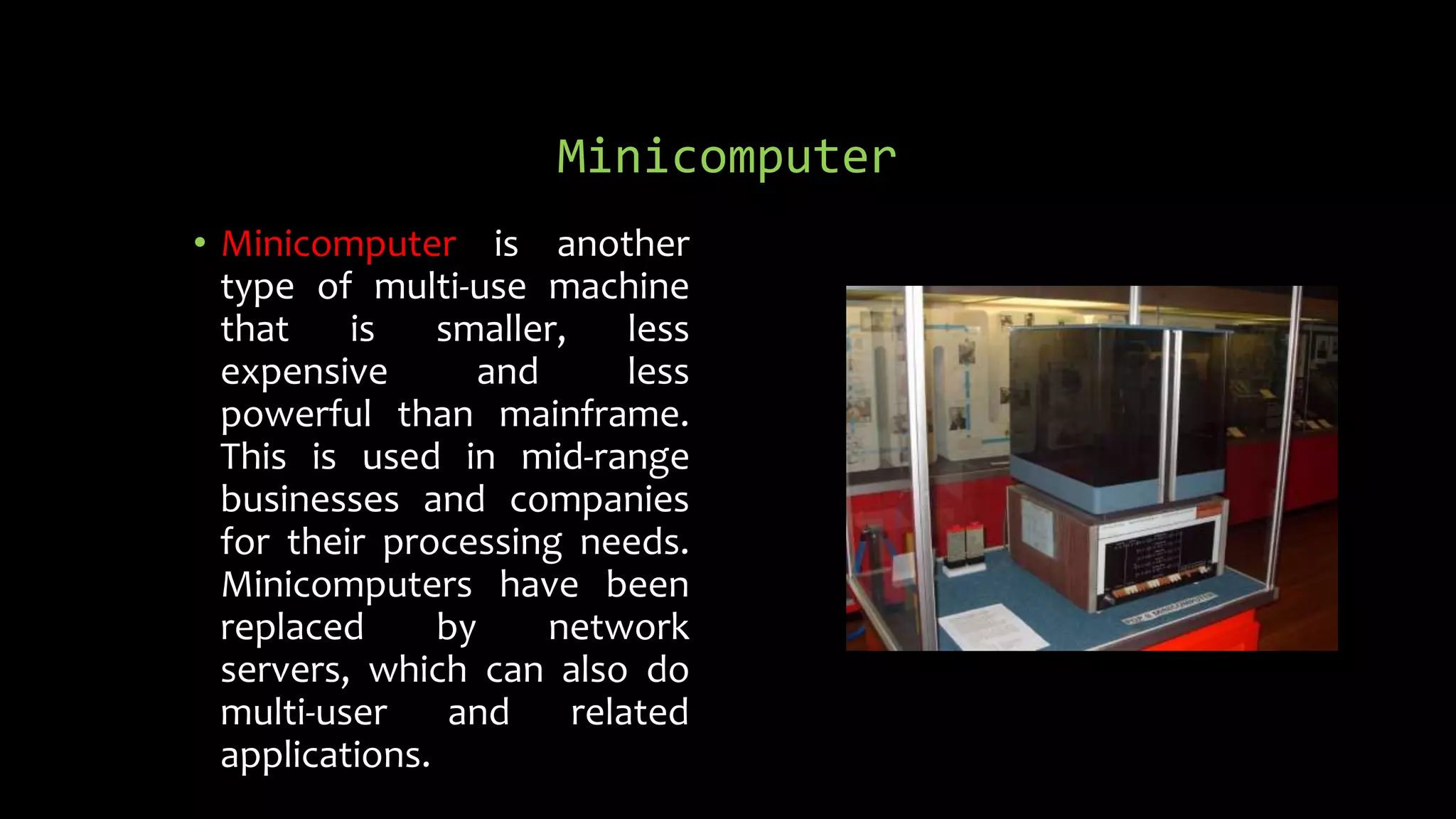
• Minicomputer is another
type of multi-use machine
that is smaller, less
expensive and less
powerful than mainframe.
This is used in mid-range
businesses and companies
for their processing needs.
Minicomputers have been
replaced by network
servers, which can also do
multi-user and related
applications.
Server
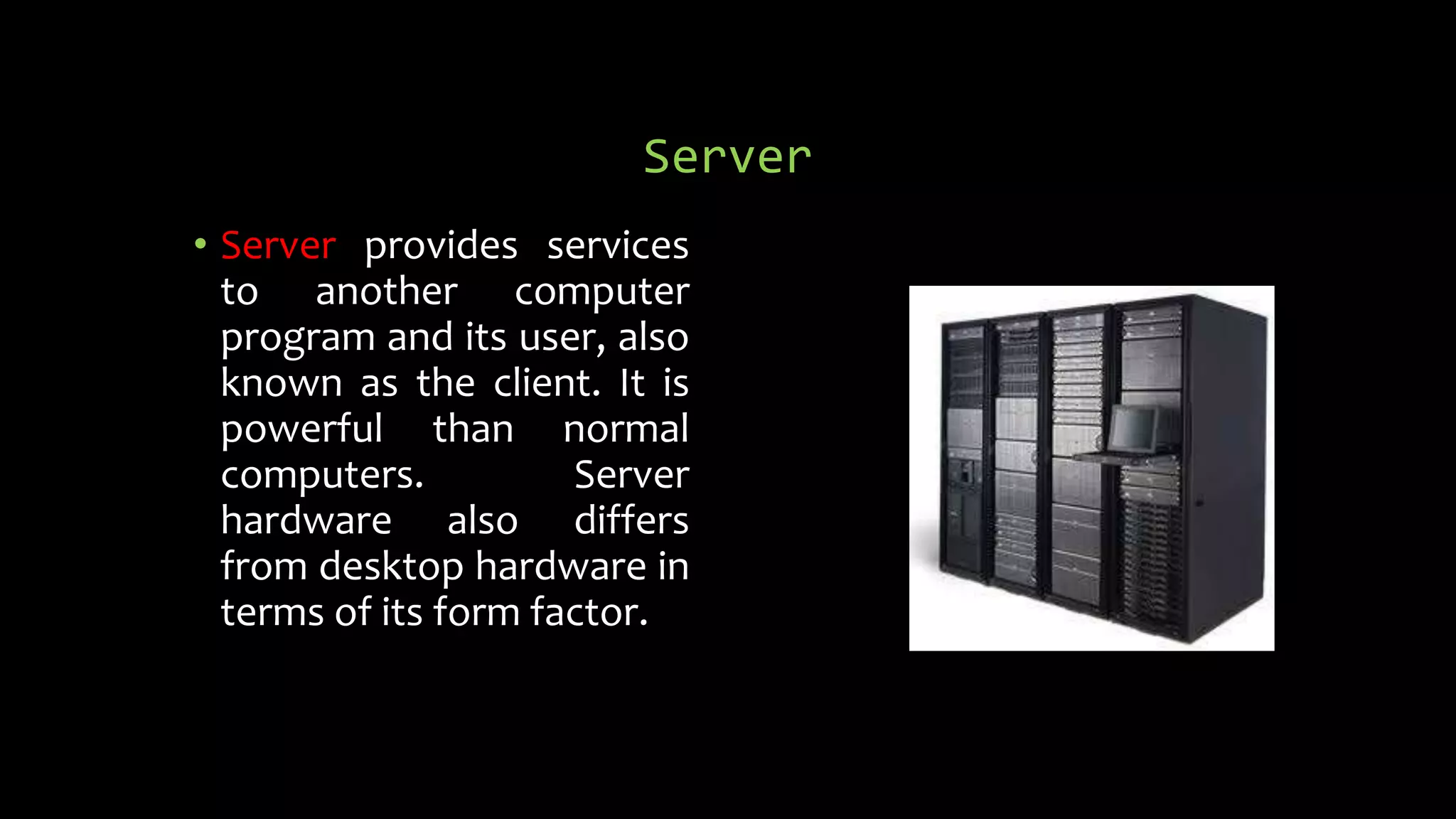
• Server provides services
to another computer
program and its user, also
known as the client. It is
powerful than normal
computers. Server
hardware also differs
from desktop hardware in
terms of its form factor.
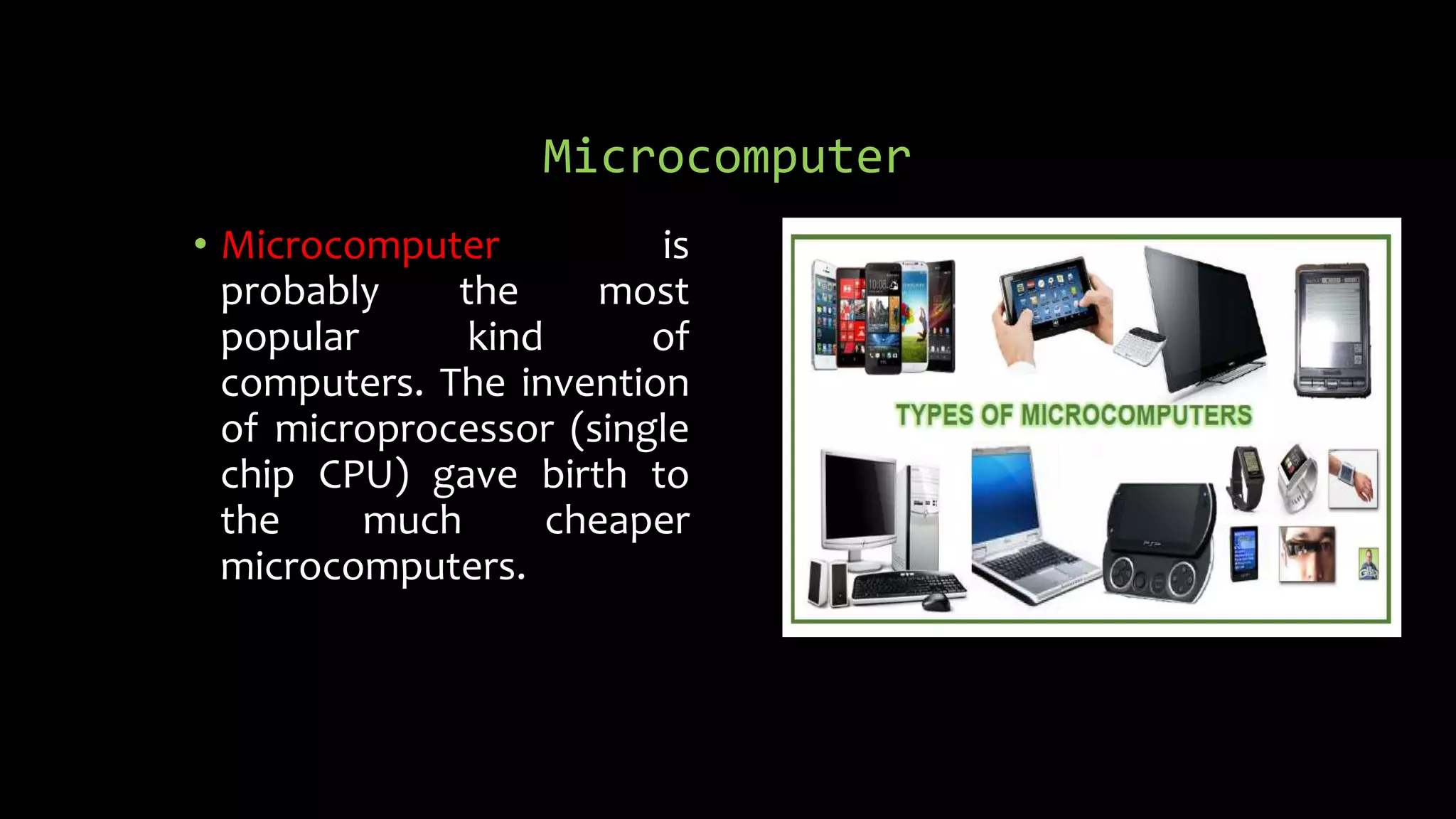
Microcomputer
• Microcomputer is
probably the most
popular kind of
computers. The invention
of microprocessor (single
chip CPU) gave birth to
the much cheaper
microcomputers.

TLE 10 - CSS (week 1 Day 1) ASSEMBLE COMPUTER HARDWARE.pptx

  • 1.
  • 2.
    LESSON 1.1: PLANUNIT ASSEMBLY • Identify the different types of computer. • Classify the different types of computers according to various ways. • List the different types of computers. • Identify the different factors to consider in planning and designing a personal computer (PC). • Plan and design a personal computer. • Give importance with the essential components when designing a PC.
  • 3.
    LOOKING BACK TOYOUR LESSON: •Computers are often made from different parts. Listed below are the basic parts of computer. Match these parts with the correct image. Write the letter of your answer on the space provided.
  • 5.
  • 6.
    A. Based onPrinciples of Operation: There are three different types of computers according to the structure, speed and architecture. Those three types of computers are: • Analog Computers •Digital Computers • Hybrid Computers
  • 8.
    Types of Computers •Analog Computer is computing device that works on continuous range of values. The results given by the analog computers will only be approximate since they deal with quantities that vary continuously. It generally deals with physical variables such as pressure, temperature, speed, and voltages.
  • 9.
    •Examples: • Thermometer –it measures the length of a mercury column continuously. • Traditional Clock – the needle of clock covers the distance
  • 10.
    Types of Computers •Digital Computer operates on digital data such as numbers. It uses binary number system in which there are only two digits 0 and 1. Each one is called a bit. It can perform arithmetic operations like addition, subtraction, multiplication and division and logical operations. Digital computer can give more accurate and faster results and most of the computers available today are digital computers.
  • 11.
  • 12.
    Types of Computers •Hybrid Computer combines the desirable features of analog and digital computers. It is mostly used for automatic operations of complicated physical process and machines. It has the speed of analog and the accuracy of digital computer.
  • 13.
    •Examples: •• In thehospital’s ICU (Intensive Care Unit), analog quality controls the temperature of the room, digital quality informs the doctor about the patient’s temperature, blood pressure and other vital signs. •• Devices used in petrol pump.
  • 14.
    B. Based onConfiguration (Size and Capability) Computers are classified in various ways. First, they differ according to size and power. Computers can be supercomputers, mainframes, minicomputers and microcomputers.
  • 15.
    Supercomputers • Supercomputer isthe largest and most powerful computers. It is also the most expensive because it is custom-made for the needs of governments and international groups and companies. • Supercomputers are used for very special purpose and engineering applications, including analyzing data from space probes, researching nuclear energy, creating weather maps and weather forecasting, and finding oil.
  • 16.
    • Examples: • GRAPE(Gravity Pipe) – used for gravitational computations • Anton – used for studying molecular dynamics: • Cray XT5 – used for various applications that need great ability to process information. One of the world’s most powerful supercomputers.
  • 17.
    Mainframe computers • Mainframecomputer is a large computer that can process data at a very high rate of speed. It is mainly used by big businesses and companies to process and compute large, bulk amounts of data and handle millions of transactions.
  • 18.
    •Examples: • Bank transactions •Census and consumer statistics • Airline ticketing • Large management and payroll needs
  • 19.
    Minicomputer • Minicomputer isanother type of multi-use machine that is smaller, less expensive and less powerful than mainframe. This is used in mid-range businesses and companies for their processing needs. Minicomputers have been replaced by network servers, which can also do multi-user and related applications.
  • 20.
    Server • Server providesservices to another computer program and its user, also known as the client. It is powerful than normal computers. Server hardware also differs from desktop hardware in terms of its form factor.
  • 21.
    Microcomputer • Microcomputer is probablythe most popular kind of computers. The invention of microprocessor (single chip CPU) gave birth to the much cheaper microcomputers.