TYPES OF
COMPUTER
Types and Classification
of Computer
Types of Computer
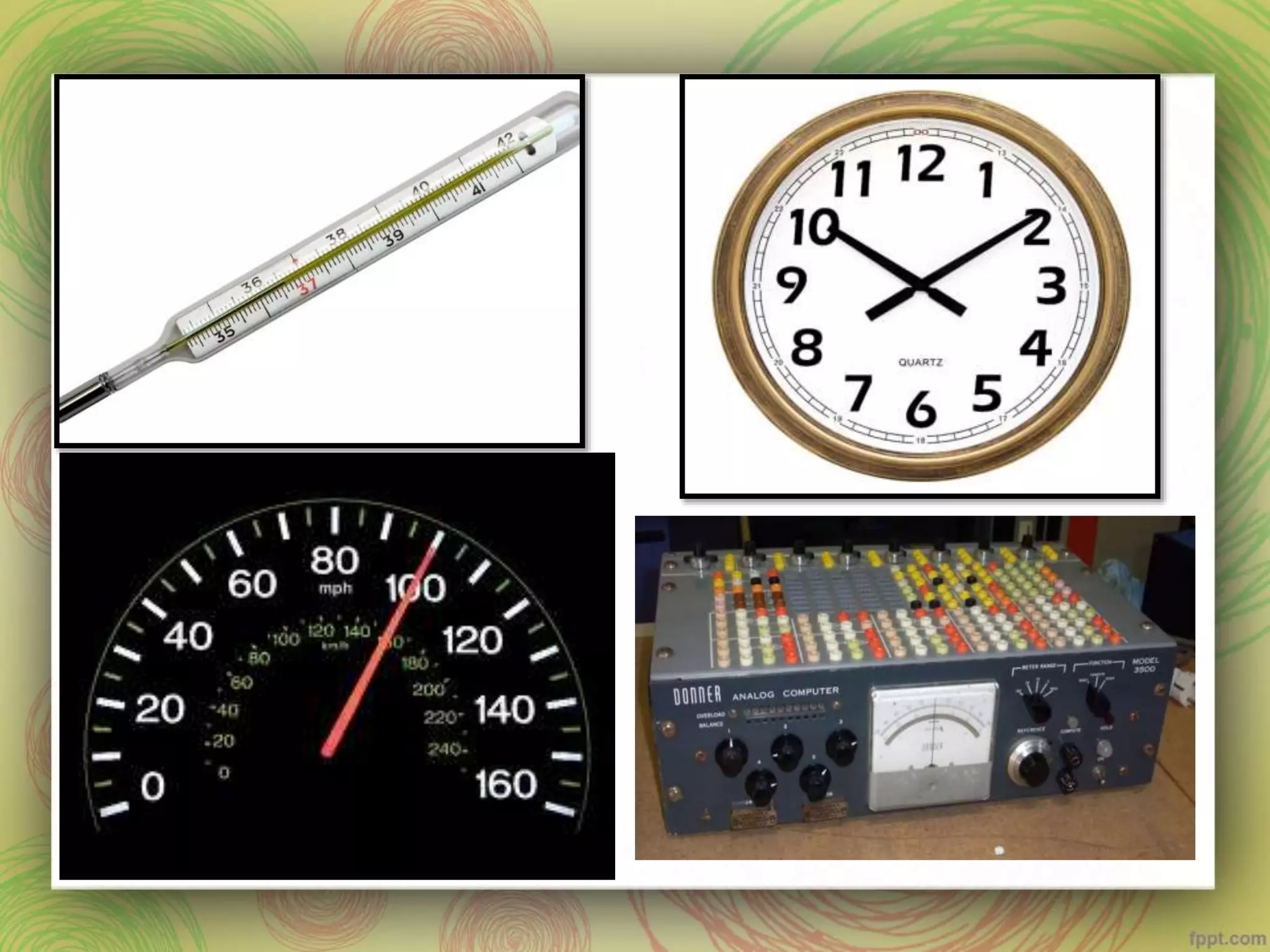
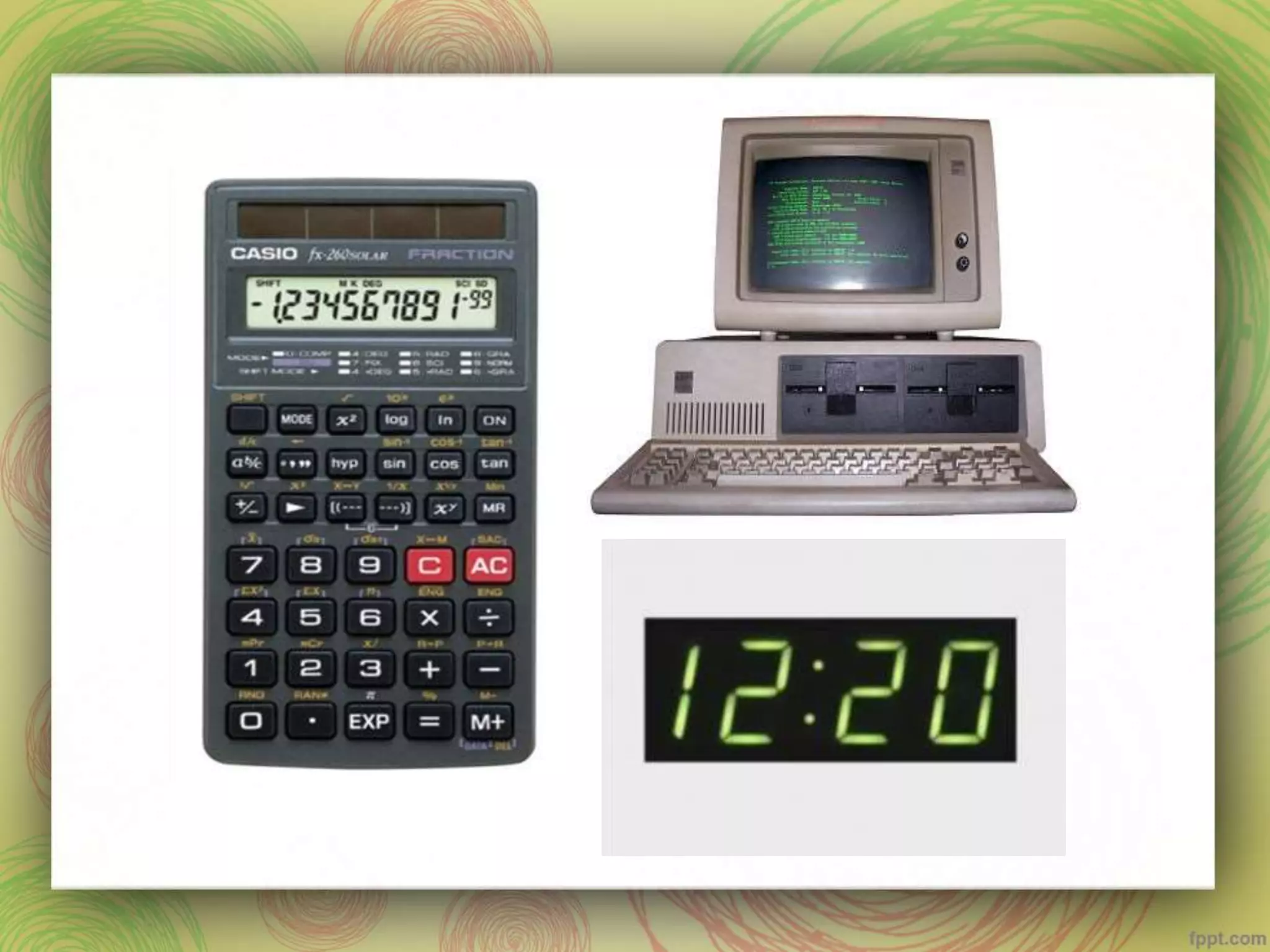
1. Analog Computer – It can perform
several mathematical operations
simultaneously. It uses continuous
variables for mathematical operations
and utilizes mechanical or electrical
energy.
2. Digital Computer – They use digital
circuits and are designed to operate on
two states, namely bits 0 and 1. Digital
computers are suitable for complex
computation and have higher
processing speeds. They are
programmable.
a. General purpose
b. Special purpose
Types of Computer
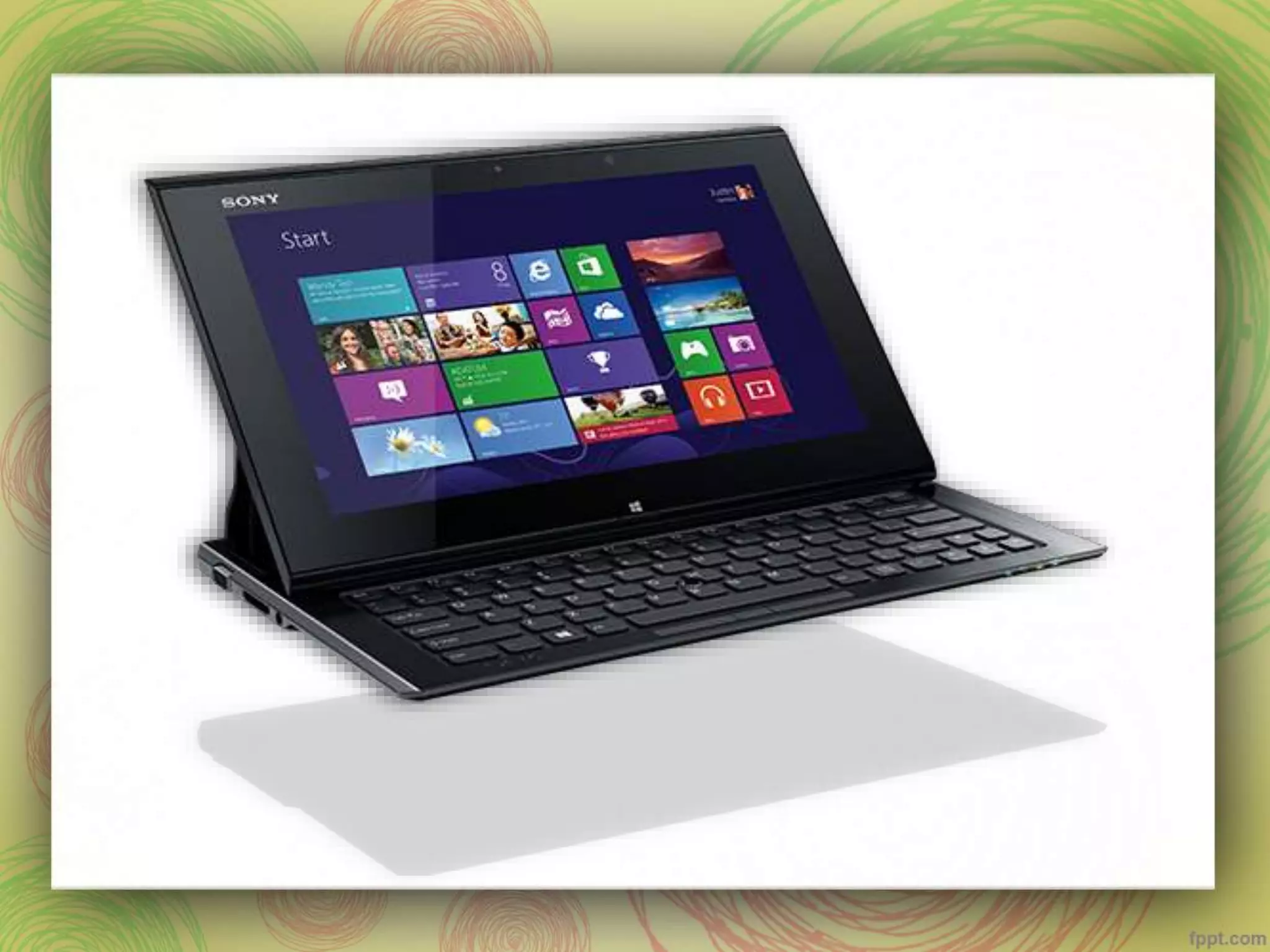
3. Hybrid Computer – These computers
are a combination of both digital and
analog computers. In this type of
computers, the digital segments
perform process control by conversion
of analog signals to digital ones.
Types of Computer
Classification of Computer
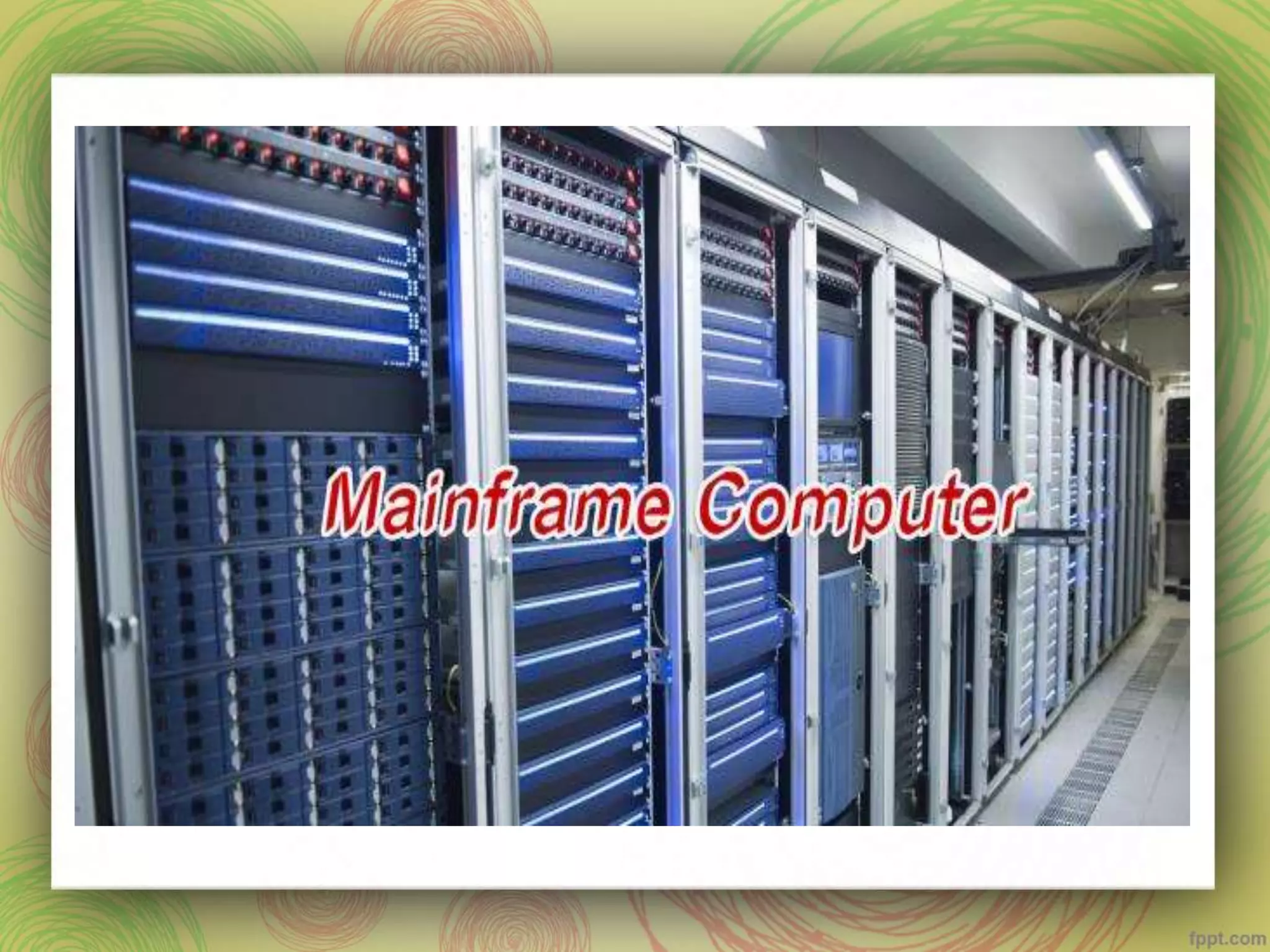
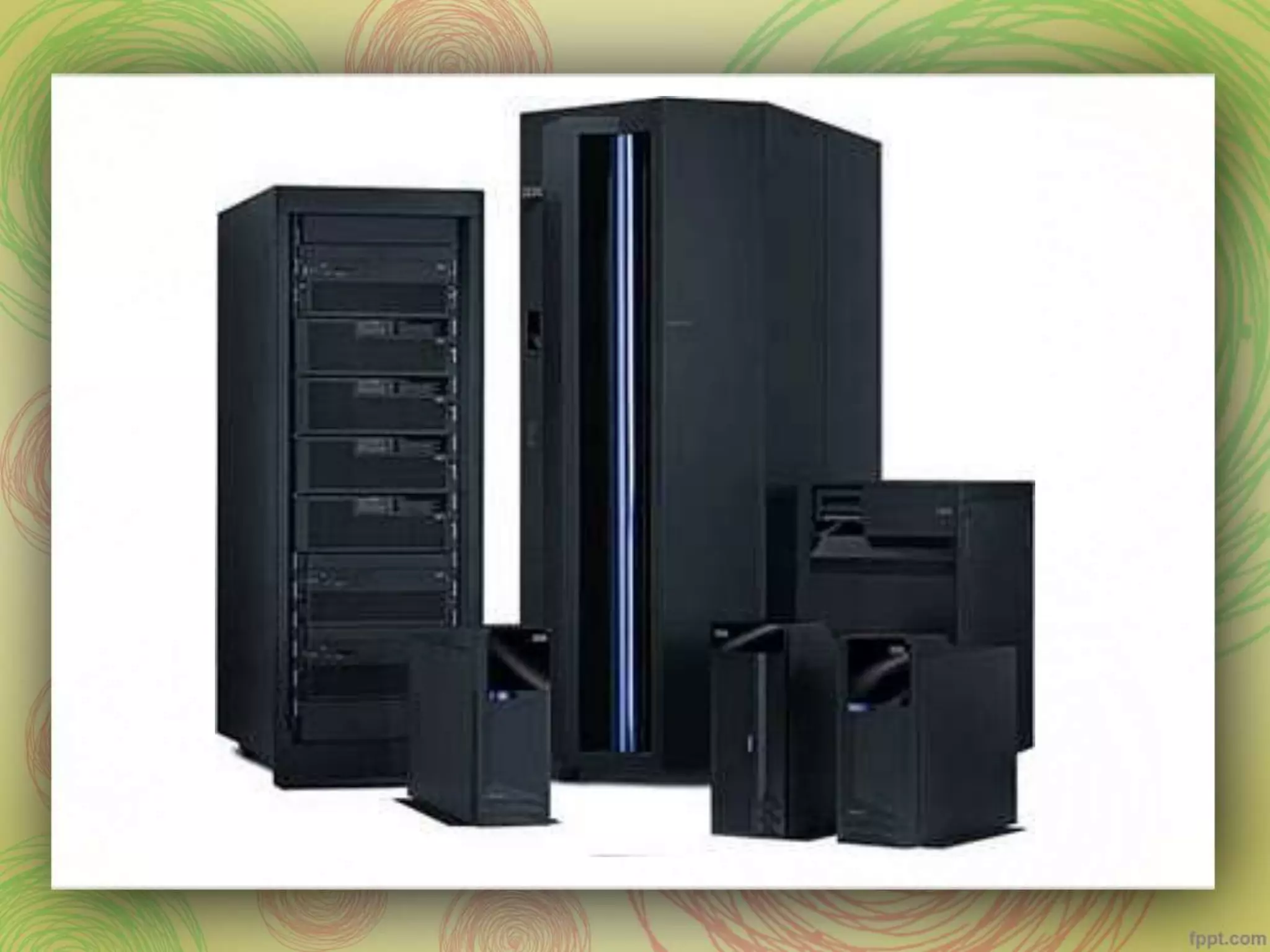
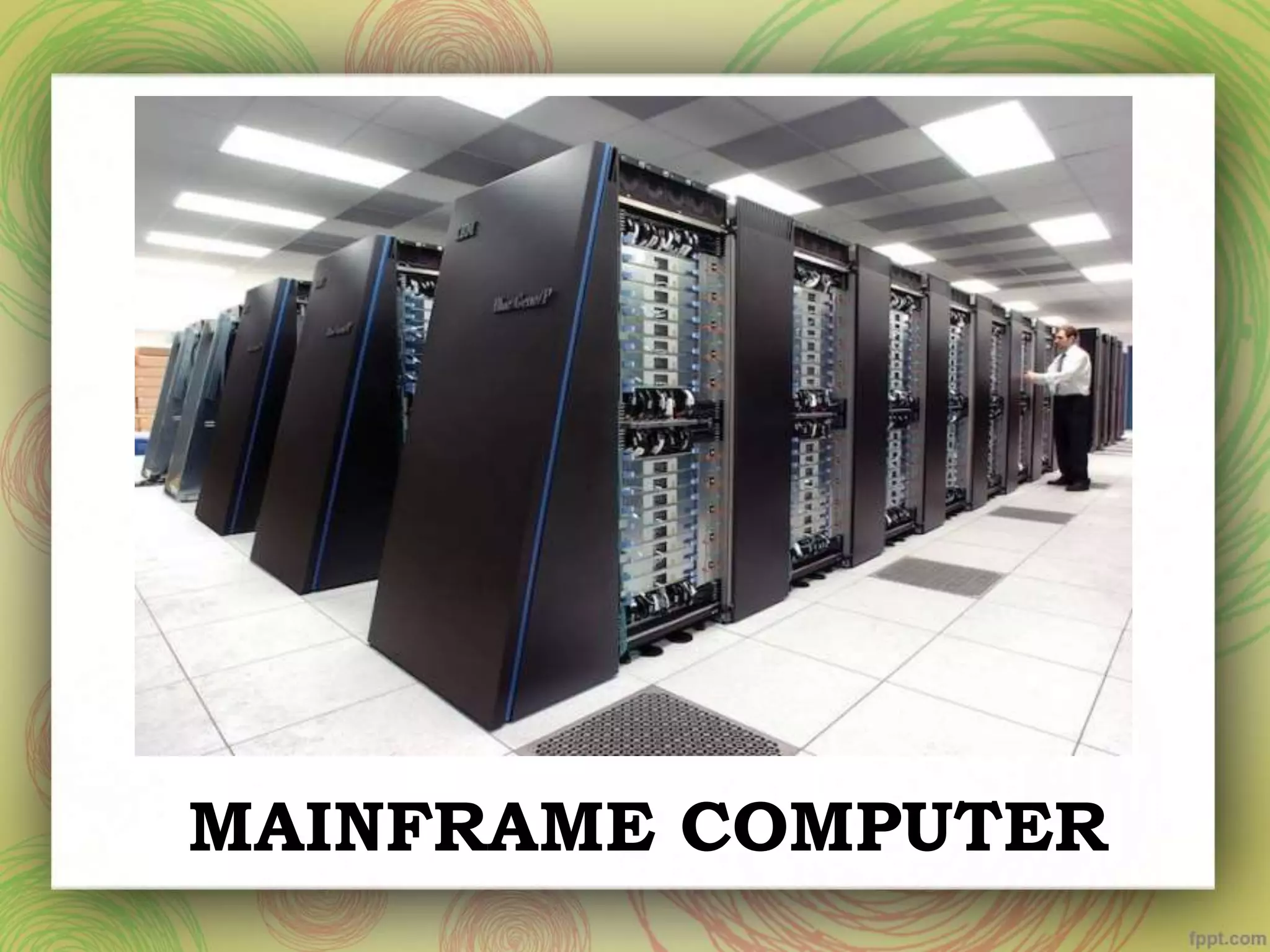
1. Mainframe Computer - Large
organizations use mainframes for
highly critical applications such as bulk
data processing and ERP.
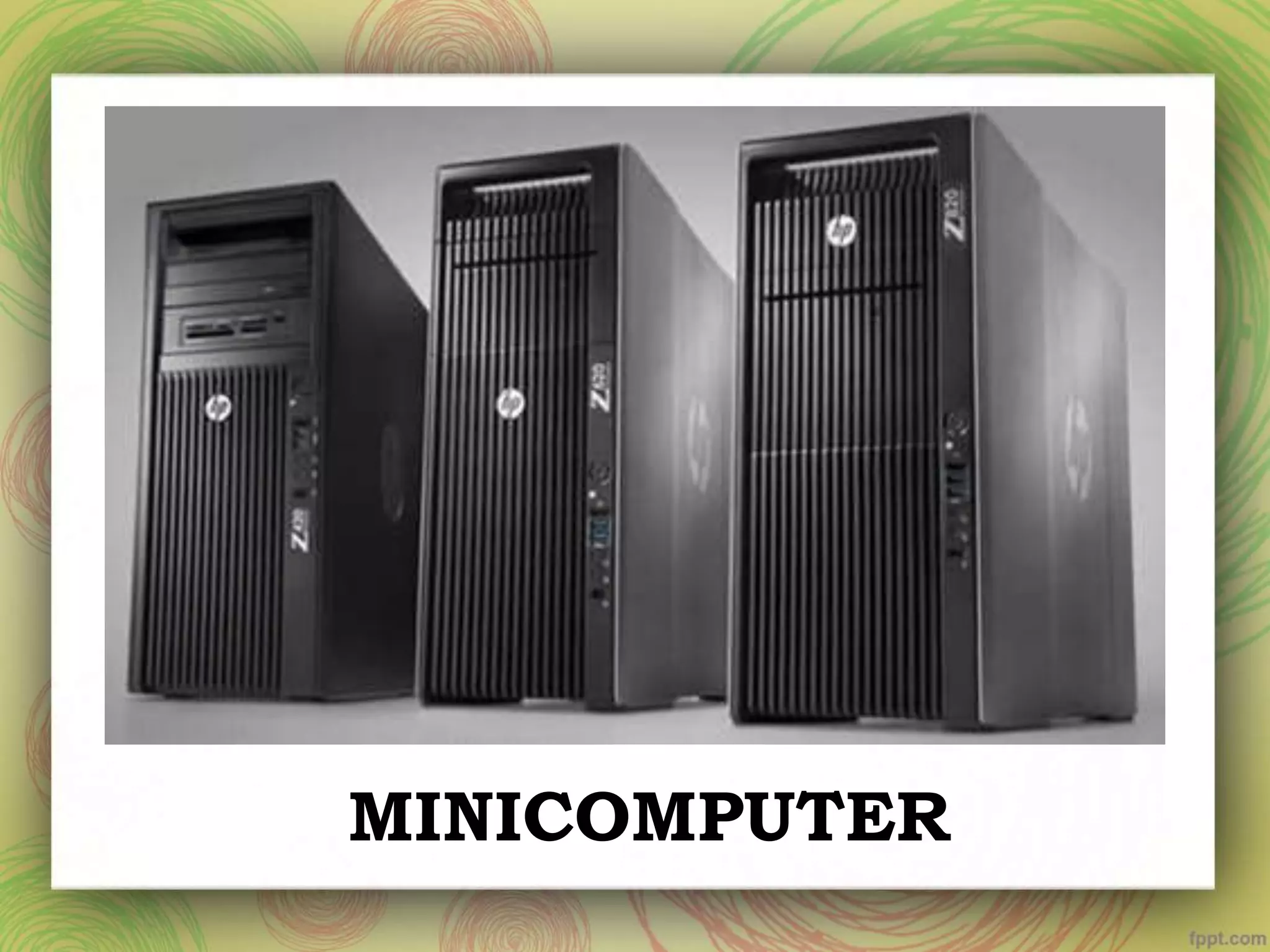
2. Minicomputer – In terms of size and
processing capacity, minicomputers lie
in between mainframes and
microcomputers.
Classification of Computer
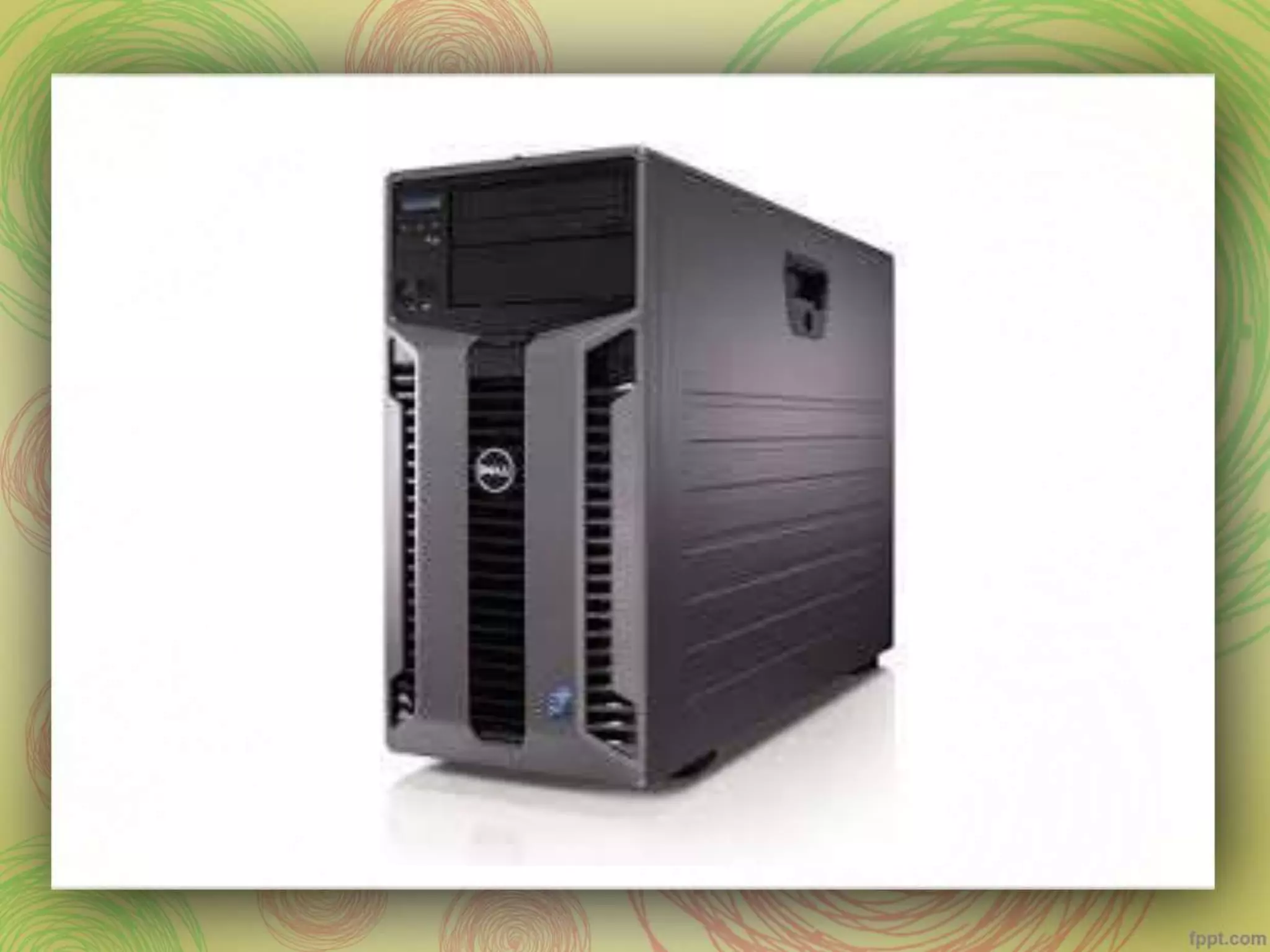
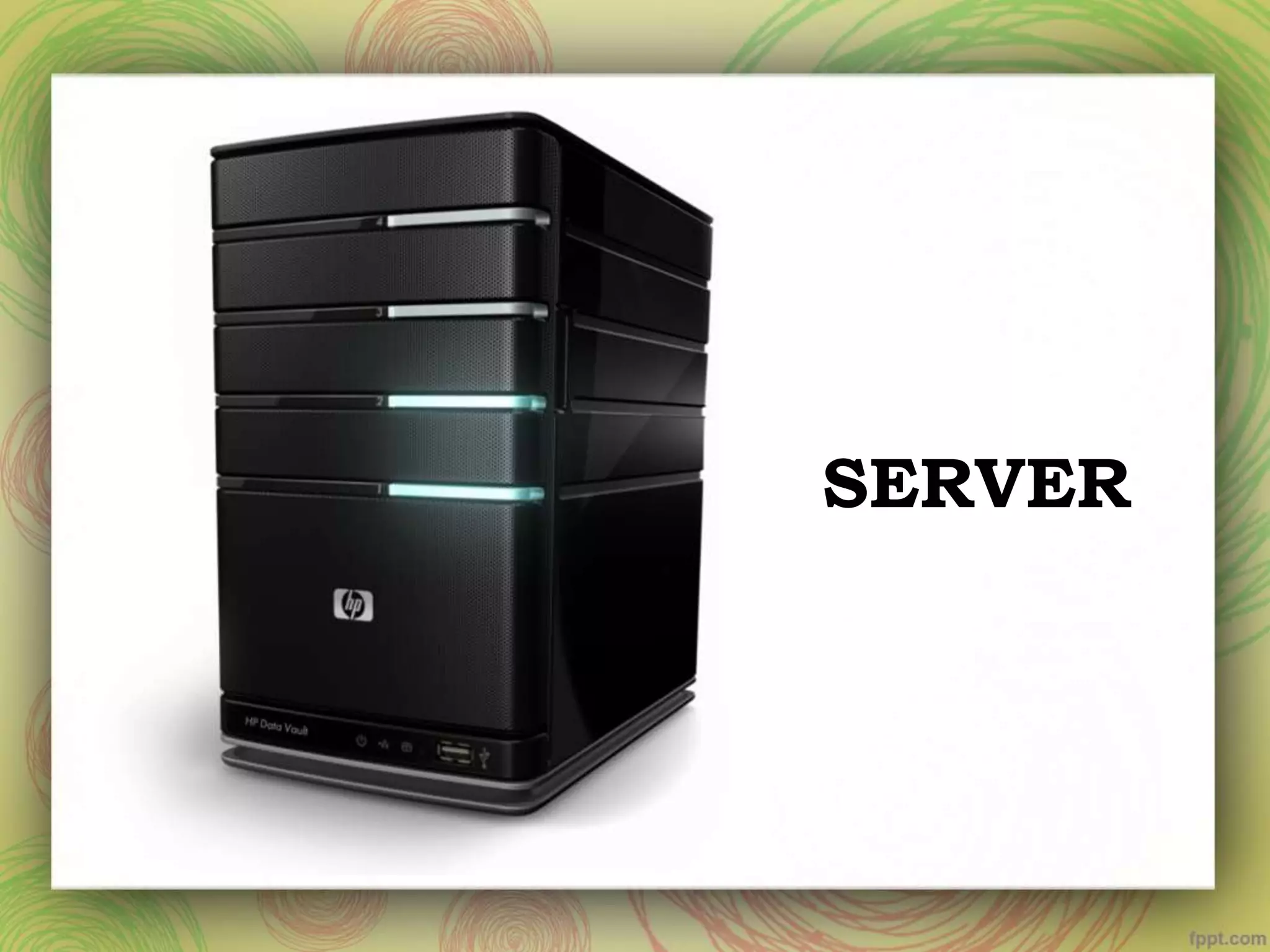
3. Server – They are computers designed to
provide services to client machines in a
computer network. They have larger
storage capacities and powerful
processors.
Classification of Computer
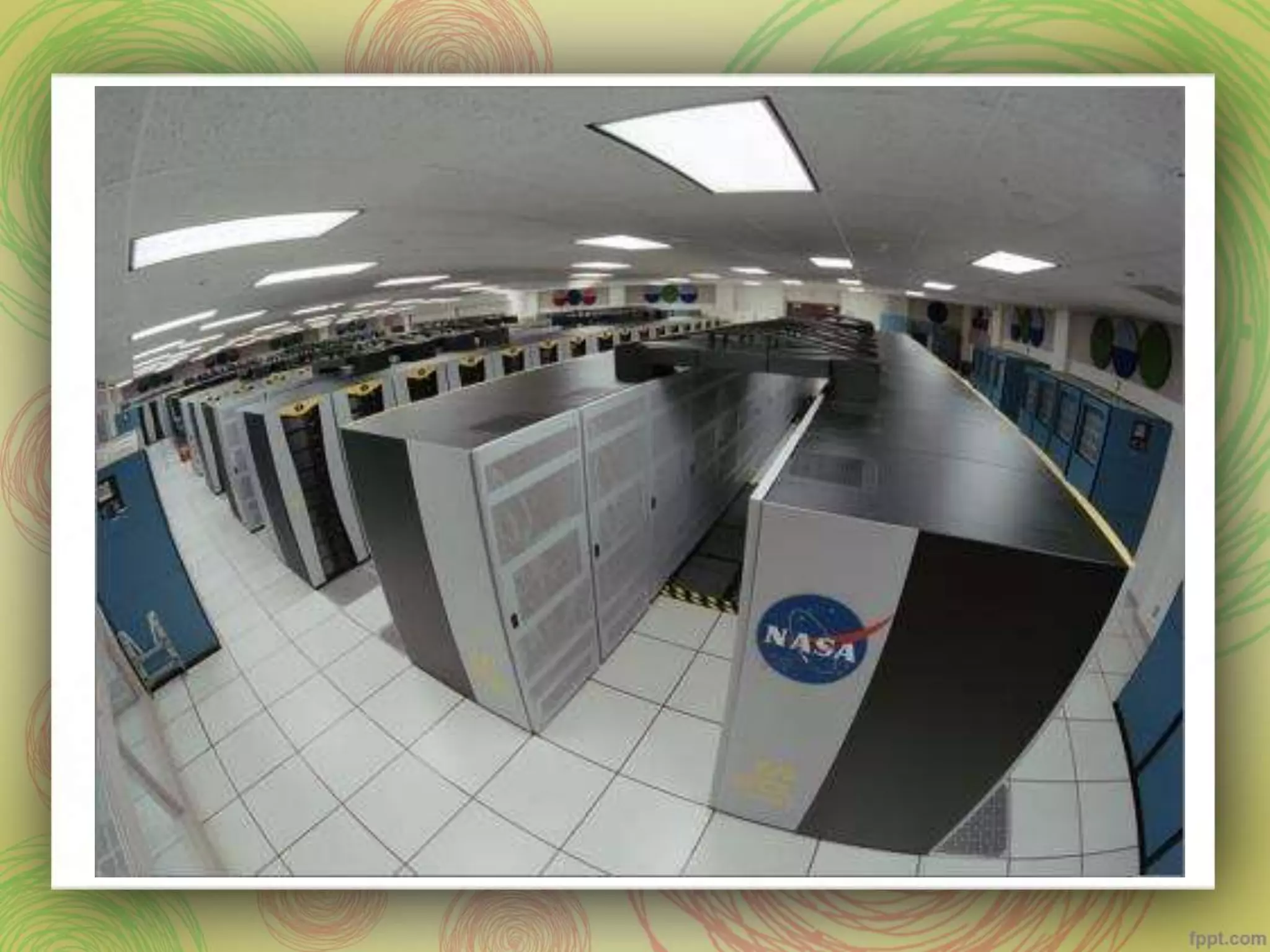
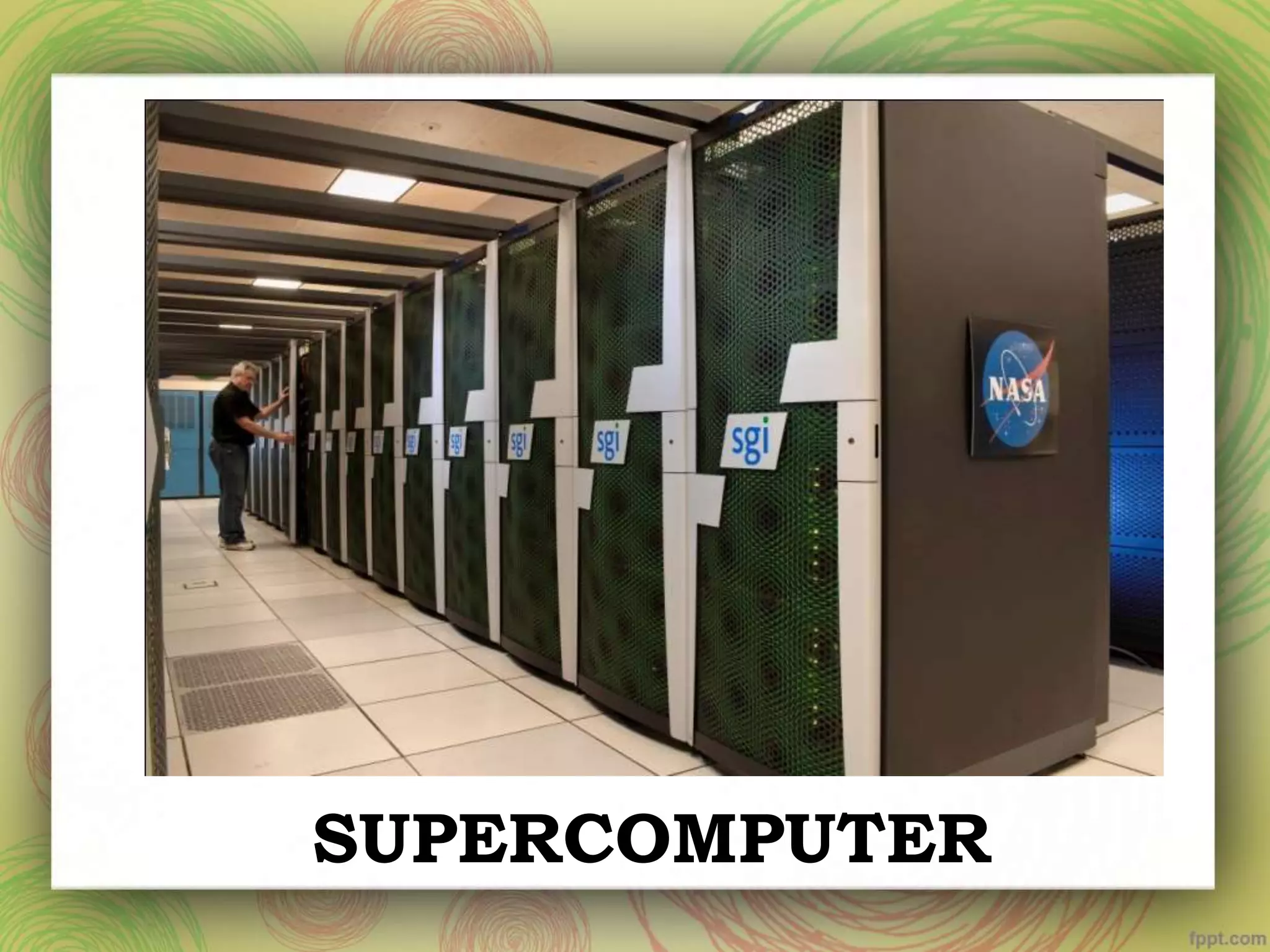
4. Supercomputer – The highly calculation-
intensive tasks can be effectively
performed by means of
supercomputers. Quantum physics,
mechanics, weather forecasting,
molecular theory are best studied by
means of supercomputers.
Classification of Computer
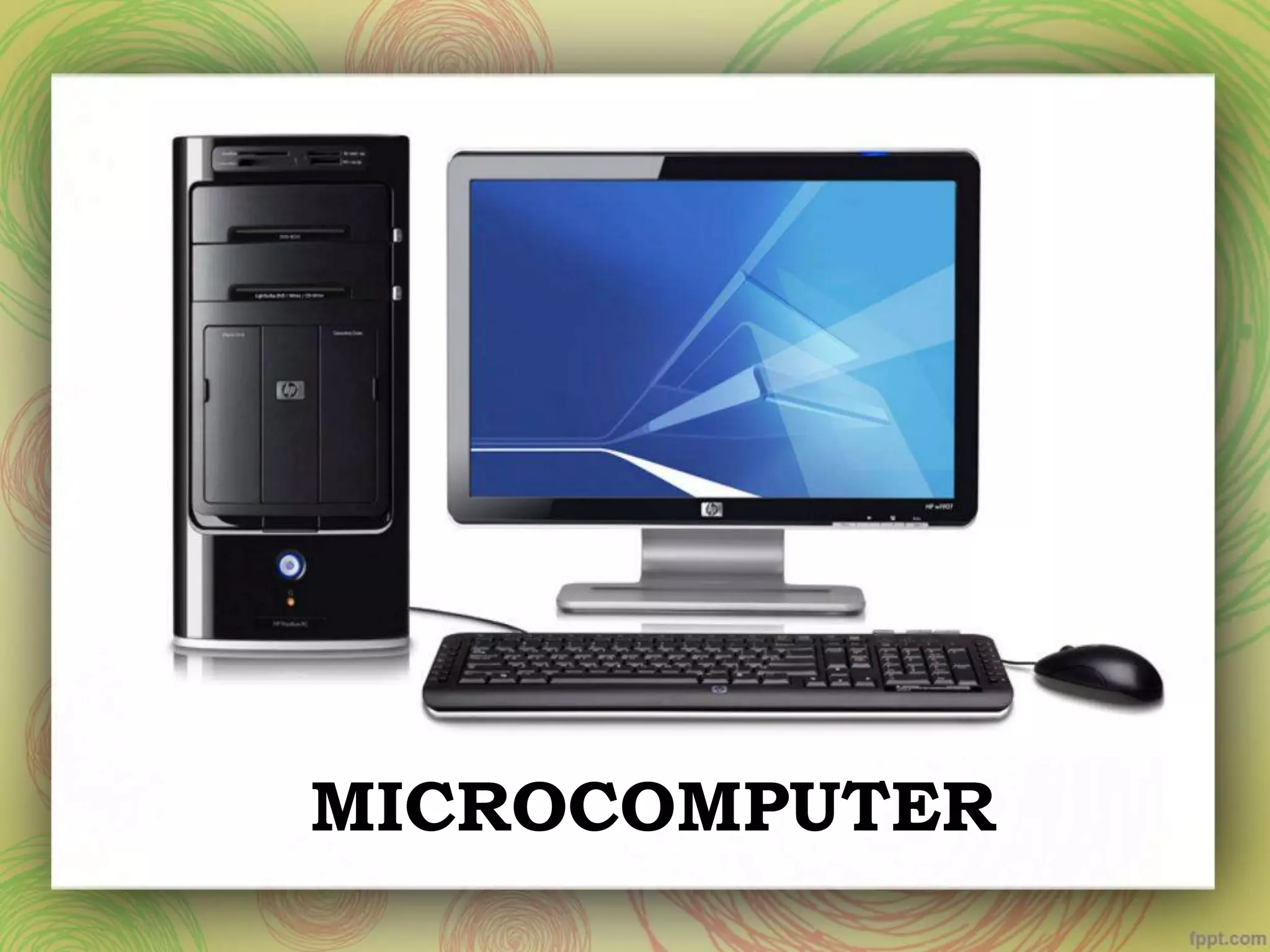
5. Microcomputer - A computer with a
microprocessor and its central
processing unit it is known as a
microcomputer.
- can be called "Personal Computer".
- These computers can fit on desks or
tables and prove to be the best
choice for single-user tasks.
Classification of Computer
Personal computers
come in different
forms
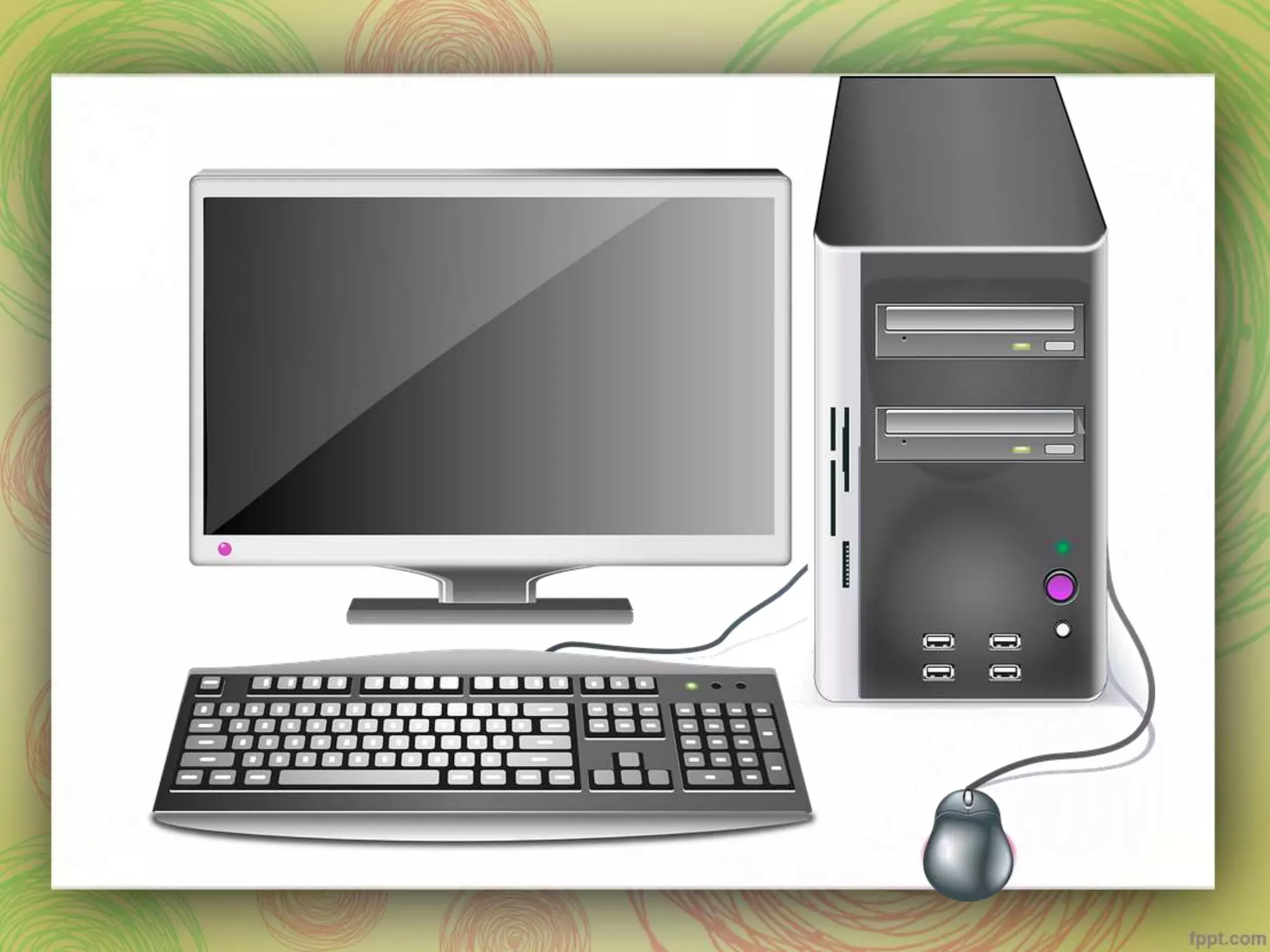
Desktops
• A desktop is intended to be used
on a single location.
• Desktops are widely popular for
daily use in the workplace and
households.
Laptops
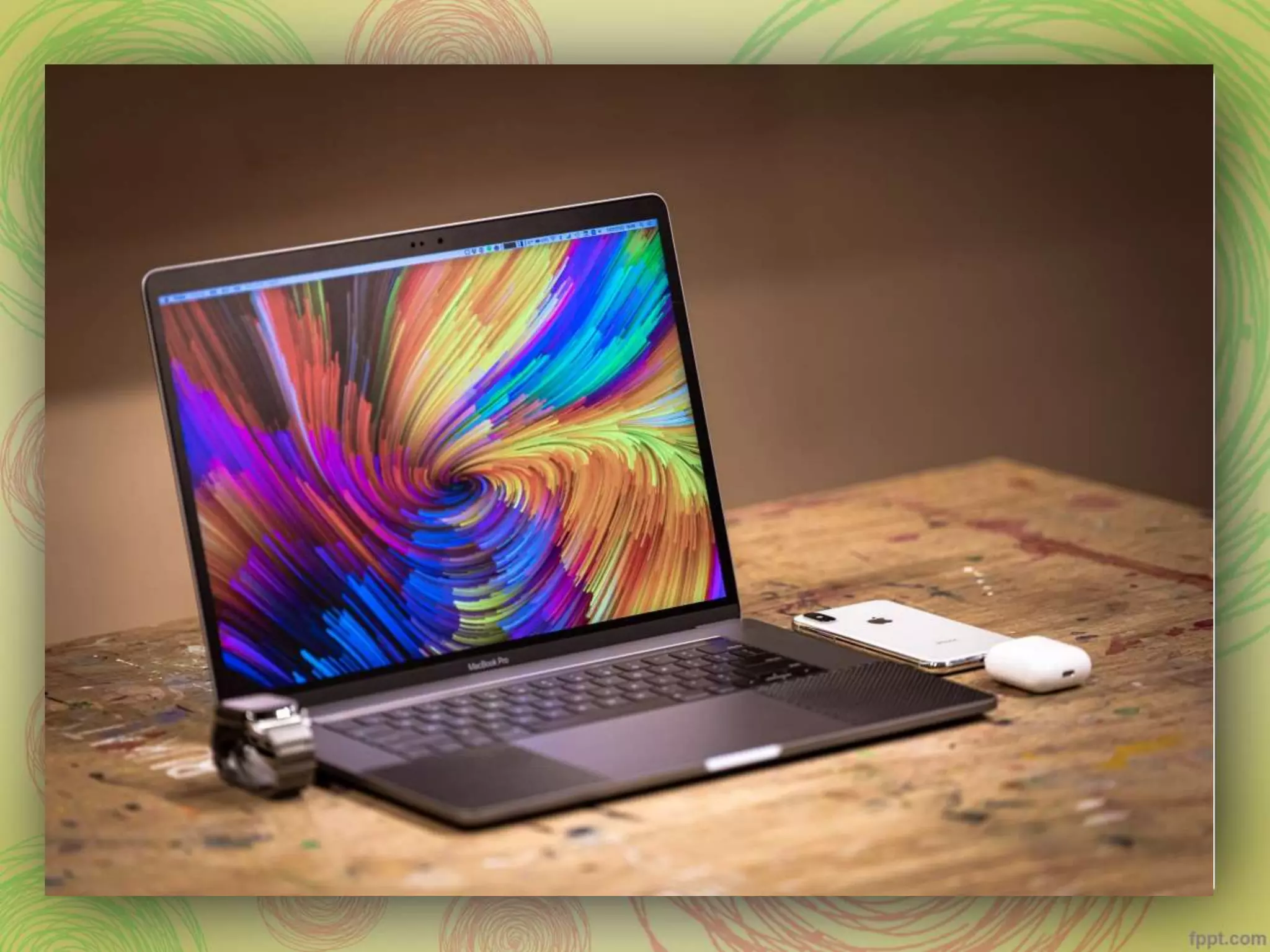
• Similar in operation to desktops.
Miniaturized and optimized for
mobile use.
• Laptops run on a single battery
or an external adapter that
charges the computer batteries.
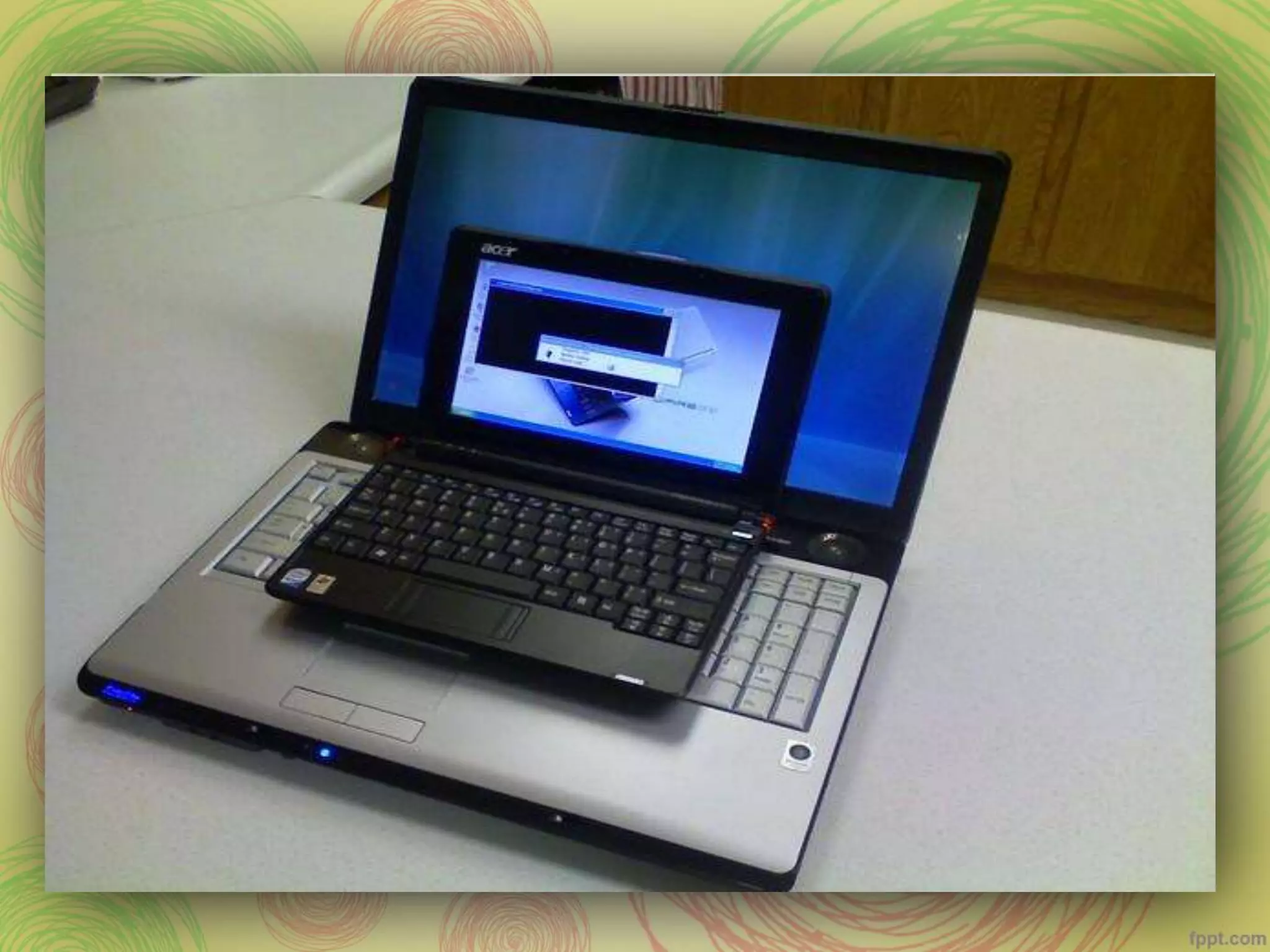
Netbooks
• Fall in the category of laptops
• Inexpensive and smaller in
size.
Personal Digital Assistants
(PDAs):
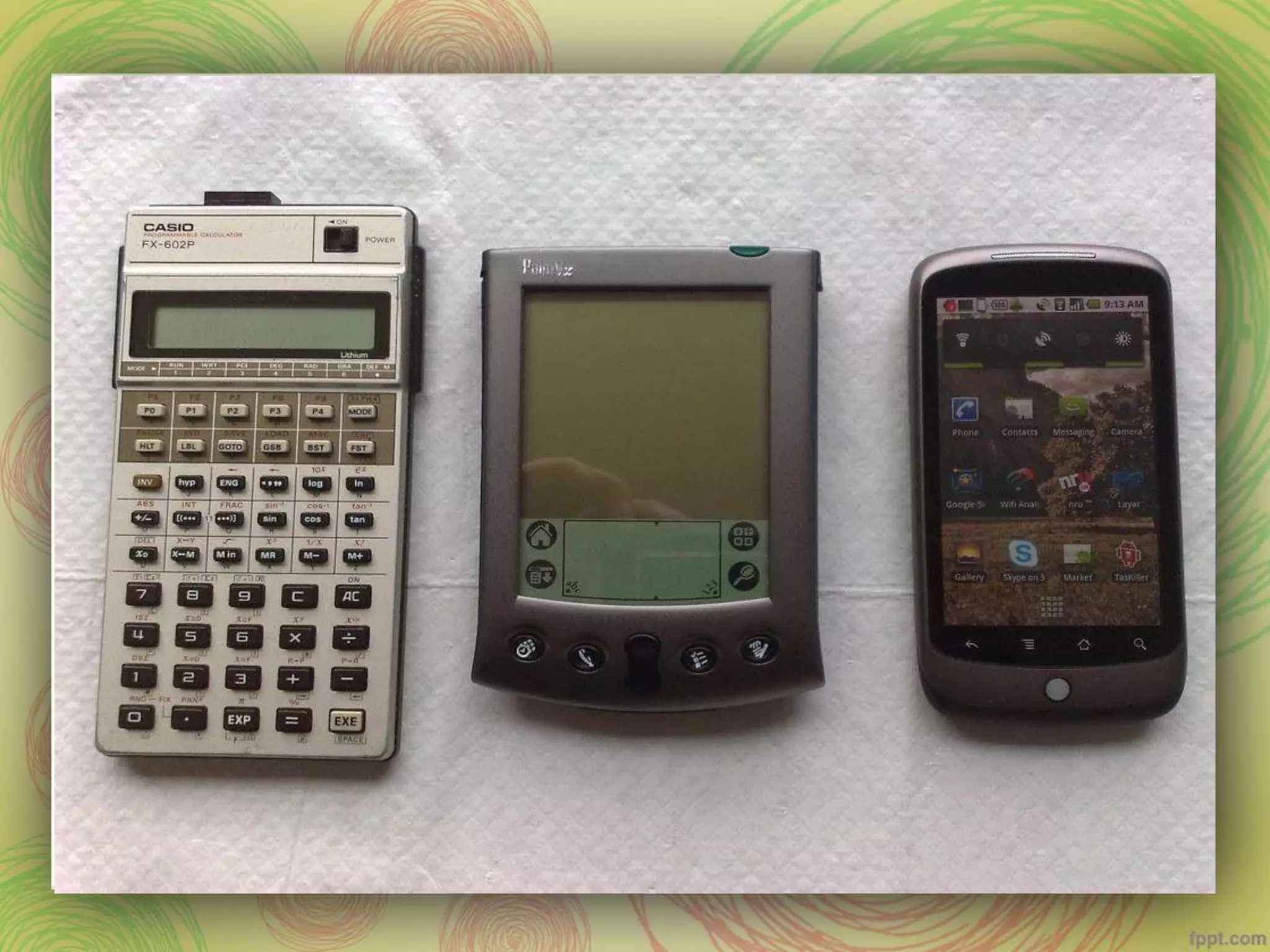
• It is a handheld computer and
popularly known as a palmtop.
• can also be used as portable
audio players, web browsers and
smart phones.
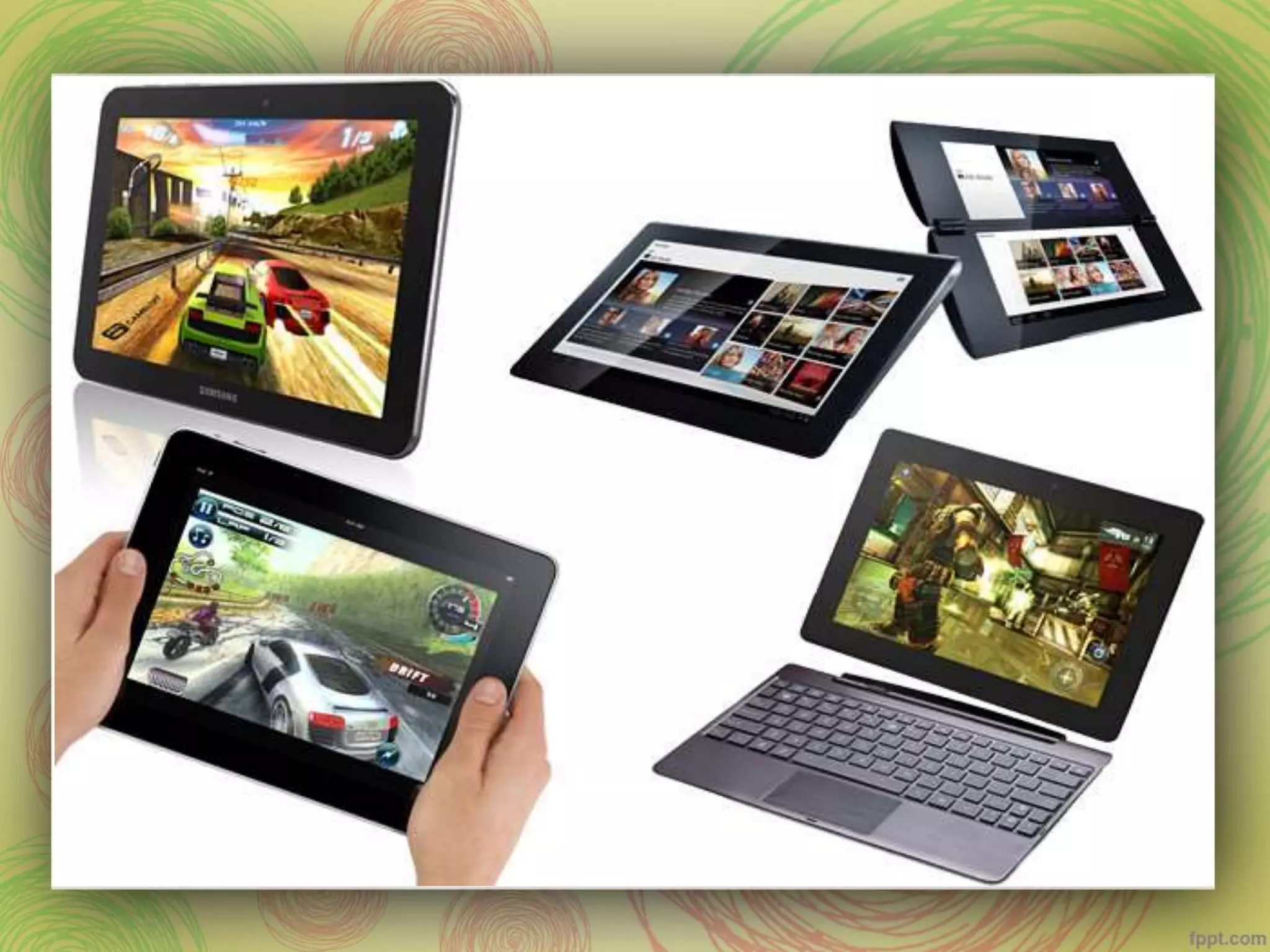
Tablet Computers
• mobile computers that are very
handy to use.
• Tablets come with an onscreen
keyboard or use a stylus or a
digital pen.
• They use the touch screen
technology.
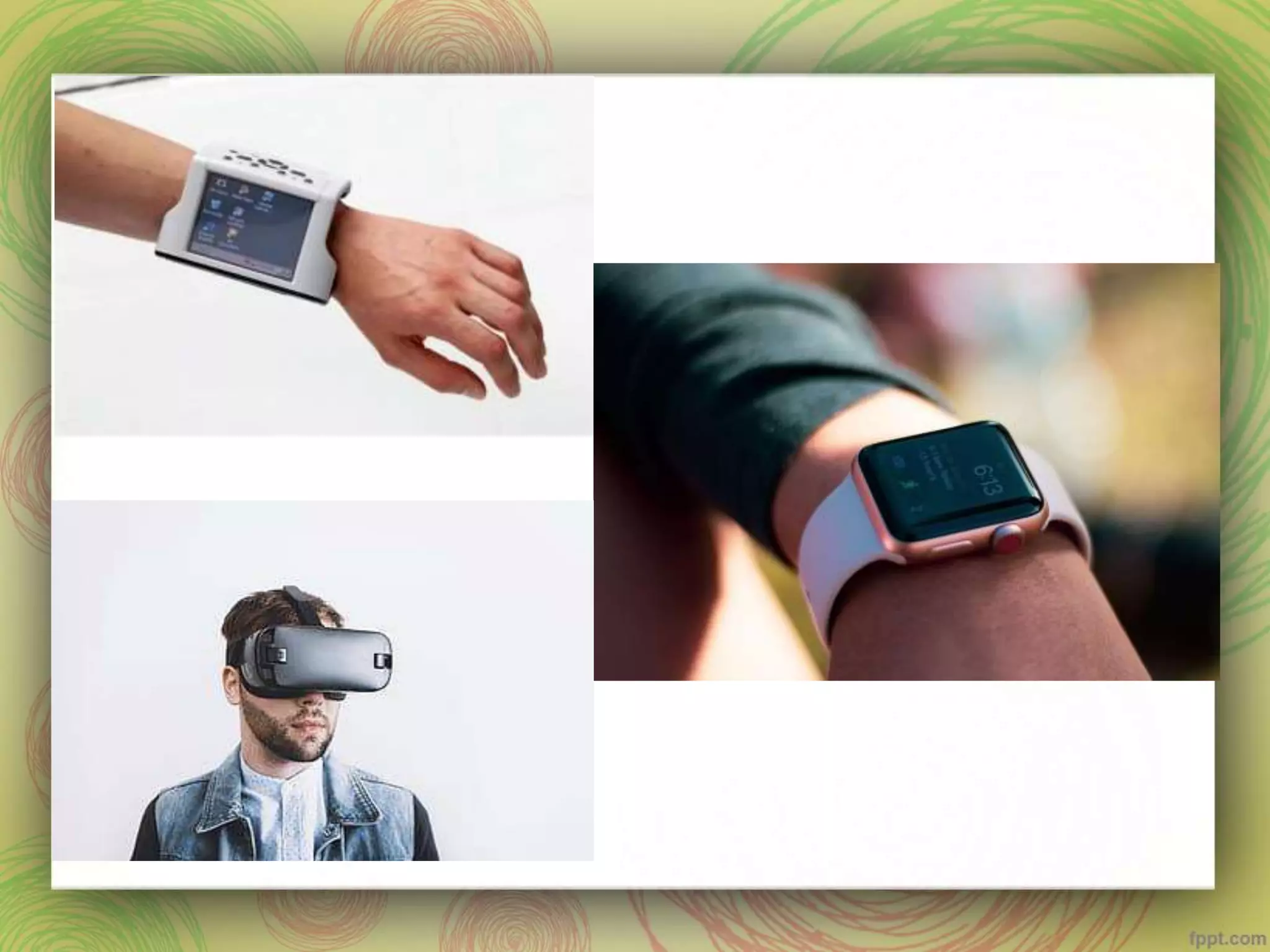
Wearable Computers
• These computers can be worn on
the body and are often used in the
study of behavior modeling and
human health.
• wearable computers are of great
help in tracking human actions.
Activity
In 2 minutes, one of the students
should be able to identify the pictures of
Mainframe Computer, Minicomputer, Server,
Supercomputer, and Microcomputer.
SUPERCOMPUTER
SERVER
MICROCOMPUTER
MINICOMPUTER
MAINFRAME COMPUTER

Types-and-classification-of-computer.pptx

  • 1.
  • 2.
  • 4.
    Types of Computer 1.Analog Computer – It can perform several mathematical operations simultaneously. It uses continuous variables for mathematical operations and utilizes mechanical or electrical energy.
  • 6.
    2. Digital Computer– They use digital circuits and are designed to operate on two states, namely bits 0 and 1. Digital computers are suitable for complex computation and have higher processing speeds. They are programmable. a. General purpose b. Special purpose Types of Computer
  • 8.
    3. Hybrid Computer– These computers are a combination of both digital and analog computers. In this type of computers, the digital segments perform process control by conversion of analog signals to digital ones. Types of Computer
  • 10.
    Classification of Computer 1.Mainframe Computer - Large organizations use mainframes for highly critical applications such as bulk data processing and ERP.
  • 12.
    2. Minicomputer –In terms of size and processing capacity, minicomputers lie in between mainframes and microcomputers. Classification of Computer
  • 14.
    3. Server –They are computers designed to provide services to client machines in a computer network. They have larger storage capacities and powerful processors. Classification of Computer
  • 16.
    4. Supercomputer –The highly calculation- intensive tasks can be effectively performed by means of supercomputers. Quantum physics, mechanics, weather forecasting, molecular theory are best studied by means of supercomputers. Classification of Computer
  • 18.
    5. Microcomputer -A computer with a microprocessor and its central processing unit it is known as a microcomputer. - can be called "Personal Computer". - These computers can fit on desks or tables and prove to be the best choice for single-user tasks. Classification of Computer
  • 19.
  • 21.
    Desktops • A desktopis intended to be used on a single location. • Desktops are widely popular for daily use in the workplace and households.
  • 23.
    Laptops • Similar inoperation to desktops. Miniaturized and optimized for mobile use. • Laptops run on a single battery or an external adapter that charges the computer batteries.
  • 25.
    Netbooks • Fall inthe category of laptops • Inexpensive and smaller in size.
  • 27.
    Personal Digital Assistants (PDAs): •It is a handheld computer and popularly known as a palmtop. • can also be used as portable audio players, web browsers and smart phones.
  • 29.
    Tablet Computers • mobilecomputers that are very handy to use. • Tablets come with an onscreen keyboard or use a stylus or a digital pen. • They use the touch screen technology.
  • 31.
    Wearable Computers • Thesecomputers can be worn on the body and are often used in the study of behavior modeling and human health. • wearable computers are of great help in tracking human actions.
  • 33.
    Activity In 2 minutes,one of the students should be able to identify the pictures of Mainframe Computer, Minicomputer, Server, Supercomputer, and Microcomputer.
  • 34.
  • 35.
  • 36.
  • 37.
  • 38.