sss
Presented by
Preethi S
II MSc Biochemistry
WELCOME TO THE
DEVELOPMENTAL BIOLOGY CLASS
Tissue Engineering – Bone,
Skin, Neural tissue
Tissue Engineering
Tissue engineering is a multidisciplinary field that
combines principles of biology, chemistry, engineering,
and material science to repair or replace the portion of
damaged tissues or organs.
Tissue engineering is a backbone of Reconstructive
Surgery, used for transplantation.
Tissue engineering is a possible way to supply the
surgical implants (Skin, ligament, nerves, heart valves).
Components in Tissue
Engineering
Cells: Building blocks of tissue .
Stem cells-Adult(Highly prefered) and
embryonic stem cells.
Scaffolds: These are three-
dimensional structures made from
biocompatible materials that provide
support for cells to grow, organize, and
form tissue.
Growth factors and bioactive
molecules:These molecules help guide
cell behavior, including proliferation,
differentiation, and tissue formation.
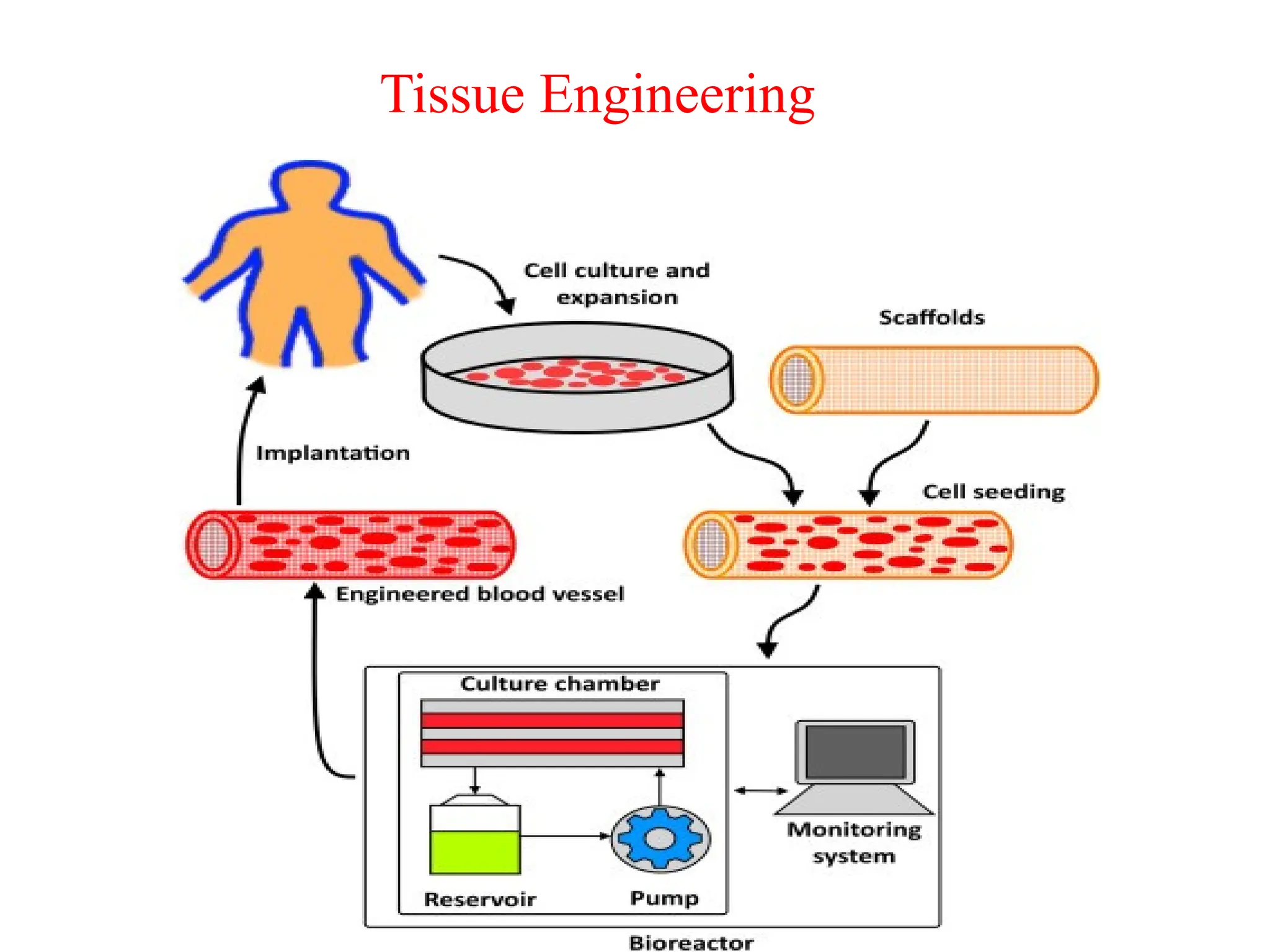
Tissue Engineering
Tissue Engineering in Bone marrow
Bone tissue engineering aims to create
functional bone substitutes that can
replace damaged bone, restore its
structure, and integrate with the
surrounding tissues.
Cells
Osteoblasts: These are bone-forming cells that
synthesize the bone matrix and facilitate
mineralization.
Mesenchymal Stem Cells (MSCs): MSCs are
typically derived from sources like bone marrow,
adipose tissue, or umbilical cord blood.
Osteoprogenitor Cells: These are precursor cells
that can differentiate into osteoblasts.
Induced Pluripotent Stem Cells (iPSCs): These
cells can be reprogrammed from adult cells to behave
like embryonic stem cells.
Scaffolds
Natural Biomaterials: Examples include
collagen, chitosan, hyaluronic acid, and fibrin,
which closely resemble the bone’s extracellular
matrix (ECM).
Synthetic Biomaterials: Common materials
include poly(lactic-co-glycolic acid) (PLGA),
polycaprolactone (PCL), calcium phosphate,
and hydroxyapatite.
Bone Morphogenetic Proteins (BMPs): BMPs
are potent signaling molecules that stimulate the
differentiation of stem cells into osteoblasts.
BMP-2, BMP-7, and BMP-9 are commonly
used in bone tissue engineering.
Vascular Endothelial Growth Factor (VEGF):
VEGF promotes angiogenesis (formation of new
blood vessels), which is critical for nutrient supply
of newly formed bone.
Fibroblast Growth Factor (FGF) and
Transforming Growth Factor-Beta (TGF-β)
also play roles in regulating cell proliferation and
differentiation.
Growth Factors
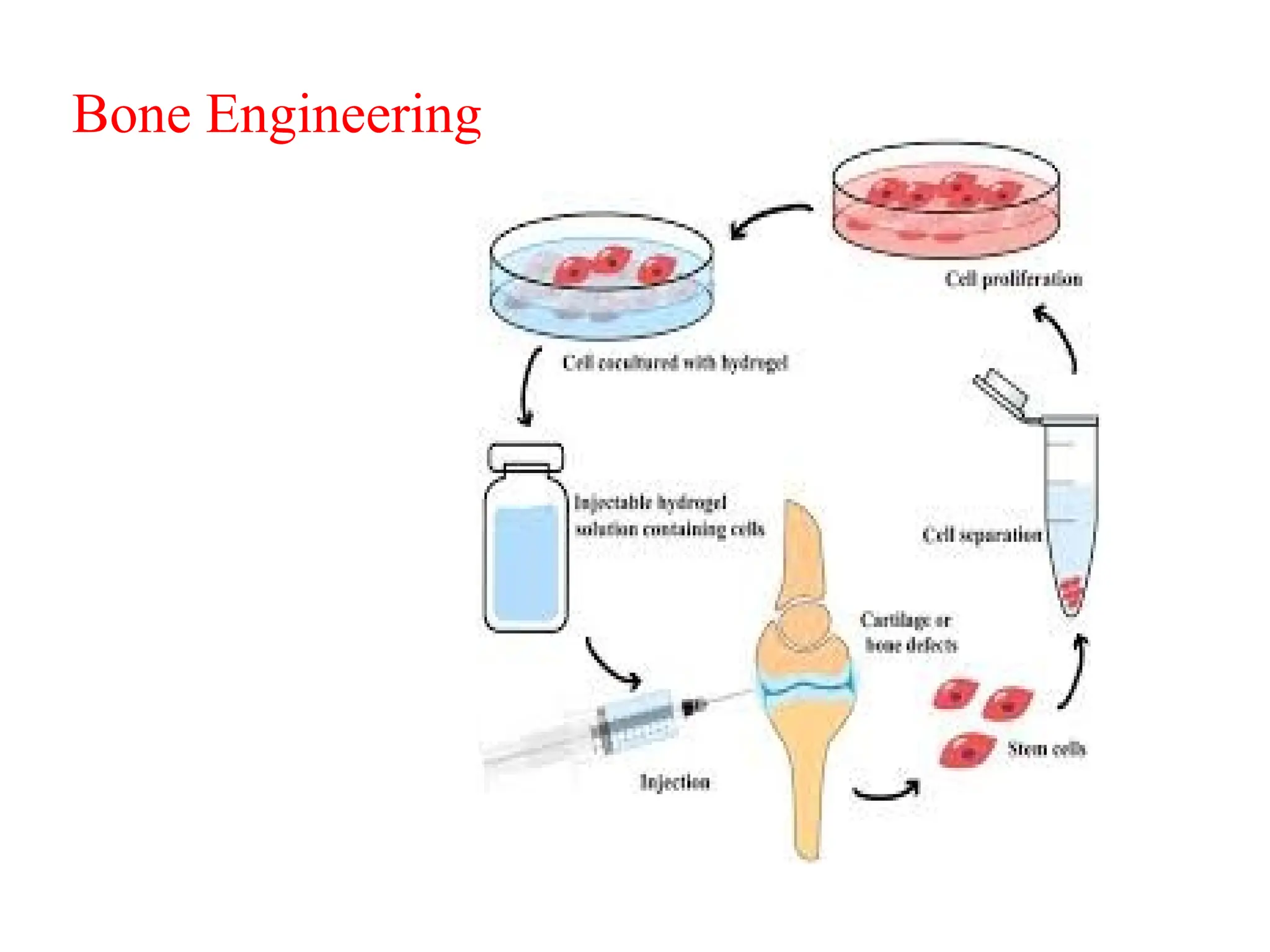
Bone Engineering
3D Cell Culture and Bioreactors
3D cell culture systems are used to stimulate the cells
to grow in three dimensions, better mimicking natural
bone architecture and improving differentiation.
Bioreactors are used to create optimal conditions for
the growth and development of engineered bone, which
are important for promoting bone formation and
maturation.
Methods for Bone Tissue
Engineering
Scaffolds provide a physical template
Partially or Fully Mineralized: scaffolds may be coated with
hydroxyapatite (HA), a naturally occurring mineral in bone, to
provide better integration with the body and promote
mineralization.
Composed of Biodegradable Polymers: Materials such as
PLGA or PCL degrade over time and are gradually replaced by
newly formed bone tissue.
Bioactive Materials: Bioactive glass or hydroxyapatite-based
scaffolds are used to mimic the mineralized matrix of bone,
encouraging osteoblasts to attach, proliferate, and mineralize.
Scaffold-Based Approaches
Mesenchymal Stem Cells (MSCs)
These stem cells can differentiate into osteoblasts in response
to certain signaling molecules, such as BMPs.
MSCs can be derived from sources like bone marrow,
adipose tissue, and umbilical cord blood.
Gene therapy is sometimes used to enhance the
differentiation of stem cells into osteoblasts.
Stem Cell-Based Therapy
3D Bioprinting for Bone
Regeneration
Bioprinting uses 3D printing techniques to create precise,
patient-specific scaffolds that can promote bone
regeneration.
Bioinks containing stem cells, osteoblasts, and
biomaterials can be printed into a bone-like structure
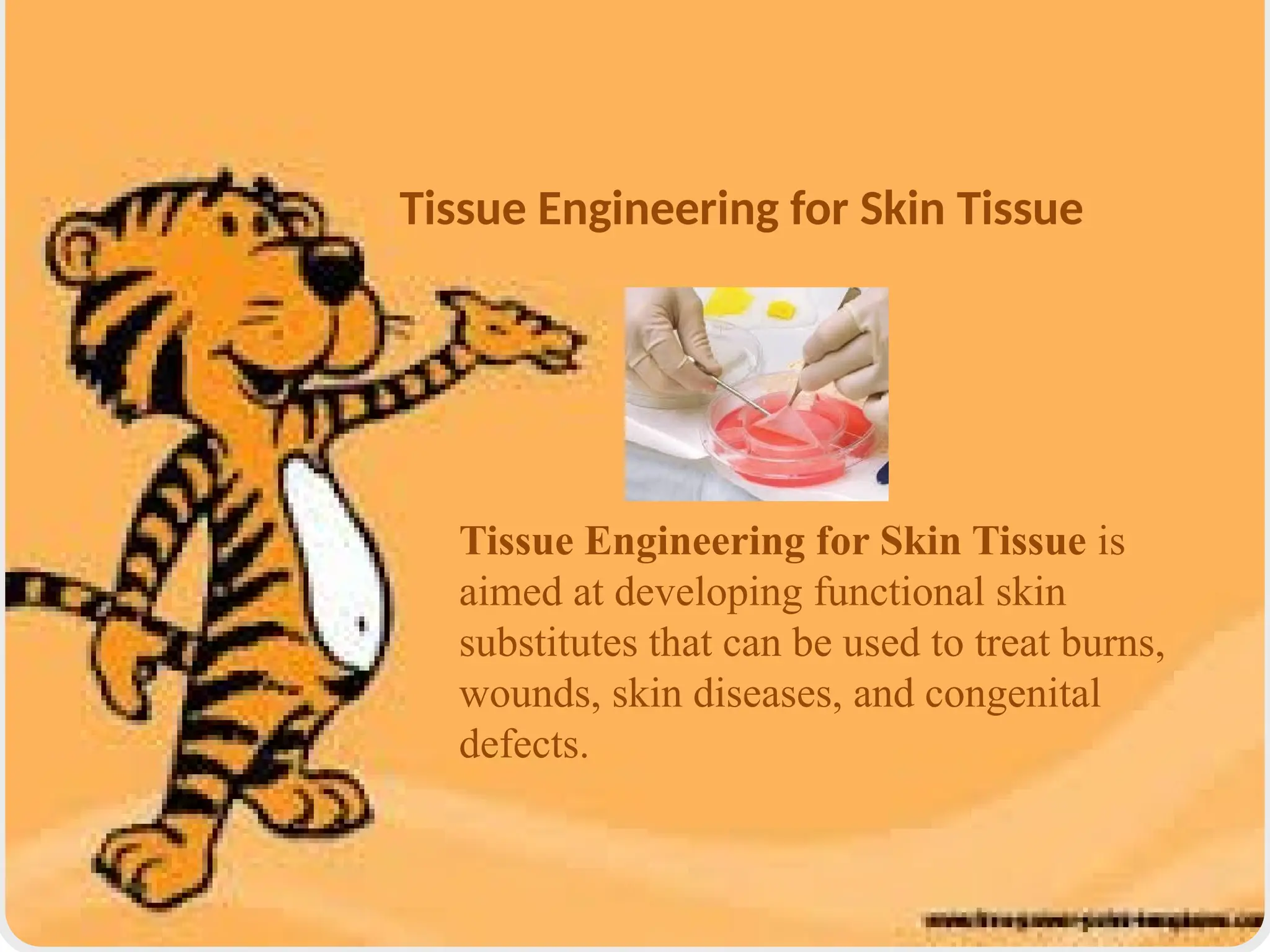
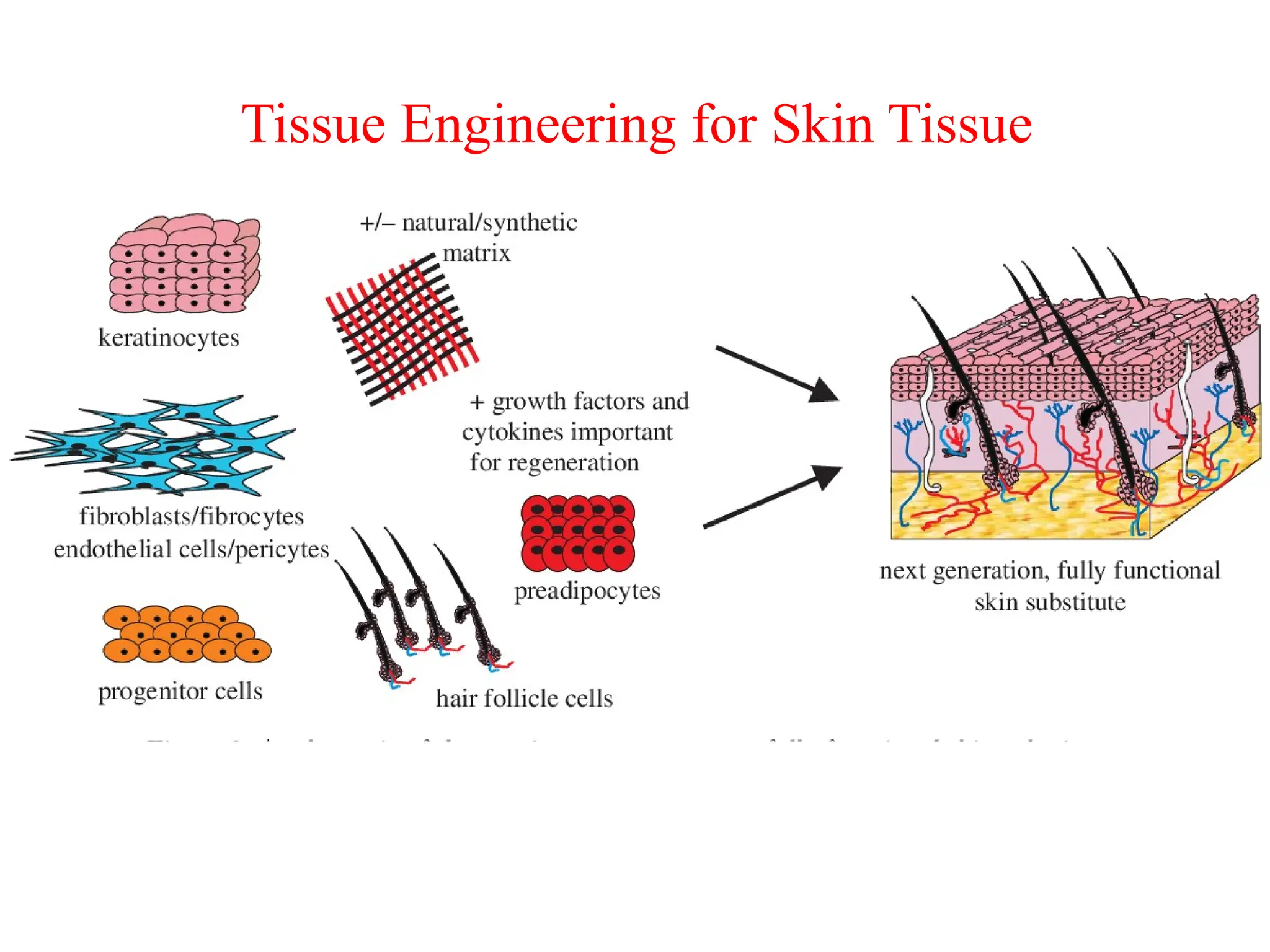
Tissue Engineering for Skin Tissue is
aimed at developing functional skin
substitutes that can be used to treat burns,
wounds, skin diseases, and congenital
defects.
Tissue Engineering for Skin Tissue
1. Cells: The choice of cells for skin tissue
engineering is crucial.
Keratinocytes: Found - outermost layer of the
skin (epidermis).
Produce - keratin and provide a protective
barrier.
Fibroblasts: Found - dermis
Produce – collagen, extracellular matrix
providing structural support and elasticity to
the skin.
Melanocytes: Produce - melanin and
contribute to skin pigmentation, for burns and
pigmentation disorders.
2.Scaffolds: Scaffolds serve as a structural
framework to support the growth, proliferation,
and differentiation of cells.
Natural Biomaterials: Examples include
collagen, hyaluronic acid, fibrin, and
chitosan. These materials are
biocompatible and promote cell attachment,
migration, and differentiation.
Synthetic Biomaterials: Polycaprolactone
(PCL), polylactic acid (PLA), and
polyglycolic acid (PGA) are synthetic
polymers to control degradation rates and
mechanical properties.
Decellularized ECM: Decellularized skin or
dermal tissue from animals or humans can be
used as a scaffold, providing a natural ECM
that promotes cellular activities such as
proliferation, migration, and differentiation.
3.Growth Factors: Growth factors are essential for
directing cell behavior, promoting cell proliferation,
differentiation, and tissue maturation.
Epidermal Growth Factor (EGF): Stimulates
keratinocyte proliferation and differentiation.
Fibroblast Growth Factor (FGF): Promotes the
proliferation of fibroblasts and angiogenesis
(formation of new blood vessels).
Transforming Growth Factor Beta (TGF-β):
Plays a role in wound healing, collagen
synthesis, and tissue remodeling.
Vascular Endothelial Growth Factor (VEGF):
Important for promoting blood vessel formation
and ensuring vascularization of the engineered
skin.
Tissue Engineering for Skin Tissue
Techniques for Skin Tissue
Engineering
1. 2D and 3D Cell Culture:
2D Culture: Cells are cultured on flat surfaces. 2D cultures
do not replicate the three-dimensional structure of skin
tissue.
3D Culture: Skin tissue engineered in 3D culture systems
better mimics the complexity of natural skin. Cells growth
leading to better differentiation and functionality.
2.Constructing Epidermal and Dermal Layers:
Epidermal Layer: The epidermis is often created by
culturing keratinocytes on a biodegradable scaffold.
Dermal Layer: The dermis is engineered by seeding
fibroblasts onto a scaffold made of collagen or other
ECM-like materials.
3.Co-culture Systems:
A co-culture system involves culturing multiple skin cell
types together, such as keratinocytes, fibroblasts, and
endothelial cells, to create a more functional skin construct.
4.Bio-printing:
3D bioprinting is a cutting-edge technique where cells,
growth factors, and biomaterials are deposited layer by layer to
create precise skin constructs. Bioprinting allows for the
creation of highly customized skin substitutes, which can be
tailored for specific patients based on their skin defects.
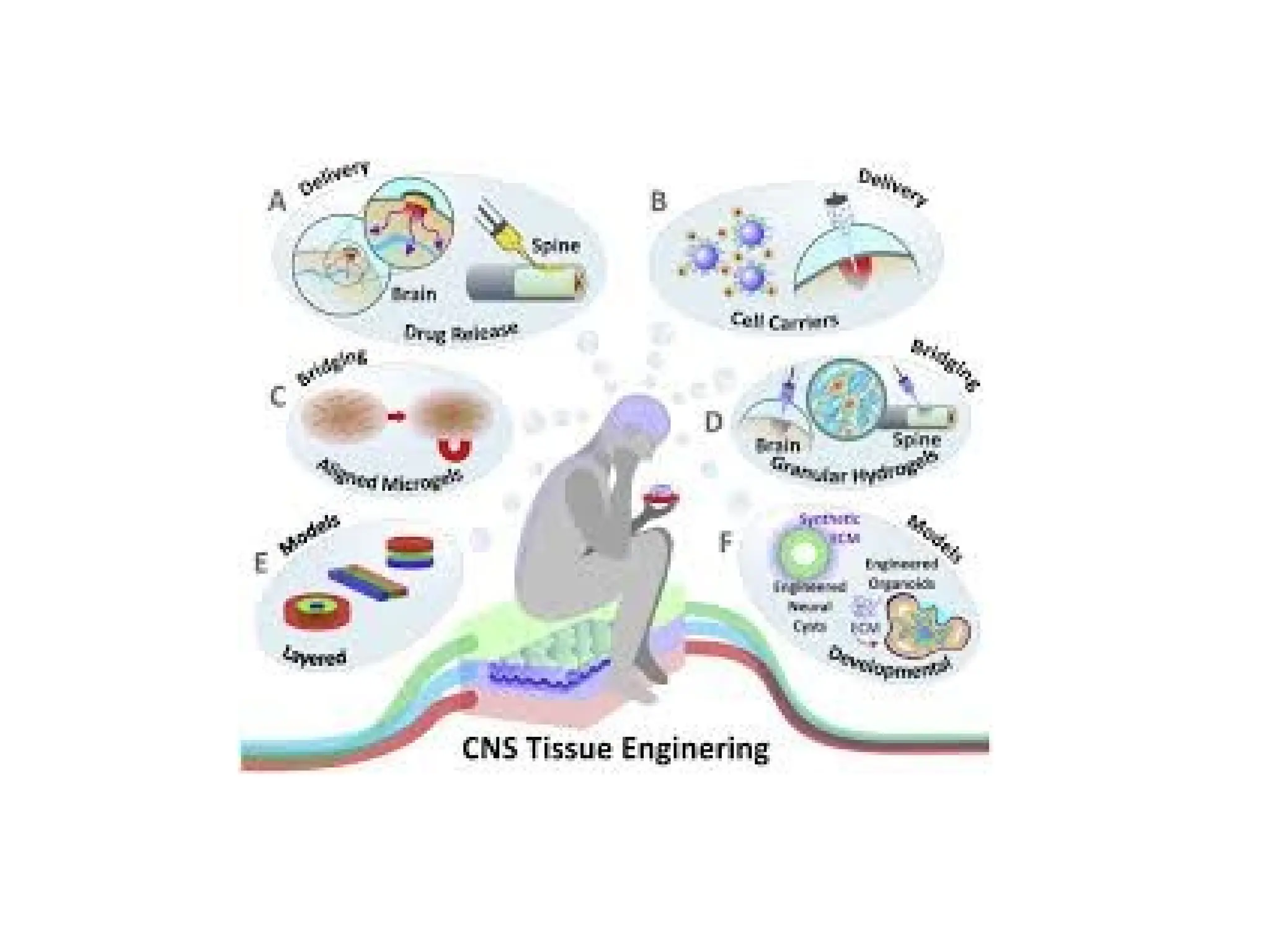
Tissue Engineering for Neural Tissue aims
to create neural-like structures that can
restore function or support recovery in cases
of neurodegenerative diseases, traumatic
injuries, or congenital disorders.
Tissue Engineering for Neural Tissue
Neurons: Neurons can be differentiated from stem
cells or induced pluripotent stem cells (iPSCs).
Primary neurons, however, are often difficult to
culture and expand, so stem cell-derived neurons are
frequently used.
Neural Stem Cells (NSCs): These multipotent
cells can differentiate into neurons, astrocytes, and
oligodendrocytes, the three main cell types in the
nervous system. NSCs can be derived from
embryonic tissue, fetal tissue, or adult neural
tissue.
Cells Used in Neural Tissue Engineering
Induced Pluripotent Stem Cells (iPSCs): iPSCs can
be generated from adult somatic cells (such as skin or
blood cells) by reprogramming them into a pluripotent
state. These cells have a promising approach for
creating patient-specific neural tissues for therapeutic
purposes.
Scaffolds provide structural support for the
growth and differentiation of neural cells,
promote cell adhesion, proliferation, and
differentiation.
Natural Biomaterials: Materials such as
collagen, fibrin, alginate, hyaluronic acid, and
chitosan are used to promote cell adhesion and
differentiation.
Scaffolds Used in Neural Tissue Engineering
Synthetic Biomaterials: Materials like polylactic
acid (PLA), and polyethylene glycol (PEG) can be
tailored for specific mechanical and degradation
properties have controlled degradation rates or
mechanical properties .
Conductive Polymers: Conductive polymers such
as polypyrrole and PEDOT (poly(3,4-
ethylenedioxythiophene)) are used to support electrical
activity and facilitate communication between neurons
in engineered tissue.
Growth factors and signaling molecules play an
essential role in promoting neural differentiation,
growth, survival, and regeneration.
Nerve Growth Factor (NGF): NGF is critical for
the growth, maintenance, and survival of certain types
of neurons, particularly in the peripheral nervous
system (PNS).
Brain-Derived Neurotrophic Factor (BDNF):
BDNF is essential for the survival and differentiation
of neurons in the central nervous system (CNS) and
plays a key role in synaptic plasticity, learning, and
memory.
Growth Factors and Bioactive Molecules
Fibroblast Growth Factor (FGF): FGF promotes
the proliferation and differentiation of neural
progenitor cells and is often used to expand NSCs in
vitro.
Vascular Endothelial Growth Factor (VEGF):
VEGF promotes angiogenesis (formation of new
blood vessels), which is essential for the survival and
growth of engineered neural tissues, particularly in
the repair of brain and spinal cord injuries.
Strategies for Neural Tissue
Engineering
Stem Cell-Based Therapies
Neural Stem Cells (NSCsThey can be isolated from the
patient’s brain or spinal cord and expanded in vitro. NSCs can
be directed to differentiate into neurons, astrocytes, and
oligodendrocytes.
Induced Pluripotent Stem Cells (iPSCs. iPSCs can be
reprogrammed from any somatic cell (e.g., skin cells) and
differentiated into neurons for use in neural tissue engineering
applications.
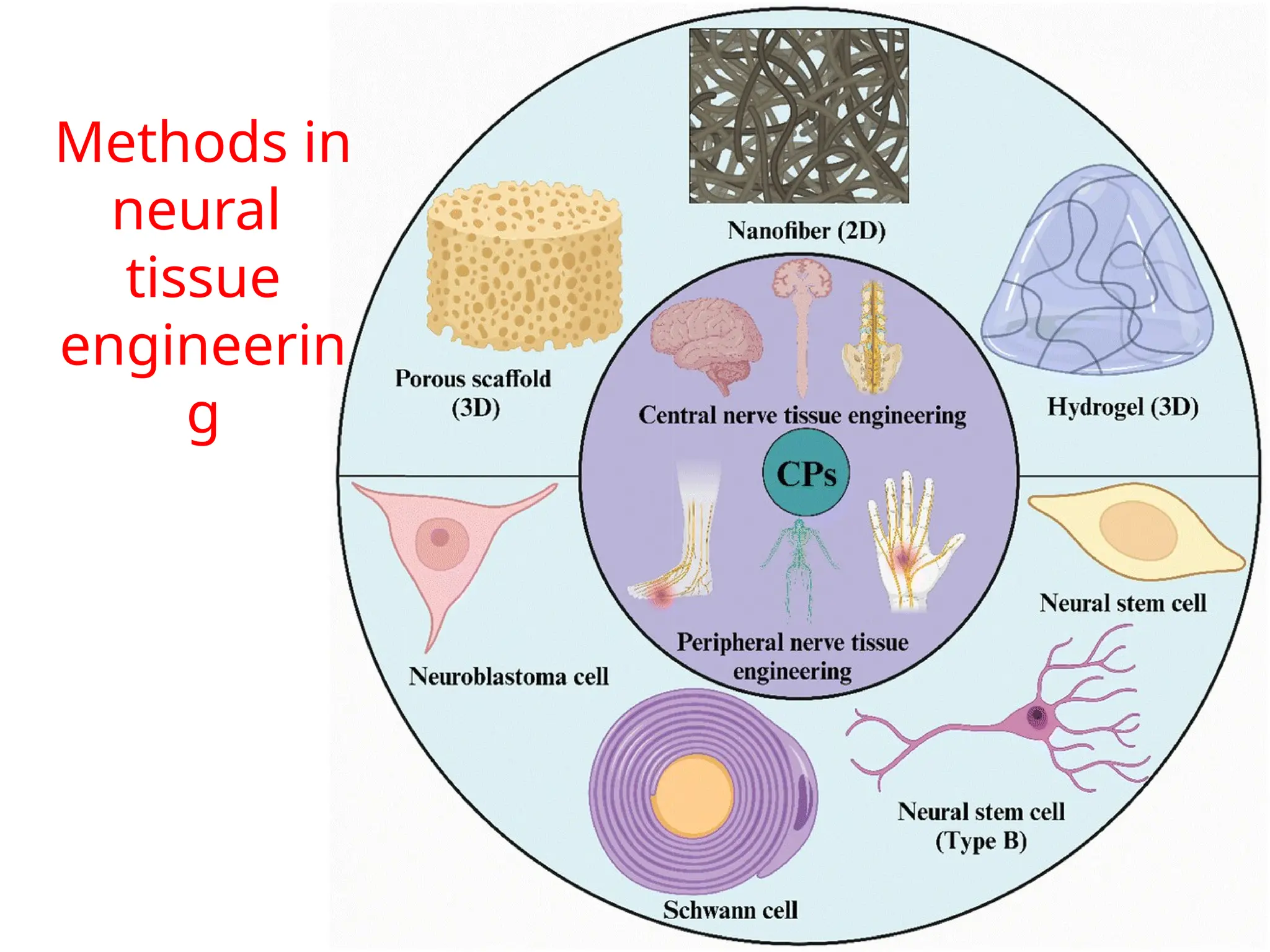
Methods in
neural
tissue
engineerin
g
scaffolds can be designed to guide axonal growth, promote
cell differentiation, and facilitate the formation of neural
networks.
Nanofiber Scaffolds: Nanofibers mimic the alignment of
collagen fibers in the natural ECM and are useful for guiding
the growth of axons and neurons. Electrospinning techniques
are often used to create nanofiber-based scaffolds.
Micropatterned Scaffolds: Microfabricated scaffolds can
be designed with specific patterns and topography that
encourage neurons to grow in specific directions, aiding in
the formation of complex neural networks.
Scaffold-Based Approaches
Electrical stimulation is a key tool in neural tissue
engineering, as neurons are highly responsive to electrical
signals. Applying electrical fields to scaffolds can promote
neural cell differentiation, enhance the formation of synapses,
and support axon guidance and growth.
Conductive Scaffolds: Scaffolds made from conductive
polymers can facilitate electrical signaling in the engineered
tissue. This is particularly important in guiding axons and
promoting the growth of functional neural networks.
Electrical Stimulation
3D bioprinting is an emerging technology in neural tissue
engineering, where cells, biomaterials, and growth factors
are precisely deposited layer-by-layer to create complex,
patient-specific neural structures. Bioprinting allows
mimic the organization of the brain or spinal cord.
Organ-on-a-Chip Models
Neural “organ-on-a-chip” models are miniature devices
that simulate the behavior of the brain or spinal cord in a
controlled environment. These models are used for drug
testing, disease modeling, and investigating neural
development and regeneration.
Bioprinting
Spinal Cord Injury: To repair spinal cord injuries and
regenerate lost axonal connections is a major focus of
research.
Neurodegenerative Diseases: For diseases such as
Parkinson's disease, Alzheimer's disease, and multiple
sclerosis.
Traumatic Brain Injury (TBI): To replace damaged brain
cells can aid in the repair of traumatic brain injuries and
improve cognitive function.
Applications of Neural Tissue
Engineering
Peripheral Nerve Injury: For injuries to peripheral nerves,
such as those caused by accidents or surgery, offers potential
treatments for nerve regeneration.
Drug Screening and Disease Modeling: Engineered neural
tissues are also used in drug testing and disease modeling.
THANK YOU
FOR
LISTENING

Tissue engineering for bone, skin and neural tissue

  • 1.
    sss Presented by Preethi S IIMSc Biochemistry WELCOME TO THE DEVELOPMENTAL BIOLOGY CLASS Tissue Engineering – Bone, Skin, Neural tissue
  • 2.
    Tissue Engineering Tissue engineeringis a multidisciplinary field that combines principles of biology, chemistry, engineering, and material science to repair or replace the portion of damaged tissues or organs. Tissue engineering is a backbone of Reconstructive Surgery, used for transplantation. Tissue engineering is a possible way to supply the surgical implants (Skin, ligament, nerves, heart valves).
  • 3.
    Components in Tissue Engineering Cells:Building blocks of tissue . Stem cells-Adult(Highly prefered) and embryonic stem cells. Scaffolds: These are three- dimensional structures made from biocompatible materials that provide support for cells to grow, organize, and form tissue. Growth factors and bioactive molecules:These molecules help guide cell behavior, including proliferation, differentiation, and tissue formation.
  • 4.
  • 5.
    Tissue Engineering inBone marrow Bone tissue engineering aims to create functional bone substitutes that can replace damaged bone, restore its structure, and integrate with the surrounding tissues.
  • 6.
    Cells Osteoblasts: These arebone-forming cells that synthesize the bone matrix and facilitate mineralization. Mesenchymal Stem Cells (MSCs): MSCs are typically derived from sources like bone marrow, adipose tissue, or umbilical cord blood. Osteoprogenitor Cells: These are precursor cells that can differentiate into osteoblasts. Induced Pluripotent Stem Cells (iPSCs): These cells can be reprogrammed from adult cells to behave like embryonic stem cells.
  • 7.
    Scaffolds Natural Biomaterials: Examplesinclude collagen, chitosan, hyaluronic acid, and fibrin, which closely resemble the bone’s extracellular matrix (ECM). Synthetic Biomaterials: Common materials include poly(lactic-co-glycolic acid) (PLGA), polycaprolactone (PCL), calcium phosphate, and hydroxyapatite.
  • 8.
    Bone Morphogenetic Proteins(BMPs): BMPs are potent signaling molecules that stimulate the differentiation of stem cells into osteoblasts. BMP-2, BMP-7, and BMP-9 are commonly used in bone tissue engineering. Vascular Endothelial Growth Factor (VEGF): VEGF promotes angiogenesis (formation of new blood vessels), which is critical for nutrient supply of newly formed bone. Fibroblast Growth Factor (FGF) and Transforming Growth Factor-Beta (TGF-β) also play roles in regulating cell proliferation and differentiation. Growth Factors
  • 9.
  • 10.
    3D Cell Cultureand Bioreactors 3D cell culture systems are used to stimulate the cells to grow in three dimensions, better mimicking natural bone architecture and improving differentiation. Bioreactors are used to create optimal conditions for the growth and development of engineered bone, which are important for promoting bone formation and maturation. Methods for Bone Tissue Engineering
  • 11.
    Scaffolds provide aphysical template Partially or Fully Mineralized: scaffolds may be coated with hydroxyapatite (HA), a naturally occurring mineral in bone, to provide better integration with the body and promote mineralization. Composed of Biodegradable Polymers: Materials such as PLGA or PCL degrade over time and are gradually replaced by newly formed bone tissue. Bioactive Materials: Bioactive glass or hydroxyapatite-based scaffolds are used to mimic the mineralized matrix of bone, encouraging osteoblasts to attach, proliferate, and mineralize. Scaffold-Based Approaches
  • 12.
    Mesenchymal Stem Cells(MSCs) These stem cells can differentiate into osteoblasts in response to certain signaling molecules, such as BMPs. MSCs can be derived from sources like bone marrow, adipose tissue, and umbilical cord blood. Gene therapy is sometimes used to enhance the differentiation of stem cells into osteoblasts. Stem Cell-Based Therapy
  • 13.
    3D Bioprinting forBone Regeneration Bioprinting uses 3D printing techniques to create precise, patient-specific scaffolds that can promote bone regeneration. Bioinks containing stem cells, osteoblasts, and biomaterials can be printed into a bone-like structure
  • 14.
    Tissue Engineering forSkin Tissue is aimed at developing functional skin substitutes that can be used to treat burns, wounds, skin diseases, and congenital defects. Tissue Engineering for Skin Tissue
  • 15.
    1. Cells: Thechoice of cells for skin tissue engineering is crucial. Keratinocytes: Found - outermost layer of the skin (epidermis). Produce - keratin and provide a protective barrier. Fibroblasts: Found - dermis Produce – collagen, extracellular matrix providing structural support and elasticity to the skin. Melanocytes: Produce - melanin and contribute to skin pigmentation, for burns and pigmentation disorders.
  • 16.
    2.Scaffolds: Scaffolds serveas a structural framework to support the growth, proliferation, and differentiation of cells. Natural Biomaterials: Examples include collagen, hyaluronic acid, fibrin, and chitosan. These materials are biocompatible and promote cell attachment, migration, and differentiation.
  • 17.
    Synthetic Biomaterials: Polycaprolactone (PCL),polylactic acid (PLA), and polyglycolic acid (PGA) are synthetic polymers to control degradation rates and mechanical properties. Decellularized ECM: Decellularized skin or dermal tissue from animals or humans can be used as a scaffold, providing a natural ECM that promotes cellular activities such as proliferation, migration, and differentiation.
  • 18.
    3.Growth Factors: Growthfactors are essential for directing cell behavior, promoting cell proliferation, differentiation, and tissue maturation. Epidermal Growth Factor (EGF): Stimulates keratinocyte proliferation and differentiation. Fibroblast Growth Factor (FGF): Promotes the proliferation of fibroblasts and angiogenesis (formation of new blood vessels). Transforming Growth Factor Beta (TGF-β): Plays a role in wound healing, collagen synthesis, and tissue remodeling. Vascular Endothelial Growth Factor (VEGF): Important for promoting blood vessel formation and ensuring vascularization of the engineered skin.
  • 19.
  • 20.
    Techniques for SkinTissue Engineering 1. 2D and 3D Cell Culture: 2D Culture: Cells are cultured on flat surfaces. 2D cultures do not replicate the three-dimensional structure of skin tissue. 3D Culture: Skin tissue engineered in 3D culture systems better mimics the complexity of natural skin. Cells growth leading to better differentiation and functionality.
  • 21.
    2.Constructing Epidermal andDermal Layers: Epidermal Layer: The epidermis is often created by culturing keratinocytes on a biodegradable scaffold. Dermal Layer: The dermis is engineered by seeding fibroblasts onto a scaffold made of collagen or other ECM-like materials.
  • 22.
    3.Co-culture Systems: A co-culturesystem involves culturing multiple skin cell types together, such as keratinocytes, fibroblasts, and endothelial cells, to create a more functional skin construct. 4.Bio-printing: 3D bioprinting is a cutting-edge technique where cells, growth factors, and biomaterials are deposited layer by layer to create precise skin constructs. Bioprinting allows for the creation of highly customized skin substitutes, which can be tailored for specific patients based on their skin defects.
  • 23.
    Tissue Engineering forNeural Tissue aims to create neural-like structures that can restore function or support recovery in cases of neurodegenerative diseases, traumatic injuries, or congenital disorders. Tissue Engineering for Neural Tissue
  • 24.
    Neurons: Neurons canbe differentiated from stem cells or induced pluripotent stem cells (iPSCs). Primary neurons, however, are often difficult to culture and expand, so stem cell-derived neurons are frequently used. Neural Stem Cells (NSCs): These multipotent cells can differentiate into neurons, astrocytes, and oligodendrocytes, the three main cell types in the nervous system. NSCs can be derived from embryonic tissue, fetal tissue, or adult neural tissue. Cells Used in Neural Tissue Engineering
  • 25.
    Induced Pluripotent StemCells (iPSCs): iPSCs can be generated from adult somatic cells (such as skin or blood cells) by reprogramming them into a pluripotent state. These cells have a promising approach for creating patient-specific neural tissues for therapeutic purposes.
  • 26.
    Scaffolds provide structuralsupport for the growth and differentiation of neural cells, promote cell adhesion, proliferation, and differentiation. Natural Biomaterials: Materials such as collagen, fibrin, alginate, hyaluronic acid, and chitosan are used to promote cell adhesion and differentiation. Scaffolds Used in Neural Tissue Engineering
  • 27.
    Synthetic Biomaterials: Materialslike polylactic acid (PLA), and polyethylene glycol (PEG) can be tailored for specific mechanical and degradation properties have controlled degradation rates or mechanical properties . Conductive Polymers: Conductive polymers such as polypyrrole and PEDOT (poly(3,4- ethylenedioxythiophene)) are used to support electrical activity and facilitate communication between neurons in engineered tissue.
  • 28.
    Growth factors andsignaling molecules play an essential role in promoting neural differentiation, growth, survival, and regeneration. Nerve Growth Factor (NGF): NGF is critical for the growth, maintenance, and survival of certain types of neurons, particularly in the peripheral nervous system (PNS). Brain-Derived Neurotrophic Factor (BDNF): BDNF is essential for the survival and differentiation of neurons in the central nervous system (CNS) and plays a key role in synaptic plasticity, learning, and memory. Growth Factors and Bioactive Molecules
  • 29.
    Fibroblast Growth Factor(FGF): FGF promotes the proliferation and differentiation of neural progenitor cells and is often used to expand NSCs in vitro. Vascular Endothelial Growth Factor (VEGF): VEGF promotes angiogenesis (formation of new blood vessels), which is essential for the survival and growth of engineered neural tissues, particularly in the repair of brain and spinal cord injuries.
  • 31.
    Strategies for NeuralTissue Engineering Stem Cell-Based Therapies Neural Stem Cells (NSCsThey can be isolated from the patient’s brain or spinal cord and expanded in vitro. NSCs can be directed to differentiate into neurons, astrocytes, and oligodendrocytes. Induced Pluripotent Stem Cells (iPSCs. iPSCs can be reprogrammed from any somatic cell (e.g., skin cells) and differentiated into neurons for use in neural tissue engineering applications.
  • 32.
  • 33.
    scaffolds can bedesigned to guide axonal growth, promote cell differentiation, and facilitate the formation of neural networks. Nanofiber Scaffolds: Nanofibers mimic the alignment of collagen fibers in the natural ECM and are useful for guiding the growth of axons and neurons. Electrospinning techniques are often used to create nanofiber-based scaffolds. Micropatterned Scaffolds: Microfabricated scaffolds can be designed with specific patterns and topography that encourage neurons to grow in specific directions, aiding in the formation of complex neural networks. Scaffold-Based Approaches
  • 34.
    Electrical stimulation isa key tool in neural tissue engineering, as neurons are highly responsive to electrical signals. Applying electrical fields to scaffolds can promote neural cell differentiation, enhance the formation of synapses, and support axon guidance and growth. Conductive Scaffolds: Scaffolds made from conductive polymers can facilitate electrical signaling in the engineered tissue. This is particularly important in guiding axons and promoting the growth of functional neural networks. Electrical Stimulation
  • 35.
    3D bioprinting isan emerging technology in neural tissue engineering, where cells, biomaterials, and growth factors are precisely deposited layer-by-layer to create complex, patient-specific neural structures. Bioprinting allows mimic the organization of the brain or spinal cord. Organ-on-a-Chip Models Neural “organ-on-a-chip” models are miniature devices that simulate the behavior of the brain or spinal cord in a controlled environment. These models are used for drug testing, disease modeling, and investigating neural development and regeneration. Bioprinting

  • 36.
    Spinal Cord Injury:To repair spinal cord injuries and regenerate lost axonal connections is a major focus of research. Neurodegenerative Diseases: For diseases such as Parkinson's disease, Alzheimer's disease, and multiple sclerosis. Traumatic Brain Injury (TBI): To replace damaged brain cells can aid in the repair of traumatic brain injuries and improve cognitive function. Applications of Neural Tissue Engineering
  • 37.
    Peripheral Nerve Injury:For injuries to peripheral nerves, such as those caused by accidents or surgery, offers potential treatments for nerve regeneration. Drug Screening and Disease Modeling: Engineered neural tissues are also used in drug testing and disease modeling.
  • 38.