CELL SYNCHRONIZATION
By
KAUSHAL KUMAR SAHU
Assistant Professor (Ad Hoc)
Department of Biotechnology
Govt. Digvijay Autonomous P. G. College
Raj-Nandgaon ( C. G. )
SYNOPSIS
• INTRODUCTION
• HISTORY
• NEED OF SYNCHRONIZATION
• TYPES OF SYNCHRONIZATION
(I)PHYSICAL CELL SEPARATION
(II)BLOCKADE
• PHYSICAL Vs BLOCKADE SYNCHRONIZATION
• CONCLUSION
• REFFERENCE
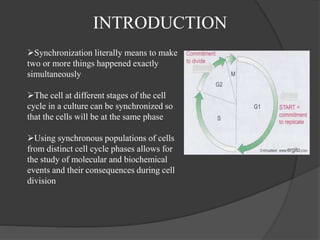
INTRODUCTION
Synchronization literally means to make
two or more things happened exactly
simultaneously
The cell at different stages of the cell
cycle in a culture can be synchronized so
that the cells will be at the same phase
Using synchronous populations of cells
from distinct cell cycle phases allows for
the study of molecular and biochemical
events and their consequences during cell
division
HISTORY
• Sedimentation at unit gravity by[Shall & McClelland, 1971; Shall, 1973], but
centrifugal elutriation by [Mikulits et al., 1997]
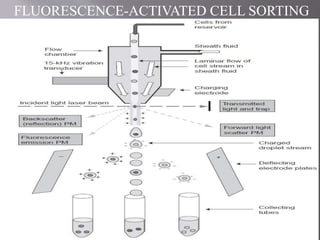
• Fluorescence-activated cell sorting by Hoffman & Houck in 1997
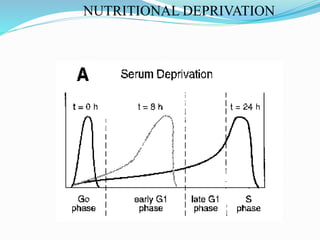
• Nutritional deprivation (G1 phase): Serum [Chang & Baserga, 1977] [Ley &
Tobey, 1970] is removed from the medium for 24 h and then restored, where
upon transit through the cycle is resumed in synchrony [Yoshida & Beppu,
1990; Jackman & O’Connor, 2001]
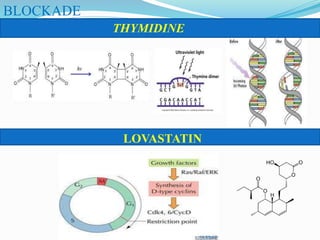
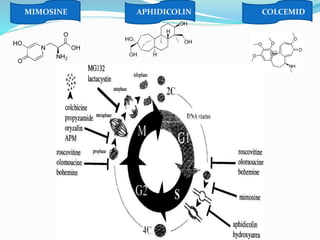
• Cell cycle progression, in G1 (lovastatin), S (aphidicolin, mimosine), and
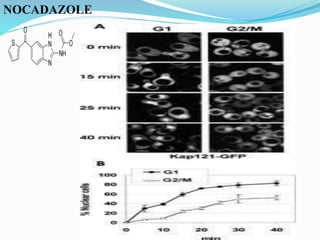
G2/M (nocodazole [Jackman & O’Connor, 2001]
• A number of cell types have been separated by centrifugation elutriations
method [Lag et al., 1996; Recktenwald, 1997; Majore et al., 2009], as have
cells of different phases of the cell cycle [Mikulits et al., 1997; Banfalvi, 2008]
NEED OF
SYNCHRONIZATION
 Understanding the molecular and
biochemical basis of cellular growth
 Investigation of regulatory events that most
often occur in a cell-cycle phase-
dependent fashion
 Studies examining cell-cycle regulatory
mechanisms and progression invariably
require cell-cycle synchronization of cell
populations
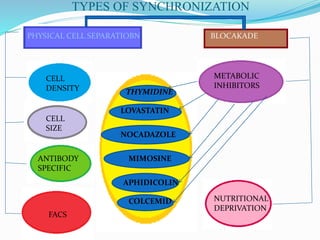
TYPES OF SYNCHRONIZATION
PHYSICAL CELL SEPARATIOBN BLOCAKADE
CELL
SIZE
CELL
DENSITY
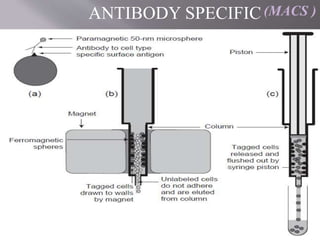
ANTIBODY
SPECIFIC
FACS
METABOLIC
INHIBITORS
NUTRITIONAL
DEPRIVATION
THYMIDINE
MIMOSINE
LOVASTATIN
NOCADAZOLE
APHIDICOLIN
COLCEMID
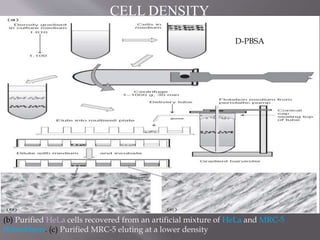
CELL DENSITY
D-PBSA
(b) Purified HeLa cells recovered from an artificial mixture of HeLa and MRC-5
finbroblasts. (c) Purified MRC-5 eluting at a lower density
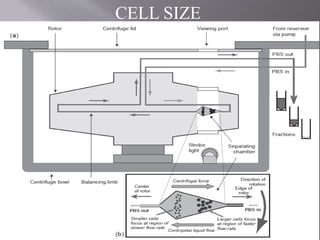
CELL SIZE
ANTIBODY SPECIFIC(MACS )
FLUORESCENCE-ACTIVATED CELL SORTING
LOVASTATIN
THYMIDINE
BLOCKADE
NOCADAZOLE
MIMOSINE APHIDICOLIN COLCEMID
NUTRITIONAL DEPRIVATION
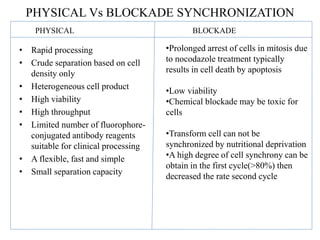
PHYSICAL Vs BLOCKADE SYNCHRONIZATION
• Rapid processing
• Crude separation based on cell
density only
• Heterogeneous cell product
• High viability
• High throughput
• Limited number of fluorophore-
conjugated antibody reagents
suitable for clinical processing
• A flexible, fast and simple
• Small separation capacity
•Prolonged arrest of cells in mitosis due
to nocodazole treatment typically
results in cell death by apoptosis
•Low viability
•Chemical blockade may be toxic for
cells
•Transform cell can not be
synchronized by nutritional deprivation
•A high degree of cell synchrony can be
obtain in the first cycle(>80%) then
decreased the rate second cycle
PHYSICAL BLOCKADE
REFFERENCE
 Culture of animal cell 5TH Edition : BY R. IAN FRESHNEY
 Biotechnology U. Satyanarayan
 Wikipedia
 http://www.ncbi.nlm.nih.gov/pubmed/21755439
 http://business.highbeam.com/437470/article-1G1-186854631/cell-
cycle-synchronization-animal-cells-and-nuclei
 http://www.unboundmedicine.com/medline/citation/21755439/Synchr
onization_of_mammalian_cells_and_nuclei_by_centrifugal_elutriation
_

Cell synchronization, animal cell culture

  • 1.
    CELL SYNCHRONIZATION By KAUSHAL KUMARSAHU Assistant Professor (Ad Hoc) Department of Biotechnology Govt. Digvijay Autonomous P. G. College Raj-Nandgaon ( C. G. )
  • 2.
    SYNOPSIS • INTRODUCTION • HISTORY •NEED OF SYNCHRONIZATION • TYPES OF SYNCHRONIZATION (I)PHYSICAL CELL SEPARATION (II)BLOCKADE • PHYSICAL Vs BLOCKADE SYNCHRONIZATION • CONCLUSION • REFFERENCE
  • 3.
    INTRODUCTION Synchronization literally meansto make two or more things happened exactly simultaneously The cell at different stages of the cell cycle in a culture can be synchronized so that the cells will be at the same phase Using synchronous populations of cells from distinct cell cycle phases allows for the study of molecular and biochemical events and their consequences during cell division
  • 4.
    HISTORY • Sedimentation atunit gravity by[Shall & McClelland, 1971; Shall, 1973], but centrifugal elutriation by [Mikulits et al., 1997] • Fluorescence-activated cell sorting by Hoffman & Houck in 1997 • Nutritional deprivation (G1 phase): Serum [Chang & Baserga, 1977] [Ley & Tobey, 1970] is removed from the medium for 24 h and then restored, where upon transit through the cycle is resumed in synchrony [Yoshida & Beppu, 1990; Jackman & O’Connor, 2001] • Cell cycle progression, in G1 (lovastatin), S (aphidicolin, mimosine), and G2/M (nocodazole [Jackman & O’Connor, 2001] • A number of cell types have been separated by centrifugation elutriations method [Lag et al., 1996; Recktenwald, 1997; Majore et al., 2009], as have cells of different phases of the cell cycle [Mikulits et al., 1997; Banfalvi, 2008]
  • 5.
    NEED OF SYNCHRONIZATION  Understandingthe molecular and biochemical basis of cellular growth  Investigation of regulatory events that most often occur in a cell-cycle phase- dependent fashion  Studies examining cell-cycle regulatory mechanisms and progression invariably require cell-cycle synchronization of cell populations
  • 6.
    TYPES OF SYNCHRONIZATION PHYSICALCELL SEPARATIOBN BLOCAKADE CELL SIZE CELL DENSITY ANTIBODY SPECIFIC FACS METABOLIC INHIBITORS NUTRITIONAL DEPRIVATION THYMIDINE MIMOSINE LOVASTATIN NOCADAZOLE APHIDICOLIN COLCEMID
  • 7.
    CELL DENSITY D-PBSA (b) PurifiedHeLa cells recovered from an artificial mixture of HeLa and MRC-5 finbroblasts. (c) Purified MRC-5 eluting at a lower density
  • 8.
  • 9.
  • 10.
  • 11.
  • 12.
  • 13.
  • 14.
  • 15.
    PHYSICAL Vs BLOCKADESYNCHRONIZATION • Rapid processing • Crude separation based on cell density only • Heterogeneous cell product • High viability • High throughput • Limited number of fluorophore- conjugated antibody reagents suitable for clinical processing • A flexible, fast and simple • Small separation capacity •Prolonged arrest of cells in mitosis due to nocodazole treatment typically results in cell death by apoptosis •Low viability •Chemical blockade may be toxic for cells •Transform cell can not be synchronized by nutritional deprivation •A high degree of cell synchrony can be obtain in the first cycle(>80%) then decreased the rate second cycle PHYSICAL BLOCKADE
  • 16.
    REFFERENCE  Culture ofanimal cell 5TH Edition : BY R. IAN FRESHNEY  Biotechnology U. Satyanarayan  Wikipedia  http://www.ncbi.nlm.nih.gov/pubmed/21755439  http://business.highbeam.com/437470/article-1G1-186854631/cell- cycle-synchronization-animal-cells-and-nuclei  http://www.unboundmedicine.com/medline/citation/21755439/Synchr onization_of_mammalian_cells_and_nuclei_by_centrifugal_elutriation _