TISSUE
ENGINEERING AND
REGENERATION
By Dr. Sanghmitra Singh
CONTENTS
• Introduction
• Sources of cells for Tissue Engineering
• Scaffolds for Tissue Engineering
• Implantation of Engineered Tissue
• Challenges to engineering IN VITRO
• Safety concerns
• Future and Conclusion
INTRODUCTION
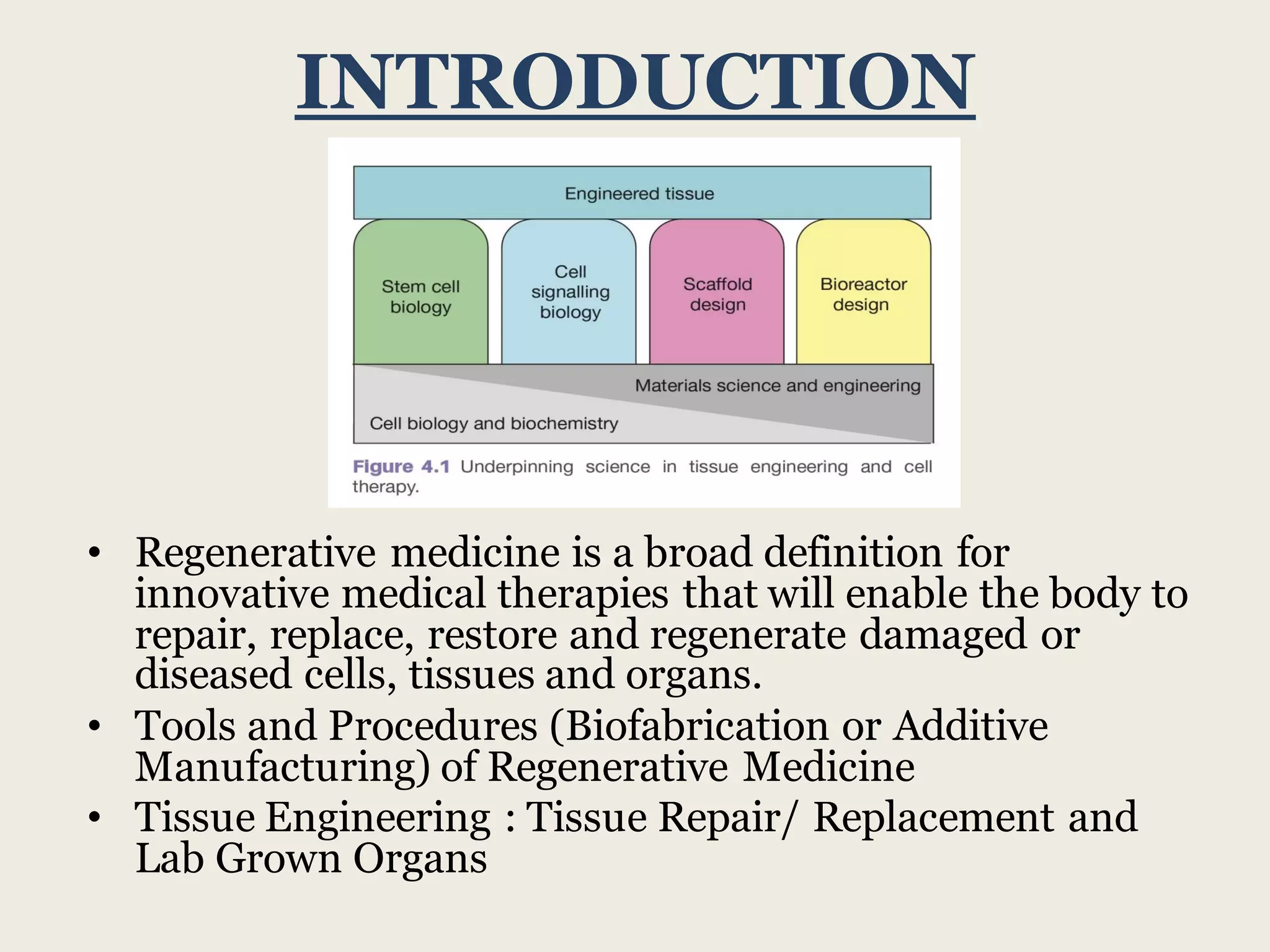
• Regenerative medicine is a broad definition for
innovative medical therapies that will enable the body to
repair, replace, restore and regenerate damaged or
diseased cells, tissues and organs.
• Tools and Procedures (Biofabrication or Additive
Manufacturing) of Regenerative Medicine
• Tissue Engineering : Tissue Repair/ Replacement and
Lab Grown Organs
Sources of cells for Tissue
Engineering
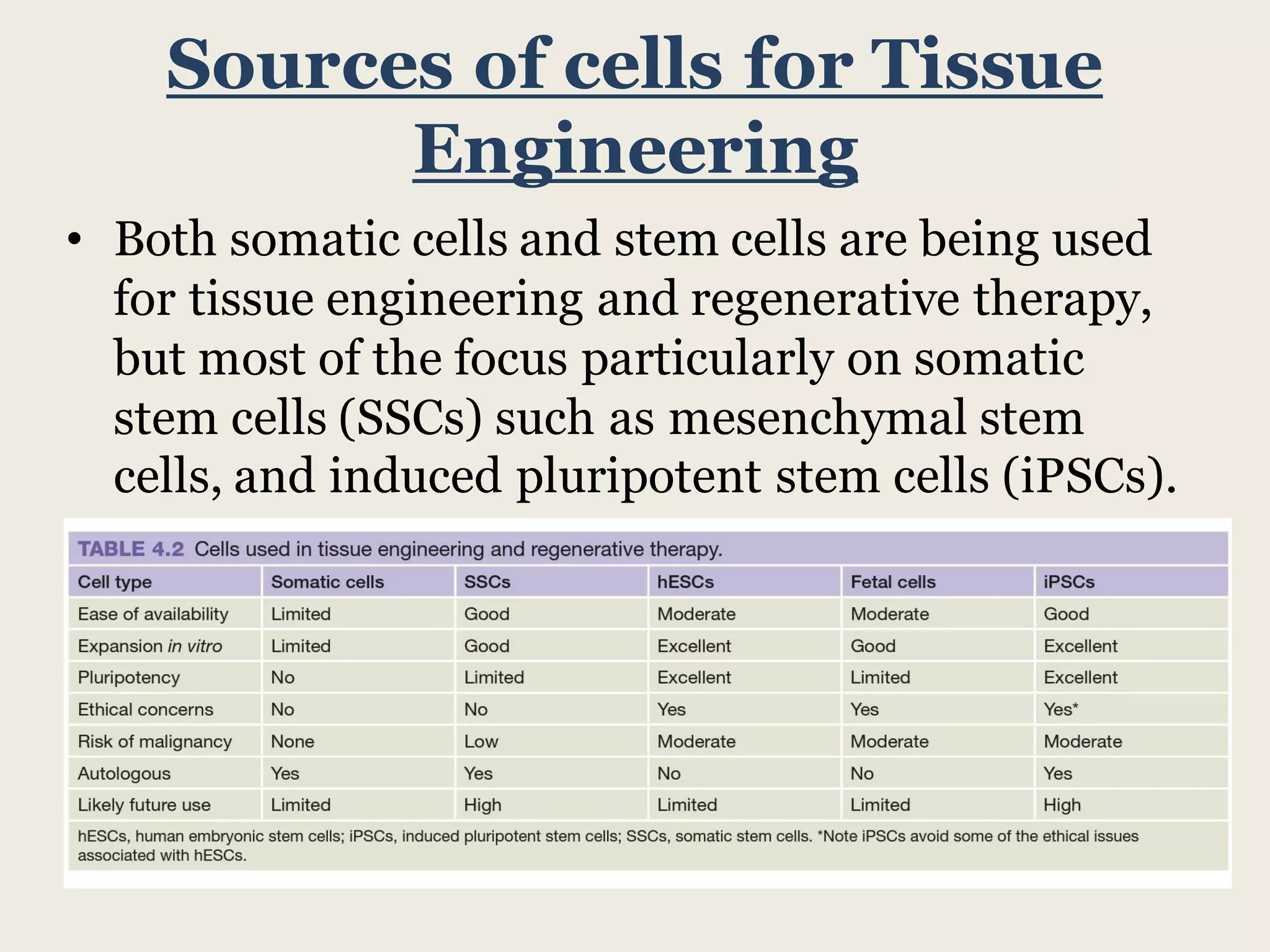
• Both somatic cells and stem cells are being used
for tissue engineering and regenerative therapy,
but most of the focus particularly on somatic
stem cells (SSCs) such as mesenchymal stem
cells, and induced pluripotent stem cells (iPSCs).
1. Stem cells
• Stem cells are undifferentiated or non-
specialised cells that are able, through cell
division, to renew themselves indefinitely.
• Stem cells can be classified according to
whether they are derived from embryonic
stem cells, fetal stem cells, later in
development (adult or somatic stem cells) or
whether they are derived by reprogramming
adult specialised cells to become pluripotent
stem cells (iPSCs).
2. Somatic stem cells
(SSCs)
• Somatic stem cells resident in the different
tissues and organs are responsible for providing
replacements for specialised cells that have
reached the end of their functional lifespan..
• Among the best characterised types of SSCs are
haematopoeitic stem cells, mesenchymal stem
or stromal cells (MSCs), endothelial progenitor
cells and neural stem cells.
• The somatic stem cell type that has been most
widely used for tissue engineering and
regenerative therapy is the MSC.
3. Mesenchymal stem &
stromal cells
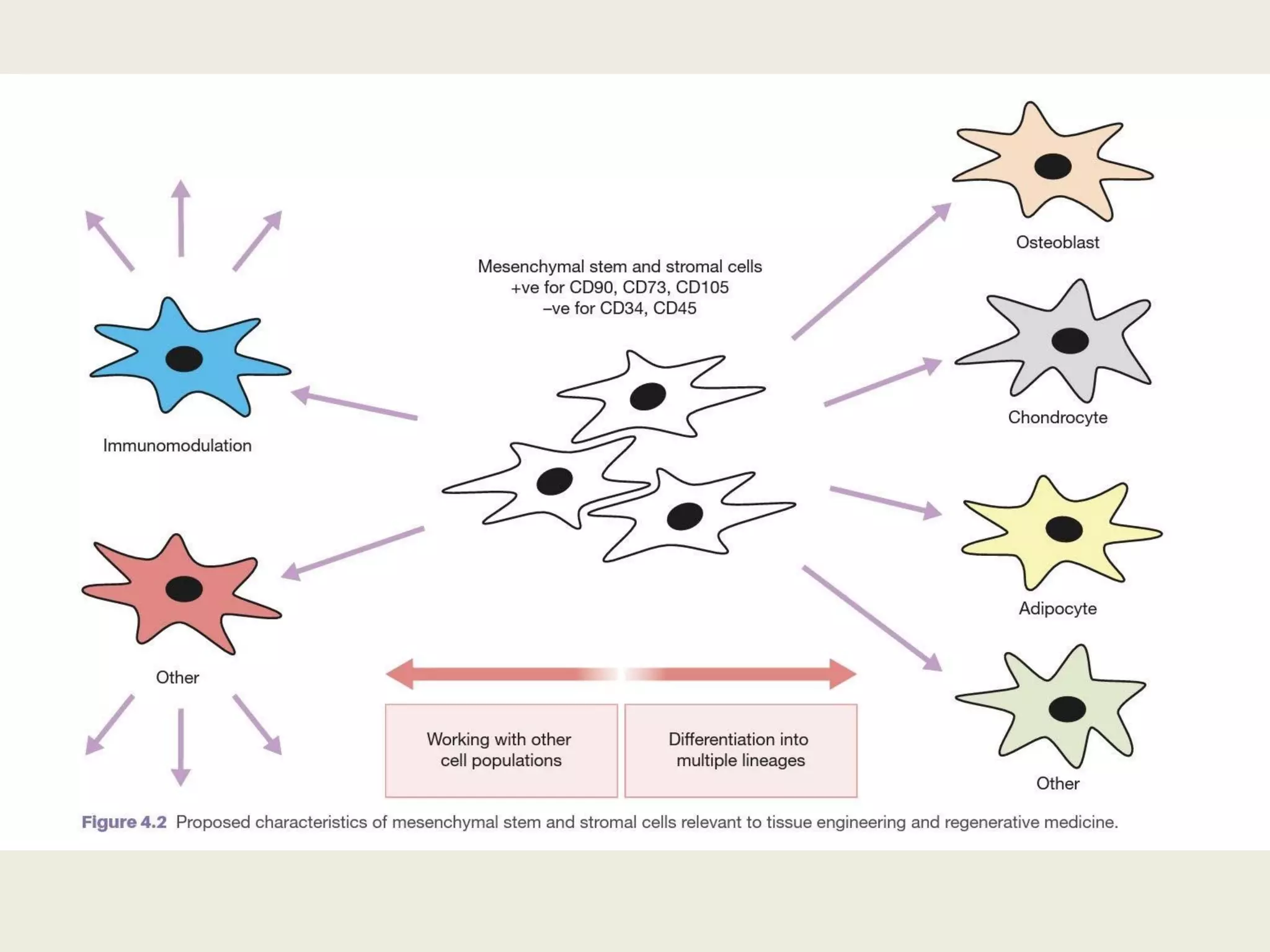
• MSCs are multipotent stromal cells that can be
sourced from a variety of tissues, including bone
marrow, adipose tissue and umbilical cord.
Morphologically they resemble fibroblasts.
• Of further clinical importance, MSCs have potent
trophic and anti-inflammatory properties,
attributable to their ability to produce growth factors.
• The relative ease of cell acquisition has meant that
autologous MSCs have been used clinically in a
variety of settings such as treatment of burns and to
repair defects in cartilage.
4. Embryonic stem cells
(ESCs)
• In the embryo, stem cells are able to give rise to all of the
different cell types of the body (i.e. they are totipotent).
ESCs are obtained from the inner cell mass of the early
human blastocyst (days 4–5 after fertilisation) using
embryos that have been created through in vitro
fertilisation for treatment of infertility, and are surplus to
those needed for reimplantation.
• ESCs have much greater proliferative ability than MSCs.
• The transferred somatic cell nucleus, containing the
human leukocyte antigen (HLA) genes and all of the other
genetic information from the donor, is turned into a
pluripotent stem cell that can be used as cell therapy for
the donor of the nucleus.
5. Fetal Stem cells
• Stem cells can also be obtained from the blood,
bone marrow and other tissues of aborted
fetuses (fetal stem cells). These proliferate in
vitro as efficiently as ESCs and are pluripotent.
•They have been used as cell therapy in a variety
of clinical settings, including Parkinson’s
disease, diabetes and spinal cord injury.
• The use of fetal stem cells also poses ethical
challenges, although perhaps not to the extent
seen with ESCs
6. Induced pluripotent stem
cells (iPSCs)
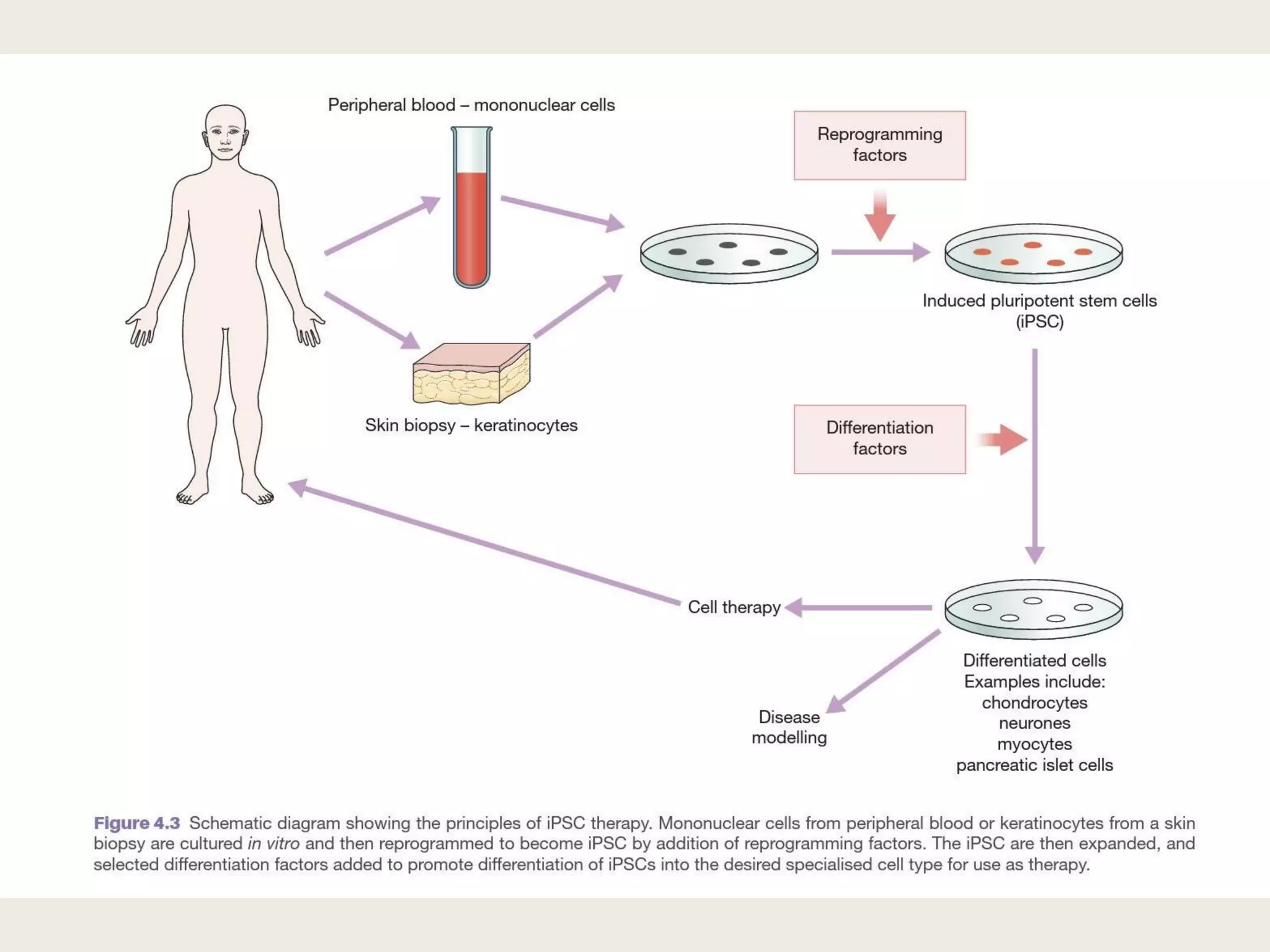
•Certain types of specialised adult cells could be
reprogrammed using genetic manipulation to become
embryonic-like iPSCs.
•Importantly, the development of iPSCs also means that,
at least in principle, an intended recipient of stem cell
therapy can themselves provide a source of stem cells
•iPSCs could be obtained from a number of volunteer
donors selected on the basis of their HLA type and stored
to create a national or international tissue bank of iPSCs.
Lines of iPSCs could then be chosen from the bank to
provide a fully or partially matched cell transplant for
recipients, eliminating or reducing the need for
immunosuppression to prevent immunological rejection.
Scaffolds for Tissue
Engineering
• The complex anatomicalarrangement of the
different cell types in tissues and organs is
absolutely integral to their normal function.
• Tissue engineering typically utilises rigid or semi-
rigid scaffolds (usually three-dimensional) that are
porous.
• Scaffolds may be derived from intact human tissue
(natural scaffolds) or from engineered implantable
biomaterials (artificial scaffolds).
• The choice of scaffolds that best fulfills the
requirements for tissue engineering will depend on
the nature of the tissue to be engineered.
1. Natural scaffolds
• Natural scaffolds may be obtained by
treatment of human or other animal tissues
or organs to remove the resident cell types,
leaving behind the extracellular matrix that
preserves the intricate architecture of the
tissue or organ, onto which to seed new cells.
• Natural scaffolds not only act as a physical
scaffold that allows the natural architecture
of the tissue to be preserved, but they may
also provide key cell signals that guide the
growth and differentiation of the cells used to
repopulate the scaffold.
2. Artificial scaffolds
• Different scaffold characteristics are
required for engineering different types of
tissue but all scaffolds need to be
biocompatible and in most settings they
should be biodegradable and
bioreabsorbable .
• Synthetic materials include various
synthetic polymers such as polylactide
(PLA) and polyglycolide (PGA), and
graphene.
• Bioactive ceramics such as calcium
phosphates (e.g. hydroxyapatite) and
bioactive glasses have been widely used for
skeletal repair.
• Synthetic biodegradable polymers are
commonly used and have the advantage that
they can be produced under standard
conditions that ensure reproducible physical
characteristics.
• Artificial scaffolds can be engineered to
incorporate molecules that aid retention of
particular cell growth factors, including
angiogenic growth factors such as vascular
endothelial growth factor (VEGF), to provide
a local environment conducive to the growth
of a functional tissue construct.
Implantation Of Engineered
Tissue
• Irrespective of the nature of the engineered
scaffold and the cell types used to populate it,
after it is implanted it will only effect successful
repair if it becomes fully integrated into adjacent
normal tissue and can be remodelled
appropriately in the recipient.
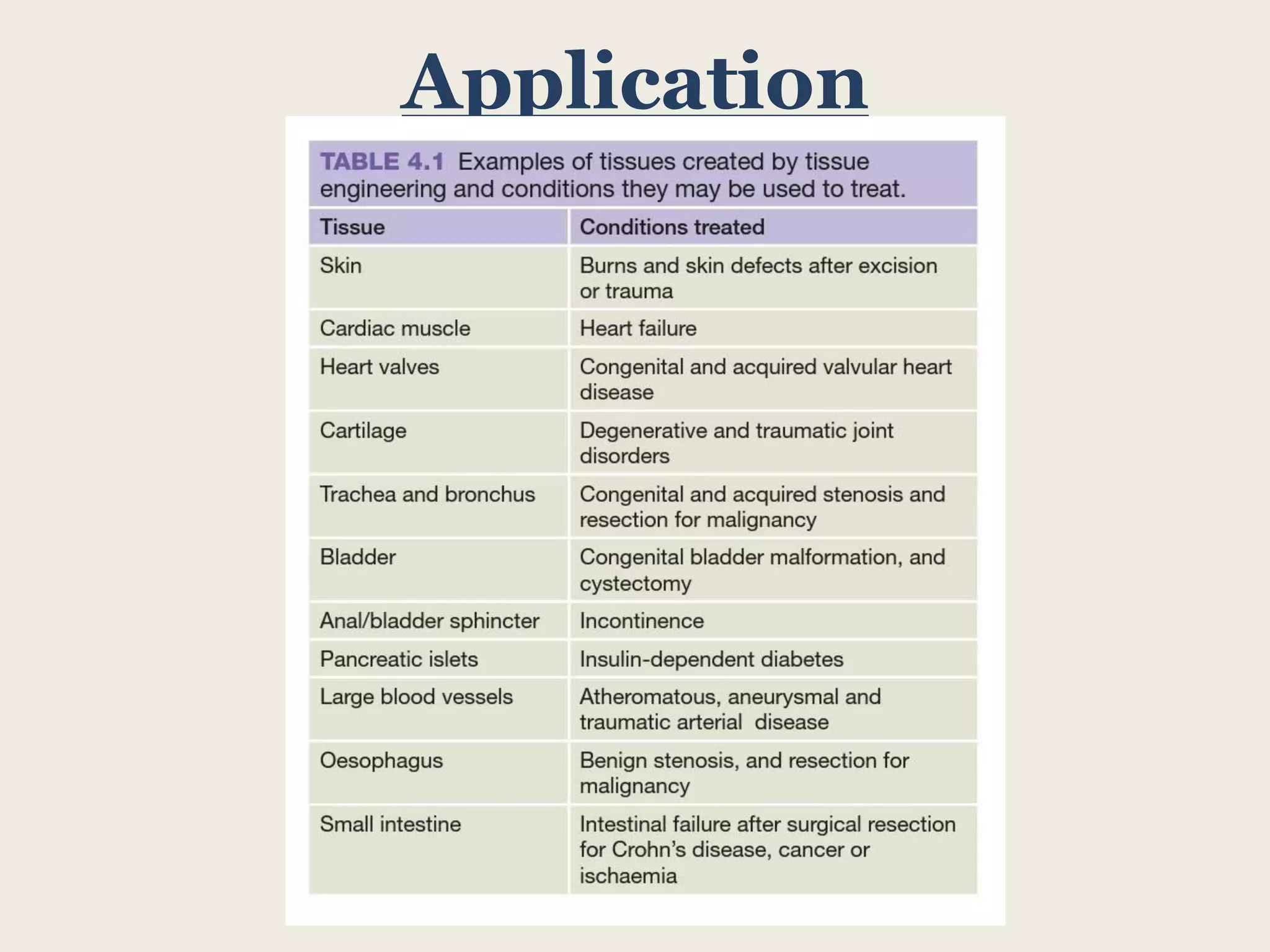
Application
Challenges To Engineering Tissue In
Vitro
• There are many technical challenges to
successful engineering of tissues in vitro:
- Delivery of adequate oxygen and nutrients
uniformly to three-dimensional tissue
constructs
- The difficulties of tissue engineering vary
considerably according to the nature of the
tissue or organ being engineered. Flat
tissues such as skin, cornea and cartilage
present fewer problems than complex
tubular structures such as trachea,
bronchus and blood vessels.
- Hollow organs, such as bladder and gut,
present a much greater challenge, and
complex solid organs such as the liver and
kidney present the greatest challenge of all.
- Obtaining adequate numbers of
differentiatedcells, maintaining their
viability and ensuring that they maintain
their function and do not revert to
undesirable cell types are all important
challenges
Safety Concerns
• One of the most serious concerns is that of tumour
formation and malignant transformation. The
direct risk of tumour formation by the transplanted
cells relates specifically to ESCs and iPSCs.
• Another major concern is that of transmitting
infection. It is essential that if allogeneic stem cells
are used they are screened to exclude infection and
that cells and engineered tissues are prepared
according to Good Manufacturing Practice
guidelines to avoid bacterial infection during in
vitro culture prior to use.
• Allogeneic stem cells used for tissue engineering
and regenerative therapy may be susceptible to
graft rejection.
Future and Conclusion
• Tissue engineering and regenerative
strategies hold out great hope for
effectively repairing or replacing tissues in
a wide number of human diseases.
• The use of mesenchymal stem and stromal
cell based therapiesand iPSC based
therapiesis likely to dominate, in
conjunction with improved bioactive
scaffold designs that can be reproducibly
manufactured and seeded.
• It is likely that patient stratification will
further refine therapy options. The ability
to phenotype, to genotype and to profile
patients at a molecular level will allow
more detailed characterisation of patient
subgroups and staging of disease
• Over the next decade it is likely that major
advances will be made in the clinical
translation of tissue engineering and
regenerative therapies across a broad
range of applications.
• However, caution is required and there are
many examples where engineered tissues
have failed to live up to their early promise
• It is important that the clinical use of tissue
engineering is subject to rigorous
evaluation, and that novel developments
are only used in the context of appropriate
clinical trials where the potential benefits
and limitations are fully examined before
they are introduced into routine clinical
practice.
THANK YOU!

Tissue Engineering And Regeneration

  • 1.
  • 2.
    CONTENTS • Introduction • Sourcesof cells for Tissue Engineering • Scaffolds for Tissue Engineering • Implantation of Engineered Tissue • Challenges to engineering IN VITRO • Safety concerns • Future and Conclusion
  • 3.
    INTRODUCTION • Regenerative medicineis a broad definition for innovative medical therapies that will enable the body to repair, replace, restore and regenerate damaged or diseased cells, tissues and organs. • Tools and Procedures (Biofabrication or Additive Manufacturing) of Regenerative Medicine • Tissue Engineering : Tissue Repair/ Replacement and Lab Grown Organs
  • 4.
    Sources of cellsfor Tissue Engineering • Both somatic cells and stem cells are being used for tissue engineering and regenerative therapy, but most of the focus particularly on somatic stem cells (SSCs) such as mesenchymal stem cells, and induced pluripotent stem cells (iPSCs).
  • 5.
    1. Stem cells •Stem cells are undifferentiated or non- specialised cells that are able, through cell division, to renew themselves indefinitely. • Stem cells can be classified according to whether they are derived from embryonic stem cells, fetal stem cells, later in development (adult or somatic stem cells) or whether they are derived by reprogramming adult specialised cells to become pluripotent stem cells (iPSCs).
  • 6.
    2. Somatic stemcells (SSCs) • Somatic stem cells resident in the different tissues and organs are responsible for providing replacements for specialised cells that have reached the end of their functional lifespan.. • Among the best characterised types of SSCs are haematopoeitic stem cells, mesenchymal stem or stromal cells (MSCs), endothelial progenitor cells and neural stem cells. • The somatic stem cell type that has been most widely used for tissue engineering and regenerative therapy is the MSC.
  • 7.
    3. Mesenchymal stem& stromal cells • MSCs are multipotent stromal cells that can be sourced from a variety of tissues, including bone marrow, adipose tissue and umbilical cord. Morphologically they resemble fibroblasts. • Of further clinical importance, MSCs have potent trophic and anti-inflammatory properties, attributable to their ability to produce growth factors. • The relative ease of cell acquisition has meant that autologous MSCs have been used clinically in a variety of settings such as treatment of burns and to repair defects in cartilage.
  • 9.
    4. Embryonic stemcells (ESCs) • In the embryo, stem cells are able to give rise to all of the different cell types of the body (i.e. they are totipotent). ESCs are obtained from the inner cell mass of the early human blastocyst (days 4–5 after fertilisation) using embryos that have been created through in vitro fertilisation for treatment of infertility, and are surplus to those needed for reimplantation. • ESCs have much greater proliferative ability than MSCs. • The transferred somatic cell nucleus, containing the human leukocyte antigen (HLA) genes and all of the other genetic information from the donor, is turned into a pluripotent stem cell that can be used as cell therapy for the donor of the nucleus.
  • 10.
    5. Fetal Stemcells • Stem cells can also be obtained from the blood, bone marrow and other tissues of aborted fetuses (fetal stem cells). These proliferate in vitro as efficiently as ESCs and are pluripotent. •They have been used as cell therapy in a variety of clinical settings, including Parkinson’s disease, diabetes and spinal cord injury. • The use of fetal stem cells also poses ethical challenges, although perhaps not to the extent seen with ESCs
  • 11.
    6. Induced pluripotentstem cells (iPSCs) •Certain types of specialised adult cells could be reprogrammed using genetic manipulation to become embryonic-like iPSCs. •Importantly, the development of iPSCs also means that, at least in principle, an intended recipient of stem cell therapy can themselves provide a source of stem cells •iPSCs could be obtained from a number of volunteer donors selected on the basis of their HLA type and stored to create a national or international tissue bank of iPSCs. Lines of iPSCs could then be chosen from the bank to provide a fully or partially matched cell transplant for recipients, eliminating or reducing the need for immunosuppression to prevent immunological rejection.
  • 13.
    Scaffolds for Tissue Engineering •The complex anatomicalarrangement of the different cell types in tissues and organs is absolutely integral to their normal function. • Tissue engineering typically utilises rigid or semi- rigid scaffolds (usually three-dimensional) that are porous. • Scaffolds may be derived from intact human tissue (natural scaffolds) or from engineered implantable biomaterials (artificial scaffolds). • The choice of scaffolds that best fulfills the requirements for tissue engineering will depend on the nature of the tissue to be engineered.
  • 15.
    1. Natural scaffolds •Natural scaffolds may be obtained by treatment of human or other animal tissues or organs to remove the resident cell types, leaving behind the extracellular matrix that preserves the intricate architecture of the tissue or organ, onto which to seed new cells. • Natural scaffolds not only act as a physical scaffold that allows the natural architecture of the tissue to be preserved, but they may also provide key cell signals that guide the growth and differentiation of the cells used to repopulate the scaffold.
  • 16.
    2. Artificial scaffolds •Different scaffold characteristics are required for engineering different types of tissue but all scaffolds need to be biocompatible and in most settings they should be biodegradable and bioreabsorbable . • Synthetic materials include various synthetic polymers such as polylactide (PLA) and polyglycolide (PGA), and graphene.
  • 18.
    • Bioactive ceramicssuch as calcium phosphates (e.g. hydroxyapatite) and bioactive glasses have been widely used for skeletal repair. • Synthetic biodegradable polymers are commonly used and have the advantage that they can be produced under standard conditions that ensure reproducible physical characteristics. • Artificial scaffolds can be engineered to incorporate molecules that aid retention of particular cell growth factors, including angiogenic growth factors such as vascular endothelial growth factor (VEGF), to provide a local environment conducive to the growth of a functional tissue construct.
  • 19.
    Implantation Of Engineered Tissue •Irrespective of the nature of the engineered scaffold and the cell types used to populate it, after it is implanted it will only effect successful repair if it becomes fully integrated into adjacent normal tissue and can be remodelled appropriately in the recipient.
  • 20.
  • 21.
    Challenges To EngineeringTissue In Vitro • There are many technical challenges to successful engineering of tissues in vitro: - Delivery of adequate oxygen and nutrients uniformly to three-dimensional tissue constructs - The difficulties of tissue engineering vary considerably according to the nature of the tissue or organ being engineered. Flat tissues such as skin, cornea and cartilage present fewer problems than complex tubular structures such as trachea, bronchus and blood vessels.
  • 22.
    - Hollow organs,such as bladder and gut, present a much greater challenge, and complex solid organs such as the liver and kidney present the greatest challenge of all. - Obtaining adequate numbers of differentiatedcells, maintaining their viability and ensuring that they maintain their function and do not revert to undesirable cell types are all important challenges
  • 23.
    Safety Concerns • Oneof the most serious concerns is that of tumour formation and malignant transformation. The direct risk of tumour formation by the transplanted cells relates specifically to ESCs and iPSCs. • Another major concern is that of transmitting infection. It is essential that if allogeneic stem cells are used they are screened to exclude infection and that cells and engineered tissues are prepared according to Good Manufacturing Practice guidelines to avoid bacterial infection during in vitro culture prior to use. • Allogeneic stem cells used for tissue engineering and regenerative therapy may be susceptible to graft rejection.
  • 24.
    Future and Conclusion •Tissue engineering and regenerative strategies hold out great hope for effectively repairing or replacing tissues in a wide number of human diseases. • The use of mesenchymal stem and stromal cell based therapiesand iPSC based therapiesis likely to dominate, in conjunction with improved bioactive scaffold designs that can be reproducibly manufactured and seeded.
  • 25.
    • It islikely that patient stratification will further refine therapy options. The ability to phenotype, to genotype and to profile patients at a molecular level will allow more detailed characterisation of patient subgroups and staging of disease • Over the next decade it is likely that major advances will be made in the clinical translation of tissue engineering and regenerative therapies across a broad range of applications.
  • 26.
    • However, cautionis required and there are many examples where engineered tissues have failed to live up to their early promise • It is important that the clinical use of tissue engineering is subject to rigorous evaluation, and that novel developments are only used in the context of appropriate clinical trials where the potential benefits and limitations are fully examined before they are introduced into routine clinical practice.
  • 27.