THRIVE / STRIVE-Hi
Dr Shreyas Kate
Conventional O2 Therapy
• First line therapy for acute resp failure
• Nasal Prongs, Non Rebreathing face mask
• Limitation:
– Mismatch b/w oxygen flow and patient ‘s
inspiratory flow
– Peak inspiratory flow may vary b/w 30 and 120
L/min during resp failure
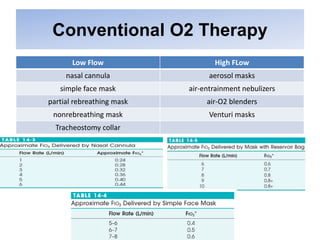
Low Flow High FLow
nasal cannula aerosol masks
simple face mask air-entrainment nebulizers
partial rebreathing mask air-O2 blenders
nonrebreathing mask Venturi masks
Tracheostomy collar
Conventional O2 Therapy
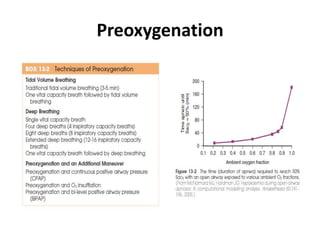
Preoxygenation
• The end points of maximal alveolar
preoxygenation
– end-tidal O2 concentration (EtO2) of approximately
90%
– Endtidal nitrogen concentration (EtN2) of 5%
• Factors affecting the efficacy
– FIO2,
– duration of breathing
– and the VA/FRC ratio
Preoxygenation
HIGH FLOW NASAL CANNULA
HFNC
• What is HFNC Oxygen therapy?
– Uses air/oxygen blender to deliver FiO2 range
from 0.21 to 1.0
– Active humidity /temperature controlled -37 Cel
and humidified at 44 mg H2O/L
– Generates flows up to 40,60,70 L/min
HFNC
• Oxygen delivery to the alveoli depends on
many factors
– Oxygen flow rate
– FiO2 being delivered
– Device interface
– Patient demand (Vt, RR, PIFR)
HFNC
Equipment
Different devices
Physiologic effects of HFNC
• Adverse Effects of Lack of Humidification
– cessation of the flow of tracheal mucus
– widespread loss of the cilia
– detachment or sloughing of the epithelium
– subepithelial vascular congestion
– excessive water loss by the nasal mucosa
HFNC
• USES:
– Neonates (counteract a lack of surfactant)
– Hypercapnic Respiratory Failure
– Hypoxemic Respiratory Failure (FLORALI trial)
– Postextubation
– Preoxygenation (denitrogenate the lungs)
– Acute Heart Failure
– Sleep Apnea
HFNC
TRANSNASAL HUMIDIFIED RAPID-
INSUFFLATION VENTILATORY EXCHANGE
THRIVE
• Apnoeic window
• Cannot intubate, cannot ventilate
• Apnoeic oxygenation
Introduction
• 1909 by Samuel Meltzer : Ventilation without
ventilatory movements (direct and continuous
intratracheal oxygen insufflation)
• Arthur Slutsky using tracheal insufflation of
O2 (TRIO) 1980s and 1990s, ‘oscillatory
ventilation’, which continues to be used in
highly-selected cases in paediatric ventilation,
and ‘constant-flow ventilation’
History
• Aventilatory mass flow (AVMF)
• Negative pressure gradient of up to 20 cmH2O
• Apnoeic oxygenation has been used both
experimentally and clinically as a strategy to
extend the apnoeic window
Physiology
Physiology
rate of rise of carbon dioxide levels was between
0.35 and 0.45 kPa.min1( 2.62 to 3.37 mm Hg/min)
• Pre-oxygenate for 10 min at 40 degrees of
head-up inclination with the nasal cannula (70
L/min)
• Intravenous induction of anaesthesia then
commenced with boluses of propofol,
fentanyl, and rocuronium, followed by a
peripheral infusion of propofol
• Nasal oxygenation maintained at the same
rate of 70 l/min until the definitive airway was
secured
Technique
Uses of THRIVE
• Reduced oxygen reserve
• Procedural sedation
• Difficult airway
• Shared Airway
SPONTANEOUS RESPIRATION USING IV
ANAESTHESIA
STRIVE-hi
• Spontaneously breathing
• HFNO
– An increased FiO2
– Generation of positive airway pressure
– Improved respiratory mechanics
– Reduced upper airway resistance
Introduction
Technique
• Tubeless anaesthesia
• Use of a standardized propofol titration
method
• use of HFNO
– 30 L/min for 01 min
– 50 L/min for 02 min in a 10–20 degrees reverse
Trendelenburg position
– 70 L/min when loss of consciousness occurred
– Awake patients
• respiratory supportive care
• preoperative preoxygenation
• postoperative support
– Sedated patients
• procedural bronchoscopy
• awake fibreoptic intubation
– Asleep patients with obstructive sleep apnoea
(OSA)
Clinical Benefits
THANK YOU

Thrive

  • 1.
  • 2.
    Conventional O2 Therapy •First line therapy for acute resp failure • Nasal Prongs, Non Rebreathing face mask • Limitation: – Mismatch b/w oxygen flow and patient ‘s inspiratory flow – Peak inspiratory flow may vary b/w 30 and 120 L/min during resp failure
  • 3.
    Low Flow HighFLow nasal cannula aerosol masks simple face mask air-entrainment nebulizers partial rebreathing mask air-O2 blenders nonrebreathing mask Venturi masks Tracheostomy collar Conventional O2 Therapy
  • 4.
  • 5.
    • The endpoints of maximal alveolar preoxygenation – end-tidal O2 concentration (EtO2) of approximately 90% – Endtidal nitrogen concentration (EtN2) of 5% • Factors affecting the efficacy – FIO2, – duration of breathing – and the VA/FRC ratio Preoxygenation
  • 7.
    HIGH FLOW NASALCANNULA HFNC
  • 8.
    • What isHFNC Oxygen therapy? – Uses air/oxygen blender to deliver FiO2 range from 0.21 to 1.0 – Active humidity /temperature controlled -37 Cel and humidified at 44 mg H2O/L – Generates flows up to 40,60,70 L/min HFNC
  • 9.
    • Oxygen deliveryto the alveoli depends on many factors – Oxygen flow rate – FiO2 being delivered – Device interface – Patient demand (Vt, RR, PIFR) HFNC
  • 10.
  • 12.
  • 13.
  • 15.
    • Adverse Effectsof Lack of Humidification – cessation of the flow of tracheal mucus – widespread loss of the cilia – detachment or sloughing of the epithelium – subepithelial vascular congestion – excessive water loss by the nasal mucosa HFNC
  • 16.
    • USES: – Neonates(counteract a lack of surfactant) – Hypercapnic Respiratory Failure – Hypoxemic Respiratory Failure (FLORALI trial) – Postextubation – Preoxygenation (denitrogenate the lungs) – Acute Heart Failure – Sleep Apnea HFNC
  • 17.
    TRANSNASAL HUMIDIFIED RAPID- INSUFFLATIONVENTILATORY EXCHANGE THRIVE
  • 18.
    • Apnoeic window •Cannot intubate, cannot ventilate • Apnoeic oxygenation Introduction
  • 19.
    • 1909 bySamuel Meltzer : Ventilation without ventilatory movements (direct and continuous intratracheal oxygen insufflation) • Arthur Slutsky using tracheal insufflation of O2 (TRIO) 1980s and 1990s, ‘oscillatory ventilation’, which continues to be used in highly-selected cases in paediatric ventilation, and ‘constant-flow ventilation’ History
  • 20.
    • Aventilatory massflow (AVMF) • Negative pressure gradient of up to 20 cmH2O • Apnoeic oxygenation has been used both experimentally and clinically as a strategy to extend the apnoeic window Physiology
  • 21.
    Physiology rate of riseof carbon dioxide levels was between 0.35 and 0.45 kPa.min1( 2.62 to 3.37 mm Hg/min)
  • 22.
    • Pre-oxygenate for10 min at 40 degrees of head-up inclination with the nasal cannula (70 L/min) • Intravenous induction of anaesthesia then commenced with boluses of propofol, fentanyl, and rocuronium, followed by a peripheral infusion of propofol • Nasal oxygenation maintained at the same rate of 70 l/min until the definitive airway was secured Technique
  • 23.
    Uses of THRIVE •Reduced oxygen reserve • Procedural sedation • Difficult airway • Shared Airway
  • 24.
    SPONTANEOUS RESPIRATION USINGIV ANAESTHESIA STRIVE-hi
  • 26.
    • Spontaneously breathing •HFNO – An increased FiO2 – Generation of positive airway pressure – Improved respiratory mechanics – Reduced upper airway resistance Introduction
  • 27.
    Technique • Tubeless anaesthesia •Use of a standardized propofol titration method • use of HFNO – 30 L/min for 01 min – 50 L/min for 02 min in a 10–20 degrees reverse Trendelenburg position – 70 L/min when loss of consciousness occurred
  • 28.
    – Awake patients •respiratory supportive care • preoperative preoxygenation • postoperative support – Sedated patients • procedural bronchoscopy • awake fibreoptic intubation – Asleep patients with obstructive sleep apnoea (OSA) Clinical Benefits
  • 29.