Downloaded 589 times






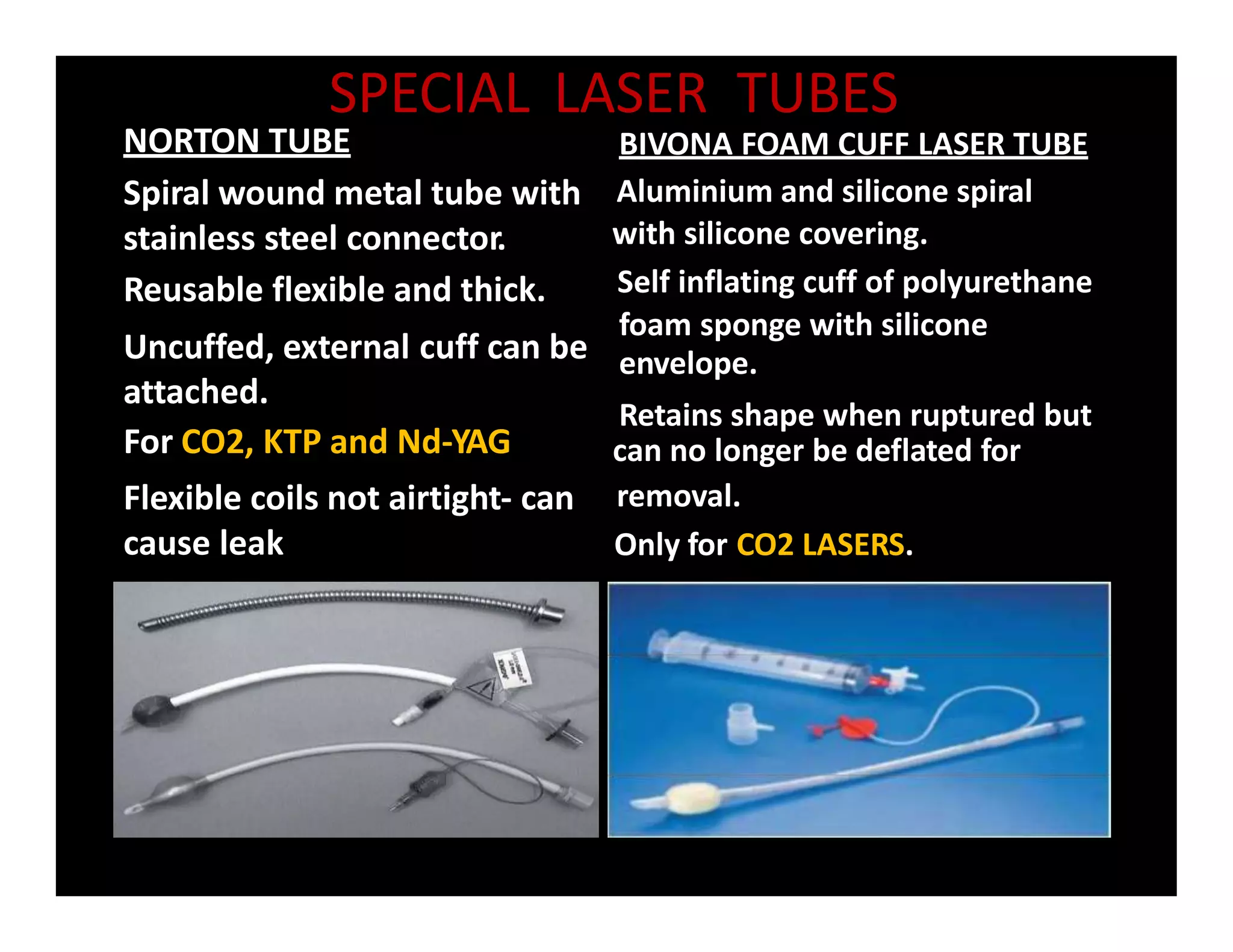
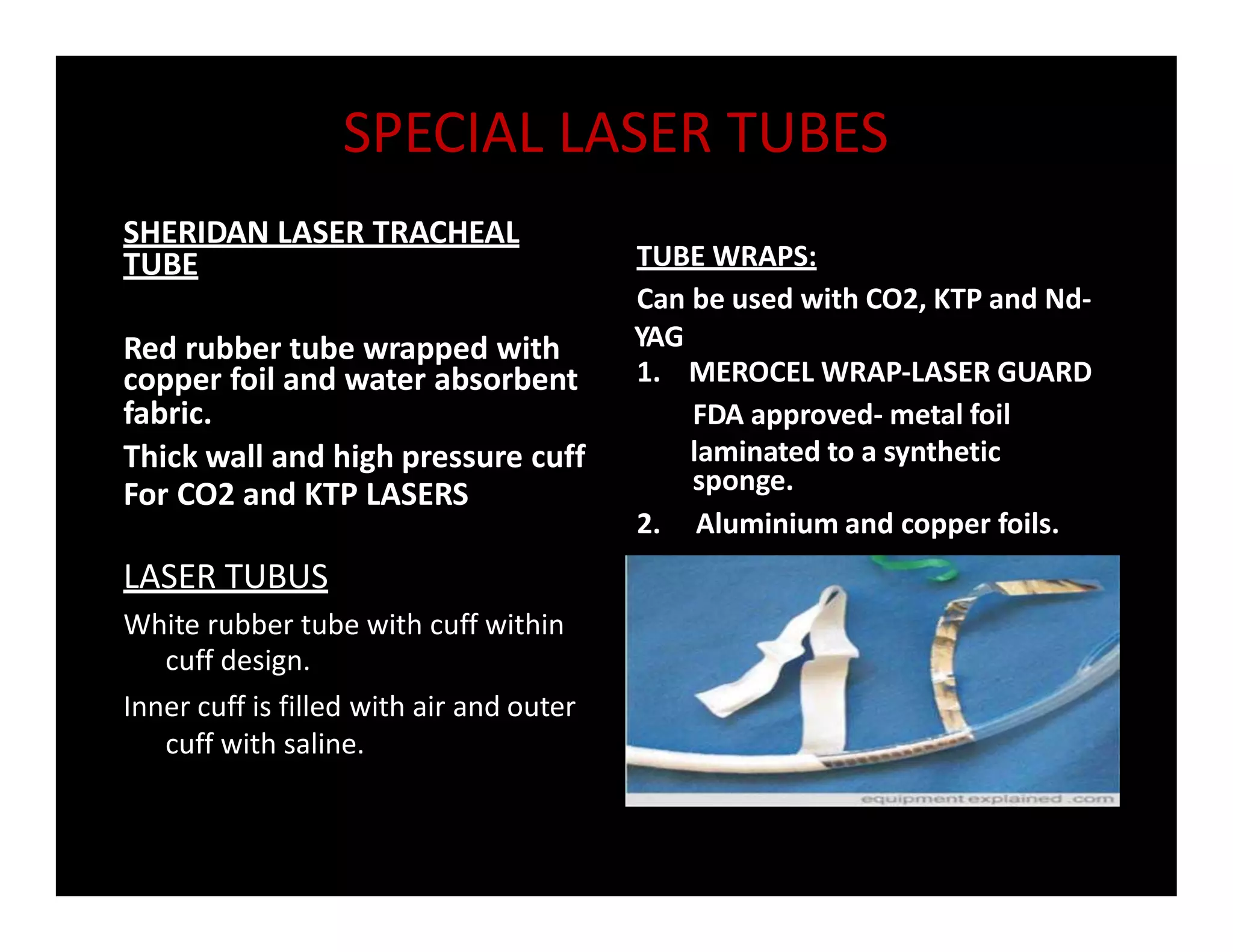

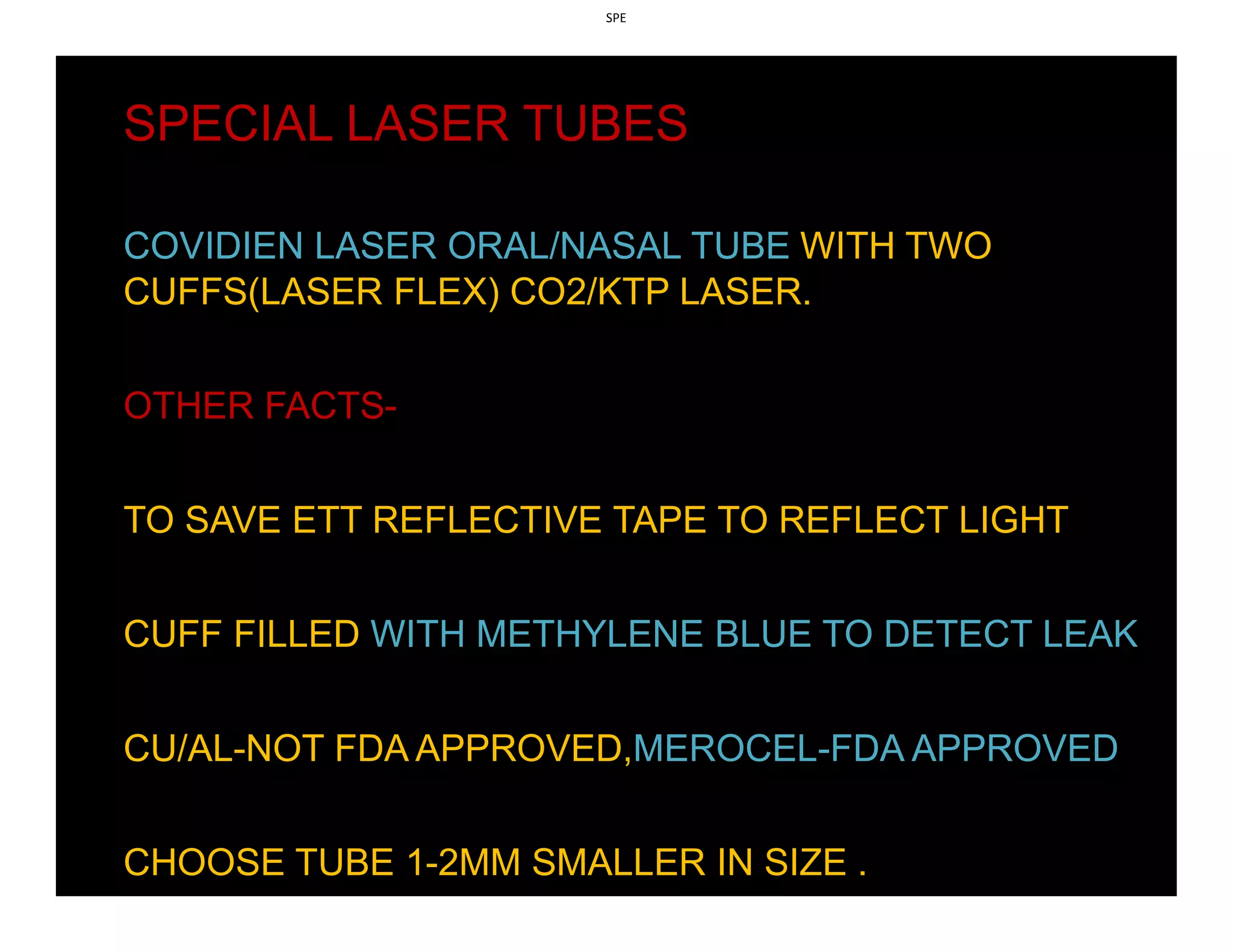


This document discusses anaesthetic considerations for laser surgery. It begins by outlining the objectives which are to discuss the types of lasers used, preoperative assessment and preparation, airway management and ventilation options, laser hazards and prevention, and crisis management for airway fires. It then provides details on the types of lasers used clinically, biological effects of lasers, and clinical applications of lasers. The role of anesthesiologists is to maintain oxygenation, remove carbon dioxide, keep the patient anesthetized, and reduce risks. Various airway management techniques and their advantages/disadvantages are discussed such as intubation, spontaneous ventilation, insufflation, and jet ventilation. Laser hazards like atmospheric contamination, perforation


