NASAL HIGH FLOW
Dr Nisar Ahmed Arain
Assistant Professor
Anesthesia/Critical care/ER
High Flow Nasal Cannula and
Humidification
OVER VIEW
-Risks
- Respiratoryfailure
- Preventingintubation
-Peri-intubation
- Post extubationtherapy
- Questions
-What is HFNC
- KeyPoints
-Indications
-Contraindications
-Complications
-Positiveeffects
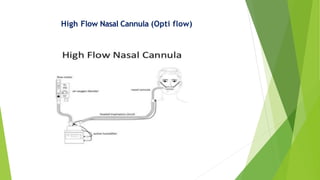
•Oxygen and air source
•Air-oxygen blender generates up
to FiO2 1.0 at a flow rate of up to
60L/min
•Active heated humidifier capable of
providing 100% body humidity
•Single limb heated inspiratory
circuit (avoids heat loss and
condensation)
•Lightweight, flexible delivery tubing
•Adjustable head strap
•Soft and flexible nasal prongs
•Different brands are available (e.g.
Optiflow™)
High Flow Nasal Cannula (Opti flow)
Key Points
-The amount of oxygen
patients get depends on
their inspiratory flow rate.
-Masks do notdeliver
consistent levels of
oxygen, where as HFNC
does.
-Deadspace is washed out
during its application
-Is not a reliable form of
PEEP
Indications
Hypoxic respiratory failure
-Community-acquired
pneumonia
-Viral pneumonia (e.g.influenza)
-Acute asthma
-Cardiogenic pulmonary edema
-Pulmonaryembolism
-Interstitialpneumonia
-Carbon monoxidepoisoning
Also needed for High FiO2
oxygen delivery in the
following conditions
-
-
1-before and after intubation
2-post cardiac surgery
3-oxygen supply during
invasive procedures
a-Trans-oral endoscopy
(TOE) upper GI
b-Endoscopy
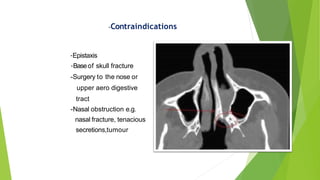
-Contraindications
-Epistaxis
-Baseof skull fracture
-Surgery to the nose or
upper aero digestive
tract
-Nasal obstruction e.g.
nasal fracture, tenacious
secretions,tumour
Complications
- Local trauma, discomfort and
pressure areas
- Epistaxis
- Gastricdistension
- Blocked cannulae due to
secretions
Positive effects
should be a two hour limit on HFNC
Risks
-He is doing ok on that,lets not
intubate……
- In patients who are acutely
unwell with high oxygen/flow
rates, trial
- It should NOT delayintubation
- Failure of HFNC might cause
delayed intubation and worse
clinical outcomes in patients
with respiratory failure. e
Respiratory failure (Type 1)
-Gold standard for Type 2 is still
BiPAP
- No bigstudies yet
-One small study comparedtreating
patients in acute respiratory
failure with facemasks and HFNC
- They found that the HFNC
improved the patients PaO2and
was associated wIthalower
respiratory rate
Respiratory failure continued
- A second study evaluated the efficiency, safety
and outcome of high flow nasal cannula
oxygen (HFNC) in ICU patients with acute
respiratory failure
- HFNC significantly reduced the respiratory rate,
heart rate and increased pulse oximetry
-These improvements were observed as early as
15M after the beginning of HFNC for respiratory
rate and pulse oximetery. PaO2 and PaO2/FiO2
increased significantly after one hour, HNFC in
comparison with base line
Preventing intubation
-One study compared standard therapy
NIV and HFNC in patients with type 1
respiratory failure
-They found the intubation rate was
lower in the HFNC group (38% of
patients compared with 47% in the
standard and 50% in the NIV group)
but this was not statistically
significant.
- It did show an improvement in
ventilator free days and 90 day
mortality
Preventing intubation
-A study which looked at
respiratory failure in do not
intubate patients treated
with HFNC first and escalated
to NIV if HFNCfailed
-The study showed that HFNC
was effective in increasing
oxygen saturations and
lowered respiratory rate.
-9 of the 50 (18%) patients
recruited had to be
escalated to NIV
Peri-intubation
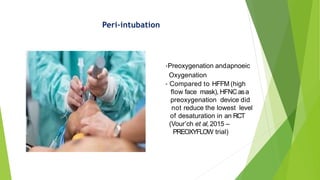
-Preoxygenation andapnoeic
Oxygenation
- Compared to HFFM (high
flow face mask), HFNCasa
preoxygenation device did
not reduce the lowest level
of desaturation in an RCT
(Vour’ch et al, 2015 –
PREOXYFLOW trial)
-Peri-intubation continued
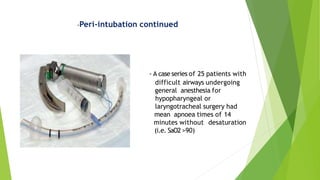
- A case series of 25 patients with
difficult airways undergoing
general anesthesia for
hypopharyngeal or
laryngotracheal surgery had
mean apnoea times of 14
minutes without desaturation
(i.e. SaO2 >90)
Post extubation therapy
-Evidence is coming through that we
should be extubating onto HFNCin
all patient
- Compared to facemask, in low risk
patients, at the same FiO2 aswhen
ventilated, there were less episodes
of desaturation (75% to 40%) and
reintubation rates were reduced
(21% to 4%). (Maggiore et al, 2014)
Post extubation therapy continued
-A second study compared highand
low risk patients extubated onto
“conventional oxygen therapy” and
optiflow
-Compared to the conventional therapy
patients experienced lower rates of
respiratory failure leading to
reintubation ( 12% to 5%)
CLEANING
-We all know how to clean an
Optiflow, hopefully!!
-What about weaning? 2hours
on 2 hours off
- Do you need a newset
-When you do
- When you don’t
STOP THEPRESSES!!
--A meta analysis published in late
2017 showed that HFNCis
superior to standard oxygen
therapy in preventing intubation
--It also showed no diffrence in
intubation rates between HFNC
and NIV
-- The recommend further RCT’s
Conclusion
-What HFNCis
-What its goodfor
-What its not good for
-Should HFNCbe our first line
treatment for Type 1RF
-Good or bad forperi-intubation
-Should we extubate onto HFNC
routinely
Questions & Discussion
THANK YOU

#Nasal high flow

  • 1.
    NASAL HIGH FLOW DrNisar Ahmed Arain Assistant Professor Anesthesia/Critical care/ER
  • 2.
    High Flow NasalCannula and Humidification
  • 3.
    OVER VIEW -Risks - Respiratoryfailure -Preventingintubation -Peri-intubation - Post extubationtherapy - Questions -What is HFNC - KeyPoints -Indications -Contraindications -Complications -Positiveeffects
  • 4.
    •Oxygen and airsource •Air-oxygen blender generates up to FiO2 1.0 at a flow rate of up to 60L/min •Active heated humidifier capable of providing 100% body humidity •Single limb heated inspiratory circuit (avoids heat loss and condensation) •Lightweight, flexible delivery tubing •Adjustable head strap •Soft and flexible nasal prongs •Different brands are available (e.g. Optiflow™) High Flow Nasal Cannula (Opti flow)
  • 5.
    Key Points -The amountof oxygen patients get depends on their inspiratory flow rate. -Masks do notdeliver consistent levels of oxygen, where as HFNC does. -Deadspace is washed out during its application -Is not a reliable form of PEEP
  • 6.
    Indications Hypoxic respiratory failure -Community-acquired pneumonia -Viralpneumonia (e.g.influenza) -Acute asthma -Cardiogenic pulmonary edema -Pulmonaryembolism -Interstitialpneumonia -Carbon monoxidepoisoning Also needed for High FiO2 oxygen delivery in the following conditions - - 1-before and after intubation 2-post cardiac surgery 3-oxygen supply during invasive procedures a-Trans-oral endoscopy (TOE) upper GI b-Endoscopy
  • 7.
    -Contraindications -Epistaxis -Baseof skull fracture -Surgeryto the nose or upper aero digestive tract -Nasal obstruction e.g. nasal fracture, tenacious secretions,tumour
  • 8.
    Complications - Local trauma,discomfort and pressure areas - Epistaxis - Gastricdistension - Blocked cannulae due to secretions
  • 9.
  • 10.
    should be atwo hour limit on HFNC Risks -He is doing ok on that,lets not intubate…… - In patients who are acutely unwell with high oxygen/flow rates, trial - It should NOT delayintubation - Failure of HFNC might cause delayed intubation and worse clinical outcomes in patients with respiratory failure. e
  • 11.
    Respiratory failure (Type1) -Gold standard for Type 2 is still BiPAP - No bigstudies yet -One small study comparedtreating patients in acute respiratory failure with facemasks and HFNC - They found that the HFNC improved the patients PaO2and was associated wIthalower respiratory rate
  • 12.
    Respiratory failure continued -A second study evaluated the efficiency, safety and outcome of high flow nasal cannula oxygen (HFNC) in ICU patients with acute respiratory failure - HFNC significantly reduced the respiratory rate, heart rate and increased pulse oximetry -These improvements were observed as early as 15M after the beginning of HFNC for respiratory rate and pulse oximetery. PaO2 and PaO2/FiO2 increased significantly after one hour, HNFC in comparison with base line
  • 13.
    Preventing intubation -One studycompared standard therapy NIV and HFNC in patients with type 1 respiratory failure -They found the intubation rate was lower in the HFNC group (38% of patients compared with 47% in the standard and 50% in the NIV group) but this was not statistically significant. - It did show an improvement in ventilator free days and 90 day mortality
  • 14.
    Preventing intubation -A studywhich looked at respiratory failure in do not intubate patients treated with HFNC first and escalated to NIV if HFNCfailed -The study showed that HFNC was effective in increasing oxygen saturations and lowered respiratory rate. -9 of the 50 (18%) patients recruited had to be escalated to NIV
  • 15.
    Peri-intubation -Preoxygenation andapnoeic Oxygenation - Comparedto HFFM (high flow face mask), HFNCasa preoxygenation device did not reduce the lowest level of desaturation in an RCT (Vour’ch et al, 2015 – PREOXYFLOW trial)
  • 16.
    -Peri-intubation continued - Acase series of 25 patients with difficult airways undergoing general anesthesia for hypopharyngeal or laryngotracheal surgery had mean apnoea times of 14 minutes without desaturation (i.e. SaO2 >90)
  • 17.
    Post extubation therapy -Evidenceis coming through that we should be extubating onto HFNCin all patient - Compared to facemask, in low risk patients, at the same FiO2 aswhen ventilated, there were less episodes of desaturation (75% to 40%) and reintubation rates were reduced (21% to 4%). (Maggiore et al, 2014)
  • 18.
    Post extubation therapycontinued -A second study compared highand low risk patients extubated onto “conventional oxygen therapy” and optiflow -Compared to the conventional therapy patients experienced lower rates of respiratory failure leading to reintubation ( 12% to 5%)
  • 19.
    CLEANING -We all knowhow to clean an Optiflow, hopefully!! -What about weaning? 2hours on 2 hours off - Do you need a newset -When you do - When you don’t
  • 20.
    STOP THEPRESSES!! --A metaanalysis published in late 2017 showed that HFNCis superior to standard oxygen therapy in preventing intubation --It also showed no diffrence in intubation rates between HFNC and NIV -- The recommend further RCT’s
  • 21.
    Conclusion -What HFNCis -What itsgoodfor -What its not good for -Should HFNCbe our first line treatment for Type 1RF -Good or bad forperi-intubation -Should we extubate onto HFNC routinely
  • 22.
  • 23.