&
(Friend, Philosopher and Guide)
(Pre - Intra - Post)
Dr. Tushar Chokshi (MD)
Anaesthesiologist 1TMC
1) How many of you are giving Magnesium
Sulphate ?
2) Are you using Routinely or Occasional ?
3) What is your Experience ?
4) Will you give Magnesium Sulphate in Your
Practice ? 2TMC
Lecture Outline
• History and Facts
• In Body
• Physiological Role
• Different Systemic Effects
• Uses, Specific Uses & Precautions to Use
• Side Effects
• Available Strengths
• IV Administration
• Magnesium and Anesthesia ( when and when not to use)
• Magnesium and Analgesia
• Magnesium and Spinal Anesthesia
• Magnesium and Local Blocks
• Articles from Journals
• My Experience
• Take home message
• Audience answers
• Thanks 3TMC
History
Technically a bitter tasting,
naturally occurring magnesium-
and-sulphate mineral
compound
Chemical name: Magnesium
Sulphate Heptahydrate
Epsom salt is named for the
English town in which it was
discovered, where it bubbled up
in water from an underground
spring in the early 17th century
(It's also known as Epsomite) 4TMC
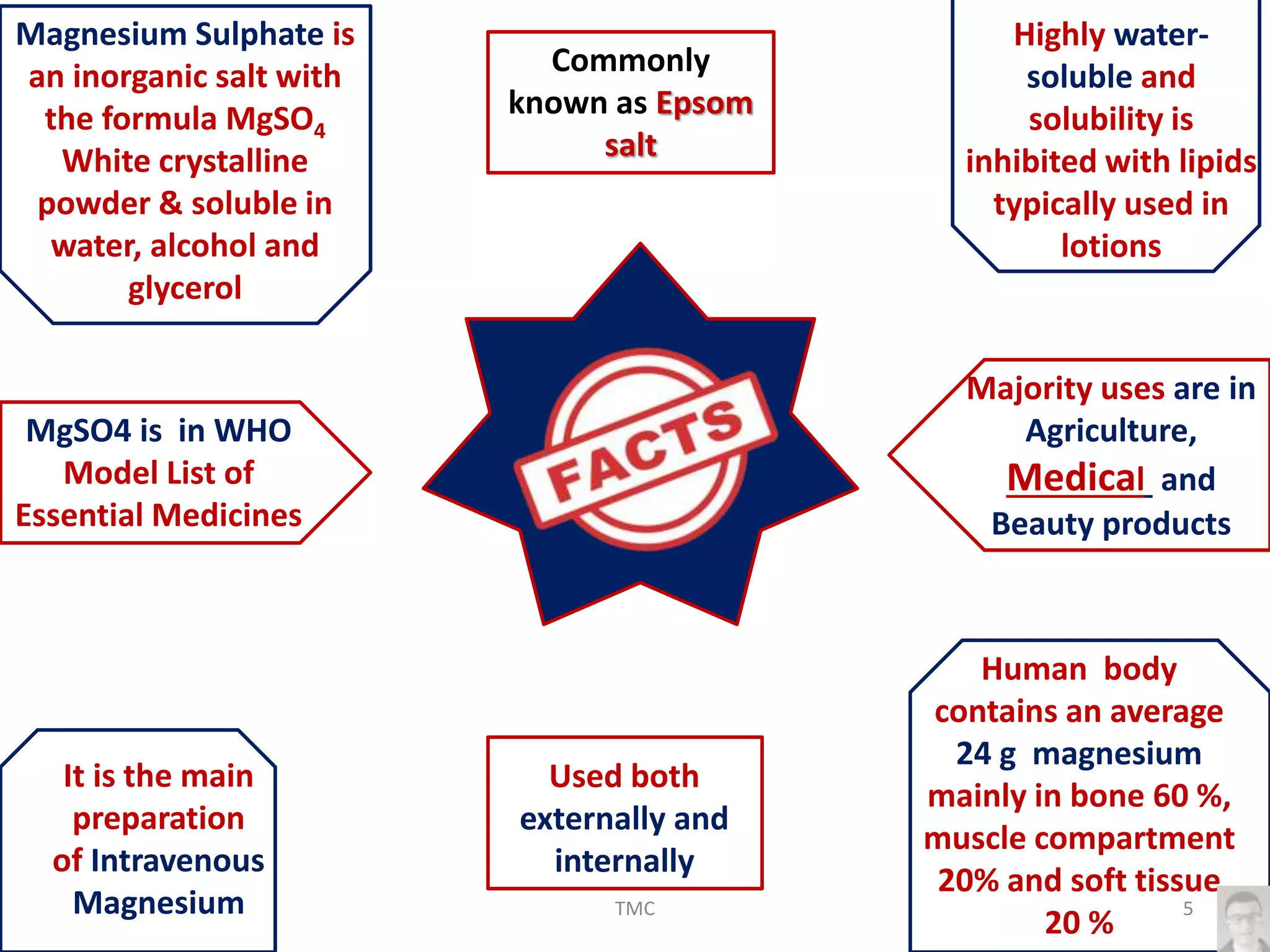
Magnesium Sulphate is
an inorganic salt with
the formula MgSO4
White crystalline
powder & soluble in
water, alcohol and
glycerol
Highly water-
soluble and
solubility is
inhibited with lipids
typically used in
lotions
Commonly
known as Epsom
salt
Used both
externally and
internally
Majority uses are in
Agriculture,
Medical and
Beauty products
MgSO4 is in WHO
Model List of
Essential Medicines
It is the main
preparation
of Intravenous
Magnesium
Human body
contains an average
24 g magnesium
mainly in bone 60 %,
muscle compartment
20% and soft tissue
20 %
5TMC
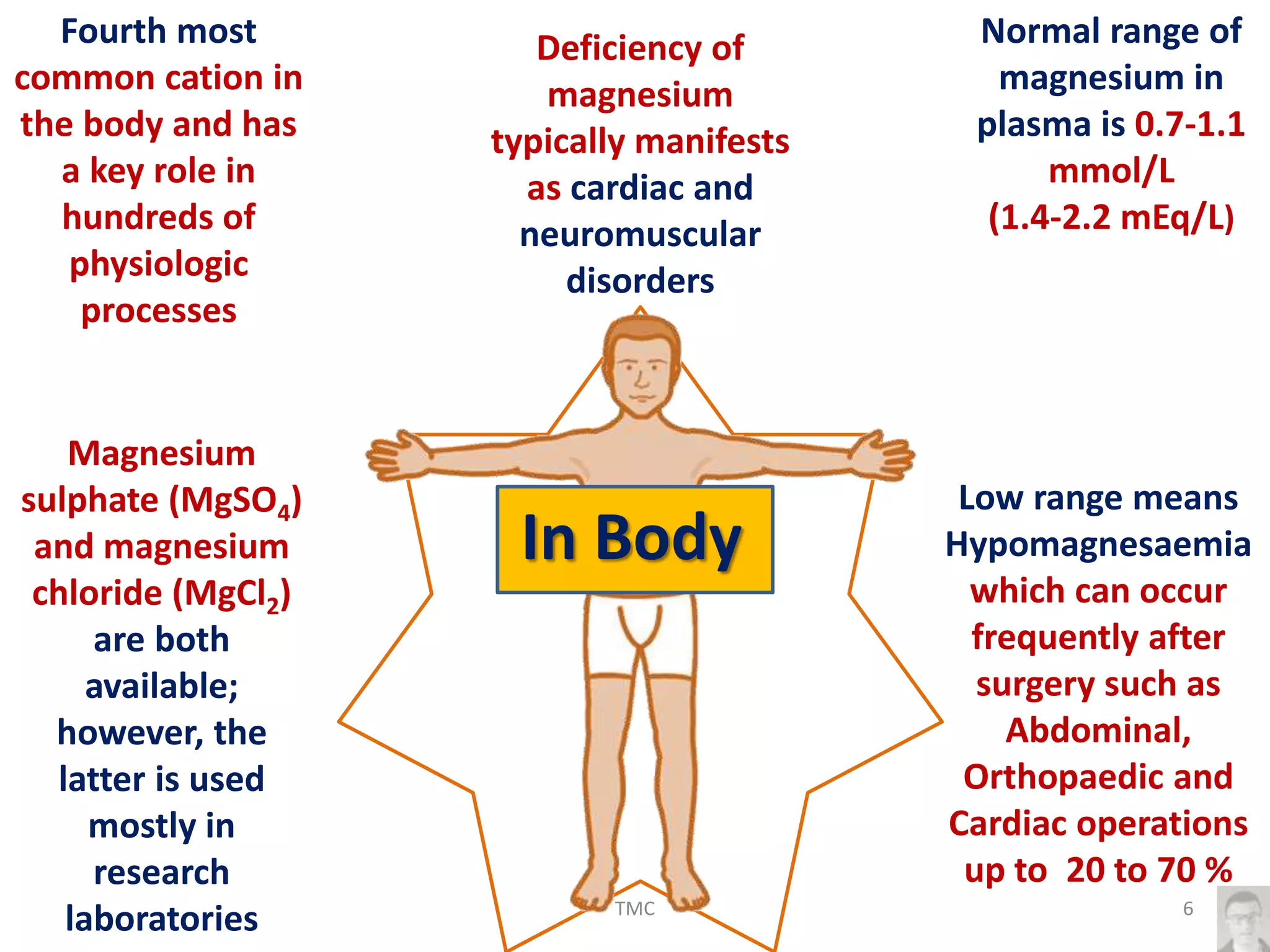
In Body
Fourth most
common cation in
the body and has
a key role in
hundreds of
physiologic
processes
Normal range of
magnesium in
plasma is 0.7-1.1
mmol/L
(1.4-2.2 mEq/L)
Low range means
Hypomagnesaemia
which can occur
frequently after
surgery such as
Abdominal,
Orthopaedic and
Cardiac operations
up to 20 to 70 %
Magnesium
sulphate (MgSO4)
and magnesium
chloride (MgCl2)
are both
available;
however, the
latter is used
mostly in
research
laboratories
Deficiency of
magnesium
typically manifests
as cardiac and
neuromuscular
disorders
6TMC
Physiological
Role
Acts as
mediator for
Na+/K+ ATPase
system
Generation of
cAMP via
adenylcyclase
It also helps in
Oxidative
Phosphorylation,
Glucose
Utilization and
Protein Synthesis
Synthesis of
DNA, RNA
and Protein
It controls the
release and
action of
Parathyroid
hormone thus
regulates
Calcium
Metabolism
7TMC
8TMC
9TMC
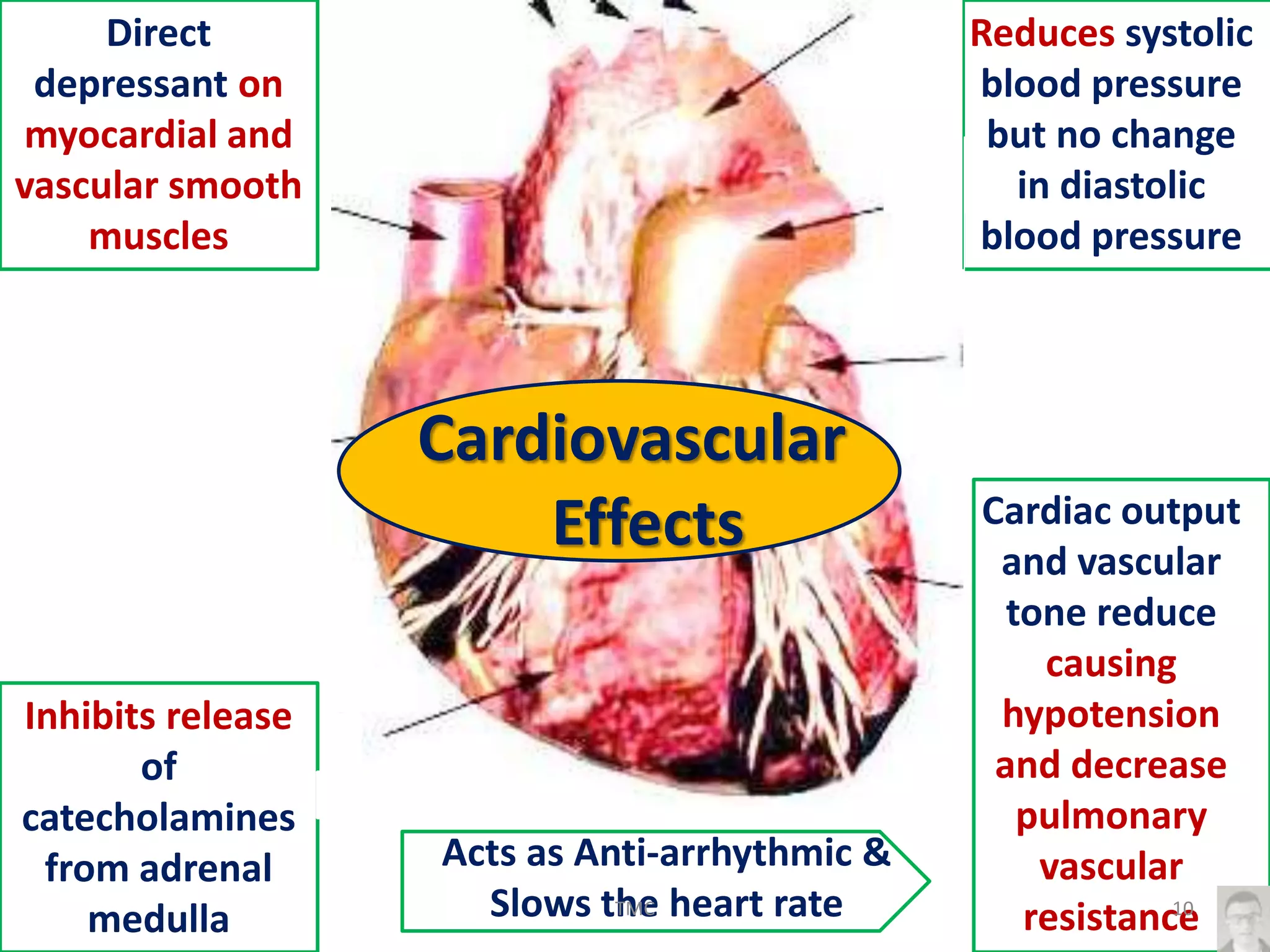
Cardiovascular
Effects
Direct
depressant on
myocardial and
vascular smooth
muscles
Inhibits release
of
catecholamines
from adrenal
medulla
Cardiac output
and vascular
tone reduce
causing
hypotension
and decrease
pulmonary
vascular
resistance
Reduces systolic
blood pressure
but no change
in diastolic
blood pressure
Acts as Anti-arrhythmic &
Slows the heart rate 10TMC
Nervous System
Effects
Reduces the
release of
acetylcholine
at NMJ by
antagonizing
Ca ions
As an
Anticonvulsant
by blocking Ca
channels
Reduce
excitability
of nerves
Reverse
the
cerebral
vasospasm 11TMC
Musculoskeletal
Effects
• Decrease release of
acetylcholine
• Terminates muscular
contraction causing
skeletal muscles
relaxation
• Potentiate the effect
of non-depolarizing
muscular relaxants
• Muscle weakness
Respiratory Effects
• Effective
bronchodilator without
affecting respiratory
drive
• Excessive dose cause
respiratory failure
Hematological effect
• Reduce platelet activity
Genitourinary Effect
• Mild Diuretic and
powerful tocolytic 12TMC
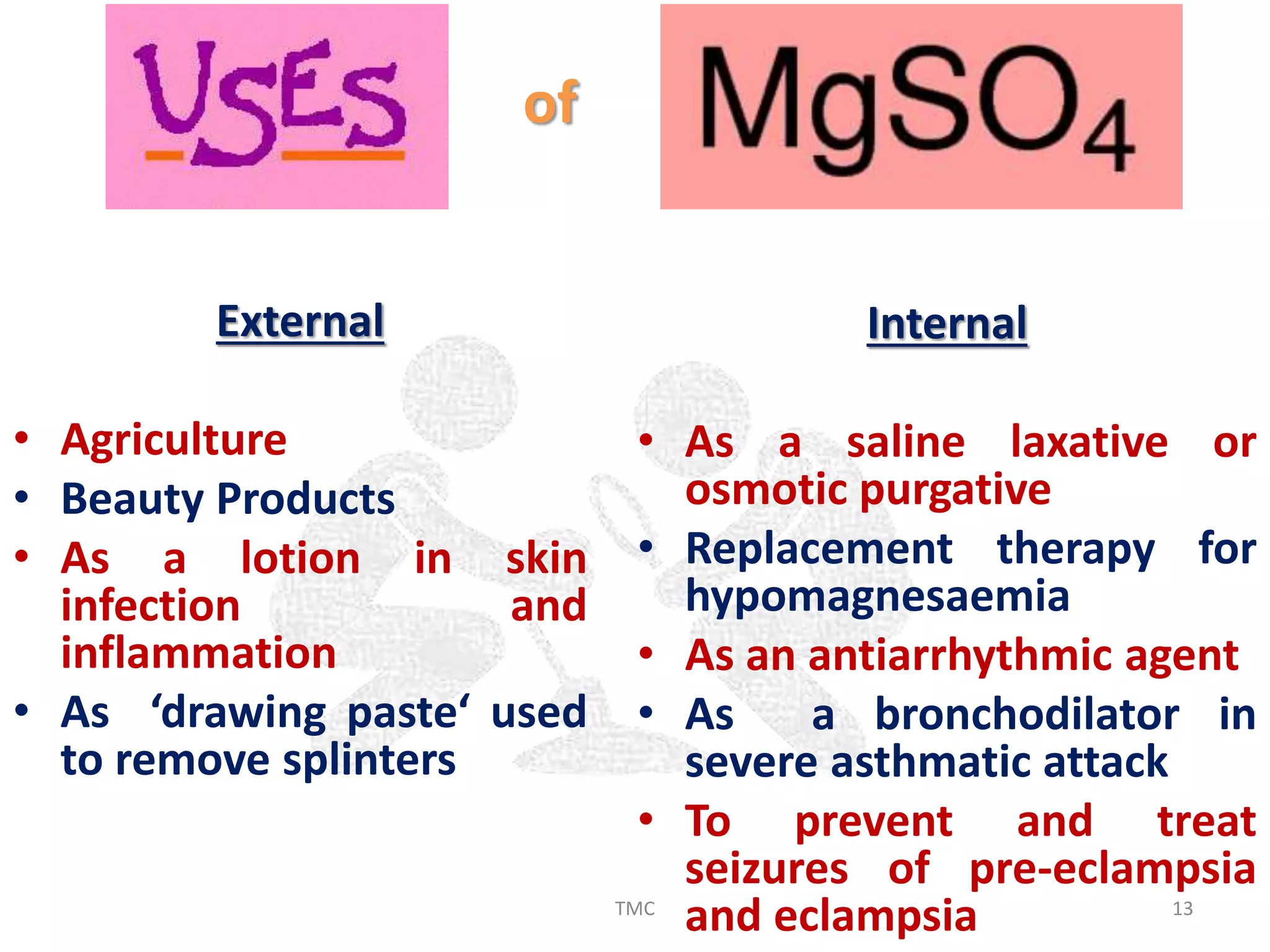
External
• Agriculture
• Beauty Products
• As a lotion in skin
infection and
inflammation
• As ‘drawing paste‘ used
to remove splinters
Internal
• As a saline laxative or
osmotic purgative
• Replacement therapy for
hypomagnesaemia
• As an antiarrhythmic agent
• As a bronchodilator in
severe asthmatic attack
• To prevent and treat
seizures of pre-eclampsia
and eclampsia
of
13TMC
Specific Uses
Hypomagnesaemia
• IV/IM: 25-50 mg/kg 6hrly for 3-
4 doses
• PO: 100-200 mg/kg 6hrly
As Antiarrhythmic and in MI
• 1-2 g slow IV (diluted in 50-100
mL D5W) over 5-60 minutes,
then 0.5-1 g/hr IV
• In all atrial and ventricular
arrhythmia
In Cardiac Arrest
• 1-2 g slow IV (diluted in 10 mL
D5W) over 5-20 minutes
In Stroke and as Neuroprotection
Bronchospasm
• 25-50 mg/kg IV over 10-20
minutes
• Also used as inhaled
magnesium in nebulizer with
other bronchodilators
Severe renal impairment
• Do not exceed 20 g/48 hr
In Eclampsia
• 4-5 g (diluted in 250 mL
NS/D5W) IV then 1-3 g/hr IV
Pheochromocytoma
• 40-60 mg/kg followed by
continuous perioperative infusion
2gm/hr up to total 8-18 gm
In Tetanus
14TMC
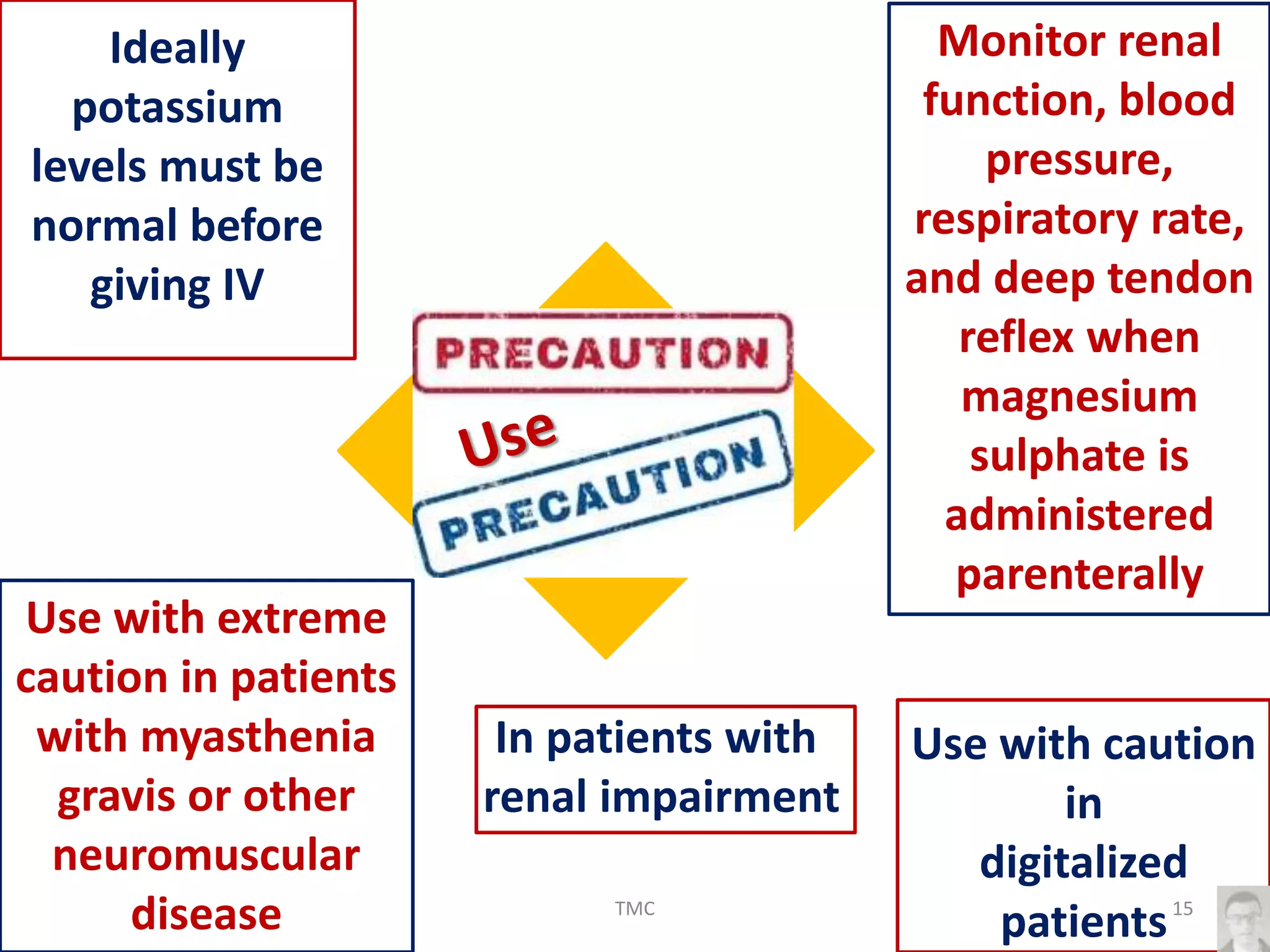
Use with caution
in
digitalized
patients
Use with extreme
caution in patients
with myasthenia
gravis or other
neuromuscular
disease
Monitor renal
function, blood
pressure,
respiratory rate,
and deep tendon
reflex when
magnesium
sulphate is
administered
parenterally
Ideally
potassium
levels must be
normal before
giving IV
In patients with
renal impairment
15TMC
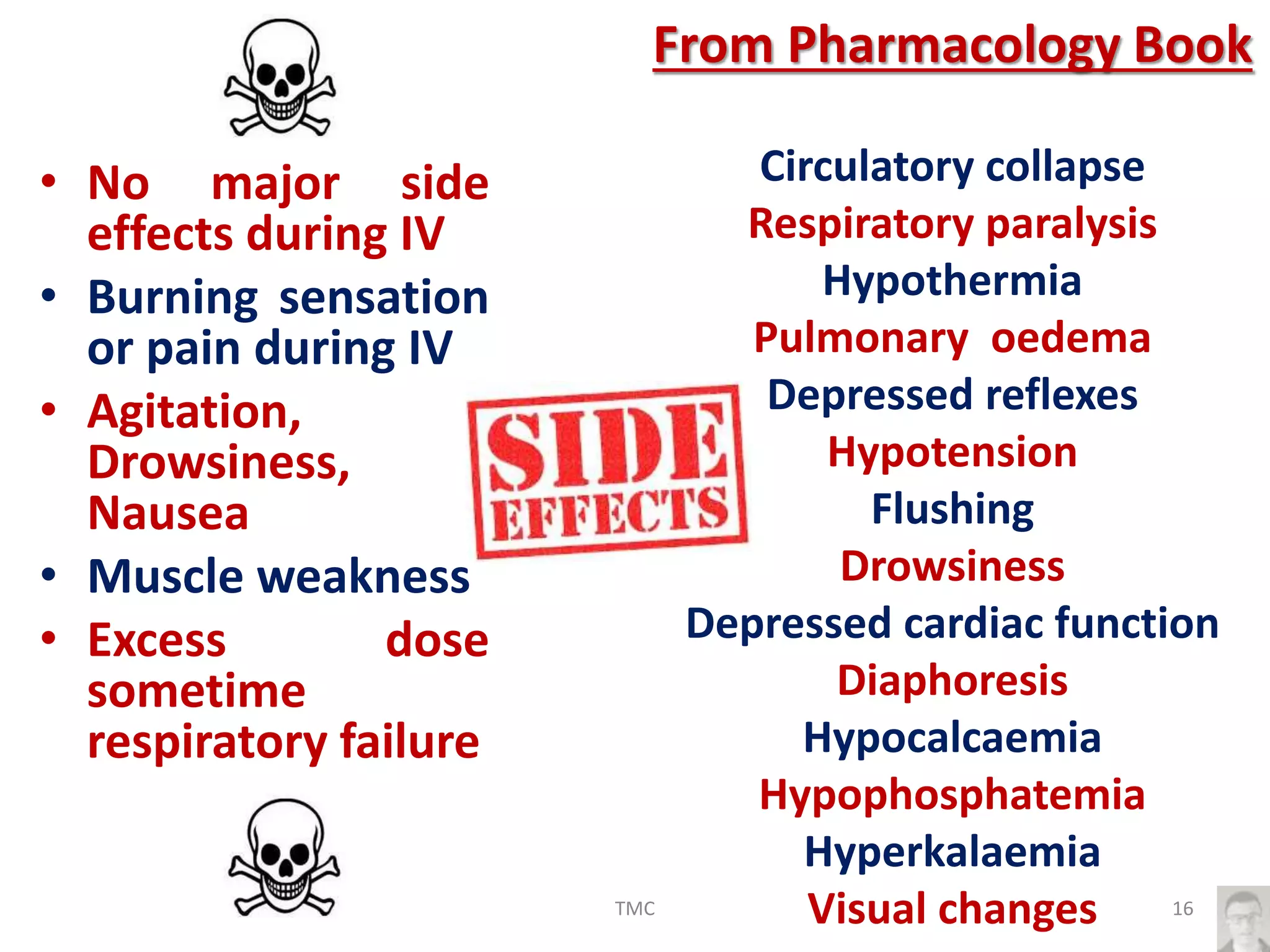
• No major side
effects during IV
• Burning sensation
or pain during IV
• Agitation,
Drowsiness,
Nausea
• Muscle weakness
• Excess dose
sometime
respiratory failure
From Pharmacology Book
Circulatory collapse
Respiratory paralysis
Hypothermia
Pulmonary oedema
Depressed reflexes
Hypotension
Flushing
Drowsiness
Depressed cardiac function
Diaphoresis
Hypocalcaemia
Hypophosphatemia
Hyperkalaemia
Visual changes 16TMC
17TMC
Available Strengths
2 ml, 5 ml and 10 ml, 20 ml, 50 ml ampoules/bulb
as clear solution
Injectable solution
• 40mg/mL
• 80mg/mL
• 500mg/mL @ 2 ml Amp
• 10 ml vial of 10 % MgSO4 ( 1 gm)
Infusion solution
• 1g/100mL
• 2g/100mL
Antidote for Magnesium is Calcium 18TMC
IV Administration
• Infuse over 1-2 hr or as otherwise specified; rate not
to exceed 125 mg/kg/hr ( In non Anaesthetic Uses)
• In severe cases, half of the dose may be infused over
first 15-20 minutes
• Rapid infusions (over 10-20 minutes) may be used for
treatment of severe asthma or torsade's de pointes
ventricular tachycardia
• Cautiously infuse diluted solution through patent IV
line
• Before Anesthesia always dilute MgSo4, and
Remember for IV Go Low, Go Slow & Always Follow
• Ideal dose in anesthesia is 50mg/kg as a single dose
preoperative period
( In Anesthesia )
19TMC
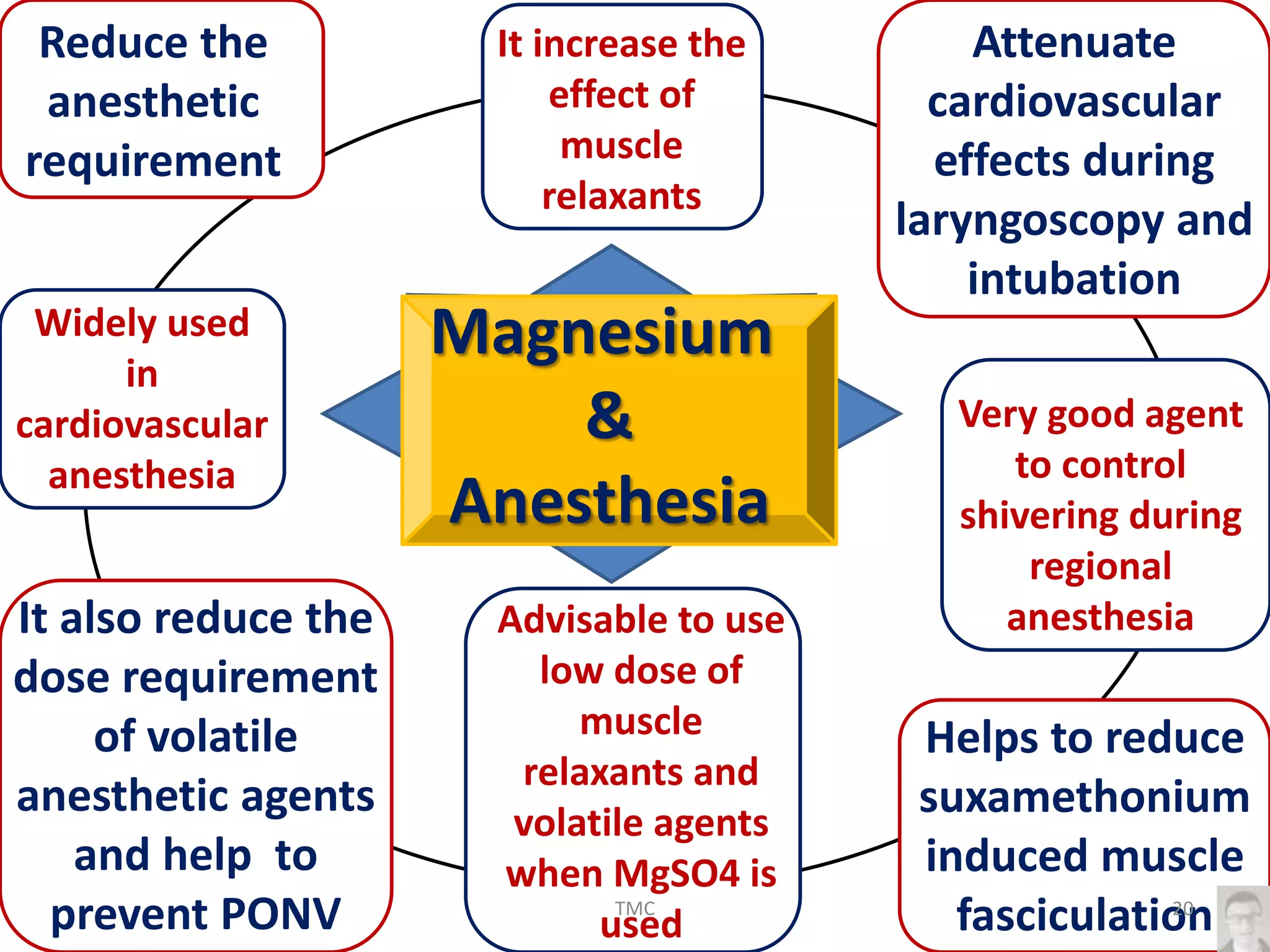
Magnesium
&
Anesthesia
Reduce the
anesthetic
requirement
Attenuate
cardiovascular
effects during
laryngoscopy and
intubation
Helps to reduce
suxamethonium
induced muscle
fasciculation
It also reduce the
dose requirement
of volatile
anesthetic agents
and help to
prevent PONV
It increase the
effect of
muscle
relaxants
Very good agent
to control
shivering during
regional
anesthesia
Widely used
in
cardiovascular
anesthesia
Advisable to use
low dose of
muscle
relaxants and
volatile agents
when MgSO4 is
used
20TMC
Where not to use
during Anesthesia
Both in hypo
and hyper
magnesemia
patients
In electrolyte
disturbance
Hyperventilated
patients
Avoid where
excessive
use of volatile
agents
during anesthesia
is there
Avoid in Geriatric
and
Pediatric patients
as far as possible,
but can be used in
low dose
In Musculo-
Skeletal
disorder patients
21TMC
Analgesic effect of MgSO4
• Magnesium is not a primary analgesic, but it enhances the analgesic
actions of more established analgesics as an adjuvant agent, so
used as Pre-emptive analgesia
• Analgesic effect of MgSO4 is due to inhibition of calcium channels
and NMDA receptors
• Effective in perioperative pain treatment and in blunting somatic,
autonomic and endocrine reflexes provoked by noxious stimuli
• Usual regimens of magnesium sulphate administration were a
loading dose of 30-50 mg/kg followed by a maintenance dose of
6-20 mg/kg/h (continuous infusion) until the end of surgery
• It reduce the dose requirement for opioids, anaesthetics and
muscle relaxants and part of MMA
• As an analgesic adjunct, useful in patients receiving total
intravenous anaesthesia(TIVA) and improved the quality of
postoperative analgesia during TIVA
22TMC
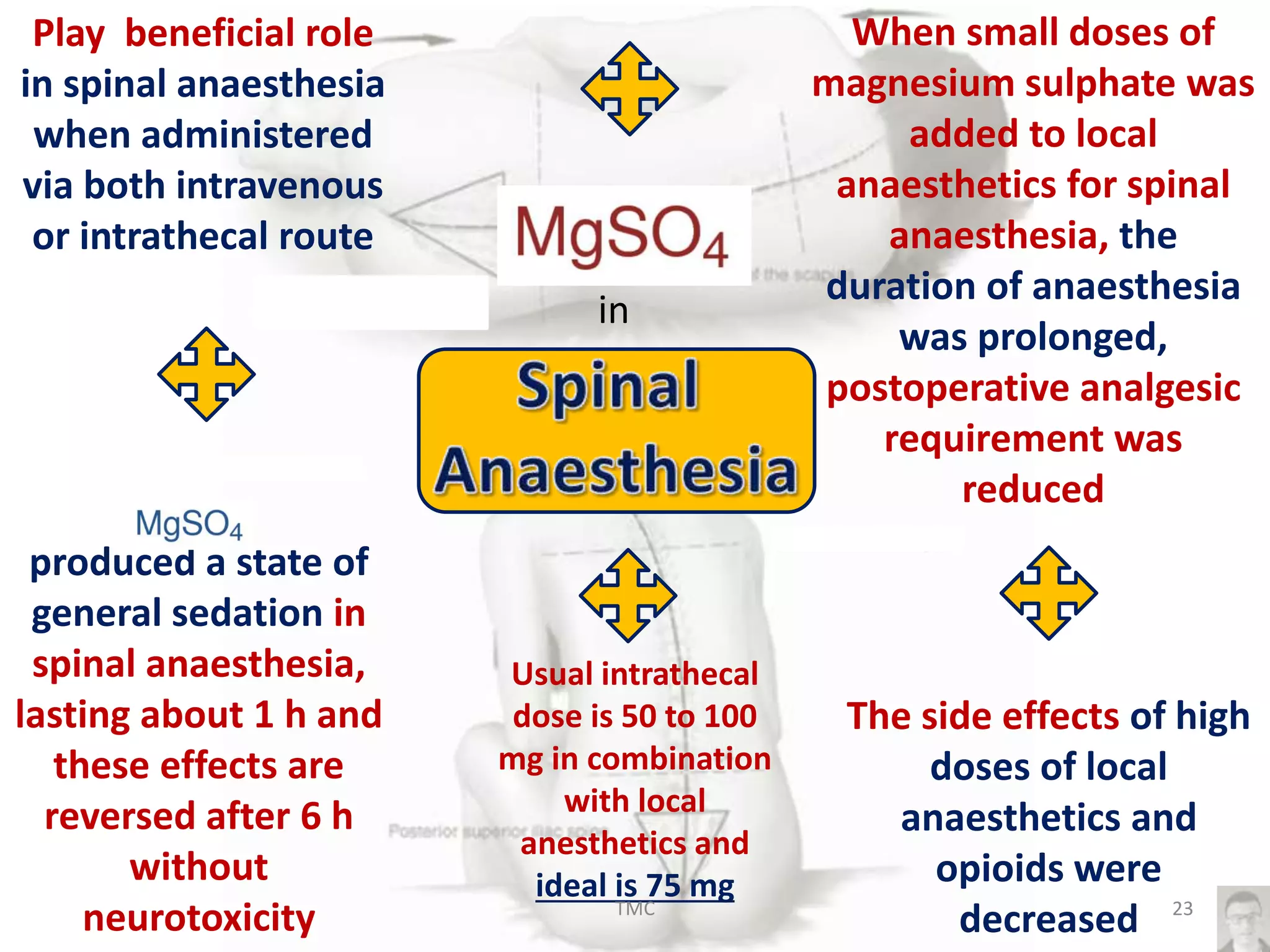
Play beneficial role
in spinal anaesthesia
when administered
via both intravenous
or intrathecal route
When small doses of
magnesium sulphate was
added to local
anaesthetics for spinal
anaesthesia, the
duration of anaesthesia
was prolonged,
postoperative analgesic
requirement was
reduced
produced a state of
general sedation in
spinal anaesthesia,
lasting about 1 h and
these effects are
reversed after 6 h
without
neurotoxicity
The side effects of high
doses of local
anaesthetics and
opioids were
decreased
Usual intrathecal
dose is 50 to 100
mg in combination
with local
anesthetics and
ideal is 75 mg
in
23TMC
The addition of
magnesium
sulphate to the
local
anaesthetic
mixture results
in the earlier
onset of
akinesia and
establishment
of suitable
conditions to
start Surgery
50 to 250 mg
of Magnesium
Sulphate is
ideal dose
The addition of
magnesium
sulphate to
lidocaine in
significantly
prolongs the
analgesic
duration and
reduces the
VAS pain score
and
postoperative
opioids
requirements
This effect is due to blocking
NMDA receptors present in
the central nervous system
and also in the peripheral
tissues such as the skin and
the muscles 24TMC
Articles
from
25TMC
In terms of potentiation of postoperative analgesia, magnesium
sulphate decrease not only opioid consumption after surgery, but also
improve pain scores as well
Bujalska Zadrozny M, Tatarkiewicz J, Kulik K, Filip M, Naruszewicz M
(2017) Magnesium enhances opioid-induced analgesia - What we have
learnt in the past decades? Eur J Pharm Sci 99: 113-127
Most previous studies suggest that perioperative intravenous
administration of magnesium sulphate potentiates analgesia after
surgery
De Oliveira GS, Castro Alves LJ, Khan JH, McCarthy RJ (2013)
Perioperative systemic magnesium to minimize postoperative pain: a
meta-analysis of randomized controlled trials. Anesthesiology 119(1):
178-190.
Albrecht E, Kirkham KR, Liu SS, Brull R (2013) Peri-operative
intravenous administration of magnesium sulphate and
postoperative pain: a meta-analysis. Anaesthesia 68(1): 79-90.
As Analgesic
26TMC
The usual dosage regimen of magnesium sulphate was as follows: a
loading dose of 30–50 mg/kg followed by a maintenance dose of 6-20
mg/kg/h (continuous infusion), until the end of surgery
Do SH (2013) Magnesium: a versatile drug for anesthesiologists.
Korean J Anesthesiol 65(1): 4-8.
The analgesia-potentiating effect of magnesium stabilized blood
pressure and heart rate during recovery from anaesthesia
Ryu JH, Sohn IS, Do SH (2009) Controlled hypotension for middle ear
surgery: a comparison between remifentanil and magnesium sulphate.
Br J Anaesth 103(4): 490-495.
Dose
27TMC
Intravenous administration of magnesium sulphate improved
postoperative analgesia in patients undergoing total hip replacement
arthroplasty under spinal anaesthesia
Hwang JY, Na HS, Jeon YT, Ro YJ, Kim CS, et al. (2010) I.V. infusion of
magnesium sulphate during spinal anaesthesia improves
postoperative analgesia. Br J Anaesth 104(1): 89-93
A small dose of magnesium sulphate added to intrathecal
administration of local anaesthetic extended the duration of spinal
anaesthesia and improved postoperative analgesia
Ozalevli M, Cetin TO, Unlugenc H, Guler T, Isik G (2005) The effect of
adding intrathecal magnesium sulphate to bupivacaine-fentanyl spinal
anaesthesia. Acta Anaesthesiol Scand 49(10): 1514-1519.
In Spinal Anesthesia
28TMC
When mixed with local anaesthetics, magnesium also showed
beneficial effects in intravenous regional anaesthesia (Bier block).
Turan A, Memis D, Karamanlioglu B, Guler T, Pamukcu Z (2005)
Intravenous regional anesthesia using lidocaine and magnesium.
Anesth Analg 100(4): 1189-1192.
Magnesium sulphate administration reduced the requirements for
nondepolarizing neuromuscular blockers. Administration of
magnesium sulphate—while potentiating the effect of muscle
relaxants— has not been found to delay the recovery from general
anaesthesia
Lee DH, Kwon IC (2009) Magnesium sulphate has beneficial effects as
an adjuvant during general anaesthesia for Caesarean section. Br J
Anaesth 103(6): 861-866
In L/A Block
29TMC
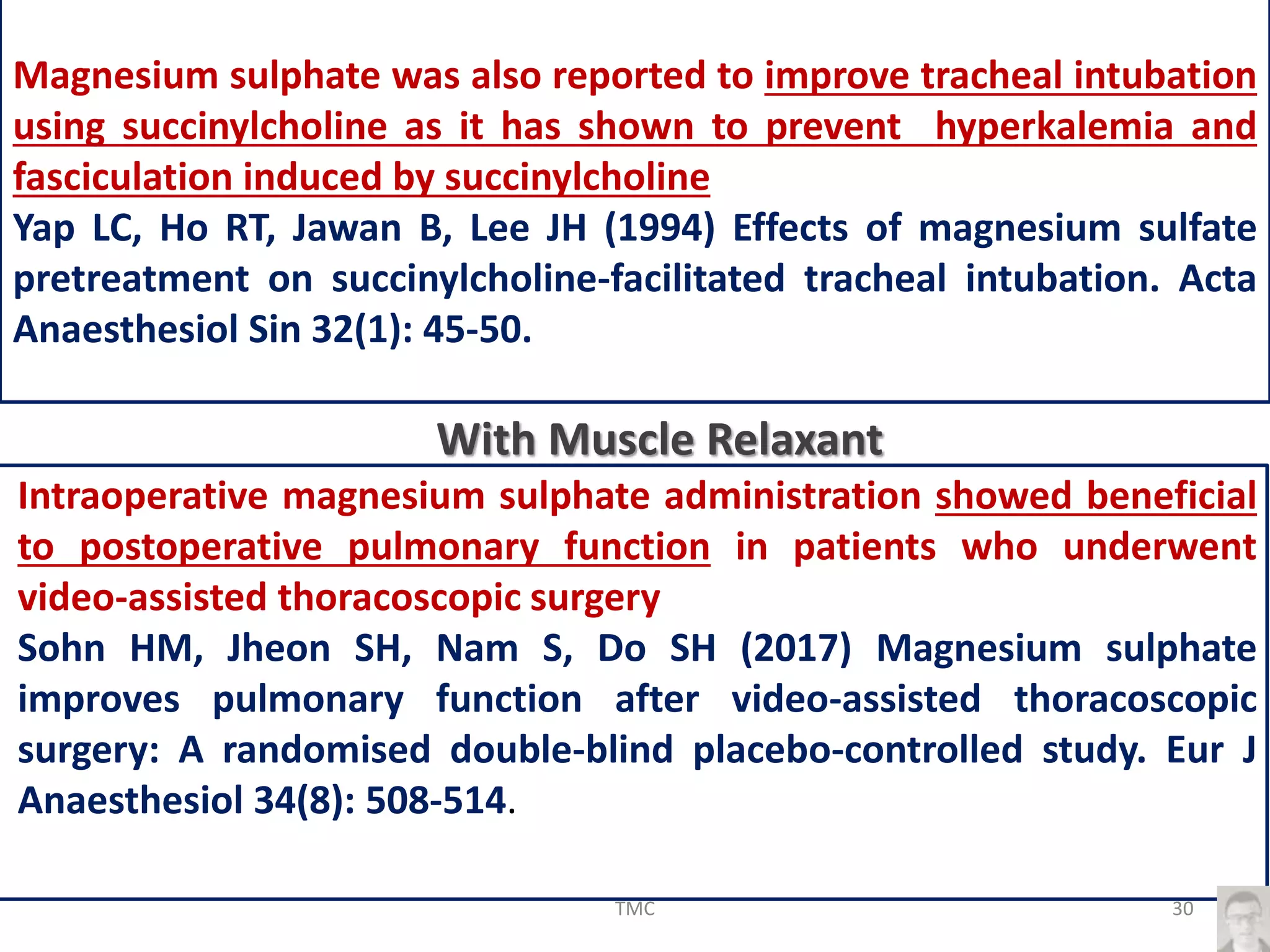
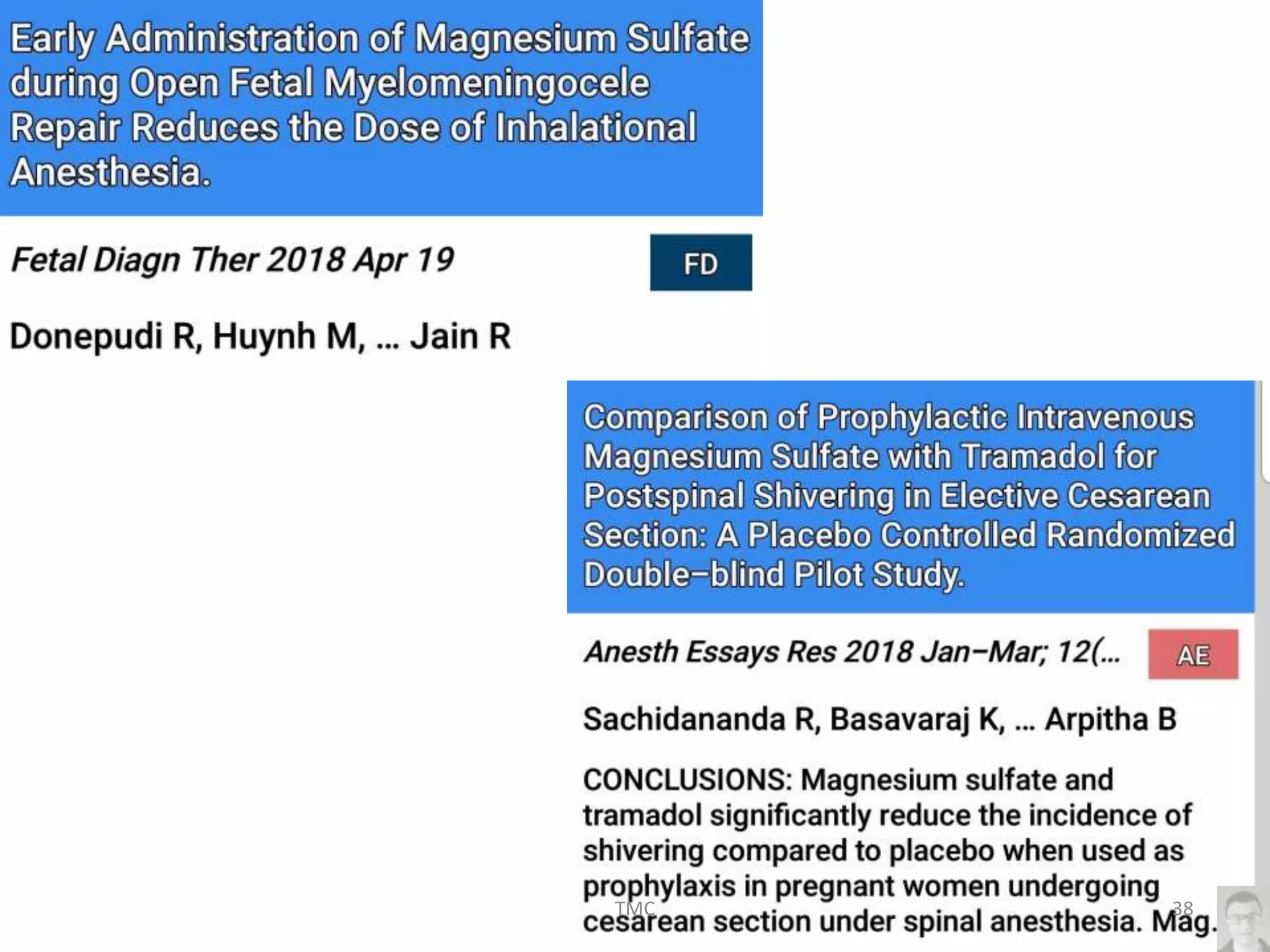
Magnesium sulphate was also reported to improve tracheal intubation
using succinylcholine as it has shown to prevent hyperkalemia and
fasciculation induced by succinylcholine
Yap LC, Ho RT, Jawan B, Lee JH (1994) Effects of magnesium sulfate
pretreatment on succinylcholine-facilitated tracheal intubation. Acta
Anaesthesiol Sin 32(1): 45-50.
Intraoperative magnesium sulphate administration showed beneficial
to postoperative pulmonary function in patients who underwent
video-assisted thoracoscopic surgery
Sohn HM, Jheon SH, Nam S, Do SH (2017) Magnesium sulphate
improves pulmonary function after video-assisted thoracoscopic
surgery: A randomised double-blind placebo-controlled study. Eur J
Anaesthesiol 34(8): 508-514.
With Muscle Relaxant
30TMC
Postoperative emergence agitation-related to alteration of cognitive
perception-was also reduced in paediatric patients who received
magnesium sulphate during adenotonsillectomy
Abdulatif M, Ahmed A, Mukhtar A, Badawy S (2013) The effect of
magnesium sulphate infusion on the incidence and severity of
emergence agitation in children undergoing adenotonsillectomy
using sevoflurane anaesthesia. Anaesthesia 68(10): 1045-1052.
It is also worthy of note that magnesium sulphate has an anti-
shivering effect
Park SM, Mangat HS, Berger K, Rosengart AJ (2012) Efficacy spectrum
of antishivering medications: meta-analysis of randomized controlled
trials. Crit Care Med 40(11): 3070-3082.
Anti-Shivering 31TMC
32TMC
33TMC
34TMC
35TMC
36TMC
37TMC
38TMC
39TMC
40TMC
41TMC
42TMC
43TMC
44TMC
45TMC
46TMC
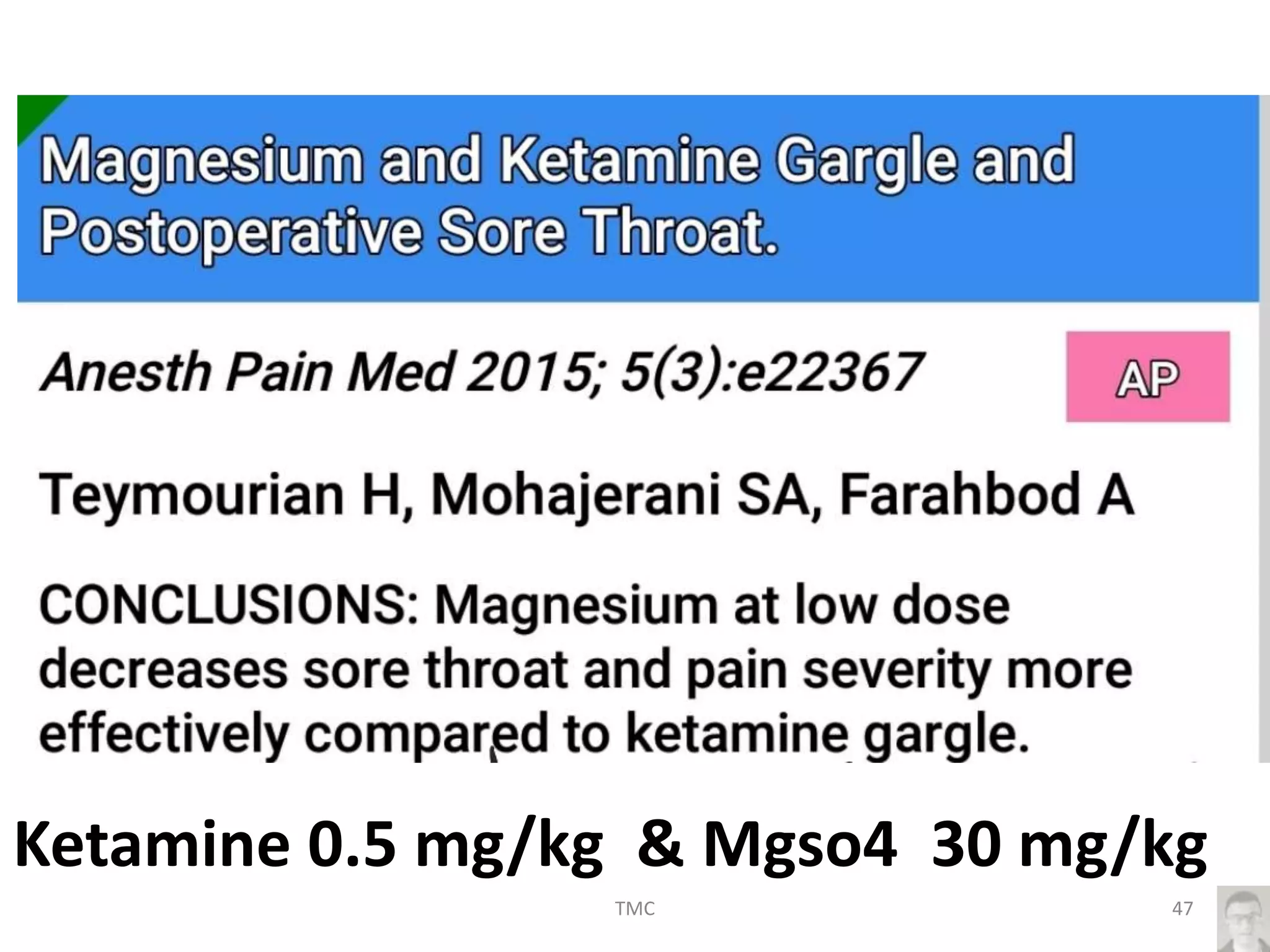
Ketamine 0.5 mg/kg & Mgso4 30 mg/kg
47TMC
48TMC
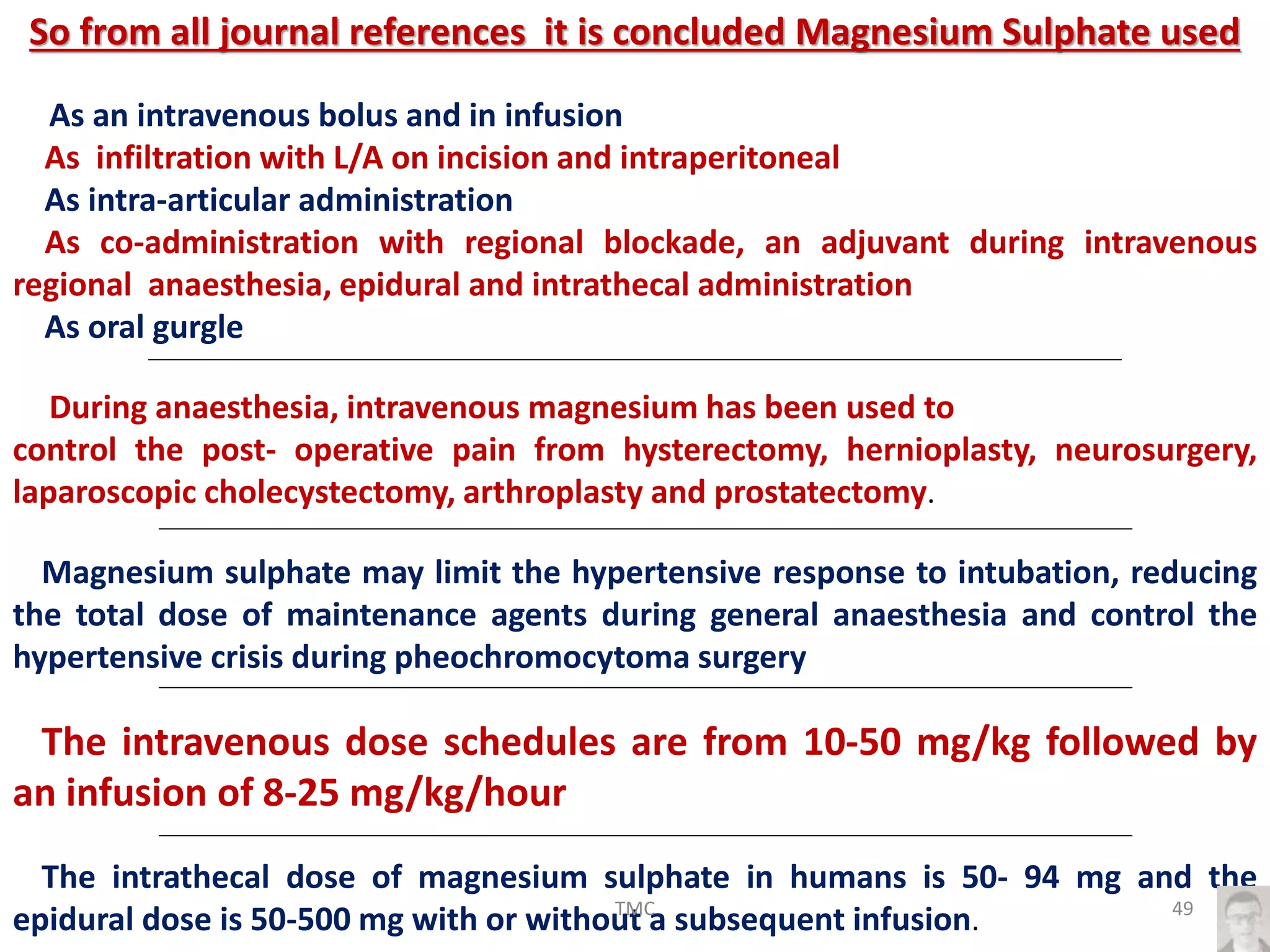
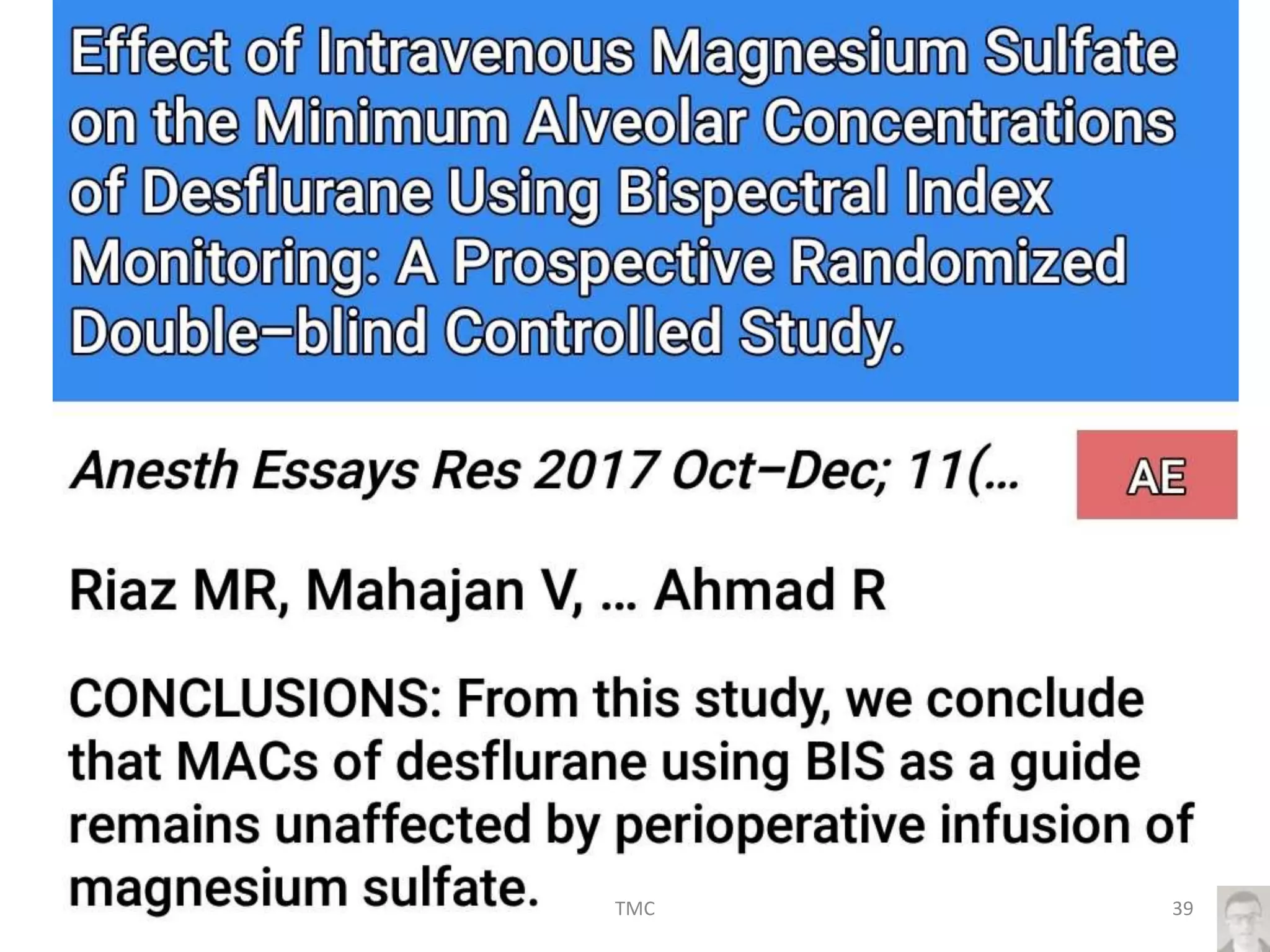
So from all journal references it is concluded Magnesium Sulphate used
As an intravenous bolus and in infusion
As infiltration with L/A on incision and intraperitoneal
As intra-articular administration
As co-administration with regional blockade, an adjuvant during intravenous
regional anaesthesia, epidural and intrathecal administration
As oral gurgle
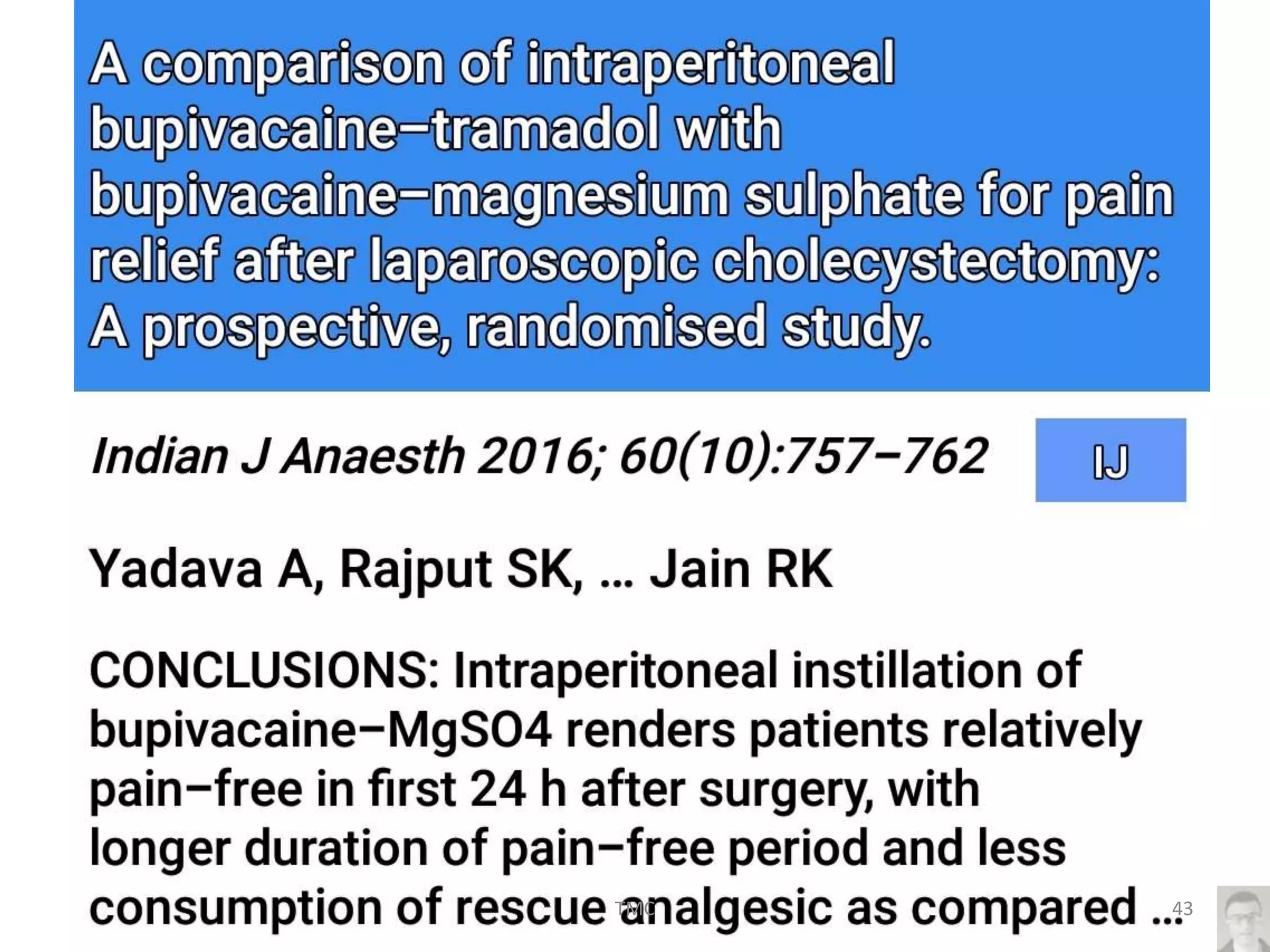
During anaesthesia, intravenous magnesium has been used to
control the post- operative pain from hysterectomy, hernioplasty, neurosurgery,
laparoscopic cholecystectomy, arthroplasty and prostatectomy.
Magnesium sulphate may limit the hypertensive response to intubation, reducing
the total dose of maintenance agents during general anaesthesia and control the
hypertensive crisis during pheochromocytoma surgery
The intravenous dose schedules are from 10-50 mg/kg followed by
an infusion of 8-25 mg/kg/hour
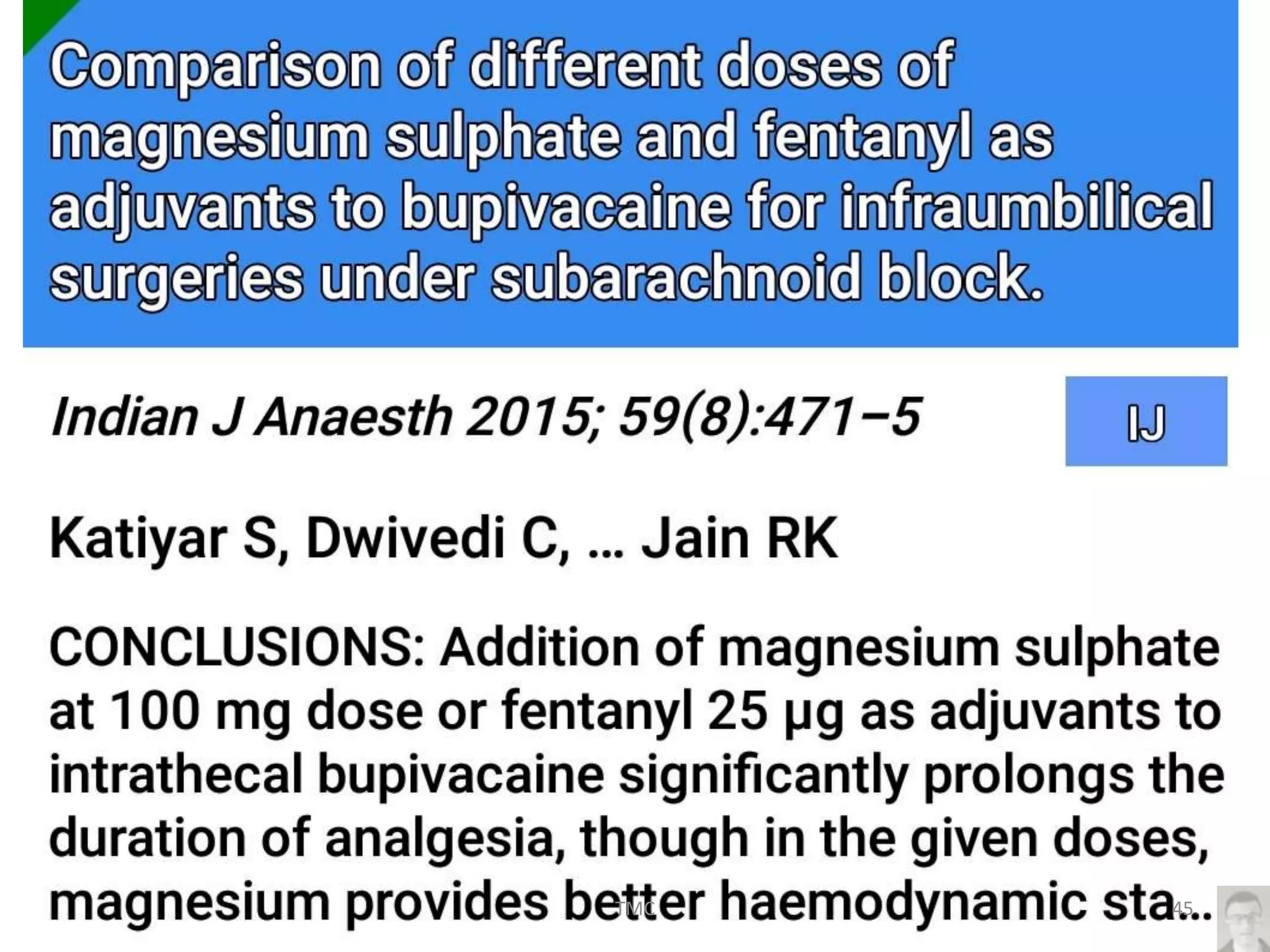
The intrathecal dose of magnesium sulphate in humans is 50- 94 mg and the
epidural dose is 50-500 mg with or without a subsequent infusion. 49TMC
My Experience
• I was knowing Magnesium Sulphate as only
reserved drug for some emergencies since my
residency
• But almost 5 yrs back reading from journals
and knowing from experience, came to know
versatile effects of MgSo4 in anesthesiology
• Since then I am using MgSo4 in my practice in
TIVA, in S/A and in Local Anesthesia Blocks
50TMC
In TIVA my usual dose
is 30-50 mg/kg as
per ASA status
In S/A giving 50-75 mg
mixing with
bupivacaine in
Ortho and Uro cases
In L/A blocks or
Infiltration
my dose is 150-250
mg mixing with either
lidocaine or Bupivacaine
My patients are
very
Comfortable and
consciously
Sedated
Overall post-
operative
pain relief is very
good
up to 24 hours
I t is my most favorite
adjuvant drug
along with Dexona
and Lidocaone in TIVA51TMC
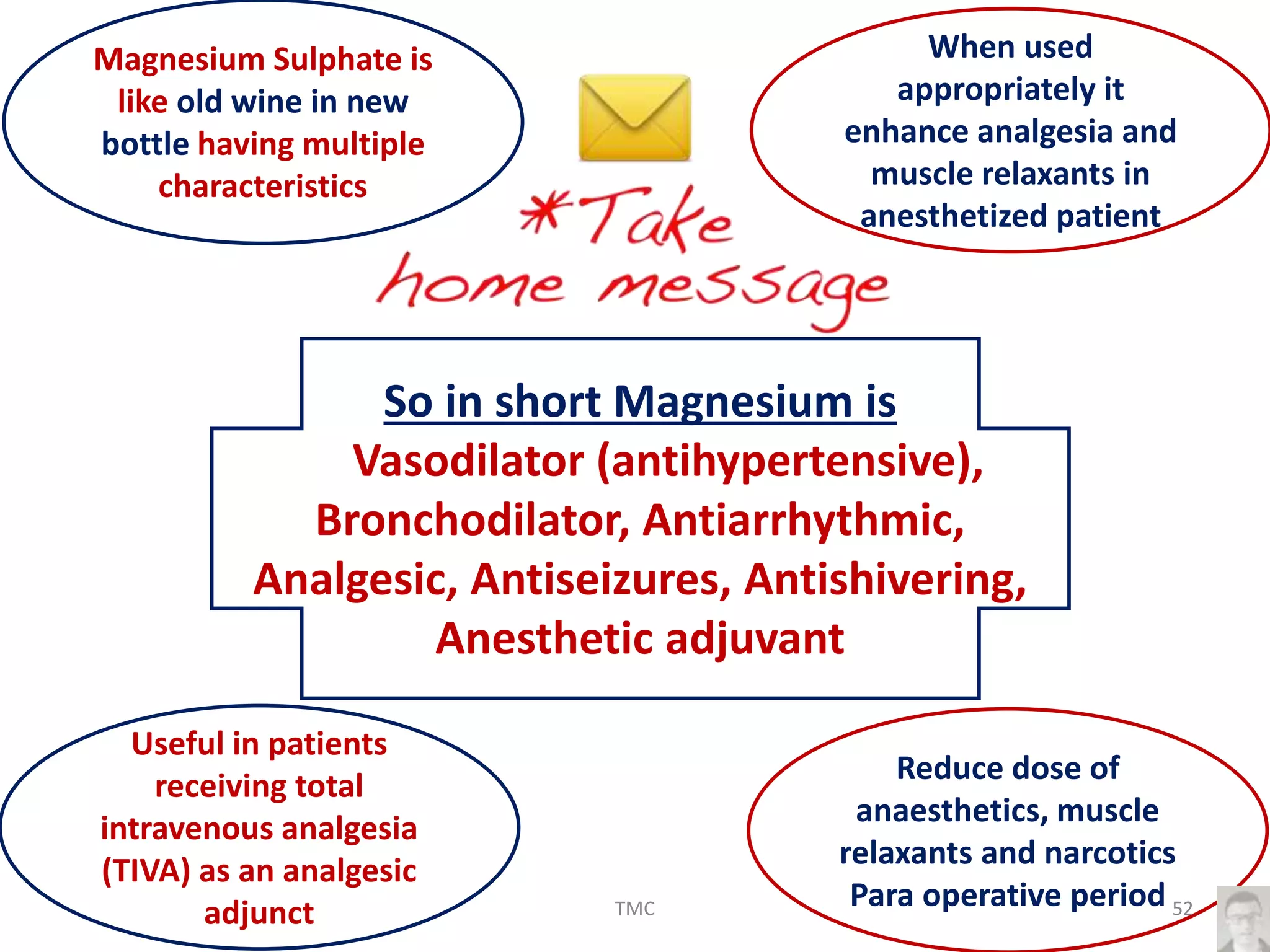
Magnesium Sulphate is
like old wine in new
bottle having multiple
characteristics
When used
appropriately it
enhance analgesia and
muscle relaxants in
anesthetized patient
Useful in patients
receiving total
intravenous analgesia
(TIVA) as an analgesic
adjunct
Reduce dose of
anaesthetics, muscle
relaxants and narcotics
Para operative period
So in short Magnesium is
Vasodilator (antihypertensive),
Bronchodilator, Antiarrhythmic,
Analgesic, Antiseizures, Antishivering,
Anesthetic adjuvant
52TMC
Magnesium sulphate has been around for a long time, but
only as of recently, its properties have been investigated and
found to be useful in the field of anaesthesia. If used
appropriately, it would enhance smooth recovery and better
postoperative outcome for surgical patients.
Is true Friend, Philosopher and Guide in
Pre, Intra and Post Operative Period
for Anesthesiologist 53TMC
54TMC
55TMC
Patient wants complete Analgesia with Anesthesia
56TMC
57TMC
58
USE
USE
USE
USE
USE
USE
USE
USED
TMC
59TMC

Magnesium sulphate and anesthesiologist

  • 1.
    & (Friend, Philosopher andGuide) (Pre - Intra - Post) Dr. Tushar Chokshi (MD) Anaesthesiologist 1TMC
  • 2.
    1) How manyof you are giving Magnesium Sulphate ? 2) Are you using Routinely or Occasional ? 3) What is your Experience ? 4) Will you give Magnesium Sulphate in Your Practice ? 2TMC
  • 3.
    Lecture Outline • Historyand Facts • In Body • Physiological Role • Different Systemic Effects • Uses, Specific Uses & Precautions to Use • Side Effects • Available Strengths • IV Administration • Magnesium and Anesthesia ( when and when not to use) • Magnesium and Analgesia • Magnesium and Spinal Anesthesia • Magnesium and Local Blocks • Articles from Journals • My Experience • Take home message • Audience answers • Thanks 3TMC
  • 4.
    History Technically a bittertasting, naturally occurring magnesium- and-sulphate mineral compound Chemical name: Magnesium Sulphate Heptahydrate Epsom salt is named for the English town in which it was discovered, where it bubbled up in water from an underground spring in the early 17th century (It's also known as Epsomite) 4TMC
  • 5.
    Magnesium Sulphate is aninorganic salt with the formula MgSO4 White crystalline powder & soluble in water, alcohol and glycerol Highly water- soluble and solubility is inhibited with lipids typically used in lotions Commonly known as Epsom salt Used both externally and internally Majority uses are in Agriculture, Medical and Beauty products MgSO4 is in WHO Model List of Essential Medicines It is the main preparation of Intravenous Magnesium Human body contains an average 24 g magnesium mainly in bone 60 %, muscle compartment 20% and soft tissue 20 % 5TMC
  • 6.
    In Body Fourth most commoncation in the body and has a key role in hundreds of physiologic processes Normal range of magnesium in plasma is 0.7-1.1 mmol/L (1.4-2.2 mEq/L) Low range means Hypomagnesaemia which can occur frequently after surgery such as Abdominal, Orthopaedic and Cardiac operations up to 20 to 70 % Magnesium sulphate (MgSO4) and magnesium chloride (MgCl2) are both available; however, the latter is used mostly in research laboratories Deficiency of magnesium typically manifests as cardiac and neuromuscular disorders 6TMC
  • 7.
    Physiological Role Acts as mediator for Na+/K+ATPase system Generation of cAMP via adenylcyclase It also helps in Oxidative Phosphorylation, Glucose Utilization and Protein Synthesis Synthesis of DNA, RNA and Protein It controls the release and action of Parathyroid hormone thus regulates Calcium Metabolism 7TMC
  • 8.
  • 9.
  • 10.
    Cardiovascular Effects Direct depressant on myocardial and vascularsmooth muscles Inhibits release of catecholamines from adrenal medulla Cardiac output and vascular tone reduce causing hypotension and decrease pulmonary vascular resistance Reduces systolic blood pressure but no change in diastolic blood pressure Acts as Anti-arrhythmic & Slows the heart rate 10TMC
  • 11.
    Nervous System Effects Reduces the releaseof acetylcholine at NMJ by antagonizing Ca ions As an Anticonvulsant by blocking Ca channels Reduce excitability of nerves Reverse the cerebral vasospasm 11TMC
  • 12.
    Musculoskeletal Effects • Decrease releaseof acetylcholine • Terminates muscular contraction causing skeletal muscles relaxation • Potentiate the effect of non-depolarizing muscular relaxants • Muscle weakness Respiratory Effects • Effective bronchodilator without affecting respiratory drive • Excessive dose cause respiratory failure Hematological effect • Reduce platelet activity Genitourinary Effect • Mild Diuretic and powerful tocolytic 12TMC
  • 13.
    External • Agriculture • BeautyProducts • As a lotion in skin infection and inflammation • As ‘drawing paste‘ used to remove splinters Internal • As a saline laxative or osmotic purgative • Replacement therapy for hypomagnesaemia • As an antiarrhythmic agent • As a bronchodilator in severe asthmatic attack • To prevent and treat seizures of pre-eclampsia and eclampsia of 13TMC
  • 14.
    Specific Uses Hypomagnesaemia • IV/IM:25-50 mg/kg 6hrly for 3- 4 doses • PO: 100-200 mg/kg 6hrly As Antiarrhythmic and in MI • 1-2 g slow IV (diluted in 50-100 mL D5W) over 5-60 minutes, then 0.5-1 g/hr IV • In all atrial and ventricular arrhythmia In Cardiac Arrest • 1-2 g slow IV (diluted in 10 mL D5W) over 5-20 minutes In Stroke and as Neuroprotection Bronchospasm • 25-50 mg/kg IV over 10-20 minutes • Also used as inhaled magnesium in nebulizer with other bronchodilators Severe renal impairment • Do not exceed 20 g/48 hr In Eclampsia • 4-5 g (diluted in 250 mL NS/D5W) IV then 1-3 g/hr IV Pheochromocytoma • 40-60 mg/kg followed by continuous perioperative infusion 2gm/hr up to total 8-18 gm In Tetanus 14TMC
  • 15.
    Use with caution in digitalized patients Usewith extreme caution in patients with myasthenia gravis or other neuromuscular disease Monitor renal function, blood pressure, respiratory rate, and deep tendon reflex when magnesium sulphate is administered parenterally Ideally potassium levels must be normal before giving IV In patients with renal impairment 15TMC
  • 16.
    • No majorside effects during IV • Burning sensation or pain during IV • Agitation, Drowsiness, Nausea • Muscle weakness • Excess dose sometime respiratory failure From Pharmacology Book Circulatory collapse Respiratory paralysis Hypothermia Pulmonary oedema Depressed reflexes Hypotension Flushing Drowsiness Depressed cardiac function Diaphoresis Hypocalcaemia Hypophosphatemia Hyperkalaemia Visual changes 16TMC
  • 17.
  • 18.
    Available Strengths 2 ml,5 ml and 10 ml, 20 ml, 50 ml ampoules/bulb as clear solution Injectable solution • 40mg/mL • 80mg/mL • 500mg/mL @ 2 ml Amp • 10 ml vial of 10 % MgSO4 ( 1 gm) Infusion solution • 1g/100mL • 2g/100mL Antidote for Magnesium is Calcium 18TMC
  • 19.
    IV Administration • Infuseover 1-2 hr or as otherwise specified; rate not to exceed 125 mg/kg/hr ( In non Anaesthetic Uses) • In severe cases, half of the dose may be infused over first 15-20 minutes • Rapid infusions (over 10-20 minutes) may be used for treatment of severe asthma or torsade's de pointes ventricular tachycardia • Cautiously infuse diluted solution through patent IV line • Before Anesthesia always dilute MgSo4, and Remember for IV Go Low, Go Slow & Always Follow • Ideal dose in anesthesia is 50mg/kg as a single dose preoperative period ( In Anesthesia ) 19TMC
  • 20.
    Magnesium & Anesthesia Reduce the anesthetic requirement Attenuate cardiovascular effects during laryngoscopyand intubation Helps to reduce suxamethonium induced muscle fasciculation It also reduce the dose requirement of volatile anesthetic agents and help to prevent PONV It increase the effect of muscle relaxants Very good agent to control shivering during regional anesthesia Widely used in cardiovascular anesthesia Advisable to use low dose of muscle relaxants and volatile agents when MgSO4 is used 20TMC
  • 21.
    Where not touse during Anesthesia Both in hypo and hyper magnesemia patients In electrolyte disturbance Hyperventilated patients Avoid where excessive use of volatile agents during anesthesia is there Avoid in Geriatric and Pediatric patients as far as possible, but can be used in low dose In Musculo- Skeletal disorder patients 21TMC
  • 22.
    Analgesic effect ofMgSO4 • Magnesium is not a primary analgesic, but it enhances the analgesic actions of more established analgesics as an adjuvant agent, so used as Pre-emptive analgesia • Analgesic effect of MgSO4 is due to inhibition of calcium channels and NMDA receptors • Effective in perioperative pain treatment and in blunting somatic, autonomic and endocrine reflexes provoked by noxious stimuli • Usual regimens of magnesium sulphate administration were a loading dose of 30-50 mg/kg followed by a maintenance dose of 6-20 mg/kg/h (continuous infusion) until the end of surgery • It reduce the dose requirement for opioids, anaesthetics and muscle relaxants and part of MMA • As an analgesic adjunct, useful in patients receiving total intravenous anaesthesia(TIVA) and improved the quality of postoperative analgesia during TIVA 22TMC
  • 23.
    Play beneficial role inspinal anaesthesia when administered via both intravenous or intrathecal route When small doses of magnesium sulphate was added to local anaesthetics for spinal anaesthesia, the duration of anaesthesia was prolonged, postoperative analgesic requirement was reduced produced a state of general sedation in spinal anaesthesia, lasting about 1 h and these effects are reversed after 6 h without neurotoxicity The side effects of high doses of local anaesthetics and opioids were decreased Usual intrathecal dose is 50 to 100 mg in combination with local anesthetics and ideal is 75 mg in 23TMC
  • 24.
    The addition of magnesium sulphateto the local anaesthetic mixture results in the earlier onset of akinesia and establishment of suitable conditions to start Surgery 50 to 250 mg of Magnesium Sulphate is ideal dose The addition of magnesium sulphate to lidocaine in significantly prolongs the analgesic duration and reduces the VAS pain score and postoperative opioids requirements This effect is due to blocking NMDA receptors present in the central nervous system and also in the peripheral tissues such as the skin and the muscles 24TMC
  • 25.
  • 26.
    In terms ofpotentiation of postoperative analgesia, magnesium sulphate decrease not only opioid consumption after surgery, but also improve pain scores as well Bujalska Zadrozny M, Tatarkiewicz J, Kulik K, Filip M, Naruszewicz M (2017) Magnesium enhances opioid-induced analgesia - What we have learnt in the past decades? Eur J Pharm Sci 99: 113-127 Most previous studies suggest that perioperative intravenous administration of magnesium sulphate potentiates analgesia after surgery De Oliveira GS, Castro Alves LJ, Khan JH, McCarthy RJ (2013) Perioperative systemic magnesium to minimize postoperative pain: a meta-analysis of randomized controlled trials. Anesthesiology 119(1): 178-190. Albrecht E, Kirkham KR, Liu SS, Brull R (2013) Peri-operative intravenous administration of magnesium sulphate and postoperative pain: a meta-analysis. Anaesthesia 68(1): 79-90. As Analgesic 26TMC
  • 27.
    The usual dosageregimen of magnesium sulphate was as follows: a loading dose of 30–50 mg/kg followed by a maintenance dose of 6-20 mg/kg/h (continuous infusion), until the end of surgery Do SH (2013) Magnesium: a versatile drug for anesthesiologists. Korean J Anesthesiol 65(1): 4-8. The analgesia-potentiating effect of magnesium stabilized blood pressure and heart rate during recovery from anaesthesia Ryu JH, Sohn IS, Do SH (2009) Controlled hypotension for middle ear surgery: a comparison between remifentanil and magnesium sulphate. Br J Anaesth 103(4): 490-495. Dose 27TMC
  • 28.
    Intravenous administration ofmagnesium sulphate improved postoperative analgesia in patients undergoing total hip replacement arthroplasty under spinal anaesthesia Hwang JY, Na HS, Jeon YT, Ro YJ, Kim CS, et al. (2010) I.V. infusion of magnesium sulphate during spinal anaesthesia improves postoperative analgesia. Br J Anaesth 104(1): 89-93 A small dose of magnesium sulphate added to intrathecal administration of local anaesthetic extended the duration of spinal anaesthesia and improved postoperative analgesia Ozalevli M, Cetin TO, Unlugenc H, Guler T, Isik G (2005) The effect of adding intrathecal magnesium sulphate to bupivacaine-fentanyl spinal anaesthesia. Acta Anaesthesiol Scand 49(10): 1514-1519. In Spinal Anesthesia 28TMC
  • 29.
    When mixed withlocal anaesthetics, magnesium also showed beneficial effects in intravenous regional anaesthesia (Bier block). Turan A, Memis D, Karamanlioglu B, Guler T, Pamukcu Z (2005) Intravenous regional anesthesia using lidocaine and magnesium. Anesth Analg 100(4): 1189-1192. Magnesium sulphate administration reduced the requirements for nondepolarizing neuromuscular blockers. Administration of magnesium sulphate—while potentiating the effect of muscle relaxants— has not been found to delay the recovery from general anaesthesia Lee DH, Kwon IC (2009) Magnesium sulphate has beneficial effects as an adjuvant during general anaesthesia for Caesarean section. Br J Anaesth 103(6): 861-866 In L/A Block 29TMC
  • 30.
    Magnesium sulphate wasalso reported to improve tracheal intubation using succinylcholine as it has shown to prevent hyperkalemia and fasciculation induced by succinylcholine Yap LC, Ho RT, Jawan B, Lee JH (1994) Effects of magnesium sulfate pretreatment on succinylcholine-facilitated tracheal intubation. Acta Anaesthesiol Sin 32(1): 45-50. Intraoperative magnesium sulphate administration showed beneficial to postoperative pulmonary function in patients who underwent video-assisted thoracoscopic surgery Sohn HM, Jheon SH, Nam S, Do SH (2017) Magnesium sulphate improves pulmonary function after video-assisted thoracoscopic surgery: A randomised double-blind placebo-controlled study. Eur J Anaesthesiol 34(8): 508-514. With Muscle Relaxant 30TMC
  • 31.
    Postoperative emergence agitation-relatedto alteration of cognitive perception-was also reduced in paediatric patients who received magnesium sulphate during adenotonsillectomy Abdulatif M, Ahmed A, Mukhtar A, Badawy S (2013) The effect of magnesium sulphate infusion on the incidence and severity of emergence agitation in children undergoing adenotonsillectomy using sevoflurane anaesthesia. Anaesthesia 68(10): 1045-1052. It is also worthy of note that magnesium sulphate has an anti- shivering effect Park SM, Mangat HS, Berger K, Rosengart AJ (2012) Efficacy spectrum of antishivering medications: meta-analysis of randomized controlled trials. Crit Care Med 40(11): 3070-3082. Anti-Shivering 31TMC
  • 32.
  • 33.
  • 34.
  • 35.
  • 36.
  • 37.
  • 38.
  • 39.
  • 40.
  • 41.
  • 42.
  • 43.
  • 44.
  • 45.
  • 46.
  • 47.
    Ketamine 0.5 mg/kg& Mgso4 30 mg/kg 47TMC
  • 48.
  • 49.
    So from alljournal references it is concluded Magnesium Sulphate used As an intravenous bolus and in infusion As infiltration with L/A on incision and intraperitoneal As intra-articular administration As co-administration with regional blockade, an adjuvant during intravenous regional anaesthesia, epidural and intrathecal administration As oral gurgle During anaesthesia, intravenous magnesium has been used to control the post- operative pain from hysterectomy, hernioplasty, neurosurgery, laparoscopic cholecystectomy, arthroplasty and prostatectomy. Magnesium sulphate may limit the hypertensive response to intubation, reducing the total dose of maintenance agents during general anaesthesia and control the hypertensive crisis during pheochromocytoma surgery The intravenous dose schedules are from 10-50 mg/kg followed by an infusion of 8-25 mg/kg/hour The intrathecal dose of magnesium sulphate in humans is 50- 94 mg and the epidural dose is 50-500 mg with or without a subsequent infusion. 49TMC
  • 50.
    My Experience • Iwas knowing Magnesium Sulphate as only reserved drug for some emergencies since my residency • But almost 5 yrs back reading from journals and knowing from experience, came to know versatile effects of MgSo4 in anesthesiology • Since then I am using MgSo4 in my practice in TIVA, in S/A and in Local Anesthesia Blocks 50TMC
  • 51.
    In TIVA myusual dose is 30-50 mg/kg as per ASA status In S/A giving 50-75 mg mixing with bupivacaine in Ortho and Uro cases In L/A blocks or Infiltration my dose is 150-250 mg mixing with either lidocaine or Bupivacaine My patients are very Comfortable and consciously Sedated Overall post- operative pain relief is very good up to 24 hours I t is my most favorite adjuvant drug along with Dexona and Lidocaone in TIVA51TMC
  • 52.
    Magnesium Sulphate is likeold wine in new bottle having multiple characteristics When used appropriately it enhance analgesia and muscle relaxants in anesthetized patient Useful in patients receiving total intravenous analgesia (TIVA) as an analgesic adjunct Reduce dose of anaesthetics, muscle relaxants and narcotics Para operative period So in short Magnesium is Vasodilator (antihypertensive), Bronchodilator, Antiarrhythmic, Analgesic, Antiseizures, Antishivering, Anesthetic adjuvant 52TMC
  • 53.
    Magnesium sulphate hasbeen around for a long time, but only as of recently, its properties have been investigated and found to be useful in the field of anaesthesia. If used appropriately, it would enhance smooth recovery and better postoperative outcome for surgical patients. Is true Friend, Philosopher and Guide in Pre, Intra and Post Operative Period for Anesthesiologist 53TMC
  • 54.
  • 55.
  • 56.
    Patient wants completeAnalgesia with Anesthesia 56TMC
  • 57.
  • 58.
  • 59.