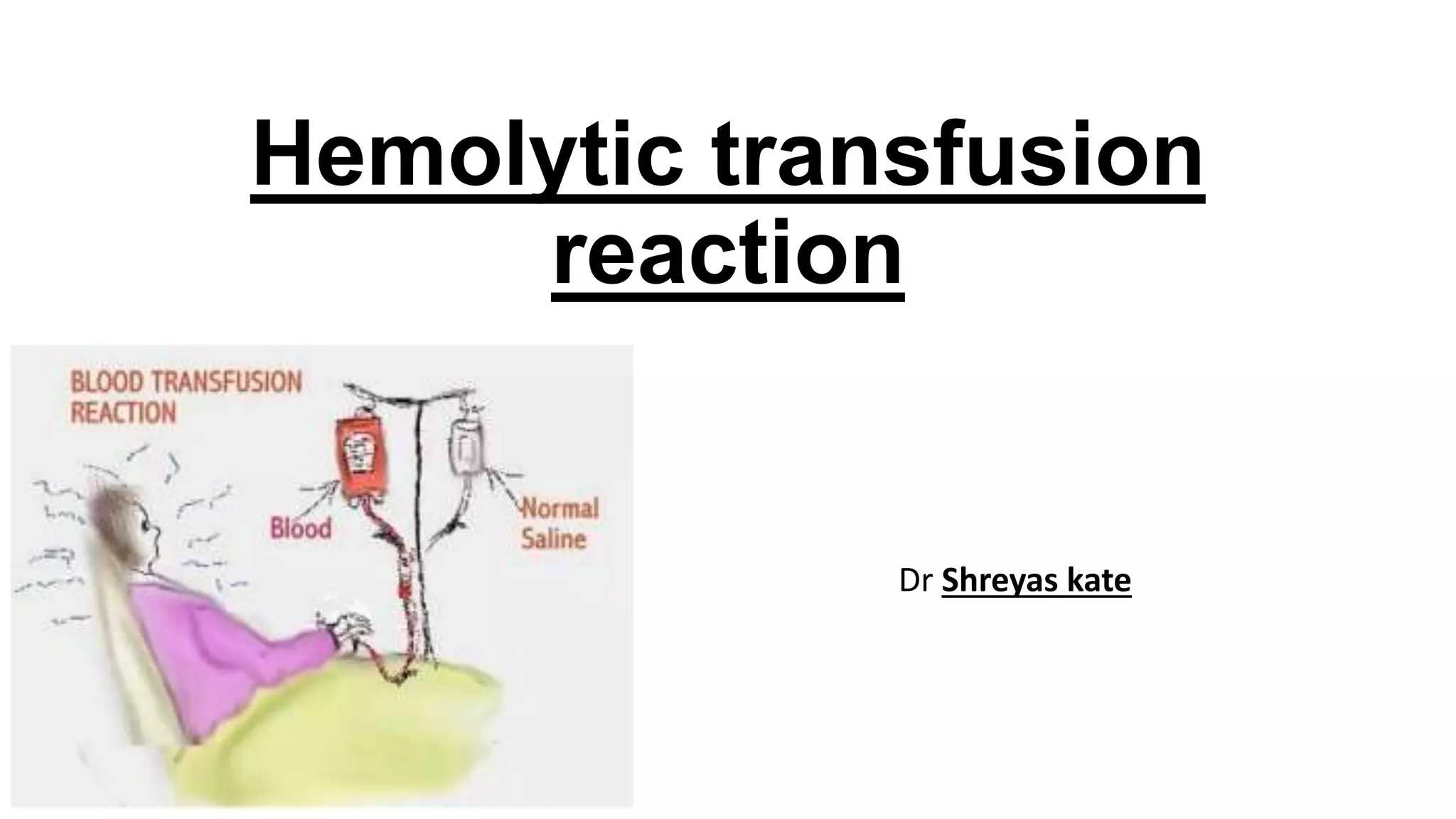

Hemolytic transfusion
reaction
Dr Shreyas kate
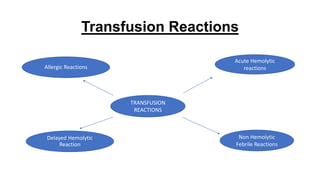
Transfusion Reactions
TRANSFUSION
REACTIONS
Acute Hemolytic
reactions
Non Hemolytic
Febrile Reactions
Allergic Reactions
Delayed Hemolytic
Reaction
Article
• Journal: The New England Journal of Medicine
• Published : July 11, 2019
• Authors: Sandhya R. Panch, M.D., M.P.H., Celina Montemayor-Garcia,
M.D., Ph.D., and Harvey G. Klein, M.D.
INTRODUCTION
• 15℅ of inpatients receive blood transfusion
• 1 ℅ of them suffer severe adverse effects
• 5℅ – Hemolytic transfusion reaction
• Bystander Hemolysis
HISTORY
• Mid 17 th Century – First documented reaction
• Landsteiner’s discovery of ABO blood groups in 1900
• Ottenberg- Routine pretransfusion testing
• Development of anticoagulant–preservative
• Combination of serologic techniques and molecular identification of
the corresponding red-cell genes (compatibility testing)
Epidemiologic Features
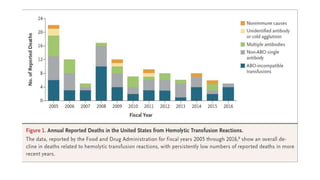
• Hemolysis was the most common cause of transfusion-associated
death during the 1976–1985
• Least common fatal complications (1/1,972,000) red-cell units
transfused in 2016
• “Wrong blood in the tube”
• Delayed hemolytic reaction- 1 in 500 to 1 in 1000
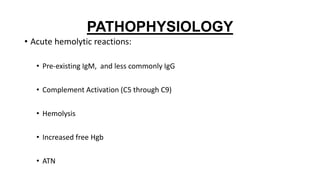
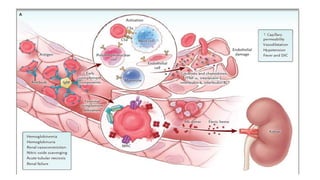
PATHOPHYSIOLOGY
• Acute hemolytic reactions:
• Pre-existing IgM, and less commonly IgG
• Complement Activation (C5 through C9)
• Hemolysis
• Increased free Hgb
• ATN
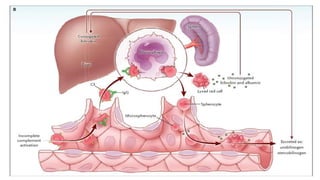
Pathophysiology
• Delayed hemolytic reaction:
• Incomplete complement activation (C3a and C5a)
• Proinflammatory cytokines
• Bradykinin and Kallikrein system activation
• Vasodilation, Hypotension DIC
• severe hemolytic reactions
• long-term transfusions
• part by the release of cell-free hemoglobin,
• activates leukocyte-driven
• inflammasome pathways and causes endothelial
• dysfunction through nitric oxide scavenging
• post-transfusion haemoglobin levels falling below the pretransfusion values
Pathophysiology
• Passenger lymphocyte syndrome
• solid-organ transplantation
• Incompatibility between the donor’s plasma and the recipient’s red cells,
“minor ABO incompatibility”
• viable donor B lymphocytes, termed “passenger lymphocytes,”
• develop 5 to 14 days after heart– lung, liver, kidney, intestinal
transplantations, as well as after hematopoietic stem-cell infusions
Pathophysiology
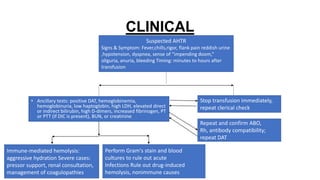
CLINICAL
Suspected AHTR
Signs & Symptom: Fever,chills,rigor, flank pain reddish urine
,hypotension, dyspnea, sense of “impending doom,”
oliguria, anuria, bleeding Timing: minutes to hours after
transfusion
Stop transfusion immediately,
repeat clerical check
• Ancillary tests: positive DAT, hemoglobinemia,
hemoglobinuria, low haptoglobin, high LDH, elevated direct
or indirect bilirubin, high D-dimers, increased fibrinogen, PT
or PTT (if DIC is present), BUN, or creatinine
Repeat and confirm ABO,
Rh, antibody compatibility;
repeat DAT
Immune-mediated hemolysis:
aggressive hydration Severe cases:
pressor support, renal consultation,
management of coagulopathies
Perform Gram's stain and blood
cultures to rule out acute
Infections Rule out drug-induced
hemolysis, nonimmune causes
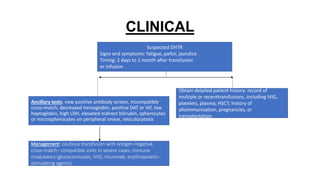
CLINICAL
Suspected DHTR
Signs and symptoms: fatigue, pallor, jaundice
Timing: 2 days to 1 month after transfusion
or infusion
Obtain detailed patient history: record of
multiple or recenttransfusions, including IVIG,
platelets, plasma; HSCT; history of
alloimmunization, pregnancies, or
transplantation
Ancillary tests: new positive antibody screen, incompatible
cross-match, decreased hemoglobin, positive DAT or IAT, low
haptoglobin, high LDH, elevated indirect bilirubin, spherocytes
or microspherocytes on peripheral smear, reticulocytosis
Management: cautious transfusion with antigen-negative,
cross-match– compatible units In severe cases: immune
modulators (glucocorticoids, IVIG, rituximab, erythropoietin-
stimulating agents)
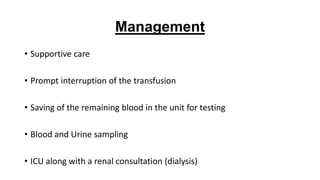
Management
• Supportive care
• Prompt interruption of the transfusion
• Saving of the remaining blood in the unit for testing
• Blood and Urine sampling
• ICU along with a renal consultation (dialysis)
• Vigorous hydration with isotonic saline
• Maintain urine output at a rate above 0.5 to 1 ml/kg/hr
• ? Mannitol
• Supplemental diuretics
• Sodium bicarbonate (130 mmol per liter in 5% dextrose) at a starting
at 200 ml /hr to achieve a urinary pH >6.5
• Hyperkalemia
• Vasopressor : dopamine infusion (2 - 10 μg /kg/min)
Management
• In DIC (bleeding, platelets, FFP and cryoprecipitate)
• platelet >20,000 per cubic ml
• INR < 2.0
• fibrinogen > 100 mg/Dl
• No evidence supports the routine use of therapeutic high-dose
glucocorticoids, intravenous immune globulin, or plasma exchange
Management
• Transfusion of incompatible units
• prophylaxis with glucocorticoids (hydrocortisone at a dose of 100 mg,
administered just before transfusion and repeated 24 hours later)
• IV IG (1.2 to 2.0 g /kg, administered over a period of 2 to 3 days, with the first
dose given just before the incompatible transfusion)
Management
• Sickle cell disease:
• Glucocorticoids
• IV Ig
• Rituximab
• Erythropoiesis-stimulating agents
• Life-threatening hemolysis:
• Plasma exchange
• Hemoglobin based red-cell substitutes
• eculizumab,
• Tocilizumab
• anti–IL 6 monoclonal antibody
Management
Newer agents : Heme scavengers
1.haptoglobin
2. hemopexin
• Preventing passenger lymphocyte syndrome
• A recipient with blood group A receiving a transplant from a group O donor
should receive group O red cells and group AB plasma
• Prophylactic plasma reduction in the donor graft, partial red-cell exchange
Management
Prevention
• “zero tolerance” policies
• accepting blood samples without core identifiers
• Electronically generated labels
• Identification bands
• Repeating ABO checks
• Centralized transfusion databases
• Patients who are already heavily alloimmunized and require long-
term transfusion support, Prophylactic
• Rituximab (1 to 2 gm iv)
• Inj methylprednisolone
• Patients with sickle cell disease
• glucocorticoids
• intravenous immune globulin
• rituximab
• erythropoiesis-stimulating agents
Prevention
SUMMARY
• HTR are important cause of transfusion-associated reactions and may
be subclinical, mild, or lethal
• Electronic verification systems
• Other reactions
• Delayed hemolytic transfusion reactions,
• Hyperhemolysis
• Passenger lymphocyte syndrome in transplant recipients
• Preventive strategies
• Systematic protocols
THANK YOU

Hemolytic transfusion reaction

  • 1.
  • 2.
    Transfusion Reactions TRANSFUSION REACTIONS Acute Hemolytic reactions NonHemolytic Febrile Reactions Allergic Reactions Delayed Hemolytic Reaction
  • 5.
    Article • Journal: TheNew England Journal of Medicine • Published : July 11, 2019 • Authors: Sandhya R. Panch, M.D., M.P.H., Celina Montemayor-Garcia, M.D., Ph.D., and Harvey G. Klein, M.D.
  • 6.
    INTRODUCTION • 15℅ ofinpatients receive blood transfusion • 1 ℅ of them suffer severe adverse effects • 5℅ – Hemolytic transfusion reaction • Bystander Hemolysis
  • 7.
    HISTORY • Mid 17th Century – First documented reaction • Landsteiner’s discovery of ABO blood groups in 1900 • Ottenberg- Routine pretransfusion testing • Development of anticoagulant–preservative • Combination of serologic techniques and molecular identification of the corresponding red-cell genes (compatibility testing)
  • 8.
    Epidemiologic Features • Hemolysiswas the most common cause of transfusion-associated death during the 1976–1985 • Least common fatal complications (1/1,972,000) red-cell units transfused in 2016 • “Wrong blood in the tube” • Delayed hemolytic reaction- 1 in 500 to 1 in 1000
  • 10.
    PATHOPHYSIOLOGY • Acute hemolyticreactions: • Pre-existing IgM, and less commonly IgG • Complement Activation (C5 through C9) • Hemolysis • Increased free Hgb • ATN
  • 13.
    Pathophysiology • Delayed hemolyticreaction: • Incomplete complement activation (C3a and C5a) • Proinflammatory cytokines • Bradykinin and Kallikrein system activation • Vasodilation, Hypotension DIC
  • 14.
    • severe hemolyticreactions • long-term transfusions • part by the release of cell-free hemoglobin, • activates leukocyte-driven • inflammasome pathways and causes endothelial • dysfunction through nitric oxide scavenging • post-transfusion haemoglobin levels falling below the pretransfusion values Pathophysiology
  • 15.
    • Passenger lymphocytesyndrome • solid-organ transplantation • Incompatibility between the donor’s plasma and the recipient’s red cells, “minor ABO incompatibility” • viable donor B lymphocytes, termed “passenger lymphocytes,” • develop 5 to 14 days after heart– lung, liver, kidney, intestinal transplantations, as well as after hematopoietic stem-cell infusions Pathophysiology
  • 17.
    CLINICAL Suspected AHTR Signs &Symptom: Fever,chills,rigor, flank pain reddish urine ,hypotension, dyspnea, sense of “impending doom,” oliguria, anuria, bleeding Timing: minutes to hours after transfusion Stop transfusion immediately, repeat clerical check • Ancillary tests: positive DAT, hemoglobinemia, hemoglobinuria, low haptoglobin, high LDH, elevated direct or indirect bilirubin, high D-dimers, increased fibrinogen, PT or PTT (if DIC is present), BUN, or creatinine Repeat and confirm ABO, Rh, antibody compatibility; repeat DAT Immune-mediated hemolysis: aggressive hydration Severe cases: pressor support, renal consultation, management of coagulopathies Perform Gram's stain and blood cultures to rule out acute Infections Rule out drug-induced hemolysis, nonimmune causes
  • 18.
    CLINICAL Suspected DHTR Signs andsymptoms: fatigue, pallor, jaundice Timing: 2 days to 1 month after transfusion or infusion Obtain detailed patient history: record of multiple or recenttransfusions, including IVIG, platelets, plasma; HSCT; history of alloimmunization, pregnancies, or transplantation Ancillary tests: new positive antibody screen, incompatible cross-match, decreased hemoglobin, positive DAT or IAT, low haptoglobin, high LDH, elevated indirect bilirubin, spherocytes or microspherocytes on peripheral smear, reticulocytosis Management: cautious transfusion with antigen-negative, cross-match– compatible units In severe cases: immune modulators (glucocorticoids, IVIG, rituximab, erythropoietin- stimulating agents)
  • 20.
    Management • Supportive care •Prompt interruption of the transfusion • Saving of the remaining blood in the unit for testing • Blood and Urine sampling • ICU along with a renal consultation (dialysis)
  • 21.
    • Vigorous hydrationwith isotonic saline • Maintain urine output at a rate above 0.5 to 1 ml/kg/hr • ? Mannitol • Supplemental diuretics • Sodium bicarbonate (130 mmol per liter in 5% dextrose) at a starting at 200 ml /hr to achieve a urinary pH >6.5 • Hyperkalemia • Vasopressor : dopamine infusion (2 - 10 μg /kg/min) Management
  • 22.
    • In DIC(bleeding, platelets, FFP and cryoprecipitate) • platelet >20,000 per cubic ml • INR < 2.0 • fibrinogen > 100 mg/Dl • No evidence supports the routine use of therapeutic high-dose glucocorticoids, intravenous immune globulin, or plasma exchange Management
  • 23.
    • Transfusion ofincompatible units • prophylaxis with glucocorticoids (hydrocortisone at a dose of 100 mg, administered just before transfusion and repeated 24 hours later) • IV IG (1.2 to 2.0 g /kg, administered over a period of 2 to 3 days, with the first dose given just before the incompatible transfusion) Management
  • 24.
    • Sickle celldisease: • Glucocorticoids • IV Ig • Rituximab • Erythropoiesis-stimulating agents • Life-threatening hemolysis: • Plasma exchange • Hemoglobin based red-cell substitutes • eculizumab, • Tocilizumab • anti–IL 6 monoclonal antibody Management Newer agents : Heme scavengers 1.haptoglobin 2. hemopexin
  • 25.
    • Preventing passengerlymphocyte syndrome • A recipient with blood group A receiving a transplant from a group O donor should receive group O red cells and group AB plasma • Prophylactic plasma reduction in the donor graft, partial red-cell exchange Management
  • 26.
    Prevention • “zero tolerance”policies • accepting blood samples without core identifiers • Electronically generated labels • Identification bands • Repeating ABO checks • Centralized transfusion databases
  • 27.
    • Patients whoare already heavily alloimmunized and require long- term transfusion support, Prophylactic • Rituximab (1 to 2 gm iv) • Inj methylprednisolone • Patients with sickle cell disease • glucocorticoids • intravenous immune globulin • rituximab • erythropoiesis-stimulating agents Prevention
  • 28.
    SUMMARY • HTR areimportant cause of transfusion-associated reactions and may be subclinical, mild, or lethal • Electronic verification systems • Other reactions • Delayed hemolytic transfusion reactions, • Hyperhemolysis • Passenger lymphocyte syndrome in transplant recipients • Preventive strategies • Systematic protocols
  • 29.