
INHALATIONAL AGENTS
DR SHREYAS KATE
CLINICAL TUTOR
DEPT OF ANAESTHESIOLOGY & CRITICAL CARE
CONTENTS
 MECHANISM OF ACTION
 UPTAKE/DISTRIBUTION
 METABOLISM/TOXICITY
MECHANISM OF ACTION
PROPERTIES
MAC
 1960s of Eger and colleagues
 Def: the inhaled anesthetic atmospheric pressure required to prevent movement
in response to a defined noxious stimulus in 50% of subjects
 MAC is analogous to the plasma concentration for 50% effect (EC50) for
intravenous anesthetics
 The MAC concept provided researchers and clinicians with a universal standard
whereby to measure a defined anesthetic end point (immobility), making
meaningful comparisons of experimental results possible and accelerating clinical
and laboratory research into anesthetic mechanisms.
IMMOBILTY
 Selective delivery of isoflurane or halothane only to the brain required 2.5-fold to
4-fold higher concentrations compared with delivery to the whole CNS
 GABAA receptors appear not to be important for the end point of
immobility, at least where inhalational agents are concerned
 Intrathecal administration of a selective inhibitor of Na+ channels potentiates
anesthetic immobility (reduces MAC), whereas an enhancer of Na+ channel
activity does the opposite
UNCONSCIOUSNESS
 depth-of-anesthesia monitors
 “bottom-up” theories changes in the brain stem circuitry that controls arousal
 “top-down” thories changes in the thalamocortical circuits that integrate information
 “integrated information theory of consciousness (IITC)”
 Anesthetics might act by interfering with the operational synchronicity and coherence of
corticothalamic networks. Consequent disruption of functional and effective connectivity has been
observed during natural slow-wave and midazolam-induced loss of responsiveness
LEARNING AND MEMORY
 Anterograde amnesia, one of the core desirable anesthetic end points, is achieved at lower
anesthetic concentrations (∼0.25 MAC) than those required for unconsciousness (∼0.5 MAC)
 Medial temporal lobe–dependent learning of temporal and spatial sequences known as
hippocampus- dependent spatial learning
 GABAergic inhibition, nAChRs,HCN1 channels and excitatory glutamatergic synapses
SEDATION
 Defined as a decrease in activity, alertness, arousal, and/or vigilance
 Achieved at anesthetic doses similar to those that produce amnesia (<0.5 MAC)
 Inhalational Agents : α1 GABAA receptor
 Possible targets for the sedative effects of the gaseous anesthetics nitrous oxide and xenon, which
do not affect GABAA receptors, include NMDA receptor antagonism and K2P channel activation
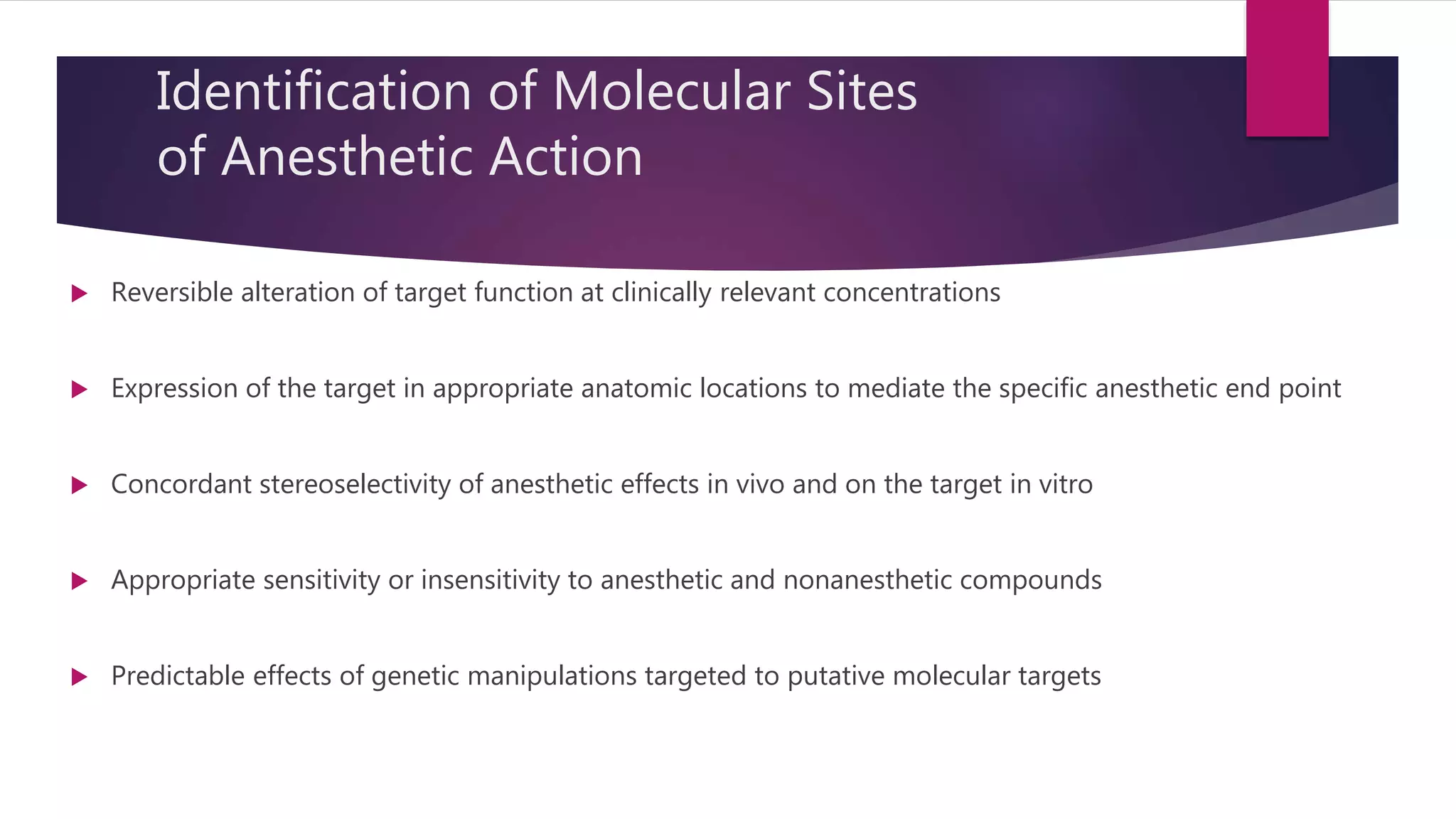
Identification of Molecular Sites
of Anesthetic Action
 Reversible alteration of target function at clinically relevant concentrations
 Expression of the target in appropriate anatomic locations to mediate the specific anesthetic end point
 Concordant stereoselectivity of anesthetic effects in vivo and on the target in vitro
 Appropriate sensitivity or insensitivity to anesthetic and nonanesthetic compounds
 Predictable effects of genetic manipulations targeted to putative molecular targets
Molecular Targets of Inhaled Anesthetics
 LIGAND-GATED ION CHANNELS
 Potentiation of Inhibitory GABAA and Glycine Receptors
 Inhibition of Excitatory Acetylcholine and Glutamate Receptors
 NMDA receptors
 non-NMDA receptors ( AMPA and kainate receptors )
 VOLTAGE-GATED AND OTHER ION CHANNELS
 Na+ Channels
 Ca2+ Channels
 K+, HCN, and TRP Channels
UPTAKE/DISTRIBUTION
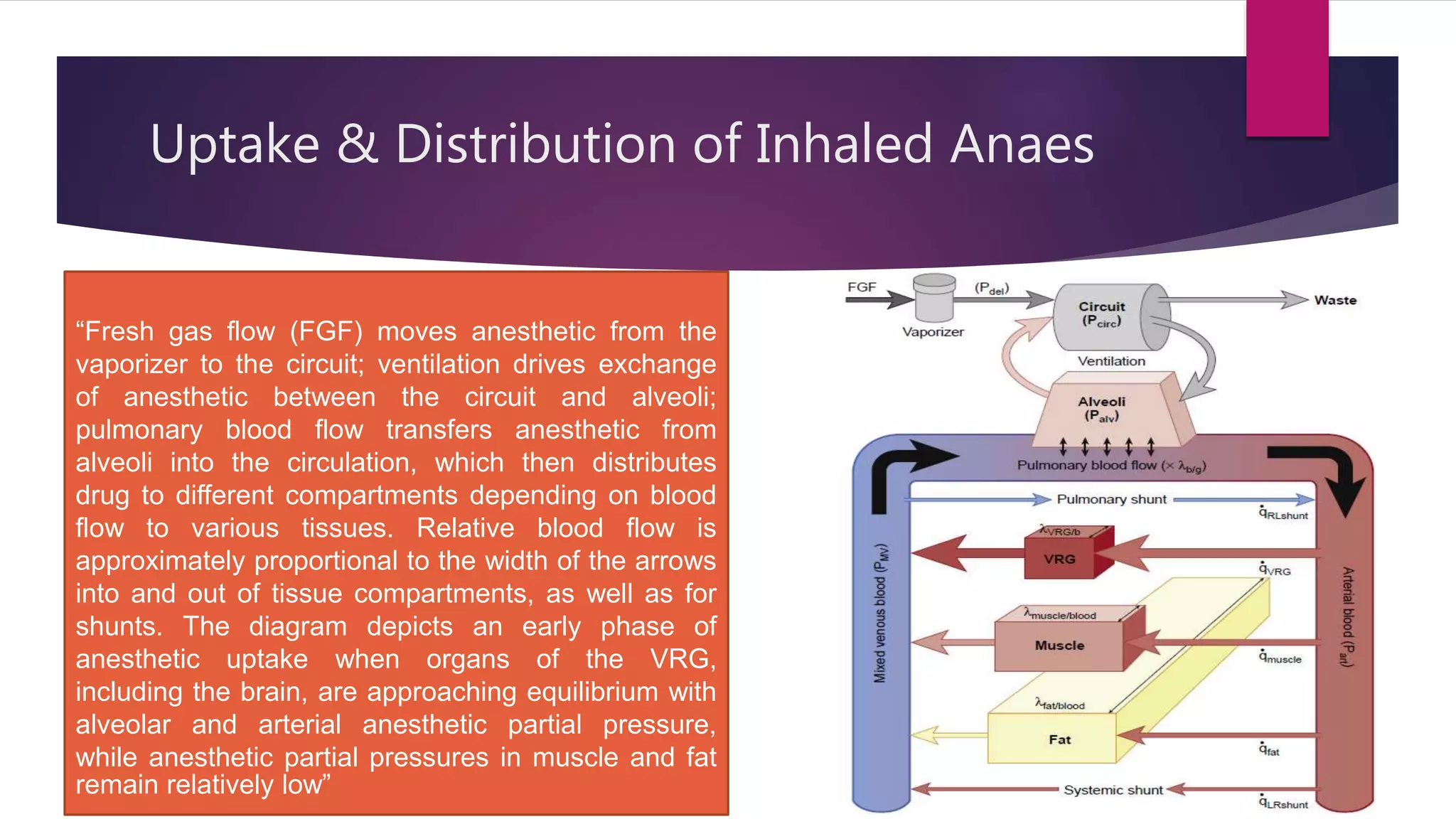
Uptake & Distribution of Inhaled Anaes
“Fresh gas flow (FGF) moves anesthetic from the
vaporizer to the circuit; ventilation drives exchange
of anesthetic between the circuit and alveoli;
pulmonary blood flow transfers anesthetic from
alveoli into the circulation, which then distributes
drug to different compartments depending on blood
flow to various tissues. Relative blood flow is
approximately proportional to the width of the arrows
into and out of tissue compartments, as well as for
shunts. The diagram depicts an early phase of
anesthetic uptake when organs of the VRG,
including the brain, are approaching equilibrium with
alveolar and arterial anesthetic partial pressure,
while anesthetic partial pressures in muscle and fat
remain relatively low”
Concentration and Second Gas Effects
After an initial inspiratory breath, alveoli are filled
with the gas mixture in the circuit (66% N2O, 33%
O2, 1% Isoflurane) at their normal end-inspiratory
volume. After half of the N2O and isoflurane are
absorbed into pulmonary blood, the alveolar gas
volume is reduced by 33.5%. At this point, the
volume of N2O equals the volume of O2 and the gas
mixture is 49.6% N2O, 49.6% O2, 0.8% isoflurane.
Inflow of additional inspired gas mixture returns
alveolar volume to its original value, resulting in a
gas mixture of 55.1% N2O, 44.1% O2, 0.8%
isoflurane. The alveolar partial pressure of N2O falls
much less than the fractional uptake (the
concentration effect). In addition, the partial pressure
of O2 increases relative to the inspired gas O2
content, and the partial pressure of isoflurane is
sustained close to the inspired value, increasing its
Diffusion Hypoxia (FINK EFFECT)
 Rapid outgassing from the tissues of patients anesthetized with N2O
 During the initial 5 to 10 minutes after discontinuation of anesthesia, the flow of N2O from blood into the
alveoli can be several liters per minute, resulting in dilution of alveolar oxygen
 Reduction of alveolar PCO2, which may also reduce respiratory drive
 If the patient does not receive supplemental oxygen during this period, then the combined effects of
respiratory depression from anesthesia, reduced alveolar PCO2, and reduced alveolar PO2 can result in
hypoventilation and oxyhemoglobin desaturation
 Management:
 Supplemental O2 for the first 5 to 10 minutes of recovery
 Vigilant attention to respiration and oxygenation.
Metabolism and Toxicity
of
Inhaled Anesthetics
BIOTRANSFORMATION
Biotransformation in the Liver
 The liver is the major site of metabolism for most drugs, particularly lipophilic drugs, which typically are
transformed into hydrophilic metabolites that are more readily excreted
 Drug biotransformation reactions include oxidation, hydrolysis, and conjugation
 phase 1 reactions: Oxidation and hydrolysis
 Cytochrome P450 (CYP) isoforms in the endoplasmic reticulum of hepatocytes
 Reactions such as dehalogenation, N- and O-dealkylation, N- and S-oxidation, and deamination
 require oxygen and NADPH dependent cytochrome P450 reductase as cofactors
 phase 2 reactions
 Conjugation
 append highly polar groups such as glucuronic acid, sulfate, or glycine to polar groups on phase 1 metabolites.
Biotransformation in the Liver (cont)
 Hepatic CYP2E1 is particularly important in the oxidative metabolism of halogenated inhaled anesthetics
 Oxidative metabolism of these drugs results in the release of fluoride (F−) and chloride (Cl−) ions and the
formation of reactive intermediates that react with water to form carboxylic acids
 Isoflurane and desflurane both produce trifluoroacetic acid, whereas enflurane forms 2-difluoromethoxy-
2,2-difluoroacetic acid
 Under conditions of systemic hypoxia or decreased blood flow, or in liver regions of low PO2, CYP2A6 and
CYP3A4 catalyze breakdown of VAs via reductive pathways.
Halothane Hepatotoxicity
 The first modern halogenated VA, halothane, was introduced in 1955
 Clinical exposure to halothane is associated with two distinct types of hepatic injury
 Subclinical hepatotoxicity
 fulminant form
 Subclinical hepatotoxicity occurs in 20% of adults who receive halothane
 mild postoperative elevations in ALT and AST
 reversible
 innocuous Anaerobic halothane reduction by CYP2A6 to a 2-chloro-1,1,1-trifluoroethyl radical
 Fulminant: (halothane hepatitis)
Halothane Hepatotoxicity
 Elevated ALT, AST, bilirubin, and alkaline phosphatase levels
 massive hepatic necrosis
 Halothane hepatitis is rare (1 in 5000-35,000 administrations in adults) but is fatal in between 50% to 75%
of cases
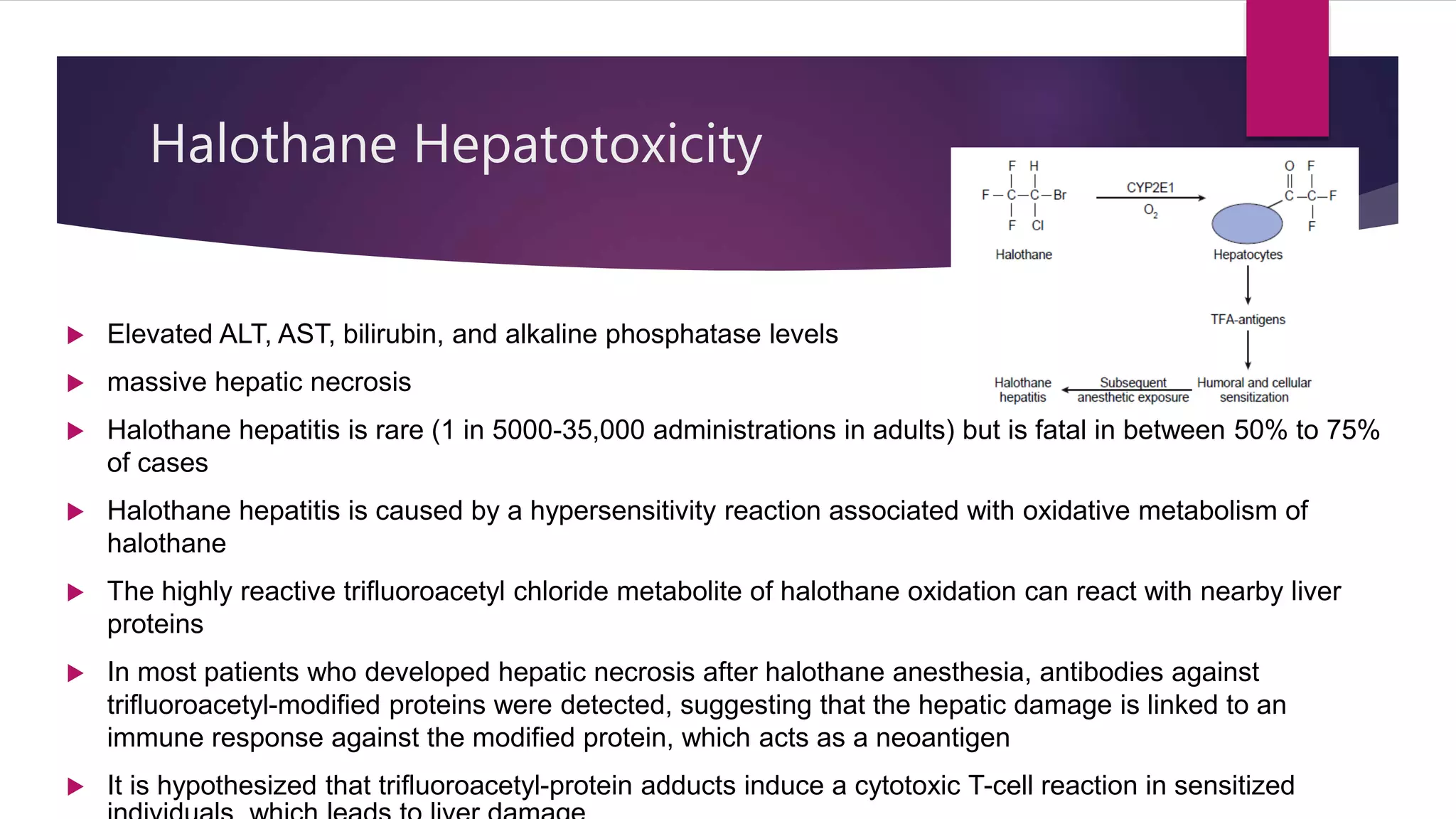
 Halothane hepatitis is caused by a hypersensitivity reaction associated with oxidative metabolism of
halothane
 The highly reactive trifluoroacetyl chloride metabolite of halothane oxidation can react with nearby liver
proteins
 In most patients who developed hepatic necrosis after halothane anesthesia, antibodies against
trifluoroacetyl-modified proteins were detected, suggesting that the hepatic damage is linked to an
immune response against the modified protein, which acts as a neoantigen
 It is hypothesized that trifluoroacetyl-protein adducts induce a cytotoxic T-cell reaction in sensitized
Biotransformation in Kidneys
 The kidneys clear most of the water-soluble metabolites resulting from biotransformation of inhaled
anesthetics
 Kidneys also contain CYP enzymes, including CYP2E1, that catalyze both phase 1 and phase 2
reactions and are therefore additional sites where inhaled anesthetic metabolism occurs
 As in the liver, various CYPs in renal parenchyma may undergo induction or inhibition by exogenous
substances
 Fluoride-Associated Nephrotoxicity
 The first modern halogenated ether anesthetic, methoxyflurane was introduced in 1959.
Methoxyflurane causes polyuric renal insufficiency and is no longer used in clinical
practice
 Serum inorganic F -levels < 50 μM had no evidence of renal injury
 Typical peak fluoride concentrations after 2 to 3 MAC hours of sevoflurane anesthesia are
20 to 30 μM
 ANESTHETIC DEGRADATION IN CARBON DIOXIDE ABSORBENTS
 Halogenated anesthetics can undergo chemical breakdown while interacting with CO2
absorbents that contain strong bases such as NaOH and KOH, which are present in soda
lime and Baralyme
 Strong bases extract a proton from the isopropyl group of sevoflurane, primarily forming
a haloalkene [fluoromethyl-2,2-difluoro-1-(trifluoromethyl) vinyl ether], known as
compound A
Biotransformation in Kidneys (cont)
 In rats, renal injury is observed with cumulative exposure to compound A above 150 parts per million (ppm)-
hours (e.g., 50 ppm inhalation for 3 hours). Moderately severe but reversible histopathologic damage was
found in rats after 200 ppm-hour exposure, associated with increased blood and urea nitrogen (BUN),
creatinine, and other measures of renal damage.
 Compound A exposure over 1000 ppm-hours is lethal in half of exposed rats
 Lack of significant sevoflurane nephrotoxicity in human
 Like sevoflurane, halothane degrades in the presence of CO2 absorbents to form a reactive intermediate Like
sevoflurane, halothane degrades in the presence of CO2 absorbents to form a reactive intermediate
Biotransformation in Kidneys (cont)
Carbon Monoxide and Heat
 In the presence of strong bases in dry CO2 absorbents (water content
<5%), some halogenated VAs undergo degradation, resulting in the
formation of CO, trifluoro methane and hydrogen fluoride
 Factors affecting:
 (KOH > NaOH >> Ba(OH)2, Ca(OH)2)
 dryness of the absorbent material
 the concentration of volatile agent
 chemical structure
INHALED ANESTHETICS AND
NEUROTOXICITY
 Some studies suggest that low nonapoptotic concentrations of general anesthetics may inhibit
normal synapse formation and damage developing neuronal networks
 Mechanisms underlying neurodevelopmental toxicity are potentially linked to the same ion channels
hypothesized to mediate general anesthesia
 FDA issued a safety announcement that repeated or lengthy exposures to general anesthetics and
sedative drugs before the age of three have the potential to harm the development of children’s brains
 TRIALS IN HUMAN:
 The Pediatric Anesthesia NeuroDevelopment Assessment (PANDA) trial
 General Anesthesia Compared to Spinal Anesthesia (GAS) trial
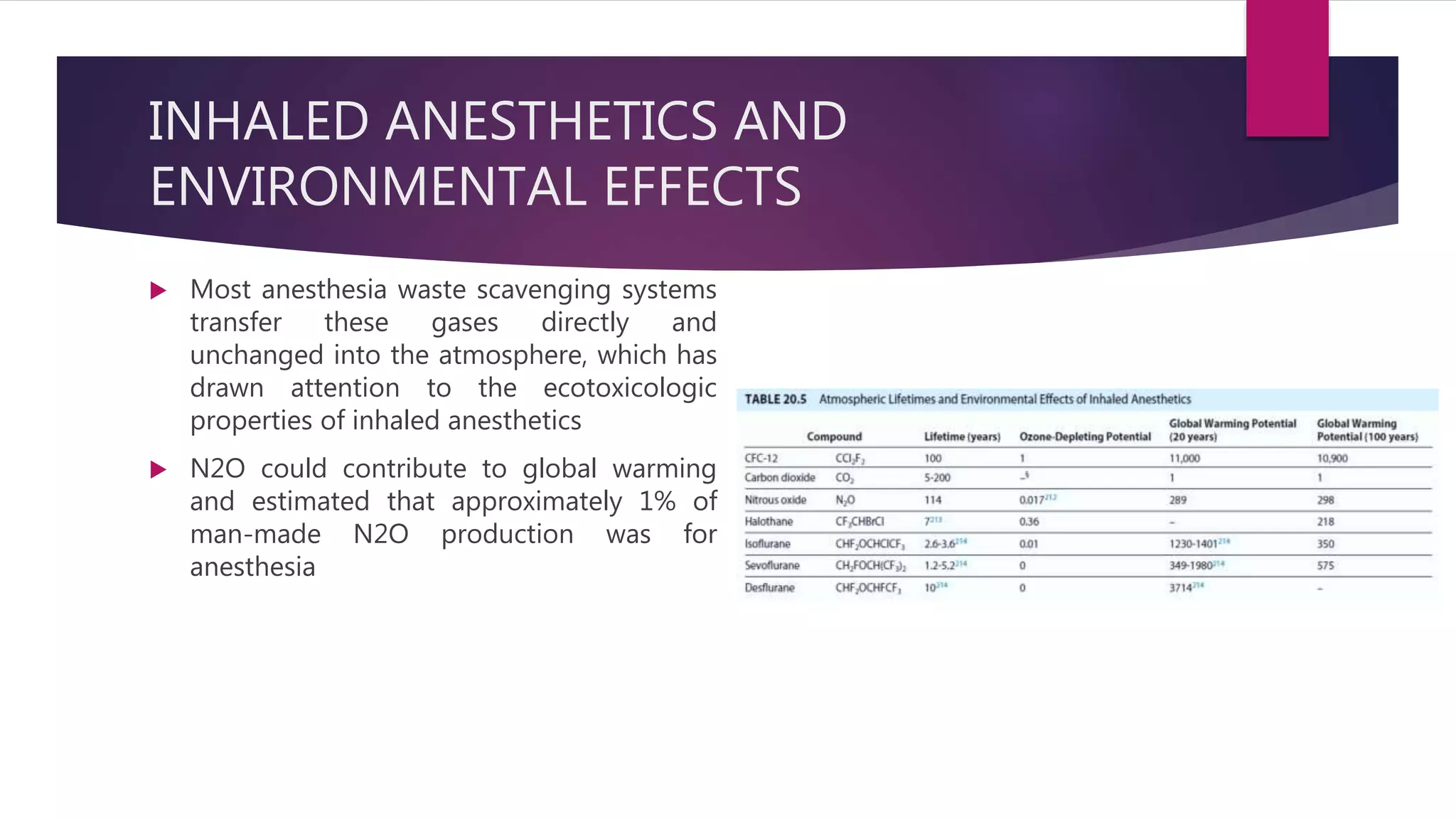
INHALED ANESTHETICS AND
ENVIRONMENTAL EFFECTS
 Most anesthesia waste scavenging systems
transfer these gases directly and
unchanged into the atmosphere, which has
drawn attention to the ecotoxicologic
properties of inhaled anesthetics
 N2O could contribute to global warming
and estimated that approximately 1% of
man-made N2O production was for
anesthesia
Xenon
 The noble gas xenon was first shown to produce general anesthesia in 1951
 Xenon is present as a minor constituent of air (50 parts per billion), and is isolated by distillation of
liquefied air
 Not an environmental pollutant
 It is odorless, tasteless, nonflammable, and has a limitless shelf-life
 λb/g = 0.14
 As a result, it has extraordinarily rapid onset and respiratory clearance, with emergence times 2- to 3-
fold faster when it replaces N2O in clinical settings
 It undergoes no biotransformation or reactions with CO2 absorbents or ultraviolet light
 It produces minimal cardiovascular depression and is not arrhythmogenic
 As with N2O, xenon has analgesic activity and reduces intraoperative opioid requirements
XENON
 It does not trigger malignant hyperthermia or produce any known toxicity
 xenon has been shown to have cardioprotective and neuroprotective activities in preclinical models
 Disadvantages:
 Cost ($15/L)
 specialized Anesthesia machines
 new waste scavenging systems are being introduced with cryogenic traps that can condense xenon in a liquid form
from waste gases
 higher density (5.9 g/L) resulting in increased flow resistance and work of breathing. Thus it may be a poor choice
for patients with compromised respiratory function
 cause expansion of trapped air spaces and vascular air emboli.
 xenon anesthesia results in a higher incidence of nausea and vomiting
Inhalational agents

Inhalational agents

  • 1.
    INHALATIONAL AGENTS DR SHREYASKATE CLINICAL TUTOR DEPT OF ANAESTHESIOLOGY & CRITICAL CARE
  • 2.
    CONTENTS  MECHANISM OFACTION  UPTAKE/DISTRIBUTION  METABOLISM/TOXICITY
  • 3.
  • 4.
  • 5.
    MAC  1960s ofEger and colleagues  Def: the inhaled anesthetic atmospheric pressure required to prevent movement in response to a defined noxious stimulus in 50% of subjects  MAC is analogous to the plasma concentration for 50% effect (EC50) for intravenous anesthetics  The MAC concept provided researchers and clinicians with a universal standard whereby to measure a defined anesthetic end point (immobility), making meaningful comparisons of experimental results possible and accelerating clinical and laboratory research into anesthetic mechanisms.
  • 7.
    IMMOBILTY  Selective deliveryof isoflurane or halothane only to the brain required 2.5-fold to 4-fold higher concentrations compared with delivery to the whole CNS  GABAA receptors appear not to be important for the end point of immobility, at least where inhalational agents are concerned  Intrathecal administration of a selective inhibitor of Na+ channels potentiates anesthetic immobility (reduces MAC), whereas an enhancer of Na+ channel activity does the opposite
  • 8.
    UNCONSCIOUSNESS  depth-of-anesthesia monitors “bottom-up” theories changes in the brain stem circuitry that controls arousal  “top-down” thories changes in the thalamocortical circuits that integrate information  “integrated information theory of consciousness (IITC)”  Anesthetics might act by interfering with the operational synchronicity and coherence of corticothalamic networks. Consequent disruption of functional and effective connectivity has been observed during natural slow-wave and midazolam-induced loss of responsiveness
  • 9.
    LEARNING AND MEMORY Anterograde amnesia, one of the core desirable anesthetic end points, is achieved at lower anesthetic concentrations (∼0.25 MAC) than those required for unconsciousness (∼0.5 MAC)  Medial temporal lobe–dependent learning of temporal and spatial sequences known as hippocampus- dependent spatial learning  GABAergic inhibition, nAChRs,HCN1 channels and excitatory glutamatergic synapses
  • 10.
    SEDATION  Defined asa decrease in activity, alertness, arousal, and/or vigilance  Achieved at anesthetic doses similar to those that produce amnesia (<0.5 MAC)  Inhalational Agents : α1 GABAA receptor  Possible targets for the sedative effects of the gaseous anesthetics nitrous oxide and xenon, which do not affect GABAA receptors, include NMDA receptor antagonism and K2P channel activation
  • 11.
    Identification of MolecularSites of Anesthetic Action  Reversible alteration of target function at clinically relevant concentrations  Expression of the target in appropriate anatomic locations to mediate the specific anesthetic end point  Concordant stereoselectivity of anesthetic effects in vivo and on the target in vitro  Appropriate sensitivity or insensitivity to anesthetic and nonanesthetic compounds  Predictable effects of genetic manipulations targeted to putative molecular targets
  • 12.
    Molecular Targets ofInhaled Anesthetics  LIGAND-GATED ION CHANNELS  Potentiation of Inhibitory GABAA and Glycine Receptors  Inhibition of Excitatory Acetylcholine and Glutamate Receptors  NMDA receptors  non-NMDA receptors ( AMPA and kainate receptors )  VOLTAGE-GATED AND OTHER ION CHANNELS  Na+ Channels  Ca2+ Channels  K+, HCN, and TRP Channels
  • 13.
  • 14.
    Uptake & Distributionof Inhaled Anaes “Fresh gas flow (FGF) moves anesthetic from the vaporizer to the circuit; ventilation drives exchange of anesthetic between the circuit and alveoli; pulmonary blood flow transfers anesthetic from alveoli into the circulation, which then distributes drug to different compartments depending on blood flow to various tissues. Relative blood flow is approximately proportional to the width of the arrows into and out of tissue compartments, as well as for shunts. The diagram depicts an early phase of anesthetic uptake when organs of the VRG, including the brain, are approaching equilibrium with alveolar and arterial anesthetic partial pressure, while anesthetic partial pressures in muscle and fat remain relatively low”
  • 15.
    Concentration and SecondGas Effects After an initial inspiratory breath, alveoli are filled with the gas mixture in the circuit (66% N2O, 33% O2, 1% Isoflurane) at their normal end-inspiratory volume. After half of the N2O and isoflurane are absorbed into pulmonary blood, the alveolar gas volume is reduced by 33.5%. At this point, the volume of N2O equals the volume of O2 and the gas mixture is 49.6% N2O, 49.6% O2, 0.8% isoflurane. Inflow of additional inspired gas mixture returns alveolar volume to its original value, resulting in a gas mixture of 55.1% N2O, 44.1% O2, 0.8% isoflurane. The alveolar partial pressure of N2O falls much less than the fractional uptake (the concentration effect). In addition, the partial pressure of O2 increases relative to the inspired gas O2 content, and the partial pressure of isoflurane is sustained close to the inspired value, increasing its
  • 16.
    Diffusion Hypoxia (FINKEFFECT)  Rapid outgassing from the tissues of patients anesthetized with N2O  During the initial 5 to 10 minutes after discontinuation of anesthesia, the flow of N2O from blood into the alveoli can be several liters per minute, resulting in dilution of alveolar oxygen  Reduction of alveolar PCO2, which may also reduce respiratory drive  If the patient does not receive supplemental oxygen during this period, then the combined effects of respiratory depression from anesthesia, reduced alveolar PCO2, and reduced alveolar PO2 can result in hypoventilation and oxyhemoglobin desaturation  Management:  Supplemental O2 for the first 5 to 10 minutes of recovery  Vigilant attention to respiration and oxygenation.
  • 17.
  • 18.
  • 19.
    Biotransformation in theLiver  The liver is the major site of metabolism for most drugs, particularly lipophilic drugs, which typically are transformed into hydrophilic metabolites that are more readily excreted  Drug biotransformation reactions include oxidation, hydrolysis, and conjugation  phase 1 reactions: Oxidation and hydrolysis  Cytochrome P450 (CYP) isoforms in the endoplasmic reticulum of hepatocytes  Reactions such as dehalogenation, N- and O-dealkylation, N- and S-oxidation, and deamination  require oxygen and NADPH dependent cytochrome P450 reductase as cofactors  phase 2 reactions  Conjugation  append highly polar groups such as glucuronic acid, sulfate, or glycine to polar groups on phase 1 metabolites.
  • 20.
    Biotransformation in theLiver (cont)  Hepatic CYP2E1 is particularly important in the oxidative metabolism of halogenated inhaled anesthetics  Oxidative metabolism of these drugs results in the release of fluoride (F−) and chloride (Cl−) ions and the formation of reactive intermediates that react with water to form carboxylic acids  Isoflurane and desflurane both produce trifluoroacetic acid, whereas enflurane forms 2-difluoromethoxy- 2,2-difluoroacetic acid  Under conditions of systemic hypoxia or decreased blood flow, or in liver regions of low PO2, CYP2A6 and CYP3A4 catalyze breakdown of VAs via reductive pathways.
  • 21.
    Halothane Hepatotoxicity  Thefirst modern halogenated VA, halothane, was introduced in 1955  Clinical exposure to halothane is associated with two distinct types of hepatic injury  Subclinical hepatotoxicity  fulminant form  Subclinical hepatotoxicity occurs in 20% of adults who receive halothane  mild postoperative elevations in ALT and AST  reversible  innocuous Anaerobic halothane reduction by CYP2A6 to a 2-chloro-1,1,1-trifluoroethyl radical  Fulminant: (halothane hepatitis)
  • 22.
    Halothane Hepatotoxicity  ElevatedALT, AST, bilirubin, and alkaline phosphatase levels  massive hepatic necrosis  Halothane hepatitis is rare (1 in 5000-35,000 administrations in adults) but is fatal in between 50% to 75% of cases  Halothane hepatitis is caused by a hypersensitivity reaction associated with oxidative metabolism of halothane  The highly reactive trifluoroacetyl chloride metabolite of halothane oxidation can react with nearby liver proteins  In most patients who developed hepatic necrosis after halothane anesthesia, antibodies against trifluoroacetyl-modified proteins were detected, suggesting that the hepatic damage is linked to an immune response against the modified protein, which acts as a neoantigen  It is hypothesized that trifluoroacetyl-protein adducts induce a cytotoxic T-cell reaction in sensitized
  • 23.
    Biotransformation in Kidneys The kidneys clear most of the water-soluble metabolites resulting from biotransformation of inhaled anesthetics  Kidneys also contain CYP enzymes, including CYP2E1, that catalyze both phase 1 and phase 2 reactions and are therefore additional sites where inhaled anesthetic metabolism occurs  As in the liver, various CYPs in renal parenchyma may undergo induction or inhibition by exogenous substances
  • 24.
     Fluoride-Associated Nephrotoxicity The first modern halogenated ether anesthetic, methoxyflurane was introduced in 1959. Methoxyflurane causes polyuric renal insufficiency and is no longer used in clinical practice  Serum inorganic F -levels < 50 μM had no evidence of renal injury  Typical peak fluoride concentrations after 2 to 3 MAC hours of sevoflurane anesthesia are 20 to 30 μM  ANESTHETIC DEGRADATION IN CARBON DIOXIDE ABSORBENTS  Halogenated anesthetics can undergo chemical breakdown while interacting with CO2 absorbents that contain strong bases such as NaOH and KOH, which are present in soda lime and Baralyme  Strong bases extract a proton from the isopropyl group of sevoflurane, primarily forming a haloalkene [fluoromethyl-2,2-difluoro-1-(trifluoromethyl) vinyl ether], known as compound A Biotransformation in Kidneys (cont)
  • 25.
     In rats,renal injury is observed with cumulative exposure to compound A above 150 parts per million (ppm)- hours (e.g., 50 ppm inhalation for 3 hours). Moderately severe but reversible histopathologic damage was found in rats after 200 ppm-hour exposure, associated with increased blood and urea nitrogen (BUN), creatinine, and other measures of renal damage.  Compound A exposure over 1000 ppm-hours is lethal in half of exposed rats  Lack of significant sevoflurane nephrotoxicity in human  Like sevoflurane, halothane degrades in the presence of CO2 absorbents to form a reactive intermediate Like sevoflurane, halothane degrades in the presence of CO2 absorbents to form a reactive intermediate Biotransformation in Kidneys (cont)
  • 26.
    Carbon Monoxide andHeat  In the presence of strong bases in dry CO2 absorbents (water content <5%), some halogenated VAs undergo degradation, resulting in the formation of CO, trifluoro methane and hydrogen fluoride  Factors affecting:  (KOH > NaOH >> Ba(OH)2, Ca(OH)2)  dryness of the absorbent material  the concentration of volatile agent  chemical structure
  • 27.
    INHALED ANESTHETICS AND NEUROTOXICITY Some studies suggest that low nonapoptotic concentrations of general anesthetics may inhibit normal synapse formation and damage developing neuronal networks  Mechanisms underlying neurodevelopmental toxicity are potentially linked to the same ion channels hypothesized to mediate general anesthesia  FDA issued a safety announcement that repeated or lengthy exposures to general anesthetics and sedative drugs before the age of three have the potential to harm the development of children’s brains  TRIALS IN HUMAN:  The Pediatric Anesthesia NeuroDevelopment Assessment (PANDA) trial  General Anesthesia Compared to Spinal Anesthesia (GAS) trial
  • 28.
    INHALED ANESTHETICS AND ENVIRONMENTALEFFECTS  Most anesthesia waste scavenging systems transfer these gases directly and unchanged into the atmosphere, which has drawn attention to the ecotoxicologic properties of inhaled anesthetics  N2O could contribute to global warming and estimated that approximately 1% of man-made N2O production was for anesthesia
  • 29.
    Xenon  The noblegas xenon was first shown to produce general anesthesia in 1951  Xenon is present as a minor constituent of air (50 parts per billion), and is isolated by distillation of liquefied air  Not an environmental pollutant  It is odorless, tasteless, nonflammable, and has a limitless shelf-life  λb/g = 0.14  As a result, it has extraordinarily rapid onset and respiratory clearance, with emergence times 2- to 3- fold faster when it replaces N2O in clinical settings  It undergoes no biotransformation or reactions with CO2 absorbents or ultraviolet light  It produces minimal cardiovascular depression and is not arrhythmogenic  As with N2O, xenon has analgesic activity and reduces intraoperative opioid requirements
  • 30.
    XENON  It doesnot trigger malignant hyperthermia or produce any known toxicity  xenon has been shown to have cardioprotective and neuroprotective activities in preclinical models  Disadvantages:  Cost ($15/L)  specialized Anesthesia machines  new waste scavenging systems are being introduced with cryogenic traps that can condense xenon in a liquid form from waste gases  higher density (5.9 g/L) resulting in increased flow resistance and work of breathing. Thus it may be a poor choice for patients with compromised respiratory function  cause expansion of trapped air spaces and vascular air emboli.  xenon anesthesia results in a higher incidence of nausea and vomiting