By. Lucia Artigas, Erick Sebastián, Yael Sánchez,
      Brenda Santos & Ana Paula Soltero.
Outline
•   Who was Thomson?                Click Here

•   His Personal Life             Click Here

•   The Theory               Click Here

•   How came to be?                Click Here

•   Mass and charge of the electron               Click Here

•   Chemestry & Food                 Click Here
•   The Atromic Model                Click Here
• References                        Click Here
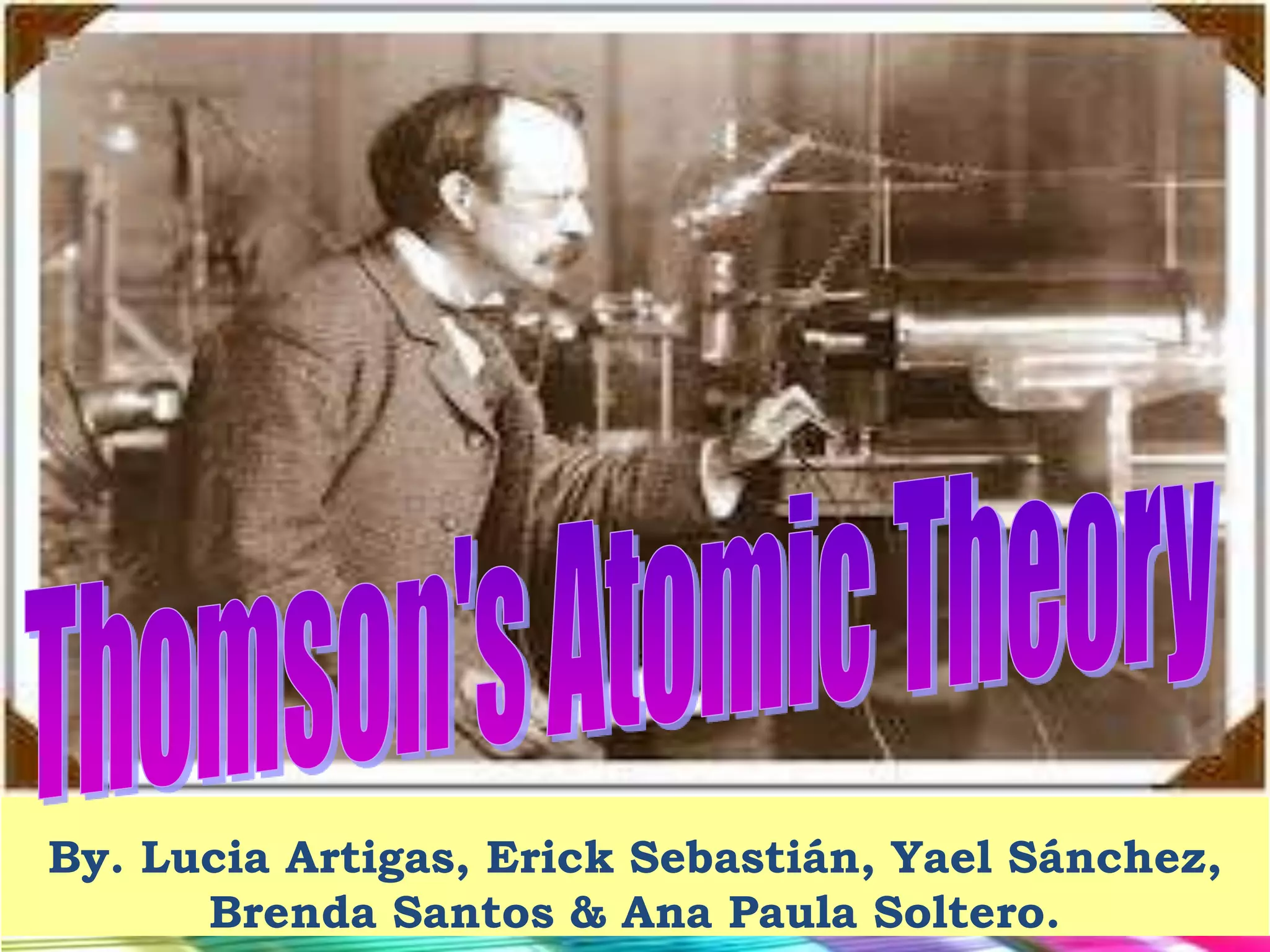
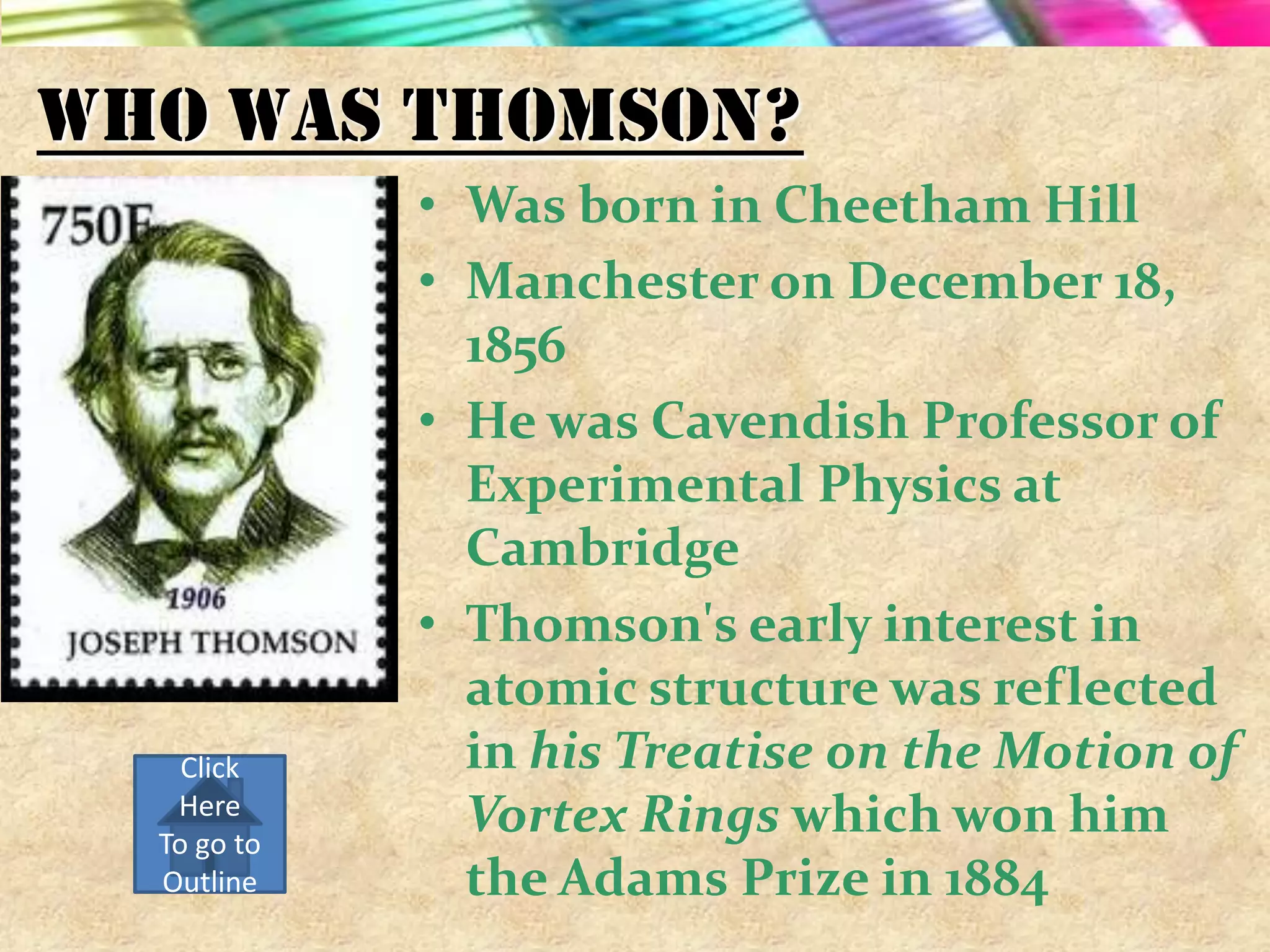
Who Was Thomson?
             • Was born in Cheetham Hill
             • Manchester on December 18,
               1856
             • He was Cavendish Professor of
               Experimental Physics at
               Cambridge
             • Thomson's early interest in
               atomic structure was reflected
    Click      in his Treatise on the Motion of
   Here
  To go to
               Vortex Rings which won him
  Outline      the Adams Prize in 1884
Click
 His Personal Life                Here
                                 To go to
                                 Outline
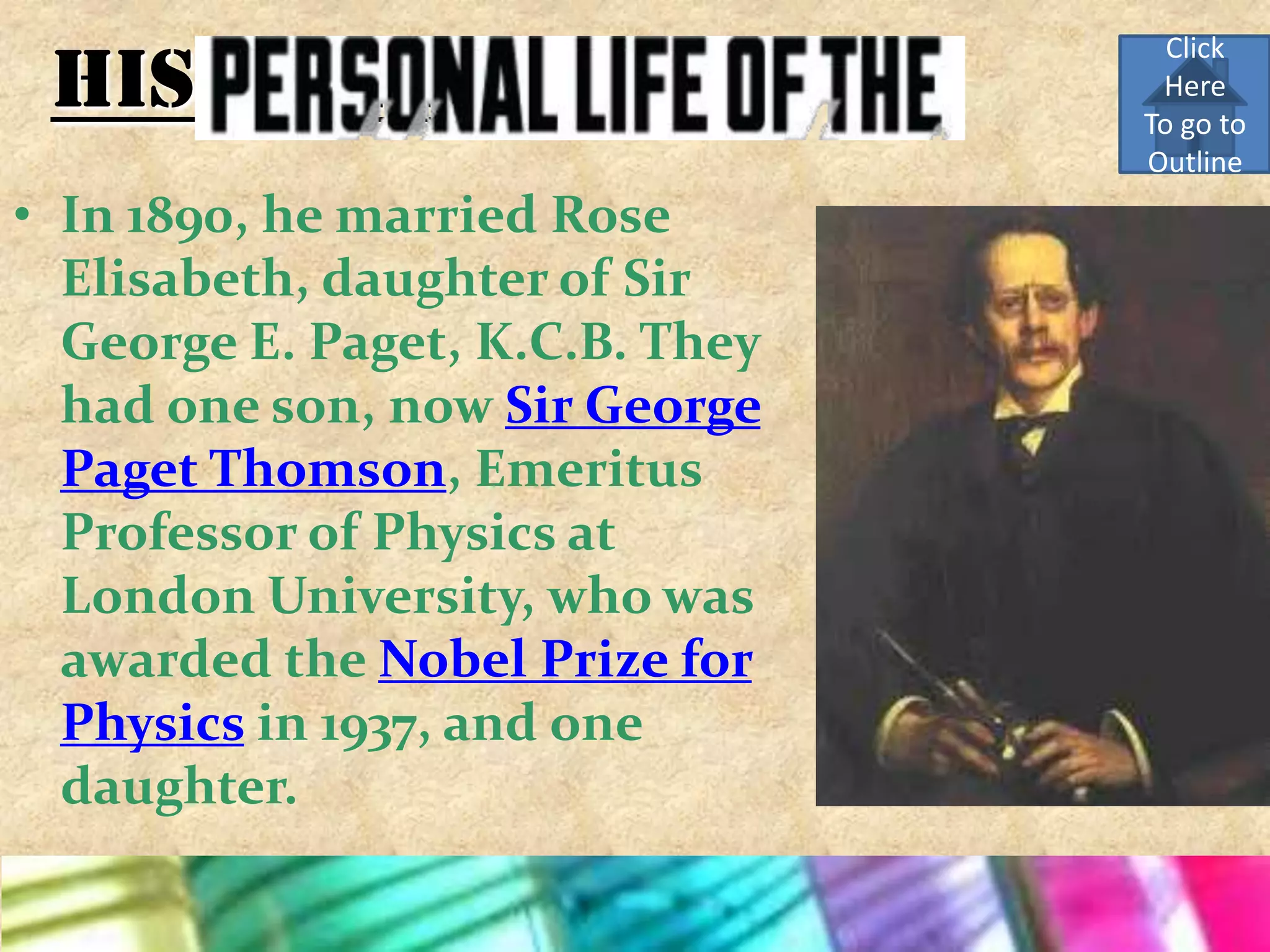
• In 1890, he married Rose
  Elisabeth, daughter of Sir
  George E. Paget, K.C.B. They
  had one son, now Sir George
  Paget Thomson, Emeritus
  Professor of Physics at
  London University, who was
  awarded the Nobel Prize for
  Physics in 1937, and one
  daughter.
The Theory
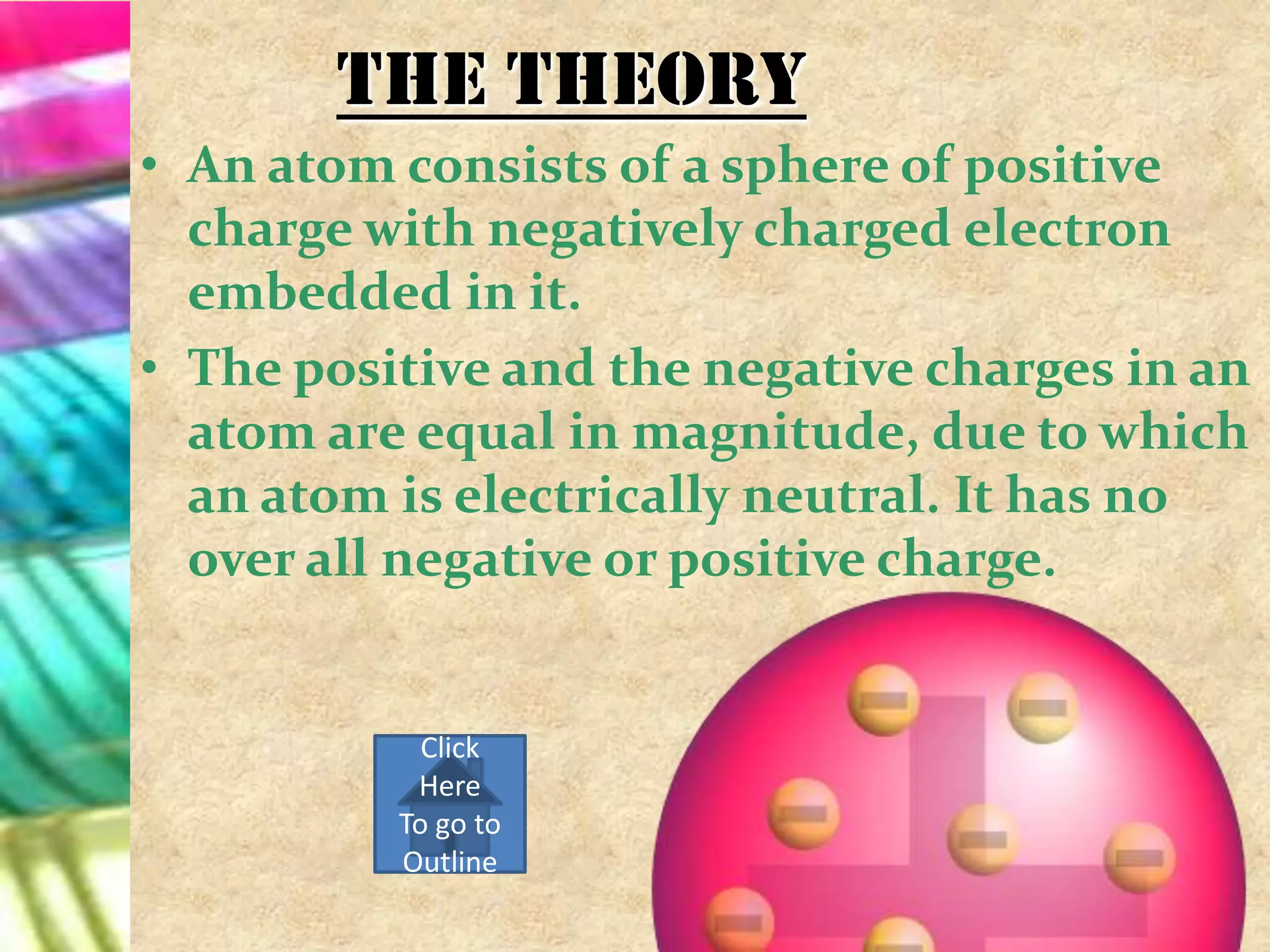
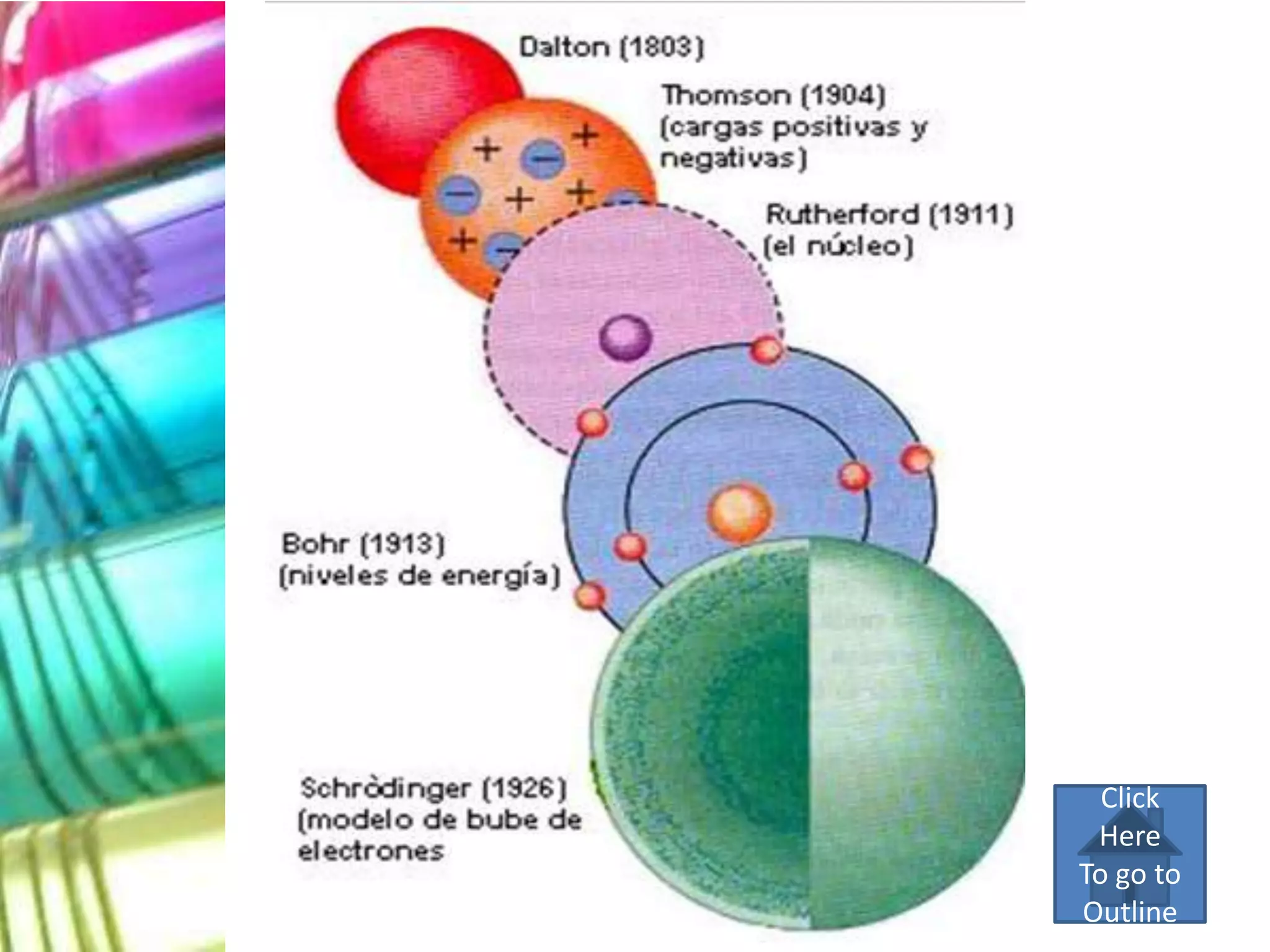
• An atom consists of a sphere of positive
  charge with negatively charged electron
  embedded in it.
• The positive and the negative charges in an
  atom are equal in magnitude, due to which
  an atom is electrically neutral. It has no
  over all negative or positive charge.


            Click
           Here
          To go to
          Outline
Click
                                              Here
     How came to be?                         To go to
                                             Outline
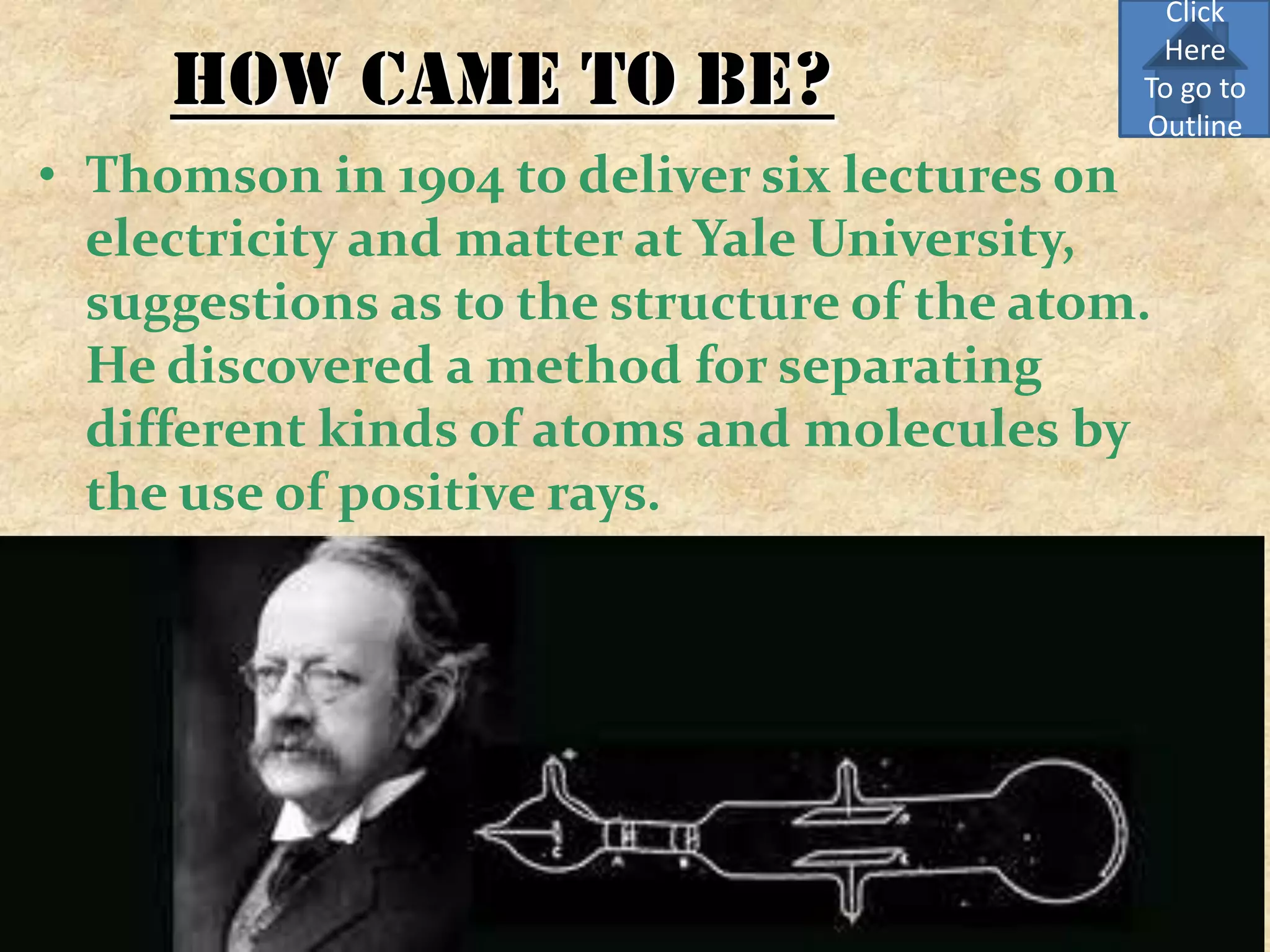
• Thomson in 1904 to deliver six lectures on
  electricity and matter at Yale University,
  suggestions as to the structure of the atom.
  He discovered a method for separating
  different kinds of atoms and molecules by
  the use of positive rays.
Mass and charge of the electron
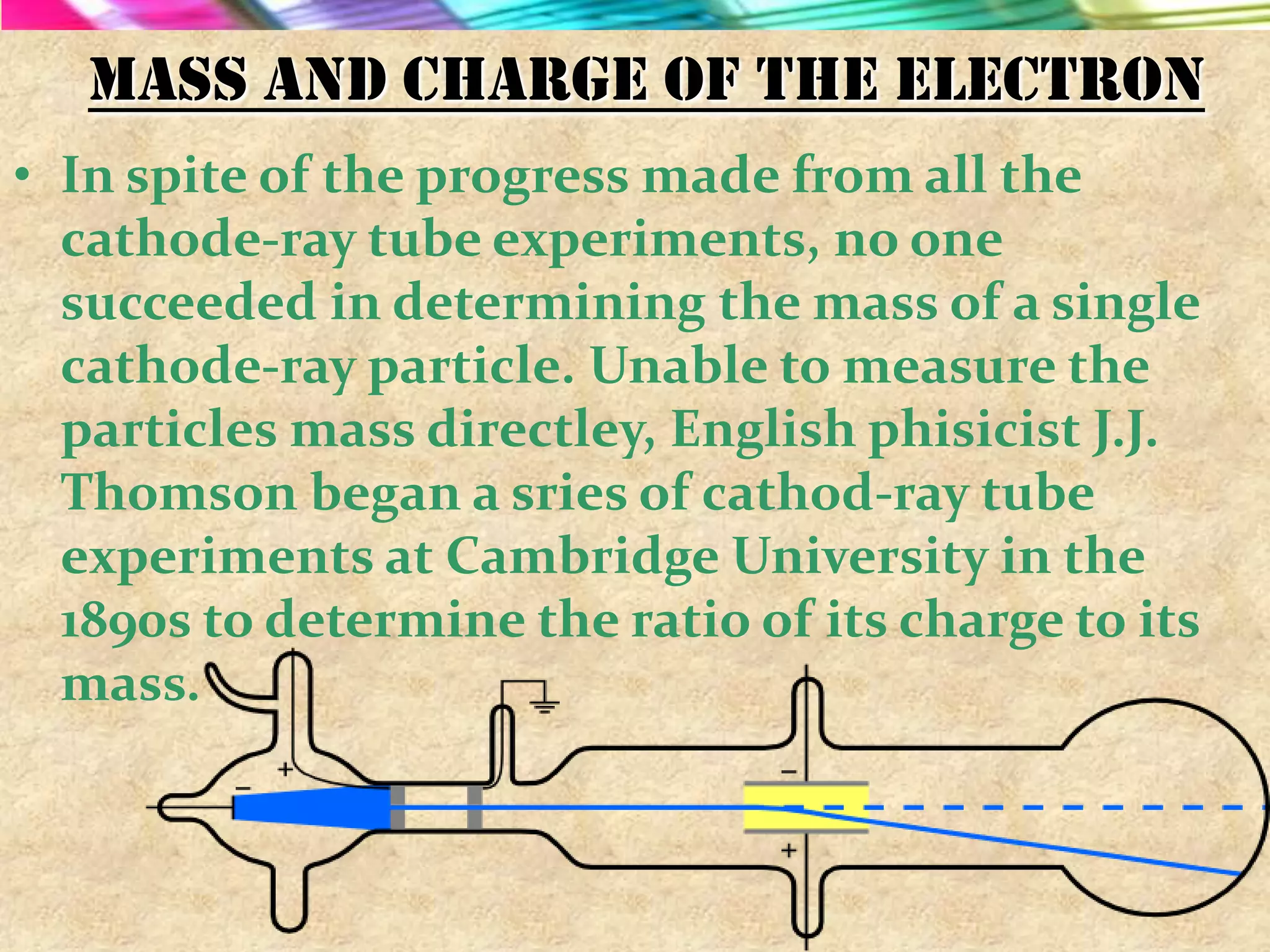
• In spite of the progress made from all the
  cathode-ray tube experiments, no one
  succeeded in determining the mass of a single
  cathode-ray particle. Unable to measure the
  particles mass directley, English phisicist J.J.
  Thomson began a sries of cathod-ray tube
  experiments at Cambridge University in the
  1890s to determine the ratio of its charge to its
  mass.
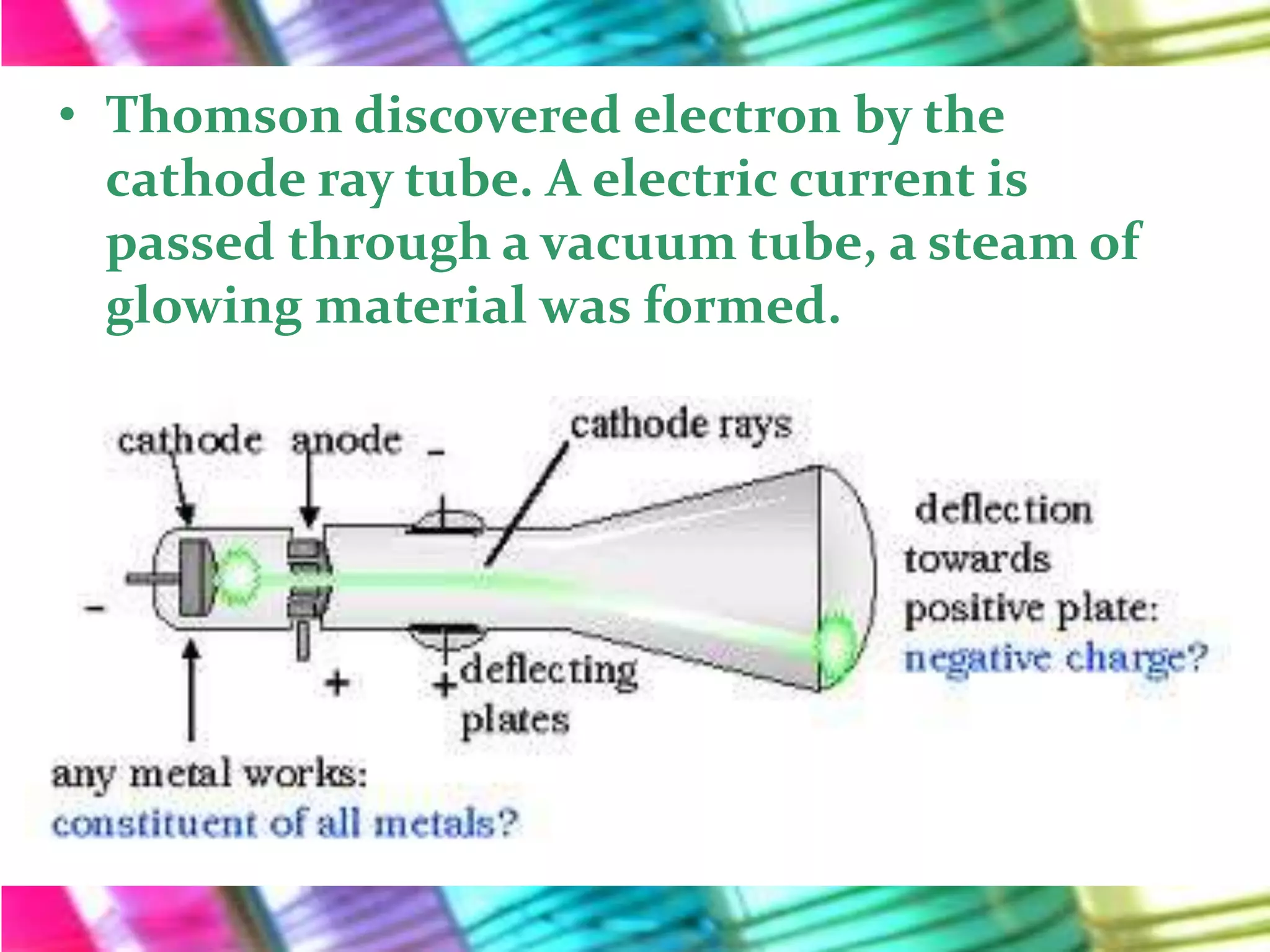
• Thomson discovered electron by the
  cathode ray tube. A electric current is
  passed through a vacuum tube, a steam of
  glowing material was formed.
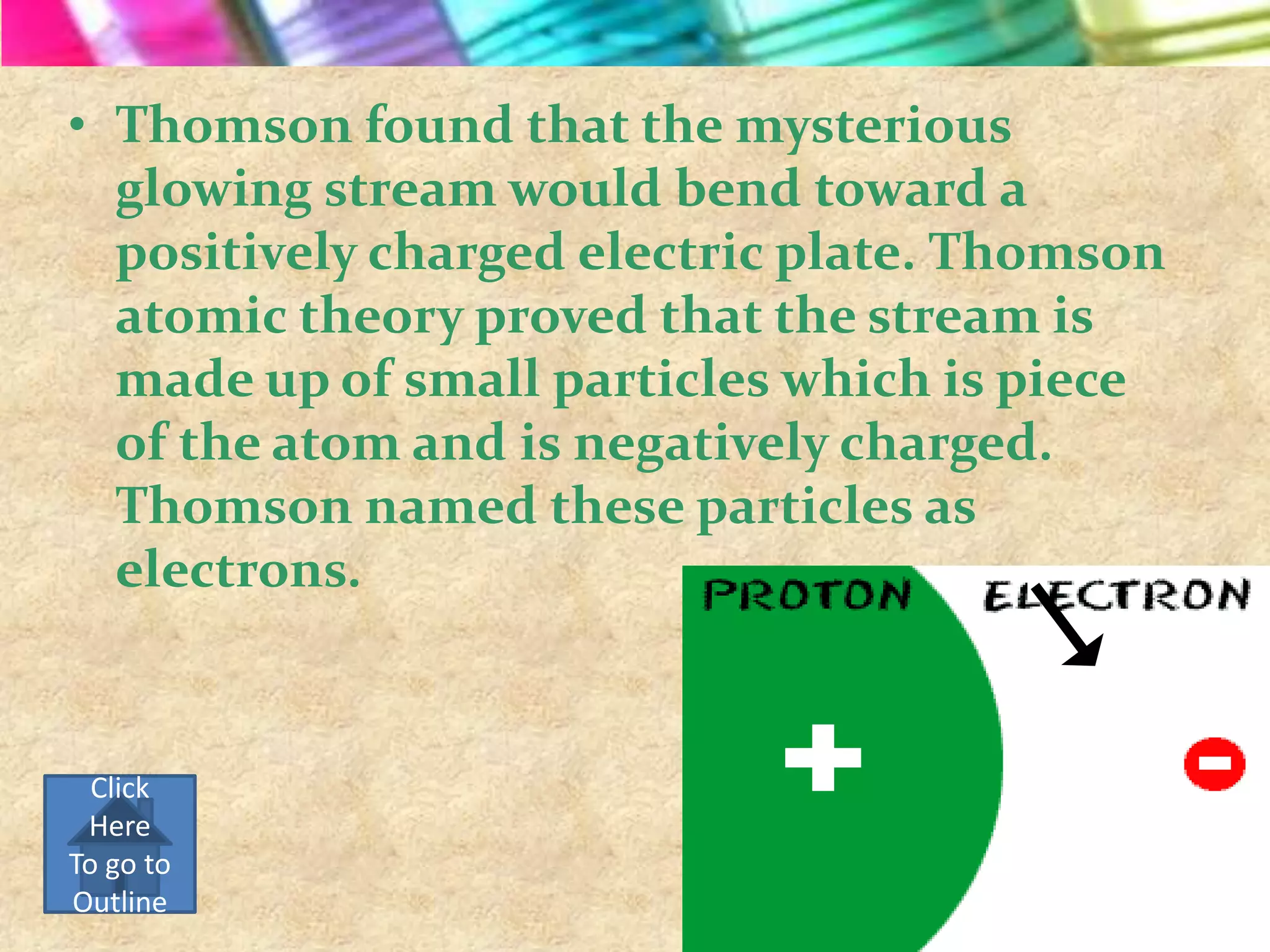
• Thomson found that the mysterious
  glowing stream would bend toward a
  positively charged electric plate. Thomson
  atomic theory proved that the stream is
  made up of small particles which is piece
  of the atom and is negatively charged.
  Thomson named these particles as
  electrons.


  Click
 Here
To go to
Outline
Chemestry
  & Food


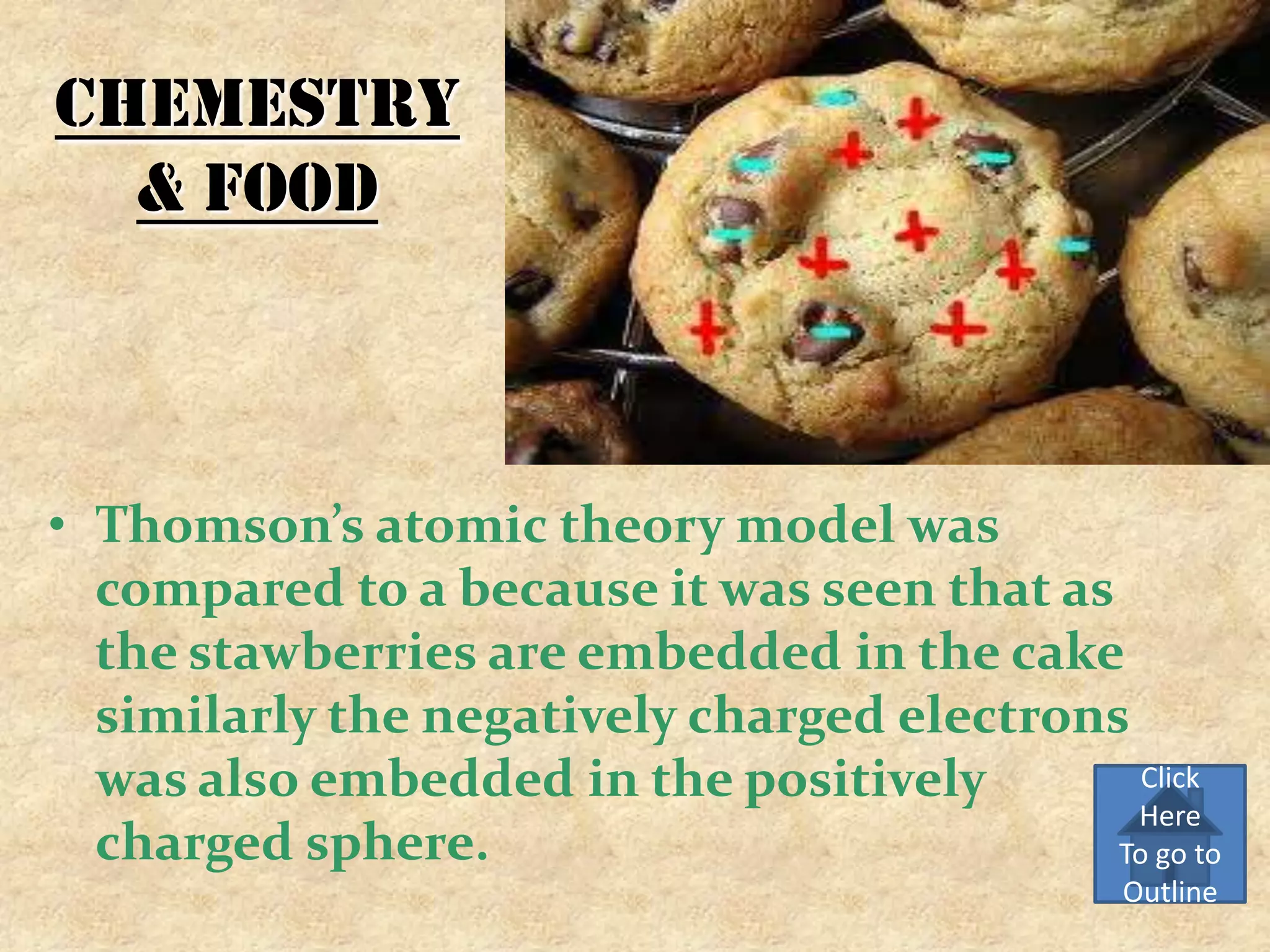
• Thomson’s atomic theory model was
  compared to a because it was seen that as
  the stawberries are embedded in the cake
  similarly the negatively charged electrons
  was also embedded in the positively         Click
                                             Here
  charged sphere.                           To go to
                                               Outline
Click
         The Atromic Model.                    Here
                                              To go to
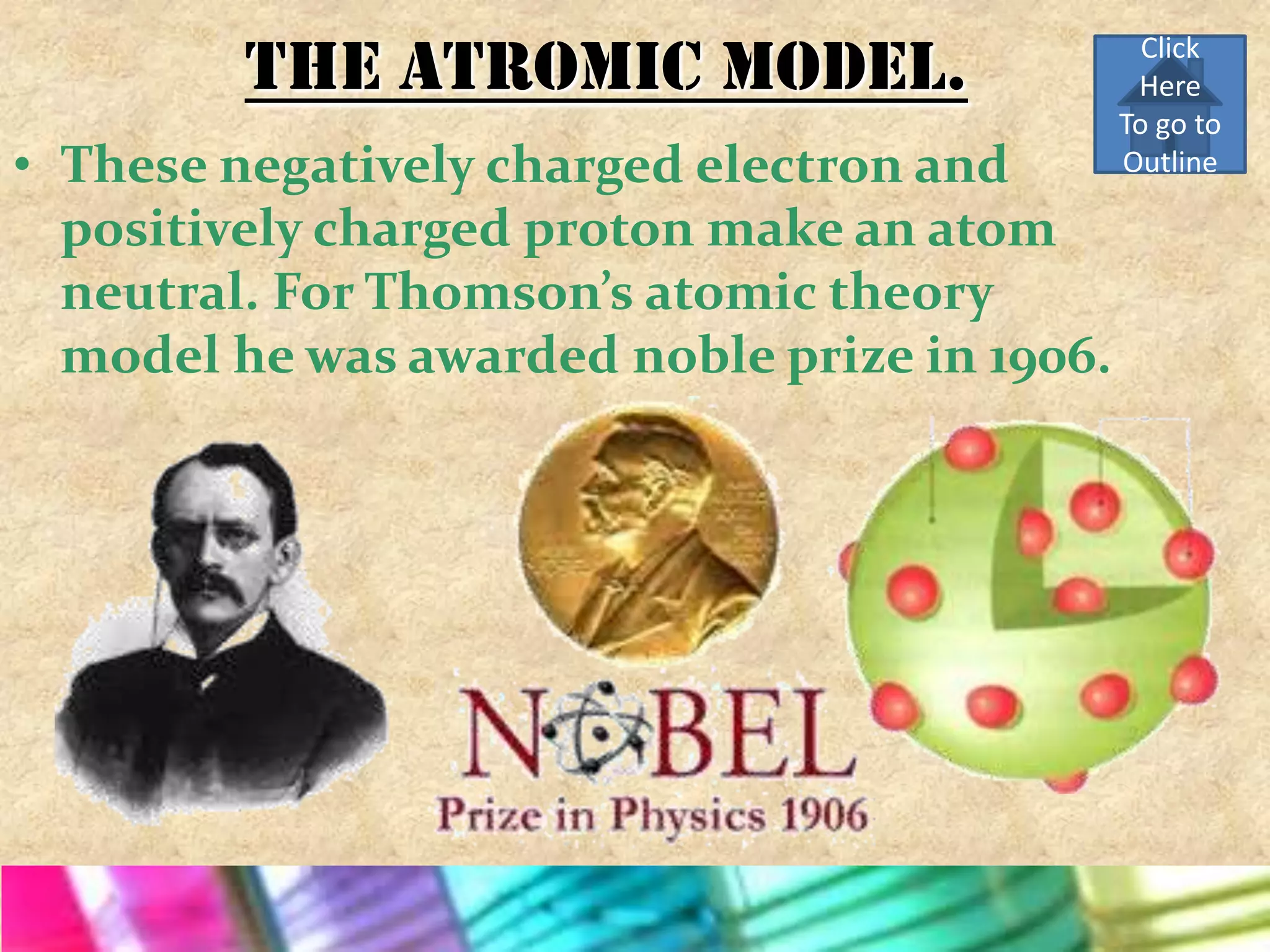
• These negatively charged electron and       Outline

  positively charged proton make an atom
  neutral. For Thomson’s atomic theory
  model he was awarded noble prize in 1906.
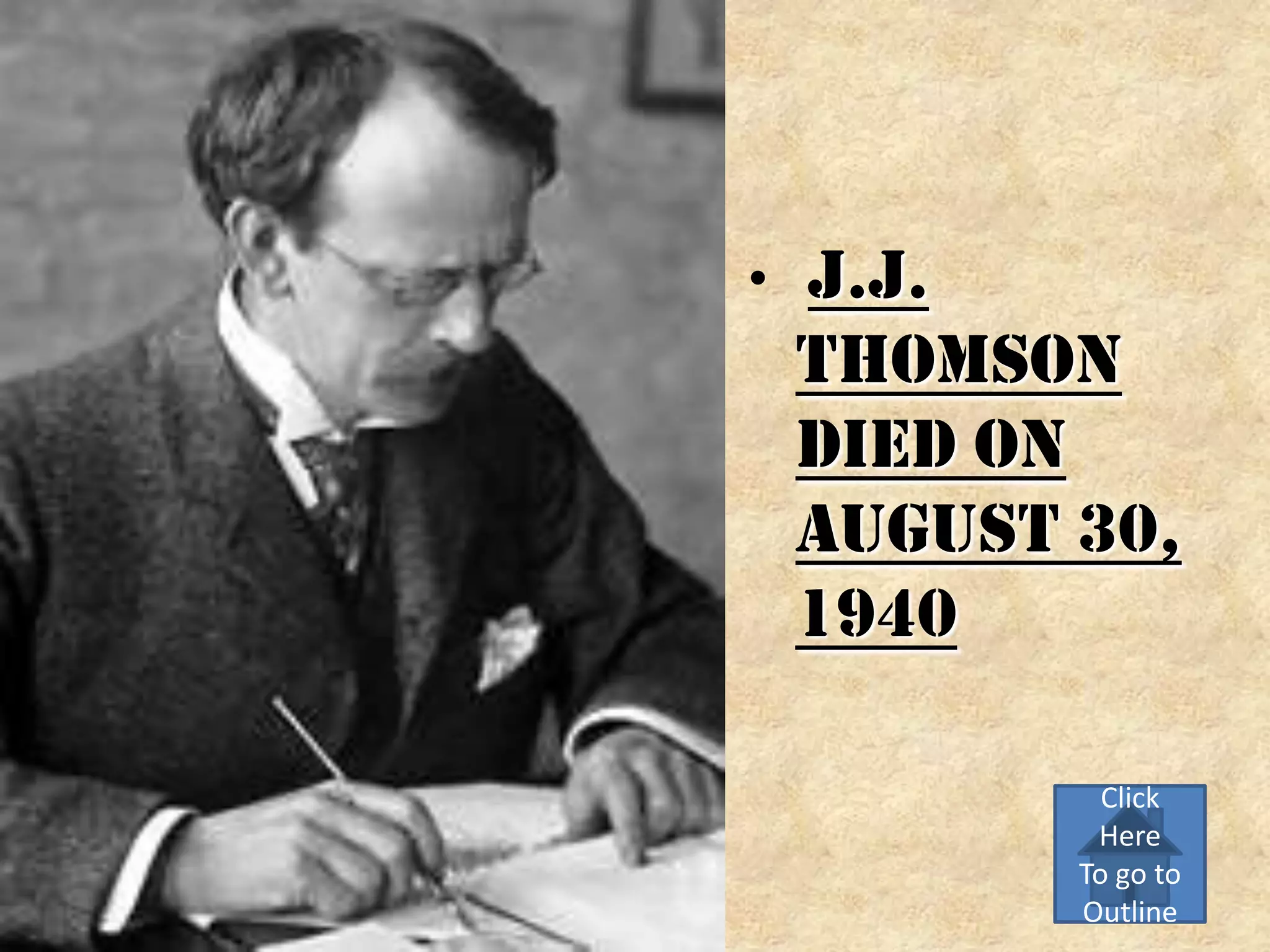
•   J.J.
    Thomson
    died on
    August 30,
    1940

             Click
            Here
           To go to
           Outline
Click
 Here
To go to
Outline
•   MLA style: "J.J. Thomson - Biography". Nobelprize.org. 7 Nov 2012
    http://www.nobelprize.org/nobel_prizes/physics/laureates/1906/thoms
    on-bio.html
•   Copyright © The Nobel Foundation 1906
•   TO CITE THIS PAGE:
    MLA style: "J.J. Thomson - Biography". Nobelprize.org. 7 Nov 2012
    http://www.nobelprize.org/nobel_prizes/physics/laureates/1906/thoms
    on-bio.html

                                                                   Click

                   References                                     Here
                                                                 To go to
                                                                 Outline

Thomsons atomic theory pp.

  • 1.
    By. Lucia Artigas,Erick Sebastián, Yael Sánchez, Brenda Santos & Ana Paula Soltero.
  • 2.
    Outline • Who was Thomson? Click Here • His Personal Life Click Here • The Theory Click Here • How came to be? Click Here • Mass and charge of the electron Click Here • Chemestry & Food Click Here • The Atromic Model Click Here • References Click Here
  • 3.
    Who Was Thomson? • Was born in Cheetham Hill • Manchester on December 18, 1856 • He was Cavendish Professor of Experimental Physics at Cambridge • Thomson's early interest in atomic structure was reflected Click in his Treatise on the Motion of Here To go to Vortex Rings which won him Outline the Adams Prize in 1884
  • 4.
    Click His PersonalLife Here To go to Outline • In 1890, he married Rose Elisabeth, daughter of Sir George E. Paget, K.C.B. They had one son, now Sir George Paget Thomson, Emeritus Professor of Physics at London University, who was awarded the Nobel Prize for Physics in 1937, and one daughter.
  • 5.
    The Theory • Anatom consists of a sphere of positive charge with negatively charged electron embedded in it. • The positive and the negative charges in an atom are equal in magnitude, due to which an atom is electrically neutral. It has no over all negative or positive charge. Click Here To go to Outline
  • 6.
    Click Here How came to be? To go to Outline • Thomson in 1904 to deliver six lectures on electricity and matter at Yale University, suggestions as to the structure of the atom. He discovered a method for separating different kinds of atoms and molecules by the use of positive rays.
  • 7.
    Mass and chargeof the electron • In spite of the progress made from all the cathode-ray tube experiments, no one succeeded in determining the mass of a single cathode-ray particle. Unable to measure the particles mass directley, English phisicist J.J. Thomson began a sries of cathod-ray tube experiments at Cambridge University in the 1890s to determine the ratio of its charge to its mass.
  • 8.
    • Thomson discoveredelectron by the cathode ray tube. A electric current is passed through a vacuum tube, a steam of glowing material was formed.
  • 9.
    • Thomson foundthat the mysterious glowing stream would bend toward a positively charged electric plate. Thomson atomic theory proved that the stream is made up of small particles which is piece of the atom and is negatively charged. Thomson named these particles as electrons. Click Here To go to Outline
  • 10.
    Chemestry &Food • Thomson’s atomic theory model was compared to a because it was seen that as the stawberries are embedded in the cake similarly the negatively charged electrons was also embedded in the positively Click Here charged sphere. To go to Outline
  • 11.
    Click The Atromic Model. Here To go to • These negatively charged electron and Outline positively charged proton make an atom neutral. For Thomson’s atomic theory model he was awarded noble prize in 1906.
  • 12.
    J.J. Thomson died on August 30, 1940 Click Here To go to Outline
  • 13.
    Click Here To goto Outline
  • 14.
    MLA style: "J.J. Thomson - Biography". Nobelprize.org. 7 Nov 2012 http://www.nobelprize.org/nobel_prizes/physics/laureates/1906/thoms on-bio.html • Copyright © The Nobel Foundation 1906 • TO CITE THIS PAGE: MLA style: "J.J. Thomson - Biography". Nobelprize.org. 7 Nov 2012 http://www.nobelprize.org/nobel_prizes/physics/laureates/1906/thoms on-bio.html Click References Here To go to Outline