1#   Lucia Artigas     9-2
                     19.20
Outline
• 1)What is the Native People Group?
    –   Culture
    –   Customs
    –   Agriculture
    –   Religion

• 2) When did they Exist?
• 3) When was this famous site created and why?
    – La Venta
                              How long did it take to complete?
    – Tres Zapotes
    – San Lorenzo             Where is it located in present day now?


•   Architecture
•   Tourism
•   Video
•   Bibliography
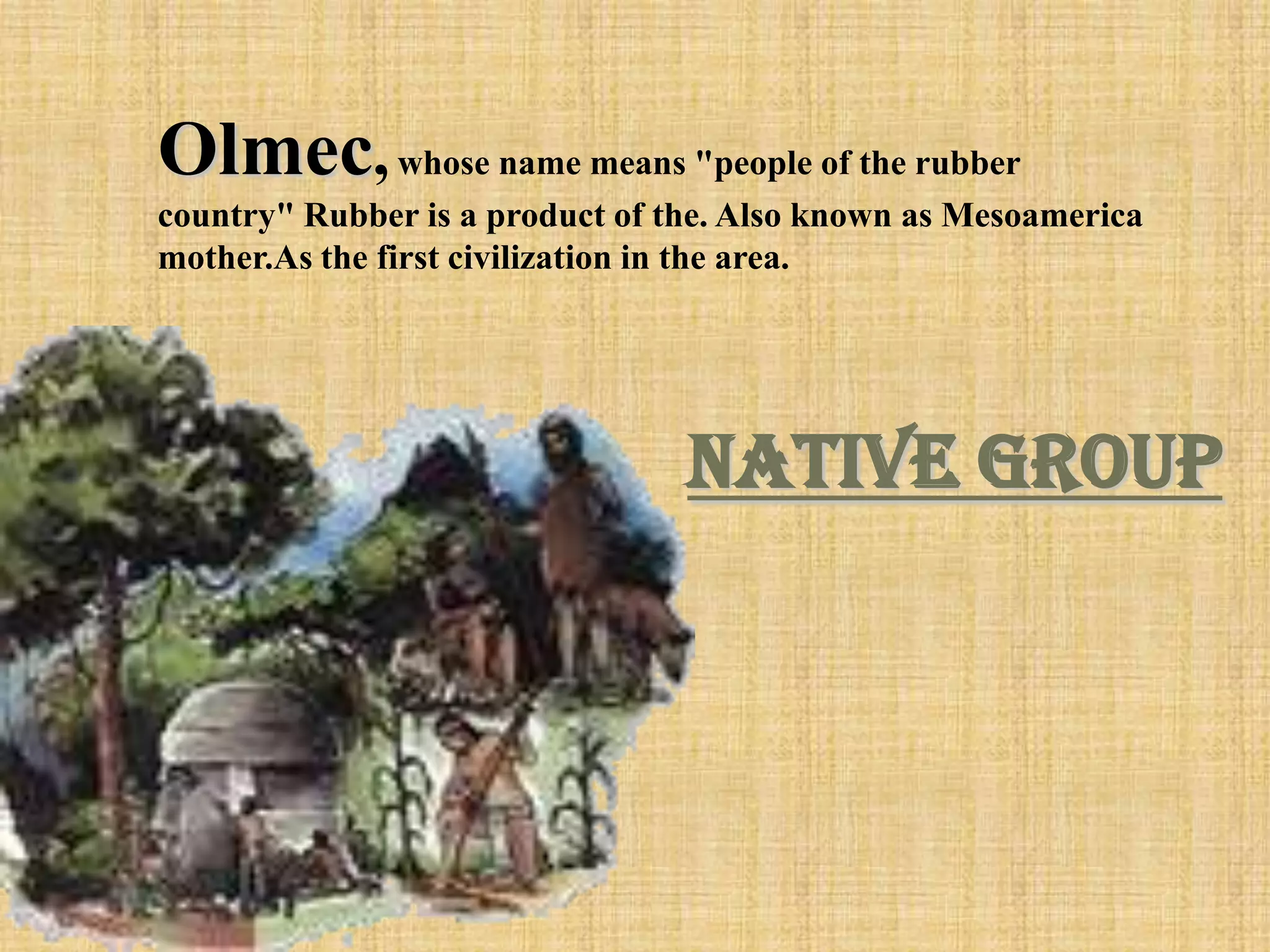
Olmec, whose name means "people of the rubber
country" Rubber is a product of the. Also known as Mesoamerica
mother.As the first civilization in the area.


                                 Native Group
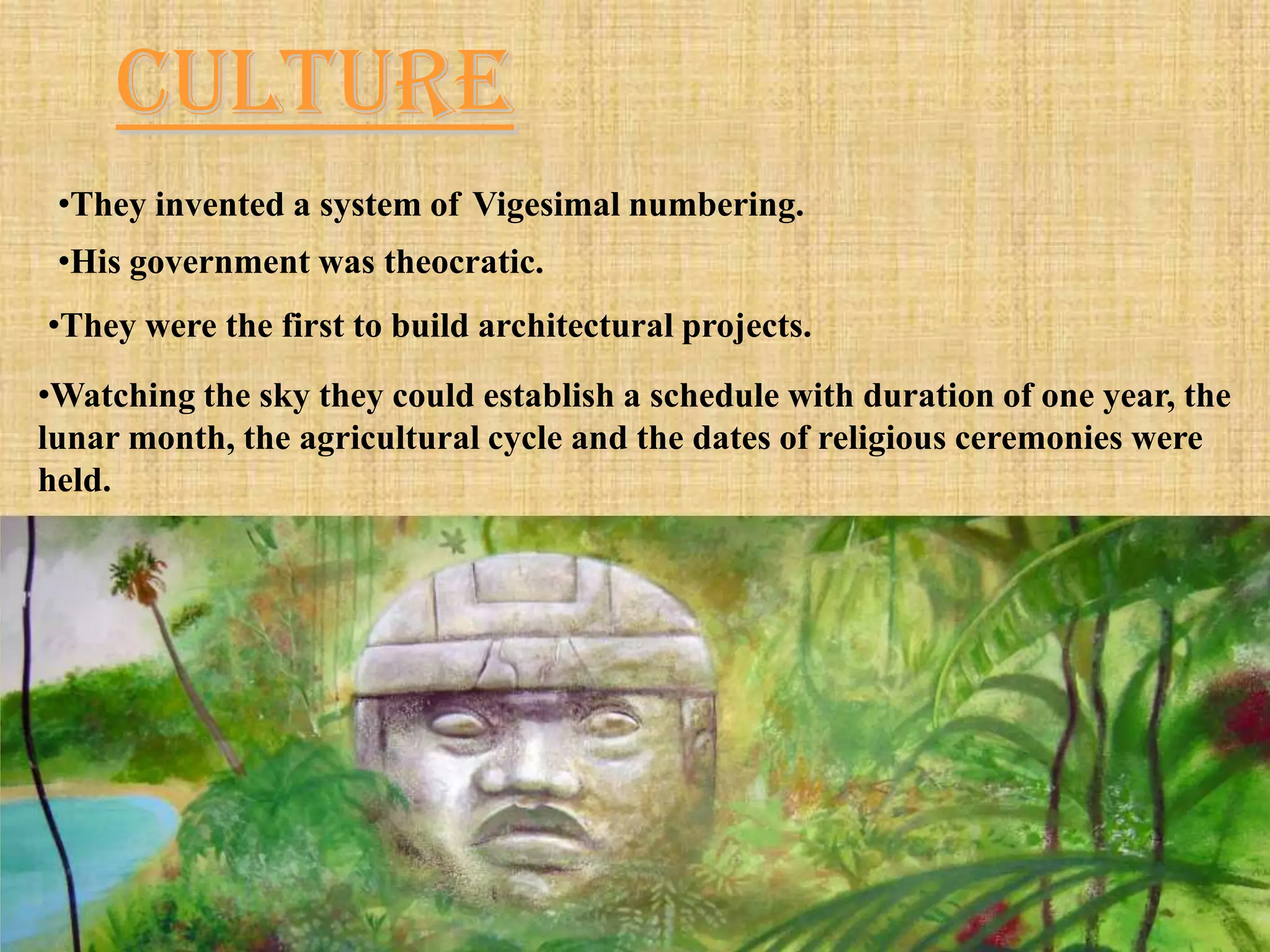
Culture
 •They invented a system of Vigesimal numbering.
 •His government was theocratic.
•They were the first to build architectural projects.
•Watching the sky they could establish a schedule with duration of one year, the
lunar month, the agricultural cycle and the dates of religious ceremonies were
held.
Customs
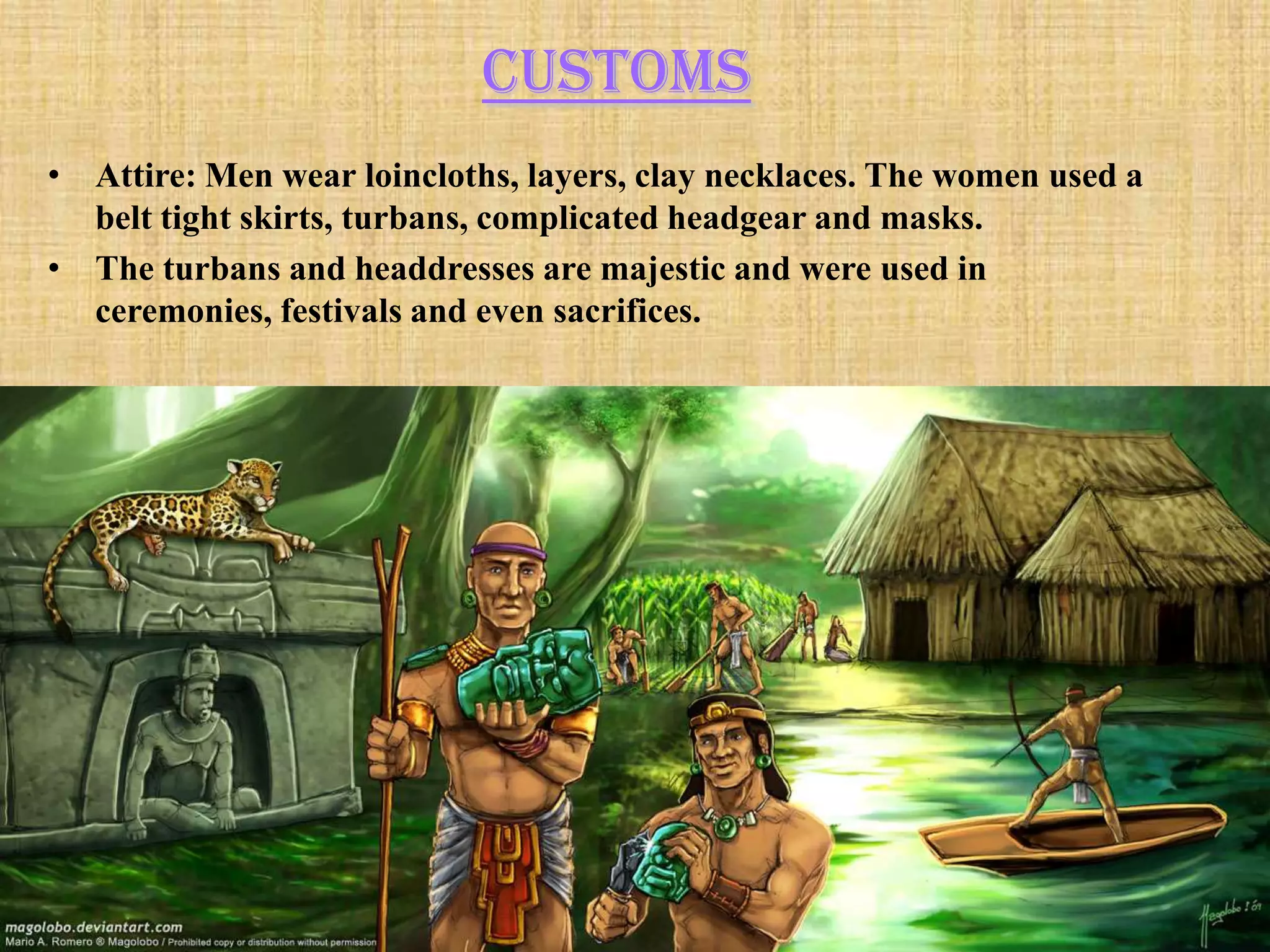
• Attire: Men wear loincloths, layers, clay necklaces. The women used a
  belt tight skirts, turbans, complicated headgear and masks.
• The turbans and headdresses are majestic and were used in
  ceremonies, festivals and even sacrifices.
agricultur
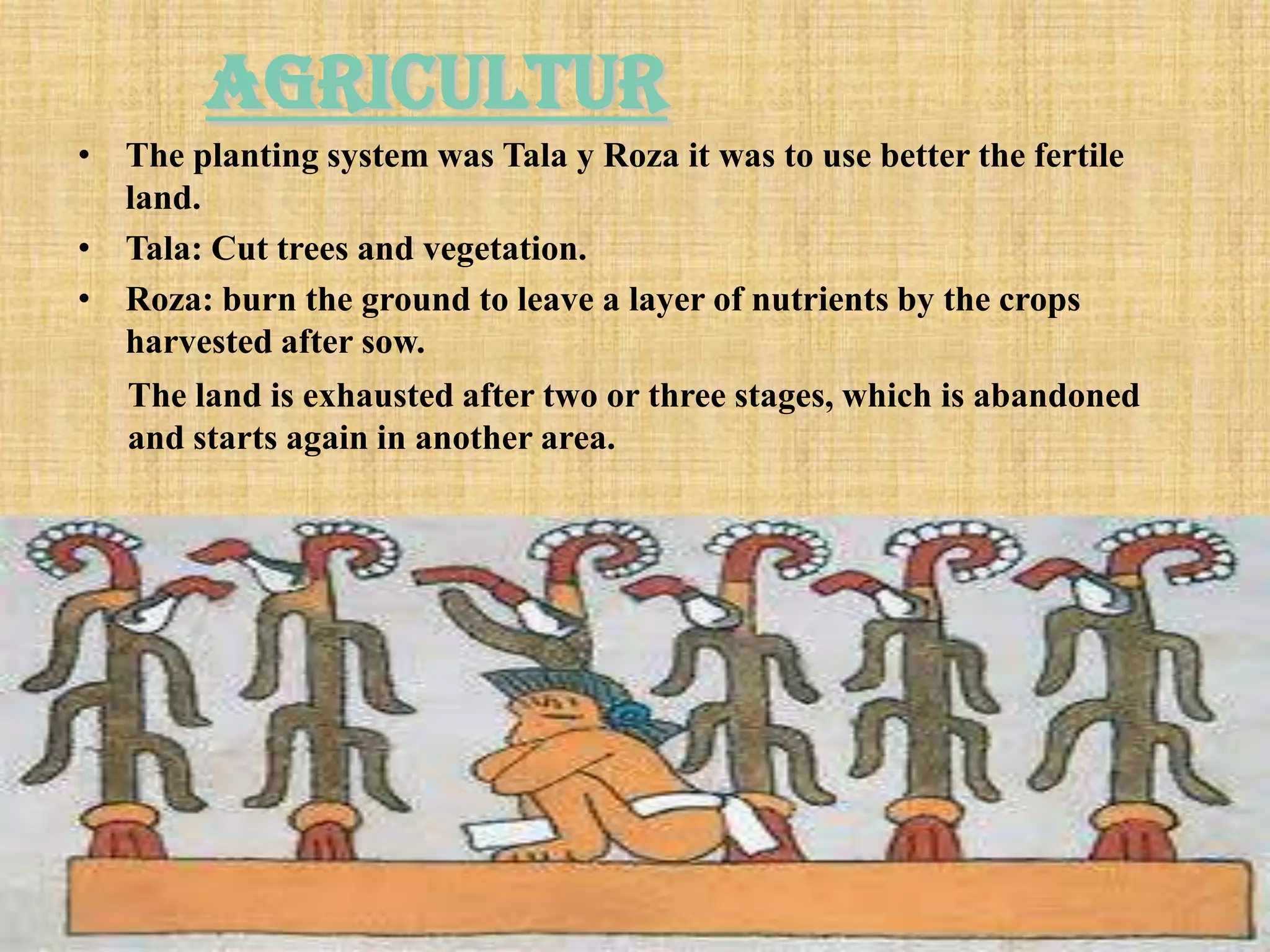
• The planting system was Tala y Roza it was to use better the fertile
  land.
• Tala: Cut trees and vegetation.
• Roza: burn the ground to leave a layer of nutrients by the crops
  harvested after sow.
   The land is exhausted after two or three stages, which is abandoned
   and starts again in another area.
Religion.
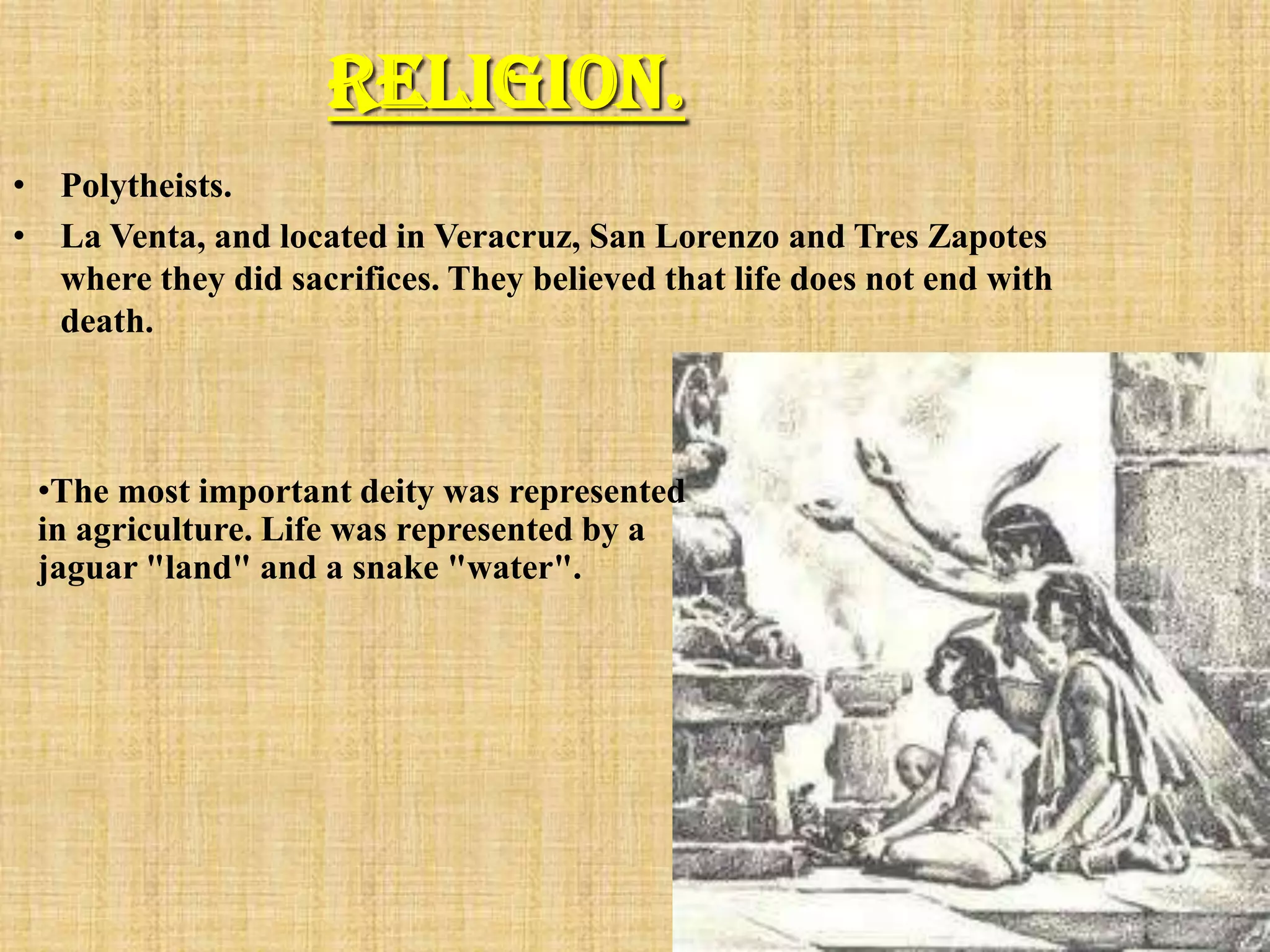
• Polytheists.
• La Venta, and located in Veracruz, San Lorenzo and Tres Zapotes
  where they did sacrifices. They believed that life does not end with
  death.


 •The most important deity was represented
 in agriculture. Life was represented by a
 jaguar "land" and a snake "water".
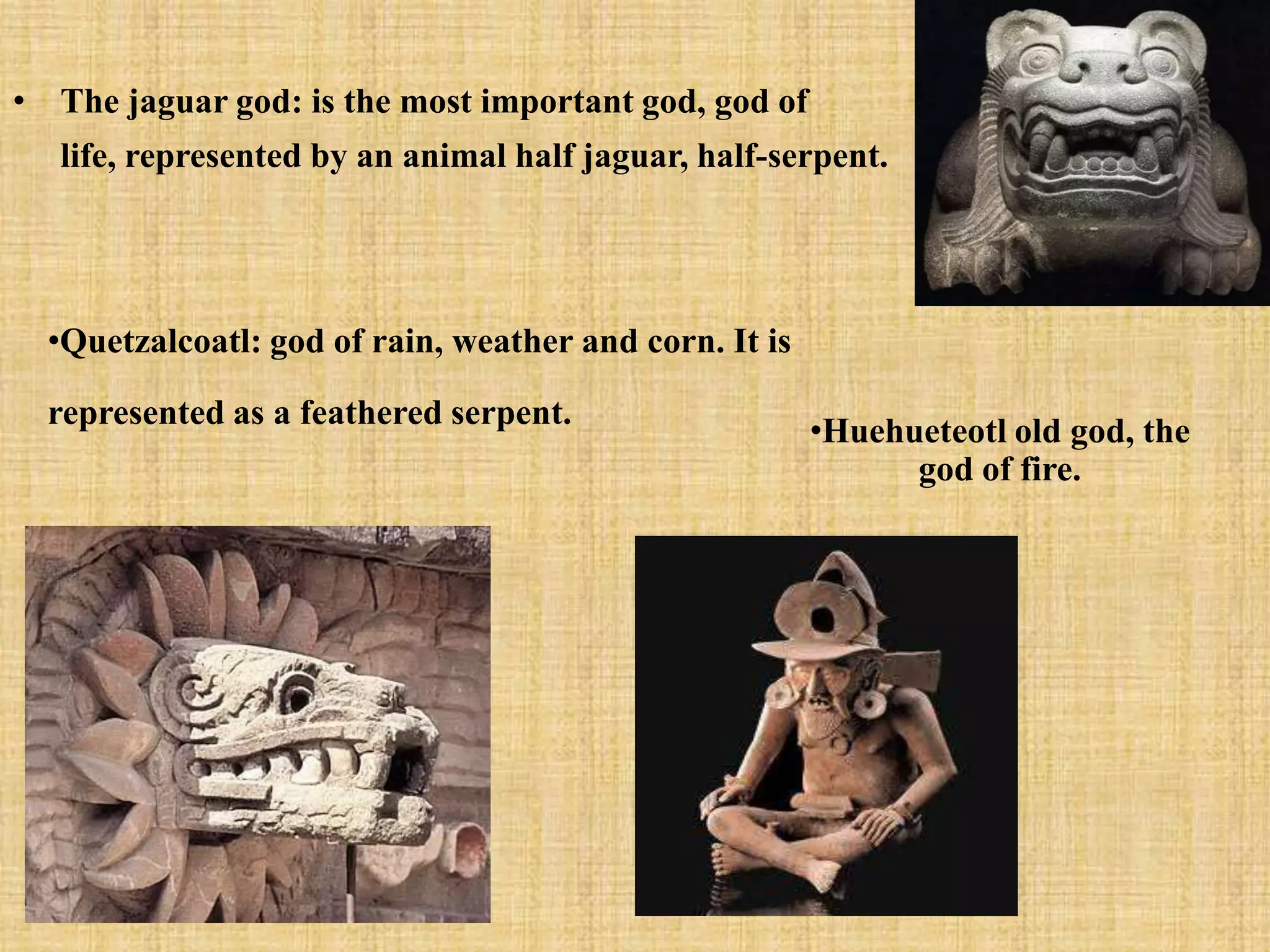
• The jaguar god: is the most important god, god of
   life, represented by an animal half jaguar, half-serpent.


  •Quetzalcoatl: god of rain, weather and corn. It is

  represented as a feathered serpent.
                                                        •Huehueteotl old god, the
                                                              god of fire.
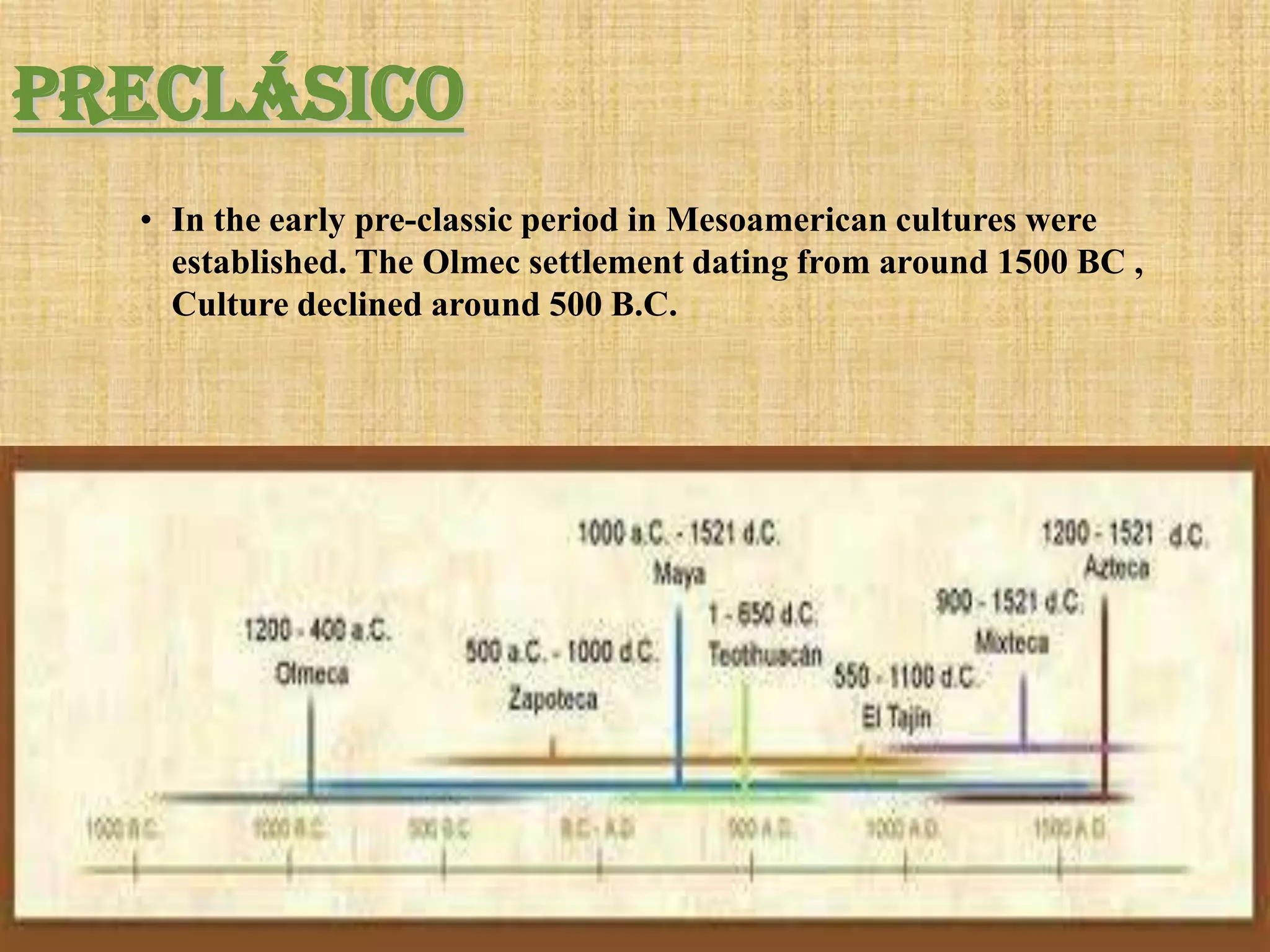
Preclásico
  • In the early pre-classic period in Mesoamerican cultures were
    established. The Olmec settlement dating from around 1500 BC ,
    Culture declined around 500 B.C.
archaeological Sites : La Venta, San                                         L
Lorenzo, Tres Zapotes

•From archaeological evidence it can be inferred that the ceremonial and ritual
life among the Olmecs had to be as intense as those of other cultural groups in
Mesoamerica consolidated.
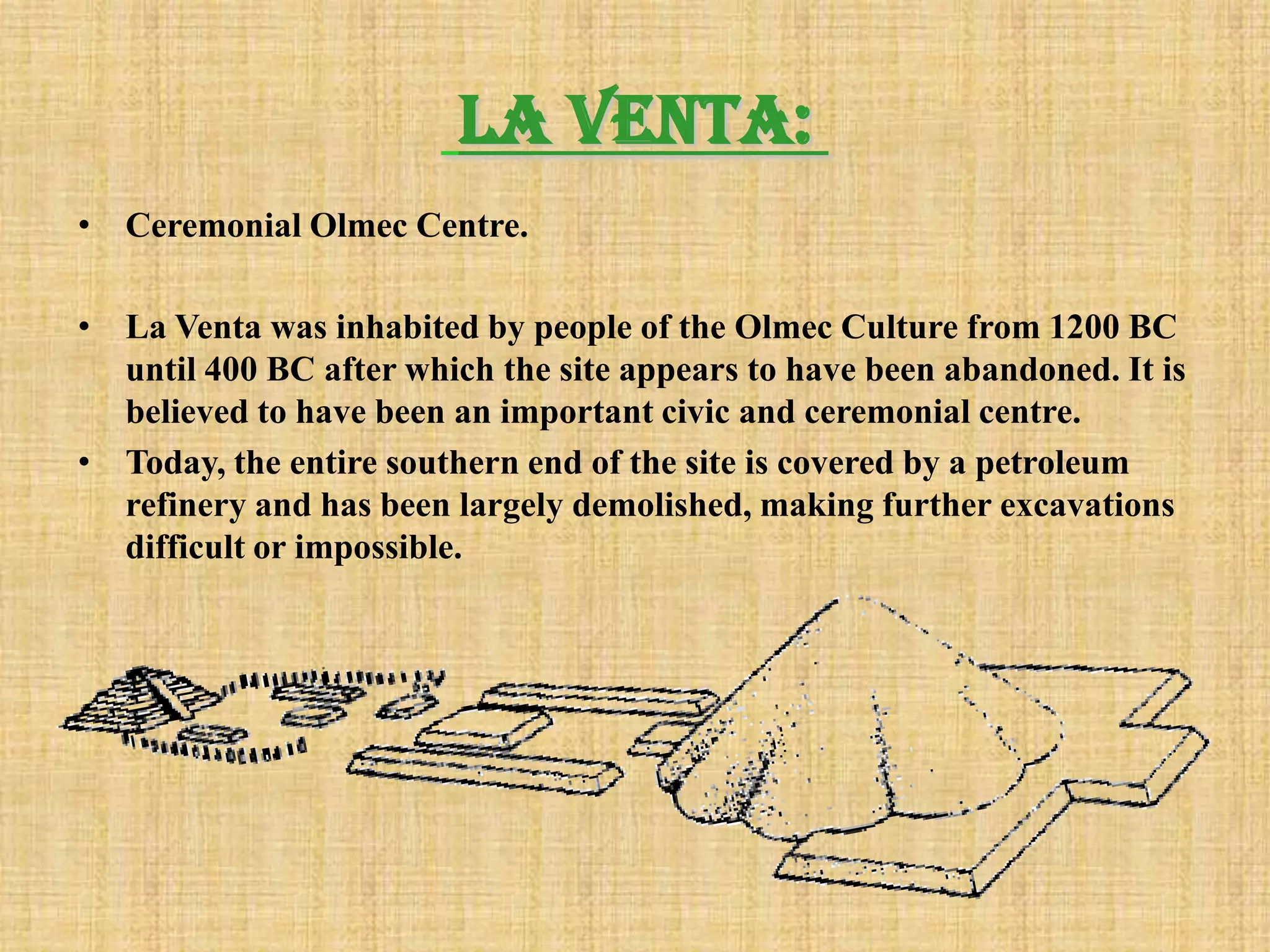
La Venta:
• Ceremonial Olmec Centre.

• La Venta was inhabited by people of the Olmec Culture from 1200 BC
  until 400 BC after which the site appears to have been abandoned. It is
  believed to have been an important civic and ceremonial centre.
• Today, the entire southern end of the site is covered by a petroleum
  refinery and has been largely demolished, making further excavations
  difficult or impossible.
San Lorenzo:
• Early Olmec culture had emerged centred around the San Lorenzo
  Tenochtitlán site near the coast in southeast Veracruz. They were the
  first Mesoamerican civilization and laid many of the foundations for
  the civilizations that followed. Among other "firsts", there is evidence
  that the Olmec practiced ritual bloodletting and played the
  Mesoamerican ballgame, hallmarks of nearly all subsequent
  Mesoamerican societies.
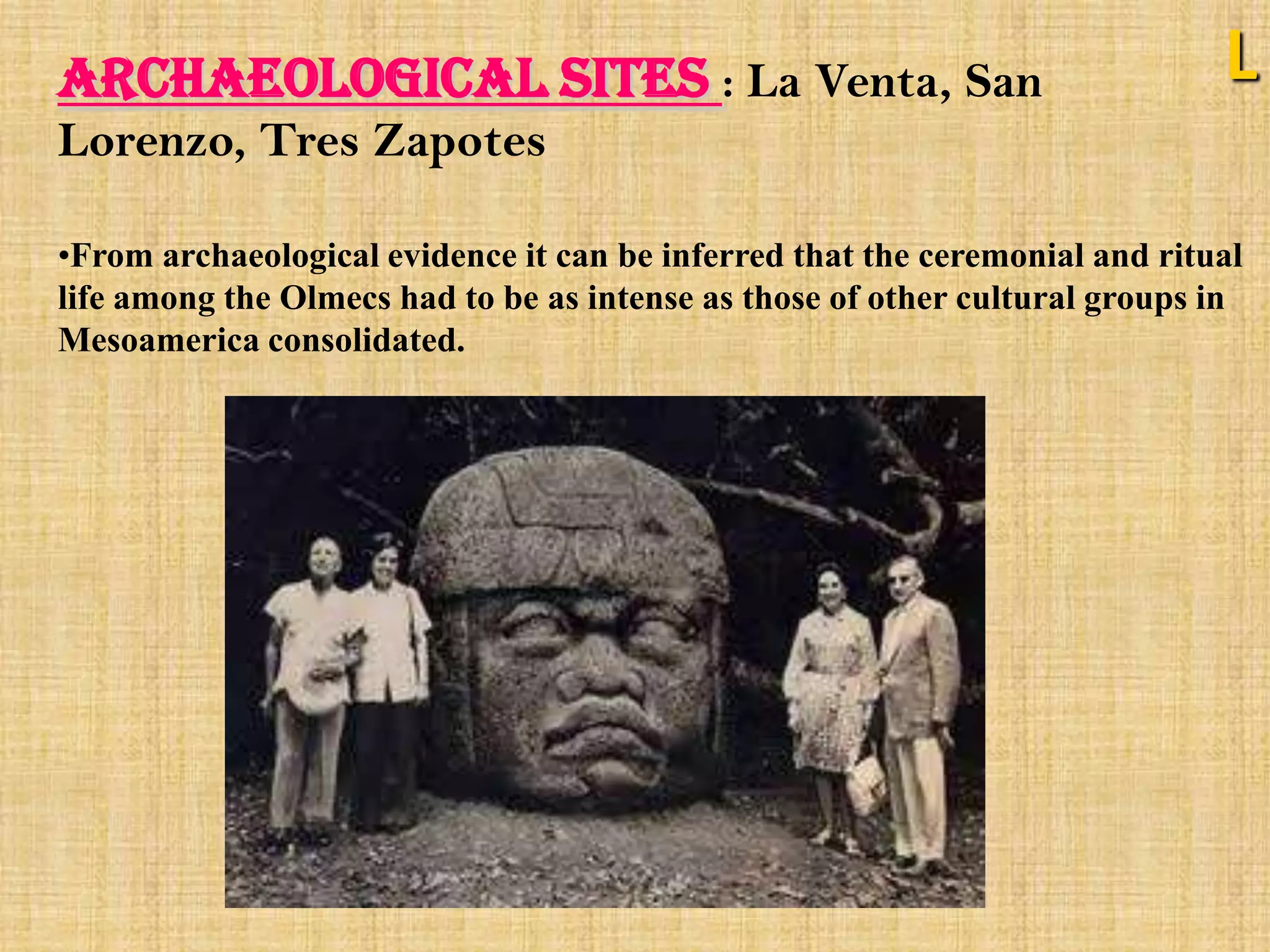
• San Lorenzo is best known today for the colossal Olmec stone heads
  unearthed there, the greatest of which weighs onwards of 40
  tons (3) and is 3 metres high.
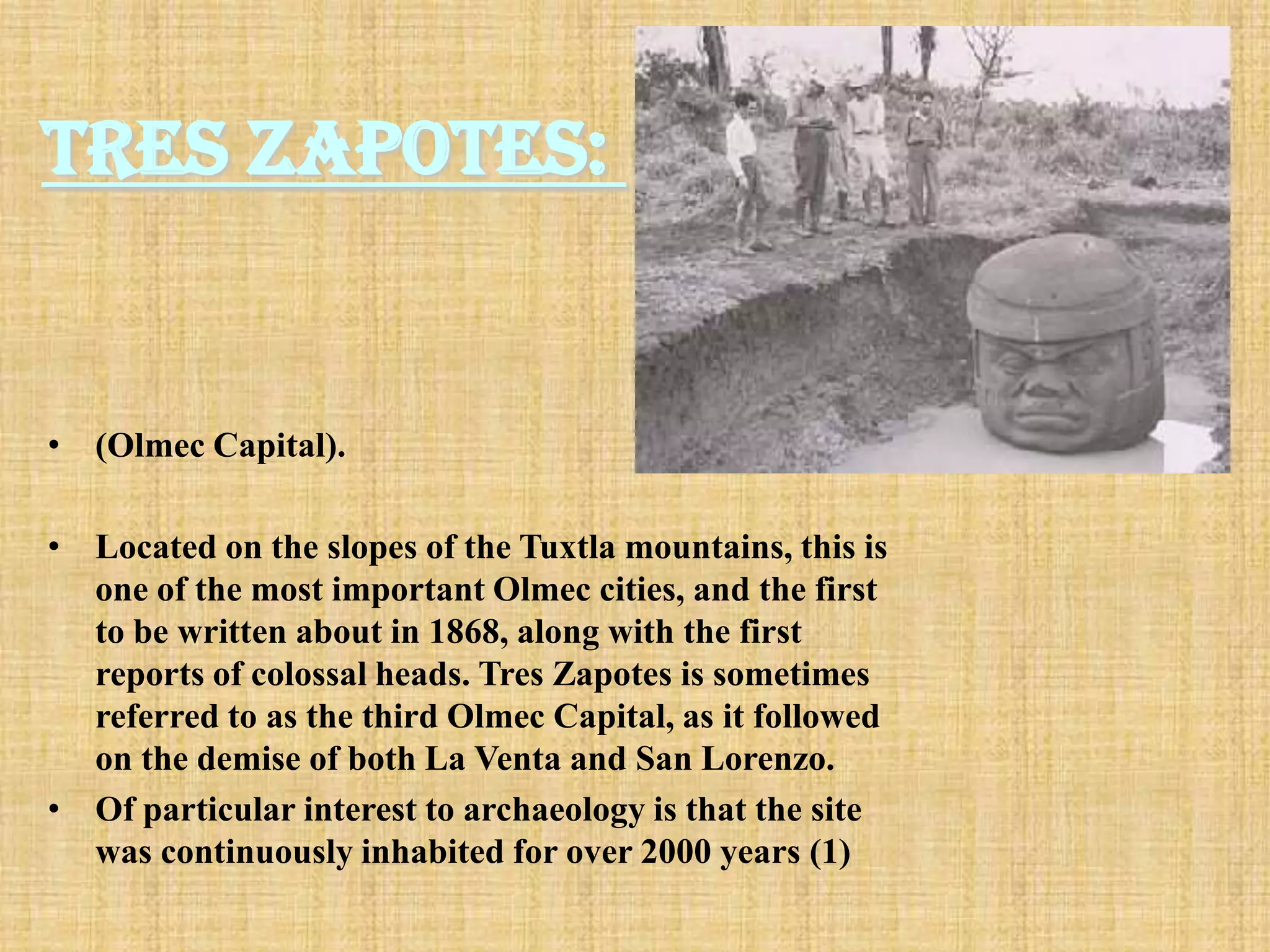
Tres Zapotes:


• (Olmec Capital).

• Located on the slopes of the Tuxtla mountains, this is
  one of the most important Olmec cities, and the first
  to be written about in 1868, along with the first
  reports of colossal heads. Tres Zapotes is sometimes
  referred to as the third Olmec Capital, as it followed
  on the demise of both La Venta and San Lorenzo.
• Of particular interest to archaeology is that the site
  was continuously inhabited for over 2000 years (1)
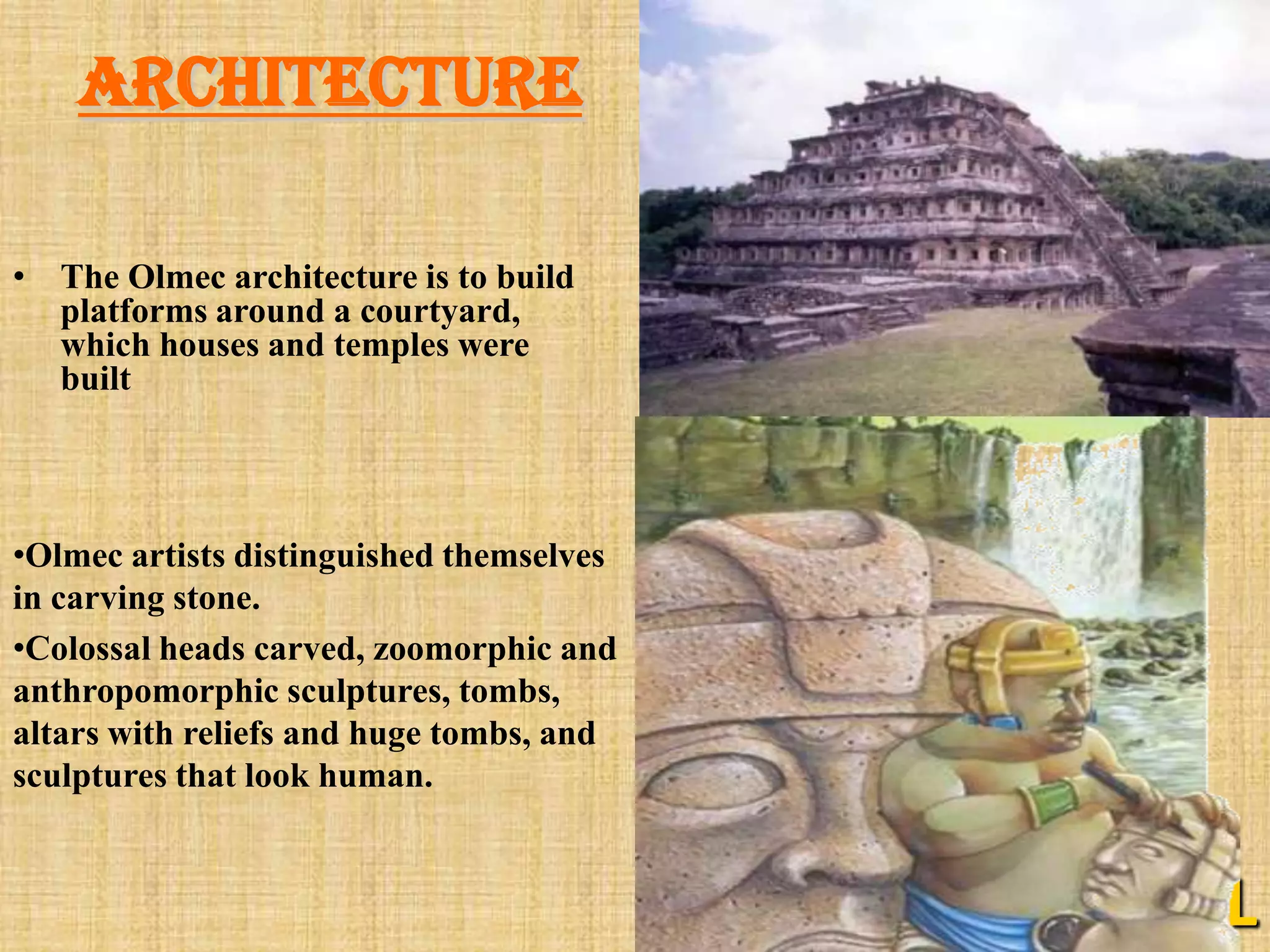
architecture

• The Olmec architecture is to build
  platforms around a courtyard,
  which houses and temples were
  built


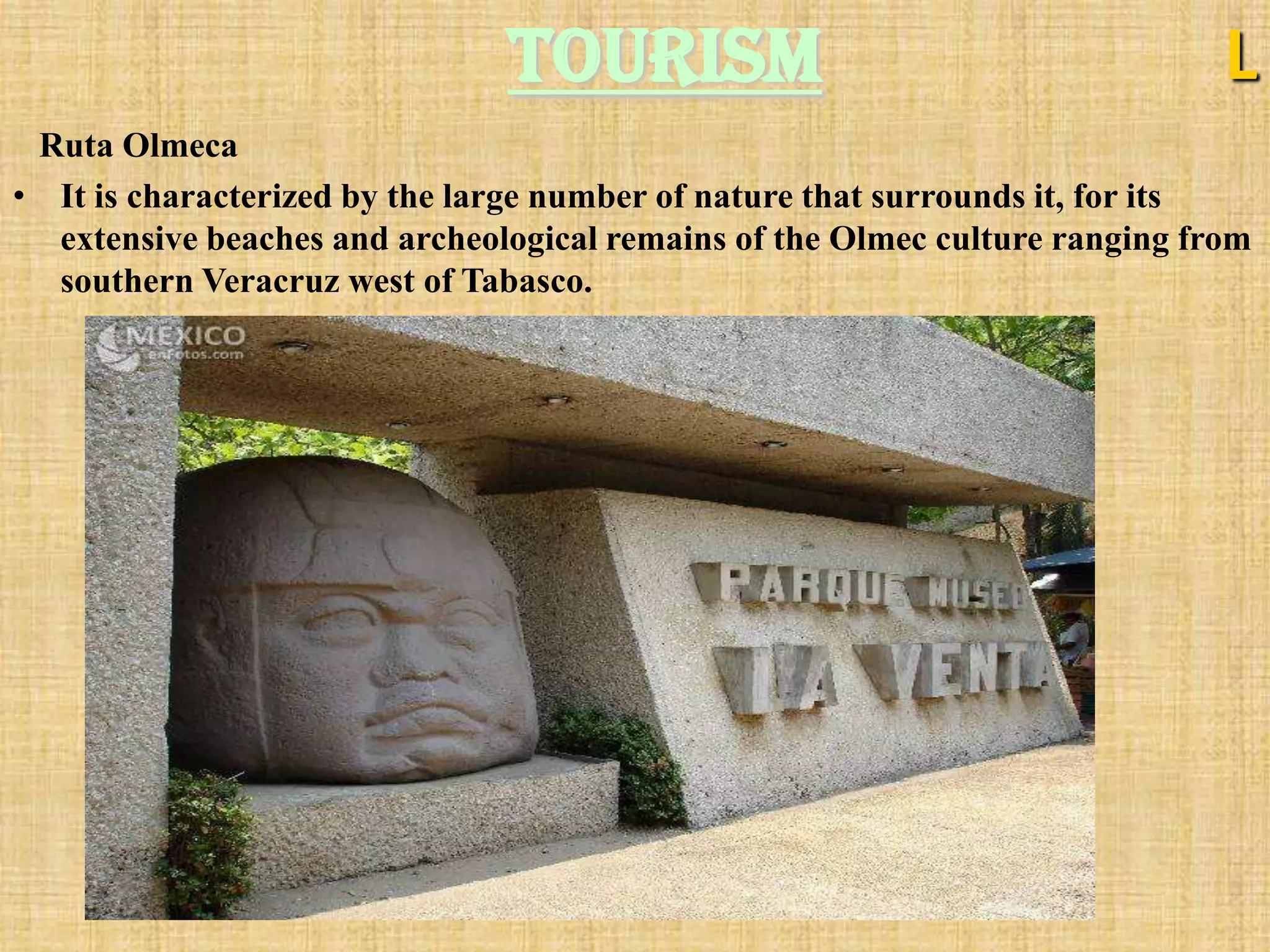
•Olmec artists distinguished themselves
in carving stone.
•Colossal heads carved, zoomorphic and
anthropomorphic sculptures, tombs,
altars with reliefs and huge tombs, and
sculptures that look human.


                                          L
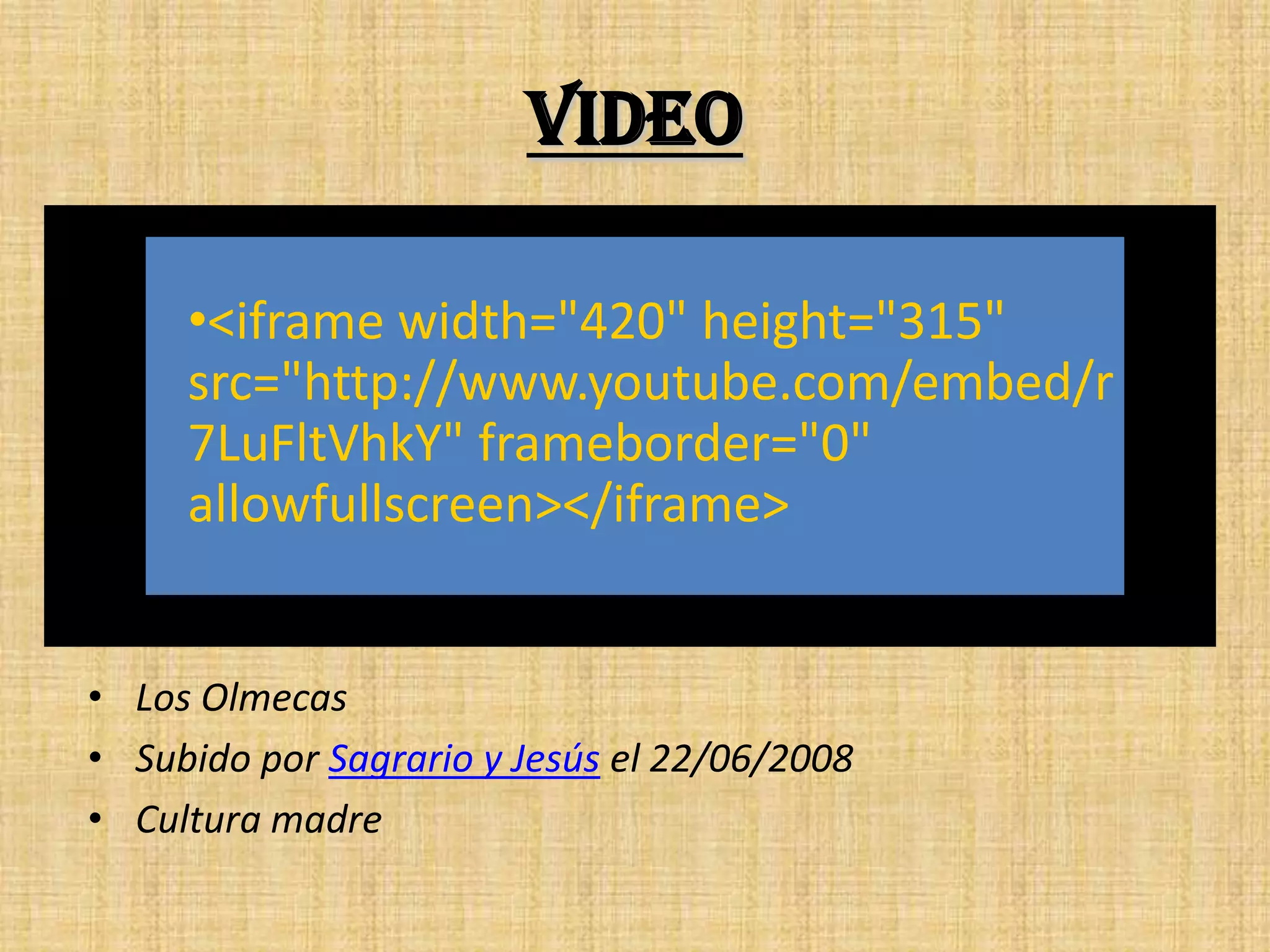
Tourism                                       L
 Ruta Olmeca
• It is characterized by the large number of nature that surrounds it, for its
  extensive beaches and archeological remains of the Olmec culture ranging from
  southern Veracruz west of Tabasco.
Video

     •<iframe width="420" height="315"
     src="http://www.youtube.com/embed/r
     7LuFltVhkY" frameborder="0"
     allowfullscreen></iframe>


• Los Olmecas
• Subido por Sagrario y Jesús el 22/06/2008
• Cultura madre
Bibliography
• "Ruta Olmeca Rutas TurÃ-sticas En México." Ruta Olmeca.
  N.p., n.d. Web. 23 Oct. 2012.
  <http://www.zonaturistica.com/rutas-
  turisticas/ruta_olmeca.html%20%20>.

• "Tres Zapotes, Mexico." Tres Zapotes, Mexico. Ed. Alexander
  Whitaker., N.p., n.d. Web. 23 Oct. 2012. <http://www.ancient-
  wisdom.co.uk/mexicotreszapotes.htm>.

• "Los Olmecas Periodo Preclasico." - Ensayos. N.p., n.d. Web.
  23 Oct. 2012. <http://www.buenastareas.com/ensayos/Los-
  Olmecas-Periodo-Preclasico/715302.html>.

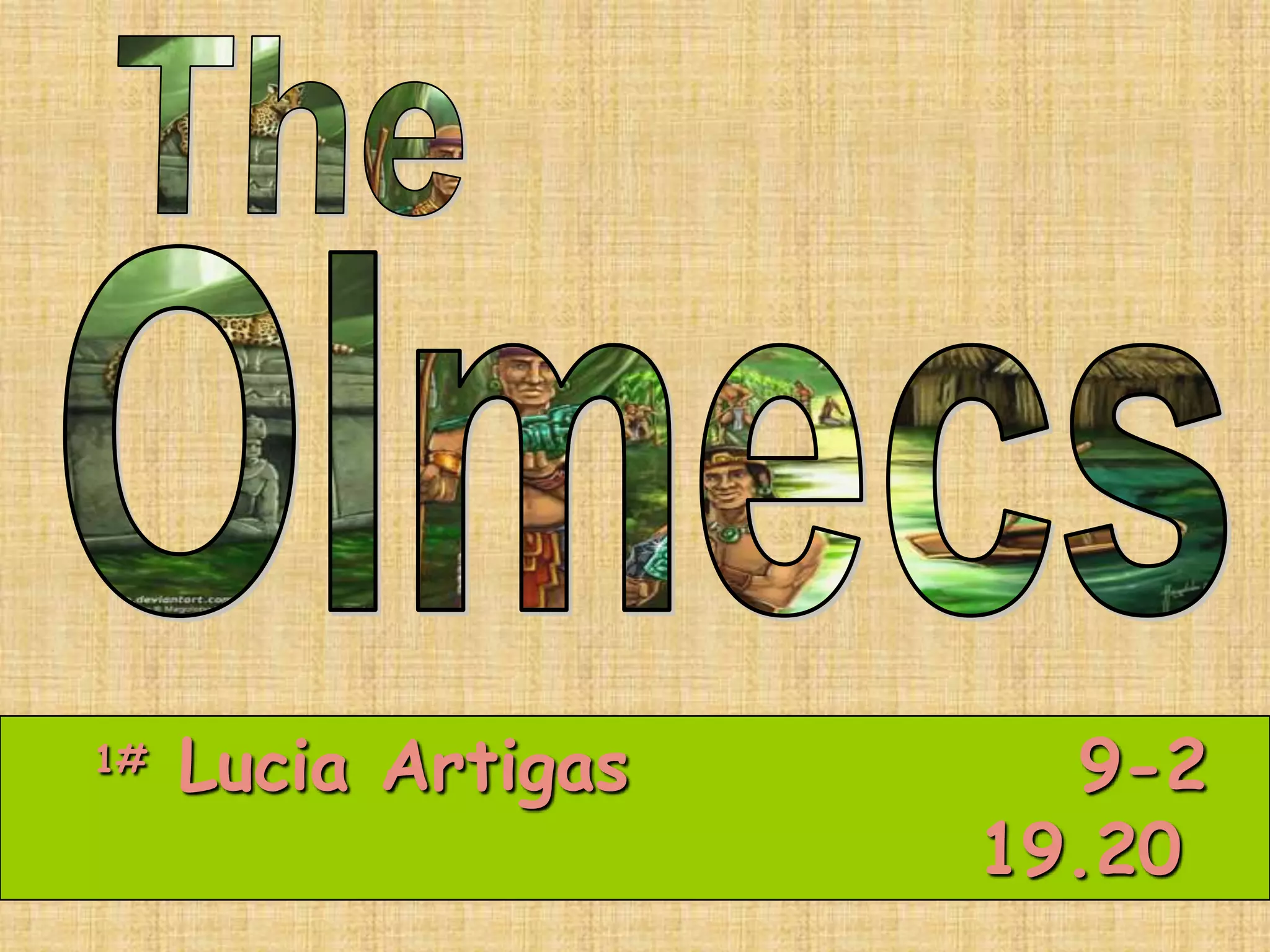
Olmecs

  • 1.
    1# Lucia Artigas 9-2 19.20
  • 2.
    Outline • 1)What isthe Native People Group? – Culture – Customs – Agriculture – Religion • 2) When did they Exist? • 3) When was this famous site created and why? – La Venta How long did it take to complete? – Tres Zapotes – San Lorenzo Where is it located in present day now? • Architecture • Tourism • Video • Bibliography
  • 3.
    Olmec, whose namemeans "people of the rubber country" Rubber is a product of the. Also known as Mesoamerica mother.As the first civilization in the area. Native Group
  • 4.
    Culture •They inventeda system of Vigesimal numbering. •His government was theocratic. •They were the first to build architectural projects. •Watching the sky they could establish a schedule with duration of one year, the lunar month, the agricultural cycle and the dates of religious ceremonies were held.
  • 5.
    Customs • Attire: Menwear loincloths, layers, clay necklaces. The women used a belt tight skirts, turbans, complicated headgear and masks. • The turbans and headdresses are majestic and were used in ceremonies, festivals and even sacrifices.
  • 6.
    agricultur • The plantingsystem was Tala y Roza it was to use better the fertile land. • Tala: Cut trees and vegetation. • Roza: burn the ground to leave a layer of nutrients by the crops harvested after sow. The land is exhausted after two or three stages, which is abandoned and starts again in another area.
  • 7.
    Religion. • Polytheists. • LaVenta, and located in Veracruz, San Lorenzo and Tres Zapotes where they did sacrifices. They believed that life does not end with death. •The most important deity was represented in agriculture. Life was represented by a jaguar "land" and a snake "water".
  • 8.
    • The jaguargod: is the most important god, god of life, represented by an animal half jaguar, half-serpent. •Quetzalcoatl: god of rain, weather and corn. It is represented as a feathered serpent. •Huehueteotl old god, the god of fire.
  • 9.
    Preclásico •In the early pre-classic period in Mesoamerican cultures were established. The Olmec settlement dating from around 1500 BC , Culture declined around 500 B.C.
  • 10.
    archaeological Sites :La Venta, San L Lorenzo, Tres Zapotes •From archaeological evidence it can be inferred that the ceremonial and ritual life among the Olmecs had to be as intense as those of other cultural groups in Mesoamerica consolidated.
  • 11.
    La Venta: • CeremonialOlmec Centre. • La Venta was inhabited by people of the Olmec Culture from 1200 BC until 400 BC after which the site appears to have been abandoned. It is believed to have been an important civic and ceremonial centre. • Today, the entire southern end of the site is covered by a petroleum refinery and has been largely demolished, making further excavations difficult or impossible.
  • 12.
    San Lorenzo: • EarlyOlmec culture had emerged centred around the San Lorenzo Tenochtitlán site near the coast in southeast Veracruz. They were the first Mesoamerican civilization and laid many of the foundations for the civilizations that followed. Among other "firsts", there is evidence that the Olmec practiced ritual bloodletting and played the Mesoamerican ballgame, hallmarks of nearly all subsequent Mesoamerican societies. • San Lorenzo is best known today for the colossal Olmec stone heads unearthed there, the greatest of which weighs onwards of 40 tons (3) and is 3 metres high.
  • 13.
    Tres Zapotes: • (OlmecCapital). • Located on the slopes of the Tuxtla mountains, this is one of the most important Olmec cities, and the first to be written about in 1868, along with the first reports of colossal heads. Tres Zapotes is sometimes referred to as the third Olmec Capital, as it followed on the demise of both La Venta and San Lorenzo. • Of particular interest to archaeology is that the site was continuously inhabited for over 2000 years (1)
  • 14.
    architecture • The Olmecarchitecture is to build platforms around a courtyard, which houses and temples were built •Olmec artists distinguished themselves in carving stone. •Colossal heads carved, zoomorphic and anthropomorphic sculptures, tombs, altars with reliefs and huge tombs, and sculptures that look human. L
  • 15.
    Tourism L Ruta Olmeca • It is characterized by the large number of nature that surrounds it, for its extensive beaches and archeological remains of the Olmec culture ranging from southern Veracruz west of Tabasco.
  • 16.
    Video •<iframe width="420" height="315" src="http://www.youtube.com/embed/r 7LuFltVhkY" frameborder="0" allowfullscreen></iframe> • Los Olmecas • Subido por Sagrario y Jesús el 22/06/2008 • Cultura madre
  • 17.
    Bibliography • "Ruta OlmecaRutas TurÃ-sticas En México." Ruta Olmeca. N.p., n.d. Web. 23 Oct. 2012. <http://www.zonaturistica.com/rutas- turisticas/ruta_olmeca.html%20%20>. • "Tres Zapotes, Mexico." Tres Zapotes, Mexico. Ed. Alexander Whitaker., N.p., n.d. Web. 23 Oct. 2012. <http://www.ancient- wisdom.co.uk/mexicotreszapotes.htm>. • "Los Olmecas Periodo Preclasico." - Ensayos. N.p., n.d. Web. 23 Oct. 2012. <http://www.buenastareas.com/ensayos/Los- Olmecas-Periodo-Preclasico/715302.html>.