THERMO CHEMICAL CONVERSION
 Biomass origin - Resources – Biomass
estimation.
 Thermo chemical conversion – Biological
conversion, Chemical conversion
 Hydrolysis & hydrogenation, solvolysis,
biocrude, biodiesel power generation gasifier,
biogas, integrated gasification.
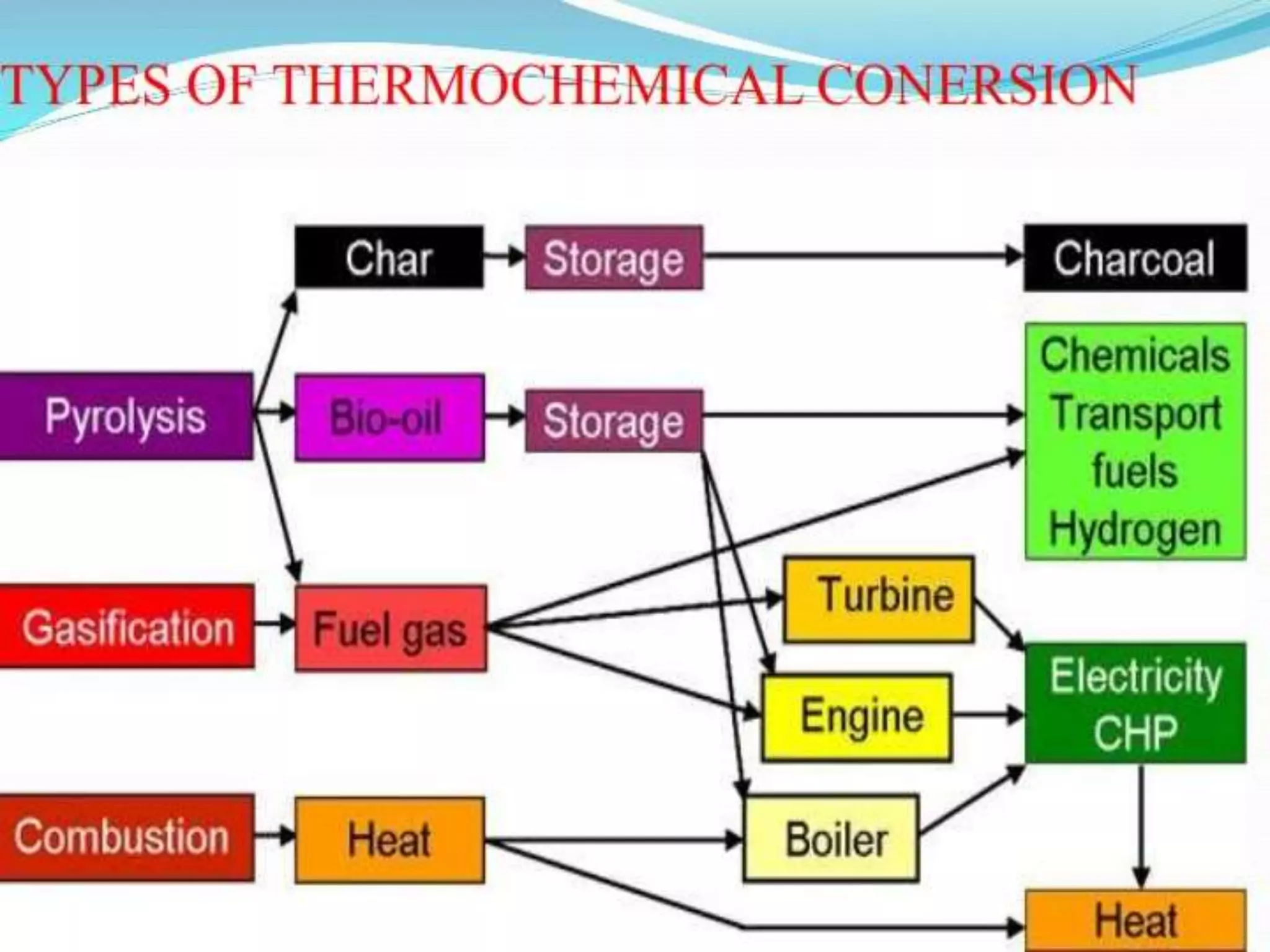
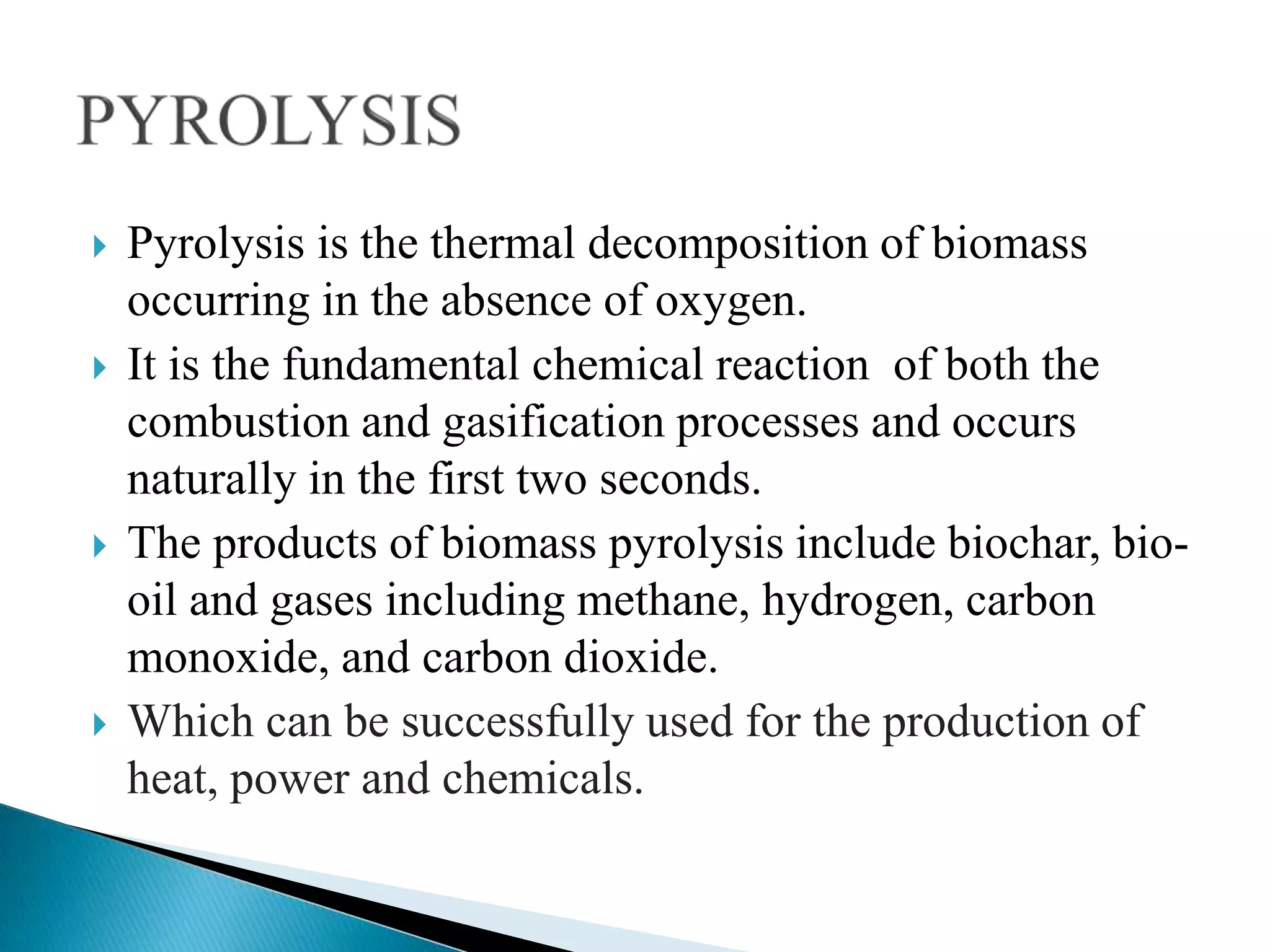
 Pyrolysis is the thermal decomposition of biomass
occurring in the absence of oxygen.
 It is the fundamental chemical reaction of both the
combustion and gasification processes and occurs
naturally in the first two seconds.
 The products of biomass pyrolysis include biochar, bio-
oil and gases including methane, hydrogen, carbon
monoxide, and carbon dioxide.
 Which can be successfully used for the production of
heat, power and chemicals.
 Depending on the thermal environment and the final
temperature, pyrolysis will yield mainly biochar at low
temperatures, less than 4500C, when the heating rate is
quite slow
 Mainly gases at high temperatures, greater than 8000C,
with rapid heating rates.
 At an intermediate temperature and under relatively
high heating rates, the main product is bio-oil.
 Pyrolysis offers a flexible and attractive way of
converting solid biomass into an easily stored and
transported liquid
 The efficiency and nature of the pyrolysis process is
dependent on the particle size of feedstocks.
 Most of the pyrolysis technologies can only process
small particles to a maximum of 2 mm keeping in
view the need for rapid heat transfer through the
particle.
 The demand for small particle size means that the
feedstock has to be size-reduced before being used
for pyrolysis.
 Pyrolysis processes can be categorized as slow
pyrolysis or fast pyrolysis.
 Fast pyrolysis is currently the most widely used
pyrolysis system.
 Slow pyrolysis takes several hours to complete and
results in biochar as the main product.
 Fast pyrolysis yields 60% bio-oil and takes seconds for
complete pyrolysis. In addition, it gives 20% biochar
and 20% syngas.
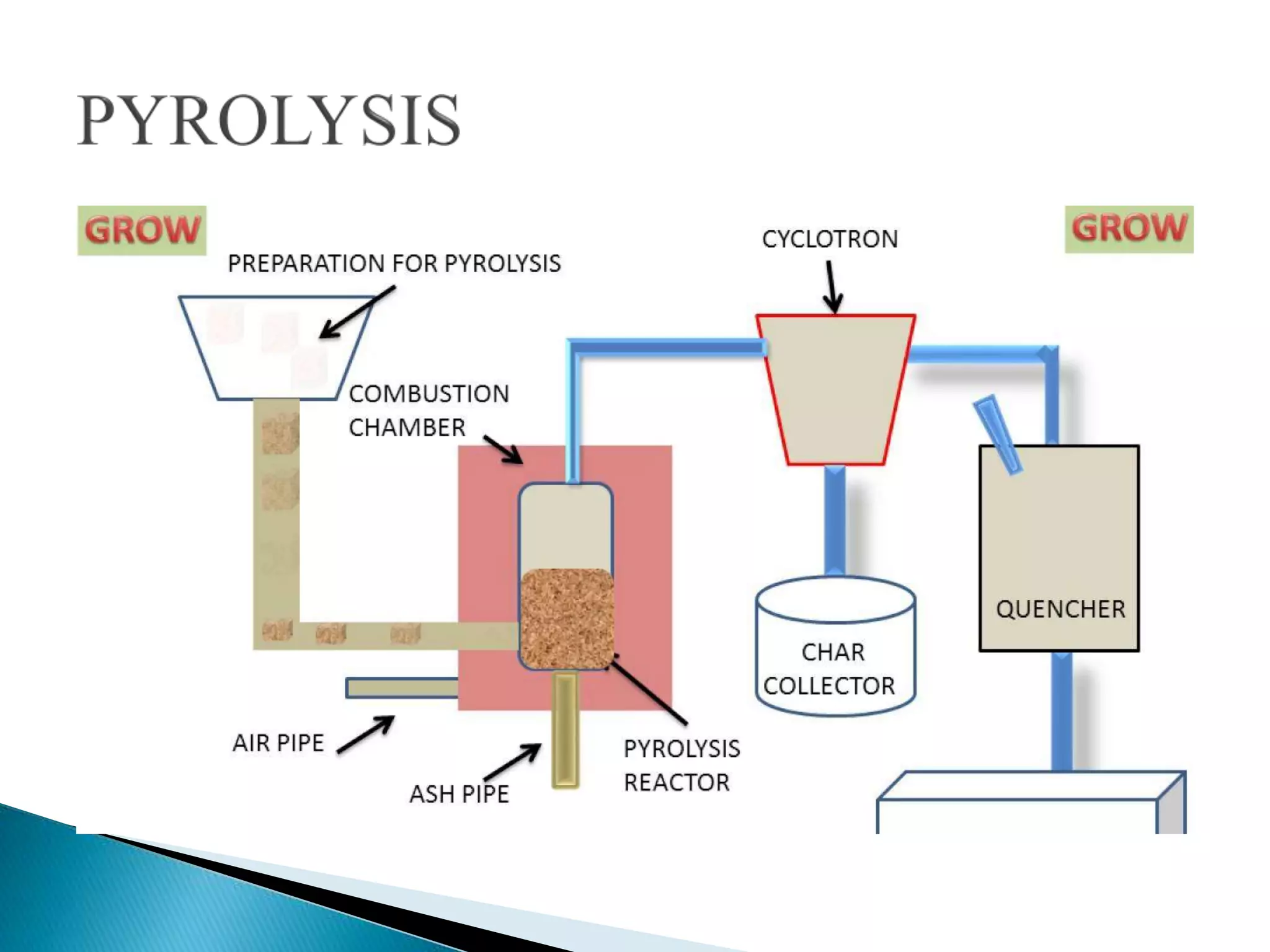
 Very high heating and heat transfer rates, which require
a finely ground feed.
 Carefully controlled reaction temperature of around
500oC in the vapour phase
 Residence time of pyrolysis vapours in the reactor less
than 1 sec
 Quenching (rapid cooling) of the pyrolysis vapours to
give the bio-oil product.
 Biochar can increase the available nutrients for plant
growth, water retention and reduce the amount of
fertilizer by preventing the leaching of nutrients out of
the soil.
 Biochar reduces methane and nitrous oxide emissions
from soil, thus further reducing GHGs emissions.
 Biochar can be utilized in many applications as a
replacement for other biomass energy systems.
 Biochar can be used as a soil amendment to increase
plant growth yield.
 Produces few air emissions due to limited use of
oxygen
 Replaces coal and natural gas as viable fuel sources,
causing a reduction in climate change
 Produces useful products for multiple applications
 Can be easily implemented in combined heat and
power
 More efficient than the Thermal power plant (70% vs.
40%)
 Pyrolysis plants are flexible and easy to operate
because they are modular.
 The pyrolysis process is complex and requires high
operational and investment costs.
 Further, an air purification installation is necessary in
order to further treat flue gases from the pyrolysis.
 Produced ashes contain a high heavy metal content,
depending on the concentrations in the to-be-processed
flow.
 These ashes are regarded as dangerous waste and must
also be disposed of.
Thermo chemical conversion

Thermo chemical conversion

  • 1.
  • 2.
     Biomass origin- Resources – Biomass estimation.  Thermo chemical conversion – Biological conversion, Chemical conversion  Hydrolysis & hydrogenation, solvolysis, biocrude, biodiesel power generation gasifier, biogas, integrated gasification.
  • 26.
     Pyrolysis isthe thermal decomposition of biomass occurring in the absence of oxygen.  It is the fundamental chemical reaction of both the combustion and gasification processes and occurs naturally in the first two seconds.  The products of biomass pyrolysis include biochar, bio- oil and gases including methane, hydrogen, carbon monoxide, and carbon dioxide.  Which can be successfully used for the production of heat, power and chemicals.
  • 27.
     Depending onthe thermal environment and the final temperature, pyrolysis will yield mainly biochar at low temperatures, less than 4500C, when the heating rate is quite slow  Mainly gases at high temperatures, greater than 8000C, with rapid heating rates.  At an intermediate temperature and under relatively high heating rates, the main product is bio-oil.  Pyrolysis offers a flexible and attractive way of converting solid biomass into an easily stored and transported liquid
  • 29.
     The efficiencyand nature of the pyrolysis process is dependent on the particle size of feedstocks.  Most of the pyrolysis technologies can only process small particles to a maximum of 2 mm keeping in view the need for rapid heat transfer through the particle.  The demand for small particle size means that the feedstock has to be size-reduced before being used for pyrolysis.
  • 30.
     Pyrolysis processescan be categorized as slow pyrolysis or fast pyrolysis.  Fast pyrolysis is currently the most widely used pyrolysis system.  Slow pyrolysis takes several hours to complete and results in biochar as the main product.  Fast pyrolysis yields 60% bio-oil and takes seconds for complete pyrolysis. In addition, it gives 20% biochar and 20% syngas.
  • 31.
     Very highheating and heat transfer rates, which require a finely ground feed.  Carefully controlled reaction temperature of around 500oC in the vapour phase  Residence time of pyrolysis vapours in the reactor less than 1 sec  Quenching (rapid cooling) of the pyrolysis vapours to give the bio-oil product.
  • 32.
     Biochar canincrease the available nutrients for plant growth, water retention and reduce the amount of fertilizer by preventing the leaching of nutrients out of the soil.  Biochar reduces methane and nitrous oxide emissions from soil, thus further reducing GHGs emissions.  Biochar can be utilized in many applications as a replacement for other biomass energy systems.  Biochar can be used as a soil amendment to increase plant growth yield.
  • 33.
     Produces fewair emissions due to limited use of oxygen  Replaces coal and natural gas as viable fuel sources, causing a reduction in climate change  Produces useful products for multiple applications  Can be easily implemented in combined heat and power  More efficient than the Thermal power plant (70% vs. 40%)  Pyrolysis plants are flexible and easy to operate because they are modular.
  • 34.
     The pyrolysisprocess is complex and requires high operational and investment costs.  Further, an air purification installation is necessary in order to further treat flue gases from the pyrolysis.  Produced ashes contain a high heavy metal content, depending on the concentrations in the to-be-processed flow.  These ashes are regarded as dangerous waste and must also be disposed of.