NCES
BIOMASS ENERGY AND BIOMASS
CONVERSION
PRESENTED BY: MUNIB MUNIR
ENTRY NO: 17-MRE-007
TEACHER INCHARGE: DR.VINEET TYAGI
CONTENTS
• INTRODUCTION TO BIOMASS
• PRODUCTION OF BIOMASS
• BIOMASS ENERGY CONVERSION
• DIRECT COMBUSTION
• THERMO-CHEMICAL CONVERSION
• BIO-CHEMICAL CONVERSION
• PROSPECTS OF BIOMASS IN INDIA
• ADVANTAGES OF BIOMASS
• DISADVANTAGES OF BIOMASS
• REFERENCES
INTRODUCTION TO BIOMASS
• The organic material from plants , microorganisms grown on
water , in the algae and their derivatives are called biomass.
• The energy derived from biomass is called bioenergy.
• It is a renewable source of energy.
• It also include organic matter such as animal wastes,
municipal wastes etc.
• Photosynthesis process is primarily responsible for generation
of biomass energy.
PRODUCTION OF BIOMASS
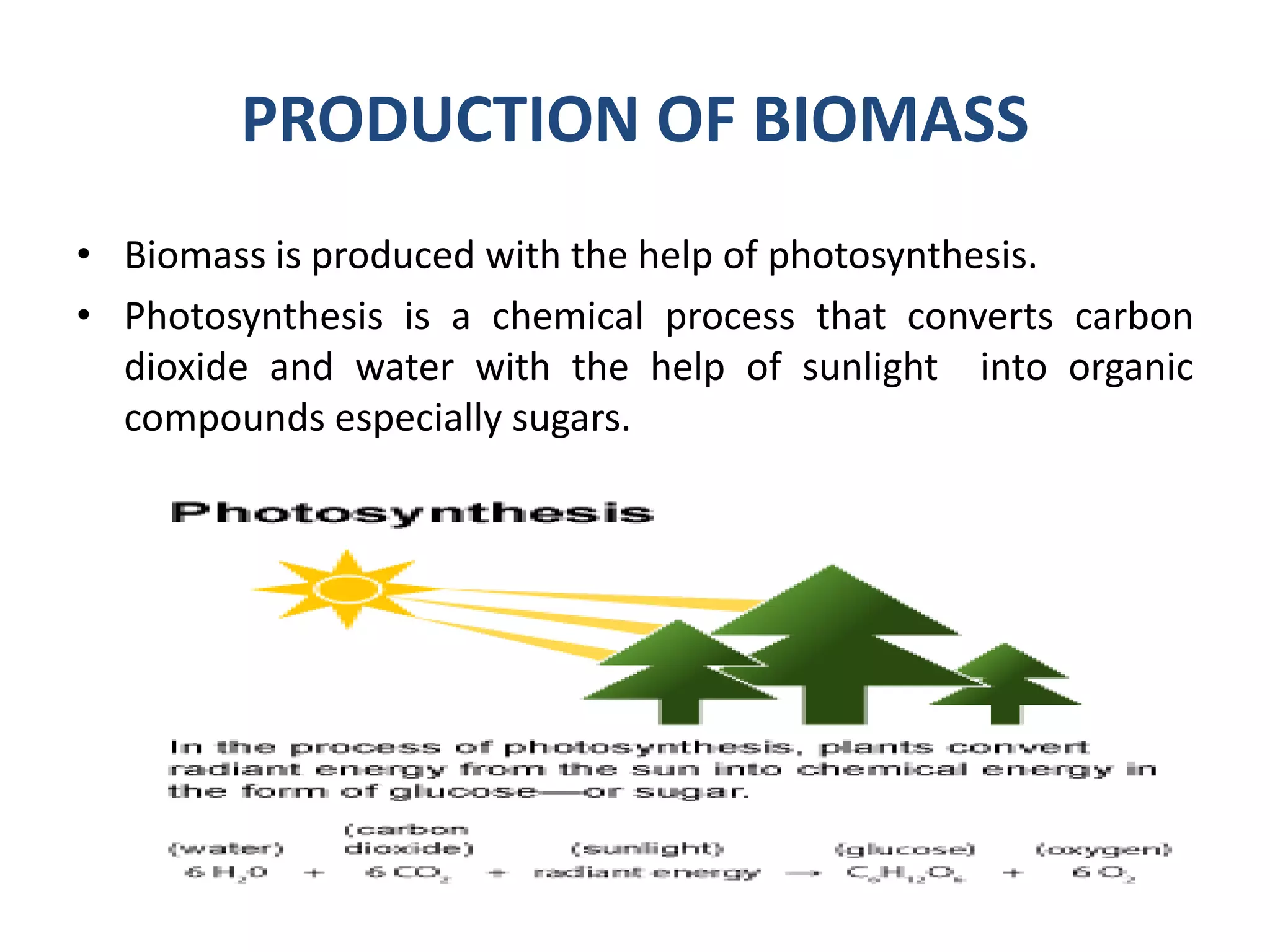
• Biomass is produced with the help of photosynthesis.
• Photosynthesis is a chemical process that converts carbon
dioxide and water with the help of sunlight into organic
compounds especially sugars.
BIOMASS ENERGY CONVERSION
• It is a technique to convert biomass resources into light, heat
and fuels.
• Biomass energy conversion techniques can be grouped as :
• Direct combustion
• thermo-chemical conversion
• Bio-chemical conversion
DIRECT COMBUSTION
• The combustion of biomass in presence of oxygen to produce
heat and by products is called direct combustion.
• The heat produced can be used for generating electricity, for
industrial processes, space heating, cooking etc.
• The complete combustion of biomass into ash is called
incineration.
PYROLYSIS
• Pyrolysis is a process of subjecting a biomass feedstock to high
temperatures (greater than 430 °C) under pressurized
environments and at low or no oxygen levels.
• Pyrolysis can process all types of organic materials including
rubber and plastics.
• In the process, biomass undergoes partial combustion.
• Processes of pyrolysis result in liquid fuels, gaseous fuels and
a solid residue called char, or biochar.
GASIFICATION
• Gasification is the process of burning biomass under restricted
air supply and temp of 1000°C or more for the generation of
producer gas or syn gas.
• Producer gas is a mixture of gases.
• The main constituents are Co,H,CH₄,CO₂,and N₂.
• Producer gas from biomass consists of following four
processes.
1.Drying.
2.pyrolysis.
3.oxidation.
4.Reduction
FOUR REACTIONS IN GASIFICATION
BIO-CHEMICAL CONVERSION
• Bio-chemical conversion of biomass involves use of bacteria,
micro-organisms and enzymes to breakdown biomass into
gaseous or liquid fuels such as bioethanol and biogas
• The two major bio-chemical processes are:
1.Fermentation
2.Anaerobic digestion.
FERMENTATION
• Fermentation is the decomposition in absence of air of simple
hexose sugars in aqueous solution by action of enzyme
present in yeast, in acidic conditions.
• The products are ethanol and carbon dioxide.
• The three major steps involved are pretreatment, enzymatic
hydrolysis, and fermentation.
ANAEROBIC DIGESTION
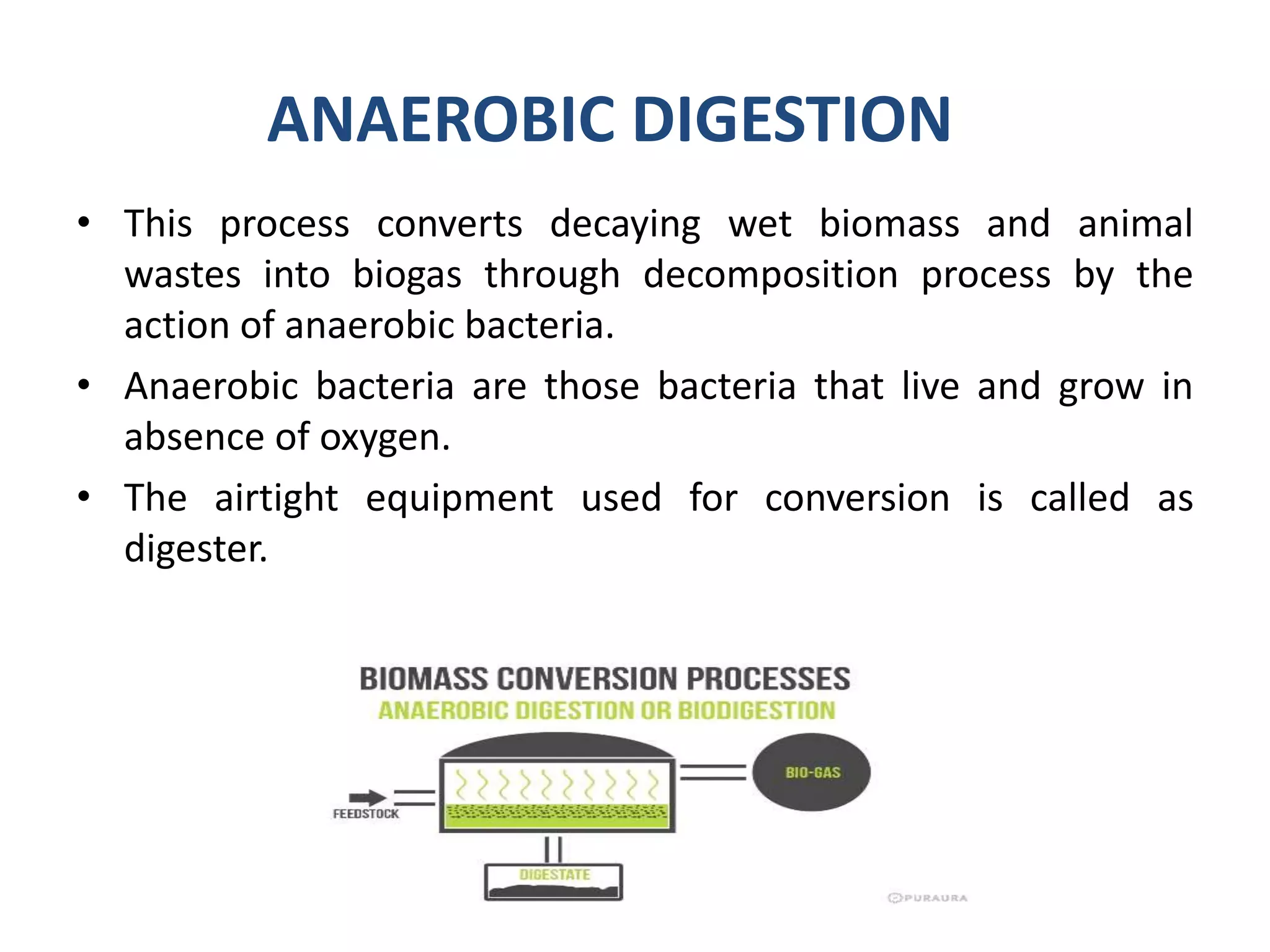
• This process converts decaying wet biomass and animal
wastes into biogas through decomposition process by the
action of anaerobic bacteria.
• Anaerobic bacteria are those bacteria that live and grow in
absence of oxygen.
• The airtight equipment used for conversion is called as
digester.
Contd.
• The biogas is mainly a mixture of methane(60 %) and carbon
dioxide(40%).
• The residual matter in the digester can be used in soil
amendment and as fertilizer.
• The process proceeds in 4 stages:
1.hydrolysis.
2.Acidogenesis.
3.Acetogenesis.
4.Methanogenesis.
BIOMASS POTENTIAL IN INDIA
ADVANTAGES OF BIOMASS
• It is a renewable form of energy.
• It is carbon neutral.
• It is widely available.
• It is cheaper compared to fossil fuels.
• It reduces amount of waste in landfills.
• It can be used to create different products.
DISADVANTAGES OF BIOMASS
• It is not entirely clean.
• Risk of deforestation.
• It requires a great deal of water.
• It is inefficient as compared to fossil fuels.
• Biogas plants occupy large areas thus cannot be used in urban
areas.
REFERENCES
• Non conventional energy resources by B H Khan.
• Technology information, forecasting and assessment council
• Ministry of new and renewable energy.
• Paper on Renewable biomass energy by Nisha Sriram,
Member, IEEE and Mohammad Shahidehpour, Fellow, IEEE
THANK YOU

BIOMASS ENERGY AND BIOMASS CONVERSION

  • 1.
    NCES BIOMASS ENERGY ANDBIOMASS CONVERSION PRESENTED BY: MUNIB MUNIR ENTRY NO: 17-MRE-007 TEACHER INCHARGE: DR.VINEET TYAGI
  • 2.
    CONTENTS • INTRODUCTION TOBIOMASS • PRODUCTION OF BIOMASS • BIOMASS ENERGY CONVERSION • DIRECT COMBUSTION • THERMO-CHEMICAL CONVERSION • BIO-CHEMICAL CONVERSION • PROSPECTS OF BIOMASS IN INDIA • ADVANTAGES OF BIOMASS • DISADVANTAGES OF BIOMASS • REFERENCES
  • 3.
    INTRODUCTION TO BIOMASS •The organic material from plants , microorganisms grown on water , in the algae and their derivatives are called biomass. • The energy derived from biomass is called bioenergy. • It is a renewable source of energy. • It also include organic matter such as animal wastes, municipal wastes etc. • Photosynthesis process is primarily responsible for generation of biomass energy.
  • 6.
    PRODUCTION OF BIOMASS •Biomass is produced with the help of photosynthesis. • Photosynthesis is a chemical process that converts carbon dioxide and water with the help of sunlight into organic compounds especially sugars.
  • 8.
    BIOMASS ENERGY CONVERSION •It is a technique to convert biomass resources into light, heat and fuels. • Biomass energy conversion techniques can be grouped as : • Direct combustion • thermo-chemical conversion • Bio-chemical conversion
  • 9.
    DIRECT COMBUSTION • Thecombustion of biomass in presence of oxygen to produce heat and by products is called direct combustion. • The heat produced can be used for generating electricity, for industrial processes, space heating, cooking etc. • The complete combustion of biomass into ash is called incineration.
  • 11.
    PYROLYSIS • Pyrolysis isa process of subjecting a biomass feedstock to high temperatures (greater than 430 °C) under pressurized environments and at low or no oxygen levels. • Pyrolysis can process all types of organic materials including rubber and plastics. • In the process, biomass undergoes partial combustion. • Processes of pyrolysis result in liquid fuels, gaseous fuels and a solid residue called char, or biochar.
  • 14.
    GASIFICATION • Gasification isthe process of burning biomass under restricted air supply and temp of 1000°C or more for the generation of producer gas or syn gas. • Producer gas is a mixture of gases. • The main constituents are Co,H,CH₄,CO₂,and N₂. • Producer gas from biomass consists of following four processes. 1.Drying. 2.pyrolysis. 3.oxidation. 4.Reduction
  • 16.
    FOUR REACTIONS INGASIFICATION
  • 17.
    BIO-CHEMICAL CONVERSION • Bio-chemicalconversion of biomass involves use of bacteria, micro-organisms and enzymes to breakdown biomass into gaseous or liquid fuels such as bioethanol and biogas • The two major bio-chemical processes are: 1.Fermentation 2.Anaerobic digestion.
  • 18.
    FERMENTATION • Fermentation isthe decomposition in absence of air of simple hexose sugars in aqueous solution by action of enzyme present in yeast, in acidic conditions. • The products are ethanol and carbon dioxide. • The three major steps involved are pretreatment, enzymatic hydrolysis, and fermentation.
  • 20.
    ANAEROBIC DIGESTION • Thisprocess converts decaying wet biomass and animal wastes into biogas through decomposition process by the action of anaerobic bacteria. • Anaerobic bacteria are those bacteria that live and grow in absence of oxygen. • The airtight equipment used for conversion is called as digester.
  • 21.
    Contd. • The biogasis mainly a mixture of methane(60 %) and carbon dioxide(40%). • The residual matter in the digester can be used in soil amendment and as fertilizer. • The process proceeds in 4 stages: 1.hydrolysis. 2.Acidogenesis. 3.Acetogenesis. 4.Methanogenesis.
  • 23.
  • 26.
    ADVANTAGES OF BIOMASS •It is a renewable form of energy. • It is carbon neutral. • It is widely available. • It is cheaper compared to fossil fuels. • It reduces amount of waste in landfills. • It can be used to create different products.
  • 27.
    DISADVANTAGES OF BIOMASS •It is not entirely clean. • Risk of deforestation. • It requires a great deal of water. • It is inefficient as compared to fossil fuels. • Biogas plants occupy large areas thus cannot be used in urban areas.
  • 28.
    REFERENCES • Non conventionalenergy resources by B H Khan. • Technology information, forecasting and assessment council • Ministry of new and renewable energy. • Paper on Renewable biomass energy by Nisha Sriram, Member, IEEE and Mohammad Shahidehpour, Fellow, IEEE
  • 29.