
Contents
Patten of Evolution
 Evolution
 Convergent Evolution
 Analogous structures
 Divergent Evolution
 Homologous structures
 Parallel Evolution
 Coevolution
 Types of Evolution
• Macroevolution
• Microevolution
 Importance of pattern of evolution
Evolution
“Evolution, or change over time, is the process by which modern organisms have
descended from ancient organisms. ”
 Evolution also explains how modern organisms have descended from ancient
organisms.
 Evolution is the Process by which organisms pass on traits from generation to
generation.
 Explains the origin of new species and diversity.
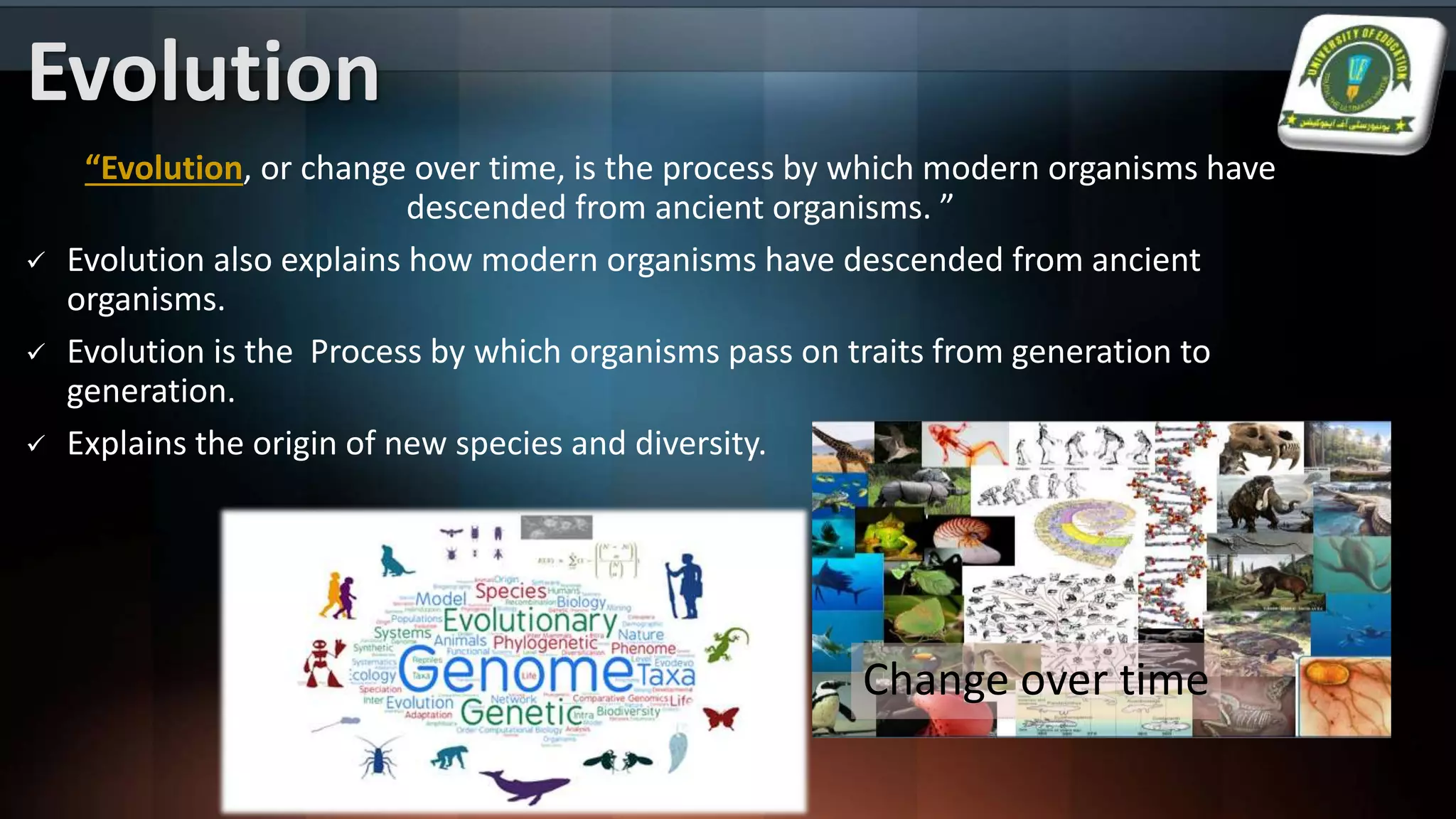
Change over time
PATTERN OF EVOLUTION
Convergent Evolution
 In evolutionary biology, convergent evolution is
the process whereby organisms not closely related
, independently evolve similar traits as a result of
having to adapt to similar environments or
ecological niches.
 Animals come from different ancestral lineages
 Caused by environmental changes
 Also called convergence
Examples
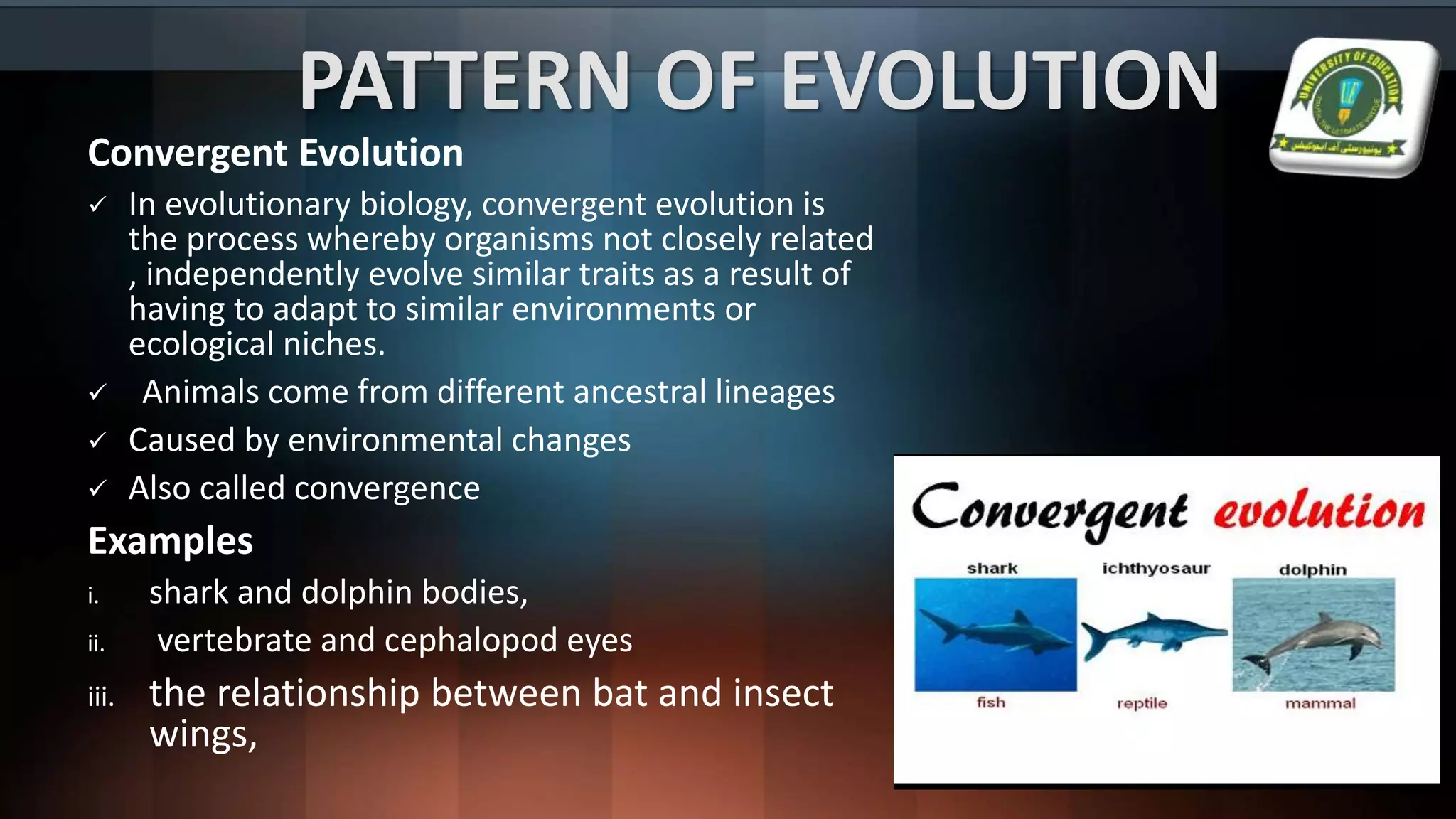
i. shark and dolphin bodies,
ii. vertebrate and cephalopod eyes
iii. the relationship between bat and insect
wings,
Analogous Structures
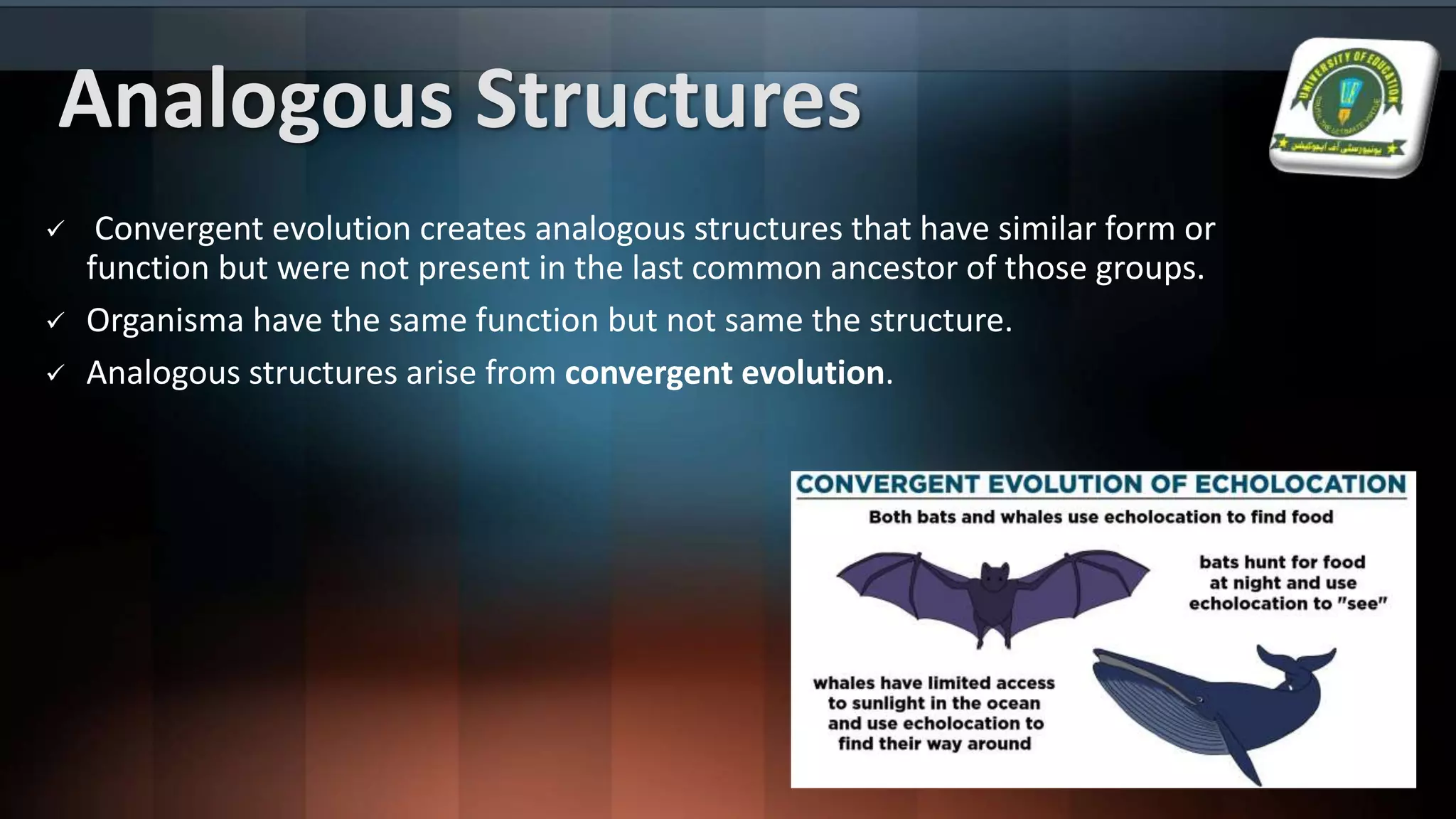
 Convergent evolution creates analogous structures that have similar form or
function but were not present in the last common ancestor of those groups.
 Organisma have the same function but not same the structure.
 Analogous structures arise from convergent evolution.
Divergent Evolution
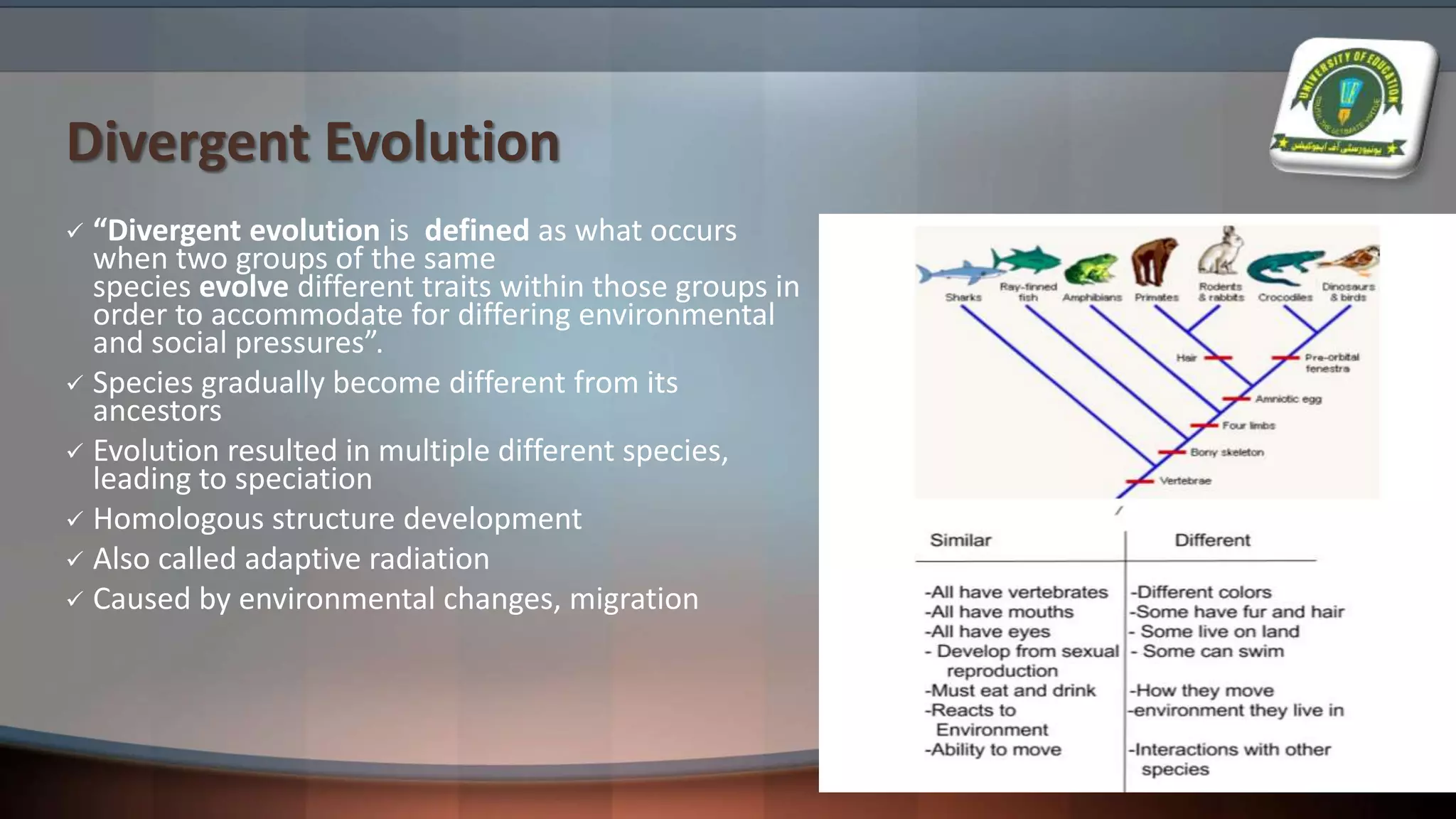
 “Divergent evolution is defined as what occurs
when two groups of the same
species evolve different traits within those groups in
order to accommodate for differing environmental
and social pressures”.
 Species gradually become different from its
ancestors
 Evolution resulted in multiple different species,
leading to speciation
 Homologous structure development
 Also called adaptive radiation
 Caused by environmental changes, migration
Examples of Divergent Evolution
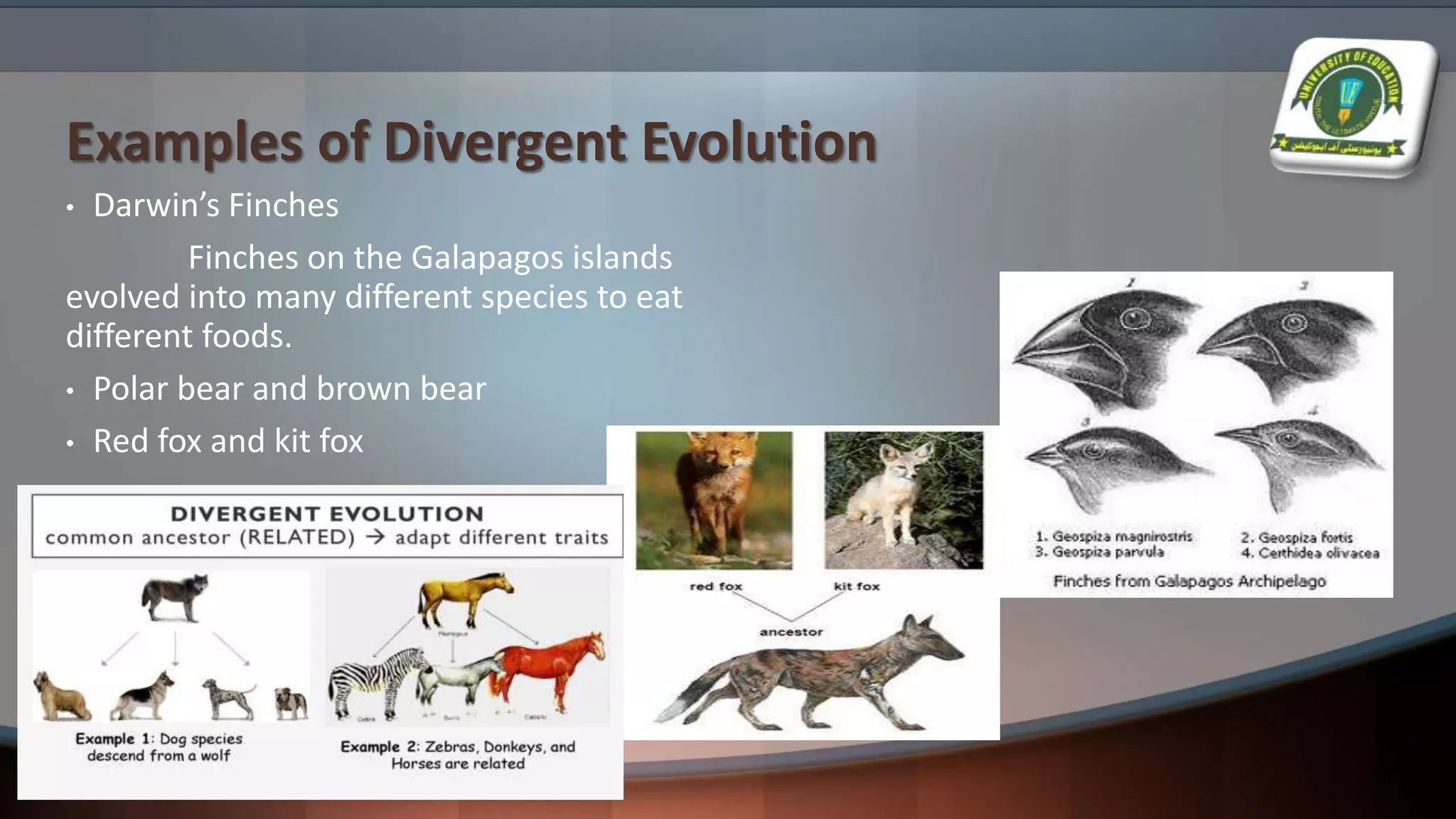
• Darwin’s Finches
Finches on the Galapagos islands
evolved into many different species to eat
different foods.
• Polar bear and brown bear
• Red fox and kit fox
Homologous Structue
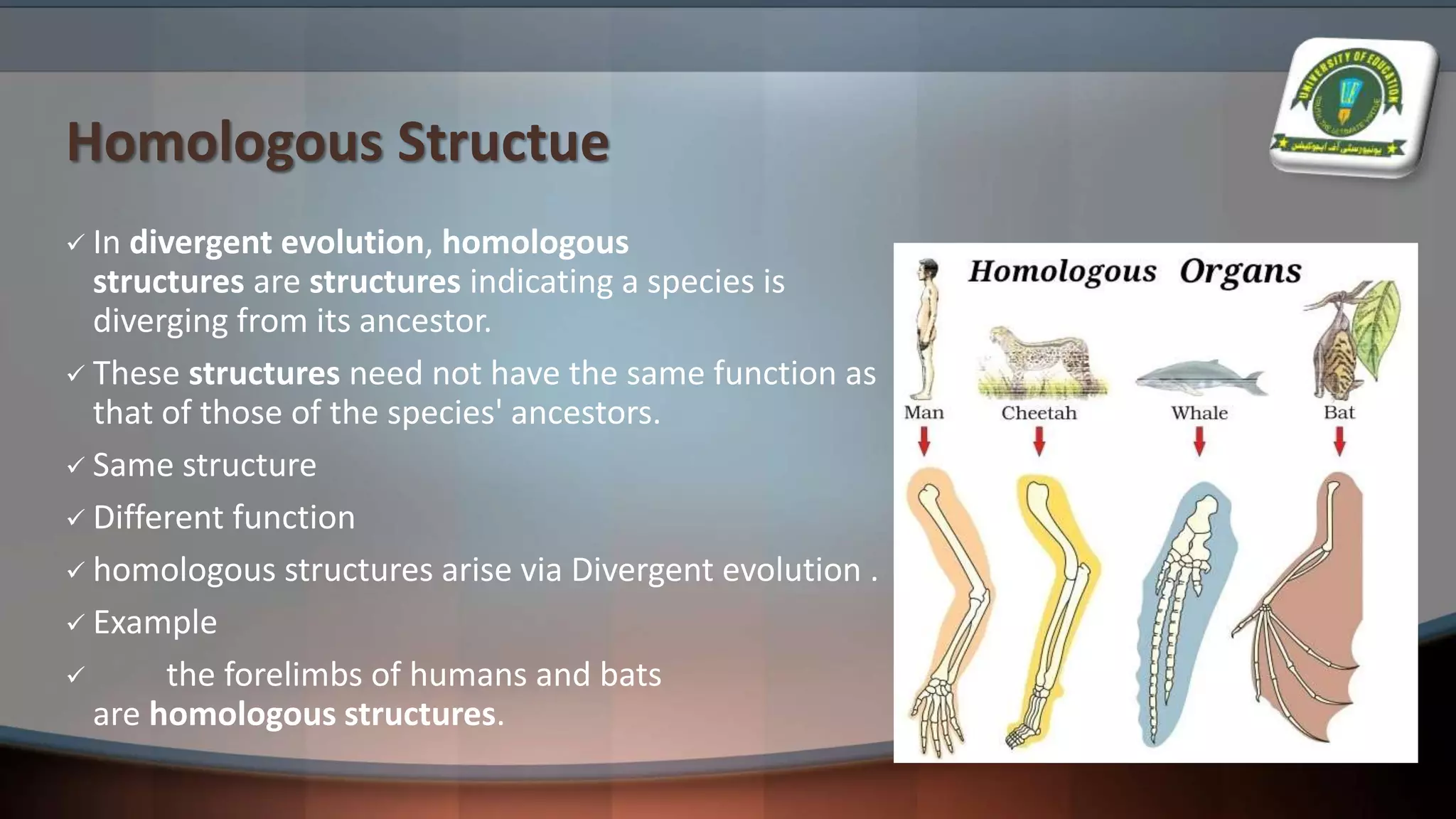
 In divergent evolution, homologous
structures are structures indicating a species is
diverging from its ancestor.
 These structures need not have the same function as
that of those of the species' ancestors.
 Same structure
 Different function
 homologous structures arise via Divergent evolution .
 Example
 the forelimbs of humans and bats
are homologous structures.
Parallel Evolution
 Some species evolve without converging on similar traits
or diverging to different traits. These species undergo
change, but they maintain a constant level of similarity to
each other. This process is known as parallel evolution.
 Parallel evolution occurs when two species evolve
independently of each other, maintaining the same level
of similarity.
 Parallel evolution usually occurs between unrelated
species that do not occupy the same or similar niches in a
given habitat
Examples
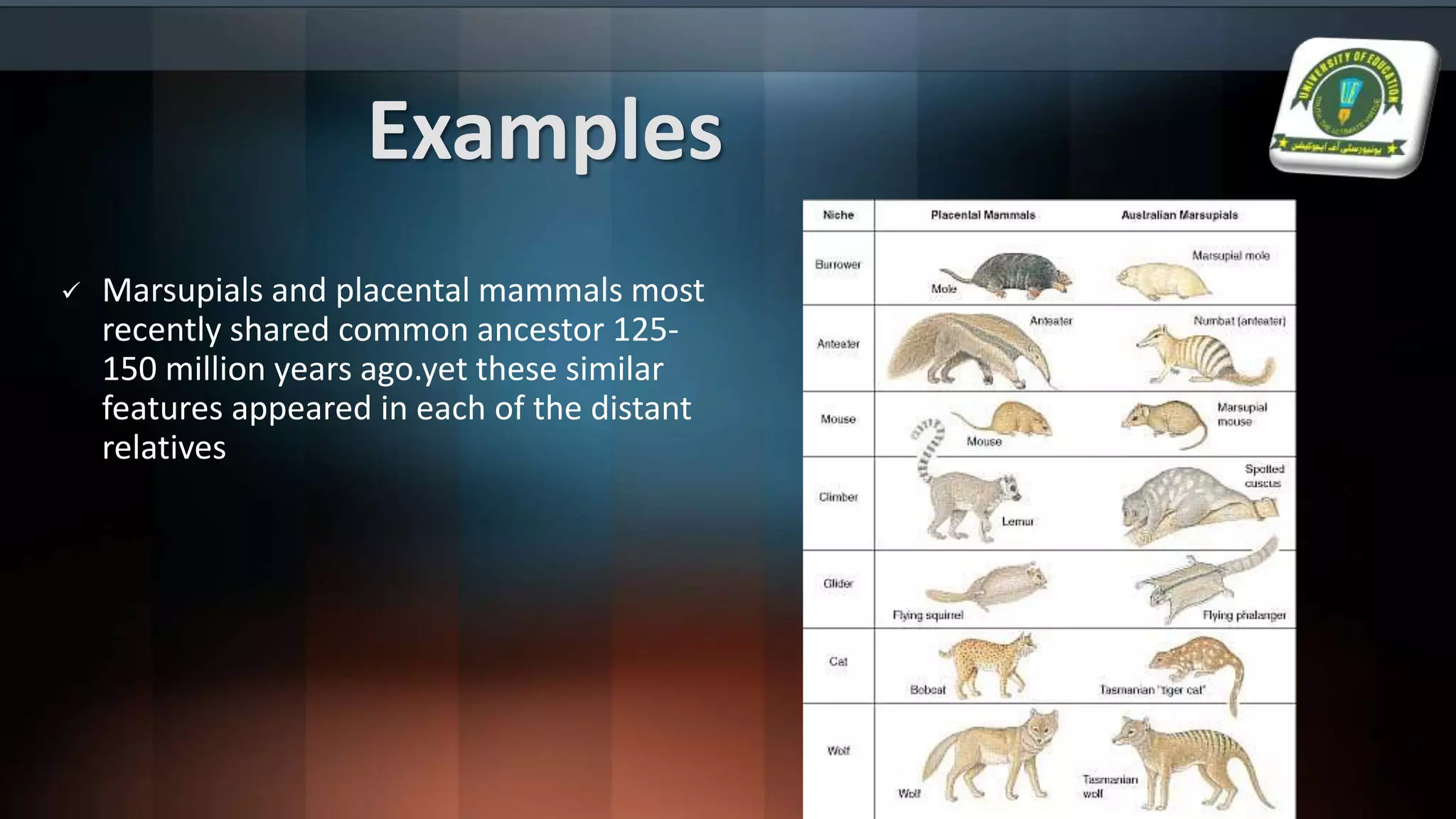
 Marsupials and placental mammals most
recently shared common ancestor 125-
150 million years ago.yet these similar
features appeared in each of the distant
relatives
Parallel Evolution
Coevolution
 “The Process By Which Two Species Evolve In
Response To Changes In Each Other”
 Species that live in a close relationship with each
other, such as a predator-prey or symbiotic
relationship, often evolve adaptations to each
other in a process called coevolution.
Types of Coevolution
i. Parasite –host coevolution
ii. Mutualistic/Beneficial coevolution
iii. Predatory/prey coevolution
Examples of Coevolution
 Mutualistic/Beneficial coevolution
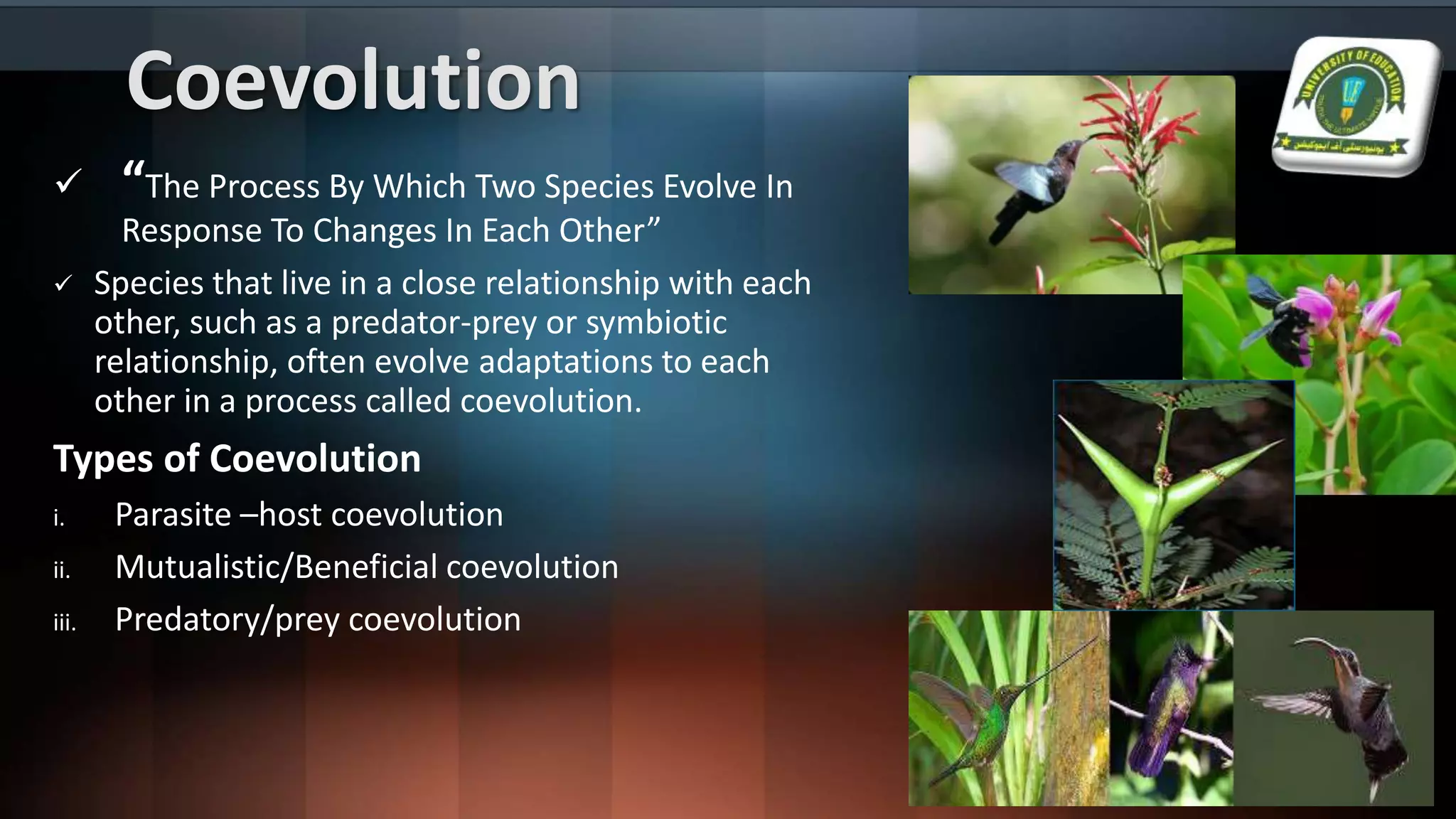
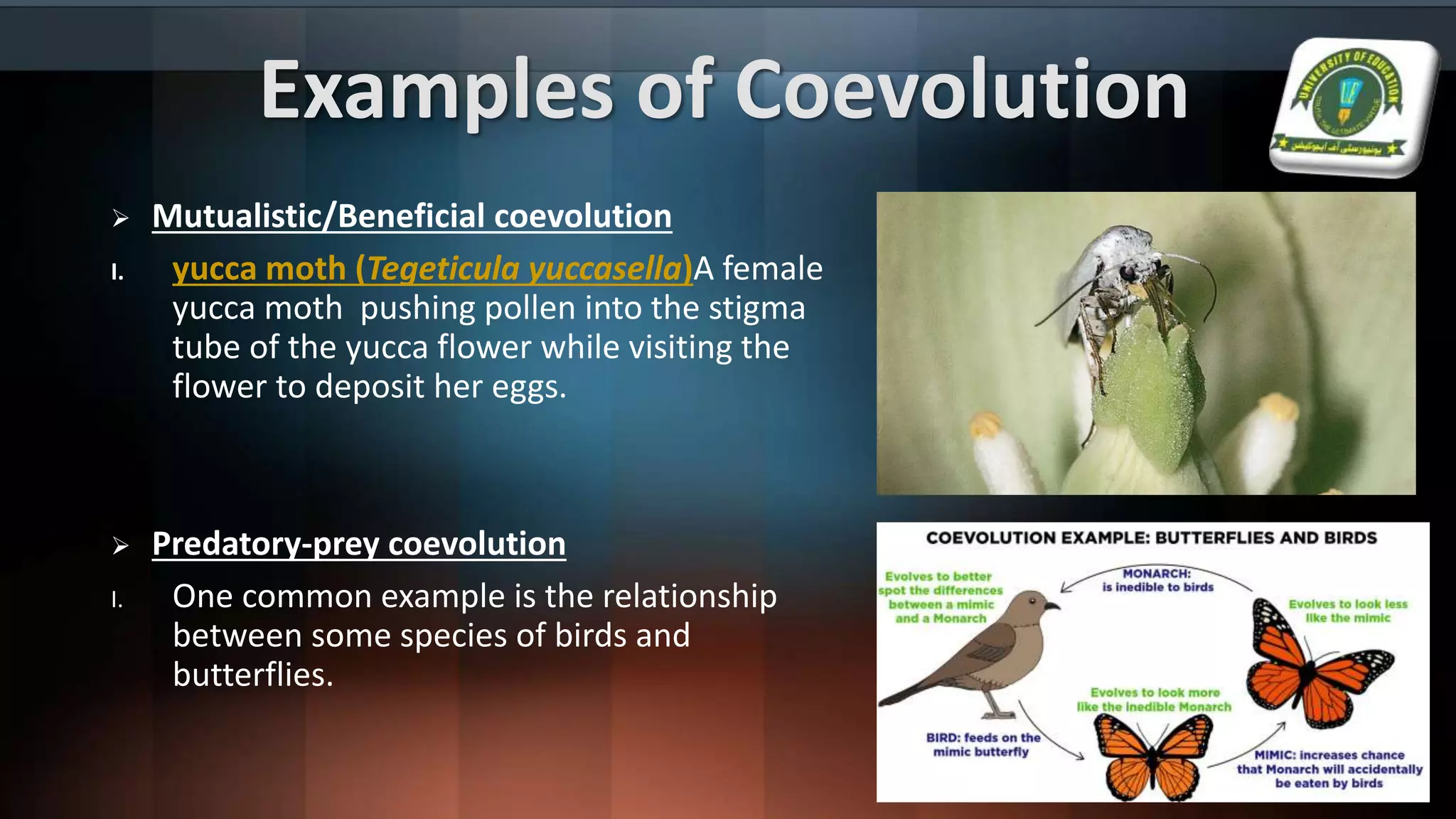
I. yucca moth (Tegeticula yuccasella)A female
yucca moth pushing pollen into the stigma
tube of the yucca flower while visiting the
flower to deposit her eggs.
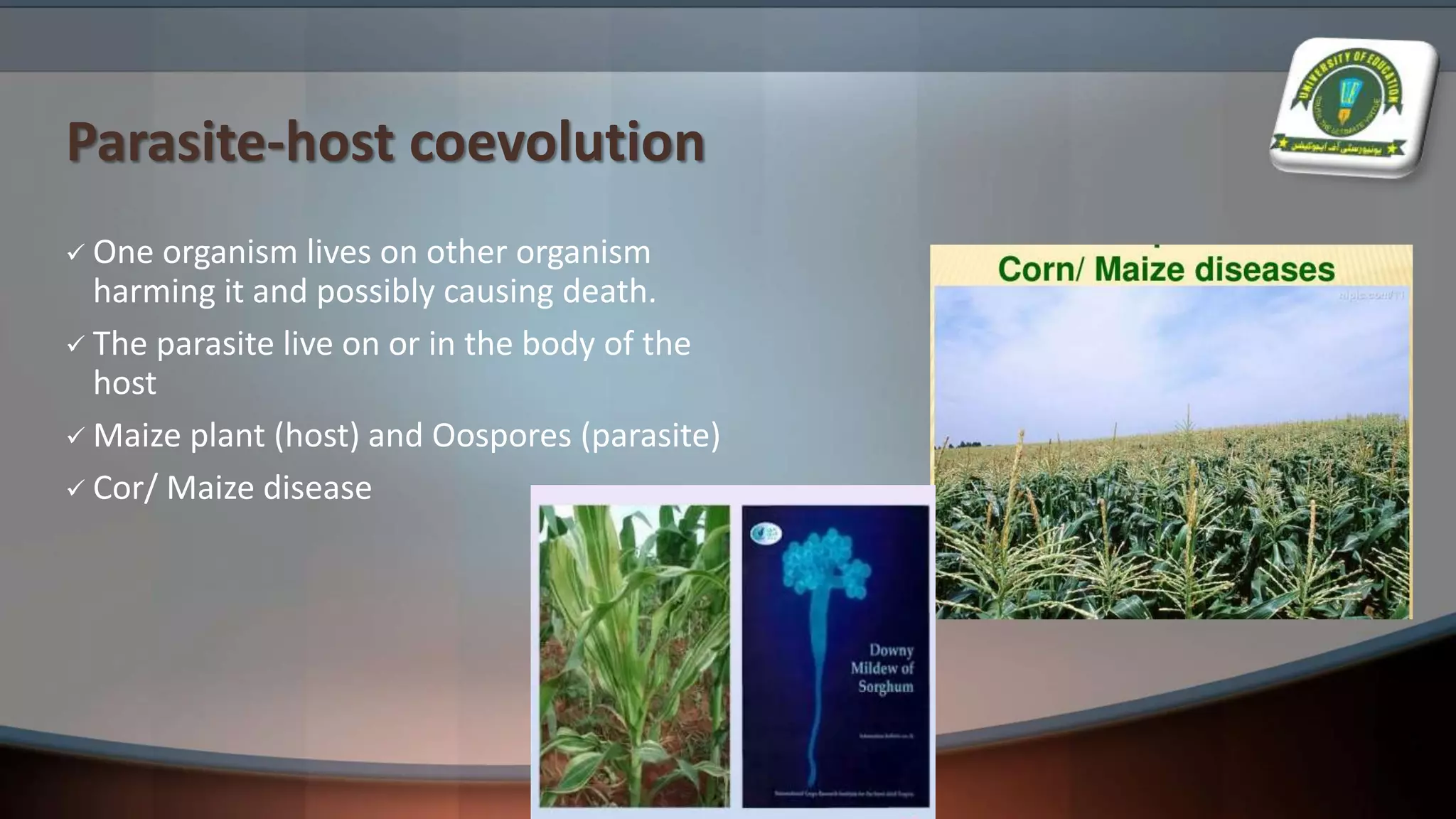
 Predatory-prey coevolution
I. One common example is the relationship
between some species of birds and
butterflies.
Parasite-host coevolution
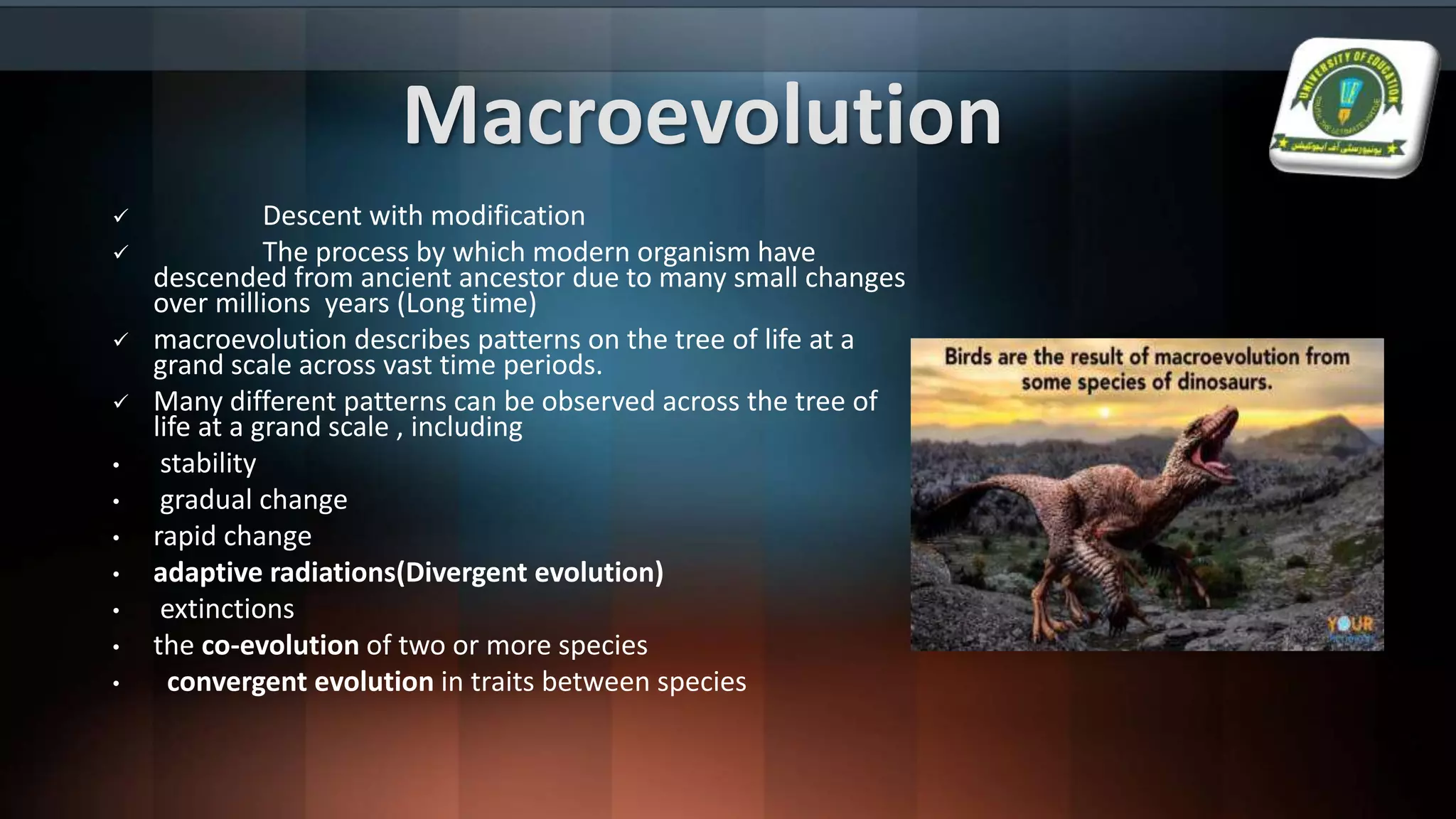
 One organism lives on other organism
harming it and possibly causing death.
 The parasite live on or in the body of the
host
 Maize plant (host) and Oospores (parasite)
 Cor/ Maize disease
Macroevolution
 Descent with modification
 The process by which modern organism have
descended from ancient ancestor due to many small changes
over millions years (Long time)
 macroevolution describes patterns on the tree of life at a
grand scale across vast time periods.
 Many different patterns can be observed across the tree of
life at a grand scale , including
• stability
• gradual change
• rapid change
• adaptive radiations(Divergent evolution)
• extinctions
• the co-evolution of two or more species
• convergent evolution in traits between species
Examples of Macroevolution
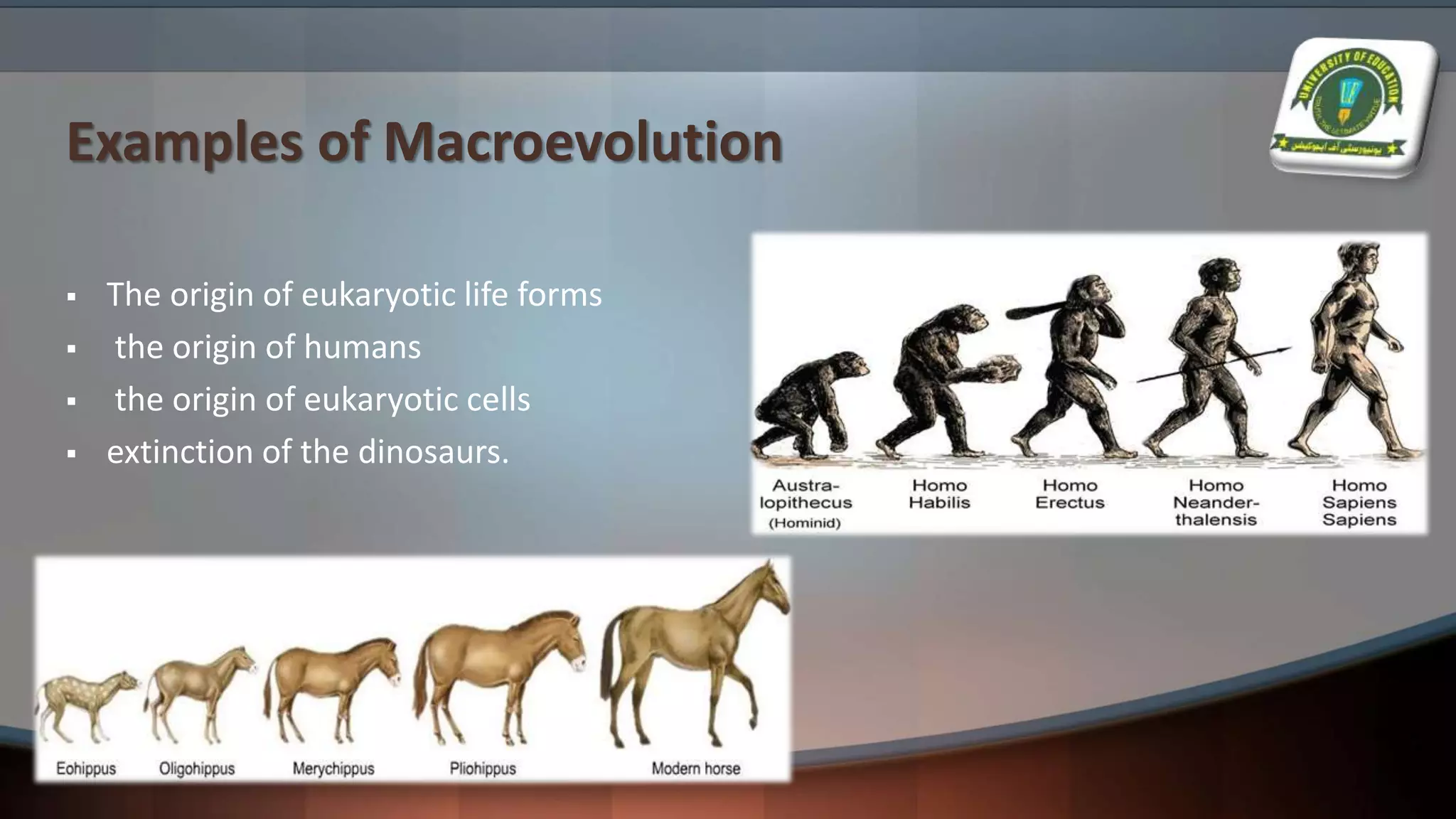
 The origin of eukaryotic life forms
 the origin of humans
 the origin of eukaryotic cells
 extinction of the dinosaurs.
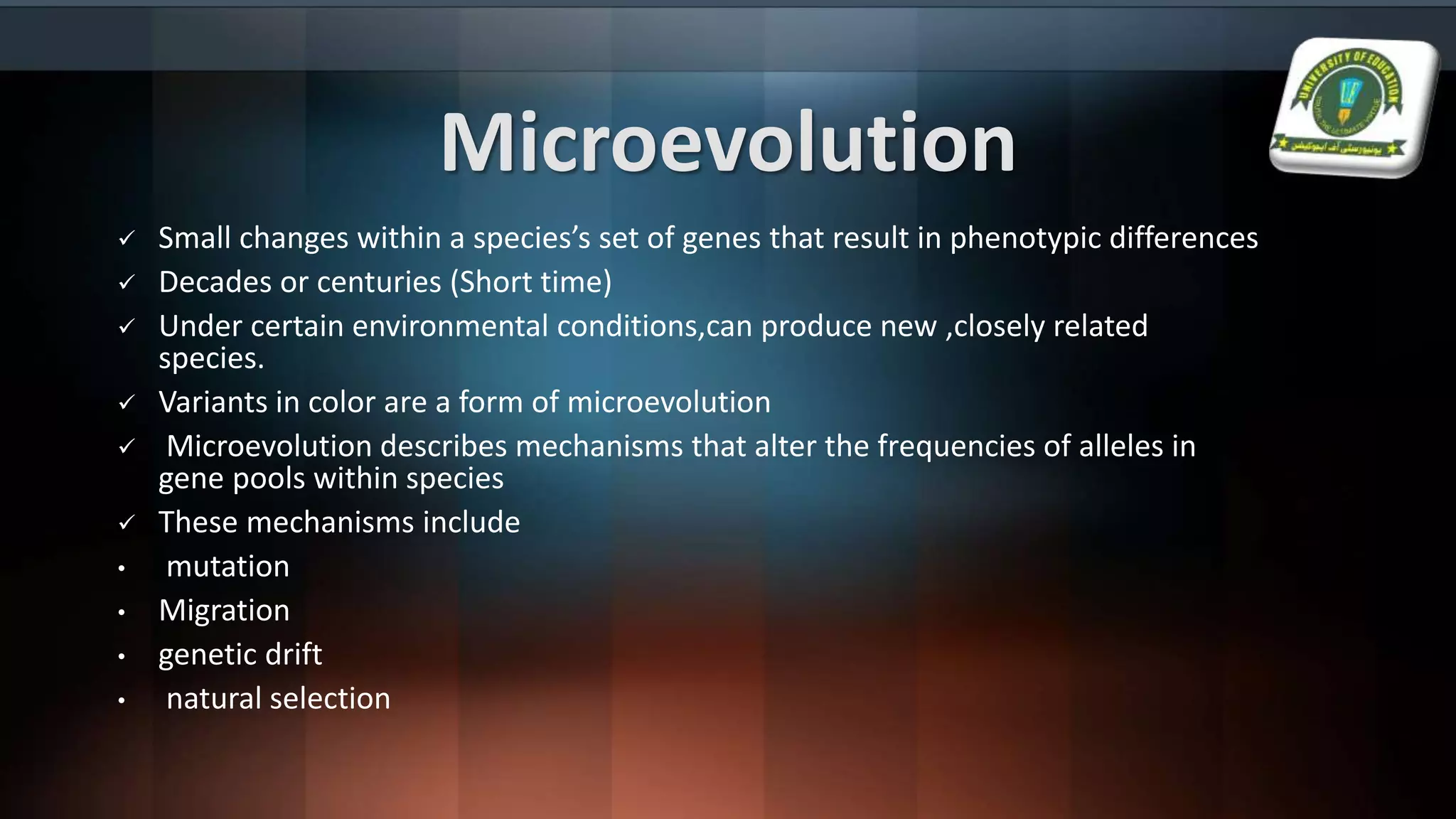
Microevolution
 Small changes within a species’s set of genes that result in phenotypic differences
 Decades or centuries (Short time)
 Under certain environmental conditions,can produce new ,closely related
species.
 Variants in color are a form of microevolution
 Microevolution describes mechanisms that alter the frequencies of alleles in
gene pools within species
 These mechanisms include
• mutation
• Migration
• genetic drift
• natural selection
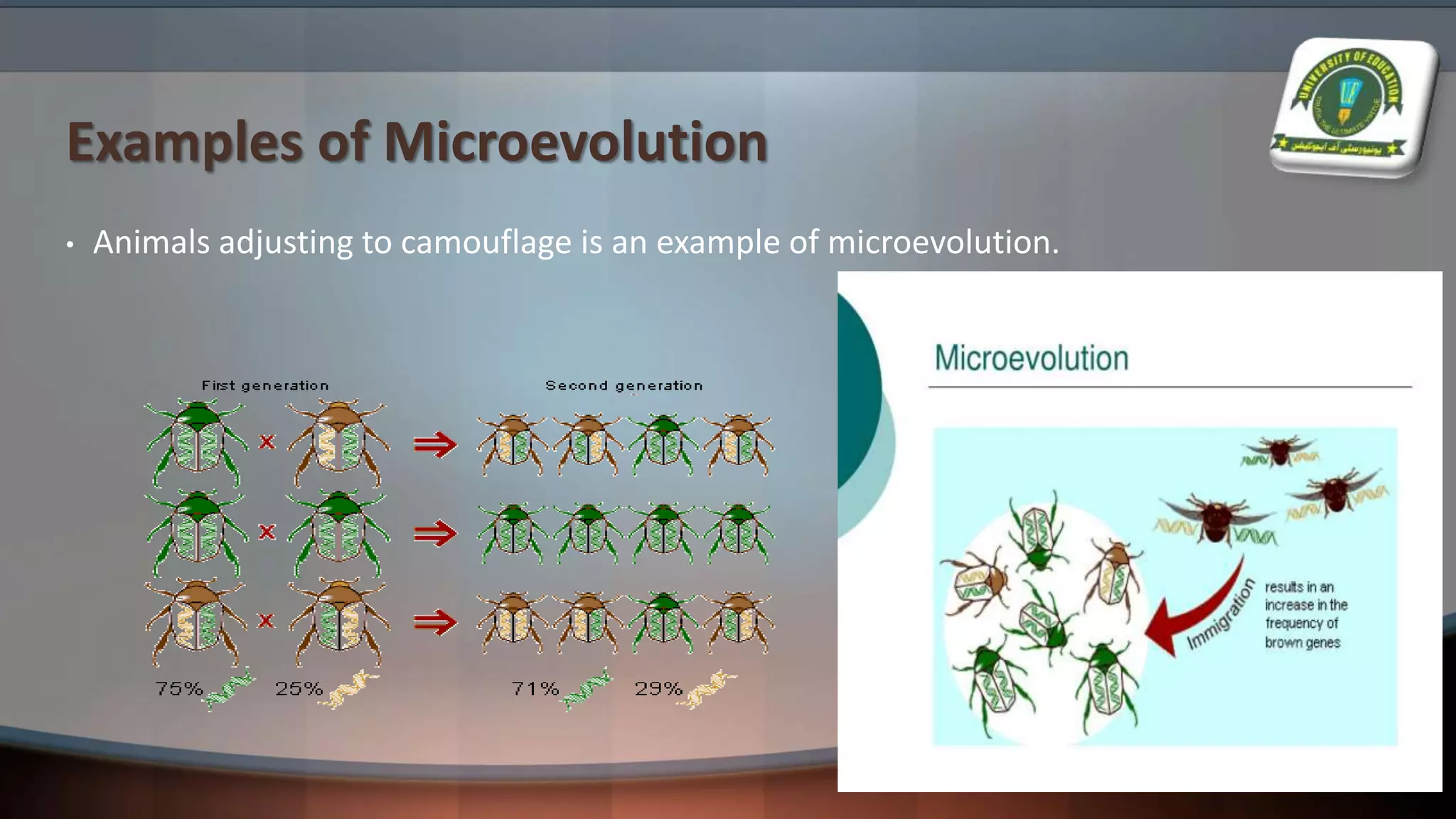
Examples of Microevolution
• Animals adjusting to camouflage is an example of microevolution.
Importance of Pattern of Evolution
 Evolution also helps in promoting biodiversity.
 It leads to speciation, it could lead to a wide range
of different organisms thriving in diverse habitats.
 Divergent evolution allows species with common
ancestral origin to be able to adapt to their own
habitats.
THANK you FOR LISTENING

Pattern of evolution

  • 2.
    Contents Patten of Evolution Evolution  Convergent Evolution  Analogous structures  Divergent Evolution  Homologous structures  Parallel Evolution  Coevolution  Types of Evolution • Macroevolution • Microevolution  Importance of pattern of evolution
  • 3.
    Evolution “Evolution, or changeover time, is the process by which modern organisms have descended from ancient organisms. ”  Evolution also explains how modern organisms have descended from ancient organisms.  Evolution is the Process by which organisms pass on traits from generation to generation.  Explains the origin of new species and diversity. Change over time
  • 4.
    PATTERN OF EVOLUTION ConvergentEvolution  In evolutionary biology, convergent evolution is the process whereby organisms not closely related , independently evolve similar traits as a result of having to adapt to similar environments or ecological niches.  Animals come from different ancestral lineages  Caused by environmental changes  Also called convergence Examples i. shark and dolphin bodies, ii. vertebrate and cephalopod eyes iii. the relationship between bat and insect wings,
  • 5.
    Analogous Structures  Convergentevolution creates analogous structures that have similar form or function but were not present in the last common ancestor of those groups.  Organisma have the same function but not same the structure.  Analogous structures arise from convergent evolution.
  • 6.
    Divergent Evolution  “Divergentevolution is defined as what occurs when two groups of the same species evolve different traits within those groups in order to accommodate for differing environmental and social pressures”.  Species gradually become different from its ancestors  Evolution resulted in multiple different species, leading to speciation  Homologous structure development  Also called adaptive radiation  Caused by environmental changes, migration
  • 7.
    Examples of DivergentEvolution • Darwin’s Finches Finches on the Galapagos islands evolved into many different species to eat different foods. • Polar bear and brown bear • Red fox and kit fox
  • 8.
    Homologous Structue  Indivergent evolution, homologous structures are structures indicating a species is diverging from its ancestor.  These structures need not have the same function as that of those of the species' ancestors.  Same structure  Different function  homologous structures arise via Divergent evolution .  Example  the forelimbs of humans and bats are homologous structures.
  • 9.
    Parallel Evolution  Somespecies evolve without converging on similar traits or diverging to different traits. These species undergo change, but they maintain a constant level of similarity to each other. This process is known as parallel evolution.  Parallel evolution occurs when two species evolve independently of each other, maintaining the same level of similarity.  Parallel evolution usually occurs between unrelated species that do not occupy the same or similar niches in a given habitat
  • 10.
    Examples  Marsupials andplacental mammals most recently shared common ancestor 125- 150 million years ago.yet these similar features appeared in each of the distant relatives
  • 11.
  • 12.
    Coevolution  “The ProcessBy Which Two Species Evolve In Response To Changes In Each Other”  Species that live in a close relationship with each other, such as a predator-prey or symbiotic relationship, often evolve adaptations to each other in a process called coevolution. Types of Coevolution i. Parasite –host coevolution ii. Mutualistic/Beneficial coevolution iii. Predatory/prey coevolution
  • 13.
    Examples of Coevolution Mutualistic/Beneficial coevolution I. yucca moth (Tegeticula yuccasella)A female yucca moth pushing pollen into the stigma tube of the yucca flower while visiting the flower to deposit her eggs.  Predatory-prey coevolution I. One common example is the relationship between some species of birds and butterflies.
  • 14.
    Parasite-host coevolution  Oneorganism lives on other organism harming it and possibly causing death.  The parasite live on or in the body of the host  Maize plant (host) and Oospores (parasite)  Cor/ Maize disease
  • 15.
    Macroevolution  Descent withmodification  The process by which modern organism have descended from ancient ancestor due to many small changes over millions years (Long time)  macroevolution describes patterns on the tree of life at a grand scale across vast time periods.  Many different patterns can be observed across the tree of life at a grand scale , including • stability • gradual change • rapid change • adaptive radiations(Divergent evolution) • extinctions • the co-evolution of two or more species • convergent evolution in traits between species
  • 16.
    Examples of Macroevolution The origin of eukaryotic life forms  the origin of humans  the origin of eukaryotic cells  extinction of the dinosaurs.
  • 17.
    Microevolution  Small changeswithin a species’s set of genes that result in phenotypic differences  Decades or centuries (Short time)  Under certain environmental conditions,can produce new ,closely related species.  Variants in color are a form of microevolution  Microevolution describes mechanisms that alter the frequencies of alleles in gene pools within species  These mechanisms include • mutation • Migration • genetic drift • natural selection
  • 18.
    Examples of Microevolution •Animals adjusting to camouflage is an example of microevolution.
  • 19.
    Importance of Patternof Evolution  Evolution also helps in promoting biodiversity.  It leads to speciation, it could lead to a wide range of different organisms thriving in diverse habitats.  Divergent evolution allows species with common ancestral origin to be able to adapt to their own habitats.
  • 20.
    THANK you FORLISTENING