



The way ahead?
Promoting high performance with
personalised learning
Chair:
Caroline Freeman
Head of Learning Design, Brightwave Group
#learnpersonal
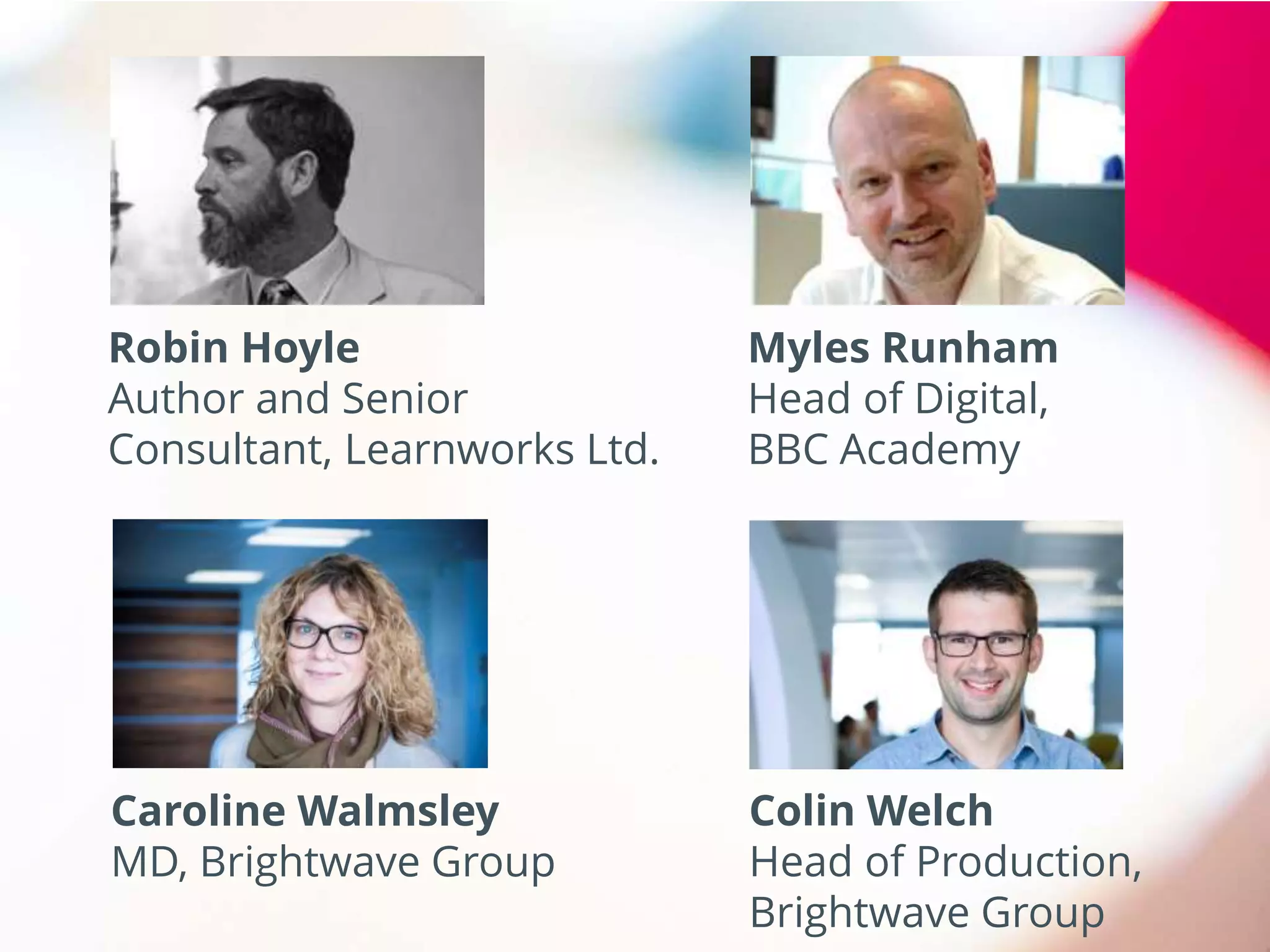
Caroline Walmsley
MD, Brightwave Group
Colin Welch
Head of Production,
Brightwave Group
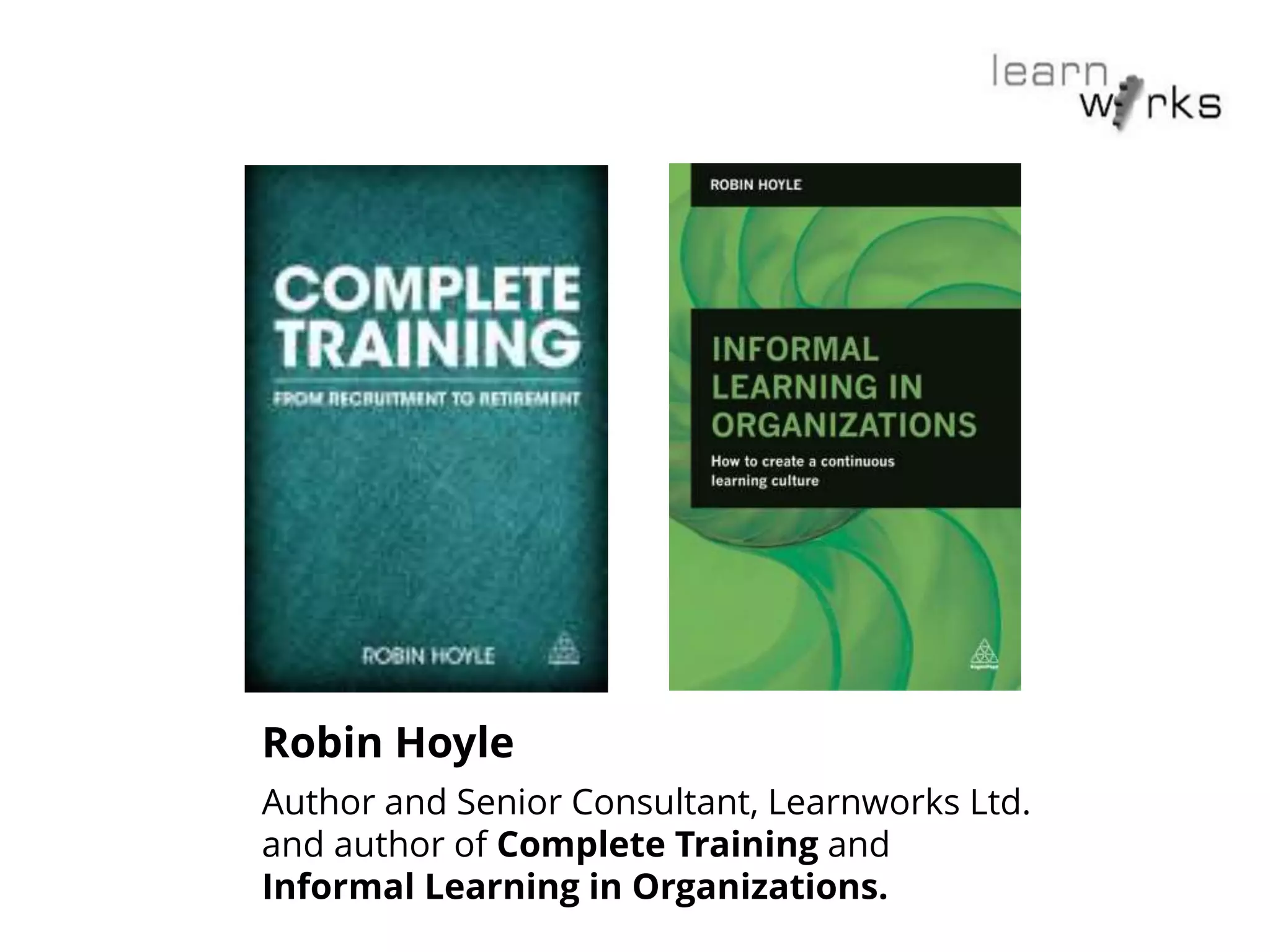
Robin Hoyle
Author and Senior
Consultant, Learnworks Ltd.
Myles Runham
Head of Digital,
BBC Academy
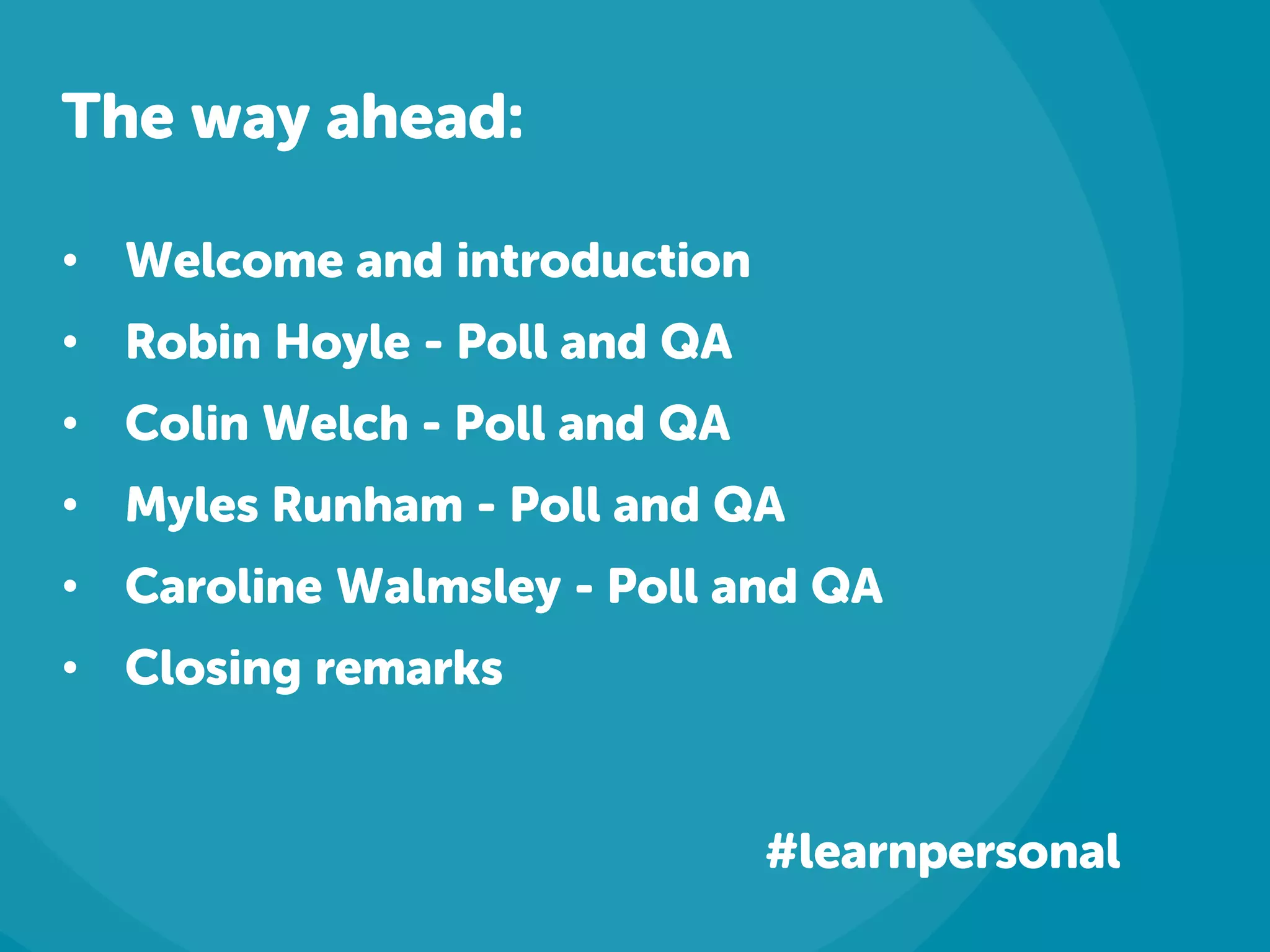
The way ahead:
• Welcome and introduction
• Robin Hoyle - Poll and QA
• Colin Welch - Poll and QA
• Myles Runham - Poll and QA
• Caroline Walmsley - Poll and QA
• Closing remarks
#learnpersonal
Breaker
slide
#learnpersonal
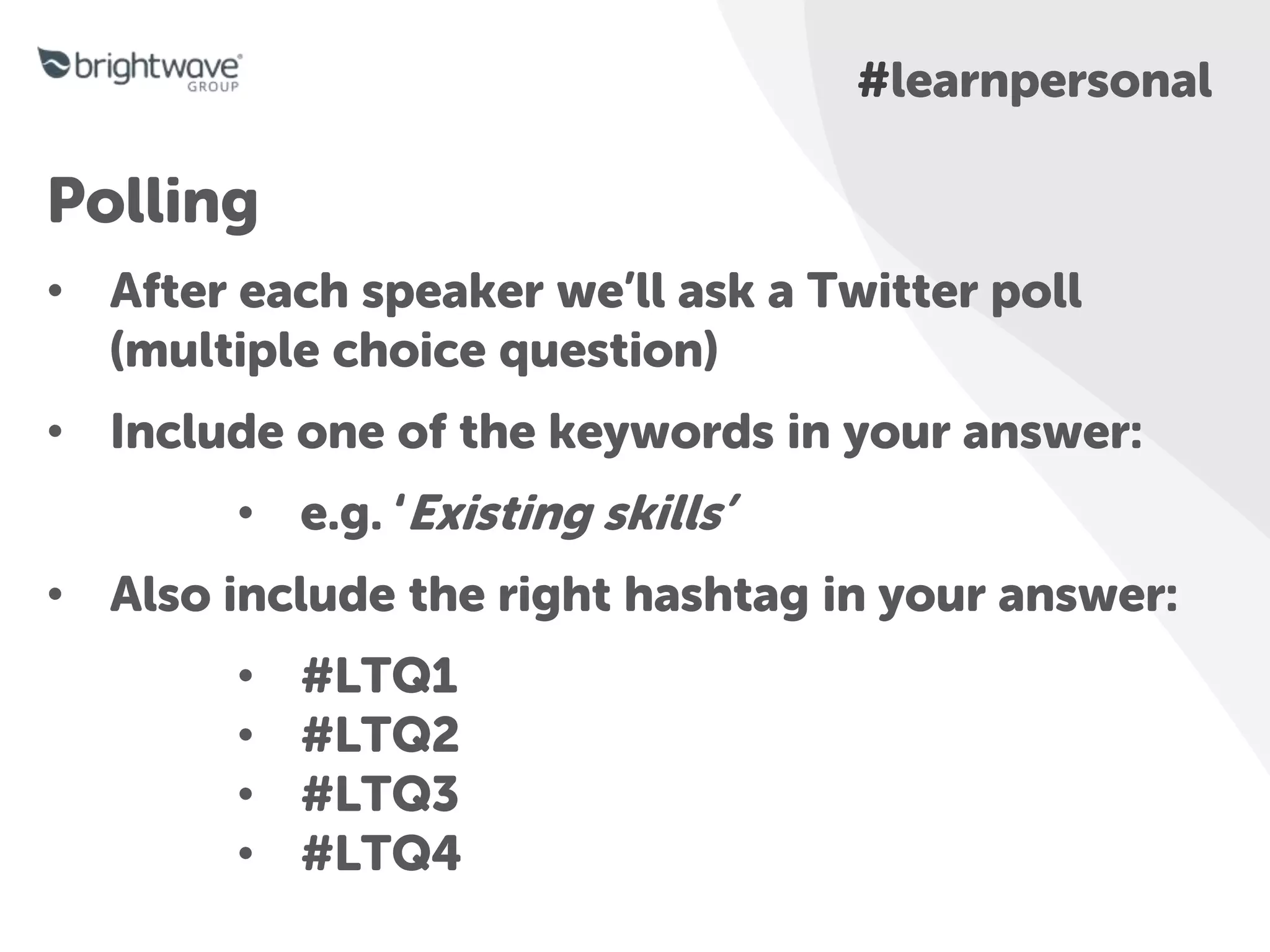
Polling
• After each speaker we’ll ask a Twitter poll
(multiple choice question)
• Include one of the keywords in your answer:
• e.g. ‘Existing skills’
• Also include the right hashtag in your answer:
• #LTQ1
• #LTQ2
• #LTQ3
• #LTQ4
The Way Ahead?
Promoting High Performance
with Personalisation
#learnpersonal
Robin Hoyle
Author and Senior Consultant, Learnworks Ltd.
and author of Complete Training and
Informal Learning in Organizations.
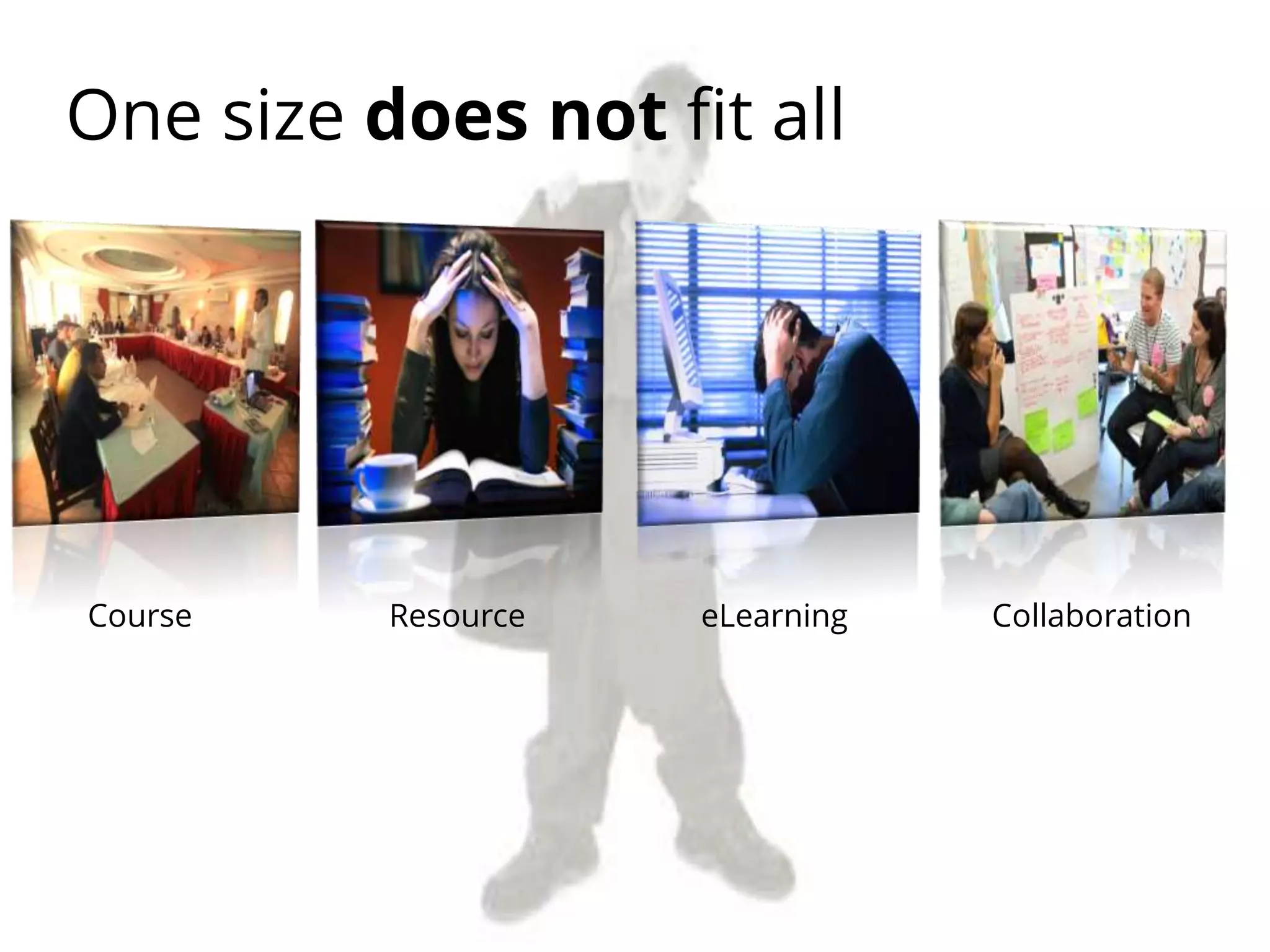
One size does not fit all
Course Resource eLearning Collaboration
People don’t know what they
don’t know
Algorithms are dumb
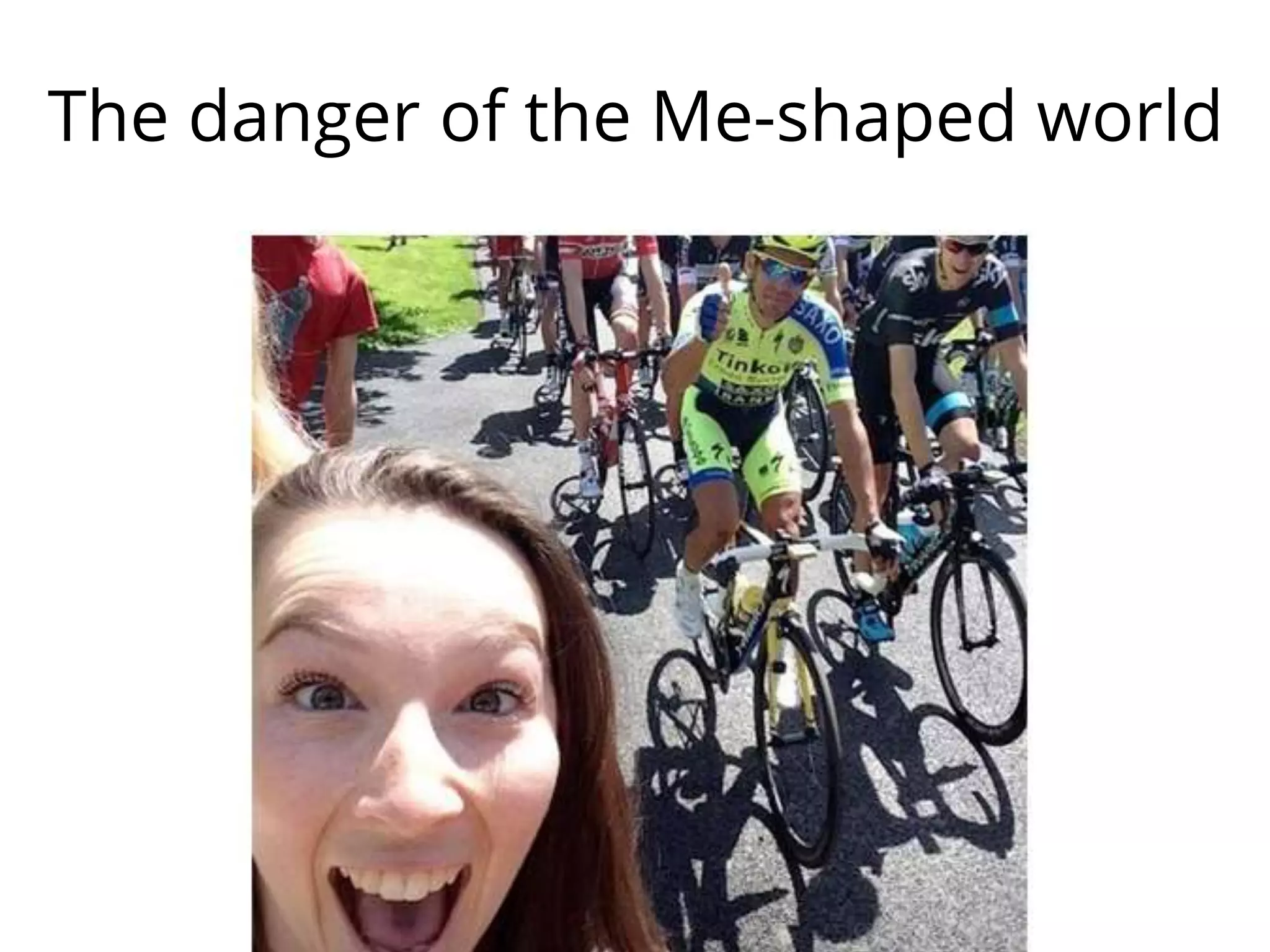
The danger of the Me-shaped world
Sharples, M., et al (2013).
Innovating Pedagogy 2013: Open University Innovation Report 2.
Milton Keynes: The Open University ,p18
‘This personalized ‘Me-shaped-world’ is a
form of seamless learning by induction: we
come to see the world as constructed around
our interactions with it. The benefit is that
relevant information may always be ready to
hand, but the danger is that this prevents us
from seeing alternative perspectives. We may
come to believe that our experiences, views,
preferences and connections are not just the
most relevant, but all there is.’
Me-shaped world
Summary
Whereas one size does not fit all….
Beware:
• People don’t know what they don’t know.
If you always do what you always did, you always get
what you always got
• Dumb algorithms and our over reliance on our
ability to utilise data
• The Me-shaped-world is not the whole story – it may
not even be the most important part.
Thank You
www.learnworks.org.uk
 robin@learnworks.org.uk
 00 44 1422 881873
@RHoyle
#learnpersonal
Customisation without
algorithms
#learnpersonal
Colin Welch, Head of Production,
Brightwave Group
Personalisation = algorithms
eLearning = publishing…
…with a next button
‘The future of technology driven learning
is immersive… I am 'in' the learning
experience and I am practicing doing
the things that I need to do better. I am
making decisions.’
- Koreen Pagano - Immersive Learning
Immersive Learning
Storytelling and Gaming
o The oldest form of learning
o You empathise with the characters
o The structure of narrative reflects the
way our brains work
o It’s memorable
Storytelling
o You make decisions
o You see the impact of those decisions
o You can fail safely and try again
o It’s memorable
Gaming:
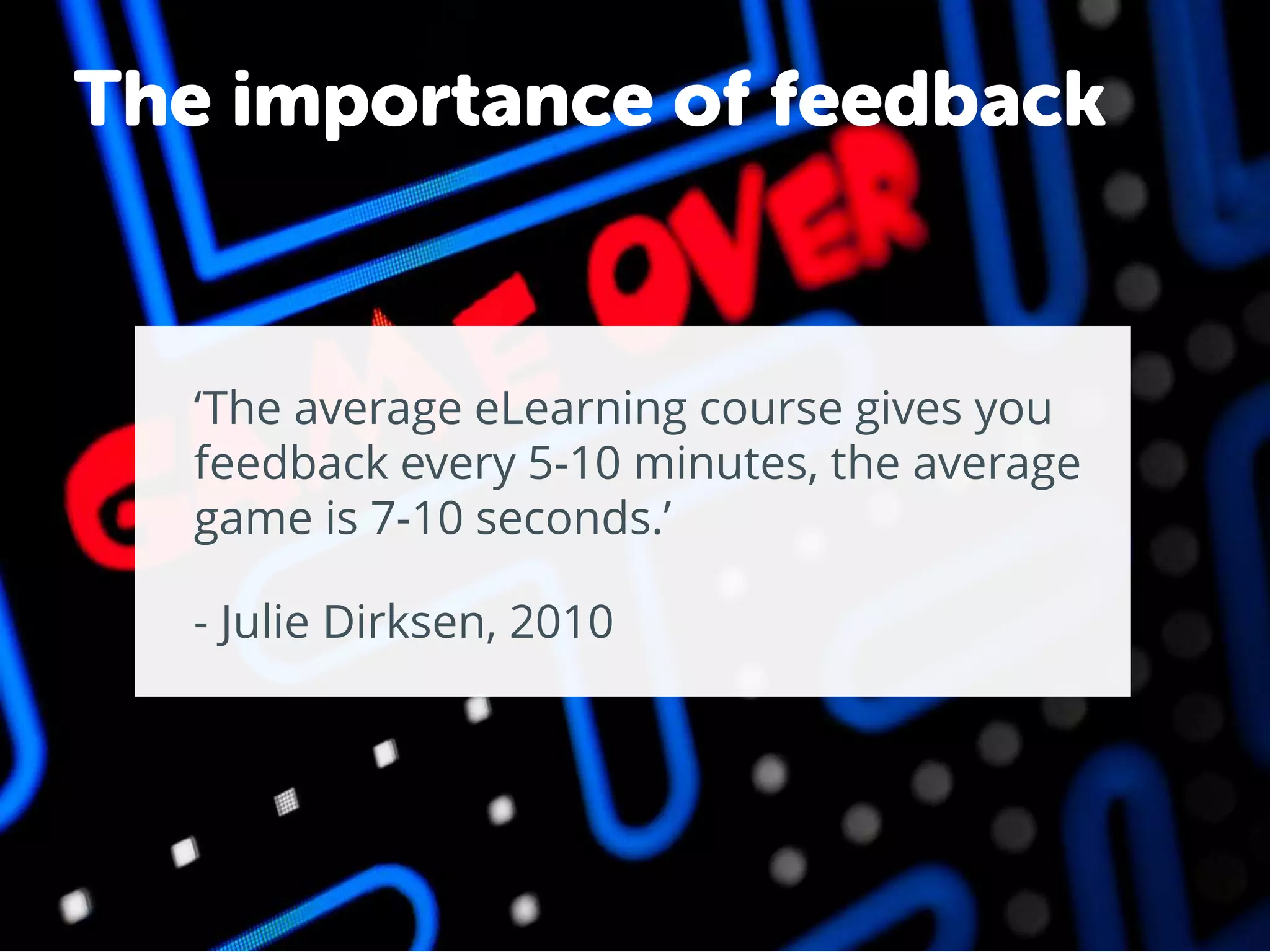
‘The average eLearning course gives you
feedback every 5-10 minutes, the average
game is 7-10 seconds.’
The importance of feedback
- Julie Dirksen, 2010
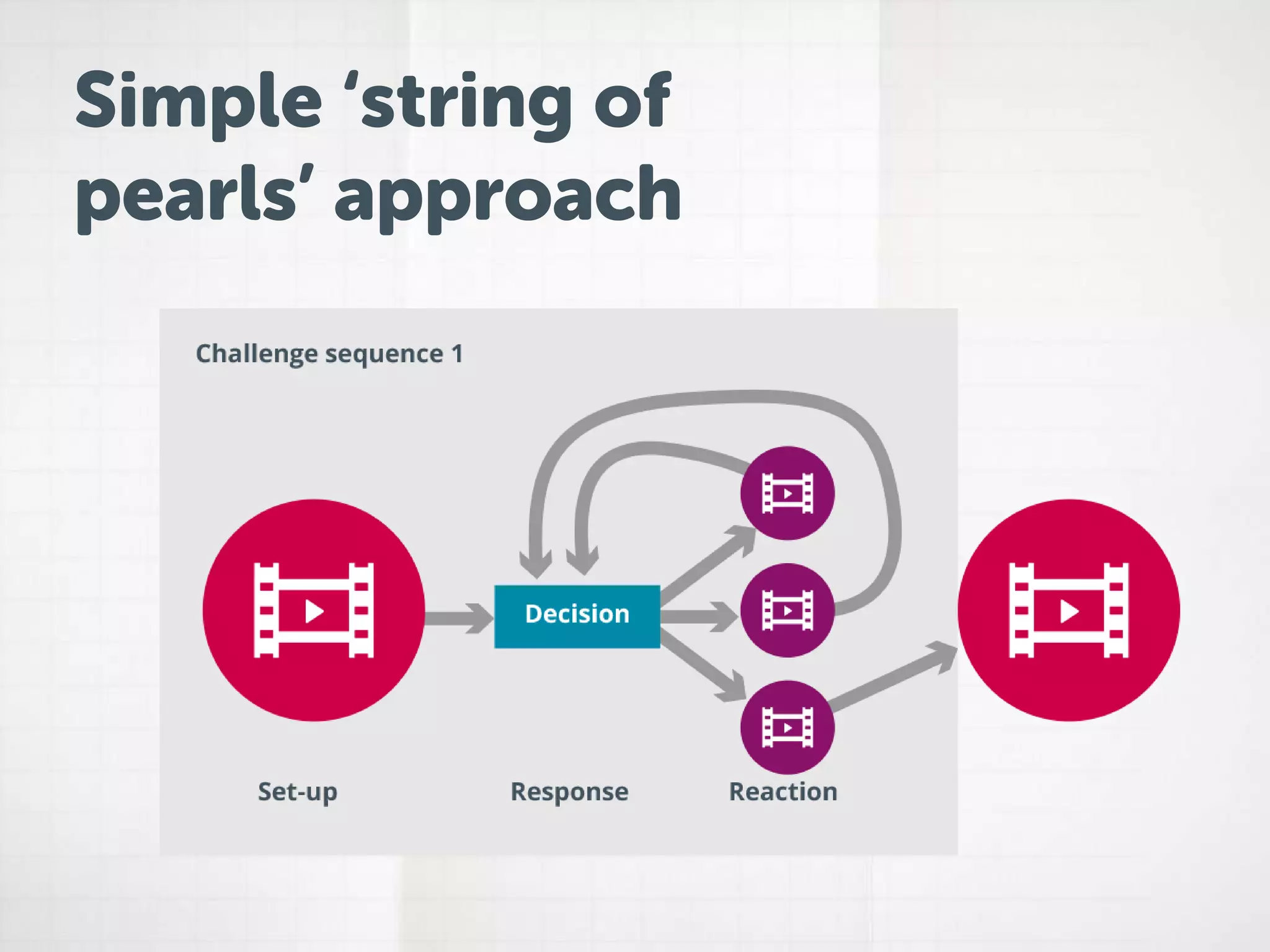
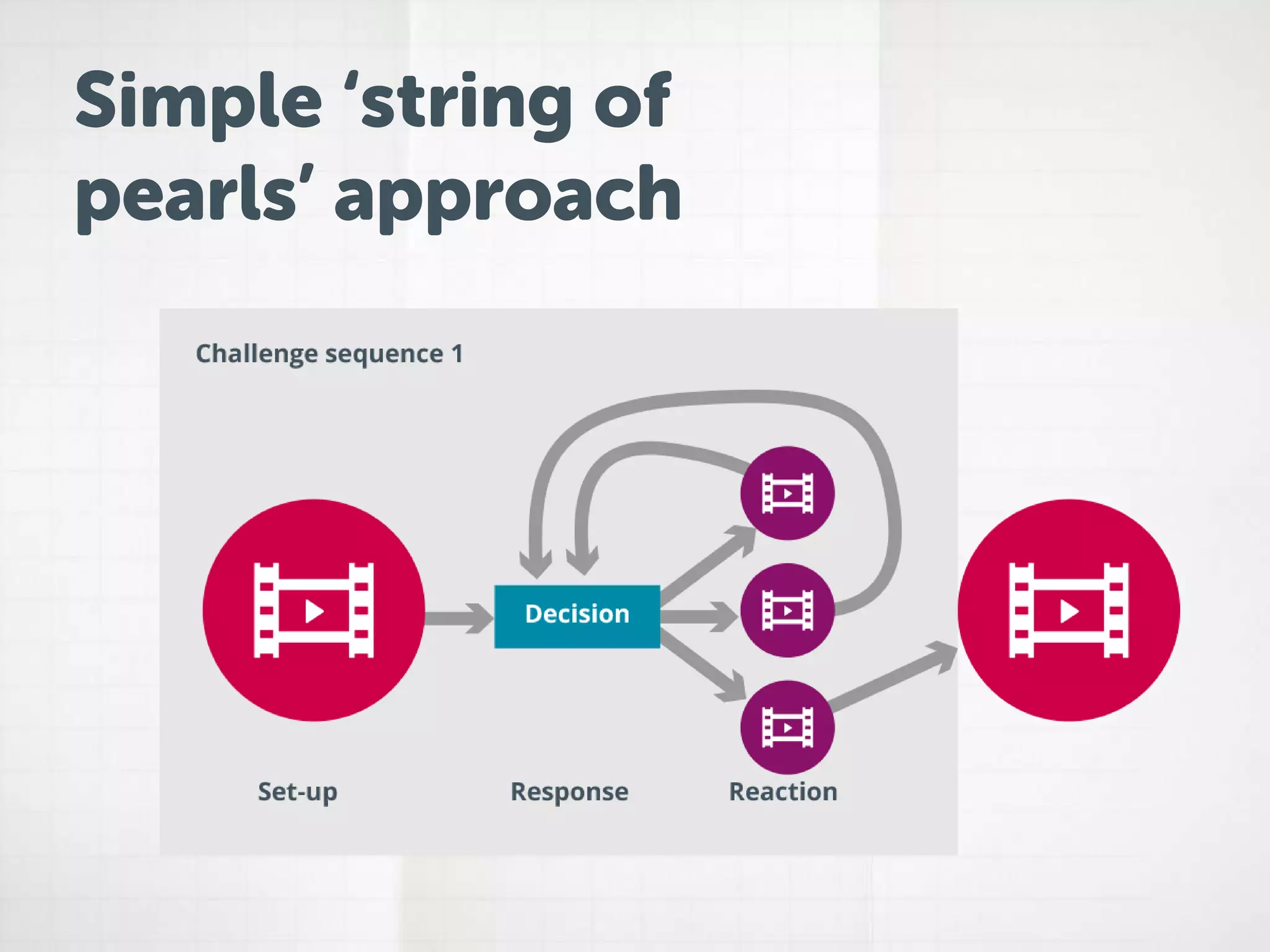
Simple ‘string of
pearls’ approach
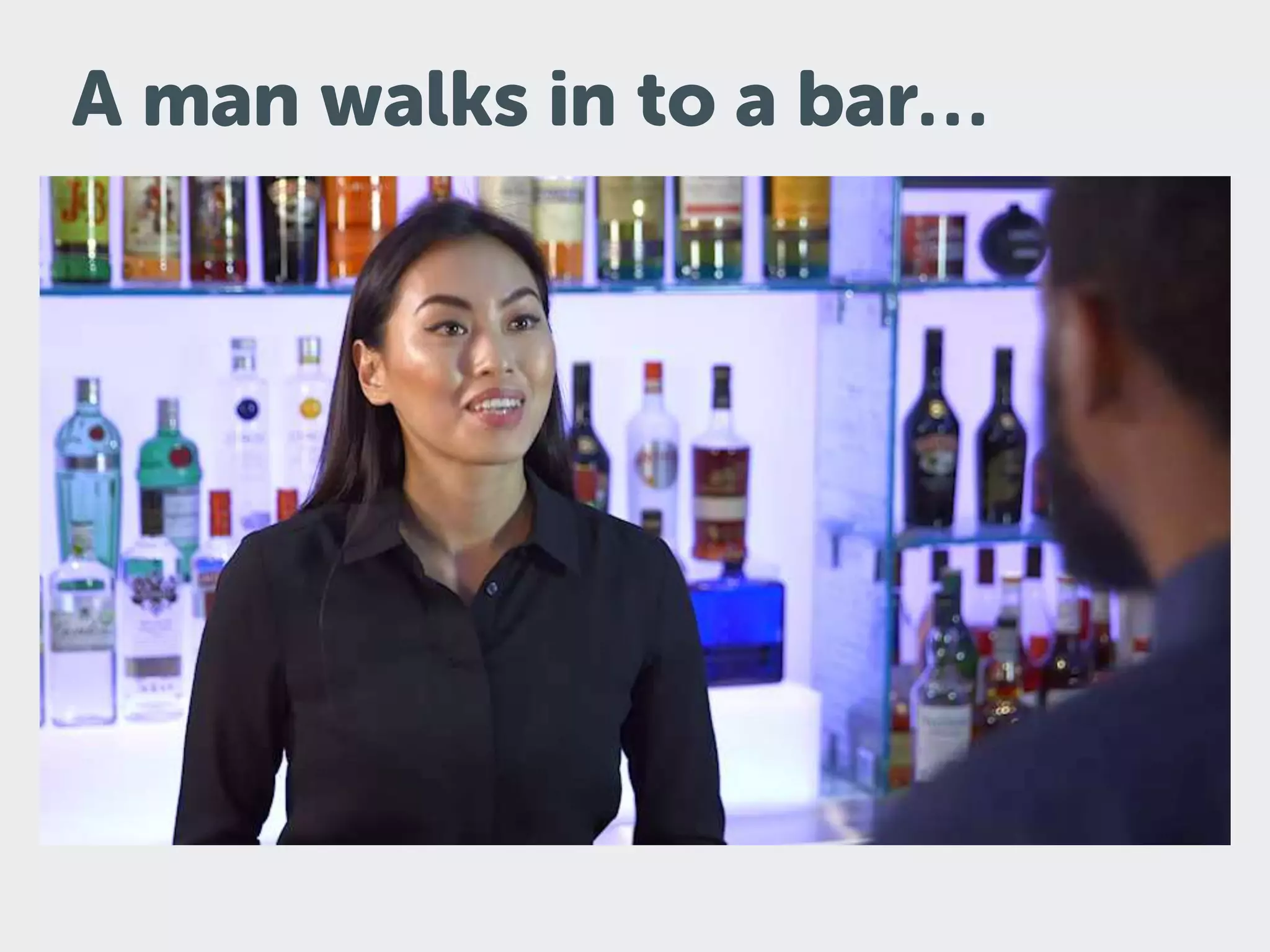
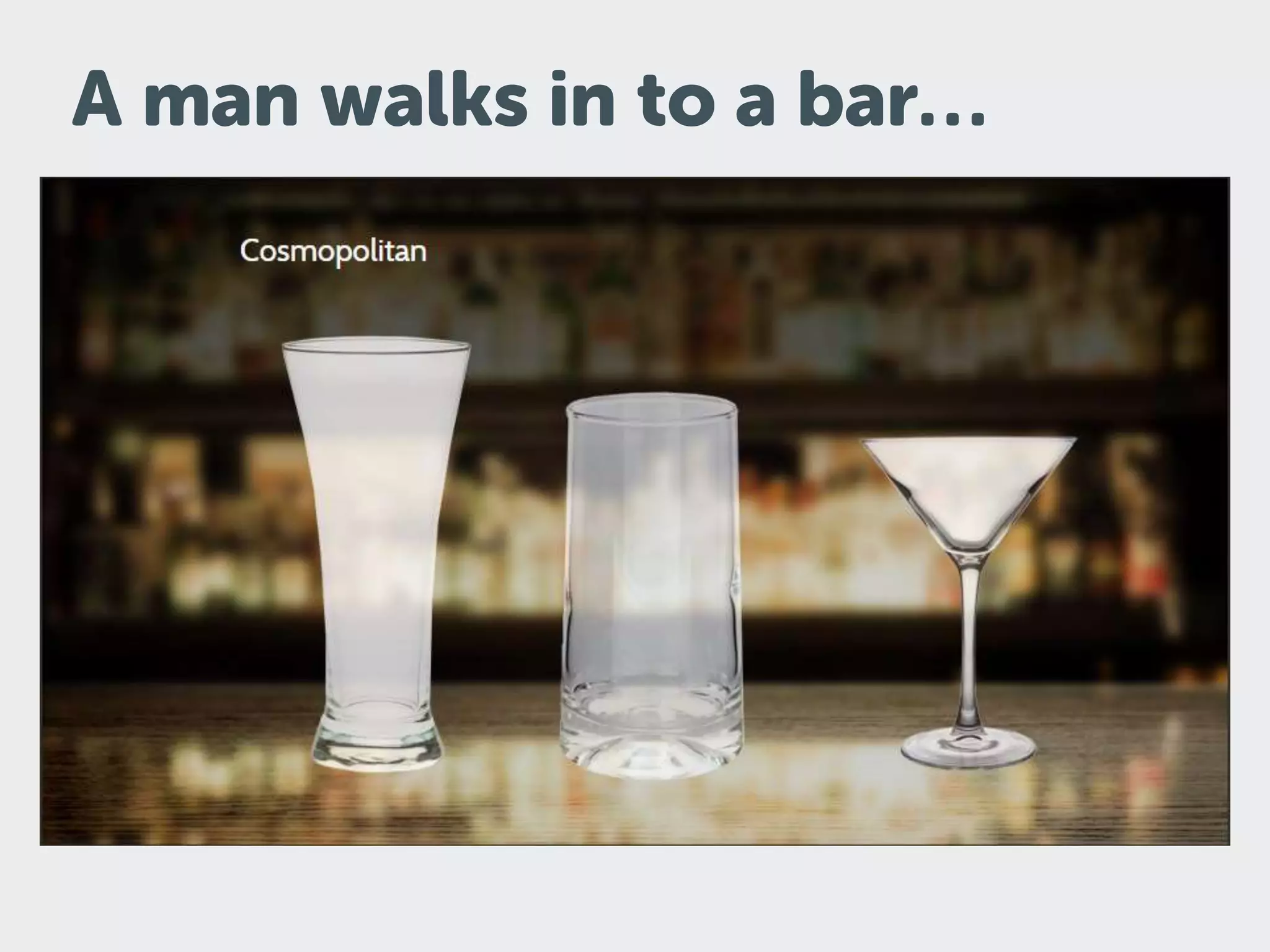
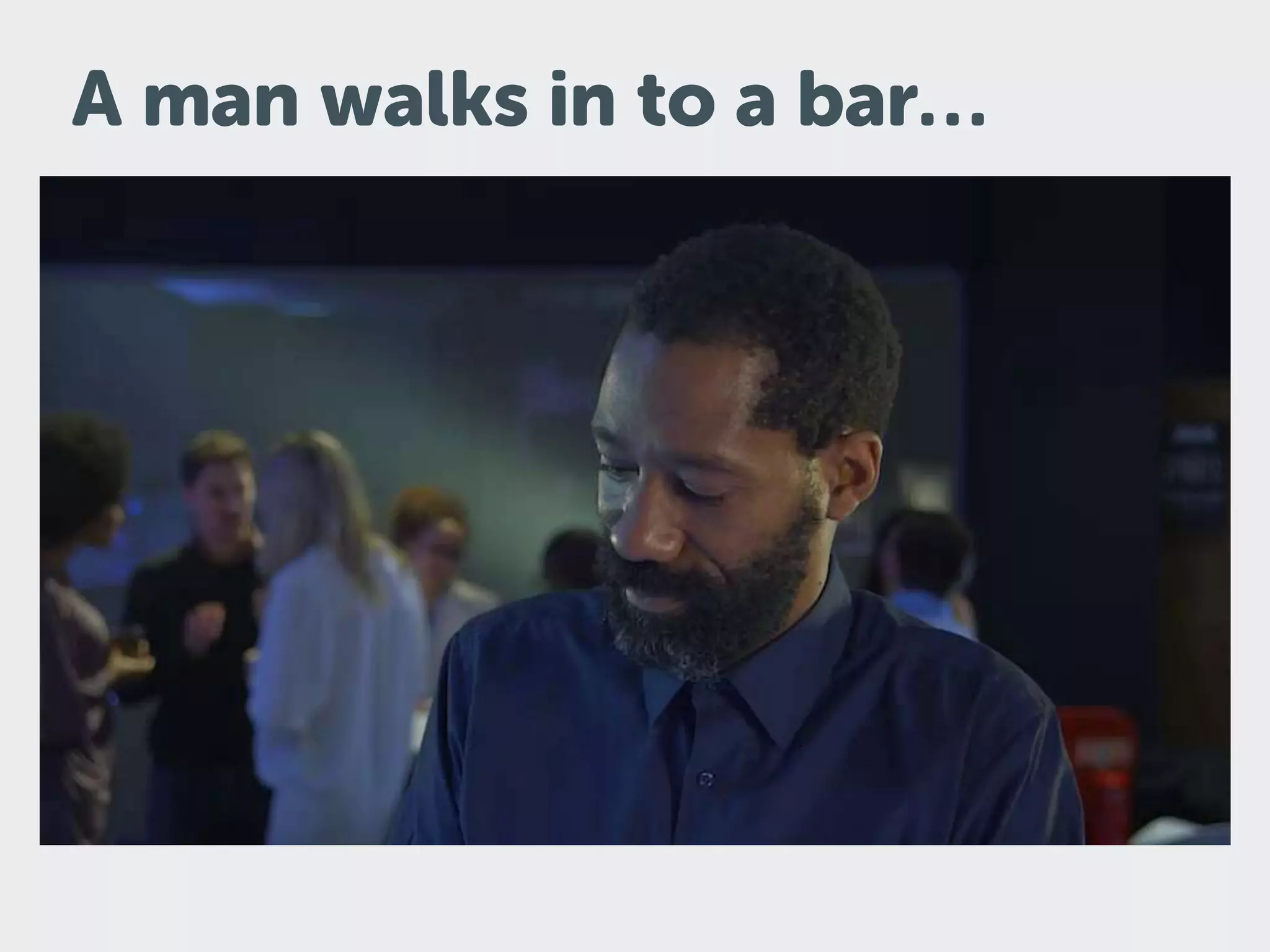
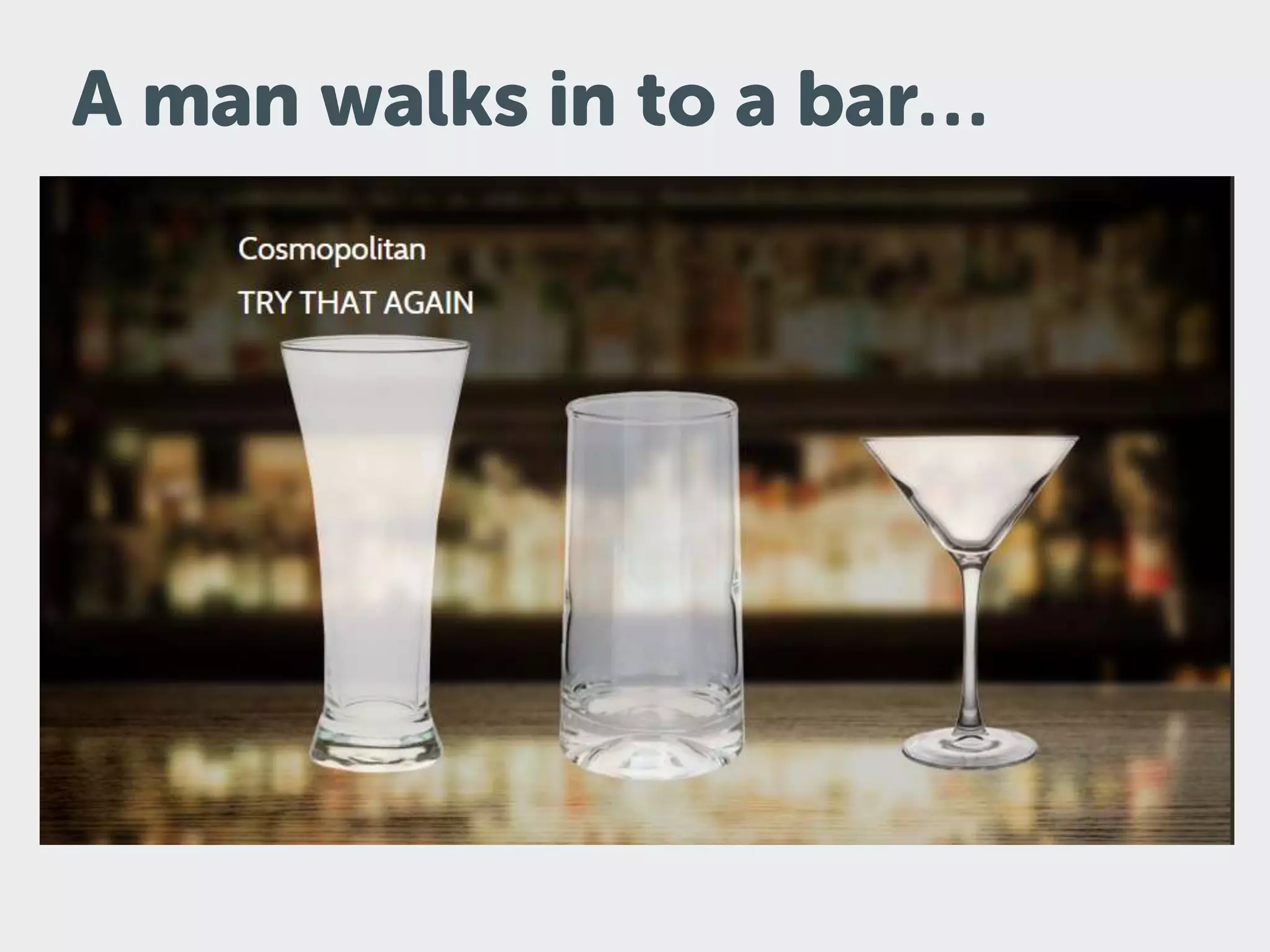
A man walks in to a bar…
Devlearn DemoFest
o It was completely immersive and contextual
o Focussed on true behaviour change
o The feedback was very authentic and fun, not
just "good job, click next"
Simple ‘string of
pearls’ approach
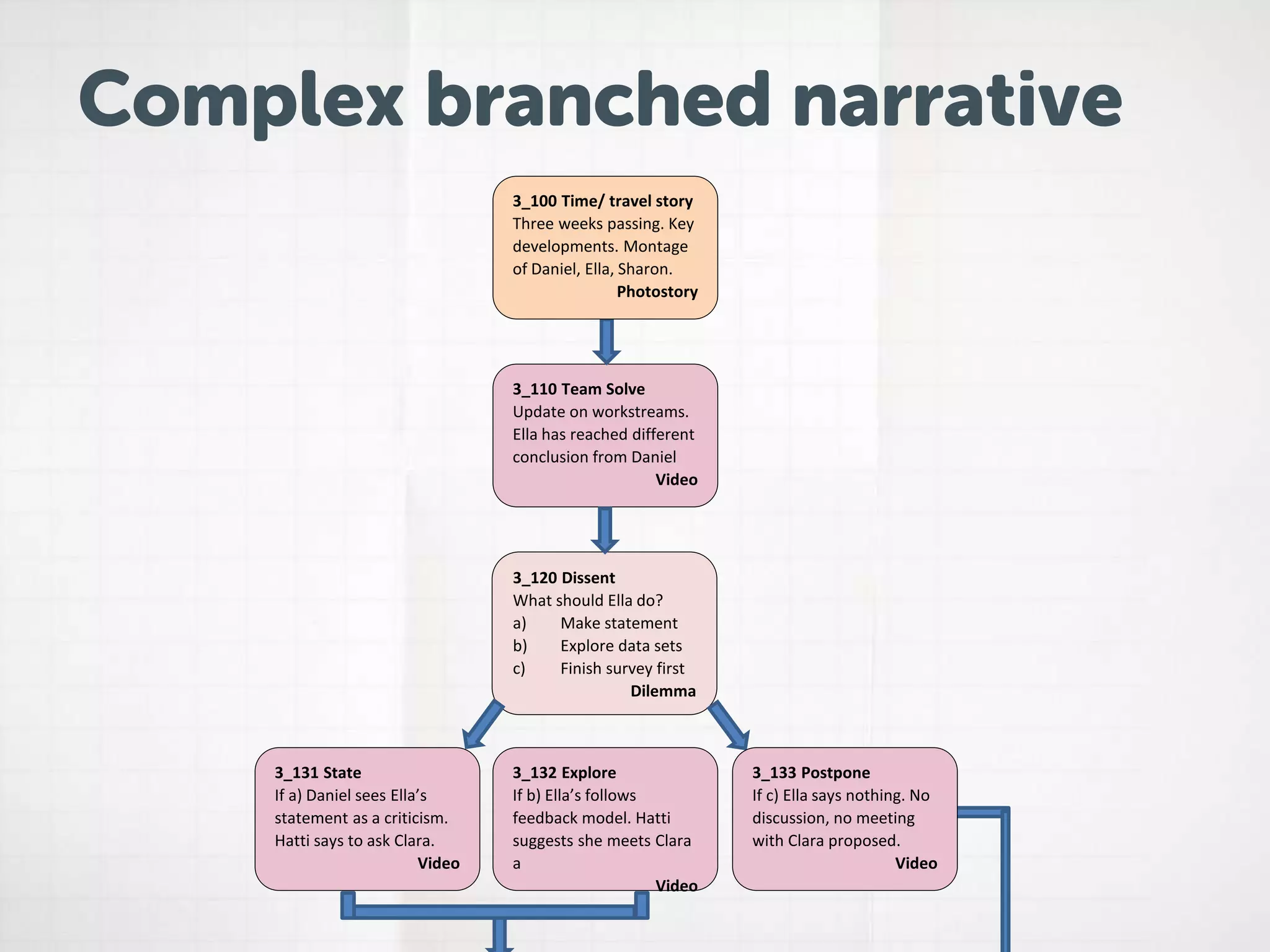
3_110 Team Solve
Update on workstreams.
Ella has reached different
conclusion from Daniel
Video
3_120 Dissent
What should Ella do?
a) Make statement
b) Explore data sets
c) Finish survey first
Dilemma
3_100 Time/ travel story
Three weeks passing. Key
developments. Montage
of Daniel, Ella, Sharon.
Photostory
3_131 State
If a) Daniel sees Ella’s
statement as a criticism.
Hatti says to ask Clara.
Video
3_132 Explore
If b) Ella’s follows
feedback model. Hatti
suggests she meets Clara
a
Video
3_133 Postpone
If c) Ella says nothing. No
discussion, no meeting
with Clara proposed.
Video
Complex branched narrative
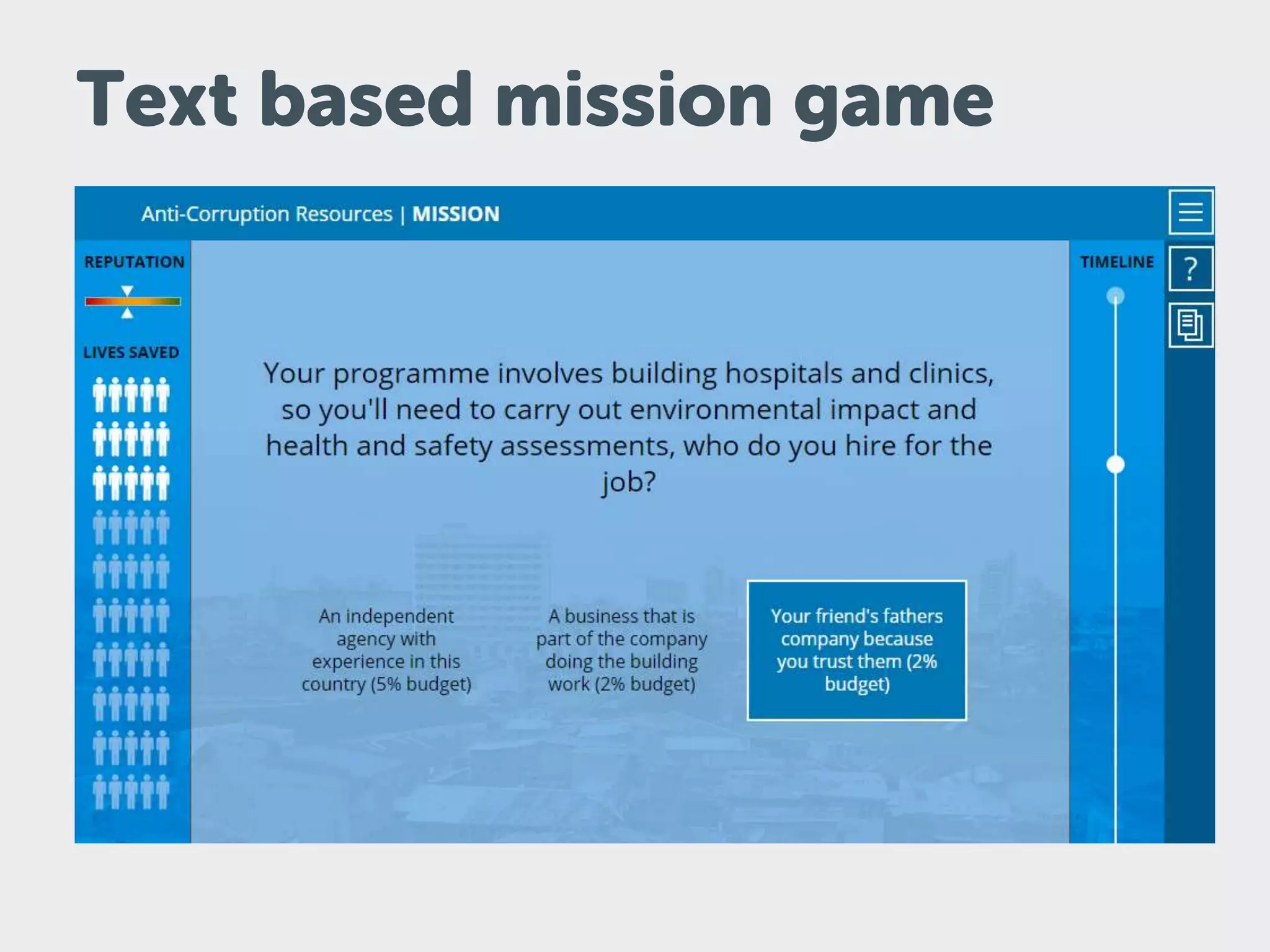
Text based mission game
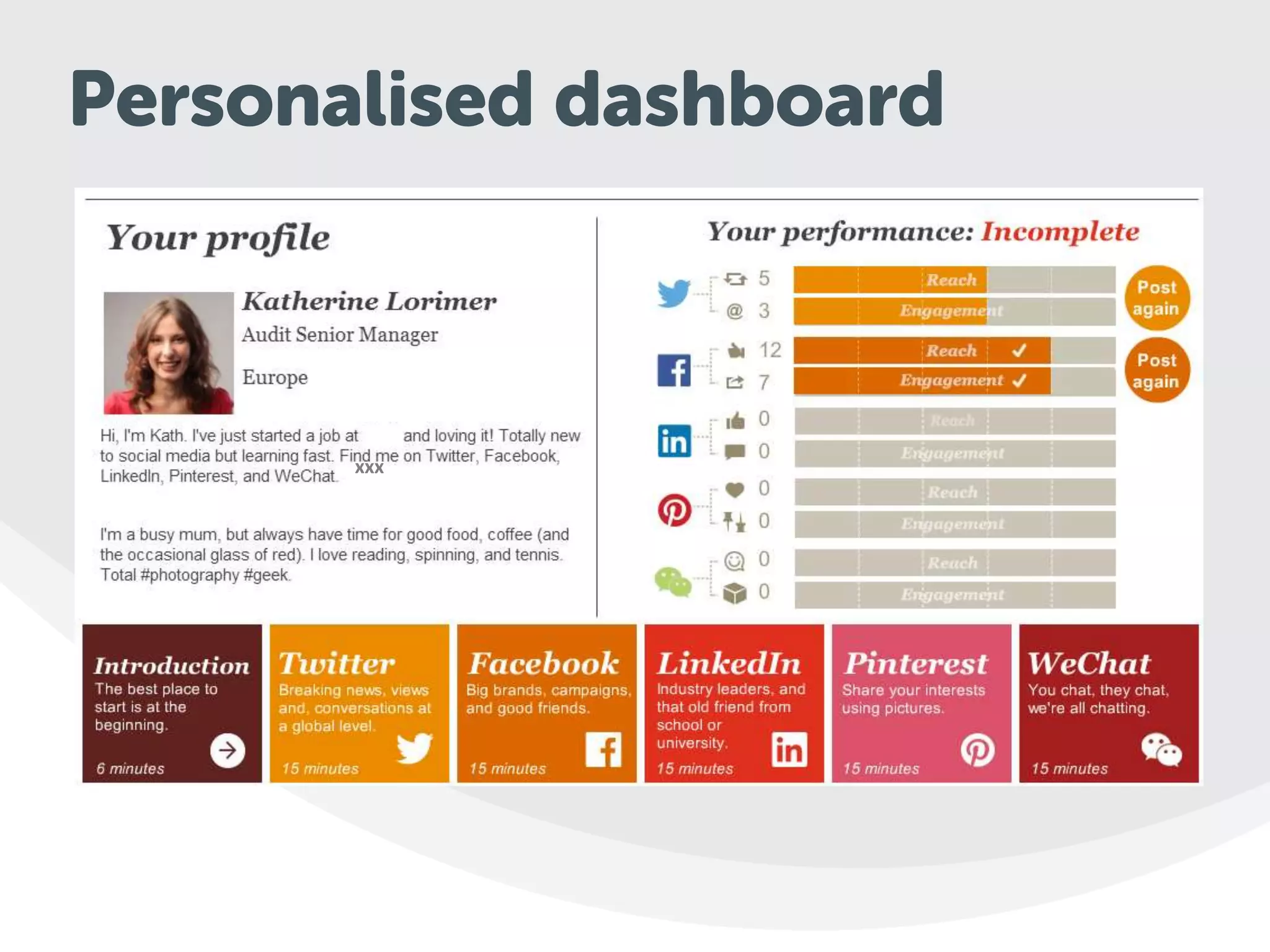
Personalised dashboard
xxx
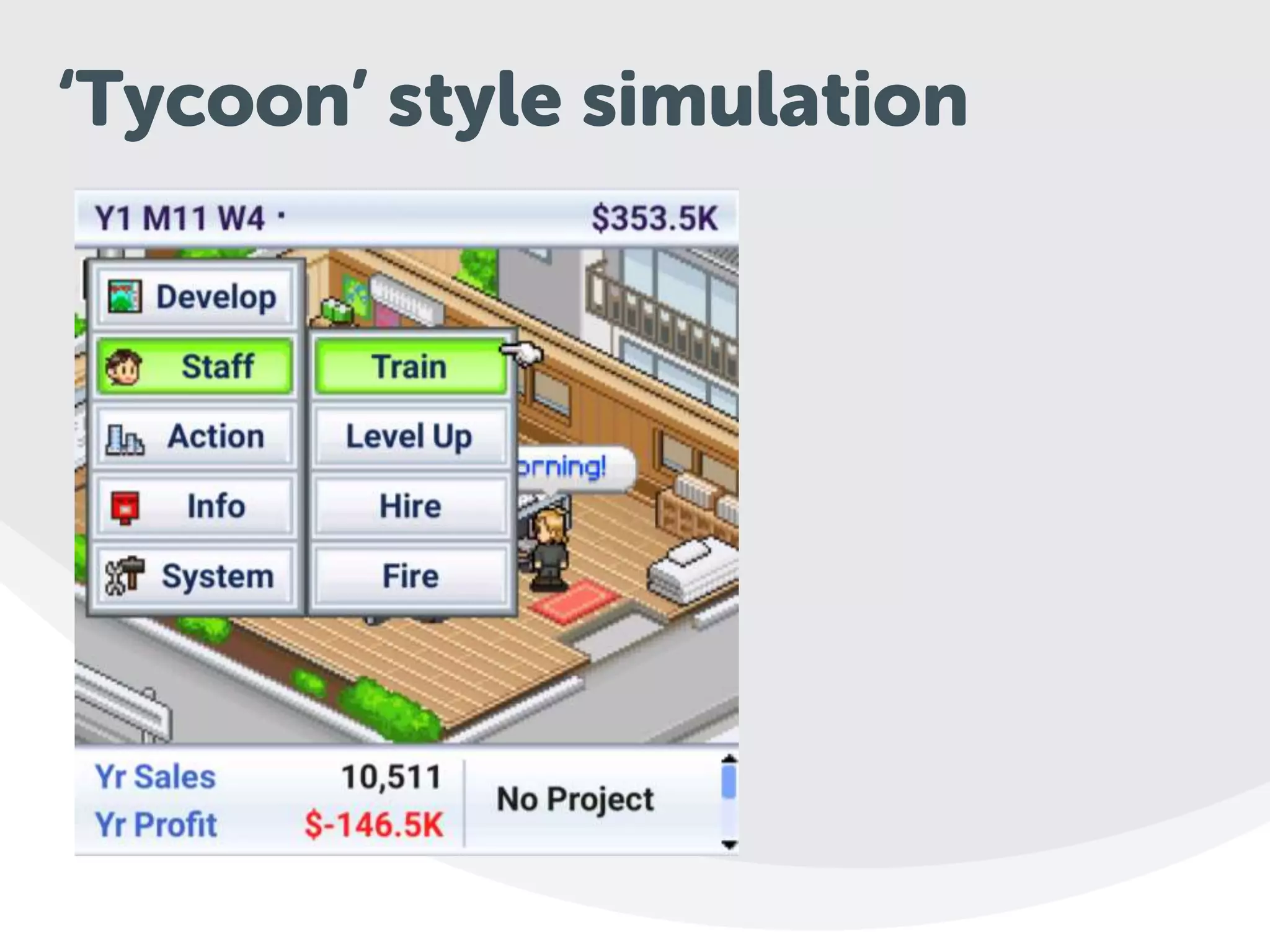
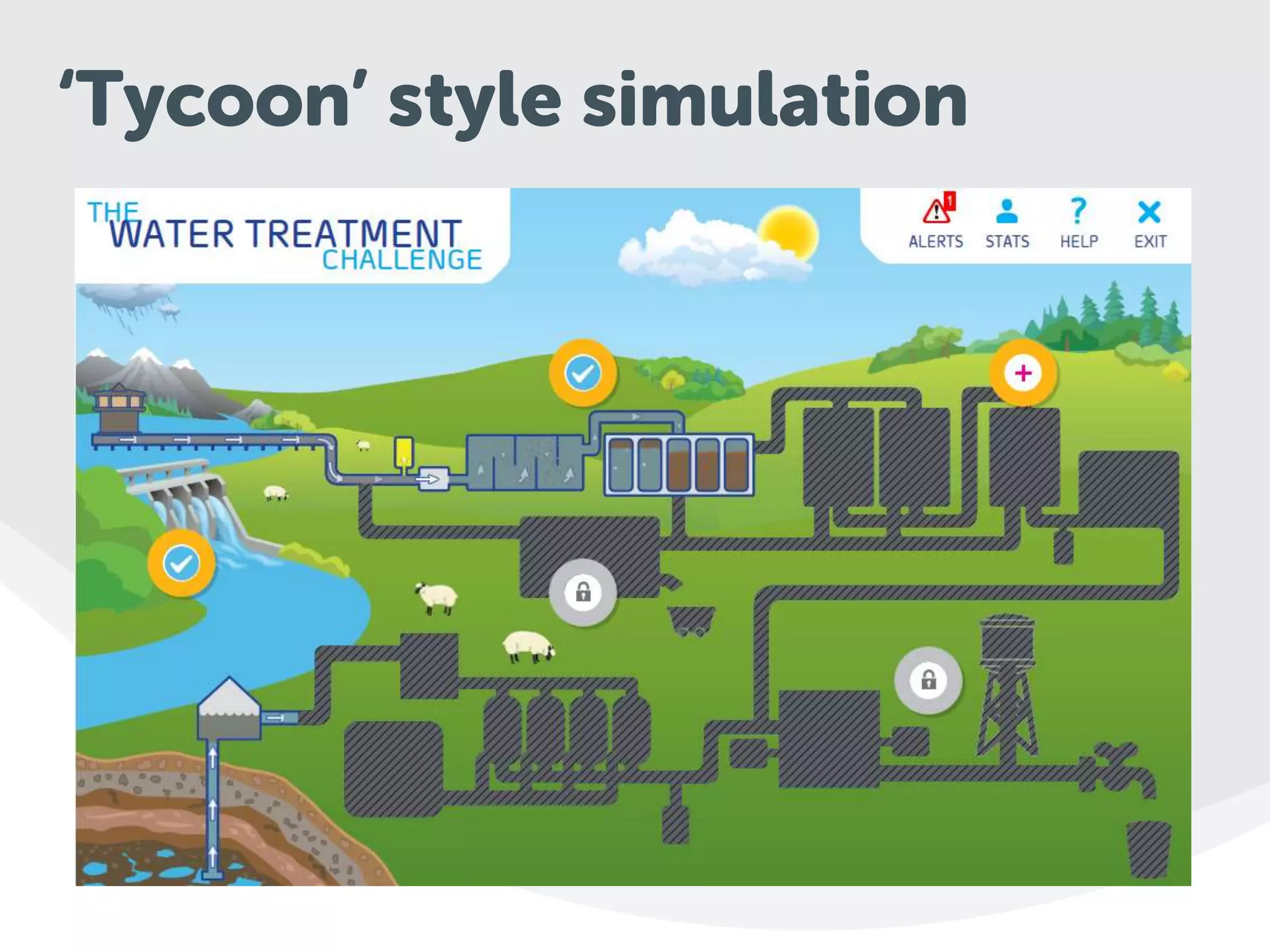
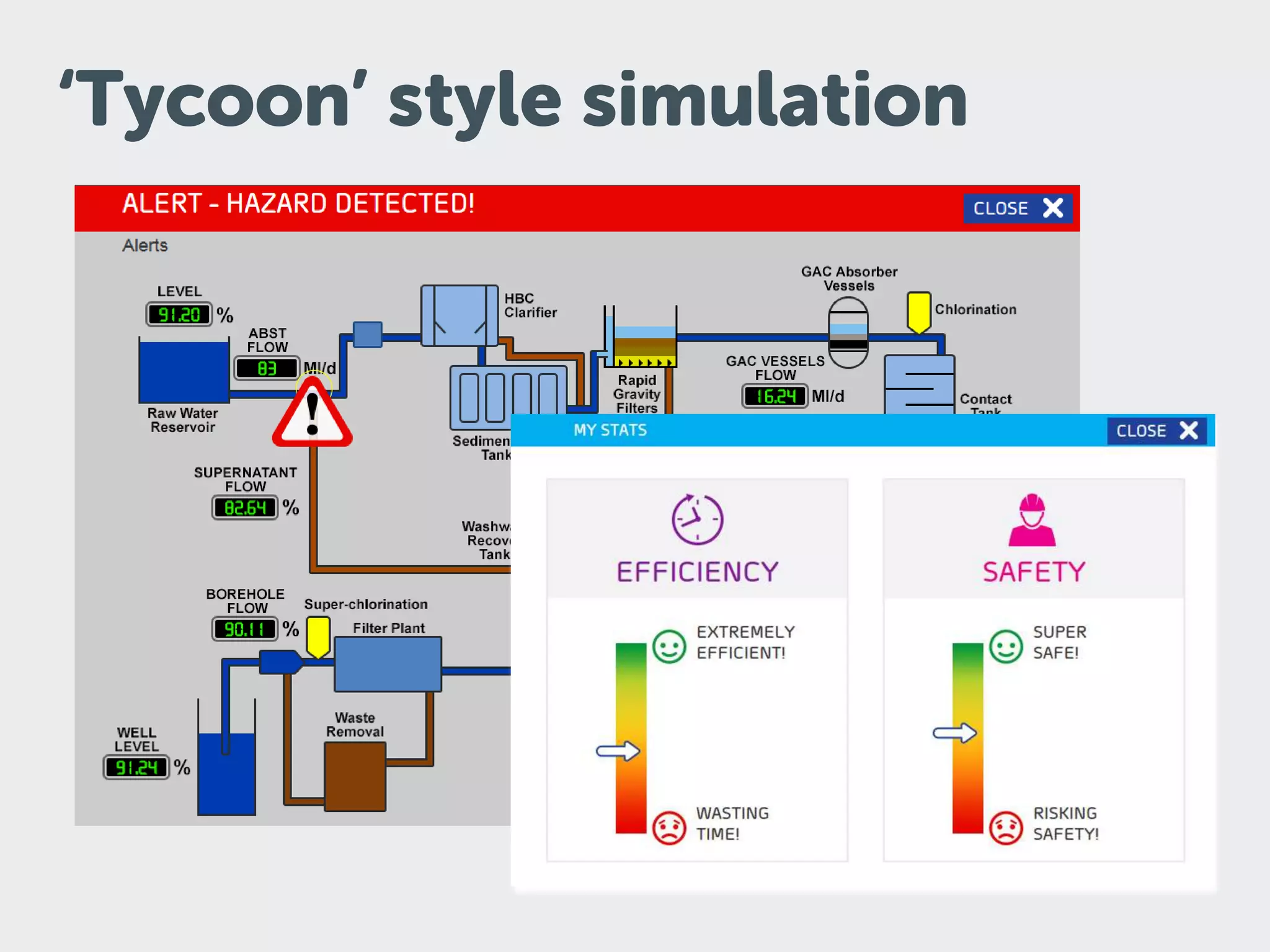
‘Tycoon’ style simulation
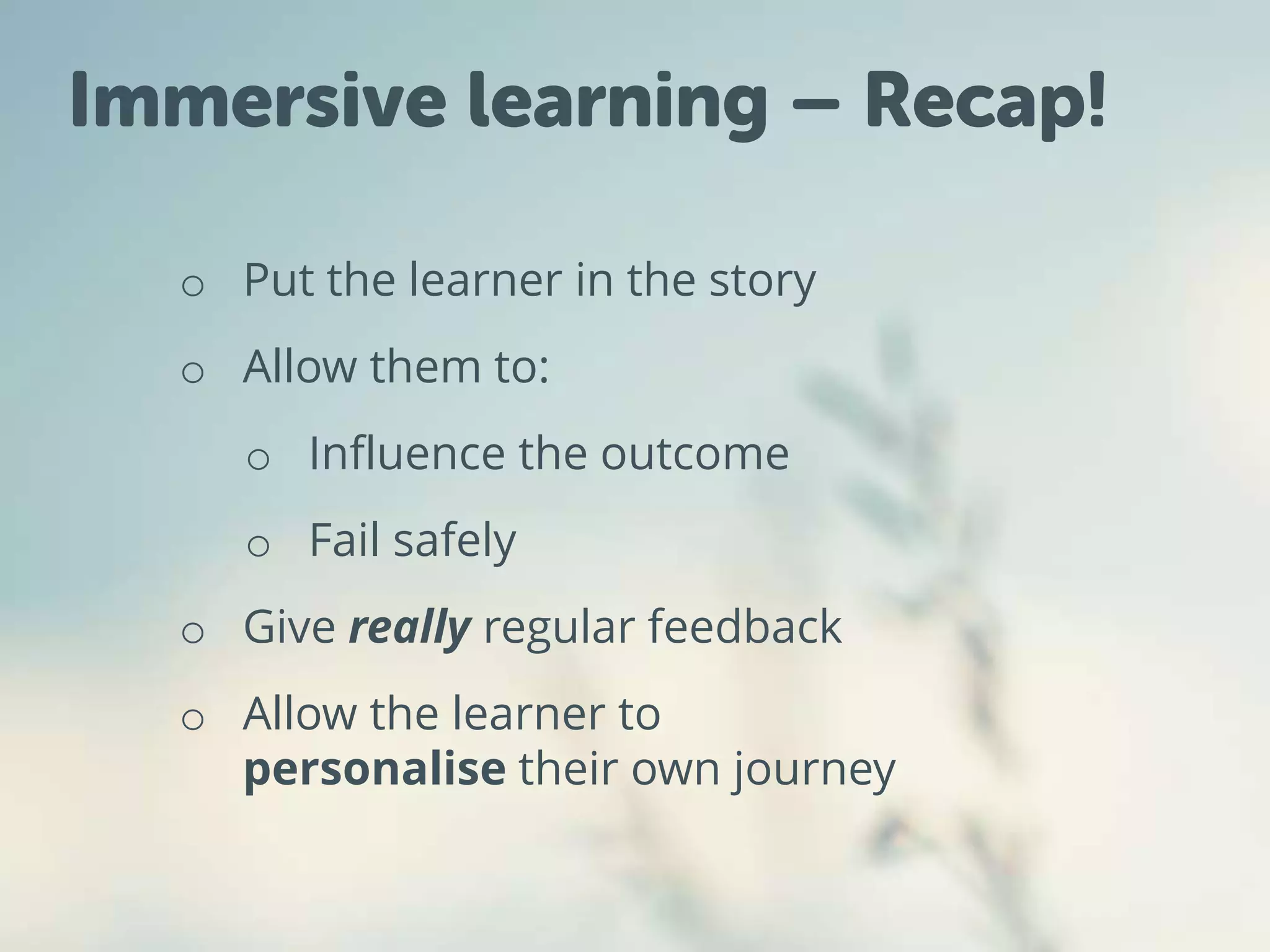
o Put the learner in the story
o Allow them to:
o Influence the outcome
o Fail safely
o Give really regular feedback
o Allow the learner to
personalise their own journey
Immersive learning – Recap!
Thank you
The Way Ahead?
Promoting High Performance
with Personalisation
Myles Runham
Head of Digital, BBC Academy
#learnpersonal
Some perspective
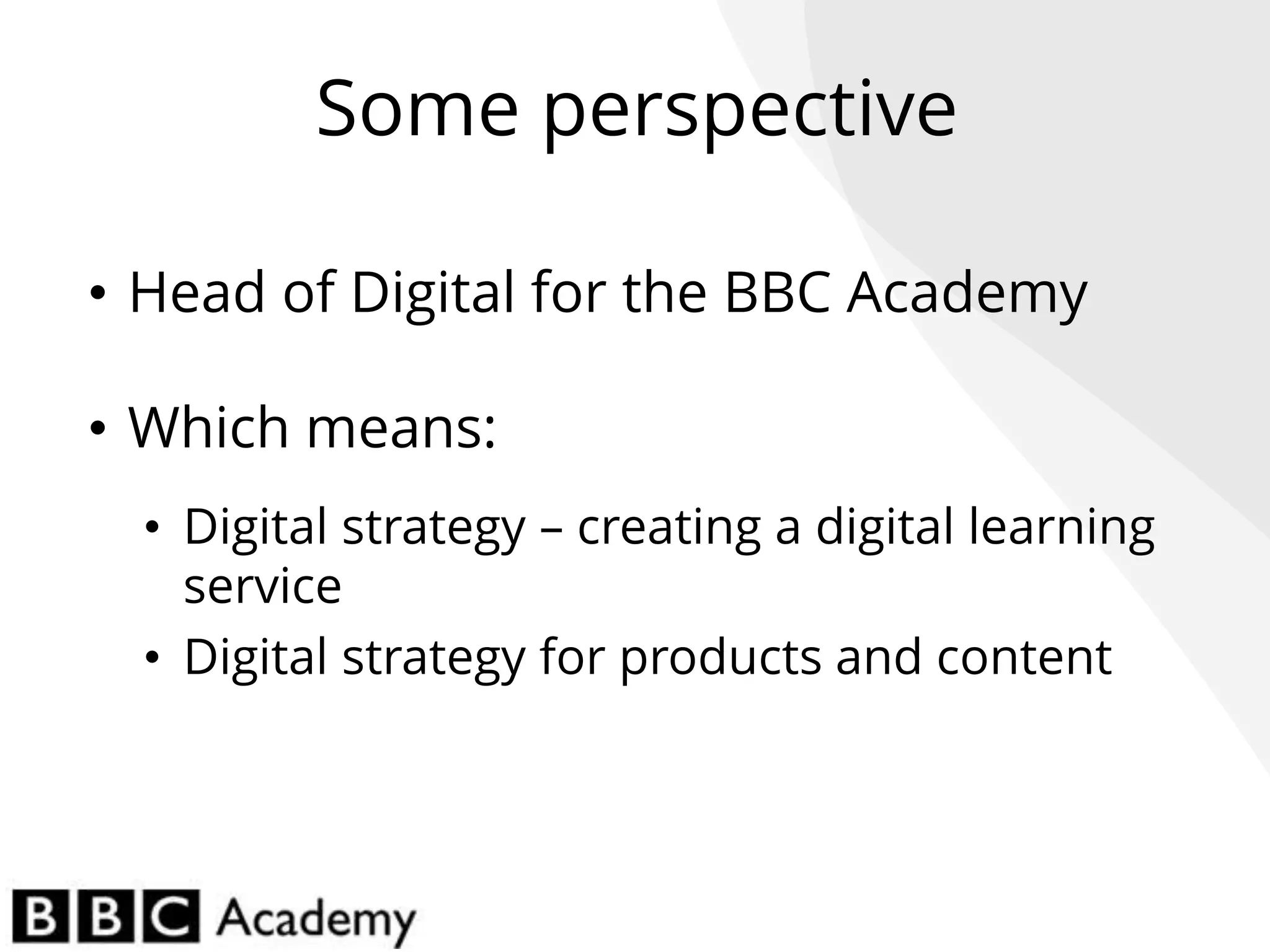
• Head of Digital for the BBC Academy
• Which means:
• Digital strategy – creating a digital learning
service
• Digital strategy for products and content
Breaker
slide
Some perspective
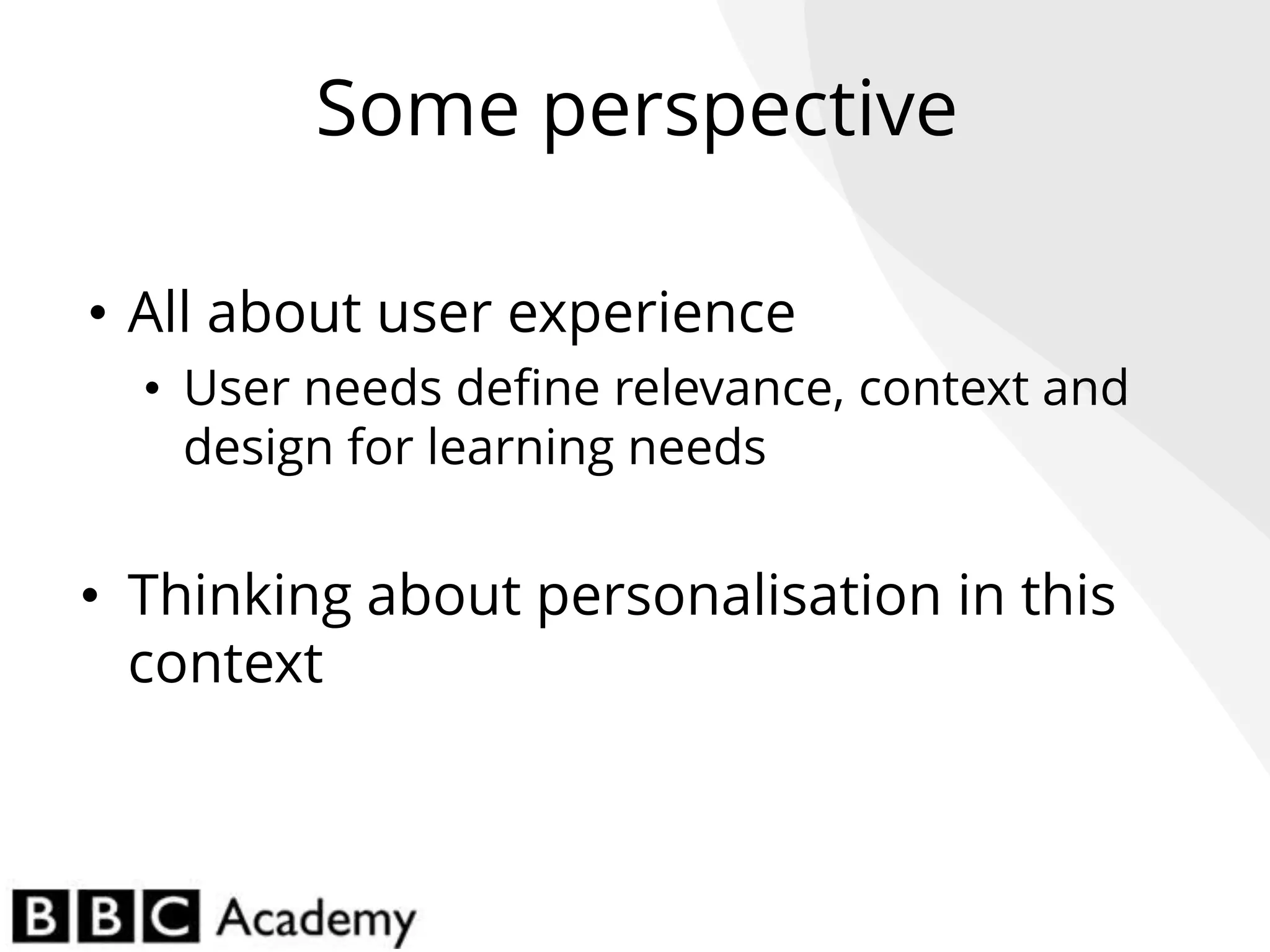
• All about user experience
• User needs define relevance, context and
design for learning needs
• Thinking about personalisation in this
context
What is the market telling us?
• Personalised now = by me for me
• This is not the same as by you for me
• Digital personal experiences set the pace
• I define the relevance for me
• And the place and time of use
• Social network activity (following/friending/liking etc.) is
mechanism of personal choice
• This activity creates the personalised experience
What is the market telling us?
• Personalisation is social now
• Personalised experiences appear via your network
• Trust is implicit
• Needs to be pulled not pushed
• Don’t anticipate need – give control
• Transparency of data and method if possible – “What’s this?”
model is commonplace now
Personalisation v. customisationPersonalisation v. customisation
• Very different ways of tailoring content
• Both appropriate and have their place
• Segments rather than individuals
• Have data for this now (probably)
• Smaller steps to cater for smaller groups
• May not even need personalisation
Personalisation v. customisation
• Customising from templates and catalogues – cheaper
(?) and more predictable
• Sophisticated targeting makes this feel more personal
• Digital advertising model leads the way
• Personal assistants setting the trend – e.g. Google Now
• Customise via these products?
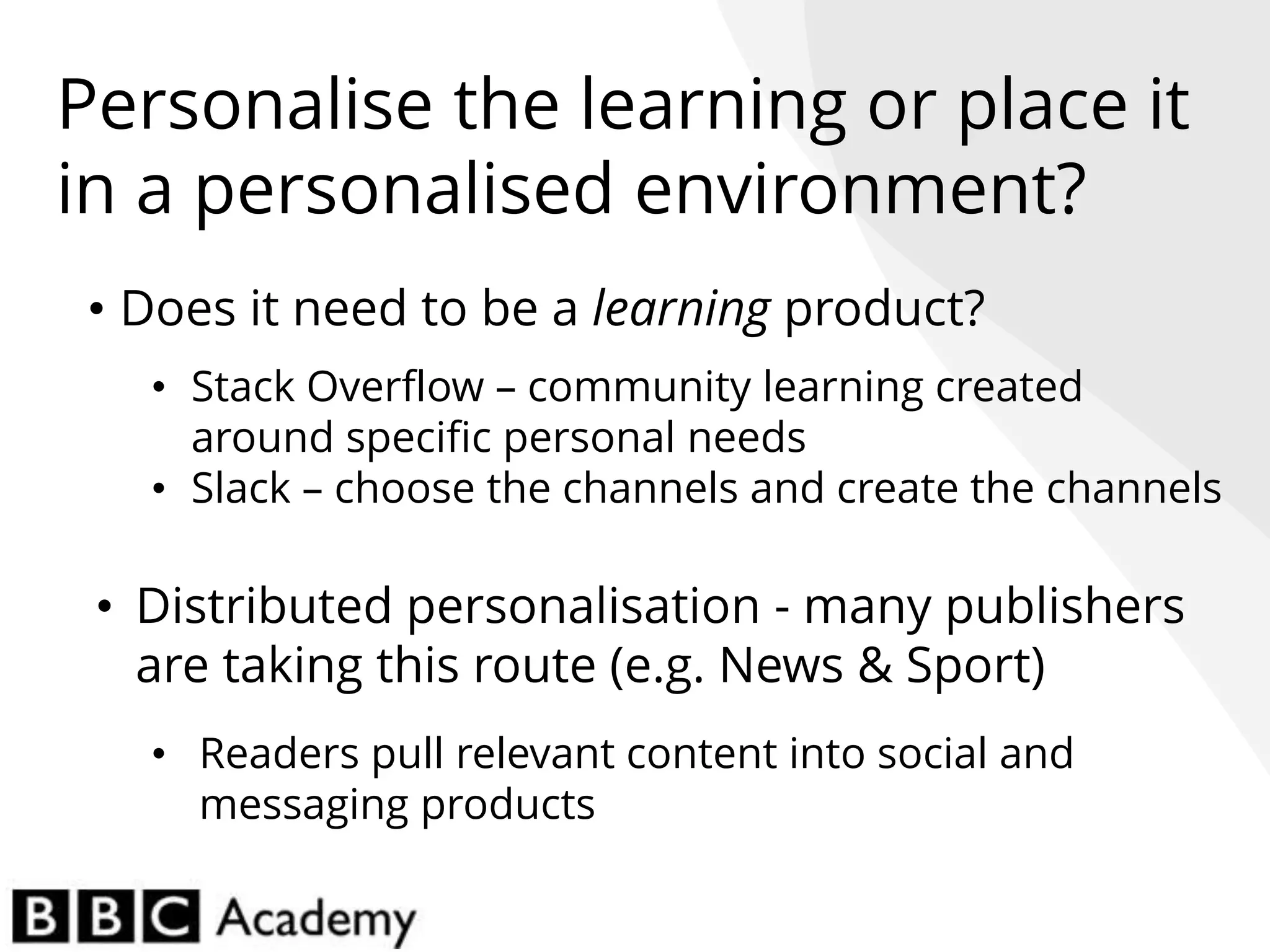
• Does it need to be a learning product?
• Stack Overflow – community learning created
around specific personal needs
• Slack – choose the channels and create the channels
• Distributed personalisation - many publishers
are taking this route (e.g. News & Sport)
• Readers pull relevant content into social and
messaging products
Personalise the learning or place it
in a personalised environment?
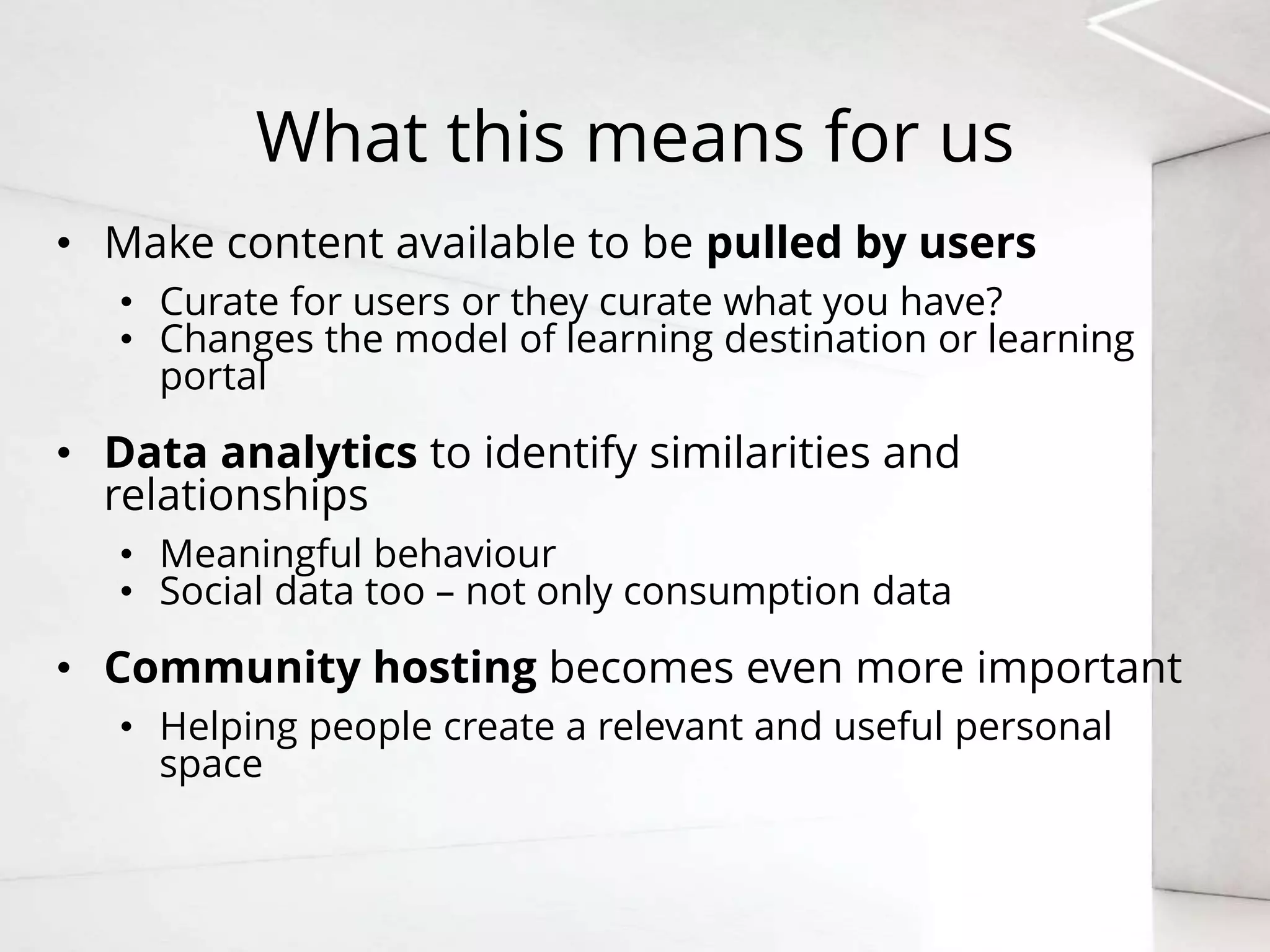
• Make content available to be pulled by users
• Curate for users or they curate what you have?
• Changes the model of learning destination or learning
portal
• Data analytics to identify similarities and
relationships
• Meaningful behaviour
• Social data too – not only consumption data
• Community hosting becomes even more important
• Helping people create a relevant and useful personal
space
What this means for us
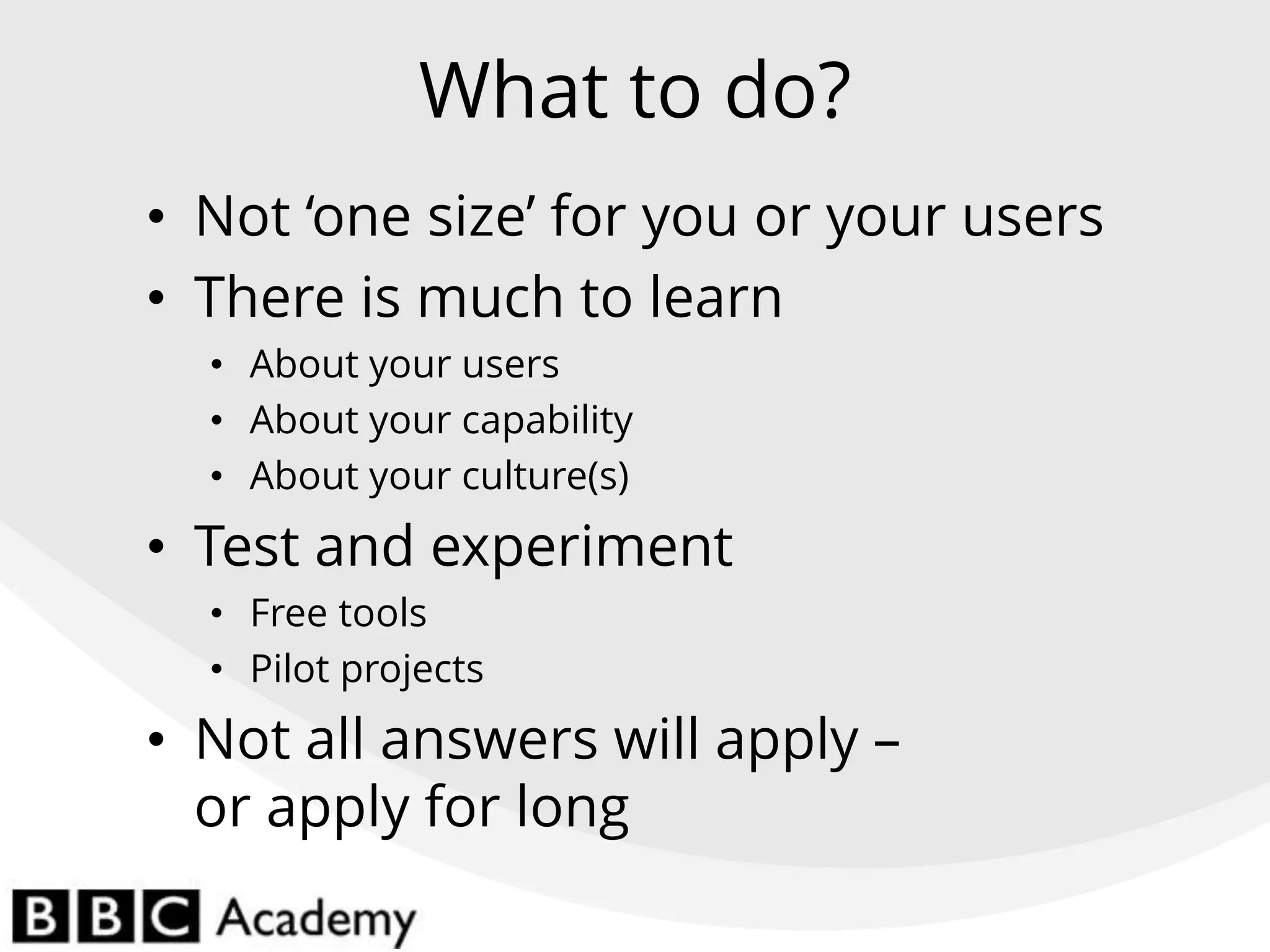
What to do?
• Not ‘one size’ for you or your users
• There is much to learn
• About your users
• About your capability
• About your culture(s)
• Test and experiment
• Free tools
• Pilot projects
• Not all answers will apply –
or apply for long
#learnpersonal
Promoting high
performance with
personalised learning
Caroline Walmsley, MD
Brightwave Group
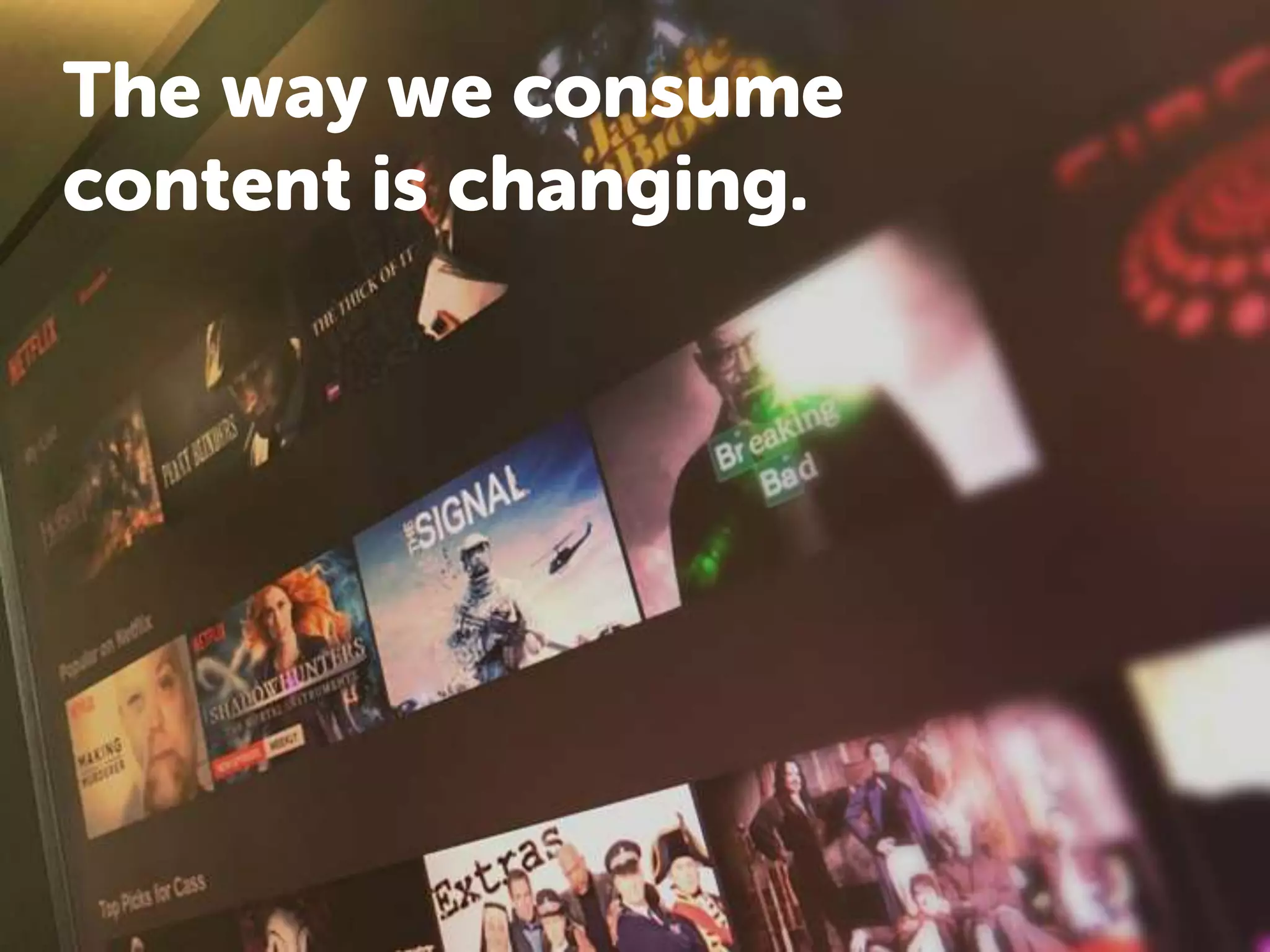
The way we consume
content is changing.
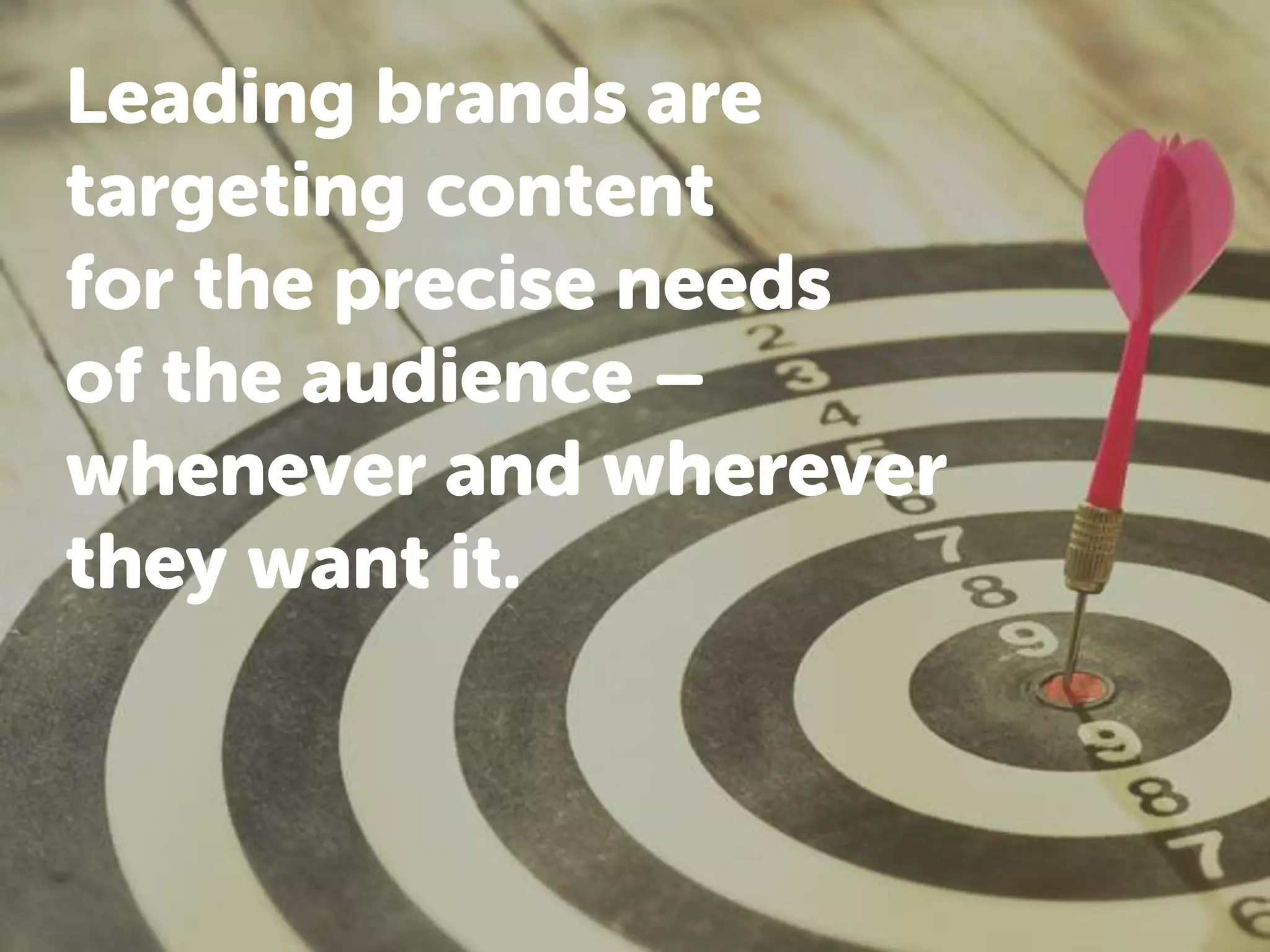
Leading brands are
targeting content
for the precise needs
of the audience –
whenever and wherever
they want it.
Personalised learning answers
today’s core L&D challenges:
o Employee engagement
o Professional development
o Performance support
Core elements of
personalisation:
o Adaptive technology
o Multi-channel
o Data and analytics
o Capability frameworks
o Learning pathways
Employee engagement
Employee engagement
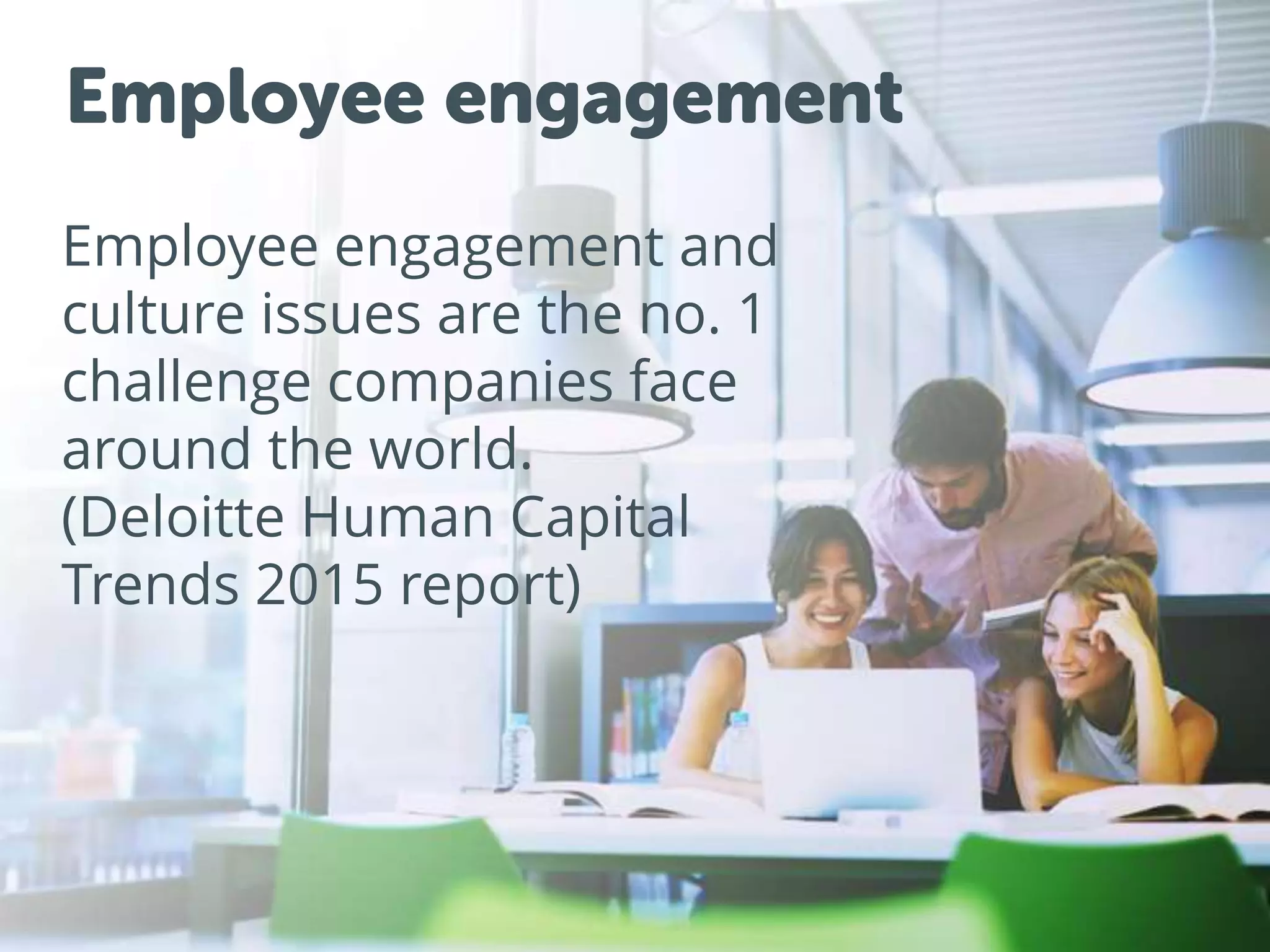
Employee engagement and
culture issues are the no. 1
challenge companies face
around the world.
(Deloitte Human Capital
Trends 2015 report)
Professional development
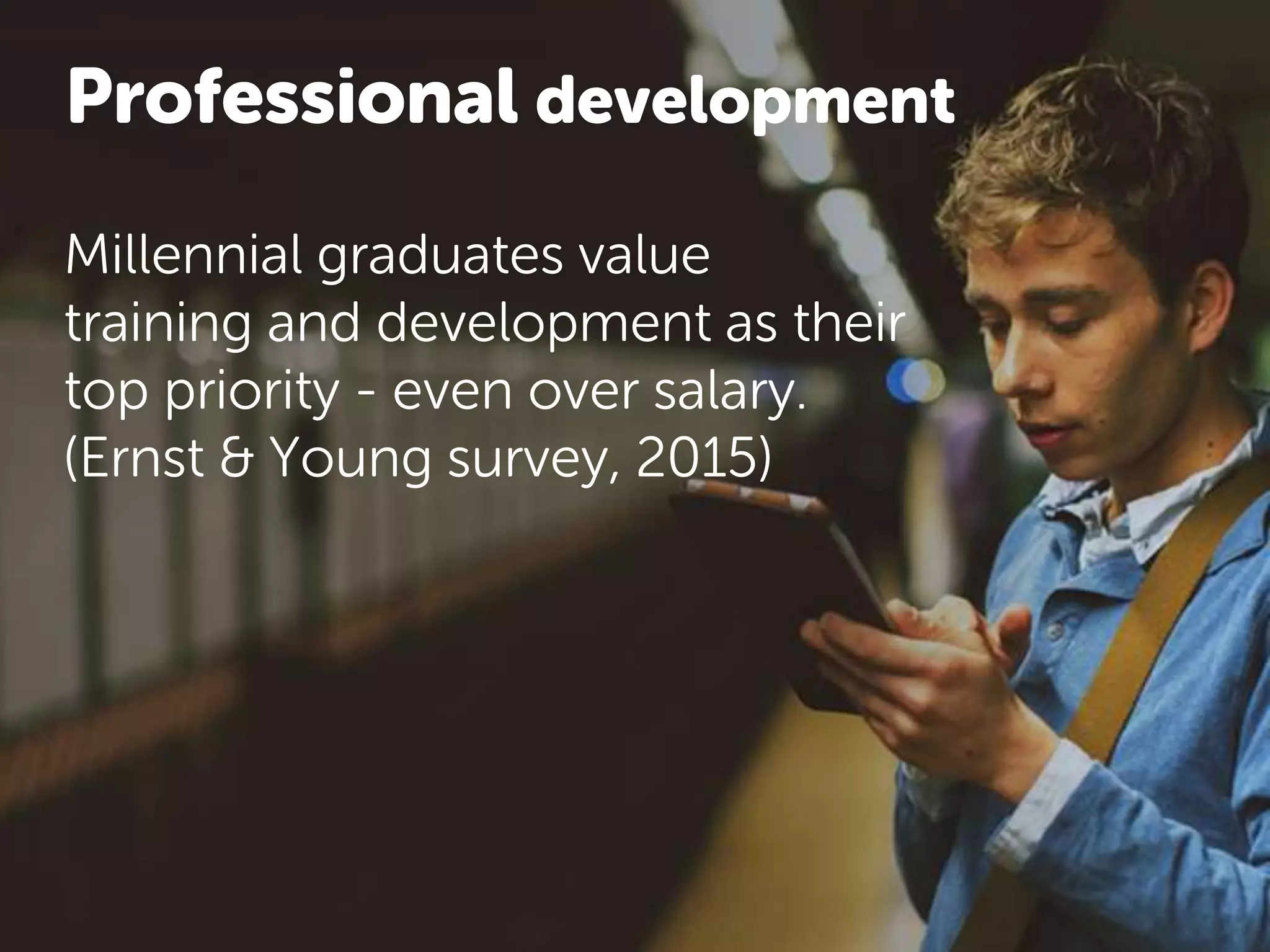
Millennial graduates value
training and development as their
top priority - even over salary.
(Ernst & Young survey, 2015)
Performance support
Performance support
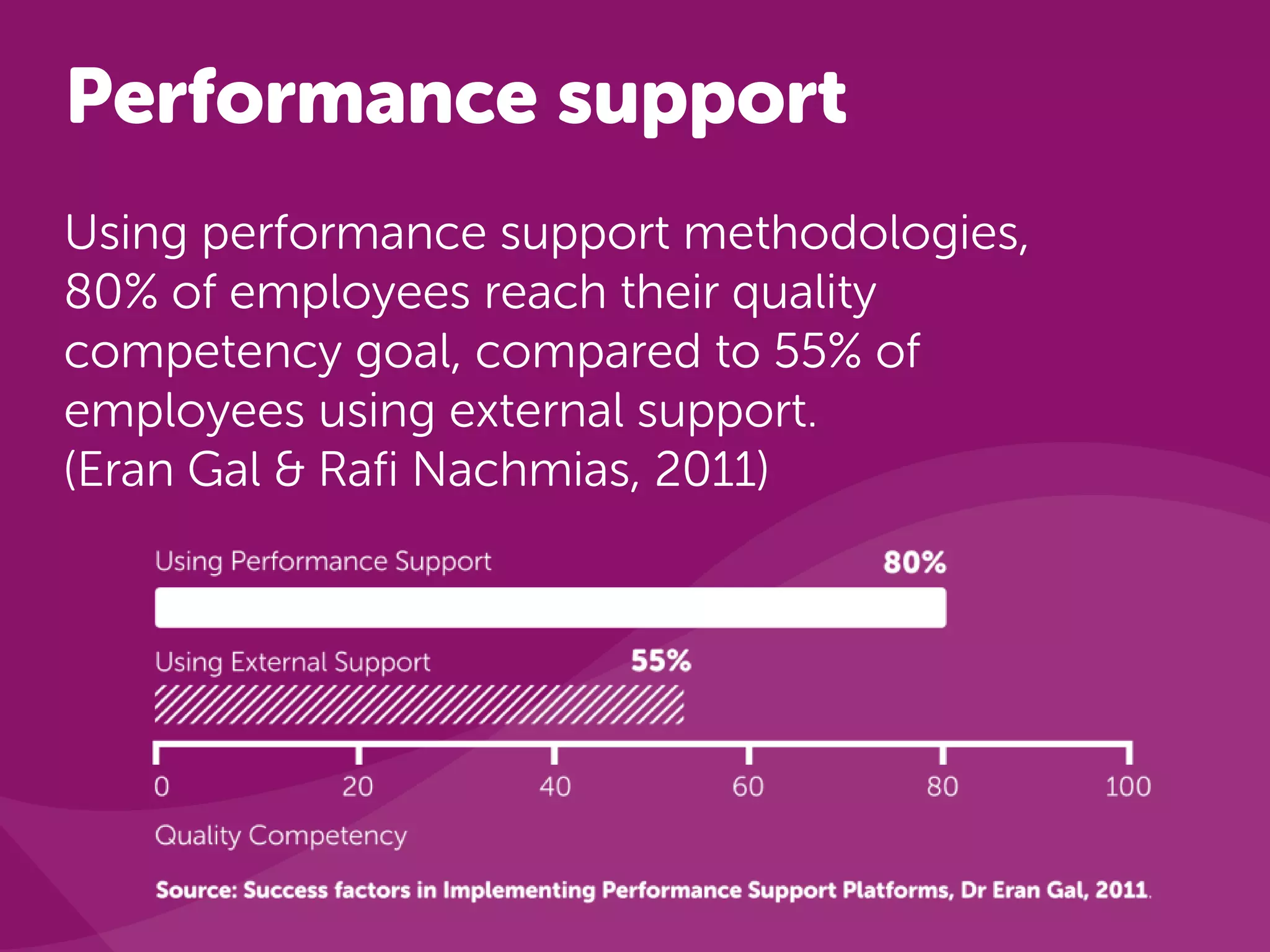
Using performance support methodologies,
80% of employees reach their quality
competency goal, compared to 55% of
employees using external support.
(Eran Gal & Rafi Nachmias, 2011)
Thank you
#learnpersonal
Continue the conversation:
find us on stand D21

The way ahead? Promoting high performance with personalised learning

  • 1.
    The way ahead? Promotinghigh performance with personalised learning Chair: Caroline Freeman Head of Learning Design, Brightwave Group #learnpersonal
  • 2.
    Caroline Walmsley MD, BrightwaveGroup Colin Welch Head of Production, Brightwave Group Robin Hoyle Author and Senior Consultant, Learnworks Ltd. Myles Runham Head of Digital, BBC Academy
  • 3.
    The way ahead: •Welcome and introduction • Robin Hoyle - Poll and QA • Colin Welch - Poll and QA • Myles Runham - Poll and QA • Caroline Walmsley - Poll and QA • Closing remarks #learnpersonal
  • 4.
    Breaker slide #learnpersonal Polling • After eachspeaker we’ll ask a Twitter poll (multiple choice question) • Include one of the keywords in your answer: • e.g. ‘Existing skills’ • Also include the right hashtag in your answer: • #LTQ1 • #LTQ2 • #LTQ3 • #LTQ4
  • 5.
    The Way Ahead? PromotingHigh Performance with Personalisation #learnpersonal
  • 6.
    Robin Hoyle Author andSenior Consultant, Learnworks Ltd. and author of Complete Training and Informal Learning in Organizations.
  • 7.
    One size doesnot fit all Course Resource eLearning Collaboration
  • 8.
    People don’t knowwhat they don’t know
  • 9.
  • 11.
    The danger ofthe Me-shaped world
  • 12.
    Sharples, M., etal (2013). Innovating Pedagogy 2013: Open University Innovation Report 2. Milton Keynes: The Open University ,p18 ‘This personalized ‘Me-shaped-world’ is a form of seamless learning by induction: we come to see the world as constructed around our interactions with it. The benefit is that relevant information may always be ready to hand, but the danger is that this prevents us from seeing alternative perspectives. We may come to believe that our experiences, views, preferences and connections are not just the most relevant, but all there is.’ Me-shaped world
  • 13.
    Summary Whereas one sizedoes not fit all…. Beware: • People don’t know what they don’t know. If you always do what you always did, you always get what you always got • Dumb algorithms and our over reliance on our ability to utilise data • The Me-shaped-world is not the whole story – it may not even be the most important part.
  • 14.
  • 15.
  • 16.
  • 17.
  • 18.
    ‘The future oftechnology driven learning is immersive… I am 'in' the learning experience and I am practicing doing the things that I need to do better. I am making decisions.’ - Koreen Pagano - Immersive Learning Immersive Learning
  • 19.
  • 20.
    o The oldestform of learning o You empathise with the characters o The structure of narrative reflects the way our brains work o It’s memorable Storytelling
  • 21.
    o You makedecisions o You see the impact of those decisions o You can fail safely and try again o It’s memorable Gaming:
  • 22.
    ‘The average eLearningcourse gives you feedback every 5-10 minutes, the average game is 7-10 seconds.’ The importance of feedback - Julie Dirksen, 2010
  • 23.
  • 24.
    A man walksin to a bar…
  • 25.
    A man walksin to a bar…
  • 26.
    A man walksin to a bar…
  • 27.
    A man walksin to a bar…
  • 28.
    Devlearn DemoFest o Itwas completely immersive and contextual o Focussed on true behaviour change o The feedback was very authentic and fun, not just "good job, click next"
  • 29.
  • 30.
    3_110 Team Solve Updateon workstreams. Ella has reached different conclusion from Daniel Video 3_120 Dissent What should Ella do? a) Make statement b) Explore data sets c) Finish survey first Dilemma 3_100 Time/ travel story Three weeks passing. Key developments. Montage of Daniel, Ella, Sharon. Photostory 3_131 State If a) Daniel sees Ella’s statement as a criticism. Hatti says to ask Clara. Video 3_132 Explore If b) Ella’s follows feedback model. Hatti suggests she meets Clara a Video 3_133 Postpone If c) Ella says nothing. No discussion, no meeting with Clara proposed. Video Complex branched narrative
  • 31.
  • 32.
  • 33.
  • 34.
  • 35.
  • 36.
    o Put thelearner in the story o Allow them to: o Influence the outcome o Fail safely o Give really regular feedback o Allow the learner to personalise their own journey Immersive learning – Recap!
  • 37.
  • 38.
    The Way Ahead? PromotingHigh Performance with Personalisation Myles Runham Head of Digital, BBC Academy #learnpersonal
  • 39.
    Some perspective • Headof Digital for the BBC Academy • Which means: • Digital strategy – creating a digital learning service • Digital strategy for products and content
  • 40.
    Breaker slide Some perspective • Allabout user experience • User needs define relevance, context and design for learning needs • Thinking about personalisation in this context
  • 41.
    What is themarket telling us? • Personalised now = by me for me • This is not the same as by you for me • Digital personal experiences set the pace • I define the relevance for me • And the place and time of use • Social network activity (following/friending/liking etc.) is mechanism of personal choice • This activity creates the personalised experience
  • 42.
    What is themarket telling us? • Personalisation is social now • Personalised experiences appear via your network • Trust is implicit • Needs to be pulled not pushed • Don’t anticipate need – give control • Transparency of data and method if possible – “What’s this?” model is commonplace now
  • 43.
    Personalisation v. customisationPersonalisationv. customisation • Very different ways of tailoring content • Both appropriate and have their place • Segments rather than individuals • Have data for this now (probably) • Smaller steps to cater for smaller groups • May not even need personalisation
  • 44.
    Personalisation v. customisation •Customising from templates and catalogues – cheaper (?) and more predictable • Sophisticated targeting makes this feel more personal • Digital advertising model leads the way • Personal assistants setting the trend – e.g. Google Now • Customise via these products?
  • 45.
    • Does itneed to be a learning product? • Stack Overflow – community learning created around specific personal needs • Slack – choose the channels and create the channels • Distributed personalisation - many publishers are taking this route (e.g. News & Sport) • Readers pull relevant content into social and messaging products Personalise the learning or place it in a personalised environment?
  • 46.
    • Make contentavailable to be pulled by users • Curate for users or they curate what you have? • Changes the model of learning destination or learning portal • Data analytics to identify similarities and relationships • Meaningful behaviour • Social data too – not only consumption data • Community hosting becomes even more important • Helping people create a relevant and useful personal space What this means for us
  • 47.
    What to do? •Not ‘one size’ for you or your users • There is much to learn • About your users • About your capability • About your culture(s) • Test and experiment • Free tools • Pilot projects • Not all answers will apply – or apply for long
  • 48.
    #learnpersonal Promoting high performance with personalisedlearning Caroline Walmsley, MD Brightwave Group
  • 49.
    The way weconsume content is changing.
  • 50.
    Leading brands are targetingcontent for the precise needs of the audience – whenever and wherever they want it.
  • 51.
    Personalised learning answers today’score L&D challenges: o Employee engagement o Professional development o Performance support
  • 52.
    Core elements of personalisation: oAdaptive technology o Multi-channel o Data and analytics o Capability frameworks o Learning pathways
  • 53.
  • 54.
    Employee engagement Employee engagementand culture issues are the no. 1 challenge companies face around the world. (Deloitte Human Capital Trends 2015 report)
  • 55.
  • 56.
    Professional development Millennial graduatesvalue training and development as their top priority - even over salary. (Ernst & Young survey, 2015)
  • 57.
  • 58.
    Performance support Using performancesupport methodologies, 80% of employees reach their quality competency goal, compared to 55% of employees using external support. (Eran Gal & Rafi Nachmias, 2011)
  • 59.
    Thank you #learnpersonal Continue theconversation: find us on stand D21