CIPD L&D Show
May 2014
www.brightwave.co.uk
Next generation learning:
How new technologies are
changing the game
Meg Green
Head of Production (Products)
• Trends that impact organisational
learning.
• What do learners want/need?
• What are the challenges for L&D
departments?
• How new innovations in
technology help bridge these
and provide real benefit for
organisations.
Today we’ll be looking at…
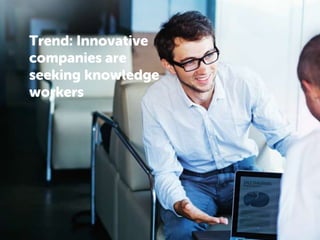
Trend: Innovative
companies are
seeking knowledge
workers
"We're seeing more and more jobs that
simply didn't exist five years ago but
were created as a result of employees
driving toward new goals and
objectives."
– Chris Hoyt, a recruiting strategist at
PepsiCo [www.fastcompany.com]
Empowered learners, wanting to
enhance their own knowledge…this is
the dream of Learning &
Development…
Right?
What challenge does this trend
present for L&D teams?
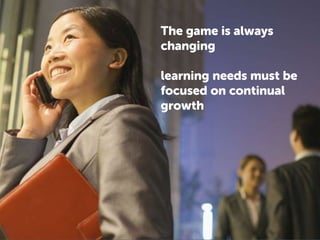
The game is always
changing
learning needs must be
focused on continual
growth
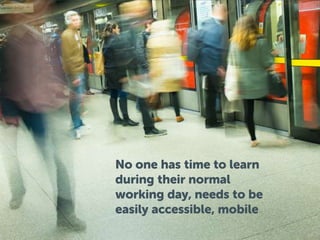
No one has time to learn
during their normal
working day, needs to be
easily accessible, mobile
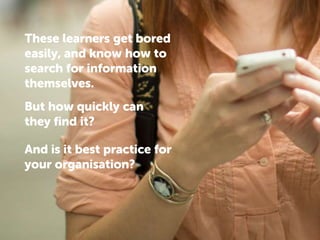
These learners get bored
easily, and know how to
search for information
themselves.
But how quickly can
they find it?
And is it best practice for
your organisation?
• Give learners a cutting edge environment where they can
take control, find content that’s interesting to them
• Show learners not only what they should do, but what they
might want to do next
• Not only show them what to do, but ask them what they’ve
done
• See what external and internal learning is most useful and
impactful, and quickly and easily make updates
• Provide instant access, from anywhere, anytime
What if we could…
Trend:
multiple
careers per
learner
• At all levels
• Subject matter experts… leave!
Challenges –
knowledge loss
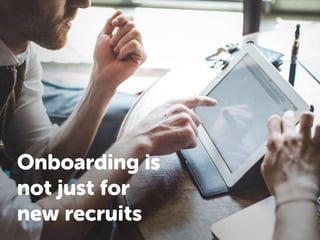
Onboarding is
not just for
new recruits
What if we could…
• Provide learners with a specific space to quickly get
up to speed on their new role, with a community
focus
• Harness existing knowledge from experts at all levels
of the business and use that knowledge to help train
new staff
• Motivate and engage existing employees to share
their own expertise, reducing the cost of content
creation
• Create a space to share best practice and coach
people starting in new roles within an organisation
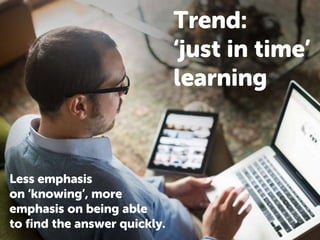
Less emphasis
on ‘knowing’, more
emphasis on being able
to find the answer quickly.
Trend:
‘just in time’
learning
• Learners need bite-sized learning,
search enabled
• Mobile and instant access is vital
What do learners
need?
‘I know what I need,
I can just find it
myself – I’ll just
google it’
• L&D as framework owners and
curators
• Introducing the coach
New opportunities
What if we could…
• Create a google atmosphere with
bite-sized, just in time learning, that
achieves larger business objectives
• Give learners additional focus and
attention with 1:1 coaching and
feedback, framed by role-based
objectives that encapsulate formal
and informal learning
• Learners are more attuned to technology
than ever before – the emerging workforce
don’t know how to cope without it
• Learners are more aware of the boundaries
and etiquette of online social interaction than
ever before
• Organisations are starting more and more to
use social tools for learning – 66% according
to the latest Towards Maturity benchmark
The good news
New learning
technologies
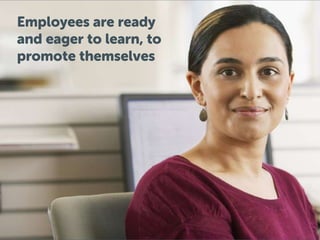
Employees are ready
and eager to learn, to
promote themselves
1. promote meaningful connections between learners,
even across distance
2. provide instant access to carefully curated resources at
time of need
3. capture learning from individuals for future use by
organisations or learners themselves
4. enable companies to swiftly on-board their ever-
changing staff
5. provide an org-led framework to qualify informal
learning
6. motivate learners to use their own time to better their
opportunities in your organisations
So how can we…?
How can a total
learning system take us
a step away from the
traditional LMS and…
• Improve engagement
• Reduce cost
• Increase quality productivity
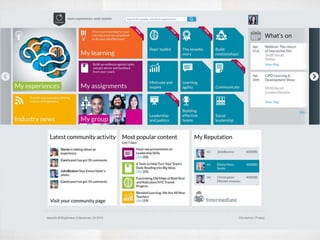
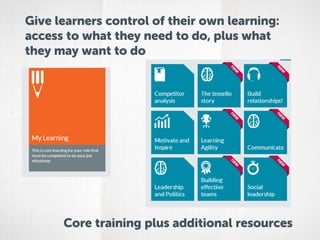
Give learners control of their own learning:
access to what they need to do, plus what
they may want to do
Core training plus additional resources
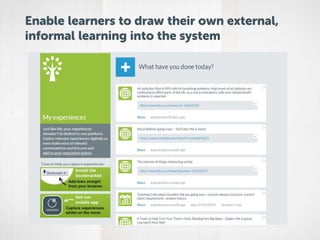
Enable learners to draw their own external,
informal learning into the system
Give time for reflection on informal learning
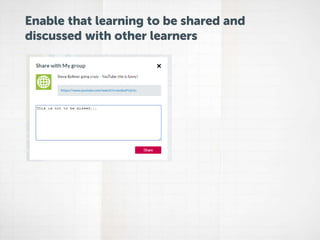
Enable that learning to be shared and
discussed with other learners
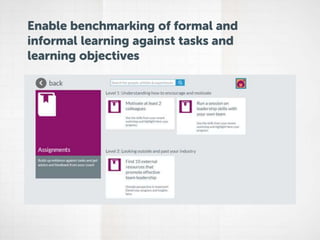
Enable benchmarking of formal and
informal learning against tasks and
learning objectives
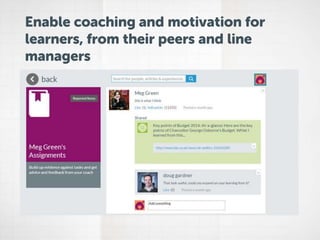
Enable coaching and motivation for
learners, from their peers and line
managers
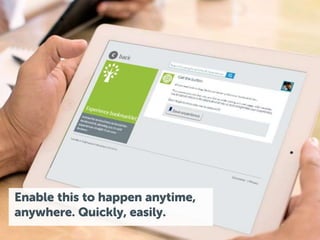
Enable this to happen anytime,
anywhere. Quickly, easily.
Organisations can benefit from the
work these employees are ALREADY
putting in, but currently can’t be
harnessed by the organisation.
• Other learners benefit
• Organisations get to keep the
learning for future onboarding
• Orgs get the data to show the work
patterns and informal learning
activity of motivated/engaged
employees
Harnessing these
opportunities enables
organisations to
promote:
• Faster learning
• Smarter working
• Stronger performance
Thank you
Any questions? Come see us on
stand 456

Next Gen Learning: How New Tech is Changing the Game

  • 1.
    CIPD L&D Show May2014 www.brightwave.co.uk Next generation learning: How new technologies are changing the game Meg Green Head of Production (Products)
  • 2.
    • Trends thatimpact organisational learning. • What do learners want/need? • What are the challenges for L&D departments? • How new innovations in technology help bridge these and provide real benefit for organisations. Today we’ll be looking at…
  • 3.
  • 4.
    "We're seeing moreand more jobs that simply didn't exist five years ago but were created as a result of employees driving toward new goals and objectives." – Chris Hoyt, a recruiting strategist at PepsiCo [www.fastcompany.com]
  • 5.
    Empowered learners, wantingto enhance their own knowledge…this is the dream of Learning & Development… Right? What challenge does this trend present for L&D teams?
  • 6.
    The game isalways changing learning needs must be focused on continual growth
  • 7.
    No one hastime to learn during their normal working day, needs to be easily accessible, mobile
  • 8.
    These learners getbored easily, and know how to search for information themselves. But how quickly can they find it? And is it best practice for your organisation?
  • 9.
    • Give learnersa cutting edge environment where they can take control, find content that’s interesting to them • Show learners not only what they should do, but what they might want to do next • Not only show them what to do, but ask them what they’ve done • See what external and internal learning is most useful and impactful, and quickly and easily make updates • Provide instant access, from anywhere, anytime What if we could…
  • 10.
  • 11.
    • At alllevels • Subject matter experts… leave! Challenges – knowledge loss
  • 12.
    Onboarding is not justfor new recruits
  • 13.
    What if wecould… • Provide learners with a specific space to quickly get up to speed on their new role, with a community focus • Harness existing knowledge from experts at all levels of the business and use that knowledge to help train new staff • Motivate and engage existing employees to share their own expertise, reducing the cost of content creation • Create a space to share best practice and coach people starting in new roles within an organisation
  • 14.
    Less emphasis on ‘knowing’,more emphasis on being able to find the answer quickly. Trend: ‘just in time’ learning
  • 15.
    • Learners needbite-sized learning, search enabled • Mobile and instant access is vital What do learners need?
  • 16.
    ‘I know whatI need, I can just find it myself – I’ll just google it’
  • 17.
    • L&D asframework owners and curators • Introducing the coach New opportunities
  • 18.
    What if wecould… • Create a google atmosphere with bite-sized, just in time learning, that achieves larger business objectives • Give learners additional focus and attention with 1:1 coaching and feedback, framed by role-based objectives that encapsulate formal and informal learning
  • 19.
    • Learners aremore attuned to technology than ever before – the emerging workforce don’t know how to cope without it • Learners are more aware of the boundaries and etiquette of online social interaction than ever before • Organisations are starting more and more to use social tools for learning – 66% according to the latest Towards Maturity benchmark The good news
  • 20.
  • 21.
    Employees are ready andeager to learn, to promote themselves
  • 22.
    1. promote meaningfulconnections between learners, even across distance 2. provide instant access to carefully curated resources at time of need 3. capture learning from individuals for future use by organisations or learners themselves 4. enable companies to swiftly on-board their ever- changing staff 5. provide an org-led framework to qualify informal learning 6. motivate learners to use their own time to better their opportunities in your organisations So how can we…?
  • 23.
    How can atotal learning system take us a step away from the traditional LMS and… • Improve engagement • Reduce cost • Increase quality productivity
  • 25.
    Give learners controlof their own learning: access to what they need to do, plus what they may want to do Core training plus additional resources
  • 26.
    Enable learners todraw their own external, informal learning into the system
  • 27.
    Give time forreflection on informal learning
  • 28.
    Enable that learningto be shared and discussed with other learners
  • 29.
    Enable benchmarking offormal and informal learning against tasks and learning objectives
  • 30.
    Enable coaching andmotivation for learners, from their peers and line managers
  • 31.
    Enable this tohappen anytime, anywhere. Quickly, easily.
  • 32.
    Organisations can benefitfrom the work these employees are ALREADY putting in, but currently can’t be harnessed by the organisation. • Other learners benefit • Organisations get to keep the learning for future onboarding • Orgs get the data to show the work patterns and informal learning activity of motivated/engaged employees
  • 33.
    Harnessing these opportunities enables organisationsto promote: • Faster learning • Smarter working • Stronger performance
  • 34.
    Thank you Any questions?Come see us on stand 456