Zest
Practice


• Ideas And Challenges For
  Creating An Inspiring
  Environment In Schools

• Tony Ryan
Best Practice


Next Practice


 Zest
Practice
Aha!!
 Hindsight       Insight     Foresight


Insight before
 Information               What insights
                             will you
                            experience
                             today??!
Systemic Zest

• Don’t teacher-proof the system. Instead,
 trust and support teachers to be
 outstanding
• Do a Finland. Stimulate pride in the
 profession
• Encourage the best and the brightest to
 become teachers
McKinsey and Company report: How The
    World’s Best Performing School Systems
              Come Out On Top

• 2003 and onwards analysis of OECD’s PISA assessment in
  literacy and numeracy

• Three interrelated sets of policies and practices continued
  to emerge. The most successful systems:
  1. Get more talented people to become teachers
  2. Develop those teachers into better instructors
  3. Ensure that their teachers deliver the best possible
  instruction for every student in the system
1. Love your employees
2. Connect peers with
purpose
3. Capacity building
prevails
4. Learning is the work
5. Transparency rules
6. Systems learn
•   An inclusive vision with
    schools, communities
    and corporate groups
    working together

•   An evidence-informed,
    rather than data-driven,
    profession

•   Strong schools helping
    their weaker peers

•   Sustainable leadership
    that spreads and lasts
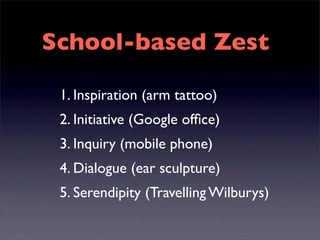
School-based Zest

 1. Inspiration (arm tattoo)
 2. Initiative (Google office)
 3. Inquiry (mobile phone)
 4. Dialogue (ear sculpture)
 5. Serendipity (Travelling Wilburys)
1. Inspiration
IF by Sarah Perry
Start-up inspiration??

• How inspired are you at the start of the
 day?
• In what ways do your classrooms say ‘Come
 On In’??
• In what ways does your school say ‘Come
 On In’ (for you, and for your students)??
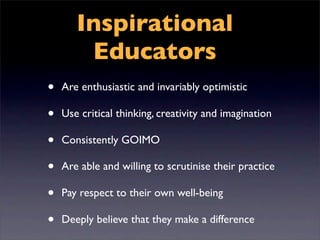
Inspirational
        Educators
•   Are enthusiastic and invariably optimistic

•   Use critical thinking, creativity and imagination

•   Consistently GOIMO

•   Are able and willing to scrutinise their practice

•   Pay respect to their own well-being

•   Deeply believe that they make a difference
The difference
 that you make

The Ripple Effect of teaching: Every teacher
contributes to the world, every day
Education systems will only ever utilise their power
when each teacher accepts responsibility for his/her
contribution
Everyone counts. Every One.
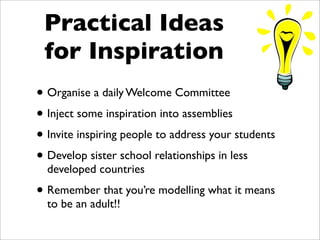
Practical Ideas
 for Inspiration
• Organise a daily Welcome Committee
• Inject some inspiration into assemblies
• Invite inspiring people to address your students
• Develop sister school relationships in less
  developed countries

• Remember that you’re modelling what it means
  to be an adult!!
2. Initiative

    The 20% policy??!
• Some of the 20% results
• Google Wonderwheel, Google Squared, Google Wave......
Where’s the bear in
  your school??!
Practical Ideas
    for Initiative

• Work out your version of the 20% policy
• Find out what students (and teachers) achieve
  outside school hrs; and promote it
• Set up Genius Bars at lunchtimes
3. Inquiry
Coming right up??
• Goodbye laptop. Hello mobile computing
• Social media leading to collective intelligence
• Connectivist learning theories and practice
• Students already have opportunity to
 generate their own inquiries via mobile
• The issue? Very few know how to advance
 their learning with the technology
•The internet as a
 brain
•Processes for
 utilising collective
 intelligence
•Brain implants
 for online access
Teacher inquiries??
• What inquiries are taking place in your school this
  term?
• How specifically do all teachers in your school
  further their learning each day?
• What is new in each teacher’s thinking in the past
  3 months?
• What will be different or enhanced in each
  teacher’s practice by the end of 2010?
Student inquiries within a
      specific unit
Q. What do we already know about this issue?
Q. What are our questions?
Q. What learning steps will we take?
Q. What and how will we research; and is it useful in
answering our questions?
Q. How will we share our findings?
Zestful inquiries!!

• Generate interest with a provocative intro
• Give your inquiry units some exciting titles (name
  them after a movie or a piece of music)
• Choose some powerful songs as background music for
  some of the learning time
• Design an icon or general image to represent the
  inquiry
• Find a metaphor for the inquiry
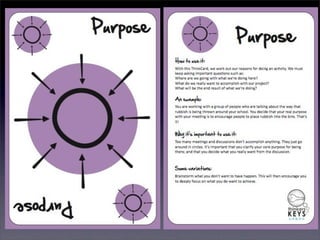
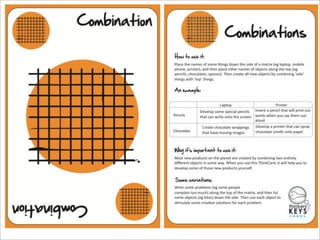
Thinkers
 Keys
42
43
The Hippo Roller
Practical Ideas for
     Inquiry
• Focus on solutions, not problems (only
 listen to solutions)
• A school must be evidence-based.
 Develop long-term inquiries about
 ‘Zest Practice’
• Provide students with processes for
 resolving issues
Either / or
4. Dialogue      Both / and
•    Small talk. Mindless banter;
    gossip; trivia; inconsequential
               comments
•    Big talk. Proactive dialogue;
      solution focus; challenge;
      reinforcement of quality
                practices
Encourage quality
                dialogue
•   The quality of everyday teacher dialogue will determine the
    level of professionalism in a school

•   Two critical skills in dialogue: listening and paraphrasing

•   Explicitly teach students to listen in conversation

•   Paraphrasing? Listen first...

    •   Then pause

    •   Then begin with: “So, you’re saying that....”
Coaching each other

1. What do you need to achieve?
2. What’s happening right now?
3. What could you put into action?
4. What will you put into action?
5. What will be the process for implementation?
6. How will you keep this going??


                          Adapted from ‘The Leadership Coaching Guide’
Practical ideas for
     Dialogue
• Staff meetings to feature teacher
 dialogue
• The development of dialogue protocol
 (eg 2Q’ coaching models) for
 professional discussions
• The encouragement of Professional
 Buddy systems
5. Serendipity
Practical Ideas for
  Serendipity??
• Share narrative about the release of genius in
  everyday life around the world (eg Piano Stairs)

• Give spot prizes eg bottles of bubble bath; ‘Do Not
  Disturb’ signs

• Loosen up. Serendipity rarely occurs when you’re
  too serious

• Look for the inspiration in routine events
tonyryan.com.au
Best Practice


Next Practice


 Zest
Practice
• tony@tonyryan.com.au   • May the rest of your year
                           be full of zest


                                      • Thank you

Zest Practice

  • 1.
    Zest Practice • Ideas AndChallenges For Creating An Inspiring Environment In Schools • Tony Ryan
  • 2.
  • 5.
    Aha!! Hindsight Insight Foresight Insight before Information What insights will you experience today??!
  • 6.
    Systemic Zest • Don’tteacher-proof the system. Instead, trust and support teachers to be outstanding • Do a Finland. Stimulate pride in the profession • Encourage the best and the brightest to become teachers
  • 7.
    McKinsey and Companyreport: How The World’s Best Performing School Systems Come Out On Top • 2003 and onwards analysis of OECD’s PISA assessment in literacy and numeracy • Three interrelated sets of policies and practices continued to emerge. The most successful systems: 1. Get more talented people to become teachers 2. Develop those teachers into better instructors 3. Ensure that their teachers deliver the best possible instruction for every student in the system
  • 8.
    1. Love youremployees 2. Connect peers with purpose 3. Capacity building prevails 4. Learning is the work 5. Transparency rules 6. Systems learn
  • 9.
    An inclusive vision with schools, communities and corporate groups working together • An evidence-informed, rather than data-driven, profession • Strong schools helping their weaker peers • Sustainable leadership that spreads and lasts
  • 10.
    School-based Zest 1.Inspiration (arm tattoo) 2. Initiative (Google office) 3. Inquiry (mobile phone) 4. Dialogue (ear sculpture) 5. Serendipity (Travelling Wilburys)
  • 11.
  • 13.
  • 17.
    Start-up inspiration?? • Howinspired are you at the start of the day? • In what ways do your classrooms say ‘Come On In’?? • In what ways does your school say ‘Come On In’ (for you, and for your students)??
  • 19.
    Inspirational Educators • Are enthusiastic and invariably optimistic • Use critical thinking, creativity and imagination • Consistently GOIMO • Are able and willing to scrutinise their practice • Pay respect to their own well-being • Deeply believe that they make a difference
  • 22.
    The difference thatyou make The Ripple Effect of teaching: Every teacher contributes to the world, every day Education systems will only ever utilise their power when each teacher accepts responsibility for his/her contribution Everyone counts. Every One.
  • 23.
    Practical Ideas forInspiration • Organise a daily Welcome Committee • Inject some inspiration into assemblies • Invite inspiring people to address your students • Develop sister school relationships in less developed countries • Remember that you’re modelling what it means to be an adult!!
  • 24.
    2. Initiative The 20% policy??!
  • 25.
    • Some ofthe 20% results • Google Wonderwheel, Google Squared, Google Wave......
  • 29.
    Where’s the bearin your school??!
  • 32.
    Practical Ideas for Initiative • Work out your version of the 20% policy • Find out what students (and teachers) achieve outside school hrs; and promote it • Set up Genius Bars at lunchtimes
  • 33.
  • 34.
    Coming right up?? •Goodbye laptop. Hello mobile computing • Social media leading to collective intelligence • Connectivist learning theories and practice • Students already have opportunity to generate their own inquiries via mobile • The issue? Very few know how to advance their learning with the technology
  • 35.
    •The internet asa brain •Processes for utilising collective intelligence •Brain implants for online access
  • 36.
    Teacher inquiries?? • Whatinquiries are taking place in your school this term? • How specifically do all teachers in your school further their learning each day? • What is new in each teacher’s thinking in the past 3 months? • What will be different or enhanced in each teacher’s practice by the end of 2010?
  • 37.
    Student inquiries withina specific unit Q. What do we already know about this issue? Q. What are our questions? Q. What learning steps will we take? Q. What and how will we research; and is it useful in answering our questions? Q. How will we share our findings?
  • 38.
    Zestful inquiries!! • Generateinterest with a provocative intro • Give your inquiry units some exciting titles (name them after a movie or a piece of music) • Choose some powerful songs as background music for some of the learning time • Design an icon or general image to represent the inquiry • Find a metaphor for the inquiry
  • 40.
  • 42.
  • 43.
  • 44.
  • 46.
    Practical Ideas for Inquiry • Focus on solutions, not problems (only listen to solutions) • A school must be evidence-based. Develop long-term inquiries about ‘Zest Practice’ • Provide students with processes for resolving issues
  • 47.
    Either / or 4.Dialogue Both / and
  • 48.
    Small talk. Mindless banter; gossip; trivia; inconsequential comments • Big talk. Proactive dialogue; solution focus; challenge; reinforcement of quality practices
  • 49.
    Encourage quality dialogue • The quality of everyday teacher dialogue will determine the level of professionalism in a school • Two critical skills in dialogue: listening and paraphrasing • Explicitly teach students to listen in conversation • Paraphrasing? Listen first... • Then pause • Then begin with: “So, you’re saying that....”
  • 50.
    Coaching each other 1.What do you need to achieve? 2. What’s happening right now? 3. What could you put into action? 4. What will you put into action? 5. What will be the process for implementation? 6. How will you keep this going?? Adapted from ‘The Leadership Coaching Guide’
  • 52.
    Practical ideas for Dialogue • Staff meetings to feature teacher dialogue • The development of dialogue protocol (eg 2Q’ coaching models) for professional discussions • The encouragement of Professional Buddy systems
  • 53.
  • 54.
    Practical Ideas for Serendipity?? • Share narrative about the release of genius in everyday life around the world (eg Piano Stairs) • Give spot prizes eg bottles of bubble bath; ‘Do Not Disturb’ signs • Loosen up. Serendipity rarely occurs when you’re too serious • Look for the inspiration in routine events
  • 55.
  • 58.
  • 59.
    • tony@tonyryan.com.au • May the rest of your year be full of zest • Thank you