Chapter N°20:
Language and Culture
LANGUAGE AND WRITTEN
EXPRESSION IV
Student: Soto Valic, Gabriela Rocio
The Study of Language
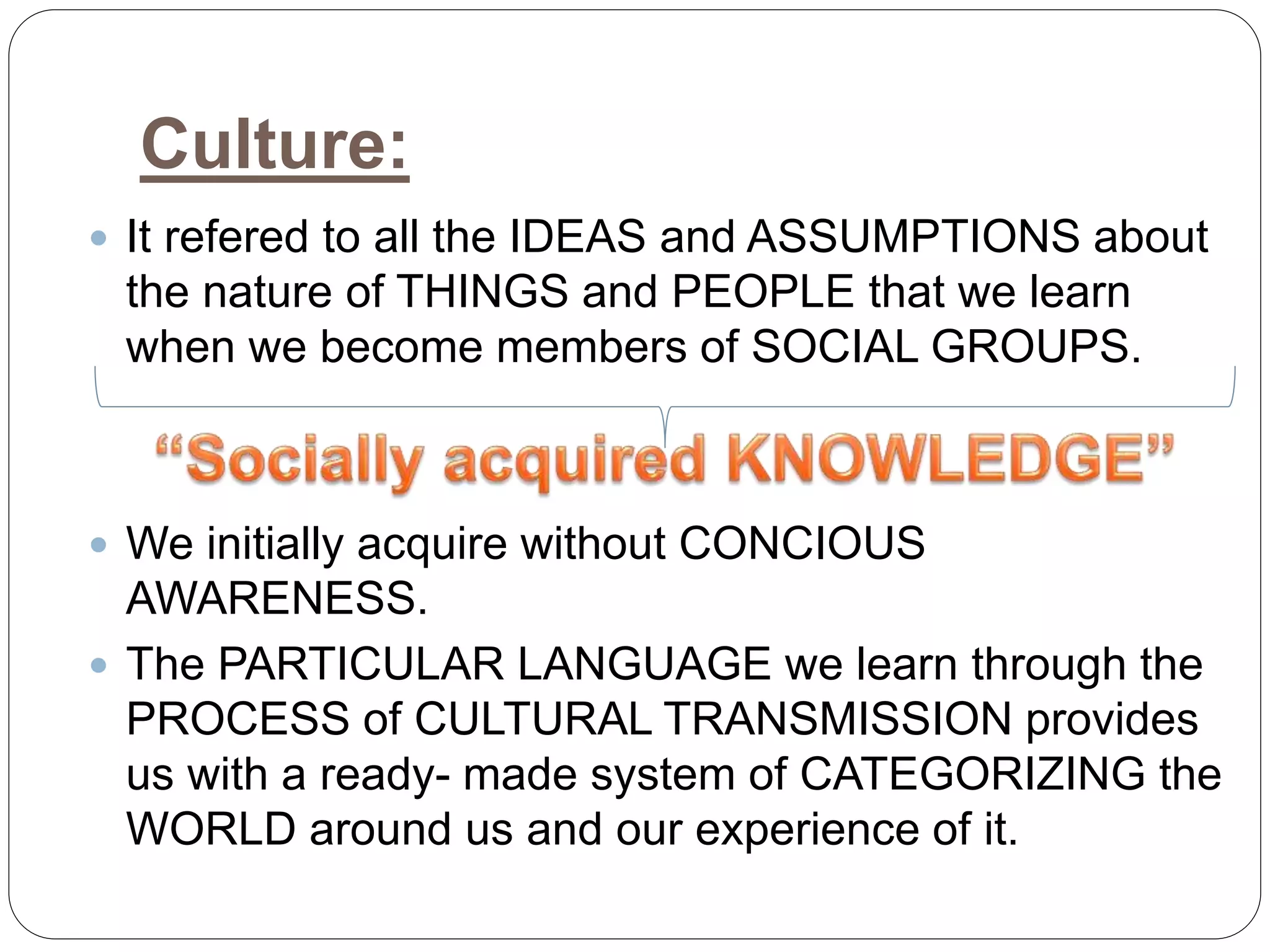
Culture:
 It refered to all the IDEAS and ASSUMPTIONS about
the nature of THINGS and PEOPLE that we learn
when we become members of SOCIAL GROUPS.
 We initially acquire without CONCIOUS
AWARENESS.
 The PARTICULAR LANGUAGE we learn through the
PROCESS of CULTURAL TRANSMISSION provides
us with a ready- made system of CATEGORIZING the
WORLD around us and our experience of it.
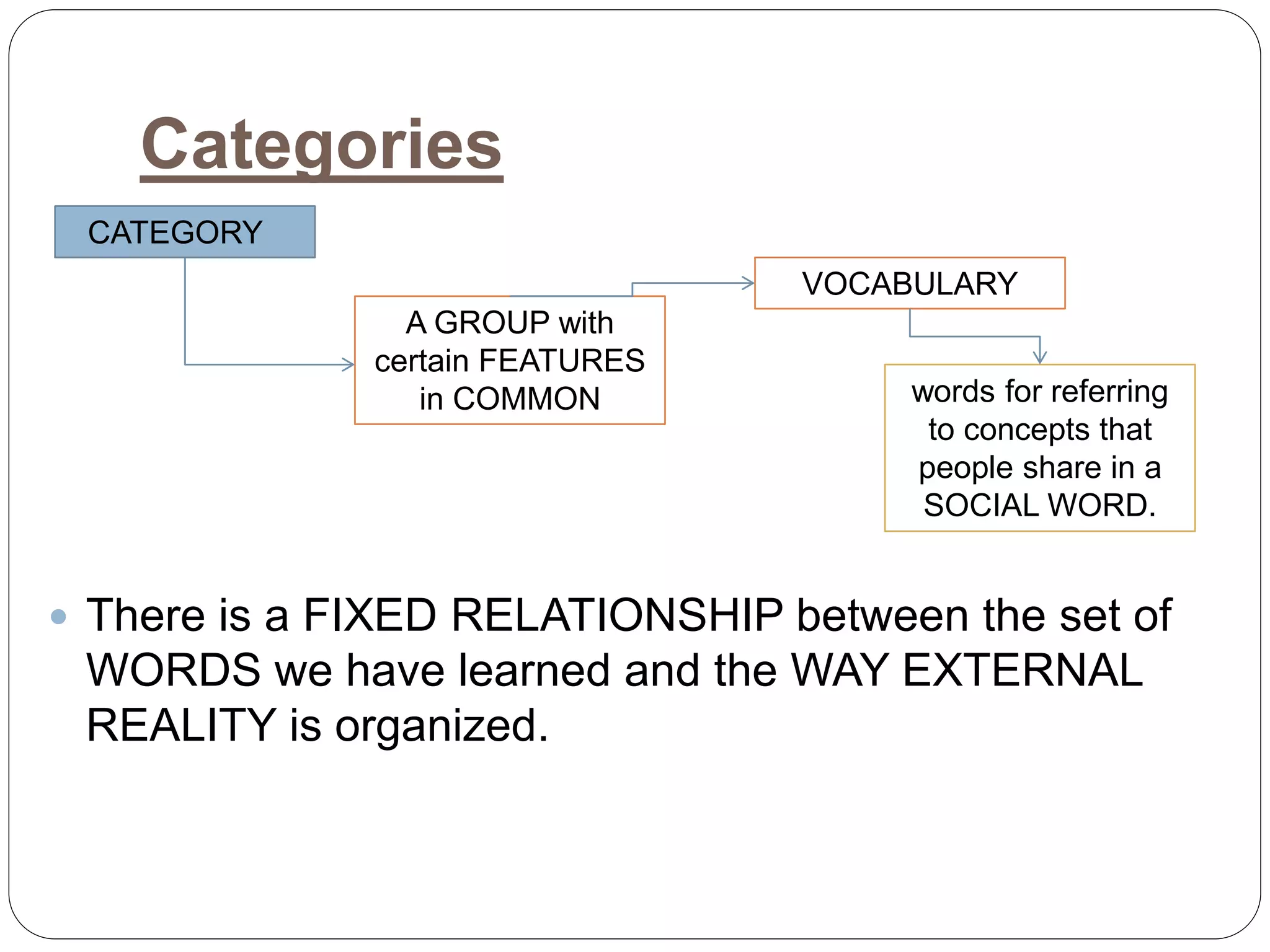
Categories
 There is a FIXED RELATIONSHIP between the set of
WORDS we have learned and the WAY EXTERNAL
REALITY is organized.
CATEGORY
A GROUP with
certain FEATURES
in COMMON
VOCABULARY
words for referring
to concepts that
people share in a
SOCIAL WORD.
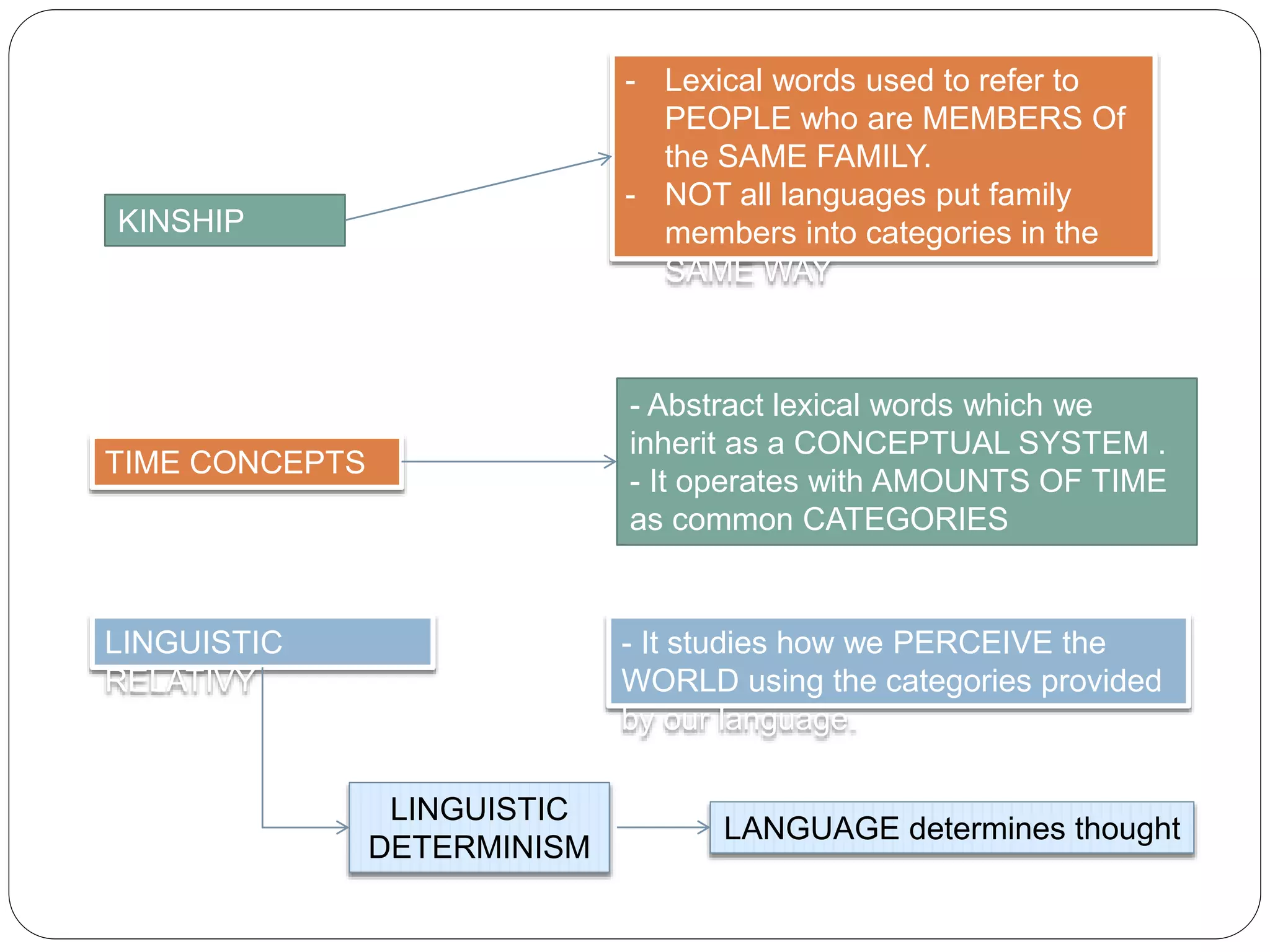
KINSHIP
TERMS
TIME CONCEPTS
- Lexical words used to refer to
PEOPLE who are MEMBERS Of
the SAME FAMILY.
- NOT all languages put family
members into categories in the
SAME WAY
- Abstract lexical words which we
inherit as a CONCEPTUAL SYSTEM .
- It operates with AMOUNTS OF TIME
as common CATEGORIES
LINGUISTIC
RELATIVY
- It studies how we PERCEIVE the
WORLD using the categories provided
by our language.
LINGUISTIC
DETERMINISM
LANGUAGE determines thought
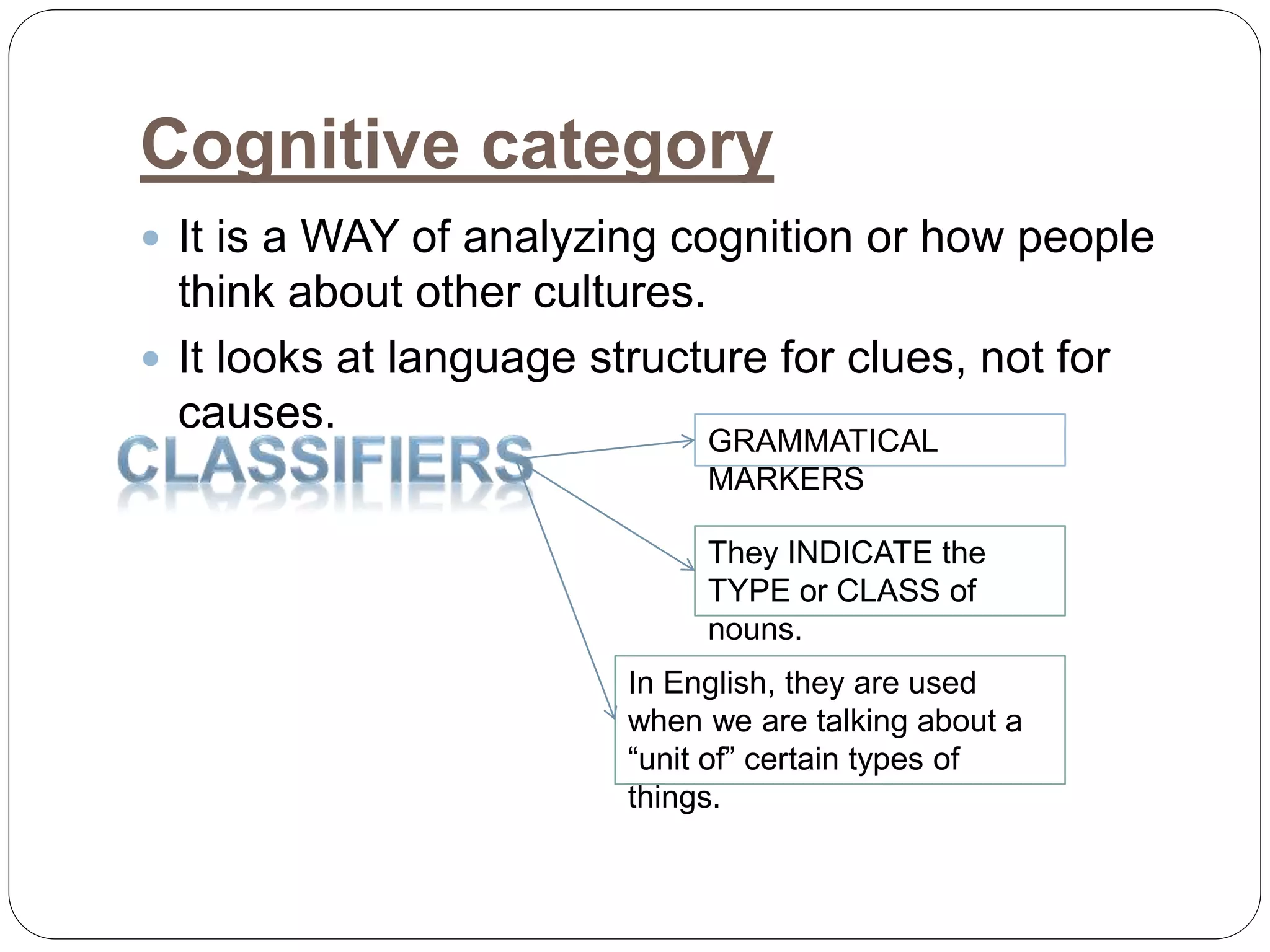
Cognitive category
 It is a WAY of analyzing cognition or how people
think about other cultures.
 It looks at language structure for clues, not for
causes.
GRAMMATICAL
MARKERS
They INDICATE the
TYPE or CLASS of
nouns.
In English, they are used
when we are talking about a
“unit of” certain types of
things.
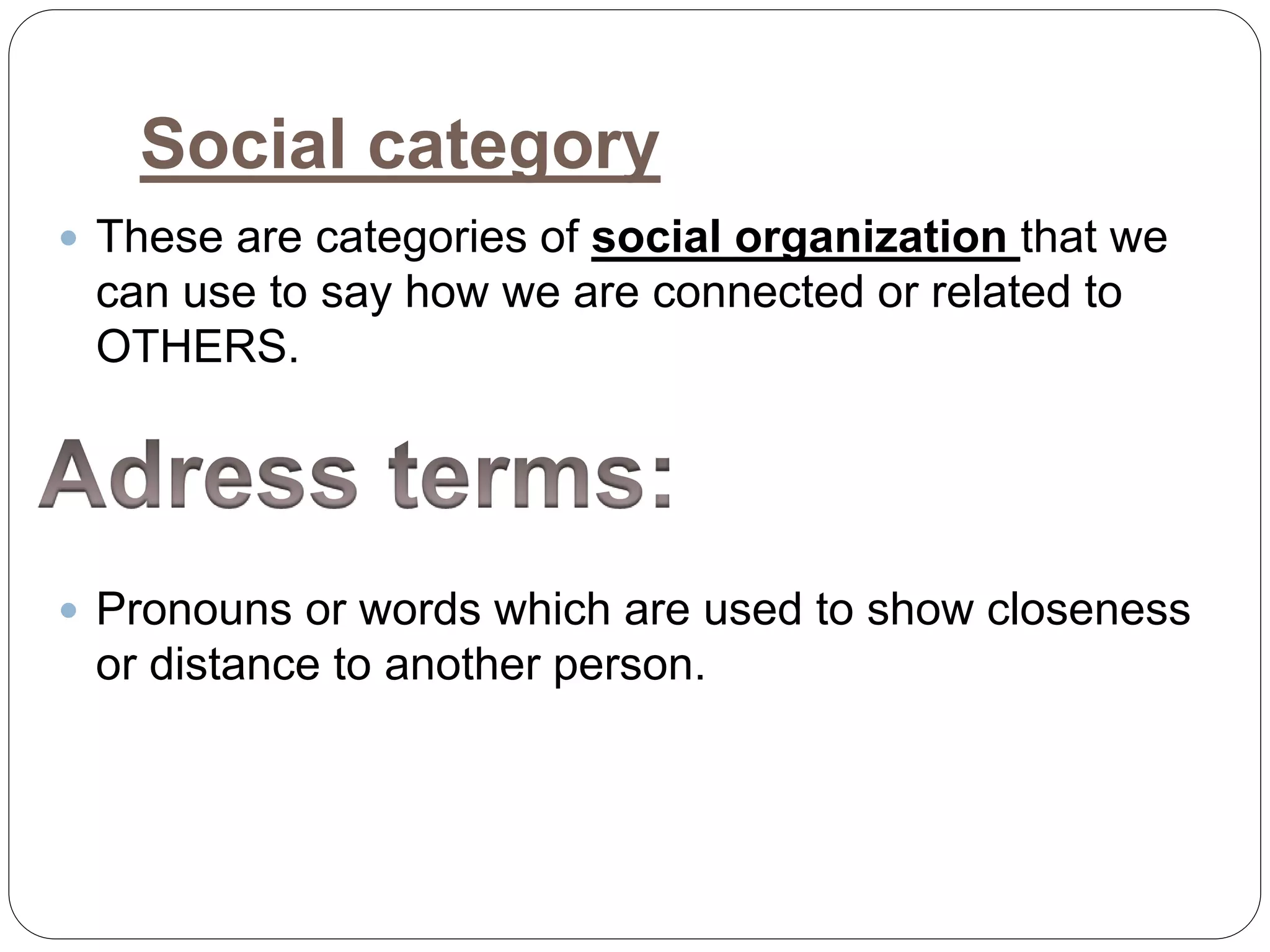
Social category
 These are categories of social organization that we
can use to say how we are connected or related to
OTHERS.
 Pronouns or words which are used to show closeness
or distance to another person.
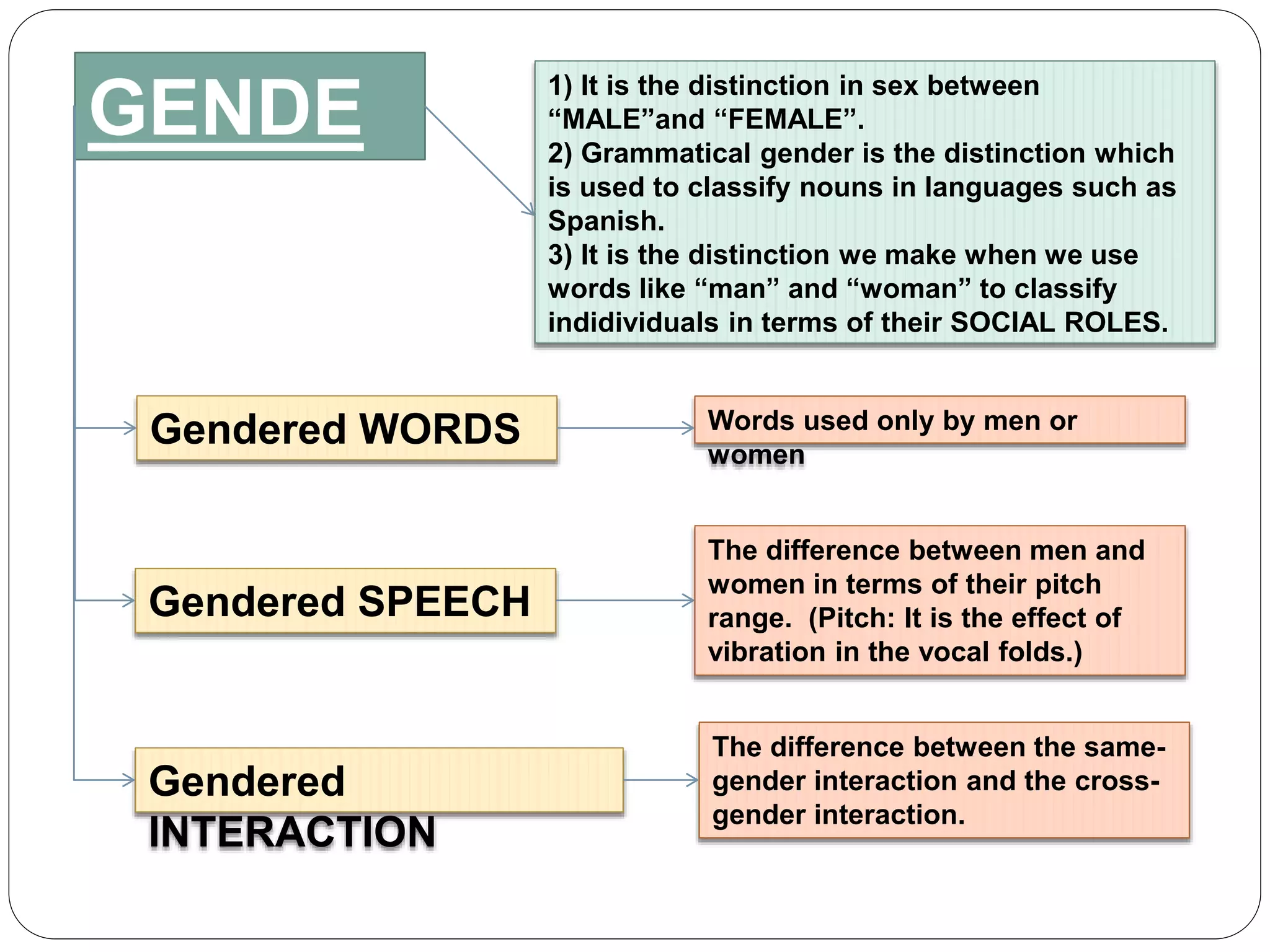
GENDE
R
1) It is the distinction in sex between
“MALE”and “FEMALE”.
2) Grammatical gender is the distinction which
is used to classify nouns in languages such as
Spanish.
3) It is the distinction we make when we use
words like “man” and “woman” to classify
indidividuals in terms of their SOCIAL ROLES.
Gendered WORDS
Gendered
INTERACTION
Gendered SPEECH
Words used only by men or
women
The difference between men and
women in terms of their pitch
range. (Pitch: It is the effect of
vibration in the vocal folds.)
The difference between the same-
gender interaction and the cross-
gender interaction.
Bibliography
 Yule, G (2016). The Study of Language. Chapter
20. U.K.: CUP.

"The study of language" - Chapter 20

  • 1.
    Chapter N°20: Language andCulture LANGUAGE AND WRITTEN EXPRESSION IV Student: Soto Valic, Gabriela Rocio The Study of Language
  • 2.
    Culture:  It referedto all the IDEAS and ASSUMPTIONS about the nature of THINGS and PEOPLE that we learn when we become members of SOCIAL GROUPS.  We initially acquire without CONCIOUS AWARENESS.  The PARTICULAR LANGUAGE we learn through the PROCESS of CULTURAL TRANSMISSION provides us with a ready- made system of CATEGORIZING the WORLD around us and our experience of it.
  • 3.
    Categories  There isa FIXED RELATIONSHIP between the set of WORDS we have learned and the WAY EXTERNAL REALITY is organized. CATEGORY A GROUP with certain FEATURES in COMMON VOCABULARY words for referring to concepts that people share in a SOCIAL WORD.
  • 4.
    KINSHIP TERMS TIME CONCEPTS - Lexicalwords used to refer to PEOPLE who are MEMBERS Of the SAME FAMILY. - NOT all languages put family members into categories in the SAME WAY - Abstract lexical words which we inherit as a CONCEPTUAL SYSTEM . - It operates with AMOUNTS OF TIME as common CATEGORIES LINGUISTIC RELATIVY - It studies how we PERCEIVE the WORLD using the categories provided by our language. LINGUISTIC DETERMINISM LANGUAGE determines thought
  • 5.
    Cognitive category  Itis a WAY of analyzing cognition or how people think about other cultures.  It looks at language structure for clues, not for causes. GRAMMATICAL MARKERS They INDICATE the TYPE or CLASS of nouns. In English, they are used when we are talking about a “unit of” certain types of things.
  • 6.
    Social category  Theseare categories of social organization that we can use to say how we are connected or related to OTHERS.  Pronouns or words which are used to show closeness or distance to another person.
  • 7.
    GENDE R 1) It isthe distinction in sex between “MALE”and “FEMALE”. 2) Grammatical gender is the distinction which is used to classify nouns in languages such as Spanish. 3) It is the distinction we make when we use words like “man” and “woman” to classify indidividuals in terms of their SOCIAL ROLES. Gendered WORDS Gendered INTERACTION Gendered SPEECH Words used only by men or women The difference between men and women in terms of their pitch range. (Pitch: It is the effect of vibration in the vocal folds.) The difference between the same- gender interaction and the cross- gender interaction.
  • 8.
    Bibliography  Yule, G(2016). The Study of Language. Chapter 20. U.K.: CUP.