Bilingualism &
Multilingualism
Sosiolinguistic
Devi Hermasari, M.A.
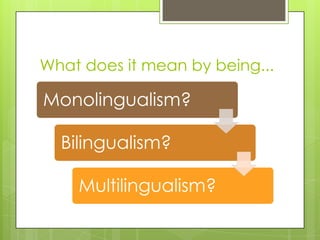
What does it mean by being...

Monolingualism?
Bilingualism?
Multilingualism?
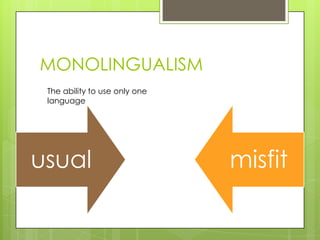
MONOLINGUALISM
The ability to use only one
language

usual

misfit
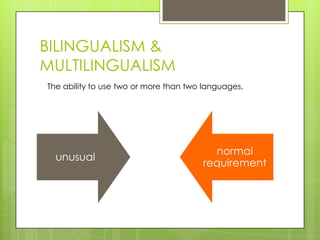
BILINGUALISM &
MULTILINGUALISM
The ability to use two or more than two languages.

unusual

normal
requirement
Bilingualism & Multilingualism




Do not necessarily have exactly the same
abilities in the languages.
Have varying degrees of command of the
different repertoires
The differences in competence in the various
languages might range from







command of a few lexical items
formulaic expressions (e.g. Greetings)
rudimentary conversational skills
excellent command of the grammar
vocabulary
specialized register and styles.’
Society with more than one
languages...
 Ones

must find out who uses
what, when, and for what purpose if they
are to be socially competent.
 The language choices are part of the
social identity you claim for themselves.
Bilingual vs. Bidialectal
 Defining

different dialects and languages
are difficult
 the bilingual–bidialectal distinction that
speakers make reflects
social, cultural, and political aspirations or
realities rather than any linguistic reality
Bilingualism drawbacks
 Regarded

as problem

 Inferiority
 Being

eradicated (Americanization)
 Leading to language loss
 Leading to diffusion (certain features
spread from one language to the other/s
as a result of the contact
situation, particularly certain kinds of
syntactic features)
Discussions


A distinction is sometimes made between
communities in which there is stable
bilingualism and those in which there is
unstable bilingualism;
Switzerland, Canada, and Haiti are cited as
examples of the former, and the linguistic
situations found in cities like New York or
among many immigrant peoples as examples
of the latter. Why are the terms stable and
unstable useful in such circumstances? Could
you mention some cases happen in
Indonesia?
Discussions


A speaker of English who wants to learn
another language, particularly an ‘exotic’
one, may find the task difficult. Speakers of
that other language may insist on using what
little English they know rather than their own
language, and there may also be compelling
social reasons that prevent the would-be
learner from achieving any but a most
rudimentary knowledge of the target
language. What factors contribute to this kind
of situation? How might you seek to avoid it?
Discussions
 Is

it possible to have a society in which
everyone is completely bilingual in the
same two languages and there is no
diglossia? How stable would such a
situation be?
Discussions
 Some

communities regard bilingualism as
a serious threat; it has even been referred
to as a ‘Trojan horse,’ initially attractive
but ultimately fatal. Why might this be so?
(Consider the experience of migration
and also the sorry state of many minority
languages in the world.) Could you
mention currently happening case in the
world?

Bilingualism & Multilingualism

  • 1.
  • 2.
    What does itmean by being... Monolingualism? Bilingualism? Multilingualism?
  • 3.
    MONOLINGUALISM The ability touse only one language usual misfit
  • 4.
    BILINGUALISM & MULTILINGUALISM The abilityto use two or more than two languages. unusual normal requirement
  • 5.
    Bilingualism & Multilingualism    Donot necessarily have exactly the same abilities in the languages. Have varying degrees of command of the different repertoires The differences in competence in the various languages might range from       command of a few lexical items formulaic expressions (e.g. Greetings) rudimentary conversational skills excellent command of the grammar vocabulary specialized register and styles.’
  • 6.
    Society with morethan one languages...  Ones must find out who uses what, when, and for what purpose if they are to be socially competent.  The language choices are part of the social identity you claim for themselves.
  • 7.
    Bilingual vs. Bidialectal Defining different dialects and languages are difficult  the bilingual–bidialectal distinction that speakers make reflects social, cultural, and political aspirations or realities rather than any linguistic reality
  • 8.
    Bilingualism drawbacks  Regarded asproblem  Inferiority  Being eradicated (Americanization)  Leading to language loss  Leading to diffusion (certain features spread from one language to the other/s as a result of the contact situation, particularly certain kinds of syntactic features)
  • 9.
    Discussions  A distinction issometimes made between communities in which there is stable bilingualism and those in which there is unstable bilingualism; Switzerland, Canada, and Haiti are cited as examples of the former, and the linguistic situations found in cities like New York or among many immigrant peoples as examples of the latter. Why are the terms stable and unstable useful in such circumstances? Could you mention some cases happen in Indonesia?
  • 10.
    Discussions  A speaker ofEnglish who wants to learn another language, particularly an ‘exotic’ one, may find the task difficult. Speakers of that other language may insist on using what little English they know rather than their own language, and there may also be compelling social reasons that prevent the would-be learner from achieving any but a most rudimentary knowledge of the target language. What factors contribute to this kind of situation? How might you seek to avoid it?
  • 11.
    Discussions  Is it possibleto have a society in which everyone is completely bilingual in the same two languages and there is no diglossia? How stable would such a situation be?
  • 12.
    Discussions  Some communities regardbilingualism as a serious threat; it has even been referred to as a ‘Trojan horse,’ initially attractive but ultimately fatal. Why might this be so? (Consider the experience of migration and also the sorry state of many minority languages in the world.) Could you mention currently happening case in the world?