INTRODUCTION TO
       APPLIED LINGUISTICS
            Video Lesson 2
         SOCIOLINGUISTICS
         Language Variations

Mgs. Nina Nesterenko
Branch of Linguistics which deals with the study of
 language use in society and in sociocultural
 context. In addition, it is the study of the linguistic
 indicators of culture and power (Schmitt, 2011).

 studies               Sociolinguistics:
language                                        explains WHY
variations                studies               languages change
( dialects,              language
accents,                 change
       It describes language varieties between different
       ethnic, religious, status , and gender groups; and explains
       how educational level, age etc., may influence the
       language differences, and categorizes individuals in
       social or socioeconomic classes .
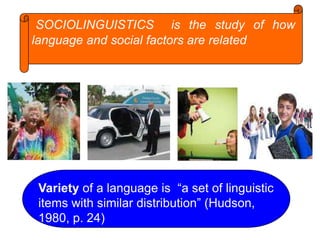
SOCIOLINGUISTICS is the study of how
language and social factors are related


Variety of a language is “a set of linguistic
items with similar distribution” (Hudson,
1980, p. 24)
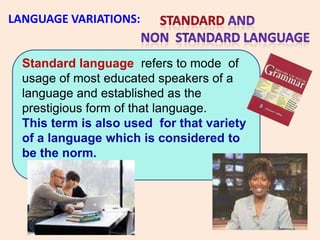
LANGUAGE VARIATIONS:


  Standard language refers to mode of
  usage of most educated speakers of a
  language and established as the
  prestigious form of that language.
  This term is also used for that variety
  of a language which is considered to
  be the norm.
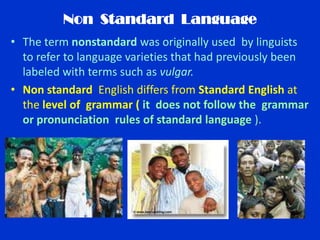
Non Standard Language
• The term nonstandard was originally used by linguists
  to refer to language varieties that had previously been
  labeled with terms such as vulgar.
• Non standard English differs from Standard English at
  the level of grammar ( it does not follow the grammar
  or pronunciation rules of standard language ).
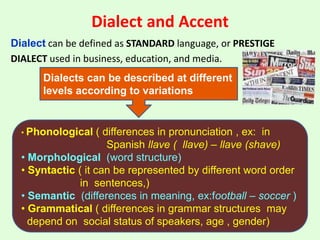
Dialect and Accent
Dialect can be defined as STANDARD language, or PRESTIGE
DIALECT used in business, education, and media.
      Dialects can be described at different
      levels according to variations


  • Phonological    ( differences in pronunciation , ex: in
                       Spanish llave ( llave) – llave (shave)
  • Morphological (word structure)
  • Syntactic ( it can be represented by different word order
               in sentences,)
  • Semantic (differences in meaning, ex:football – soccer )
  • Grammatical ( differences in grammar structures may
    depend on social status of speakers, age , gender)
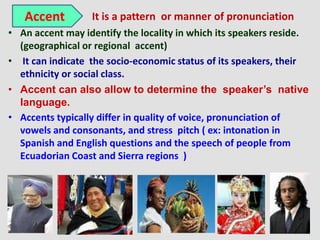
Accent         It is a pattern or manner of pronunciation
• An accent may identify the locality in which its speakers reside.
  (geographical or regional accent)
• It can indicate the socio-economic status of its speakers, their
  ethnicity or social class.
• Accent can also allow to determine the speaker’s native
  language.
• Accents typically differ in quality of voice, pronunciation of
  vowels and consonants, and stress pitch ( ex: intonation in
  Spanish and English questions and the speech of people from
  Ecuadorian Coast and Sierra regions )
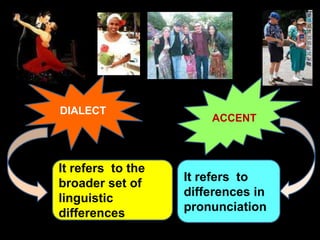
DIALECT
                       ACCENT


It refers to the
                   It refers to
broader set of
                   differences in
linguistic
differences        pronunciation
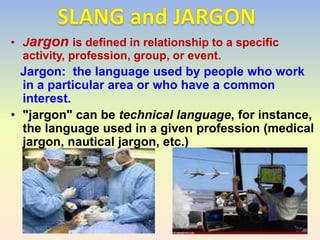
• Jargon is defined in relationship to a specific
  activity, profession, group, or event.
  Jargon: the language used by people who work
  in a particular area or who have a common
  interest.
• "jargon" can be technical language, for instance,
  the language used in a given profession (medical
  jargon, nautical jargon, etc.)
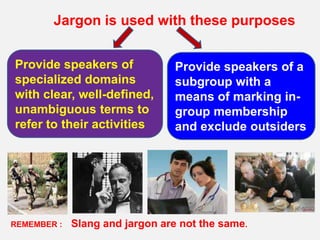
Jargon is used with these purposes


Provide speakers of              Provide speakers of a
specialized domains              subgroup with a
with clear, well-defined,        means of marking in-
unambiguous terms to             group membership
refer to their activities        and exclude outsiders


REMEMBER :   Slang and jargon are not the same.
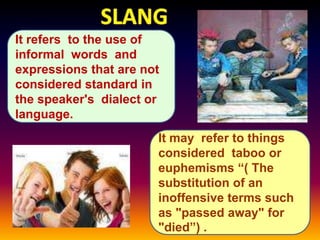
It refers to the use of
informal words and
expressions that are not
considered standard in
the speaker's dialect or
language.
                       It may refer to things
                       considered taboo or
                       euphemisms “( The
                       substitution of an
                       inoffensive terms such
                       as "passed away" for
                       "died”) .
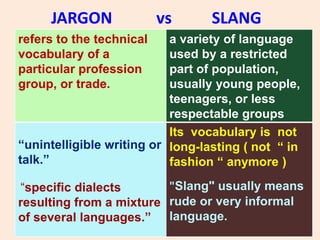
JARGON               vs      SLANG
refers to the technical    a variety of language
vocabulary of a            used by a restricted
particular profession      part of population,
group, or trade.           usually young people,
                           teenagers, or less
                           respectable groups
                           Its vocabulary is not
“unintelligible writing or long-lasting ( not “ in
talk.”                     fashion “ anymore )

“specific dialects       "Slang" usually means
resulting from a mixture rude or very informal
of several languages.” language.
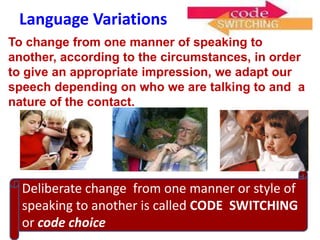
Language Variations
To change from one manner of speaking to
another, according to the circumstances, in order
to give an appropriate impression, we adapt our
speech depending on who we are talking to and a
nature of the contact.


  Deliberate change from one manner or style of
  speaking to another is called CODE SWITCHING
  or code choice
To be continued!....

  Thank you!

Sociolinguistics language variations

  • 1.
    INTRODUCTION TO APPLIED LINGUISTICS Video Lesson 2 SOCIOLINGUISTICS Language Variations Mgs. Nina Nesterenko
  • 2.
    Branch of Linguisticswhich deals with the study of language use in society and in sociocultural context. In addition, it is the study of the linguistic indicators of culture and power (Schmitt, 2011). studies Sociolinguistics: language explains WHY variations studies languages change ( dialects, language accents, change It describes language varieties between different ethnic, religious, status , and gender groups; and explains how educational level, age etc., may influence the language differences, and categorizes individuals in social or socioeconomic classes .
  • 3.
    SOCIOLINGUISTICS is thestudy of how language and social factors are related Variety of a language is “a set of linguistic items with similar distribution” (Hudson, 1980, p. 24)
  • 4.
    LANGUAGE VARIATIONS: Standard language refers to mode of usage of most educated speakers of a language and established as the prestigious form of that language. This term is also used for that variety of a language which is considered to be the norm.
  • 5.
    Non Standard Language •The term nonstandard was originally used by linguists to refer to language varieties that had previously been labeled with terms such as vulgar. • Non standard English differs from Standard English at the level of grammar ( it does not follow the grammar or pronunciation rules of standard language ).
  • 6.
    Dialect and Accent Dialectcan be defined as STANDARD language, or PRESTIGE DIALECT used in business, education, and media. Dialects can be described at different levels according to variations • Phonological ( differences in pronunciation , ex: in Spanish llave ( llave) – llave (shave) • Morphological (word structure) • Syntactic ( it can be represented by different word order in sentences,) • Semantic (differences in meaning, ex:football – soccer ) • Grammatical ( differences in grammar structures may depend on social status of speakers, age , gender)
  • 7.
    Accent It is a pattern or manner of pronunciation • An accent may identify the locality in which its speakers reside. (geographical or regional accent) • It can indicate the socio-economic status of its speakers, their ethnicity or social class. • Accent can also allow to determine the speaker’s native language. • Accents typically differ in quality of voice, pronunciation of vowels and consonants, and stress pitch ( ex: intonation in Spanish and English questions and the speech of people from Ecuadorian Coast and Sierra regions )
  • 8.
    DIALECT ACCENT It refers to the It refers to broader set of differences in linguistic differences pronunciation
  • 9.
    • Jargon isdefined in relationship to a specific activity, profession, group, or event. Jargon: the language used by people who work in a particular area or who have a common interest. • "jargon" can be technical language, for instance, the language used in a given profession (medical jargon, nautical jargon, etc.)
  • 10.
    Jargon is usedwith these purposes Provide speakers of Provide speakers of a specialized domains subgroup with a with clear, well-defined, means of marking in- unambiguous terms to group membership refer to their activities and exclude outsiders REMEMBER : Slang and jargon are not the same.
  • 11.
    It refers tothe use of informal words and expressions that are not considered standard in the speaker's dialect or language. It may refer to things considered taboo or euphemisms “( The substitution of an inoffensive terms such as "passed away" for "died”) .
  • 12.
    JARGON vs SLANG refers to the technical a variety of language vocabulary of a used by a restricted particular profession part of population, group, or trade. usually young people, teenagers, or less respectable groups Its vocabulary is not “unintelligible writing or long-lasting ( not “ in talk.” fashion “ anymore ) “specific dialects "Slang" usually means resulting from a mixture rude or very informal of several languages.” language.
  • 13.
    Language Variations To changefrom one manner of speaking to another, according to the circumstances, in order to give an appropriate impression, we adapt our speech depending on who we are talking to and a nature of the contact. Deliberate change from one manner or style of speaking to another is called CODE SWITCHING or code choice
  • 14.