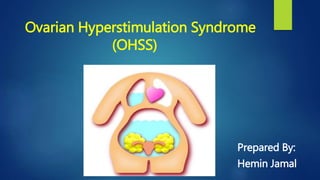
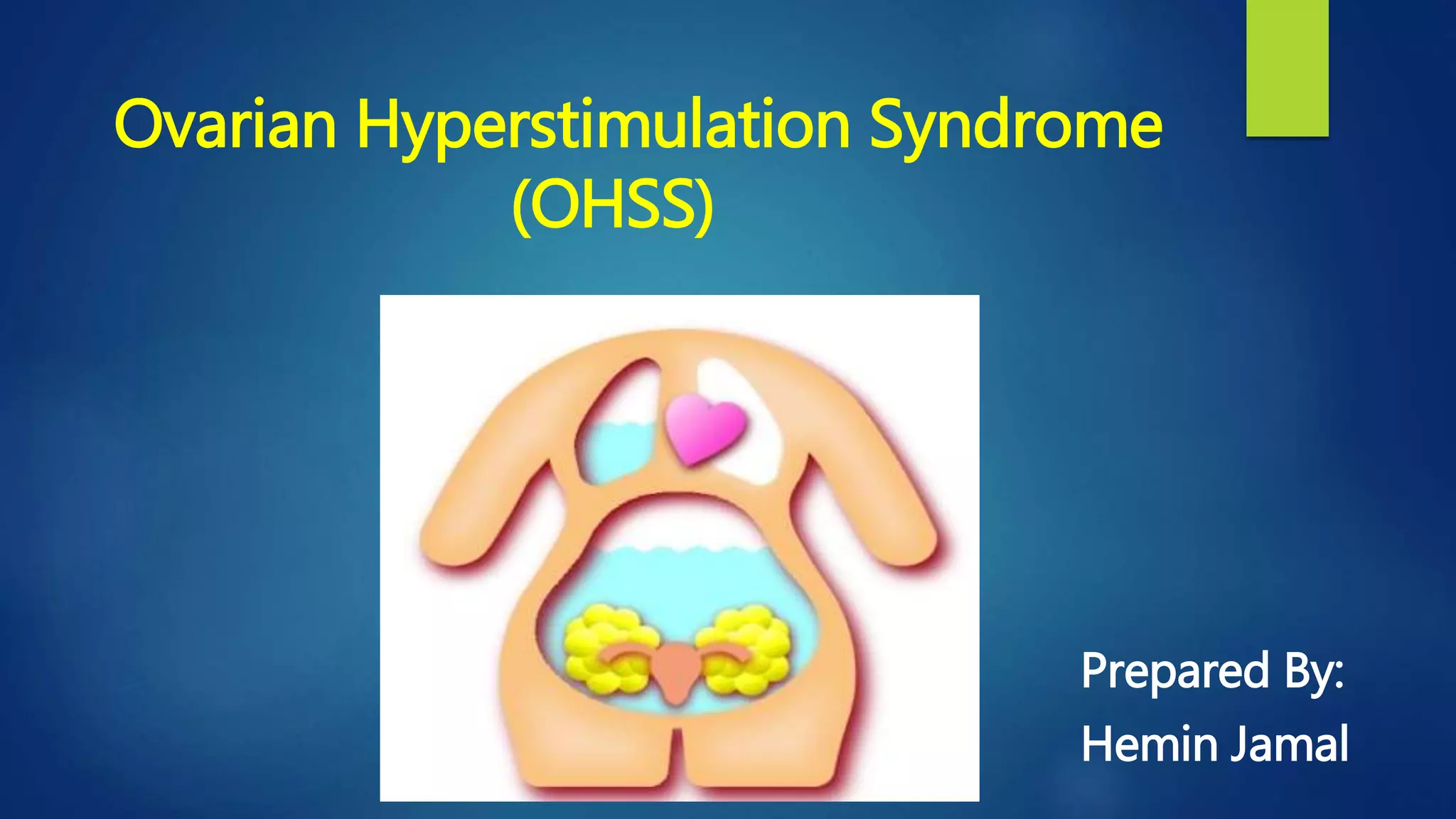
Ovarian Hyperstimulation Syndrome
(OHSS)
Prepared By:
Hemin Jamal
Definition
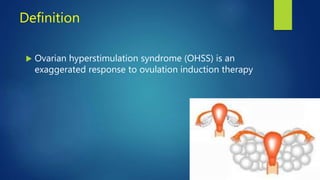
 Ovarian hyperstimulation syndrome (OHSS) is an
exaggerated response to ovulation induction therapy
Causes
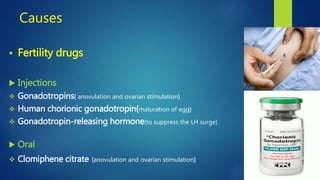
 Fertility drugs
 Injections
 Gonadotropins( anovulation and ovarian stimulation)
 Human chorionic gonadotropin(maturation of egg)
 Gonadotropin-releasing hormone(to suppress the LH surge)
 Oral
 Clomiphene citrate (anovulation and ovarian stimulation)
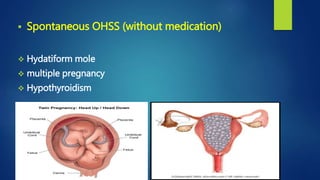
 Spontaneous OHSS (without medication)
 Hydatiform mole
 multiple pregnancy
 Hypothyroidism
F
F
F
F
F F
F
F
F
F F
Stimulation Multiple follicles
VEGF
VEGF
VEGF
VEGF
VEGF
Bloodvessel
Ovary
enlargement
t
Production of
VEGF
Increase
permeability
Shift of fluid to
3rd space
edema
ascites
Effects
Risk
factors
Pathophysiology Endo hCG
Upregulate
F F
F F
F
F
F
Mature
Mature
Mature
Mature
Mature
VEGF
Mature
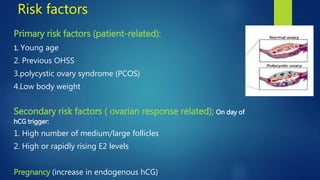
Risk factors
Primary risk factors (patient-related):
1. Young age
2. Previous OHSS
3.polycystic ovary syndrome (PCOS)
4.Low body weight
Secondary risk factors ( ovarian response related); On day of
hCG trigger:
1. High number of medium/large follicles
2. High or rapidly rising E2 levels
Pregnancy (increase in endogenous hCG)
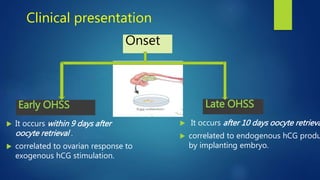
Clinical presentation
 It occurs after 10 days oocyte retrieva
 correlated to endogenous hCG produ
by implanting embryo.
Onset
Late OHSSEarly OHSS
 It occurs within 9 days after
oocyte retrieval .
 correlated to ovarian response to
exogenous hCG stimulation.
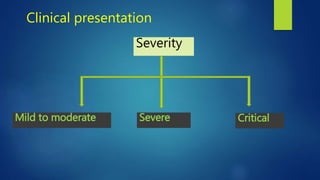
Clinical presentation
Severity
CriticalMild to moderate Severe
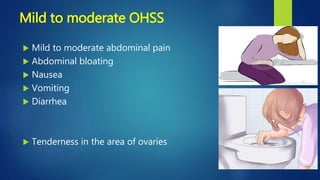
Mild to moderate OHSS
 Mild to moderate abdominal pain
 Abdominal bloating
 Nausea
 Vomiting
 Diarrhea
 Tenderness in the area of ovaries
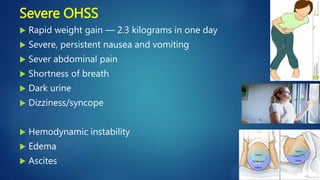
Severe OHSS
 Rapid weight gain — 2.3 kilograms in one day
 Severe, persistent nausea and vomiting
 Sever abdominal pain
 Shortness of breath
 Dark urine
 Dizziness/syncope
 Hemodynamic instability
 Edema
 Ascites
Critical
 Acute renal failure
 Arrhythmia(Electrolyte disturbances )
 Thromboembolism(hemoconcentration)
 Pericardial effusion
 Massive hydrothorax
 Adult RDS
 Ovarian torsion
 Rupture of a cyst in an ovary
Diagnosis
Laboratory investigations:
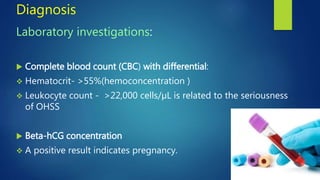
 Complete blood count (CBC) with differential:
 Hematocrit- >55%(hemoconcentration )
 Leukocyte count - >22,000 cells/µL is related to the seriousness
of OHSS
 Beta-hCG concentration
 A positive result indicates pregnancy.
 Estradiol levels
 Estradiol levels are increased
 estradiol >2000 pg/mL
 Complete metabolic panel
 Liver function test: AST, ALT , and ALP
 Renal function test: blood urea and creatinine
 Albumin and protein levels are decreased.
 Electrolyte imbalances: hyperkalemia and acidosis may be
present.
Imaging
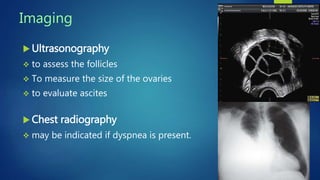
 Ultrasonography
 to assess the follicles
 To measure the size of the ovaries
 to evaluate ascites
 Chest radiography
 may be indicated if dyspnea is present.
Treatment
Outpatient management
(follow up twice-weekly):
 mild & moderate OHSS.
 Severe OHSS
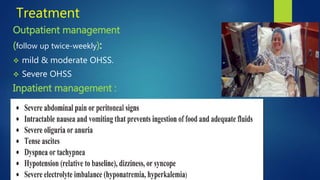
Inpatient management :
Conservative
 Education
 Fluid: the patient should receive plenty of of fluid (not less
than 1 liter).
 Activity: the patient should avoid vigorous activities
 Weight: should be recorded daily,
 urine output: the frequency and/or volume
 Pain relief:
- Symptomatic relief of abdominal pain can be achieved with
acetaminophen and if necessary oral or parenteral opiates.
 Nausea and/or vomiting
Antiemetic agents considered to be safe in early pregnancy
should be used to alleviate nausea and/or vomiting.
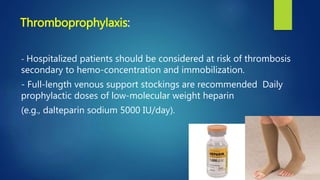
- Hospitalized patients should be considered at risk of thrombosis
secondary to hemo-concentration and immobilization.
- Full-length venous support stockings are recommended Daily
prophylactic doses of low-molecular weight heparin
(e.g., dalteparin sodium 5000 IU/day).
Thromboprophylaxis:
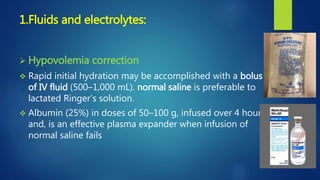
1.Fluids and electrolytes:
 Hypovolemia correction
 Rapid initial hydration may be accomplished with a bolus
of IV fluid (500–1,000 mL). normal saline is preferable to
lactated Ringer’s solution.
 Albumin (25%) in doses of 50–100 g, infused over 4 hours
and, is an effective plasma expander when infusion of
normal saline fails
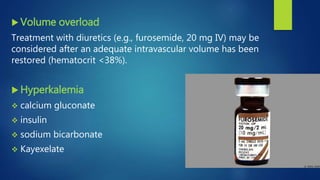
 Volume overload
Treatment with diuretics (e.g., furosemide, 20 mg IV) may be
considered after an adequate intravascular volume has been
restored (hematocrit <38%).
 Hyperkalemia
 calcium gluconate
 insulin
 sodium bicarbonate
 Kayexelate
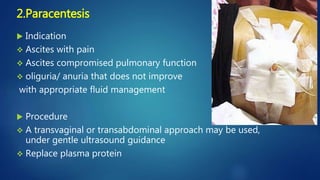
2.Paracentesis
 Indication
 Ascites with pain
 Ascites compromised pulmonary function
 oliguria/ anuria that does not improve
with appropriate fluid management
 Procedure
 A transvaginal or transabdominal approach may be used,
under gentle ultrasound guidance
 Replace plasma protein
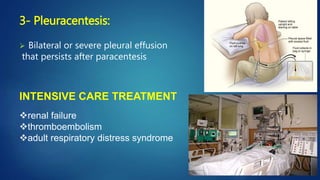
3- Pleuracentesis:
 Bilateral or severe pleural effusion
that persists after paracentesis
INTENSIVE CARE TREATMENT
renal failure
thromboembolism
adult respiratory distress syndrome
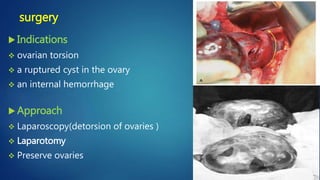
surgery
 Indications
 ovarian torsion
 a ruptured cyst in the ovary
 an internal hemorrhage
 Approach
 Laparoscopy(detorsion of ovaries )
 Laparotomy
 Preserve ovaries
prevention
 Recognition of risk factors for OHSS
 Ovulation induction regimens should be highly
individualized
 Use the minimum dose and duration of gonadotropin
therapy necessary to achieve the therapeutic goal.
 Monitoring(E2 and ultrasoography) and prophylactic
treatment with volume expanders
ovarian hyperstimulation syndrome

ovarian hyperstimulation syndrome

  • 1.
  • 2.
    Definition  Ovarian hyperstimulationsyndrome (OHSS) is an exaggerated response to ovulation induction therapy
  • 3.
    Causes  Fertility drugs Injections  Gonadotropins( anovulation and ovarian stimulation)  Human chorionic gonadotropin(maturation of egg)  Gonadotropin-releasing hormone(to suppress the LH surge)  Oral  Clomiphene citrate (anovulation and ovarian stimulation)
  • 4.
     Spontaneous OHSS(without medication)  Hydatiform mole  multiple pregnancy  Hypothyroidism
  • 5.
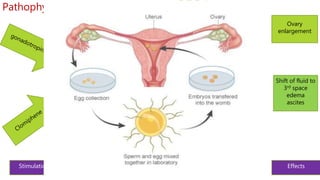
    F F F F F F F F F F F StimulationMultiple follicles VEGF VEGF VEGF VEGF VEGF Bloodvessel Ovary enlargement t Production of VEGF Increase permeability Shift of fluid to 3rd space edema ascites Effects Risk factors Pathophysiology Endo hCG Upregulate F F F F F F F Mature Mature Mature Mature Mature VEGF Mature
  • 6.
    Risk factors Primary riskfactors (patient-related): 1. Young age 2. Previous OHSS 3.polycystic ovary syndrome (PCOS) 4.Low body weight Secondary risk factors ( ovarian response related); On day of hCG trigger: 1. High number of medium/large follicles 2. High or rapidly rising E2 levels Pregnancy (increase in endogenous hCG)
  • 7.
    Clinical presentation  Itoccurs after 10 days oocyte retrieva  correlated to endogenous hCG produ by implanting embryo. Onset Late OHSSEarly OHSS  It occurs within 9 days after oocyte retrieval .  correlated to ovarian response to exogenous hCG stimulation.
  • 8.
  • 9.
    Mild to moderateOHSS  Mild to moderate abdominal pain  Abdominal bloating  Nausea  Vomiting  Diarrhea  Tenderness in the area of ovaries
  • 10.
    Severe OHSS  Rapidweight gain — 2.3 kilograms in one day  Severe, persistent nausea and vomiting  Sever abdominal pain  Shortness of breath  Dark urine  Dizziness/syncope  Hemodynamic instability  Edema  Ascites
  • 11.
    Critical  Acute renalfailure  Arrhythmia(Electrolyte disturbances )  Thromboembolism(hemoconcentration)  Pericardial effusion  Massive hydrothorax  Adult RDS  Ovarian torsion  Rupture of a cyst in an ovary
  • 12.
    Diagnosis Laboratory investigations:  Completeblood count (CBC) with differential:  Hematocrit- >55%(hemoconcentration )  Leukocyte count - >22,000 cells/µL is related to the seriousness of OHSS  Beta-hCG concentration  A positive result indicates pregnancy.
  • 13.
     Estradiol levels Estradiol levels are increased  estradiol >2000 pg/mL  Complete metabolic panel  Liver function test: AST, ALT , and ALP  Renal function test: blood urea and creatinine  Albumin and protein levels are decreased.  Electrolyte imbalances: hyperkalemia and acidosis may be present.
  • 14.
    Imaging  Ultrasonography  toassess the follicles  To measure the size of the ovaries  to evaluate ascites  Chest radiography  may be indicated if dyspnea is present.
  • 15.
    Treatment Outpatient management (follow uptwice-weekly):  mild & moderate OHSS.  Severe OHSS Inpatient management :
  • 16.
    Conservative  Education  Fluid:the patient should receive plenty of of fluid (not less than 1 liter).  Activity: the patient should avoid vigorous activities  Weight: should be recorded daily,  urine output: the frequency and/or volume
  • 17.
     Pain relief: -Symptomatic relief of abdominal pain can be achieved with acetaminophen and if necessary oral or parenteral opiates.  Nausea and/or vomiting Antiemetic agents considered to be safe in early pregnancy should be used to alleviate nausea and/or vomiting.
  • 18.
    - Hospitalized patientsshould be considered at risk of thrombosis secondary to hemo-concentration and immobilization. - Full-length venous support stockings are recommended Daily prophylactic doses of low-molecular weight heparin (e.g., dalteparin sodium 5000 IU/day). Thromboprophylaxis:
  • 19.
    1.Fluids and electrolytes: Hypovolemia correction  Rapid initial hydration may be accomplished with a bolus of IV fluid (500–1,000 mL). normal saline is preferable to lactated Ringer’s solution.  Albumin (25%) in doses of 50–100 g, infused over 4 hours and, is an effective plasma expander when infusion of normal saline fails
  • 20.
     Volume overload Treatmentwith diuretics (e.g., furosemide, 20 mg IV) may be considered after an adequate intravascular volume has been restored (hematocrit <38%).  Hyperkalemia  calcium gluconate  insulin  sodium bicarbonate  Kayexelate
  • 21.
    2.Paracentesis  Indication  Asciteswith pain  Ascites compromised pulmonary function  oliguria/ anuria that does not improve with appropriate fluid management  Procedure  A transvaginal or transabdominal approach may be used, under gentle ultrasound guidance  Replace plasma protein
  • 22.
    3- Pleuracentesis:  Bilateralor severe pleural effusion that persists after paracentesis INTENSIVE CARE TREATMENT renal failure thromboembolism adult respiratory distress syndrome
  • 23.
    surgery  Indications  ovariantorsion  a ruptured cyst in the ovary  an internal hemorrhage  Approach  Laparoscopy(detorsion of ovaries )  Laparotomy  Preserve ovaries
  • 24.
    prevention  Recognition ofrisk factors for OHSS  Ovulation induction regimens should be highly individualized  Use the minimum dose and duration of gonadotropin therapy necessary to achieve the therapeutic goal.  Monitoring(E2 and ultrasoography) and prophylactic treatment with volume expanders

Editor's Notes

  • #12 Classically, the woman with adnexal torsion complains of sharp lower abdominal pain with sudden onset that worsens intermittently over several hours. Th e pain usually is localized to the involved side, with radiation to the fl ank, groin, or thigh. Low-grade fever suggests adnexal necrosis. Nausea and vomiting frequently accompany the pain.
  • #13 statistically significant correlation was found between plasma VEGF levels and certain biological characteristics of OHSS, and of capillary leakage such as leukocytosis with increasing VEGF levels
  • #18 Chlorpromazine cyclizine diphenhydramine
  • #21 worsening hypotension and its sequelae). Diuretics will increase blood viscosity and increase the risk of venous thrombosis,Diuretics should used in the management of pulmonary edema.