The Scientific Research Process
Samuel Gibbs
http://www.splendidresearchers.com/
 Research is the process of discovering facts and
knowledge about phenomena that take place around
us.
 Research is important because it enriches our
understanding and help us to solve problems.
 The aim of this presentation is to describe the
scientific research process.
Introduction
 Purposive- should have a specific aim or purpose.
 Systematic- Should follow a defined plan of
investigation.
 Objective-it should be free from opinion and feelings
of the researcher.
 Replicable- it should be possible for others to
reproduce the study.
Characteristics of Scientific Research
 The scientific research process seeks to address a
problem.
 The first step in this investigative process is to define
the problem.
 The problem definition will give purpose and direction
to the research process.
1. Define the Problem
 Identifying variables is the second step in the
scientific investigation process.
 Conduct a background such so as to identify the
variables that may be responsible for the problem.
 Create a conceptual framework that illustrate the
relationship between the variables and the research
problem.
2. Identify Variables
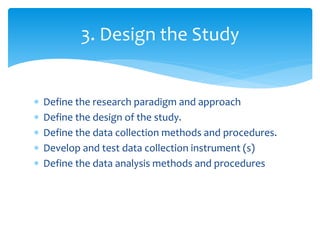
 Define the research paradigm and approach
 Define the design of the study.
 Define the data collection methods and procedures.
 Develop and test data collection instrument (s)
 Define the data analysis methods and procedures
3. Design the Study
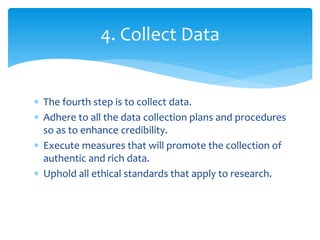
 The fourth step is to collect data.
 Adhere to all the data collection plans and procedures
so as to enhance credibility.
 Execute measures that will promote the collection of
authentic and rich data.
 Uphold all ethical standards that apply to research.
4. Collect Data
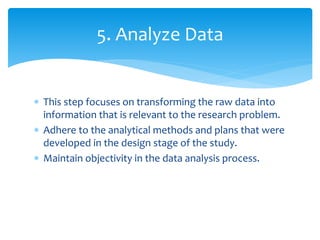
 This step focuses on transforming the raw data into
information that is relevant to the research problem.
 Adhere to the analytical methods and plans that were
developed in the design stage of the study.
 Maintain objectivity in the data analysis process.
5. Analyze Data
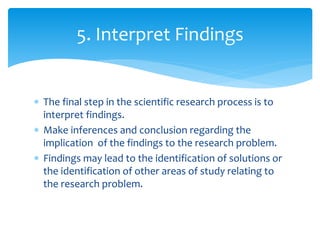
 The final step in the scientific research process is to
interpret findings.
 Make inferences and conclusion regarding the
implication of the findings to the research problem.
 Findings may lead to the identification of solutions or
the identification of other areas of study relating to
the research problem.
5. Interpret Findings
Need more help with your research?
Contact www.splendidresearchers.com

The scientific research process

  • 1.
    The Scientific ResearchProcess Samuel Gibbs http://www.splendidresearchers.com/
  • 2.
     Research isthe process of discovering facts and knowledge about phenomena that take place around us.  Research is important because it enriches our understanding and help us to solve problems.  The aim of this presentation is to describe the scientific research process. Introduction
  • 3.
     Purposive- shouldhave a specific aim or purpose.  Systematic- Should follow a defined plan of investigation.  Objective-it should be free from opinion and feelings of the researcher.  Replicable- it should be possible for others to reproduce the study. Characteristics of Scientific Research
  • 4.
     The scientificresearch process seeks to address a problem.  The first step in this investigative process is to define the problem.  The problem definition will give purpose and direction to the research process. 1. Define the Problem
  • 5.
     Identifying variablesis the second step in the scientific investigation process.  Conduct a background such so as to identify the variables that may be responsible for the problem.  Create a conceptual framework that illustrate the relationship between the variables and the research problem. 2. Identify Variables
  • 6.
     Define theresearch paradigm and approach  Define the design of the study.  Define the data collection methods and procedures.  Develop and test data collection instrument (s)  Define the data analysis methods and procedures 3. Design the Study
  • 7.
     The fourthstep is to collect data.  Adhere to all the data collection plans and procedures so as to enhance credibility.  Execute measures that will promote the collection of authentic and rich data.  Uphold all ethical standards that apply to research. 4. Collect Data
  • 8.
     This stepfocuses on transforming the raw data into information that is relevant to the research problem.  Adhere to the analytical methods and plans that were developed in the design stage of the study.  Maintain objectivity in the data analysis process. 5. Analyze Data
  • 9.
     The finalstep in the scientific research process is to interpret findings.  Make inferences and conclusion regarding the implication of the findings to the research problem.  Findings may lead to the identification of solutions or the identification of other areas of study relating to the research problem. 5. Interpret Findings
  • 10.
    Need more helpwith your research? Contact www.splendidresearchers.com