Key Questions
 What are the different Nervous Systems?

 What are the functions different Nervous Systems?
 Can the Nervous System be trained?
 How are messages sent from the Brain and transferred
by the neurons?
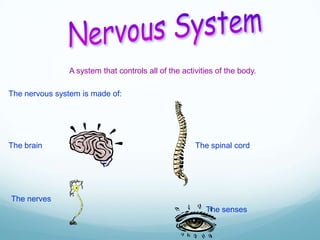
A system that controls all of the activities of the body.

The nervous system is made of:

The brain

The spinal cord

The nerves
The senses
The nervous system also allows you to react to a stimulus.

A stimulus is a change in the environment.

Example: A tennis Serve
Or… being tackled in football
Your reactions are automatic.

Automatic means that you do not have to think about your reactions.

Example: Reflex catch in the slips
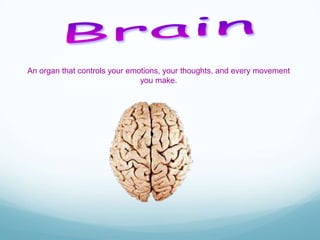
An organ that controls your emotions, your thoughts, and every movement
you make.
The Nervous Systems
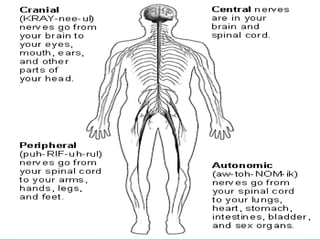
Central, Peripheral and Autonomic
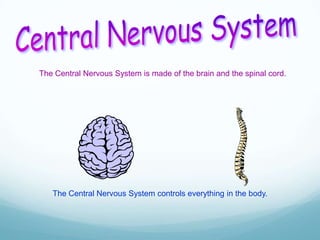
The Central Nervous System is made of the brain and the spinal cord.

The Central Nervous System controls everything in the body.
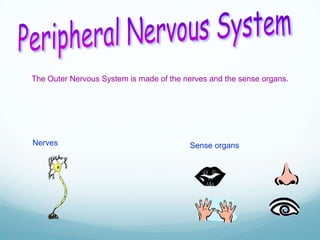
The Outer Nervous System is made of the nerves and the sense organs.

Nerves

Sense organs
* The Central Nervous System controls all of the body’s activities.

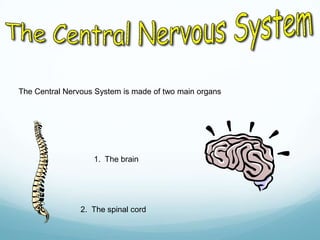
* The Central Nervous System is made of two main organs.

1. The brain

2. The spinal cord
* The spinal cord sends messages to the brain.

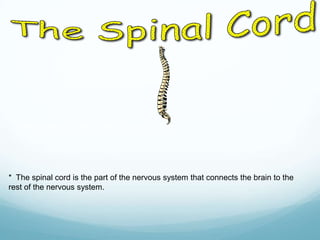
* The spinal cord is the part of the nervous system that connects the brain to the
rest of the nervous system.
* The brain controls everything in the body.

* The brain is made of more than 10 billion nerves!

* The brain is divided into three parts and is protected by the skull.
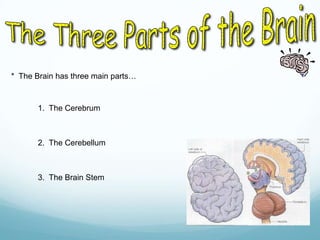
* The Brain has three main parts…

1. The Cerebrum

2. The Cerebellum

3. The Brain Stem
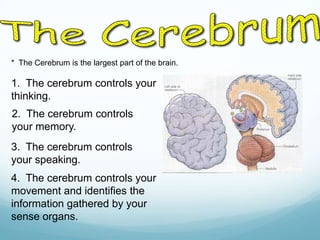
* The Cerebrum is the largest part of the brain.

1. The cerebrum controls your
thinking.
2. The cerebrum controls
your memory.
3. The cerebrum controls
your speaking.
4. The cerebrum controls your
movement and identifies the
information gathered by your
sense organs.
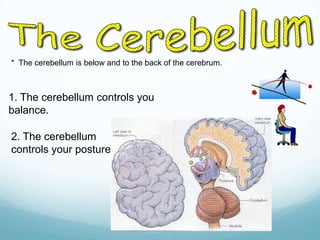
* The cerebellum is below and to the back of the cerebrum.

1. The cerebellum controls you
balance.

2. The cerebellum
controls your posture.
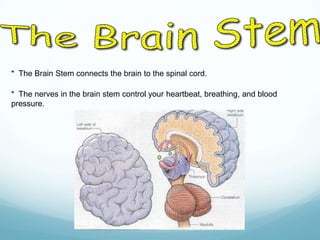
* The Brain Stem connects the brain to the spinal cord.

* The nerves in the brain stem control your heartbeat, breathing, and blood
pressure.
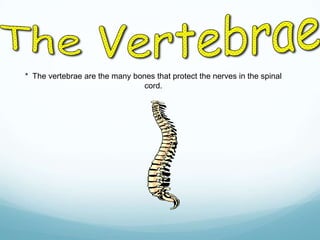
* The vertebrae are the many bones that protect the nerves in the spinal
cord.
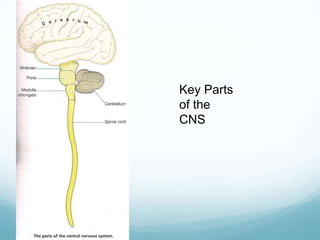
Key Parts
of the
CNS
* The

nervous system carries messages between the central nervous
system and the rest of the body.

* The Outer Nervous System’s job is to connect the Central Nervous
System to the rest of the body.
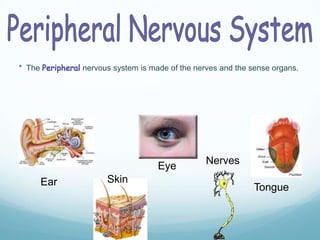
* The

nervous system is made of the nerves and the sense organs.

Eye
Ear

Skin

Nerves

Tongue
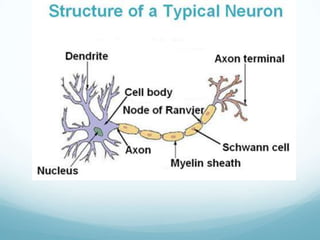
Messages carried throughout the body by nerves.
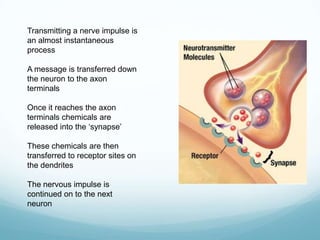
Transmitting a nerve impulse is
an almost instantaneous
process
A message is transferred down
the neuron to the axon
terminals
Once it reaches the axon
terminals chemicals are
released into the ‘synapse’
These chemicals are then
transferred to receptor sites on
the dendrites
The nervous impulse is
continued on to the next
neuron
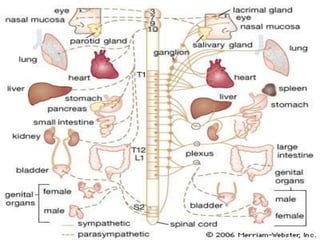
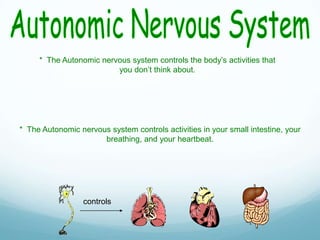
* The Autonomic nervous system controls the body’s activities that
you don’t think about.

* The Autonomic nervous system controls activities in your small intestine, your
breathing, and your heartbeat.

controls

The nervous system

  • 2.
    Key Questions  Whatare the different Nervous Systems?  What are the functions different Nervous Systems?  Can the Nervous System be trained?  How are messages sent from the Brain and transferred by the neurons?
  • 5.
    A system thatcontrols all of the activities of the body. The nervous system is made of: The brain The spinal cord The nerves The senses
  • 6.
    The nervous systemalso allows you to react to a stimulus. A stimulus is a change in the environment. Example: A tennis Serve Or… being tackled in football
  • 7.
    Your reactions areautomatic. Automatic means that you do not have to think about your reactions. Example: Reflex catch in the slips
  • 8.
    An organ thatcontrols your emotions, your thoughts, and every movement you make.
  • 9.
    The Nervous Systems Central,Peripheral and Autonomic
  • 10.
    The Central NervousSystem is made of the brain and the spinal cord. The Central Nervous System controls everything in the body.
  • 11.
    The Outer NervousSystem is made of the nerves and the sense organs. Nerves Sense organs
  • 12.
    * The CentralNervous System controls all of the body’s activities. * The Central Nervous System is made of two main organs. 1. The brain 2. The spinal cord
  • 13.
    * The spinalcord sends messages to the brain. * The spinal cord is the part of the nervous system that connects the brain to the rest of the nervous system.
  • 14.
    * The braincontrols everything in the body. * The brain is made of more than 10 billion nerves! * The brain is divided into three parts and is protected by the skull.
  • 15.
    * The Brainhas three main parts… 1. The Cerebrum 2. The Cerebellum 3. The Brain Stem
  • 16.
    * The Cerebrumis the largest part of the brain. 1. The cerebrum controls your thinking. 2. The cerebrum controls your memory. 3. The cerebrum controls your speaking. 4. The cerebrum controls your movement and identifies the information gathered by your sense organs.
  • 17.
    * The cerebellumis below and to the back of the cerebrum. 1. The cerebellum controls you balance. 2. The cerebellum controls your posture.
  • 18.
    * The BrainStem connects the brain to the spinal cord. * The nerves in the brain stem control your heartbeat, breathing, and blood pressure.
  • 19.
    * The vertebraeare the many bones that protect the nerves in the spinal cord.
  • 20.
  • 22.
    * The nervous systemcarries messages between the central nervous system and the rest of the body. * The Outer Nervous System’s job is to connect the Central Nervous System to the rest of the body.
  • 23.
    * The nervous systemis made of the nerves and the sense organs. Eye Ear Skin Nerves Tongue
  • 24.
    Messages carried throughoutthe body by nerves.
  • 26.
    Transmitting a nerveimpulse is an almost instantaneous process A message is transferred down the neuron to the axon terminals Once it reaches the axon terminals chemicals are released into the ‘synapse’ These chemicals are then transferred to receptor sites on the dendrites The nervous impulse is continued on to the next neuron
  • 27.
    * The Autonomicnervous system controls the body’s activities that you don’t think about. * The Autonomic nervous system controls activities in your small intestine, your breathing, and your heartbeat. controls