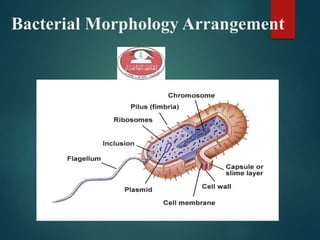
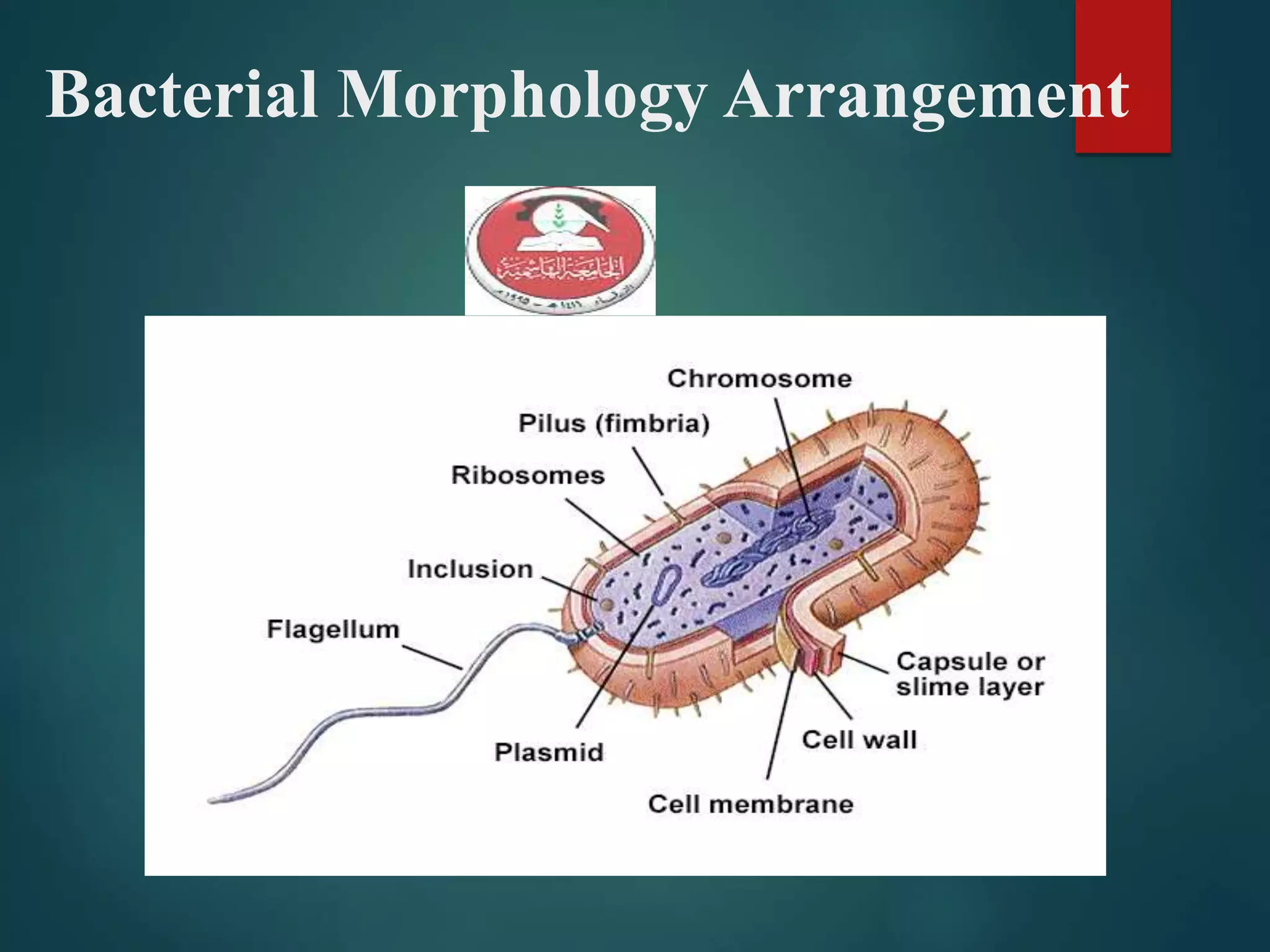
Bacterial Morphology Arrangement
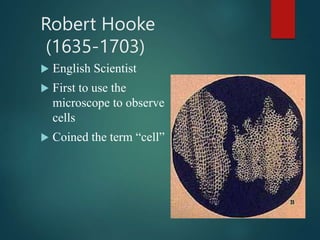
Robert Hooke
(1635-1703)
 English Scientist
 First to use the
microscope to observe
cells
 Coined the term “cell”
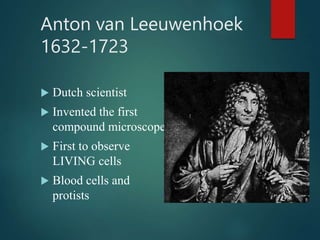
Anton van Leeuwenhoek
1632-1723
 Dutch scientist
 Invented the first
compound microscope
 First to observe
LIVING cells
 Blood cells and
protists
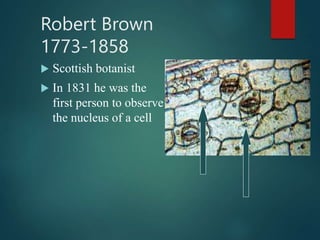
Robert Brown
1773-1858
 Scottish botanist
 In 1831 he was the
first person to observe
the nucleus of a cell
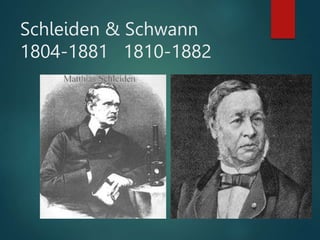
Schleiden & Schwann
1804-1881 1810-1882
Developing Cell Theory
1838
Schleiden
Said “all
plants are
made up of
cells”
Schwann
Said “all
animals are
made up of
cells”
Cell Theory Overview
1. All organisms are made of one or more cells
[Unicellular or Multicellular].
2. All cells carry on life activities.
3. New cells arise only from other living cells.
Prokaryotic vs Eukaryotic
 PROKARYOTIC
 Simplest form
 Lack membrane
bound structures
 Lack true nucleus
 Example: bacteria
and
cyanobacteria
 EUKARYOTIC
 Most common
 Possess
membrane
bound structures
and a nucleus
 Found in most
living things
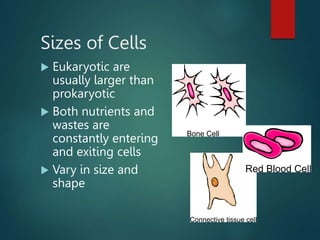
Sizes of Cells
 Eukaryotic are
usually larger than
prokaryotic
 Both nutrients and
wastes are
constantly entering
and exiting cells
 Vary in size and
shape
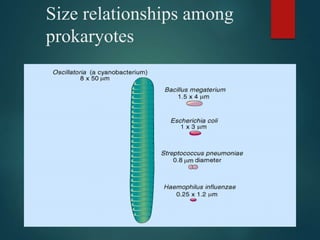
Size relationships among
prokaryotes
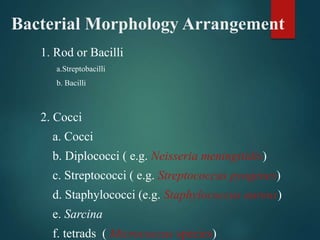
Bacterial Morphology Arrangement
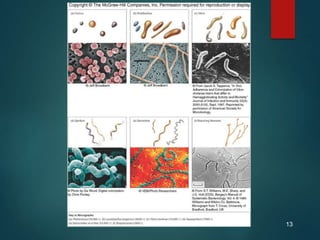
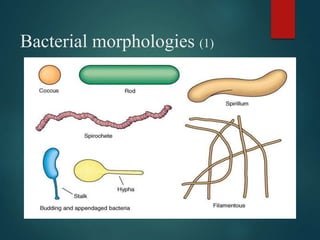
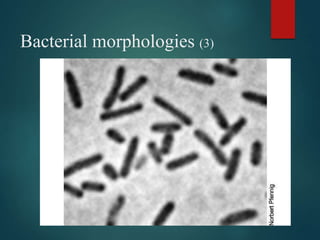
1. Rod or Bacilli
a.Streptobacilli
b. Bacilli
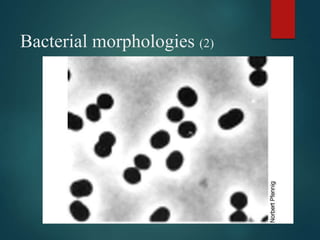
2. Cocci
a. Cocci
b. Diplococci ( e.g. Neisseria meningitidis)
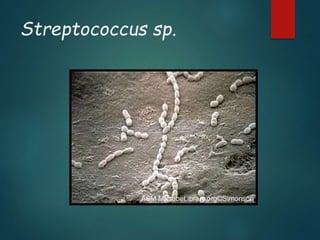
c. Streptococci ( e.g. Streptococcus pyogenes)
d. Staphylococci (e.g. Staphylococcus aureus)
e. Sarcina
f. tetrads ( Micrococcus species)
12
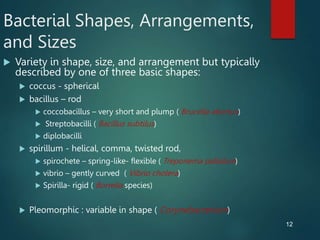
Bacterial Shapes, Arrangements,
and Sizes
 Variety in shape, size, and arrangement but typically
described by one of three basic shapes:
 coccus - spherical
 bacillus – rod
 coccobacillus – very short and plump ( Brucella abortus)
 Streptobacilli ( Bacillus subtilus)
 diplobacilli
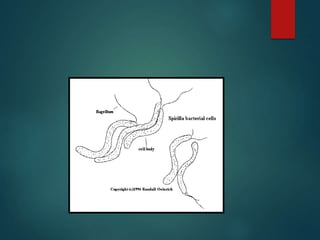
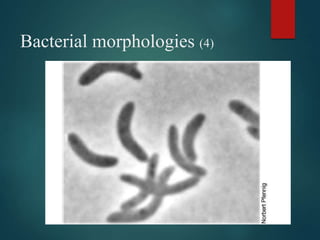
 spirillum - helical, comma, twisted rod,
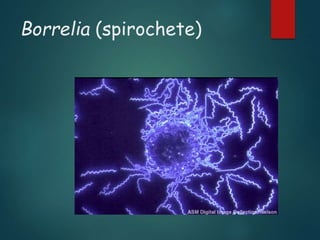
 spirochete – spring-like- flexible ( Treponema pallidum)
 vibrio – gently curved ( Vibrio cholera)
 Spirilla- rigid ( Borrelia species)
 Pleomorphic : variable in shape ( Corynebacterium)
13
14
Bacterial Shapes, Arrangements, and
Sizes
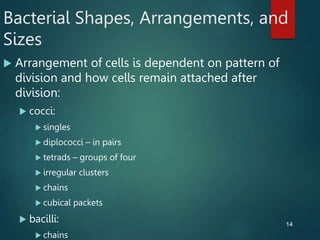
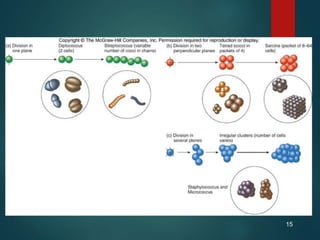
 Arrangement of cells is dependent on pattern of
division and how cells remain attached after
division:
 cocci:
 singles
 diplococci – in pairs
 tetrads – groups of four
 irregular clusters
 chains
 cubical packets
 bacilli:
 chains
15
Streptococcus sp.
Bacterial morphologies (1)
Bacterial morphologies (2)
Bacterial morphologies (3)
Bacterial Morphology Arrangement
3 Spirl
a. Vibrio
b. Spirillum
c. Spirochete
Bacterial morphologies (4)
Borrelia (spirochete)
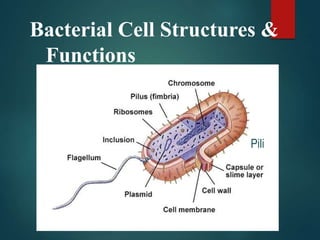
Bacterial Cell Structures &
Functions
Pili
Bacterial Cell Structure
 Appendages - flagella, pili or fimbriae
 Surface layers - capsule, cell wall, cell membrane
 Cytoplasm - nuclear material, ribosome, mesosome,
inclusions etc.
 Special structure - endospore
Appendages
1. flagella
Some rods and spiral form have this.
a). function: motility
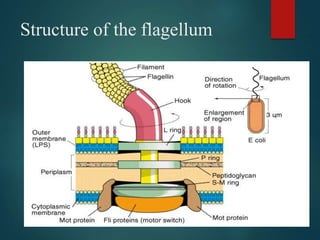
b). origin : cell membrane flagella attach to the cell by hook and
basal body which consists of set(s) of rings and rods
Gram - : 2 sets of ring and rods, L, P, S, M rings and
rods . e.g. E. coli
Gram + : S, M rings and rods .e.g. B. megaterium
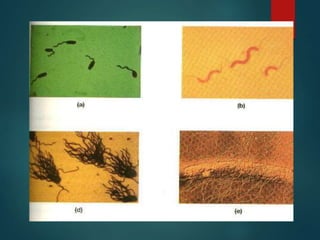
Flagella
 Motility - movement
 Swarming occurs with some bacteria
 Spread across Petri Dish
 Proteus species most evident
 Arrangement basis for classification
 Monotrichous; 1 flagella
 Lophotrichous; tuft at one end
 Kophotrichous; tuft at both ends
 Amphitrichous; both ends
 Peritrichous; all around bacteria
Structure of the flagellum
c).Origin (continued)
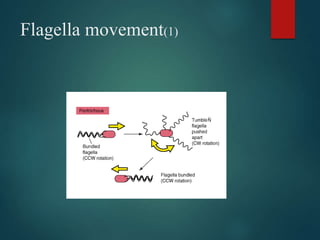
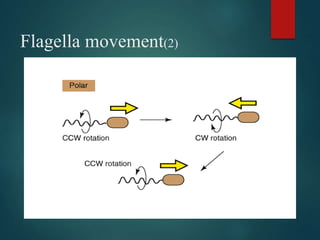
– The structure of the bacterial flagella allows it to spin like a
propeller and thereby propel the bacterial cell; clockwise or
counter clockwise wave like motion.
– Bacterial flagella provides the bacterium with mechanism for
swimming toward or away from chemical stimuli, a behavior
is knows as CHEMOTAXIX, chemosenors in the cell
envelope can detect certain chemicals and signal the flagella
to respond.
d). structure
protein in nature: subunit flagellin ( globular protein)
Flagella movement(1)
Flagella movement(2)
2. Fimbriae and Pili
Fimbriae: Shorter than flagella and straighter ,
smaller, hairlike appendages . Only on some
gram- bacteria.
a). function: adhere. Not involve in motility.
One of the invasive mechanism on bacteria.
Some pathogens cause diseases due to this
(Antigenic characteristic). Prevent phagocytosis.
pili - sex factor. If they make pili, they are + or
donors of F factor.
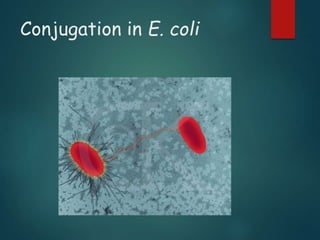
It is necessary for bacterial conjugation
resulting in the transfer of DNA from one cell to
another.
It have been implicated in the ability of
bacteria to recognize specific receptor sites on
the host cell membrane.
Conjugation in E. coli
b). Origin: Cell membrane
c). Position: common pili , numerous over the cell, usually called sex pile,
1-4/cell
d). Structure: composed of proteins which can be dissociated into smaller
unit Pilin . It belongs to a class of protein Lectin which bond to cell
surface polysaccharide.
II. CELL SURFACE LAYER
1. Glycocalyx: Capsule or slime layer
Many bacteria are able to secrete material that adheres to the bacterial
cell but is actually external to the cell.
It consists of polypeptide and polysaccharide on bacilli. Most of them
have only polysaccharide. It is a protective layer that resists host
phagocytosis. Medically important ( Streptococcus pneumonia).
Capsule and Slime layer
 The layer is well organized and not easily
washed off, it is capsule
 Slime layer, unorganized material that is
easily removed.
 They give mucoid growth on agar plate
 B. anthracis has a capsule of poly-D-glutamic
acid, while S. pyogenes made of Hyaluronic
acid.
 Function: Resistant phagocytosis, Protect
against desiccation, Attachment to surface of
solid objects.
Axial Filaments
 Present in spirochetes ( Treponema pallidum cause
syphilis)
 Function is motility – gliding motility
 Bundles of fibrils that arise at the ends of the cell
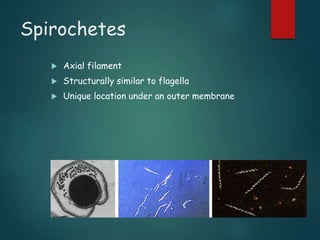
Spirochetes
 Axial filament
 Structurally similar to flagella
 Unique location under an outer membrane
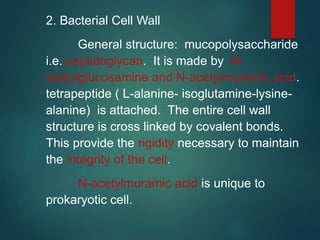
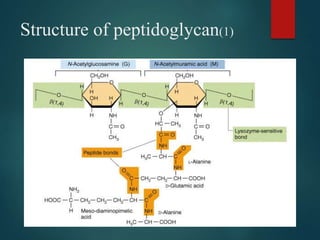
2. Bacterial Cell Wall
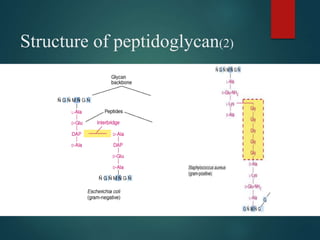
General structure: mucopolysaccharide
i.e. peptidoglycan. It is made by N-
acetylglucosamine and N-acetylmuramic acid.
tetrapeptide ( L-alanine- isoglutamine-lysine-
alanine) is attached. The entire cell wall
structure is cross linked by covalent bonds.
This provide the rigidity necessary to maintain
the integrity of the cell.
N-acetylmuramic acid is unique to
prokaryotic cell.
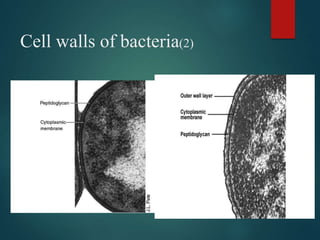
Cell walls of bacteria(2)
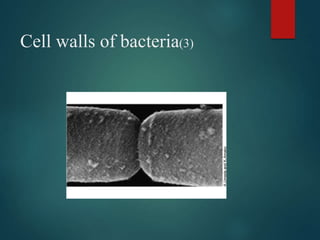
Cell walls of bacteria(3)
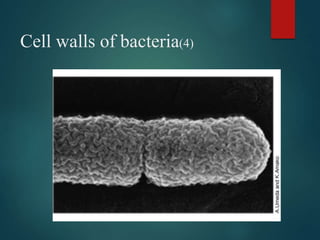
Cell walls of bacteria(4)
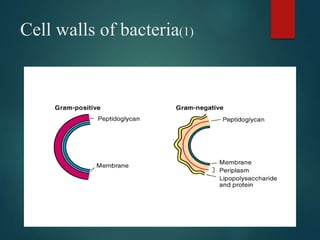
Cell walls of bacteria(1)
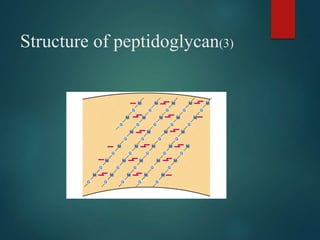
Structure of peptidoglycan(1)
Structure of peptidoglycan(2)
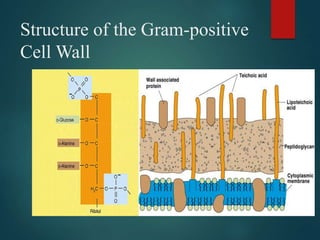
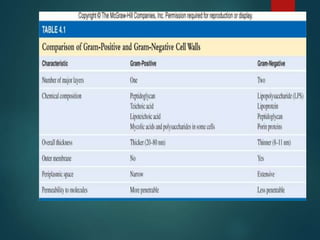
a). Gram positive bacterial cell wall
Thick peptidoglycan layer
pentaglycin cross linkage.
Teichoic acid (TA): Polymer of ribitol
& glycerol joined by phosphate groups
Some have peptioglycan teichoic acid.
All have lipoteichoic acid.
Function of Teichoic acids:
* Antigenic determinant
* Participate in the supply of Mg to
the cell by binding Mg++
* regulate normal cell division.
For most part, protein is not found as
a constituent of the G+ cell wall except
M protein on group streptococci
Structure of the Gram-positive
Cell Wall
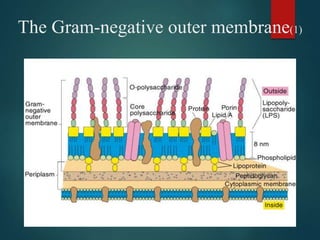
(b) Gram negative bacterial cell wall:
Thin peptidoglycan
Tetrapeptide cross linkage
A second membrane structure: protein and
lipopolysaccharide (LPS).
Toxicity : endotoxin on lipid A of LPS.
glucosamine- glucosamine-long
polysaccharide- repeated sequences of a few sugars
(e.g. gal- mann-rham) n=10-20 O antigen
Structure of peptidoglycan(3)
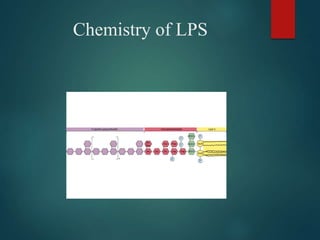
Toxicity : endotoxin on lipid A of
lipopolysaccharide.
glucosamine- glucosamine-long
FA FA FA FA
polysaccharide- repeated sequences of
a few sugars (e.g. gal- mann-rham)
n=10-20 O antigen
Chemistry of LPS
The Gram-negative outer membrane(1)
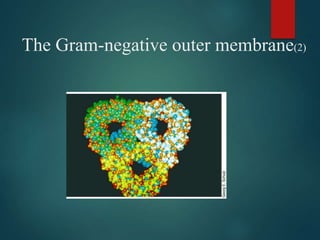
The Gram-negative outer membrane(2)
58
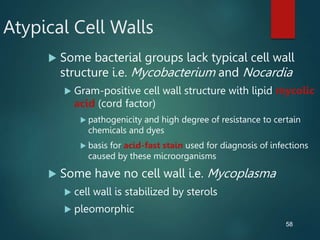
Atypical Cell Walls
 Some bacterial groups lack typical cell wall
structure i.e. Mycobacterium and Nocardia
 Gram-positive cell wall structure with lipid mycolic
acid (cord factor)
 pathogenicity and high degree of resistance to certain
chemicals and dyes
 basis for acid-fast stain used for diagnosis of infections
caused by these microorganisms
 Some have no cell wall i.e. Mycoplasma
 cell wall is stabilized by sterols
 pleomorphic
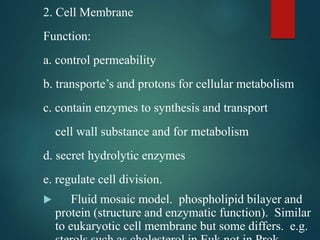
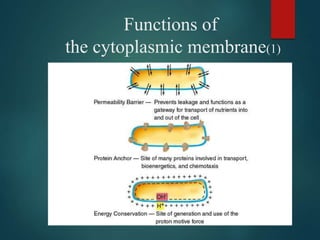
2. Cell Membrane
Function:
a. control permeability
b. transporte’s and protons for cellular metabolism
c. contain enzymes to synthesis and transport
cell wall substance and for metabolism
d. secret hydrolytic enzymes
e. regulate cell division.
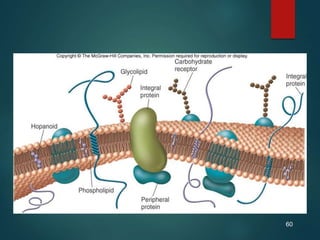
 Fluid mosaic model. phospholipid bilayer and
protein (structure and enzymatic function). Similar
to eukaryotic cell membrane but some differs. e.g.
60
Functions of
the cytoplasmic membrane(1)
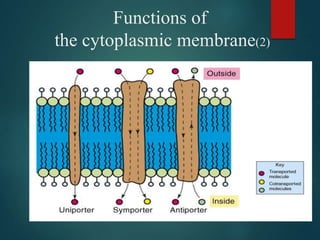
Functions of
the cytoplasmic membrane(2)
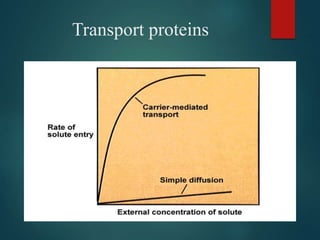
Transport proteins
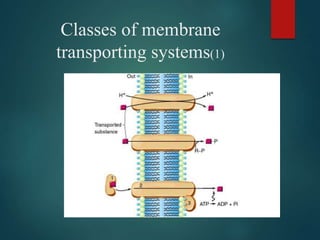
Classes of membrane
transporting systems(1)
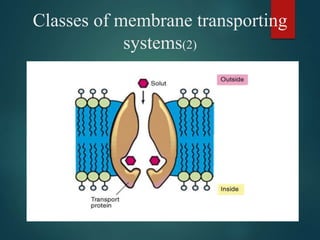
Classes of membrane transporting
systems(2)
66
Bacterial Internal Structures
 Cell cytoplasm:
 dense gelatinous solution of sugars, amino acids, and salts
 70-80% water
 serves as solvent for materials used in all cell functions
67
Bacterial Internal Structures
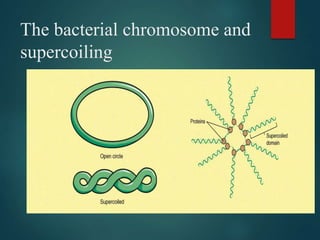
 Chromosome
 single, circular, double-stranded DNA molecule that contains all the
genetic information required by a cell
 DNA is tightly coiled around a protein, aggregated in a dense area
called the nucleoid.
The bacterial chromosome and
supercoiling
69
Bacterial Internal Structures
 Plasmids
 small circular, double-stranded DNA
 free or integrated into the chromosome
 duplicated and passed on to offspring
 not essential to bacterial growth and metabolism
 may encode antibiotic resistance, tolerance to toxic metals, enzymes and
toxins
 used in genetic engineering- readily manipulated and transferred from
cell to cell
70
Bacterial Internal Structures
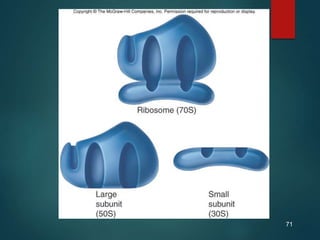
 Ribosomes (70 S)
 made of 60% ribosomal RNA and 40% protein
 consist of two subunits: large and small
 procaryotic differ from eucaryotic ribosomes in size and number of
proteins
 site of protein synthesis
 present in all cells
71
3. Mesosomes ( mostly in Gram +ve)
A large invaginations of the plasma membrane,
irregular in shape.
a. increase in membrane surface, which may be
useful as a site for enzyme activity in respiration
and transport.
b. may participate in cell replication by serving as a
place of attachment for the bacterial chromosome.
4. Inclusions
Not separate by a membrane but distinct.
Granules of various kinds:
* glycogen ( used as carbon source),
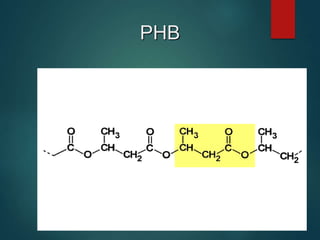
*polyhydroxybutyric acid droplets (PHB)
i.e. fat droplets and have Lipid inclusion
* inorganic metaphosphate (metachromatic granules or
Volutin granules) - in general, starvation of cell for almost
any nutrients leads to the formation of this to serve as an
intracellular phosphate reservoir ( Corynebacterium).
PHB
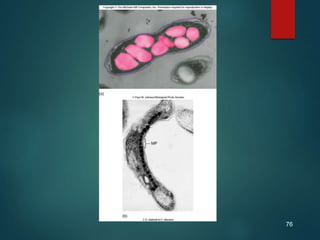
5. Chromatophores
Only in photosynthetic bacteria and blue green algae.
Prok. no chloroplast, pigment found in lamellae
located beneath the cell membrane.
Sulfur Granules: Mainly in Thiobacillus, convert H2S
to S
76
IV. Special Structure
* Endospores
Spore former: Sporobactobacilli and Sporosarcinae
(Gram + cocci)- no medical importance.
Bacillus and Clostridium ( Gram + Rod) have medical
importance. Coxiella ( Gram –ve Rod) cause Q fever.
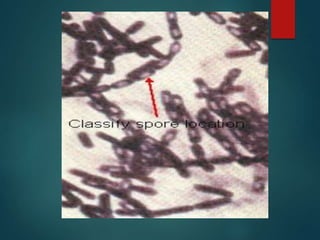
* Position: median, sub-terminal and terminal have
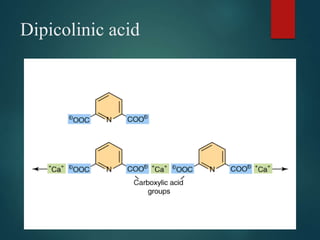
small water, high calcium content and dipicolinic acid
(calcium dipicolinate)
 Extremely resistant to heat, UV, chemicals etc. may be
due to many S containing A.A for disulfide groups.
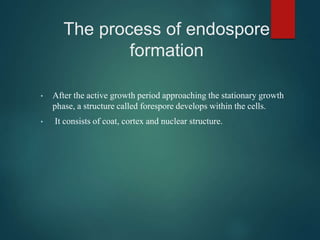
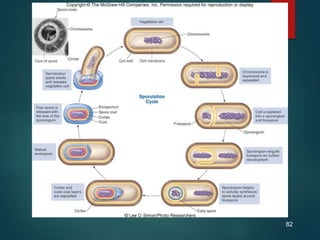
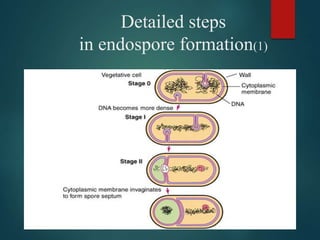
• After the active growth period approaching the stationary growth
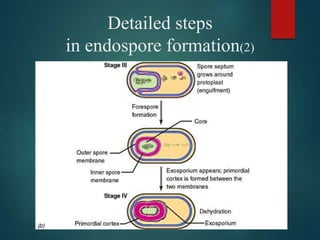
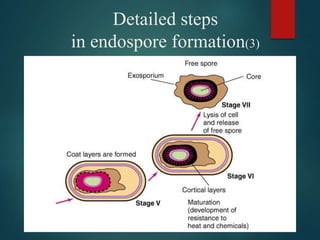
phase, a structure called forespore develops within the cells.
• It consists of coat, cortex and nuclear structure.
The process of endospore
formation
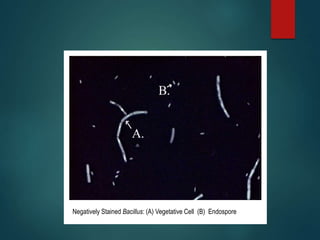
Negatively Stained Bacillus: (A) Vegetative Cell (B) Endospore
Dipicolinic acid
82
Detailed steps
in endospore formation(1)
Detailed steps
in endospore formation(2)
Detailed steps
in endospore formation(3)
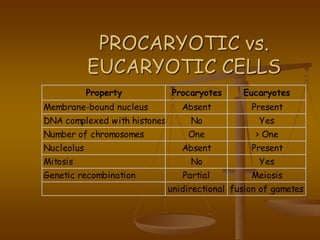
PROCARYOTIC vs.
EUCARYOTIC CELLS
Property Procaryotes Eucaryotes
Membrane-bound nucleus Absent Present
DNA complexed with histones No Yes
Number of chromosomes One > One
Nucleolus Absent Present
Mitosis No Yes
Genetic recombination Partial Meiosis
unidirectional fusion of gametes
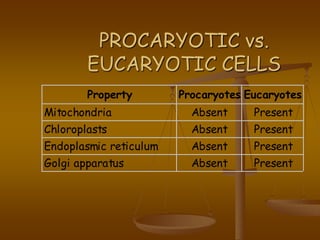
PROCARYOTIC vs.
EUCARYOTIC CELLS
Property Procaryotes Eucaryotes
Mitochondria Absent Present
Chloroplasts Absent Present
Endoplasmic reticulum Absent Present
Golgi apparatus Absent Present
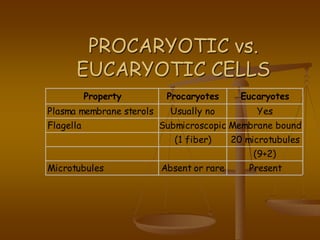
PROCARYOTIC vs.
EUCARYOTIC CELLS
Property Procaryotes Eucaryotes
Plasma membrane sterols Usually no Yes
Flagella Submicroscopic Membrane bound
(1 fiber) 20 microtubules
(9+2)
Microtubules Absent or rare Present
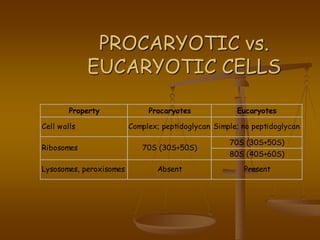
PROCARYOTIC vs.
EUCARYOTIC CELLS
Property Procaryotes Eucaryotes
70S (30S+50S)
80S (40S+60S)
Lysosomes, peroxisomes Absent Present
Cell walls
Ribosomes
Complex; peptidoglycan Simple; no peptidoglycan
70S (30S+50S)

Bacterial Cell structure and Function (1).ppt

  • 1.
  • 2.
    Robert Hooke (1635-1703)  EnglishScientist  First to use the microscope to observe cells  Coined the term “cell”
  • 3.
    Anton van Leeuwenhoek 1632-1723 Dutch scientist  Invented the first compound microscope  First to observe LIVING cells  Blood cells and protists
  • 4.
    Robert Brown 1773-1858  Scottishbotanist  In 1831 he was the first person to observe the nucleus of a cell
  • 5.
  • 6.
    Developing Cell Theory 1838 Schleiden Said“all plants are made up of cells” Schwann Said “all animals are made up of cells”
  • 7.
    Cell Theory Overview 1.All organisms are made of one or more cells [Unicellular or Multicellular]. 2. All cells carry on life activities. 3. New cells arise only from other living cells.
  • 8.
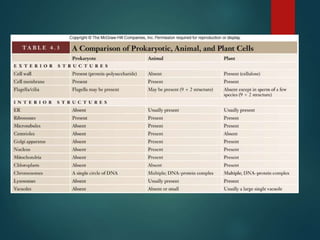
    Prokaryotic vs Eukaryotic PROKARYOTIC  Simplest form  Lack membrane bound structures  Lack true nucleus  Example: bacteria and cyanobacteria  EUKARYOTIC  Most common  Possess membrane bound structures and a nucleus  Found in most living things
  • 9.
    Sizes of Cells Eukaryotic are usually larger than prokaryotic  Both nutrients and wastes are constantly entering and exiting cells  Vary in size and shape
  • 10.
  • 11.
    Bacterial Morphology Arrangement 1.Rod or Bacilli a.Streptobacilli b. Bacilli 2. Cocci a. Cocci b. Diplococci ( e.g. Neisseria meningitidis) c. Streptococci ( e.g. Streptococcus pyogenes) d. Staphylococci (e.g. Staphylococcus aureus) e. Sarcina f. tetrads ( Micrococcus species)
  • 12.
    12 Bacterial Shapes, Arrangements, andSizes  Variety in shape, size, and arrangement but typically described by one of three basic shapes:  coccus - spherical  bacillus – rod  coccobacillus – very short and plump ( Brucella abortus)  Streptobacilli ( Bacillus subtilus)  diplobacilli  spirillum - helical, comma, twisted rod,  spirochete – spring-like- flexible ( Treponema pallidum)  vibrio – gently curved ( Vibrio cholera)  Spirilla- rigid ( Borrelia species)  Pleomorphic : variable in shape ( Corynebacterium)
  • 13.
  • 14.
    14 Bacterial Shapes, Arrangements,and Sizes  Arrangement of cells is dependent on pattern of division and how cells remain attached after division:  cocci:  singles  diplococci – in pairs  tetrads – groups of four  irregular clusters  chains  cubical packets  bacilli:  chains
  • 15.
  • 16.
  • 17.
  • 18.
  • 19.
  • 20.
    Bacterial Morphology Arrangement 3Spirl a. Vibrio b. Spirillum c. Spirochete
  • 22.
  • 23.
  • 24.
    Bacterial Cell Structures& Functions Pili
  • 25.
    Bacterial Cell Structure Appendages - flagella, pili or fimbriae  Surface layers - capsule, cell wall, cell membrane  Cytoplasm - nuclear material, ribosome, mesosome, inclusions etc.  Special structure - endospore
  • 26.
    Appendages 1. flagella Some rodsand spiral form have this. a). function: motility b). origin : cell membrane flagella attach to the cell by hook and basal body which consists of set(s) of rings and rods Gram - : 2 sets of ring and rods, L, P, S, M rings and rods . e.g. E. coli Gram + : S, M rings and rods .e.g. B. megaterium
  • 27.
    Flagella  Motility -movement  Swarming occurs with some bacteria  Spread across Petri Dish  Proteus species most evident  Arrangement basis for classification  Monotrichous; 1 flagella  Lophotrichous; tuft at one end  Kophotrichous; tuft at both ends  Amphitrichous; both ends  Peritrichous; all around bacteria
  • 29.
  • 30.
    c).Origin (continued) – Thestructure of the bacterial flagella allows it to spin like a propeller and thereby propel the bacterial cell; clockwise or counter clockwise wave like motion. – Bacterial flagella provides the bacterium with mechanism for swimming toward or away from chemical stimuli, a behavior is knows as CHEMOTAXIX, chemosenors in the cell envelope can detect certain chemicals and signal the flagella to respond. d). structure protein in nature: subunit flagellin ( globular protein)
  • 31.
  • 32.
  • 33.
    2. Fimbriae andPili Fimbriae: Shorter than flagella and straighter , smaller, hairlike appendages . Only on some gram- bacteria. a). function: adhere. Not involve in motility. One of the invasive mechanism on bacteria. Some pathogens cause diseases due to this (Antigenic characteristic). Prevent phagocytosis.
  • 34.
    pili - sexfactor. If they make pili, they are + or donors of F factor. It is necessary for bacterial conjugation resulting in the transfer of DNA from one cell to another. It have been implicated in the ability of bacteria to recognize specific receptor sites on the host cell membrane.
  • 35.
  • 36.
    b). Origin: Cellmembrane c). Position: common pili , numerous over the cell, usually called sex pile, 1-4/cell d). Structure: composed of proteins which can be dissociated into smaller unit Pilin . It belongs to a class of protein Lectin which bond to cell surface polysaccharide.
  • 37.
    II. CELL SURFACELAYER 1. Glycocalyx: Capsule or slime layer Many bacteria are able to secrete material that adheres to the bacterial cell but is actually external to the cell. It consists of polypeptide and polysaccharide on bacilli. Most of them have only polysaccharide. It is a protective layer that resists host phagocytosis. Medically important ( Streptococcus pneumonia).
  • 38.
    Capsule and Slimelayer  The layer is well organized and not easily washed off, it is capsule  Slime layer, unorganized material that is easily removed.  They give mucoid growth on agar plate  B. anthracis has a capsule of poly-D-glutamic acid, while S. pyogenes made of Hyaluronic acid.  Function: Resistant phagocytosis, Protect against desiccation, Attachment to surface of solid objects.
  • 39.
    Axial Filaments  Presentin spirochetes ( Treponema pallidum cause syphilis)  Function is motility – gliding motility  Bundles of fibrils that arise at the ends of the cell
  • 40.
    Spirochetes  Axial filament Structurally similar to flagella  Unique location under an outer membrane
  • 41.
    2. Bacterial CellWall General structure: mucopolysaccharide i.e. peptidoglycan. It is made by N- acetylglucosamine and N-acetylmuramic acid. tetrapeptide ( L-alanine- isoglutamine-lysine- alanine) is attached. The entire cell wall structure is cross linked by covalent bonds. This provide the rigidity necessary to maintain the integrity of the cell. N-acetylmuramic acid is unique to prokaryotic cell.
  • 42.
    Cell walls ofbacteria(2)
  • 43.
    Cell walls ofbacteria(3)
  • 44.
    Cell walls ofbacteria(4)
  • 45.
    Cell walls ofbacteria(1)
  • 46.
  • 47.
  • 48.
    a). Gram positivebacterial cell wall Thick peptidoglycan layer pentaglycin cross linkage. Teichoic acid (TA): Polymer of ribitol & glycerol joined by phosphate groups Some have peptioglycan teichoic acid. All have lipoteichoic acid.
  • 49.
    Function of Teichoicacids: * Antigenic determinant * Participate in the supply of Mg to the cell by binding Mg++ * regulate normal cell division. For most part, protein is not found as a constituent of the G+ cell wall except M protein on group streptococci
  • 50.
    Structure of theGram-positive Cell Wall
  • 51.
    (b) Gram negativebacterial cell wall: Thin peptidoglycan Tetrapeptide cross linkage A second membrane structure: protein and lipopolysaccharide (LPS). Toxicity : endotoxin on lipid A of LPS. glucosamine- glucosamine-long polysaccharide- repeated sequences of a few sugars (e.g. gal- mann-rham) n=10-20 O antigen
  • 52.
  • 53.
    Toxicity : endotoxinon lipid A of lipopolysaccharide. glucosamine- glucosamine-long FA FA FA FA polysaccharide- repeated sequences of a few sugars (e.g. gal- mann-rham) n=10-20 O antigen
  • 54.
  • 55.
  • 56.
  • 58.
    58 Atypical Cell Walls Some bacterial groups lack typical cell wall structure i.e. Mycobacterium and Nocardia  Gram-positive cell wall structure with lipid mycolic acid (cord factor)  pathogenicity and high degree of resistance to certain chemicals and dyes  basis for acid-fast stain used for diagnosis of infections caused by these microorganisms  Some have no cell wall i.e. Mycoplasma  cell wall is stabilized by sterols  pleomorphic
  • 59.
    2. Cell Membrane Function: a.control permeability b. transporte’s and protons for cellular metabolism c. contain enzymes to synthesis and transport cell wall substance and for metabolism d. secret hydrolytic enzymes e. regulate cell division.  Fluid mosaic model. phospholipid bilayer and protein (structure and enzymatic function). Similar to eukaryotic cell membrane but some differs. e.g.
  • 60.
  • 61.
  • 62.
  • 63.
  • 64.
  • 65.
    Classes of membranetransporting systems(2)
  • 66.
    66 Bacterial Internal Structures Cell cytoplasm:  dense gelatinous solution of sugars, amino acids, and salts  70-80% water  serves as solvent for materials used in all cell functions
  • 67.
    67 Bacterial Internal Structures Chromosome  single, circular, double-stranded DNA molecule that contains all the genetic information required by a cell  DNA is tightly coiled around a protein, aggregated in a dense area called the nucleoid.
  • 68.
    The bacterial chromosomeand supercoiling
  • 69.
    69 Bacterial Internal Structures Plasmids  small circular, double-stranded DNA  free or integrated into the chromosome  duplicated and passed on to offspring  not essential to bacterial growth and metabolism  may encode antibiotic resistance, tolerance to toxic metals, enzymes and toxins  used in genetic engineering- readily manipulated and transferred from cell to cell
  • 70.
    70 Bacterial Internal Structures Ribosomes (70 S)  made of 60% ribosomal RNA and 40% protein  consist of two subunits: large and small  procaryotic differ from eucaryotic ribosomes in size and number of proteins  site of protein synthesis  present in all cells
  • 71.
  • 72.
    3. Mesosomes (mostly in Gram +ve) A large invaginations of the plasma membrane, irregular in shape. a. increase in membrane surface, which may be useful as a site for enzyme activity in respiration and transport. b. may participate in cell replication by serving as a place of attachment for the bacterial chromosome.
  • 73.
    4. Inclusions Not separateby a membrane but distinct. Granules of various kinds: * glycogen ( used as carbon source), *polyhydroxybutyric acid droplets (PHB) i.e. fat droplets and have Lipid inclusion * inorganic metaphosphate (metachromatic granules or Volutin granules) - in general, starvation of cell for almost any nutrients leads to the formation of this to serve as an intracellular phosphate reservoir ( Corynebacterium).
  • 74.
  • 75.
    5. Chromatophores Only inphotosynthetic bacteria and blue green algae. Prok. no chloroplast, pigment found in lamellae located beneath the cell membrane. Sulfur Granules: Mainly in Thiobacillus, convert H2S to S
  • 76.
  • 77.
    IV. Special Structure *Endospores Spore former: Sporobactobacilli and Sporosarcinae (Gram + cocci)- no medical importance. Bacillus and Clostridium ( Gram + Rod) have medical importance. Coxiella ( Gram –ve Rod) cause Q fever. * Position: median, sub-terminal and terminal have small water, high calcium content and dipicolinic acid (calcium dipicolinate)  Extremely resistant to heat, UV, chemicals etc. may be due to many S containing A.A for disulfide groups.
  • 78.
    • After theactive growth period approaching the stationary growth phase, a structure called forespore develops within the cells. • It consists of coat, cortex and nuclear structure. The process of endospore formation
  • 80.
    Negatively Stained Bacillus:(A) Vegetative Cell (B) Endospore
  • 81.
  • 82.
  • 83.
  • 84.
  • 85.
  • 87.
    PROCARYOTIC vs. EUCARYOTIC CELLS PropertyProcaryotes Eucaryotes Membrane-bound nucleus Absent Present DNA complexed with histones No Yes Number of chromosomes One > One Nucleolus Absent Present Mitosis No Yes Genetic recombination Partial Meiosis unidirectional fusion of gametes
  • 88.
    PROCARYOTIC vs. EUCARYOTIC CELLS PropertyProcaryotes Eucaryotes Mitochondria Absent Present Chloroplasts Absent Present Endoplasmic reticulum Absent Present Golgi apparatus Absent Present
  • 89.
    PROCARYOTIC vs. EUCARYOTIC CELLS PropertyProcaryotes Eucaryotes Plasma membrane sterols Usually no Yes Flagella Submicroscopic Membrane bound (1 fiber) 20 microtubules (9+2) Microtubules Absent or rare Present
  • 90.
    PROCARYOTIC vs. EUCARYOTIC CELLS PropertyProcaryotes Eucaryotes 70S (30S+50S) 80S (40S+60S) Lysosomes, peroxisomes Absent Present Cell walls Ribosomes Complex; peptidoglycan Simple; no peptidoglycan 70S (30S+50S)