Dr Ajay Manickam
JR – DEPT OF ENT AND HNS
RG KAR MEDICAL COLLEGE
The Mechanism of Hearing
The Mechanism of hearing
Broad classification
Mechanical
conduction of sound
Transduction of
mechanical energy
to electrical
impulses
Conduction of
electrical impulses
to brain
Mechanical conduction
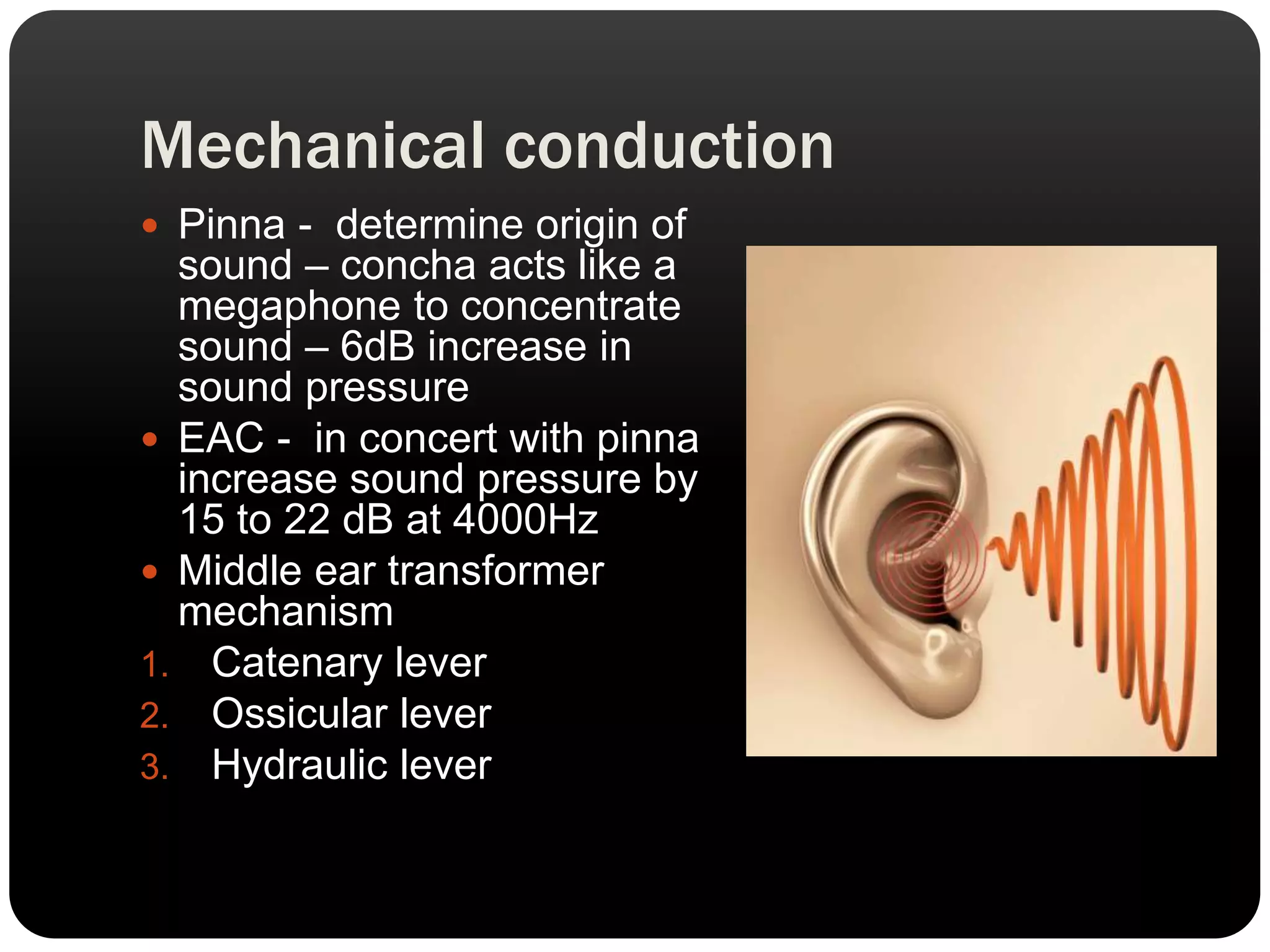
 Pinna - determine origin of
sound – concha acts like a
megaphone to concentrate
sound – 6dB increase in
sound pressure
 EAC - in concert with pinna
increase sound pressure by
15 to 22 dB at 4000Hz
 Middle ear transformer
mechanism
1. Catenary lever
2. Ossicular lever
3. Hydraulic lever
Mechanical conduction (Acoustic
Transformer)
Middle ear transformer
mechanism
1. Catenary lever – ear drum –
2times gain in sound
pressure
2. Ossicular lever – ossicles –
handle of malleus 1.3 times
longer than long process of
incus – mechanical
advantage of 1.3
3. Hydraulic lever – diff in
surface between TM (55 sq
mm) & Stapes (3.2 sq mm) –
areal ratio – 14: 1
Acoustic transduction
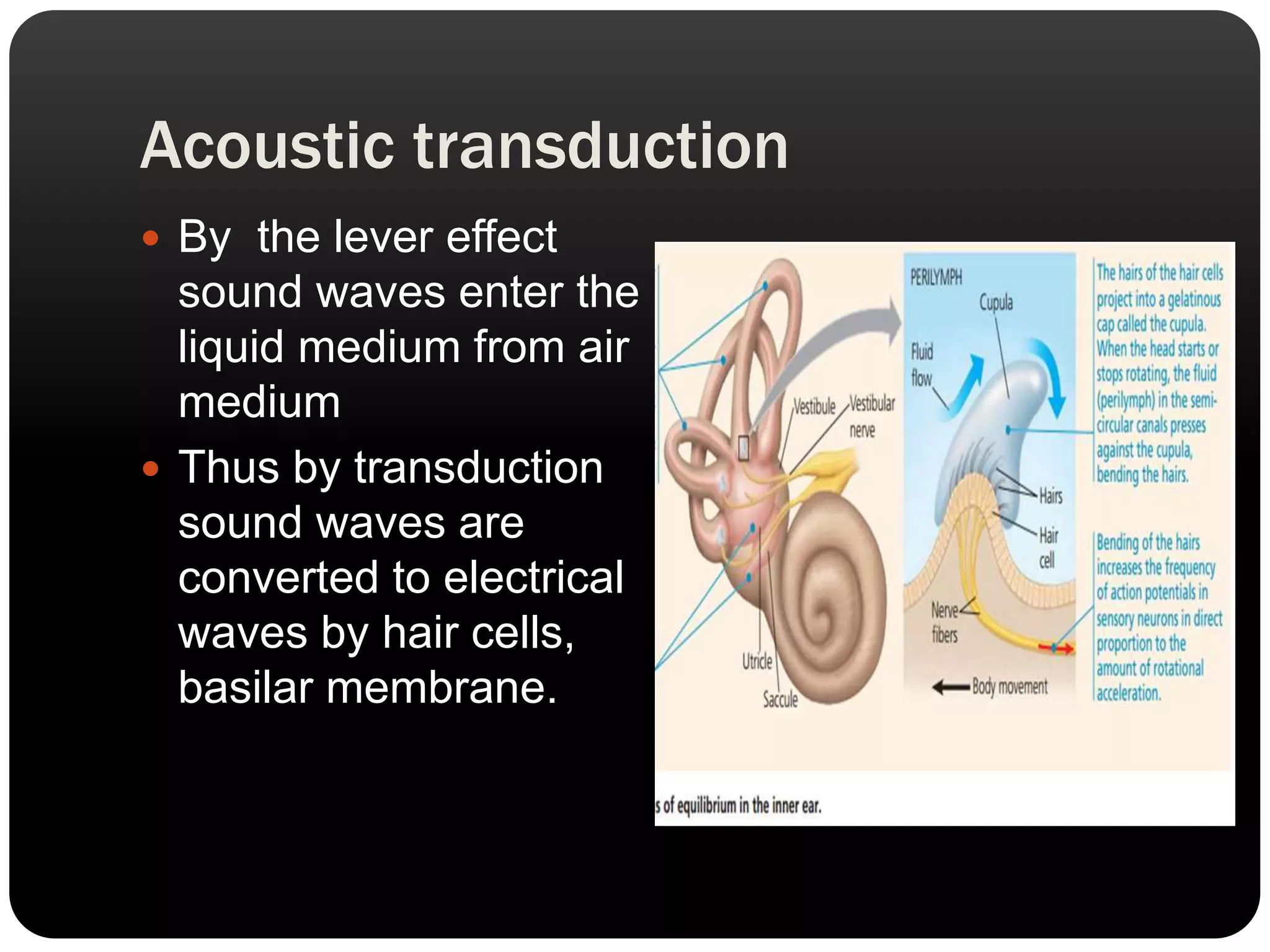
 By the lever effect
sound waves enter the
liquid medium from air
medium
 Thus by transduction
sound waves are
converted to electrical
waves by hair cells,
basilar membrane.
Conduction of electrical impulses to brain
1
• Hair cells peripheral / spiral ganglia central
2
• Cochlear nerve
3
• Ventral & dorsal Cochlear nucleus
4
• Superior olivary nucleus
5
• Lateral lemniscus
6
• Inferior colliculus
7
• Medial geniculate body
8
• Auditory cortex
Theories of hearing
 Helmhotz’s place theory (1883)
 Rutherford’s frequency theory (1886)
 Wever’s volley resonance theory (1949)
 Von bekesy’s travelling wave theory (1960)
The PLACE theory (1883)
 High frequency will
excite BASAL region
 Low frequency will
excite APICAL
region
The FREQUENCY theory (1886)
 All frequencies activate
entire length of basilar
membrane
 All vibrations are
portrayed to the brain
without complex
vibrations of cochlea
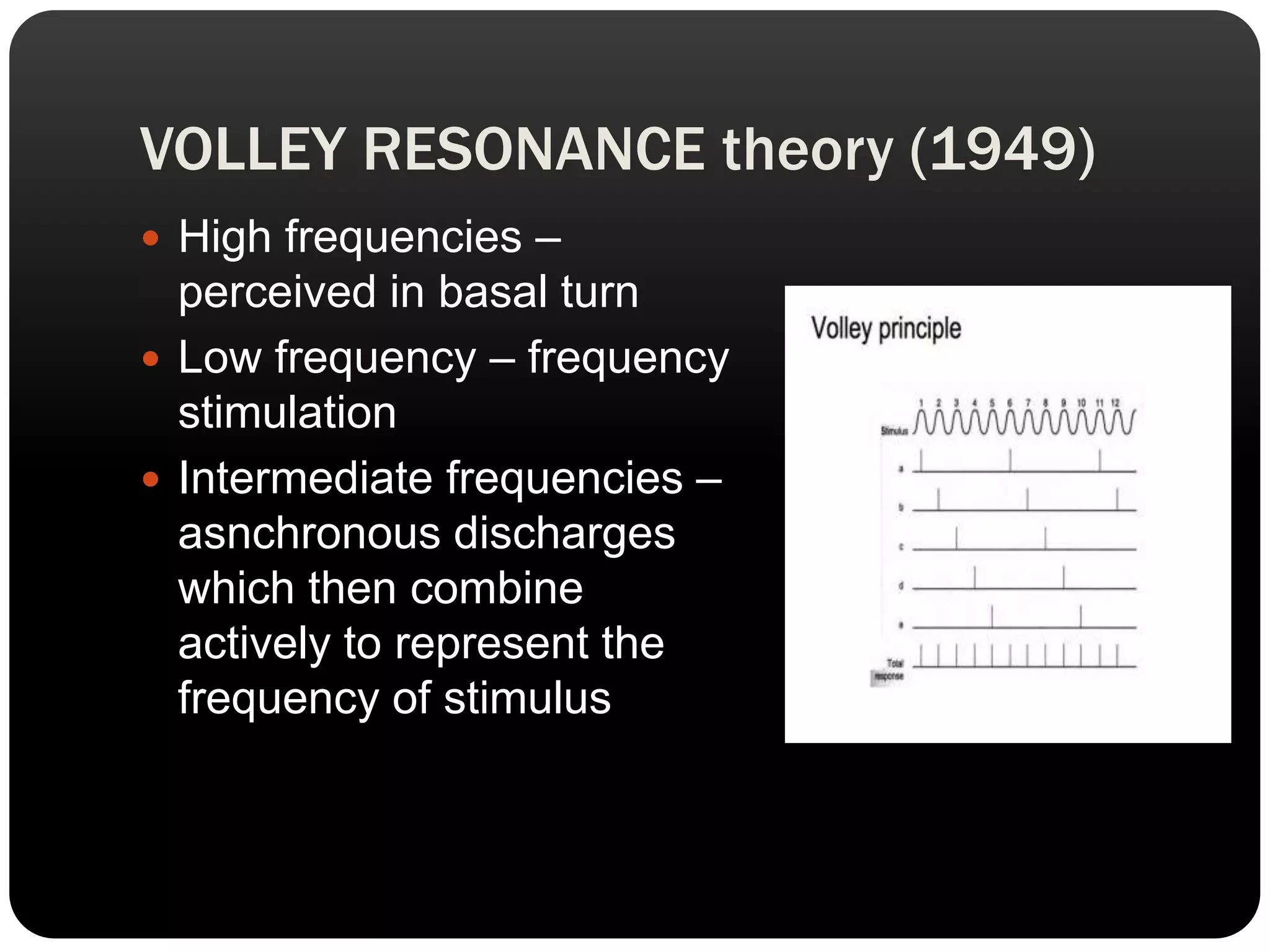
VOLLEY RESONANCE theory (1949)
 High frequencies –
perceived in basal turn
 Low frequency – frequency
stimulation
 Intermediate frequencies –
asnchronous discharges
which then combine
actively to represent the
frequency of stimulus
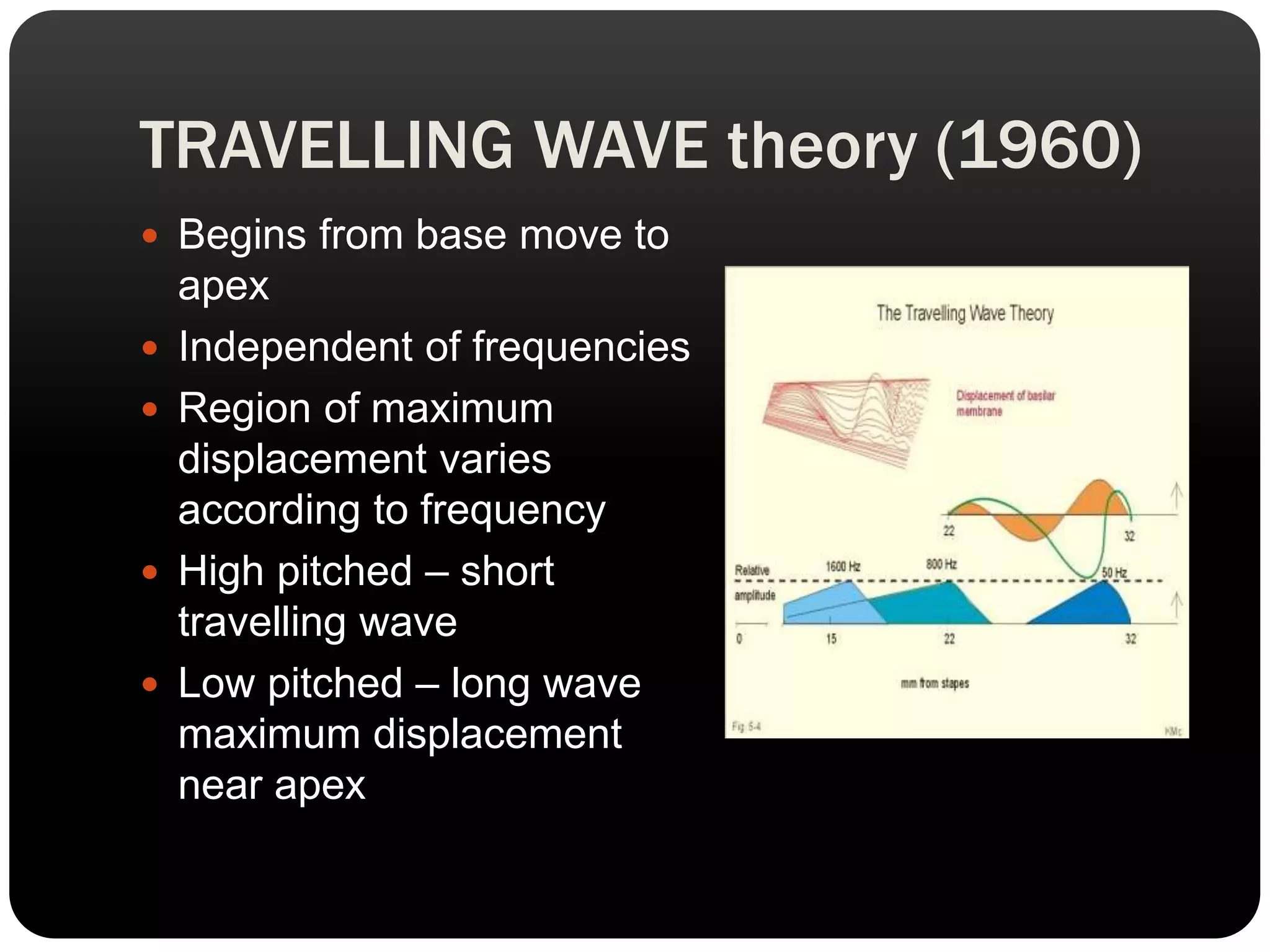
TRAVELLING WAVE theory (1960)
 Begins from base move to
apex
 Independent of frequencies
 Region of maximum
displacement varies
according to frequency
 High pitched – short
travelling wave
 Low pitched – long wave
maximum displacement
near apex
Thank you

The mechanism of hearing

  • 1.
    Dr Ajay Manickam JR– DEPT OF ENT AND HNS RG KAR MEDICAL COLLEGE The Mechanism of Hearing
  • 2.
  • 3.
    Broad classification Mechanical conduction ofsound Transduction of mechanical energy to electrical impulses Conduction of electrical impulses to brain
  • 4.
    Mechanical conduction  Pinna- determine origin of sound – concha acts like a megaphone to concentrate sound – 6dB increase in sound pressure  EAC - in concert with pinna increase sound pressure by 15 to 22 dB at 4000Hz  Middle ear transformer mechanism 1. Catenary lever 2. Ossicular lever 3. Hydraulic lever
  • 5.
    Mechanical conduction (Acoustic Transformer) Middleear transformer mechanism 1. Catenary lever – ear drum – 2times gain in sound pressure 2. Ossicular lever – ossicles – handle of malleus 1.3 times longer than long process of incus – mechanical advantage of 1.3 3. Hydraulic lever – diff in surface between TM (55 sq mm) & Stapes (3.2 sq mm) – areal ratio – 14: 1
  • 6.
    Acoustic transduction  Bythe lever effect sound waves enter the liquid medium from air medium  Thus by transduction sound waves are converted to electrical waves by hair cells, basilar membrane.
  • 7.
    Conduction of electricalimpulses to brain 1 • Hair cells peripheral / spiral ganglia central 2 • Cochlear nerve 3 • Ventral & dorsal Cochlear nucleus 4 • Superior olivary nucleus 5 • Lateral lemniscus 6 • Inferior colliculus 7 • Medial geniculate body 8 • Auditory cortex
  • 8.
    Theories of hearing Helmhotz’s place theory (1883)  Rutherford’s frequency theory (1886)  Wever’s volley resonance theory (1949)  Von bekesy’s travelling wave theory (1960)
  • 9.
    The PLACE theory(1883)  High frequency will excite BASAL region  Low frequency will excite APICAL region
  • 10.
    The FREQUENCY theory(1886)  All frequencies activate entire length of basilar membrane  All vibrations are portrayed to the brain without complex vibrations of cochlea
  • 11.
    VOLLEY RESONANCE theory(1949)  High frequencies – perceived in basal turn  Low frequency – frequency stimulation  Intermediate frequencies – asnchronous discharges which then combine actively to represent the frequency of stimulus
  • 12.
    TRAVELLING WAVE theory(1960)  Begins from base move to apex  Independent of frequencies  Region of maximum displacement varies according to frequency  High pitched – short travelling wave  Low pitched – long wave maximum displacement near apex
  • 13.