Introduction to Ecology: ‘Decade of Discovery’Article from BBC.co.ukworld news website From: Oct. 4, 2010In Cambodia, a new species of rhacophorid frog, Chiromantissamkosensis, was identified in 2007. It is distinguished from other species of Asian Chiromantis by having green blood and turquoise bonesRead more: http://www.cbsnews.com/2300-500142_162-4668710-5.html?tag=page#ixzz11fxWUi2wA new plant species, AeschynanthusMendumiae, discovered on the southeastern slopes of Laos' Phuo Yang Mountain, is one of 1,068 new species identified in the Greater Mekong from 1997 to 2007 in the WWF report, "First Contact in the Greater Mekong."Read more: http://www.cbsnews.com/2300-500142_162-4668710.html#ixzz11fwtSLWhThe Dragon millipede Desmoxytespurpurosea, from Lansak district Uthaithani Province, Thailand. This formidable-looking creature sees off predators first with its spiny bright-pink skin and second with glands that produce cyanide.Read more: http://www.cbsnews.com/2300-500142_162-4668710-2.html?tag=page#ixzz11fxEQ8Cf
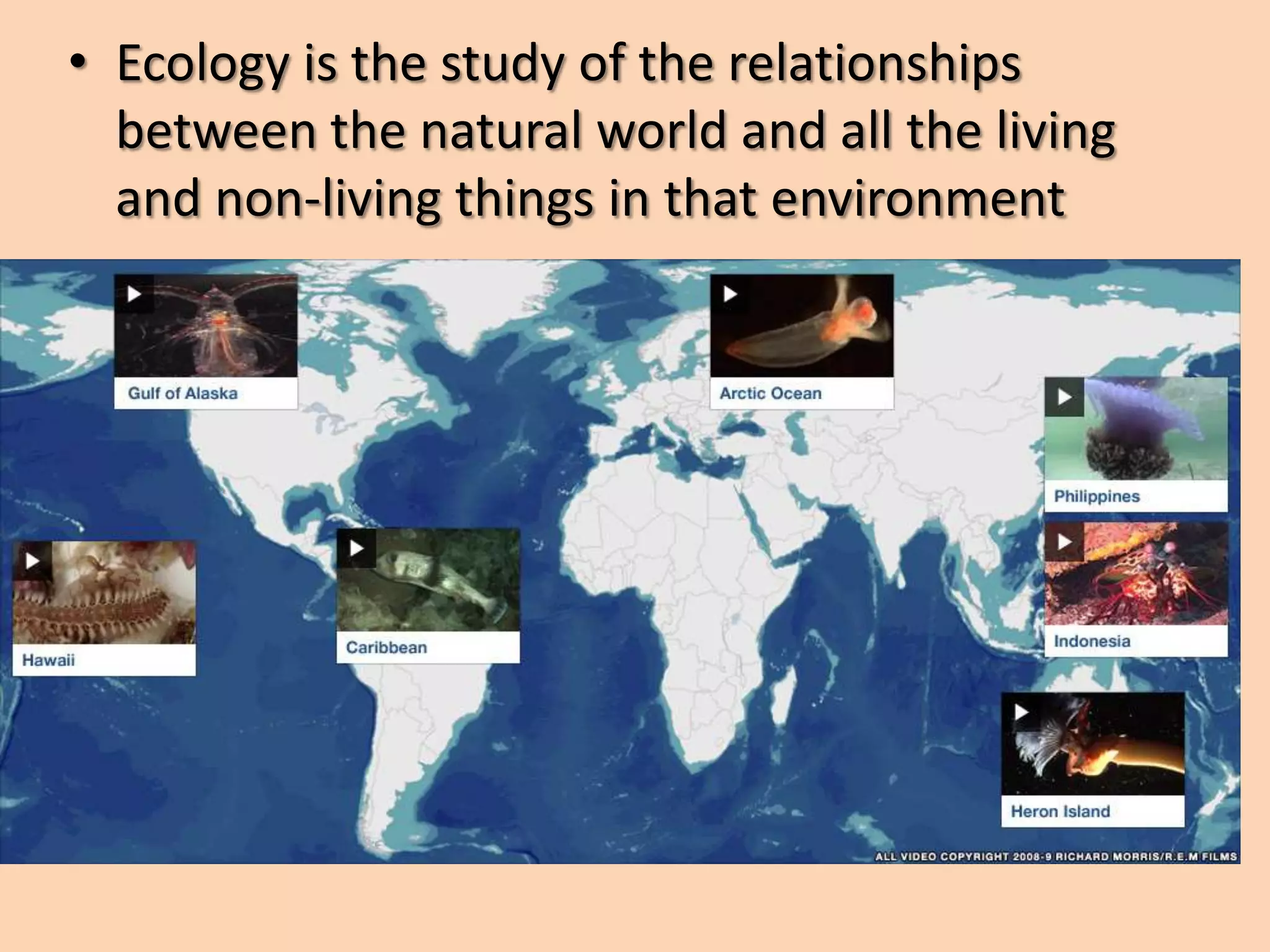
Ecology is the study of the relationships between the natural world and all the living and non-living things in that environment
Article InformationThis article tells us about a research study completed on the FIRST census of marine lifeInvolved almost 3000 researchers from 80 different countries, and over 9000 days at sea!Key questions:What LIVED in the oceans?What DOES live in the oceans?What WILL live in the oceans?
Discovered many species thought to be rareCollected many specimens and are identifying almost 6000 new species!Oceans are changing quickly, so it is important to know what lives thereQuestions to consider:Do you think this is an important study? Why/why not? Explain.Now that we have more knowledge about the oceans and the life found in oceans, what should we do with this information?This member of the new Kiwaidae family of crabs, discovered near Easter Island, was named Kiwahirsuta because of its furry appearance. From:http://news.bbc.co.uk/2/hi/science/nature/8523389.stmThis new sponge produces a chemical with anti-cancer propertiesFrom: http://news.bbc.co.uk/2/hi/science/nature/8523389.stm
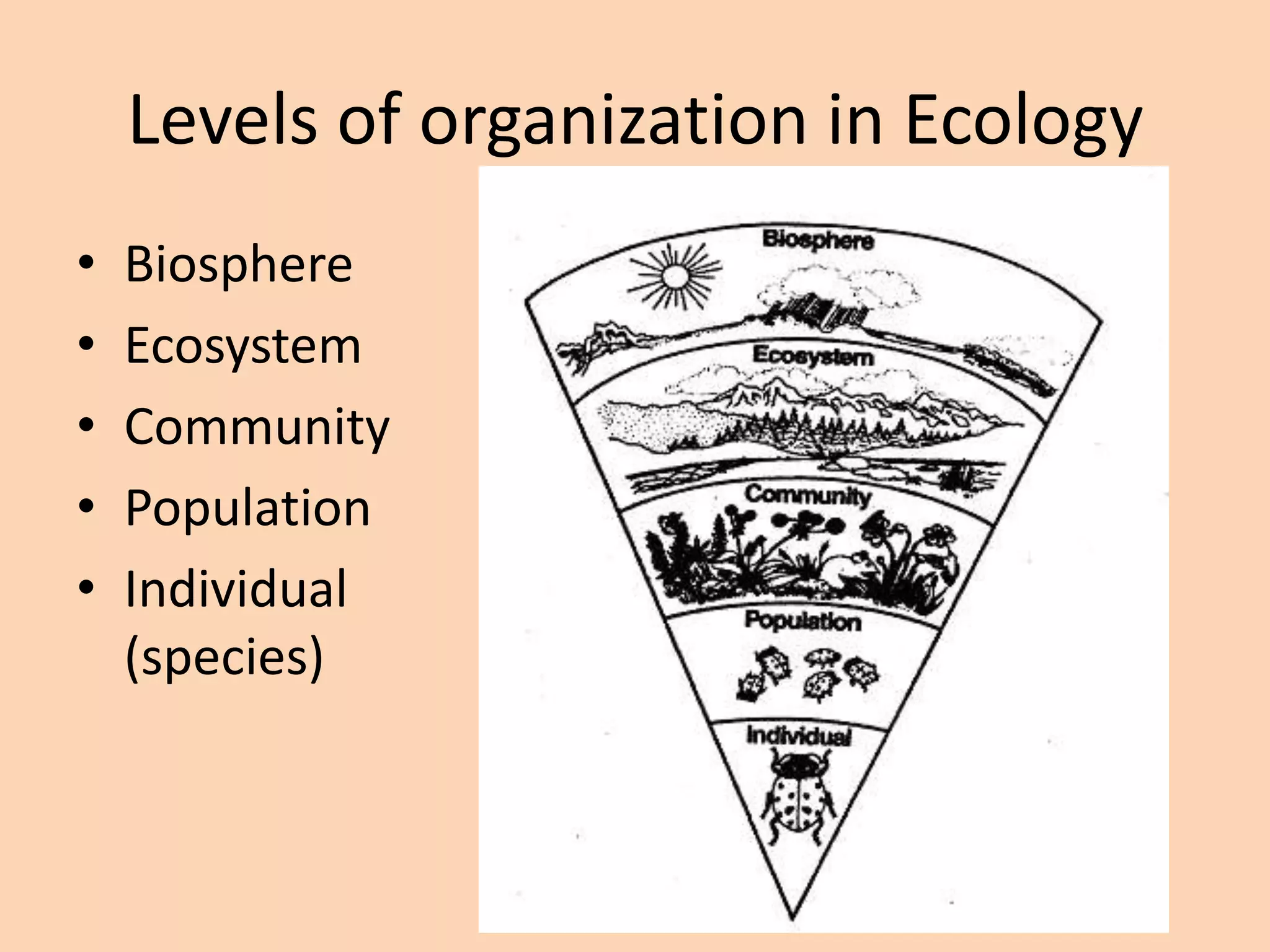
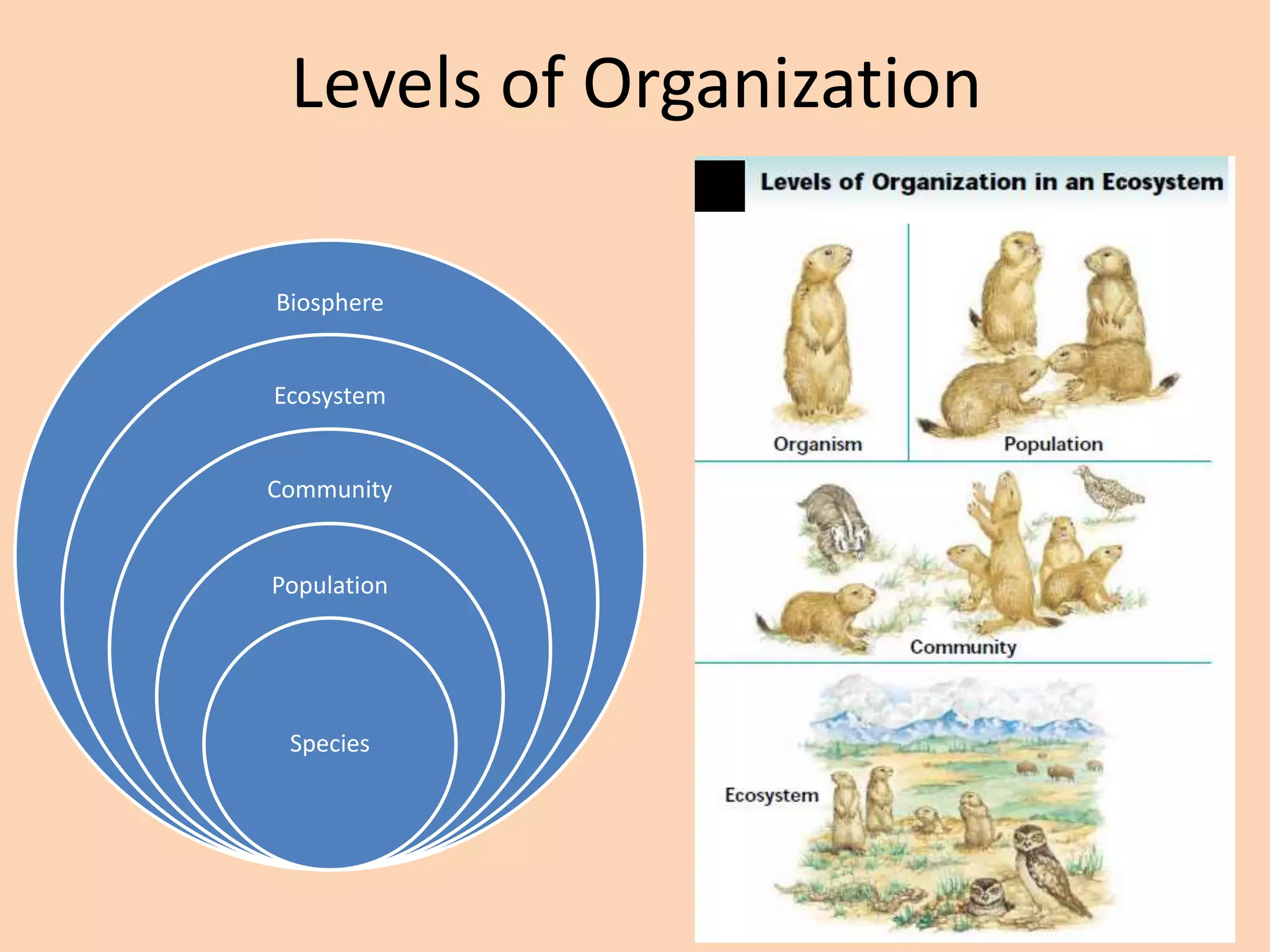
Levels of organization in EcologyBiosphereEcosystemCommunityPopulationIndividual (species)
SPECIESExamples: Species of frog: water frog, red-eyed tree frogSpecies of horse: Clydesdale horses, Andalusian horsesSimilar organisms that can successfully reproduce among themselves in their natural environmentTHIS MEANS: they produce offspring that can reproduce as well
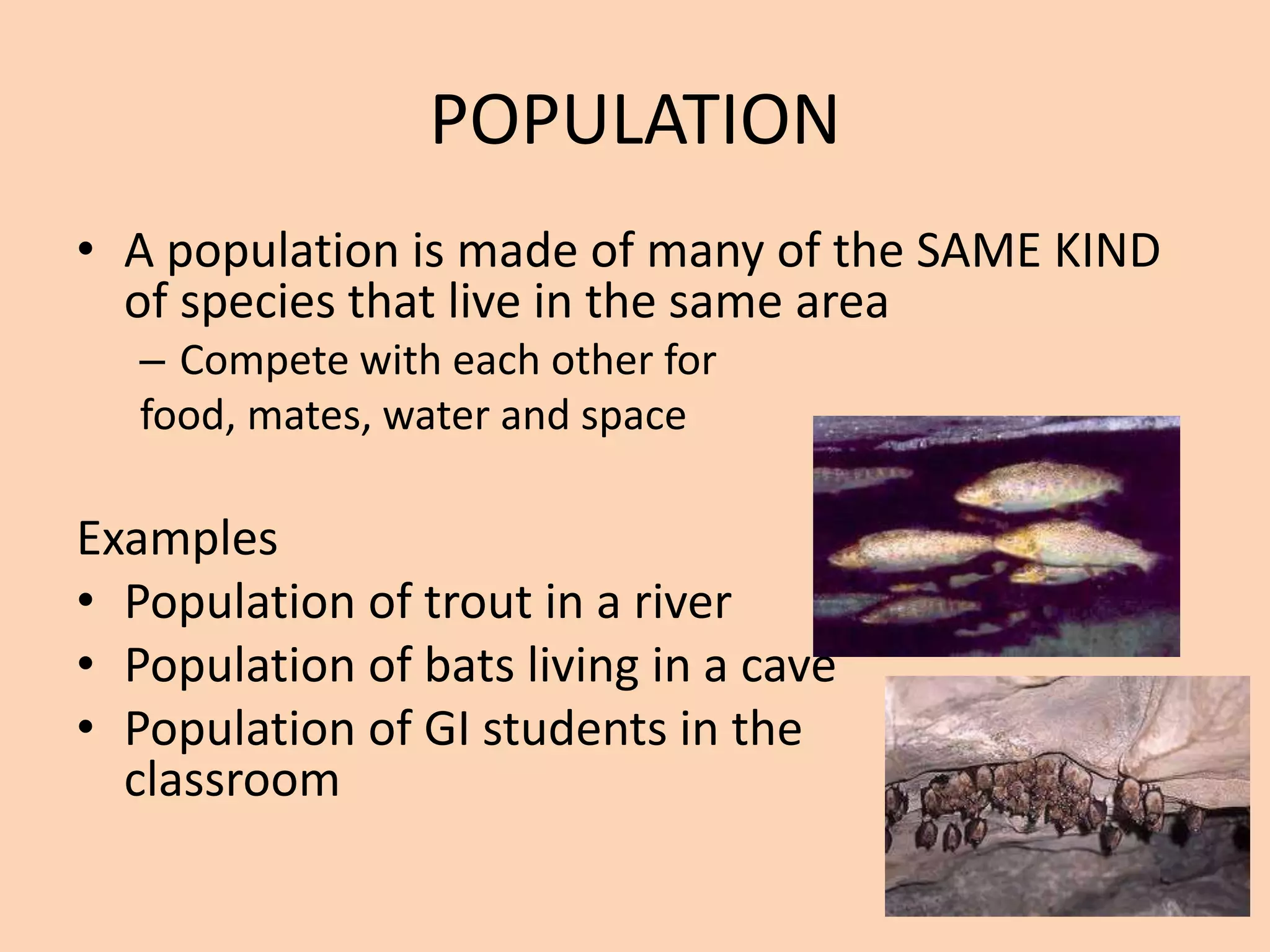
POPULATIONA population is made of many of the SAME KIND of species that live in the same areaCompete with each other for food, mates, water and spaceExamplesPopulation of trout in a riverPopulation of bats living in a cavePopulation of GI students in the classroom
COMMUNITYA community is made of many groups of populations that interact in an area Examples:A forest: populations of trees, populations of mushrooms, populations of birdsA lake: populations of insects, populations of fish, populations of algae
ECOSYSTEMAn ecosystem includes all the living organisms in an area and all the non- living things that affect it Examples:Forest ecosystem includes grass, soil, wind, sunlight, animalsOcean ecosystem includes fish, coral, rocks at the bottom, temperature of water
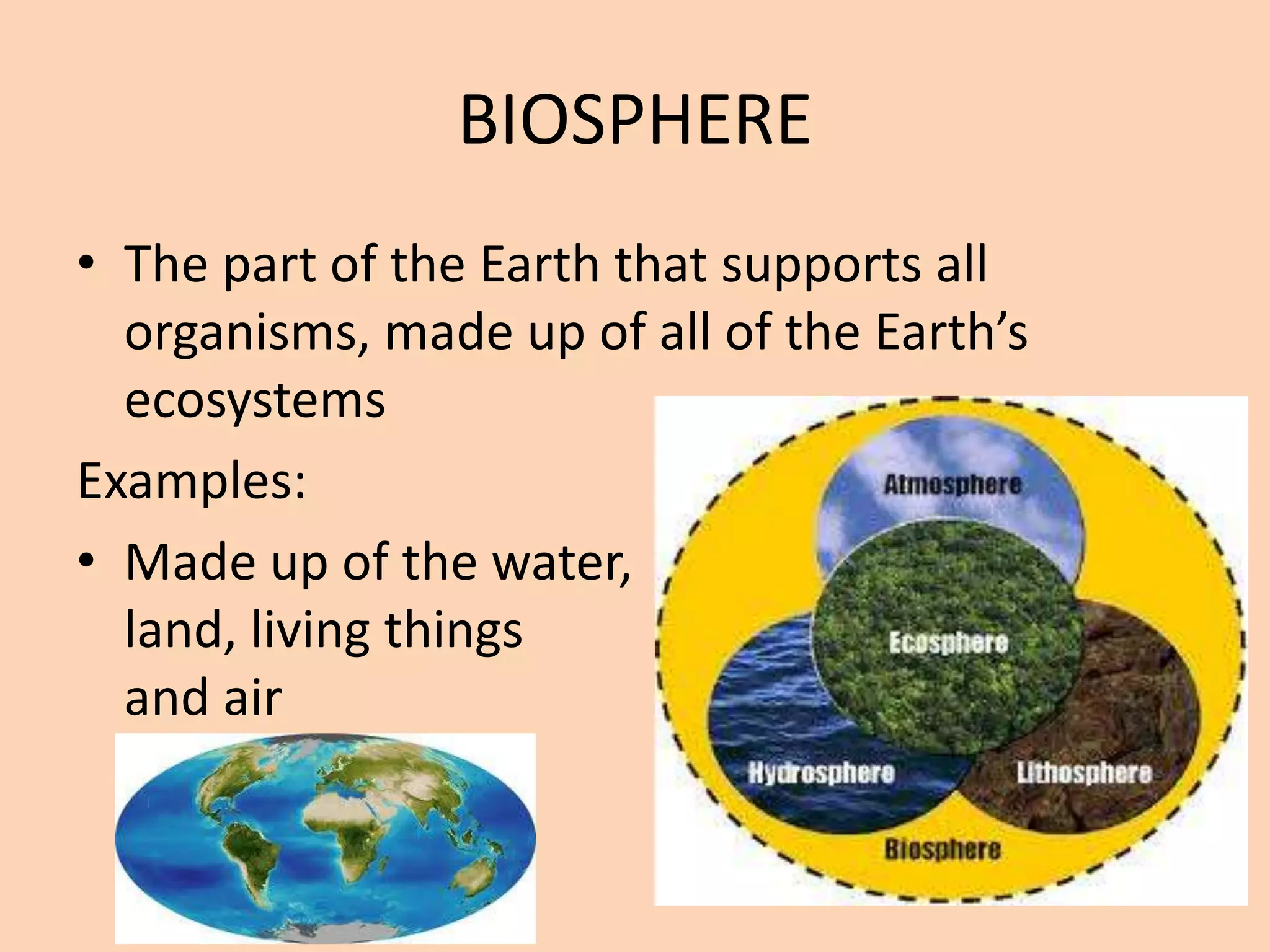
BIOSPHEREThe part of the Earth that supports all organisms, made up of all of the Earth’s ecosystemsExamples:Made up of the water, land, living things and air
Levels of Organization
Oct.20/21 Science JournalSJ: Why do you think the ecological model (in the note today) is a picture of circles within circles?

Ecology: Levels of Organization

  • 1.
    Introduction to Ecology:‘Decade of Discovery’Article from BBC.co.ukworld news website From: Oct. 4, 2010In Cambodia, a new species of rhacophorid frog, Chiromantissamkosensis, was identified in 2007. It is distinguished from other species of Asian Chiromantis by having green blood and turquoise bonesRead more: http://www.cbsnews.com/2300-500142_162-4668710-5.html?tag=page#ixzz11fxWUi2wA new plant species, AeschynanthusMendumiae, discovered on the southeastern slopes of Laos' Phuo Yang Mountain, is one of 1,068 new species identified in the Greater Mekong from 1997 to 2007 in the WWF report, "First Contact in the Greater Mekong."Read more: http://www.cbsnews.com/2300-500142_162-4668710.html#ixzz11fwtSLWhThe Dragon millipede Desmoxytespurpurosea, from Lansak district Uthaithani Province, Thailand. This formidable-looking creature sees off predators first with its spiny bright-pink skin and second with glands that produce cyanide.Read more: http://www.cbsnews.com/2300-500142_162-4668710-2.html?tag=page#ixzz11fxEQ8Cf
  • 2.
    Ecology is thestudy of the relationships between the natural world and all the living and non-living things in that environment
  • 3.
    Article InformationThis articletells us about a research study completed on the FIRST census of marine lifeInvolved almost 3000 researchers from 80 different countries, and over 9000 days at sea!Key questions:What LIVED in the oceans?What DOES live in the oceans?What WILL live in the oceans?
  • 4.
    Discovered many speciesthought to be rareCollected many specimens and are identifying almost 6000 new species!Oceans are changing quickly, so it is important to know what lives thereQuestions to consider:Do you think this is an important study? Why/why not? Explain.Now that we have more knowledge about the oceans and the life found in oceans, what should we do with this information?This member of the new Kiwaidae family of crabs, discovered near Easter Island, was named Kiwahirsuta because of its furry appearance. From:http://news.bbc.co.uk/2/hi/science/nature/8523389.stmThis new sponge produces a chemical with anti-cancer propertiesFrom: http://news.bbc.co.uk/2/hi/science/nature/8523389.stm
  • 5.
    Levels of organizationin EcologyBiosphereEcosystemCommunityPopulationIndividual (species)
  • 6.
    SPECIESExamples: Species offrog: water frog, red-eyed tree frogSpecies of horse: Clydesdale horses, Andalusian horsesSimilar organisms that can successfully reproduce among themselves in their natural environmentTHIS MEANS: they produce offspring that can reproduce as well
  • 7.
    POPULATIONA population ismade of many of the SAME KIND of species that live in the same areaCompete with each other for food, mates, water and spaceExamplesPopulation of trout in a riverPopulation of bats living in a cavePopulation of GI students in the classroom
  • 8.
    COMMUNITYA community ismade of many groups of populations that interact in an area Examples:A forest: populations of trees, populations of mushrooms, populations of birdsA lake: populations of insects, populations of fish, populations of algae
  • 9.
    ECOSYSTEMAn ecosystem includesall the living organisms in an area and all the non- living things that affect it Examples:Forest ecosystem includes grass, soil, wind, sunlight, animalsOcean ecosystem includes fish, coral, rocks at the bottom, temperature of water
  • 10.
    BIOSPHEREThe part ofthe Earth that supports all organisms, made up of all of the Earth’s ecosystemsExamples:Made up of the water, land, living things and air
  • 11.
  • 12.
    Oct.20/21 Science JournalSJ:Why do you think the ecological model (in the note today) is a picture of circles within circles?

Editor's Notes

  • #4 A census is a survey taken to gather information about a certain group – marine life!