TETANUS
By PINKY RATHEE
M.Sc. Nursing
INTRODUCTION
Its infectious disease caused by
contamination of wounds from
bacteria Clostridium tetani, or
spores they produce that live
soil, and animal feces.
in
• Greek words -“tetanos
and teinein”, meaning
stretched.
rigid and
• Clostridium tetani produces 2 toxins,
1.Tetanolysin (Cause red cell lysis)
2.Tetanospasmin (muscle spasm/rigidity)
• Tetanus spores are found throughout the
environment, usually in soil, dust, and animal
waste.
Tetanus is acquired through contact with the
environment; it is not transmitted from person
person.
to
• As the infection progresses, muscle spasms in the
jaw develops, hence the common name, lockjaw.
• This is followed by difficulty swallowing &
general muscle stiffness & spasms in other parts
of the body.
Infection can be prevented by proper
immunisation & by post-exposure prophylaxis.
Incubation period varies from 1 day to several
months. , but is usually about eight days.
incidence
Around a million cases occur worldwide
eachyear.
If the patient does not receive treatment the
risk of life-threatening complications is
higher - Mortality rates reported vary from
40% to 78% in 2013 it caused about 59,000
deaths
TETANUS
Tetanus is a
medical
condition
characterised
by prolonged
contraction of
skeletal
muscle fibres.
•The bacteria that cause tetanus, Clostridium
tetani, are found in soil, dust and animal feces.
When they enter a deep flesh wound, spores of
the bacteria may produce a powerful toxin,
tetanospasmin, which actively impairs your motor
neurons, nerves that control your muscles. The
effect of the toxin on your motor neurons can
cause muscle stiffness and spasms — the major
signs of tetanus.
•They cause tetanus in both man & animal.
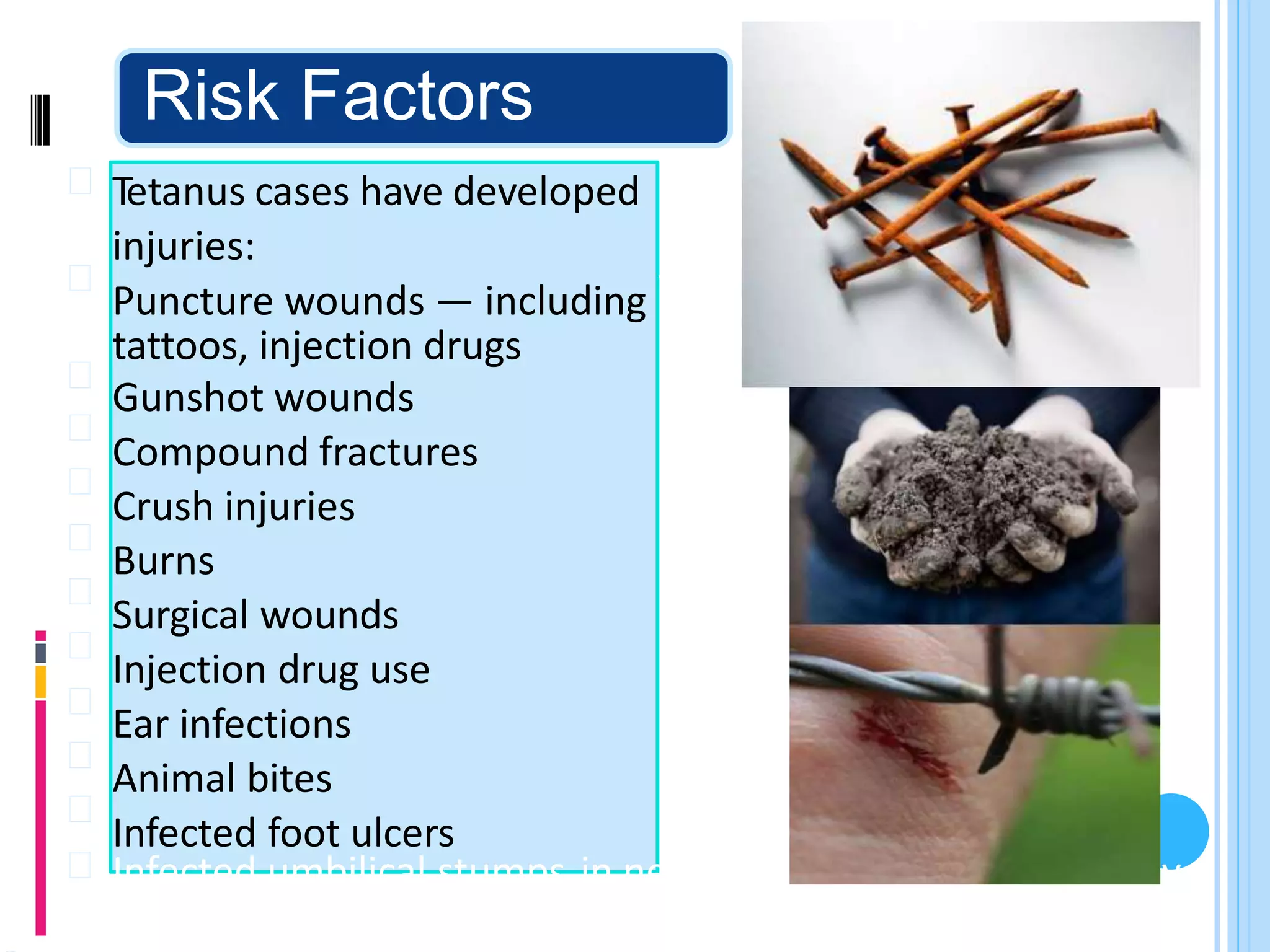
Risk Factors
Tetanus cases have developed
injuries:
Puncture wounds — including
tattoos, injection drugs
Gunshot wounds
Compound fractures
Crush injuries
Burns
Surgical wounds
Injection drug use
Ear infections
Animal bites
Infected foot ulcers
from the following types of
from splinters, body piercings,
Infected umbilical stumps
immunized mothers
in newborns born of inadequately
certain factors are necessary for tetanus
bacteria to proliferate in your body.These
include:
Lack of immunization or inadequate
immunization — failure to receive timely
booster shots — against tetanus.
A penetrating injury that results in tetanus
spores being introduced to the wound site.
The presence of other infective bacteria.
Injured tissue.
A foreign body, such as a nail or splinter.
Swelling around the injury.
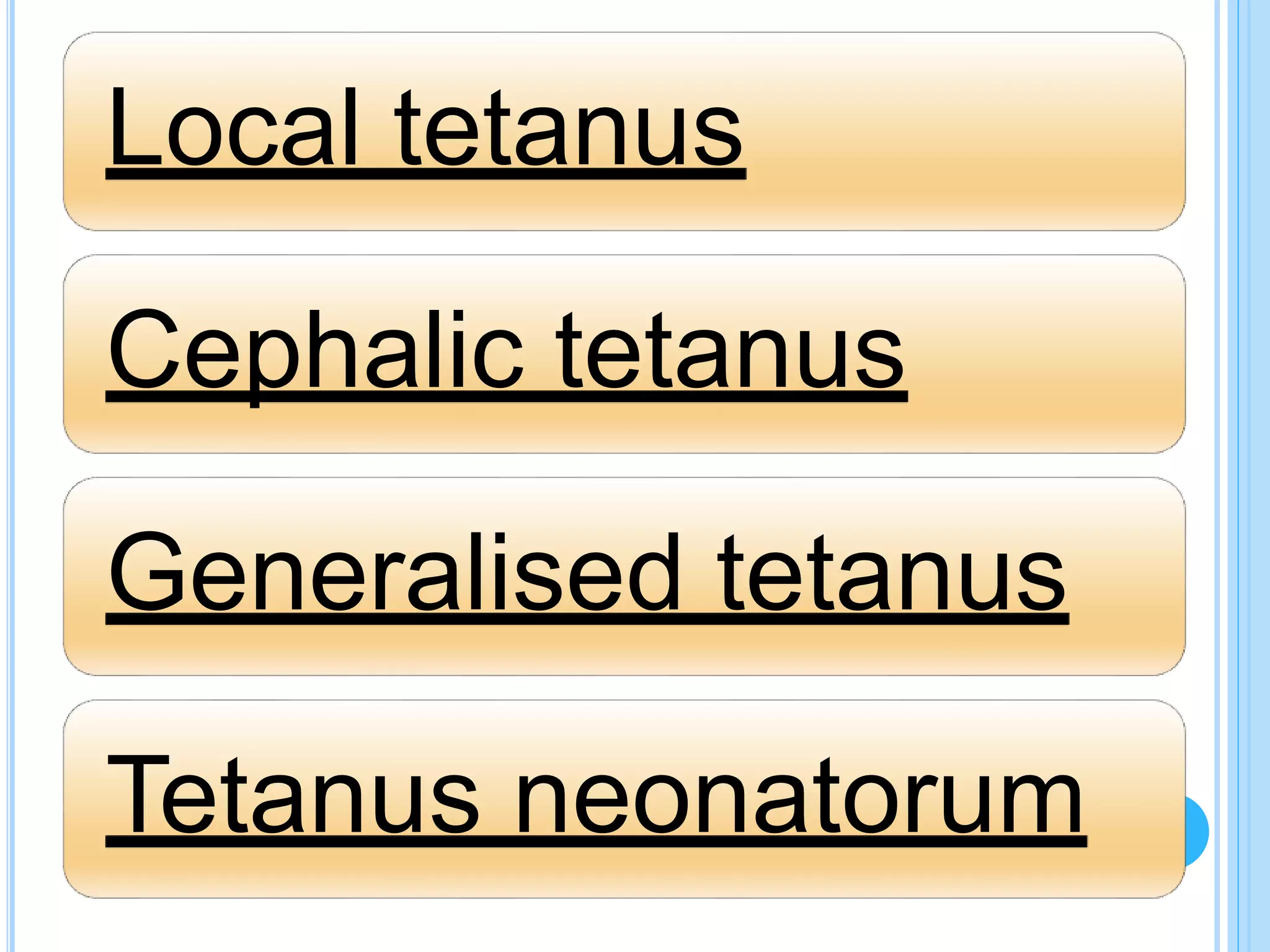
TYPES 0F
TETANUS
Local tetanus
Cephalic tetanus
Generalised tetanus
Tetanus neonatorum
1.Local tetanus
Persistent spasm of musculature at site
of primary infection (injury site).
Contractions persist for weeks before
subsiding.
Its generally milder, 1% cases are fatal
precede the generalised tetanus.
f
but may
affects mostly the cranial nerves and facial
nerves.
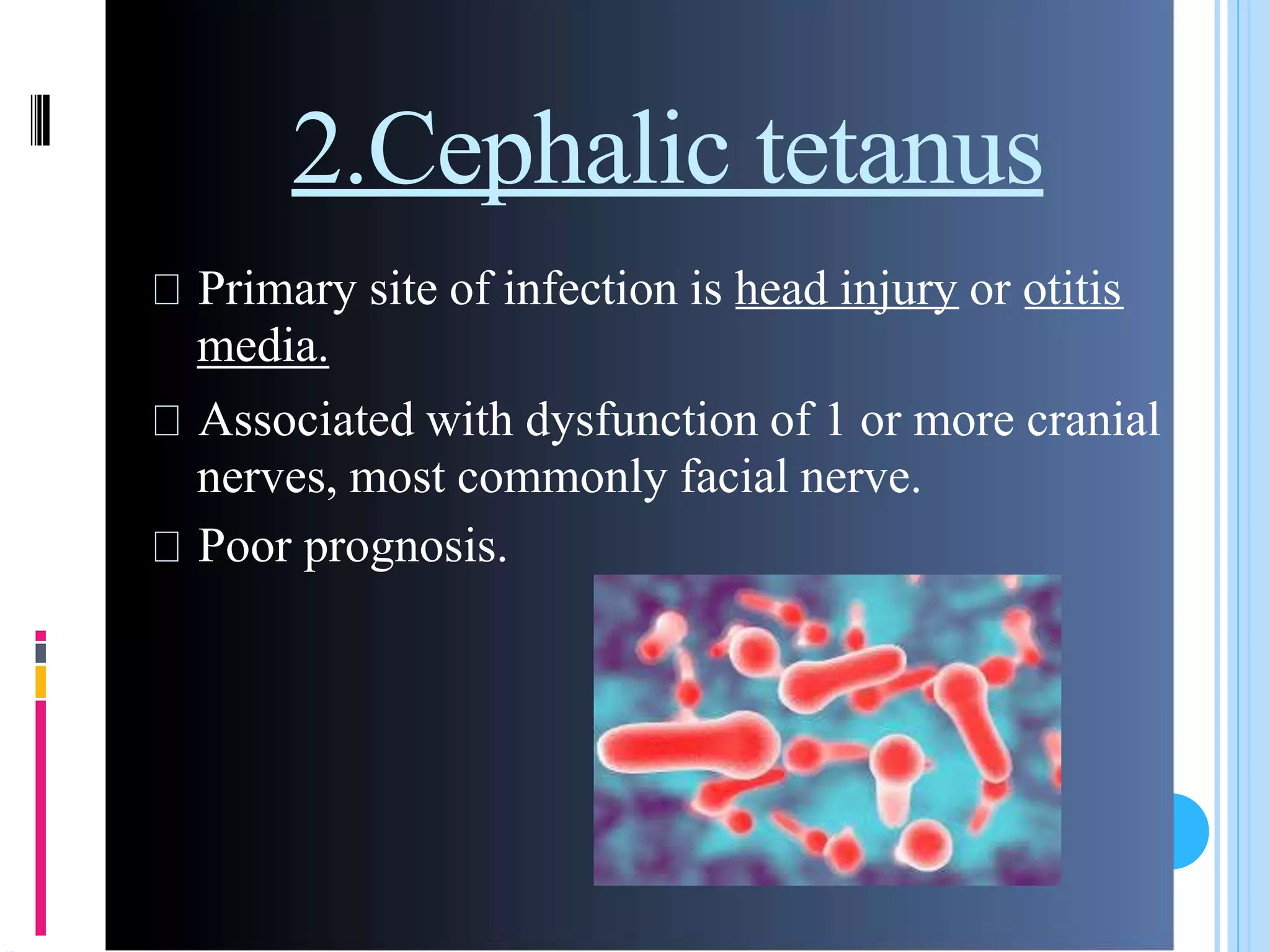
2.Cephalic tetanus
Primary site of infection is head injury or otitis
media.
Associated with dysfunction of 1 or more cranial
nerves, most commonly facial nerve.
Poor prognosis.
3.Generalised tetanus
Most common form(80% of cases).
Presents with a descending pattern.
1st sign is trismus (lockjaw) -due to spasm of
masseter muscles.
Followed by stiffness of the neck, difficulty in
swallowing, rigidity of abdominal muscles.
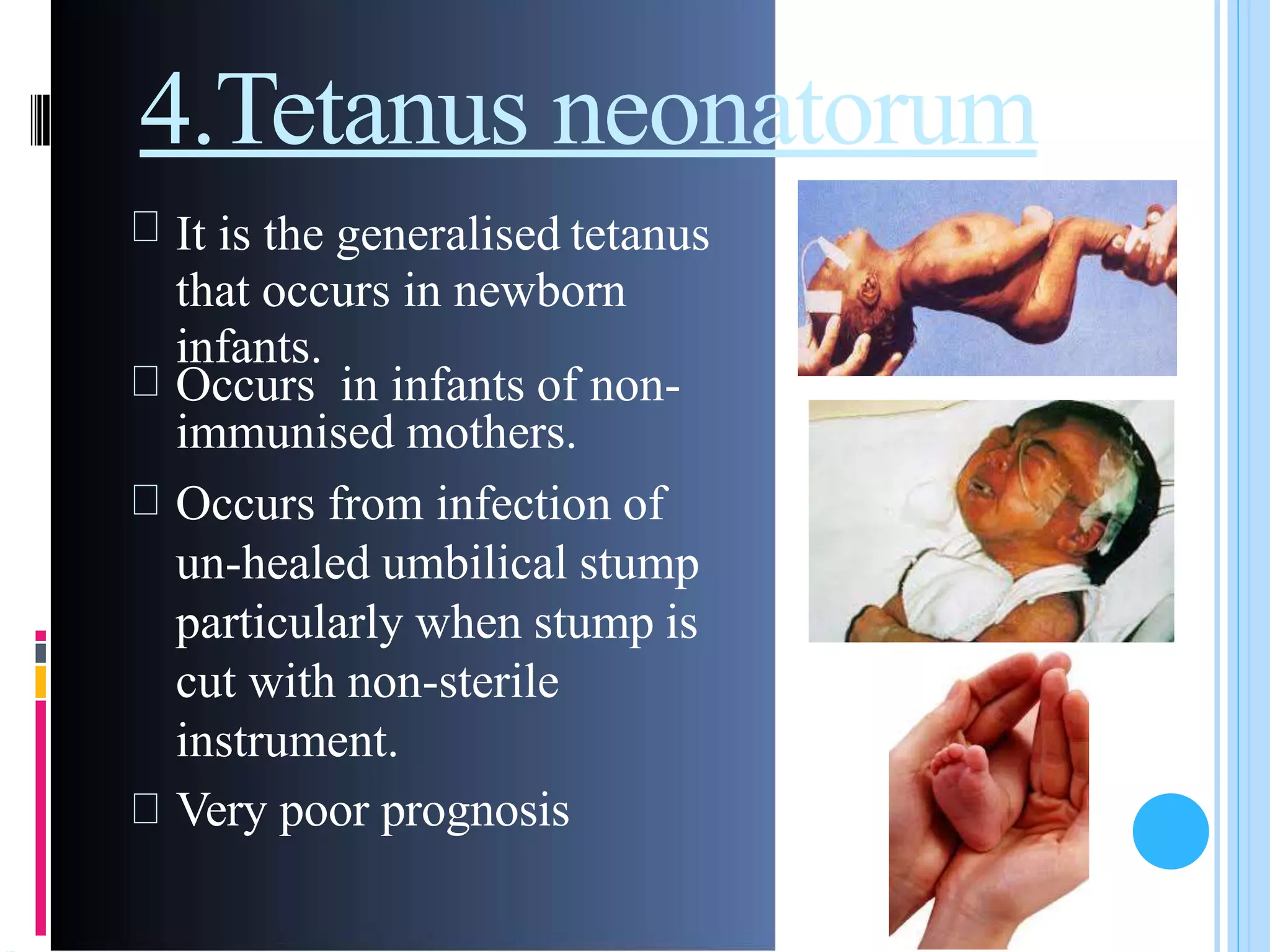
4.Tetanus neonatorum
It is the generalised tetanus
that occurs in newborn
infants.
Occurs in infants of non-
immunised mothers.
Occurs from infection of
un-healed umbilical stump
particularly when stump is
cut with non-sterile
instrument.
Very poor prognosis
This has a faster acting progression and
the incubation period is normally only four
days. This is a rare condition in developed
countries, but elsewhere is responsible for
around 15% of neonatal deaths.
If the mother has been immunised against
tetanus then this can help to give the child
'passive immunity'.
CLINICAL FEATURES
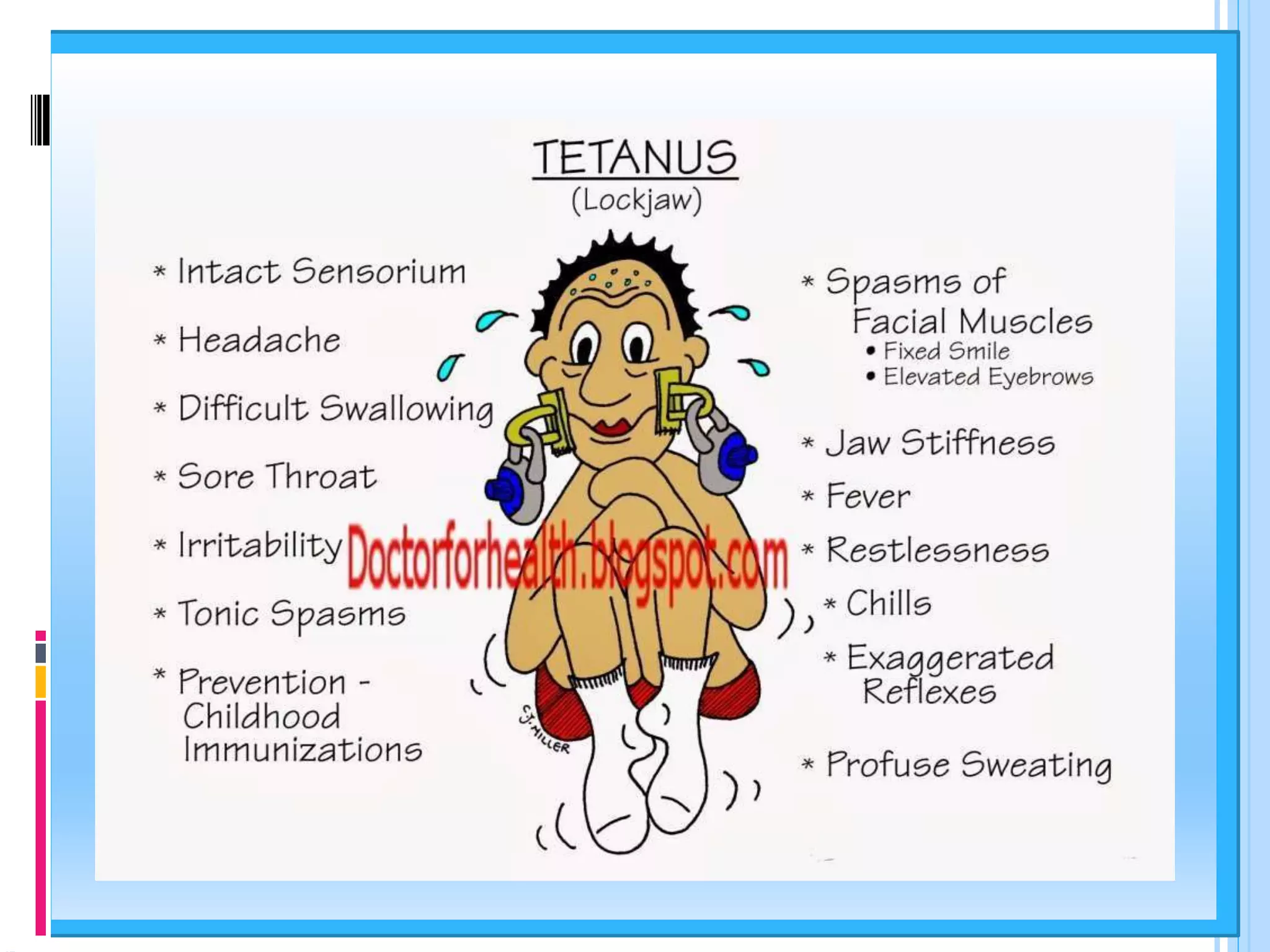
• Febrile (feverish), irritability,
heavy sweating•
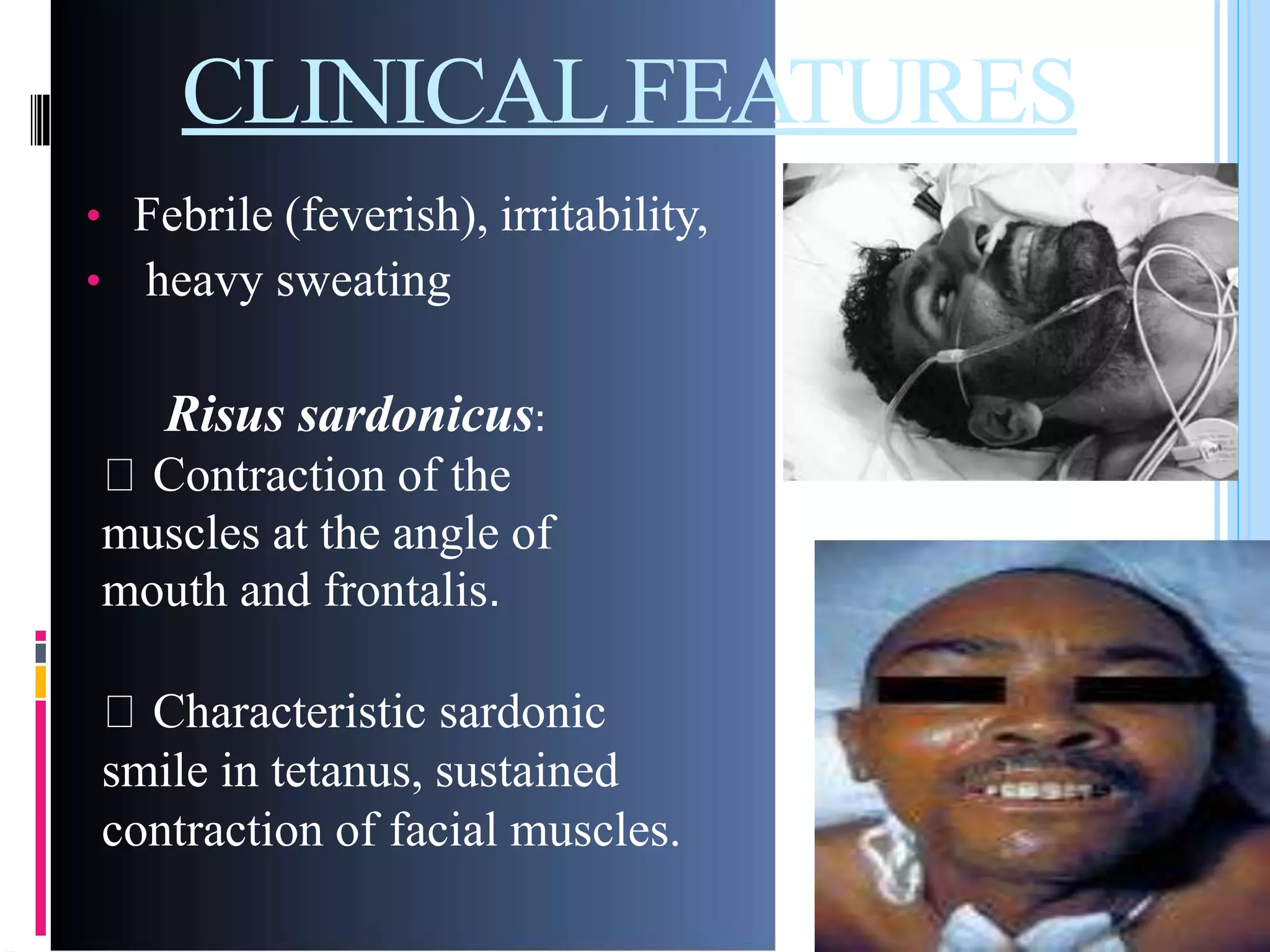
Risus sardonicus:
Contraction of the
muscles at the angle of
mouth and frontalis.
Characteristic sardonic
smile in tetanus, sustained
contraction of facial muscles.
Trismus (Lock
muscles.
Jaw): Spasm of Masseter
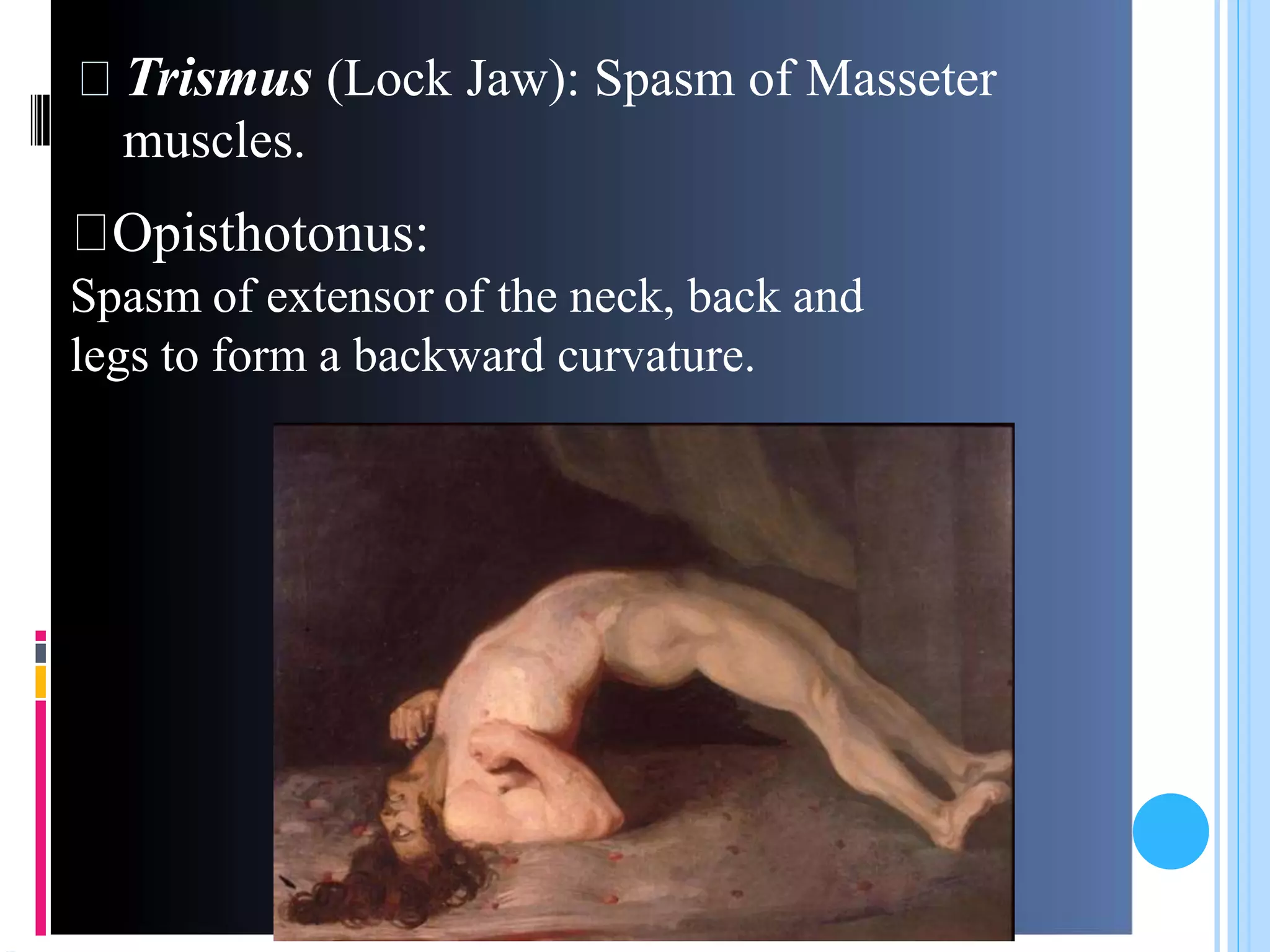
Opisthotonus:
Spasm of extensor of the neck, back and
legs to form a backward curvature.
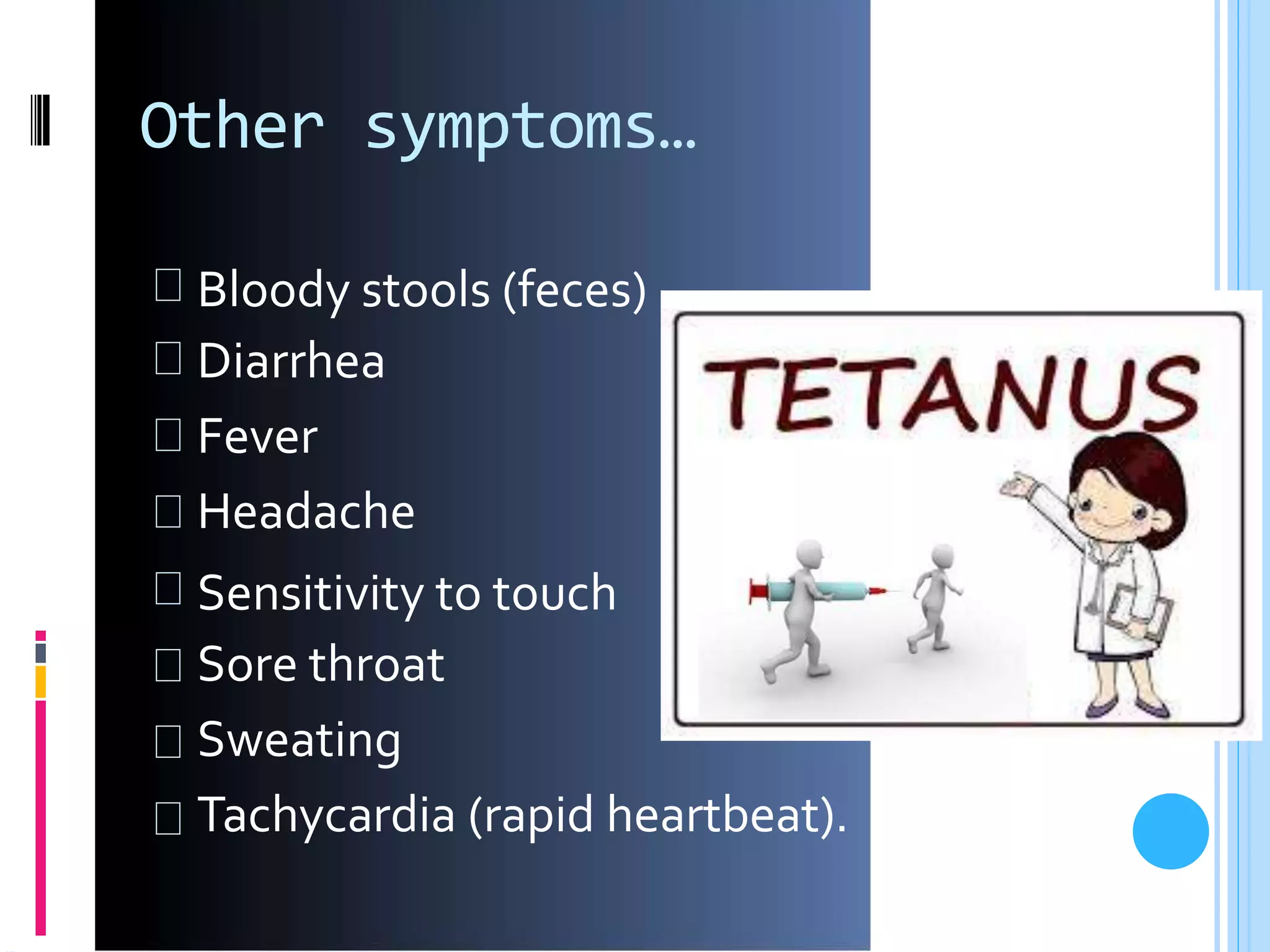
Other symptoms…
Bloody stools
Diarrhea
Fever
Headache
(feces)
Sensitivity to touch
Sore throat
Sweating
Tachycardia (rapid heartbeat).
PATHOGENESIS
C. tetani enters
body from wound.
Stays in sporulated form until
anaerobic conditions are presented
Tetnospasmin
spreads using blood
and lymphatic
system, and binds
to motor neurons
Germinates under anaerobic
conditions and begins to multiply
and produce tetnospasmin.
Binds to sites responsible for
inhibiting skeletal muscle
contraction.
Travels along the
axons to the spinal
cord.
TEATANUS TOXIN ACTION….
It blocks the release of inhibitory
neurotransmitters (glycine and gamma-
amino butyric acid) across the synaptic
cleft, which is required to check the nervous
impulse.
If nervous impulses cannot be checked by
normal inhibitory mechanisms, it leads to
unopposed muscular contraction and spasms
that are characteristic of tetanus.
Complications
Once tetanus toxin has bonded to your nerve
endings it is impossible to remove. Complete
recovery from a tetanus infection requires the
growth of new nerve endings and can take up to
several months.
Broken bones. The severity of spasms may cause
the spine and other bones to break.
Disability. Treatment for tetanus typically
involves the use of powerful sedatives to
control muscle spasms. Prolonged
immobility due to the use of these drugs can
lead to permanent disability. In infants,
tetanus infections may cause lasting brain
damage, ranging from minor mental deficits
to cerebral palsy.
Aspiration pneumonia - if secretions or contents of
the stomach are inhaled, which may sometimes
happen in patients with tetanus, a lower respiratory
tract infection can develop, leading to pneumonia.
Laryngospasm - the larynx (voice box) goes into a
spasm which can last up to a minute and cause
breathing difficulties. In severe cases the patient
can suffocate.
Pulmonary embolism - a blood vessel in the lung
can become blocked and affect breathing and
circulation.The patient will urgently need oxygen
therapy and anti-clotting medication.
Tetanic seizures - if infection spreads to the
brain the patient can have epileptic-like fits
(seizures).
Severe kidney failure (acute renal failure) -
severe muscle spasms can result in the
destruction of skeletal muscle which can cause
myoblobin - a muscle protein - leaking into the
urine.This can cause acute renal failure (severe
kidney failure).
- symptoms may include: Asphyxia (suffocation)
Heart attack
Kidney failure
Septicemia (blood poisoning).
Prolonged muscular action causes sudden,
powerful, and painful contractions of muscle
groups. This is called tetany. These episodes
can cause fractures and muscle tears.
DIAGNOSIS
Diagnosis made based on clinical presentation.
Doctors diagnose tetanus based on a physical
examination, medical and immunization history, and
the signs and symptoms of muscle spasms, stiffness
and pain.
Laboratory tests generally aren't helpful for
diagnosing tetanus.
Specimen: Wound swab, exudate or tissue from
wound.
1.Direct smear & gram staining
2.Culture
3.Animal inoculation
Management
There's no cure for tetanus.Treatment
focuses on managing complications until the
effects of the tetanus toxin resolve. Fatality is
highest in individuals who haven't been
immunized and in older adults with
inadequate immunization.
Cleaning the wound is essential to preventing
growth of tetanus spores.This involves
removing dirt, foreign objects and dead
tissue from the wound.
Any patient with a tetanus prone wound should
receiveTIG (tetanus immunoglobulin) as soon as
possible, even if he/she has been vaccinated.
Tetanus immunoglobulin contains antibodies
that kill Clostridium tetani. It is injected into a
vein and provides immediate short-term
protection against tetanus.TIG is just short-term
and does not replace the long-term effects of
vaccination.
Antibiotics
doctors may prescribe penicillin
and metronidazole for tetanus
treatment. These antibiotics prevent
the bacterium from multiplying and
producing the neurotoxin that
causes muscle spasms and
stiffness. Patients who are allergic
to penicillin or metronidazole may
be given tetracycline .
Anticonvulsants - these treat muscle spasms.
Examples include diazepam (Valium) and
phenobarbital.
Muscle relaxants - these drugs help ease the
symptoms of muscle stiffness and spasms.
Examples include baclofen (Lioresal) and
dantrolene (Dantrium).
Vaccine. Having tetanus once doesn't make
you immune to the bacteria afterward. So you'll
need to receive a tetanus vaccine in order to
prevent future tetanus infection.
Neuromuscular blocking agents - these medications
block the signals from nerves to muscle fibers and are
useful in controlling muscle spasms. An example is
vacuronium, a neuromuscular blocking agent
sometimes used as a muscle relaxant in addition to
anesthesia during surgery.
Surgery - If the doctor thinks the tetanus prone wound
is very large, he/she may surgically remove as much of
the damaged and infected muscle as possible
(debridement). Debridement is the act of removing
dead or contaminated tissue, or foreign material. In
the case of a tetanus prone wound the foreign
material may be dirt or manure.
Nutrition - A patient with tetanus
requires a high daily calorie intake
because of increased muscle activity.
Ventilator - Some patients may need
ventilator support to help with
breathing if their vocal cords or
respiratory muscles are affected.
PREVENTION :-
1.TT-2 doses for pregnant women,
2.DPT at 6, 10, 14 weeks after birth,
3.DPT booster at 18 months
4.DT at 5yrs.
5.TT boosters at 10 & 16 yrs.
Nursing
Management
Provide complete bed rest to the child.
Keep the infant in dim lighted, quiet and well
ventilated room, as spasms can be precipitated
by bright light, noise or even touch.
Minimiseexternal stimuli.
Prompt suctioning and oxygen administration
is essential.
Fluid and electrolyte balance should be
maintained.
Due to spasm and increased mucle activity,
patients are exhausted and need extra calories,
so provide high calorie & protein diet to
patient.
NG feed must b given in case of high fever
and tapid spunging too.
Change patients position every 2 hourly to
prevent bed sores.
General hygiene including bath,oral care, and
elimination should be maintained.
Care of wound such as removal of necrosed
tissue, cleaning with hydrogen peroxide and
treatment with antibiotic ointment is done.
Regularly monitor vital signs.
THANKY
OU

Tetanus

  • 1.
  • 2.
    INTRODUCTION Its infectious diseasecaused by contamination of wounds from bacteria Clostridium tetani, or spores they produce that live soil, and animal feces. in • Greek words -“tetanos and teinein”, meaning stretched. rigid and
  • 3.
    • Clostridium tetaniproduces 2 toxins, 1.Tetanolysin (Cause red cell lysis) 2.Tetanospasmin (muscle spasm/rigidity) • Tetanus spores are found throughout the environment, usually in soil, dust, and animal waste. Tetanus is acquired through contact with the environment; it is not transmitted from person person. to
  • 4.
    • As theinfection progresses, muscle spasms in the jaw develops, hence the common name, lockjaw. • This is followed by difficulty swallowing & general muscle stiffness & spasms in other parts of the body. Infection can be prevented by proper immunisation & by post-exposure prophylaxis. Incubation period varies from 1 day to several months. , but is usually about eight days.
  • 5.
    incidence Around a millioncases occur worldwide eachyear. If the patient does not receive treatment the risk of life-threatening complications is higher - Mortality rates reported vary from 40% to 78% in 2013 it caused about 59,000 deaths
  • 6.
    TETANUS Tetanus is a medical condition characterised byprolonged contraction of skeletal muscle fibres.
  • 7.
    •The bacteria thatcause tetanus, Clostridium tetani, are found in soil, dust and animal feces. When they enter a deep flesh wound, spores of the bacteria may produce a powerful toxin, tetanospasmin, which actively impairs your motor neurons, nerves that control your muscles. The effect of the toxin on your motor neurons can cause muscle stiffness and spasms — the major signs of tetanus. •They cause tetanus in both man & animal.
  • 8.
    Risk Factors Tetanus caseshave developed injuries: Puncture wounds — including tattoos, injection drugs Gunshot wounds Compound fractures Crush injuries Burns Surgical wounds Injection drug use Ear infections Animal bites Infected foot ulcers from the following types of from splinters, body piercings, Infected umbilical stumps immunized mothers in newborns born of inadequately
  • 9.
    certain factors arenecessary for tetanus bacteria to proliferate in your body.These include: Lack of immunization or inadequate immunization — failure to receive timely booster shots — against tetanus. A penetrating injury that results in tetanus spores being introduced to the wound site. The presence of other infective bacteria. Injured tissue. A foreign body, such as a nail or splinter. Swelling around the injury.
  • 10.
  • 11.
  • 12.
    1.Local tetanus Persistent spasmof musculature at site of primary infection (injury site). Contractions persist for weeks before subsiding. Its generally milder, 1% cases are fatal precede the generalised tetanus. f but may affects mostly the cranial nerves and facial nerves.
  • 13.
    2.Cephalic tetanus Primary siteof infection is head injury or otitis media. Associated with dysfunction of 1 or more cranial nerves, most commonly facial nerve. Poor prognosis.
  • 14.
    3.Generalised tetanus Most commonform(80% of cases). Presents with a descending pattern. 1st sign is trismus (lockjaw) -due to spasm of masseter muscles. Followed by stiffness of the neck, difficulty in swallowing, rigidity of abdominal muscles.
  • 15.
    4.Tetanus neonatorum It isthe generalised tetanus that occurs in newborn infants. Occurs in infants of non- immunised mothers. Occurs from infection of un-healed umbilical stump particularly when stump is cut with non-sterile instrument. Very poor prognosis
  • 16.
    This has afaster acting progression and the incubation period is normally only four days. This is a rare condition in developed countries, but elsewhere is responsible for around 15% of neonatal deaths. If the mother has been immunised against tetanus then this can help to give the child 'passive immunity'.
  • 17.
    CLINICAL FEATURES • Febrile(feverish), irritability, heavy sweating• Risus sardonicus: Contraction of the muscles at the angle of mouth and frontalis. Characteristic sardonic smile in tetanus, sustained contraction of facial muscles.
  • 18.
    Trismus (Lock muscles. Jaw): Spasmof Masseter Opisthotonus: Spasm of extensor of the neck, back and legs to form a backward curvature.
  • 19.
    Other symptoms… Bloody stools Diarrhea Fever Headache (feces) Sensitivityto touch Sore throat Sweating Tachycardia (rapid heartbeat).
  • 21.
    PATHOGENESIS C. tetani enters bodyfrom wound. Stays in sporulated form until anaerobic conditions are presented Tetnospasmin spreads using blood and lymphatic system, and binds to motor neurons Germinates under anaerobic conditions and begins to multiply and produce tetnospasmin. Binds to sites responsible for inhibiting skeletal muscle contraction. Travels along the axons to the spinal cord.
  • 22.
    TEATANUS TOXIN ACTION…. Itblocks the release of inhibitory neurotransmitters (glycine and gamma- amino butyric acid) across the synaptic cleft, which is required to check the nervous impulse. If nervous impulses cannot be checked by normal inhibitory mechanisms, it leads to unopposed muscular contraction and spasms that are characteristic of tetanus.
  • 23.
    Complications Once tetanus toxinhas bonded to your nerve endings it is impossible to remove. Complete recovery from a tetanus infection requires the growth of new nerve endings and can take up to several months. Broken bones. The severity of spasms may cause the spine and other bones to break.
  • 24.
    Disability. Treatment fortetanus typically involves the use of powerful sedatives to control muscle spasms. Prolonged immobility due to the use of these drugs can lead to permanent disability. In infants, tetanus infections may cause lasting brain damage, ranging from minor mental deficits to cerebral palsy.
  • 25.
    Aspiration pneumonia -if secretions or contents of the stomach are inhaled, which may sometimes happen in patients with tetanus, a lower respiratory tract infection can develop, leading to pneumonia. Laryngospasm - the larynx (voice box) goes into a spasm which can last up to a minute and cause breathing difficulties. In severe cases the patient can suffocate. Pulmonary embolism - a blood vessel in the lung can become blocked and affect breathing and circulation.The patient will urgently need oxygen therapy and anti-clotting medication.
  • 26.
    Tetanic seizures -if infection spreads to the brain the patient can have epileptic-like fits (seizures). Severe kidney failure (acute renal failure) - severe muscle spasms can result in the destruction of skeletal muscle which can cause myoblobin - a muscle protein - leaking into the urine.This can cause acute renal failure (severe kidney failure).
  • 27.
    - symptoms mayinclude: Asphyxia (suffocation) Heart attack Kidney failure Septicemia (blood poisoning). Prolonged muscular action causes sudden, powerful, and painful contractions of muscle groups. This is called tetany. These episodes can cause fractures and muscle tears.
  • 28.
    DIAGNOSIS Diagnosis made basedon clinical presentation. Doctors diagnose tetanus based on a physical examination, medical and immunization history, and the signs and symptoms of muscle spasms, stiffness and pain. Laboratory tests generally aren't helpful for diagnosing tetanus. Specimen: Wound swab, exudate or tissue from wound. 1.Direct smear & gram staining 2.Culture 3.Animal inoculation
  • 29.
    Management There's no curefor tetanus.Treatment focuses on managing complications until the effects of the tetanus toxin resolve. Fatality is highest in individuals who haven't been immunized and in older adults with inadequate immunization. Cleaning the wound is essential to preventing growth of tetanus spores.This involves removing dirt, foreign objects and dead tissue from the wound.
  • 30.
    Any patient witha tetanus prone wound should receiveTIG (tetanus immunoglobulin) as soon as possible, even if he/she has been vaccinated. Tetanus immunoglobulin contains antibodies that kill Clostridium tetani. It is injected into a vein and provides immediate short-term protection against tetanus.TIG is just short-term and does not replace the long-term effects of vaccination.
  • 31.
    Antibiotics doctors may prescribepenicillin and metronidazole for tetanus treatment. These antibiotics prevent the bacterium from multiplying and producing the neurotoxin that causes muscle spasms and stiffness. Patients who are allergic to penicillin or metronidazole may be given tetracycline .
  • 32.
    Anticonvulsants - thesetreat muscle spasms. Examples include diazepam (Valium) and phenobarbital. Muscle relaxants - these drugs help ease the symptoms of muscle stiffness and spasms. Examples include baclofen (Lioresal) and dantrolene (Dantrium). Vaccine. Having tetanus once doesn't make you immune to the bacteria afterward. So you'll need to receive a tetanus vaccine in order to prevent future tetanus infection.
  • 33.
    Neuromuscular blocking agents- these medications block the signals from nerves to muscle fibers and are useful in controlling muscle spasms. An example is vacuronium, a neuromuscular blocking agent sometimes used as a muscle relaxant in addition to anesthesia during surgery. Surgery - If the doctor thinks the tetanus prone wound is very large, he/she may surgically remove as much of the damaged and infected muscle as possible (debridement). Debridement is the act of removing dead or contaminated tissue, or foreign material. In the case of a tetanus prone wound the foreign material may be dirt or manure.
  • 34.
    Nutrition - Apatient with tetanus requires a high daily calorie intake because of increased muscle activity. Ventilator - Some patients may need ventilator support to help with breathing if their vocal cords or respiratory muscles are affected.
  • 35.
    PREVENTION :- 1.TT-2 dosesfor pregnant women, 2.DPT at 6, 10, 14 weeks after birth, 3.DPT booster at 18 months 4.DT at 5yrs. 5.TT boosters at 10 & 16 yrs.
  • 36.
  • 37.
    Provide complete bedrest to the child. Keep the infant in dim lighted, quiet and well ventilated room, as spasms can be precipitated by bright light, noise or even touch. Minimiseexternal stimuli. Prompt suctioning and oxygen administration is essential. Fluid and electrolyte balance should be maintained. Due to spasm and increased mucle activity, patients are exhausted and need extra calories, so provide high calorie & protein diet to patient.
  • 38.
    NG feed mustb given in case of high fever and tapid spunging too. Change patients position every 2 hourly to prevent bed sores. General hygiene including bath,oral care, and elimination should be maintained. Care of wound such as removal of necrosed tissue, cleaning with hydrogen peroxide and treatment with antibiotic ointment is done. Regularly monitor vital signs.
  • 39.