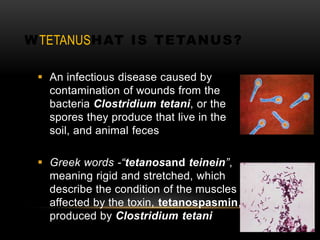
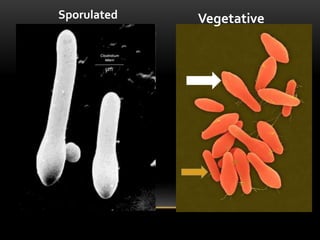
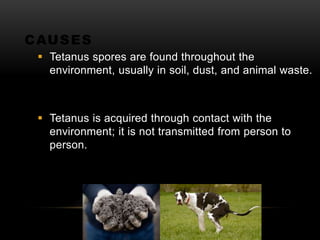
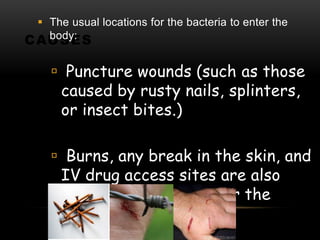
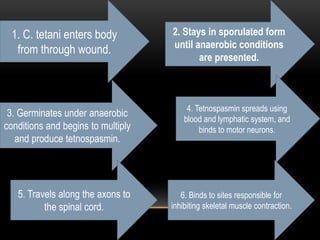
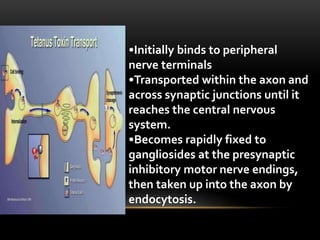
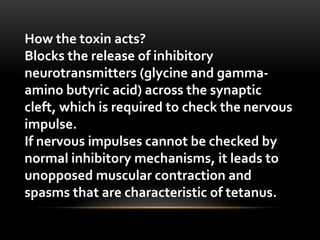
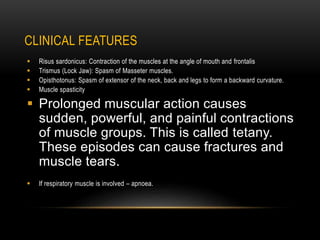
Tetanus is caused by the bacteria Clostridium tetani entering the body through wounds and producing a toxin that causes painful muscle spasms. It is found worldwide in soil and animal waste. The spores can live for years in the body until an injury provides anaerobic conditions for the bacteria to grow. The toxin travels to motor neurons and prevents inhibitory signals, causing constant muscle contraction. Symptoms include lockjaw, arching of the back, and risus sardonicus. Treatment involves wound cleaning, antibiotics, antitoxin antibodies, and supportive care. Tetanus is preventable through active immunization with the tetanus toxoid vaccine as part of routine childhood immunization schedules and bo