Downloaded 413 times




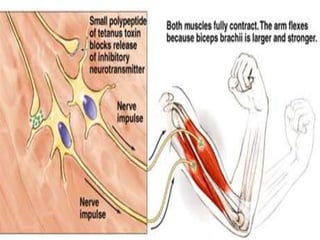









Tetanus is caused by Clostridium tetani bacteria and results in painful muscle spasms. It is characterized by three main types: generalized, localized, and neonatal. The bacteria forms spores that can survive in soil for years and enter the body through wounds. The toxin it produces is transported to the central nervous system where it blocks neurotransmitter release, causing spasms. Treatment involves wound cleansing, antitoxin administration to neutralize toxin, antibiotics, and medications or paralysis to control spasms while providing respiratory support. Prevention centers on active immunization with tetanus toxoid vaccine. Prognosis depends on factors like age, incubation period, and vaccination history.


