DONE BY: JIMMY KAMS
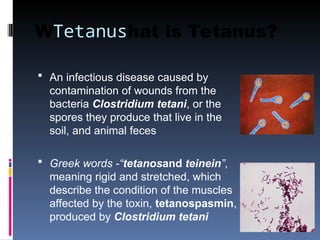
WTetanushat is Tetanus?
 An infectious disease caused by
contamination of wounds from the
bacteria Clostridium tetani, or the
spores they produce that live in the
soil, and animal feces
 Greek words -“tetanosand teinein”,
meaning rigid and stretched, which
describe the condition of the muscles
affected by the toxin, tetanospasmin,
produced by Clostridium tetani
Sporulated Vegetative
Causes
 Tetanus spores are found throughout the
environment, usually in soil, dust, and animal waste.
 Tetanus is acquired through contact with the
environment; it is not transmitted from person to
person.
Causes
 The usual locations for the bacteria to enter the body:
 Puncture wounds (such as those caused by rusty
nails, splinters, or insect bites.)
 Burns, any break in the skin, and IV drug access
sites are also potential entryways for the bacteria.
Route of Entry
 Apparently trivial injuries
 Animal bites/human bites
 Open fractures
 Burns
 Gangrene
 In neonates usually via infected
umbilical stumps
 Abscess
 Parenteral drug abuse
epidemiology
Tetanus is an international health problem, as
spores are ubiquitous. The disease occurs almost
exclusively in persons who are unvaccinated or
inadequately immunized.
Tetanus occurs worldwide but is more common in
hot, damp climates with soil rich in organic matter.
More common in developing and under developing
countries.
More prevalent in industrial establishment, where
agricultures workers are employed.
Tetanus neonatorum is common due to lack of
MCH care.
Incubation Period
 Varies from 1 day to several months. It
is defined as the time from injury to the
first symptom.
Period of onset
 It is the time from first symptoms to the
reflex spasm.
 An incubation period of 4 days or less
or
 A period of onset of less than 48 hr is
associated with the development of
severe tetanus.
pathogenesis
1. C. tetani enters
body from through
wound.
3. Germinates under
anaerobic conditions and
begins to multiply and
produce tetnospasmin.
2. Stays in sporulated
form until anaerobic
conditions are
presented.
4. Tetnospasmin spreads
using blood and lymphatic
system, and binds to motor
neurons.
5. Travels along the
axons to the spinal
cord.
6. Binds to sites responsible
for inhibiting skeletal muscle
contraction.
•Initially binds to peripheral
nerve terminals
•Transported within the
axon and across synaptic
junctions until it reaches the
central nervous system.
•Becomes rapidly fixed to
gangliosides at the
presynaptic inhibitory motor
nerve endings, then taken
up into the axon by
endocytosis.
How the toxin acts?
Blocks the release of inhibitory
neurotransmitters (glycine and
gamma-amino butyric acid) across
the synaptic cleft, which is required
to check the nervous impulse.
If nervous impulses cannot be
checked by normal inhibitory
mechanisms, it leads to unopposed
muscular contraction and spasms
that are characteristic of tetanus.
Tetanus prone wound
 A wound sustained more than 6 hr
before surgical treatment.
 A wound sustained at any interval after
injury which is puncture type or shows
much devitalised tissue or is septic or is
contaminated with soil or manure.
Clinical features
 Risus sardonicus: Contraction of the muscles at
the angle of mouth and frontalis
 Trismus (Lock Jaw): Spasm of Masseter muscles.
 Opisthotonus: Spasm of extensor of the neck,
back and legs to form a backward curvature.
 Muscle spasticity
 Prolonged muscular action causes sudden,
powerful, and painful contractions of muscle
groups. This is called tetany. These episodes
can cause fractures and muscle tears.
 If respiratory muscle is involved – apnoea.
Signs and Symptoms
Other symptoms include:
 Drooling
 Excessive sweating
 Fever
 Hand or foot spasms
 Irritability
 Swallowing difficulty
 Uncontrolled urination or defecation
Diagnosis
 There are currently no blood tests that can be used to
diagnose tetanus. Diagnosis is done clinically.
Differential Diagnosis
 Masseter muscle spasm due to dental
abscess
 Dystonic reaction to phenothiazine
 Rabies
 Hysteria
Principle of Treatment
 1. Neutralization of unbound toxin with
Human tetanus immunoglobulin
 2. Prevention of further toxin
production by
-Wound debridement
-Antibiotics (Metronidazole)
 3. Control of spasm
- Nursing in quiet environment
- avoid unnecessary stimuli
- Protecting the airway
 4. Supportive care
- Adequate hydration
- Nutrition
- Treatment of secondary infection
- prevention of bed sores.
Prevention
 Tetanus is completely preventable
by active tetanus immunization.
 Immunization is thought to provide
protection for 10 years.
 Begins in infancy with the DTP
series of shots. The DTP vaccine is
a "3-in-1" vaccine that protects
against diphtheria, pertussis, and
tetanus.
Prevention
 Can be achieved by active immunization by
tetanus toxoid (5 doses – 0 day, 1 month, 6
month, 1 year, 1 year).
 Older teenagers and adults who have
sustained injuries, especially puncture-type
wounds, should receive booster immunization
for tetanus if more than 10 years have passed
since the last booster.
 Clinical tetanus does not produce immunity to
further attacks. Therefore, even after recovery
patients must receive a full course of tetanus
toxoid.
Thank You

TETANUS NOTES.pptx. medicine

  • 1.
  • 2.
    WTetanushat is Tetanus? An infectious disease caused by contamination of wounds from the bacteria Clostridium tetani, or the spores they produce that live in the soil, and animal feces  Greek words -“tetanosand teinein”, meaning rigid and stretched, which describe the condition of the muscles affected by the toxin, tetanospasmin, produced by Clostridium tetani
  • 3.
  • 4.
    Causes  Tetanus sporesare found throughout the environment, usually in soil, dust, and animal waste.  Tetanus is acquired through contact with the environment; it is not transmitted from person to person.
  • 5.
    Causes  The usuallocations for the bacteria to enter the body:  Puncture wounds (such as those caused by rusty nails, splinters, or insect bites.)  Burns, any break in the skin, and IV drug access sites are also potential entryways for the bacteria.
  • 6.
    Route of Entry Apparently trivial injuries  Animal bites/human bites  Open fractures  Burns  Gangrene  In neonates usually via infected umbilical stumps  Abscess  Parenteral drug abuse
  • 7.
    epidemiology Tetanus is aninternational health problem, as spores are ubiquitous. The disease occurs almost exclusively in persons who are unvaccinated or inadequately immunized. Tetanus occurs worldwide but is more common in hot, damp climates with soil rich in organic matter. More common in developing and under developing countries. More prevalent in industrial establishment, where agricultures workers are employed. Tetanus neonatorum is common due to lack of MCH care.
  • 8.
    Incubation Period  Variesfrom 1 day to several months. It is defined as the time from injury to the first symptom.
  • 9.
    Period of onset It is the time from first symptoms to the reflex spasm.  An incubation period of 4 days or less or  A period of onset of less than 48 hr is associated with the development of severe tetanus.
  • 10.
  • 11.
    1. C. tetanienters body from through wound. 3. Germinates under anaerobic conditions and begins to multiply and produce tetnospasmin. 2. Stays in sporulated form until anaerobic conditions are presented. 4. Tetnospasmin spreads using blood and lymphatic system, and binds to motor neurons. 5. Travels along the axons to the spinal cord. 6. Binds to sites responsible for inhibiting skeletal muscle contraction.
  • 12.
    •Initially binds toperipheral nerve terminals •Transported within the axon and across synaptic junctions until it reaches the central nervous system. •Becomes rapidly fixed to gangliosides at the presynaptic inhibitory motor nerve endings, then taken up into the axon by endocytosis.
  • 13.
    How the toxinacts? Blocks the release of inhibitory neurotransmitters (glycine and gamma-amino butyric acid) across the synaptic cleft, which is required to check the nervous impulse. If nervous impulses cannot be checked by normal inhibitory mechanisms, it leads to unopposed muscular contraction and spasms that are characteristic of tetanus.
  • 14.
    Tetanus prone wound A wound sustained more than 6 hr before surgical treatment.  A wound sustained at any interval after injury which is puncture type or shows much devitalised tissue or is septic or is contaminated with soil or manure.
  • 15.
    Clinical features  Risussardonicus: Contraction of the muscles at the angle of mouth and frontalis  Trismus (Lock Jaw): Spasm of Masseter muscles.  Opisthotonus: Spasm of extensor of the neck, back and legs to form a backward curvature.  Muscle spasticity  Prolonged muscular action causes sudden, powerful, and painful contractions of muscle groups. This is called tetany. These episodes can cause fractures and muscle tears.  If respiratory muscle is involved – apnoea.
  • 17.
    Signs and Symptoms Othersymptoms include:  Drooling  Excessive sweating  Fever  Hand or foot spasms  Irritability  Swallowing difficulty  Uncontrolled urination or defecation
  • 18.
    Diagnosis  There arecurrently no blood tests that can be used to diagnose tetanus. Diagnosis is done clinically. Differential Diagnosis  Masseter muscle spasm due to dental abscess  Dystonic reaction to phenothiazine  Rabies  Hysteria
  • 19.
    Principle of Treatment 1. Neutralization of unbound toxin with Human tetanus immunoglobulin  2. Prevention of further toxin production by -Wound debridement -Antibiotics (Metronidazole)
  • 20.
     3. Controlof spasm - Nursing in quiet environment - avoid unnecessary stimuli - Protecting the airway  4. Supportive care - Adequate hydration - Nutrition - Treatment of secondary infection - prevention of bed sores.
  • 21.
    Prevention  Tetanus iscompletely preventable by active tetanus immunization.  Immunization is thought to provide protection for 10 years.  Begins in infancy with the DTP series of shots. The DTP vaccine is a "3-in-1" vaccine that protects against diphtheria, pertussis, and tetanus.
  • 22.
    Prevention  Can beachieved by active immunization by tetanus toxoid (5 doses – 0 day, 1 month, 6 month, 1 year, 1 year).  Older teenagers and adults who have sustained injuries, especially puncture-type wounds, should receive booster immunization for tetanus if more than 10 years have passed since the last booster.  Clinical tetanus does not produce immunity to further attacks. Therefore, even after recovery patients must receive a full course of tetanus toxoid.
  • 23.

Editor's Notes

  • #11 Usually a puncture wound or laceration, nails Dead tissue Extremely potent neurotoxin Only creates small immune response so not enough antibodies for immunity and not usually any inflamation of the wound