







Vision of the Future:
Where will eLearning be in 2020?


                               Carol Skyring
                          LearnTel, Australia
                    cskyring@learntel.com.au
ā€œā€¦the future has been a
   disappointmentā€
            John Gardner
    Queen’s University, Belfast 1995
      Cited in http://hdl.handle.net/2428/8061
Video removed see
       Mr Winkle Wakes:
http://www.youtube.com/watch?v=lm1sCsl2MQY
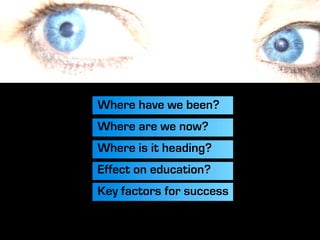
Where have we been?
Where are we now?
Where is it heading?
Effect on education?
Key factors for success
Where
have we
been
          ?
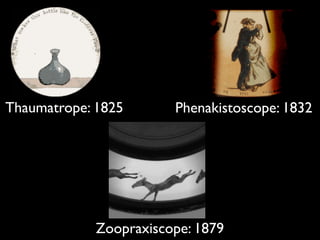
Thaumatrope: 1825       Phenakistoscope: 1832


             Zoopraxiscope: 1879
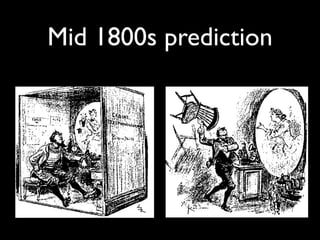
Mid 1800s prediction

  Frustrated and enraged at
  obtaining so many crossed
  visual lines, a man hurls his
      chair at le tele. An
  observation by Robida that
while tremendous strides may
be made in technology, human
 behaviour changes not in the
            slightest.
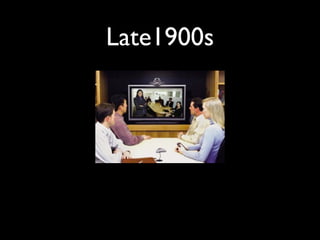
Late1900s
Where
are we
now
         ?
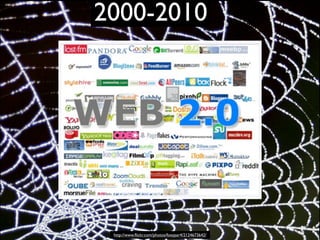
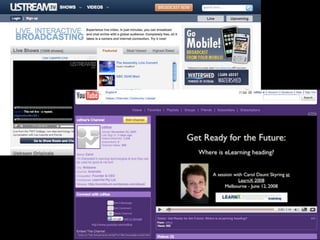
2000-2010


 http://www.flickr.com/photos/foxypar4/2124673642/
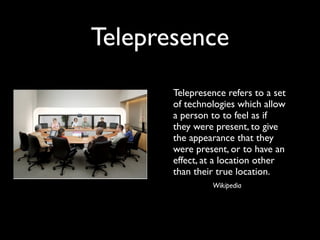
Telepresence
      
 Telepresence refers to a set
        of technologies which allow
        a person to to feel as if
        they were present, to give
        the appearance that they
        were present, or to have an
        effect, at a location other
        than their true location.
                 Wikipedia
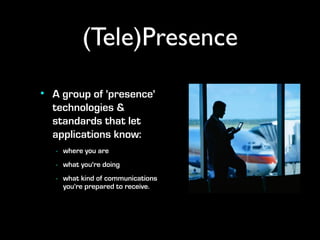
(Tele)Presence
• A group of 'presence'
  technologies &
  standards that let
  applications know:
   - where you are
   - what you're doing
   - what kind of communications
     you're prepared to receive.
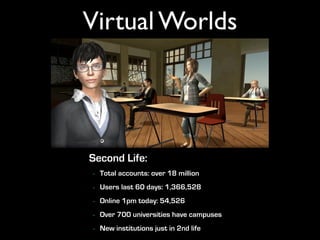
Virtual Worlds


Second Life:
-   Total accounts: over 18 million
-   Users last 60 days: 1,366,528
-   Online 1pm today: 54,526
-   Over 700 universities have campuses
-   New institutions just in 2nd life
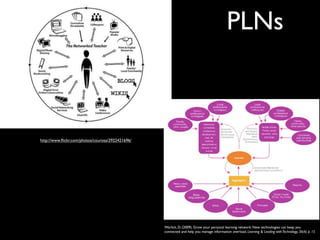
PLNs


http://www.flickr.com/photos/courosa/2922421696/


                                                  Warlick, D. (2009). Grow your personal learning network: New technologies can keep you
                                                  connected and help you manage information overload. Learning & Leading with Technology, 36(6) p. 15
Where
is it
heading
          ?
In 2020
   • Children currently in Year 1 will be entering
          the workforce
   • Some parents of Year 1 students are
          currently finishing school
   • More over 65s than under 16s*
   • Younger, less experienced teachers*
* in 2020 Vision: Report of the Teaching and Learning in 2020 Review Group, Department for Education and Skills, UK
Video removed see
       Joe’s Non-Netbook:
http://www.youtube.com/watch?v=SkhpmEZWuRQ
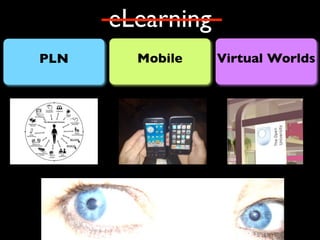
eLearning
PLN     Mobile    Virtual Worlds
Personalised Learning

• Learner centred
• Knowledge centred
• Assessment centred (formative & summative)

          2020 Vision:Ā Report of the Teaching and Learning in 2020 Review Group
          http://www.decs.sa.gov.au/learningtechnologies/files/links/2020_Vision.pdf.
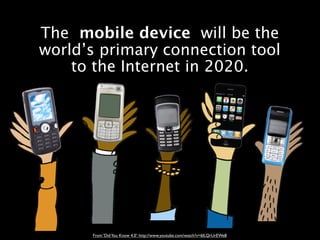
The mobile device will be the
world’s primary connection tool
    to the Internet in 2020.


      From ā€˜Did You Know 4.0’: http://www.youtube.com/watch?v=6ILQrUrEWe8
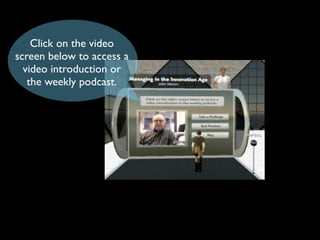
Click on the video
screen below to access a
  video introduction or
   the weekly podcast.
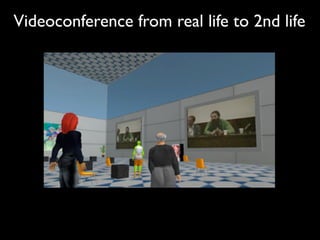
Videoconference from real life to 2nd life
Video removed see
MPK20 - Sun's Virtual Workspace:
http://www.youtube.com/watch?v=4K_yLMMHTmE
Effect
on
education
            ?
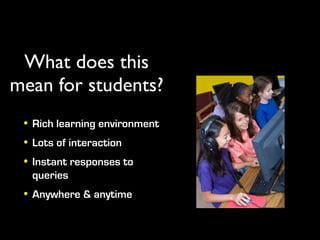
What does this
mean for students?
 • Rich learning environment
 • Lots of interaction
 • Instant responses to
   queries
 • Anywhere & anytime
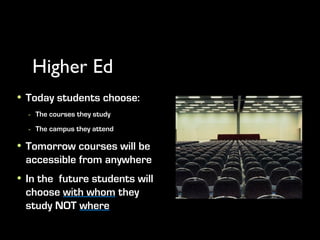
Higher Ed
• Today students choose:
  - The courses they study
  - The campus they attend
• Tomorrow courses will be
  accessible from anywhere
• In the future students will
  choose with whom they
  study NOT where
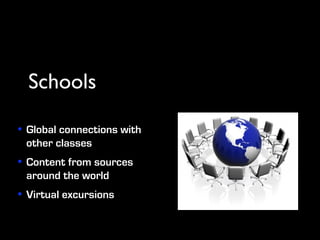
Schools

• Global connections with
  other classes
• Content from sources
  around the world
• Virtual excursions
What does this
mean for teachers?
• New ways of teaching
• New ways of structuring
  learning
• Always on?
  - Anywhere
  - Anyone
  - Anytime
  - 24/7
Key
factors
for
success
          ?
• Appropriate and effective use:
  - Is this the RIGHT tool
  - A combination

• Pedagogical issues:
  - How can I BEST teach this
  - Instructional design

• Environment
  - Ease of use

• Support for instructors and students:
  - Professional development
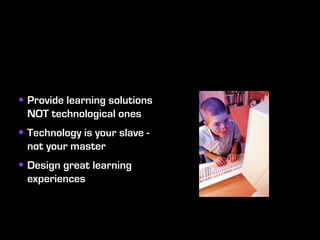
• Provide learning solutions
 NOT technological ones
• Technology is your slave -
 not your master
• Design great learning
 experiences
We are currently preparing
 students for jobs & technologies
      that don’t yet exist.....


  in order to solve problems we
don’t even know are problems yet.
We can’t solve problems by using
 the same kind of thinking we
 used when we created them.
           Albert Einstein
Video removed see
A Brave New Worlds Wide Web:
http://www.youtube.com/watch?v=gyPQ4Qr8xks
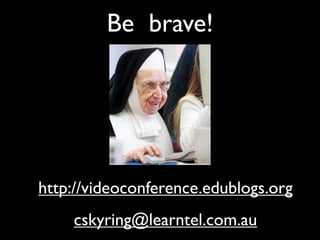
Be brave!


http://videoconference.edublogs.org
    cskyring@learntel.com.au

Vision of the Future: Where will eLearning be in 2020?

  • 1.
    Vision of theFuture: Where will eLearning be in 2020? Carol Skyring LearnTel, Australia cskyring@learntel.com.au
  • 2.
    ā€œā€¦the future hasbeen a disappointmentā€ John Gardner Queen’s University, Belfast 1995 Cited in http://hdl.handle.net/2428/8061
  • 3.
    Video removed see Mr Winkle Wakes: http://www.youtube.com/watch?v=lm1sCsl2MQY
  • 4.
    Where have webeen? Where are we now? Where is it heading? Effect on education? Key factors for success
  • 5.
  • 6.
    Thaumatrope: 1825 Phenakistoscope: 1832 Zoopraxiscope: 1879
  • 7.
    Mid 1800s prediction Frustrated and enraged at obtaining so many crossed visual lines, a man hurls his chair at le tele. An observation by Robida that while tremendous strides may be made in technology, human behaviour changes not in the slightest.
  • 8.
  • 9.
  • 10.
  • 15.
    Telepresence Telepresence refers to a set of technologies which allow a person to to feel as if they were present, to give the appearance that they were present, or to have an effect, at a location other than their true location. Wikipedia
  • 16.
    (Tele)Presence • A groupof 'presence' technologies & standards that let applications know: - where you are - what you're doing - what kind of communications you're prepared to receive.
  • 17.
    Virtual Worlds Second Life: - Total accounts: over 18 million - Users last 60 days: 1,366,528 - Online 1pm today: 54,526 - Over 700 universities have campuses - New institutions just in 2nd life
  • 18.
    PLNs http://www.flickr.com/photos/courosa/2922421696/ Warlick, D. (2009). Grow your personal learning network: New technologies can keep you connected and help you manage information overload. Learning & Leading with Technology, 36(6) p. 15
  • 19.
  • 20.
    In 2020 • Children currently in Year 1 will be entering the workforce • Some parents of Year 1 students are currently finishing school • More over 65s than under 16s* • Younger, less experienced teachers* * in 2020 Vision: Report of the Teaching and Learning in 2020 Review Group, Department for Education and Skills, UK
  • 21.
    Video removed see Joe’s Non-Netbook: http://www.youtube.com/watch?v=SkhpmEZWuRQ
  • 22.
    eLearning PLN Mobile Virtual Worlds
  • 23.
    Personalised Learning • Learnercentred • Knowledge centred • Assessment centred (formative & summative) 2020 Vision:Ā Report of the Teaching and Learning in 2020 Review Group http://www.decs.sa.gov.au/learningtechnologies/files/links/2020_Vision.pdf.
  • 24.
    The mobile devicewill be the world’s primary connection tool to the Internet in 2020. From ā€˜Did You Know 4.0’: http://www.youtube.com/watch?v=6ILQrUrEWe8
  • 25.
    Click on thevideo screen below to access a video introduction or the weekly podcast.
  • 26.
    Videoconference from reallife to 2nd life
  • 27.
    Video removed see MPK20- Sun's Virtual Workspace: http://www.youtube.com/watch?v=4K_yLMMHTmE
  • 28.
  • 29.
    What does this meanfor students? • Rich learning environment • Lots of interaction • Instant responses to queries • Anywhere & anytime
  • 30.
    Higher Ed • Todaystudents choose: - The courses they study - The campus they attend • Tomorrow courses will be accessible from anywhere • In the future students will choose with whom they study NOT where
  • 31.
    Schools • Global connectionswith other classes • Content from sources around the world • Virtual excursions
  • 32.
    What does this meanfor teachers? • New ways of teaching • New ways of structuring learning • Always on? - Anywhere - Anyone - Anytime - 24/7
  • 33.
  • 34.
    • Appropriate andeffective use: - Is this the RIGHT tool - A combination • Pedagogical issues: - How can I BEST teach this - Instructional design • Environment - Ease of use • Support for instructors and students: - Professional development
  • 35.
    • Provide learningsolutions NOT technological ones • Technology is your slave - not your master • Design great learning experiences
  • 36.
    We are currentlypreparing students for jobs & technologies that don’t yet exist..... in order to solve problems we don’t even know are problems yet.
  • 37.
    We can’t solveproblems by using the same kind of thinking we used when we created them. Albert Einstein
  • 38.
    Video removed see ABrave New Worlds Wide Web: http://www.youtube.com/watch?v=gyPQ4Qr8xks
  • 39.