Downloaded 225 times
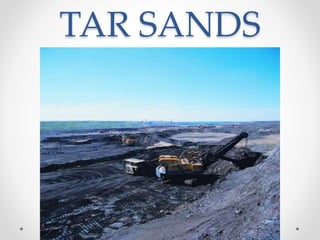
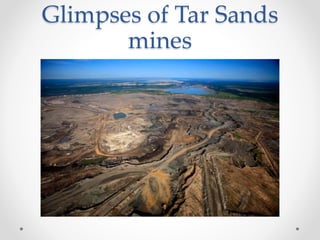
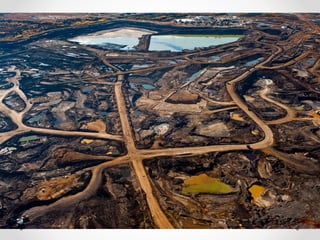
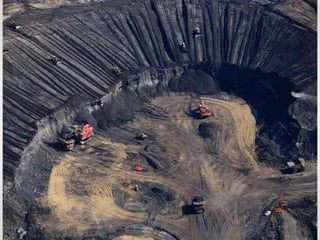
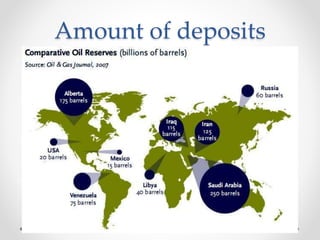
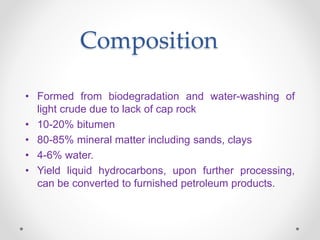
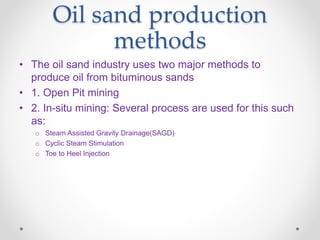
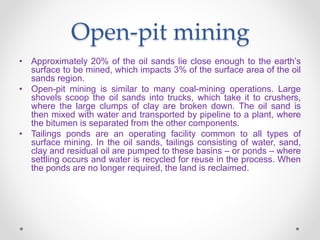
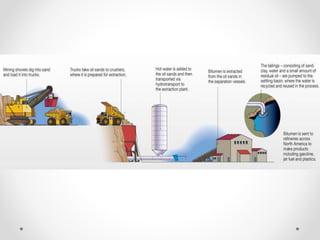
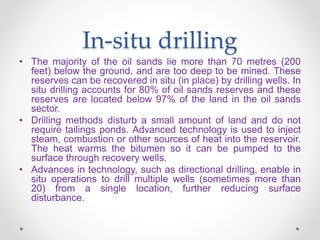

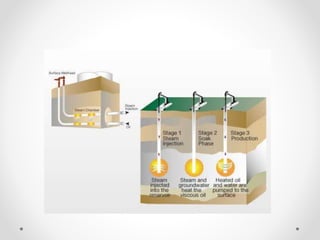

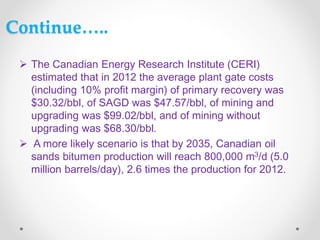
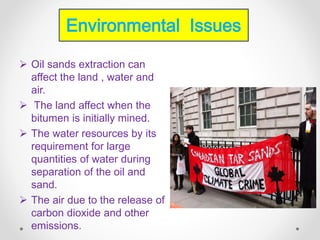
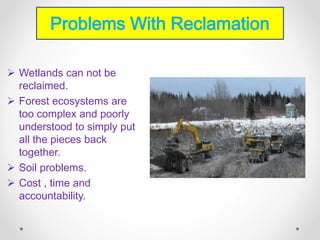
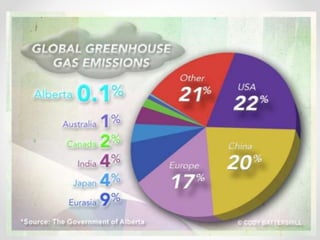
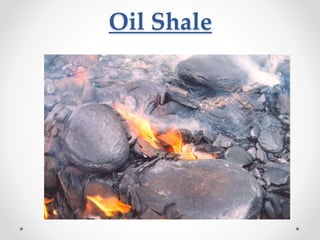
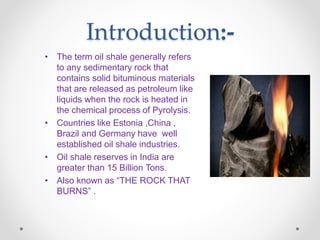
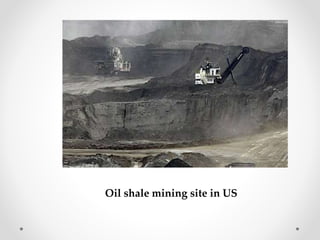
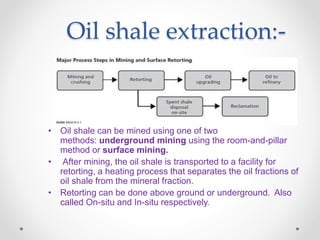
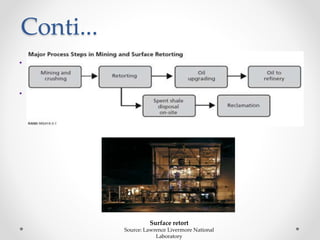
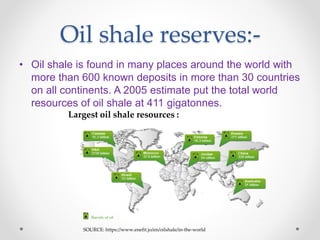
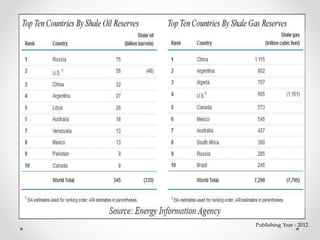
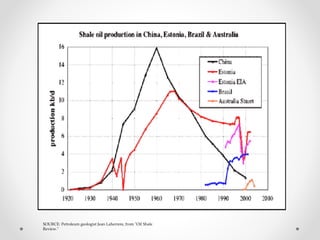
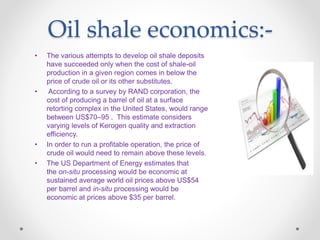
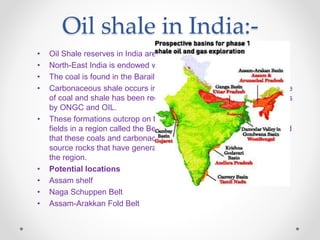


Tar sands and oil shale are unconventional sources of petroleum that require more energy-intensive extraction and processing than conventional crude oil. Tar sands, also known as oil sands, consist of bitumen mixed with sand, clay, and water found predominantly in Alberta, Canada. Oil shale is a sedimentary rock containing kerogen, which can be converted to synthetic oil via pyrolysis. While Canada and the United States have large reserves of tar sands and oil shale that could help meet energy demand, extraction causes significant environmental impacts through land disturbance, water and air pollution, and greenhouse gas emissions.


![Refining albertas energy advantage[1]](https://cdn.slidesharecdn.com/ss_thumbnails/refiningalbertasenergyadvantage1-111122115847-phpapp02-thumbnail.jpg?width=640&height=640&fit=bounds)


![TAR-SANDS (ARENAS BITUMINOSAS) [OIL-SANDS]](https://cdn.slidesharecdn.com/ss_thumbnails/tarsandsarenasbituminosas-131223102350-phpapp02-thumbnail.jpg?width=640&height=640&fit=bounds)


