Introduction 
 What are the reservoir rock properties? 
 The importance of reservoir rock & fluid 
properties 
 How fluids flow through the reservoir rock 
and how this flow can be altered to produce 
greater recovery and profits 
 Provides good understanding in reservoir 
management, Simulation and EOR, etc.
Reservoir Fluid Properties? 
 What are reservoir fluids? 
 Crude oil 
 Natural gas or 
 Drinkable water?
Reservoir Rocks 
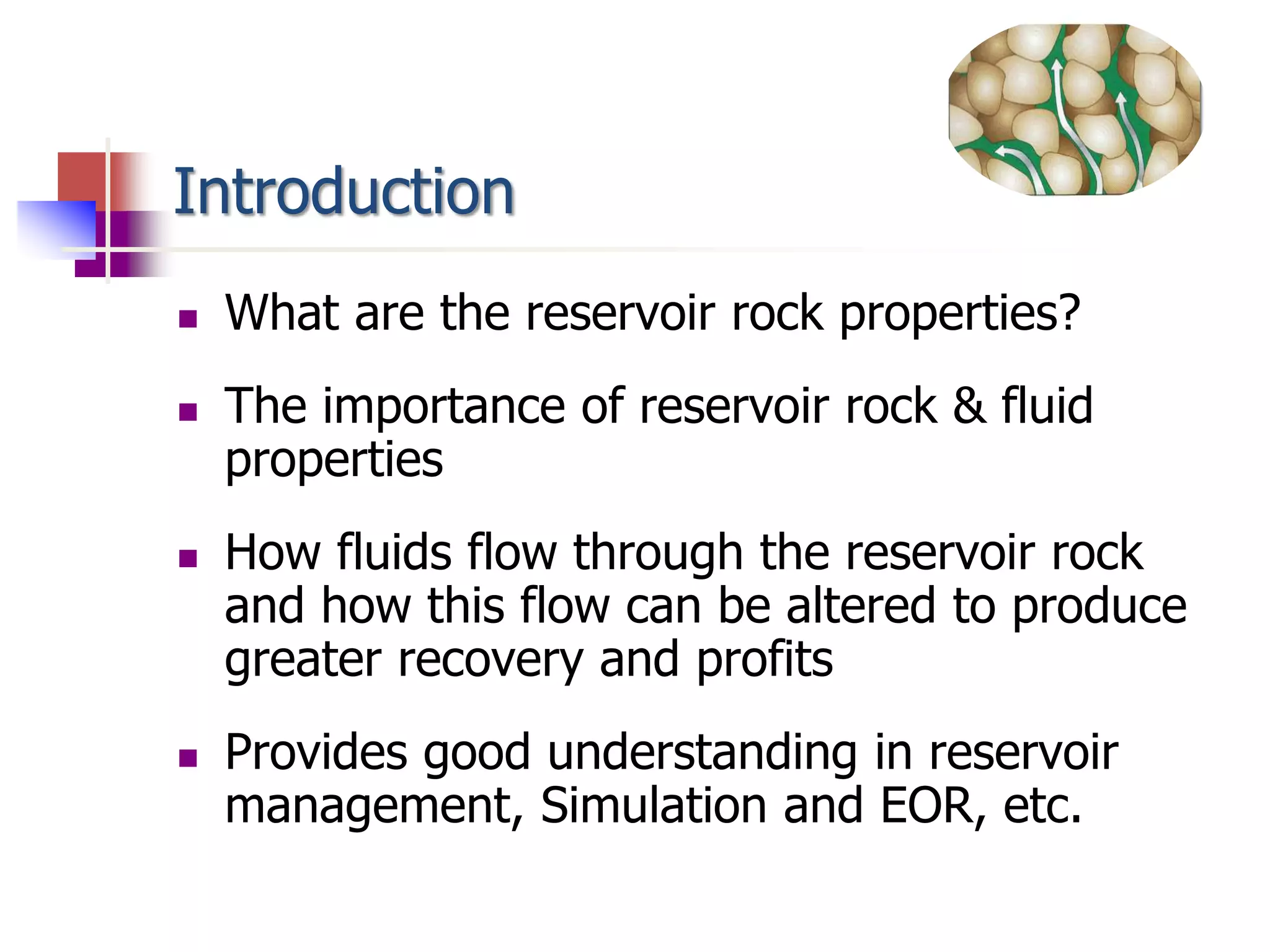
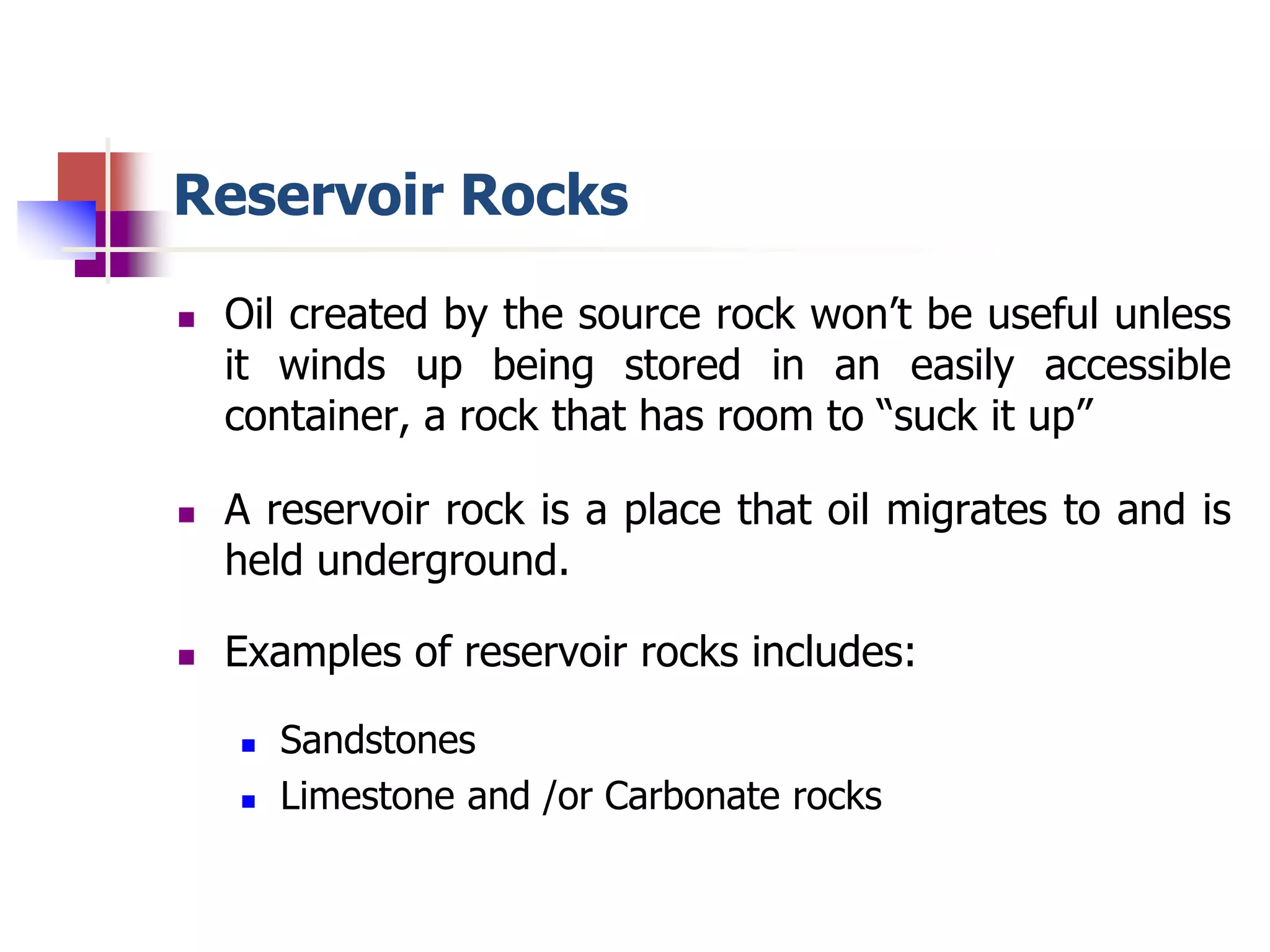
 Oil created by the source rock won’t be useful unless 
it winds up being stored in an easily accessible 
container, a rock that has room to “suck it up” 
 A reservoir rock is a place that oil migrates to and is 
held underground. 
 Examples of reservoir rocks includes: 
 Sandstones 
 Limestone and /or Carbonate rocks
Characteristics of Reservoir Rocks 
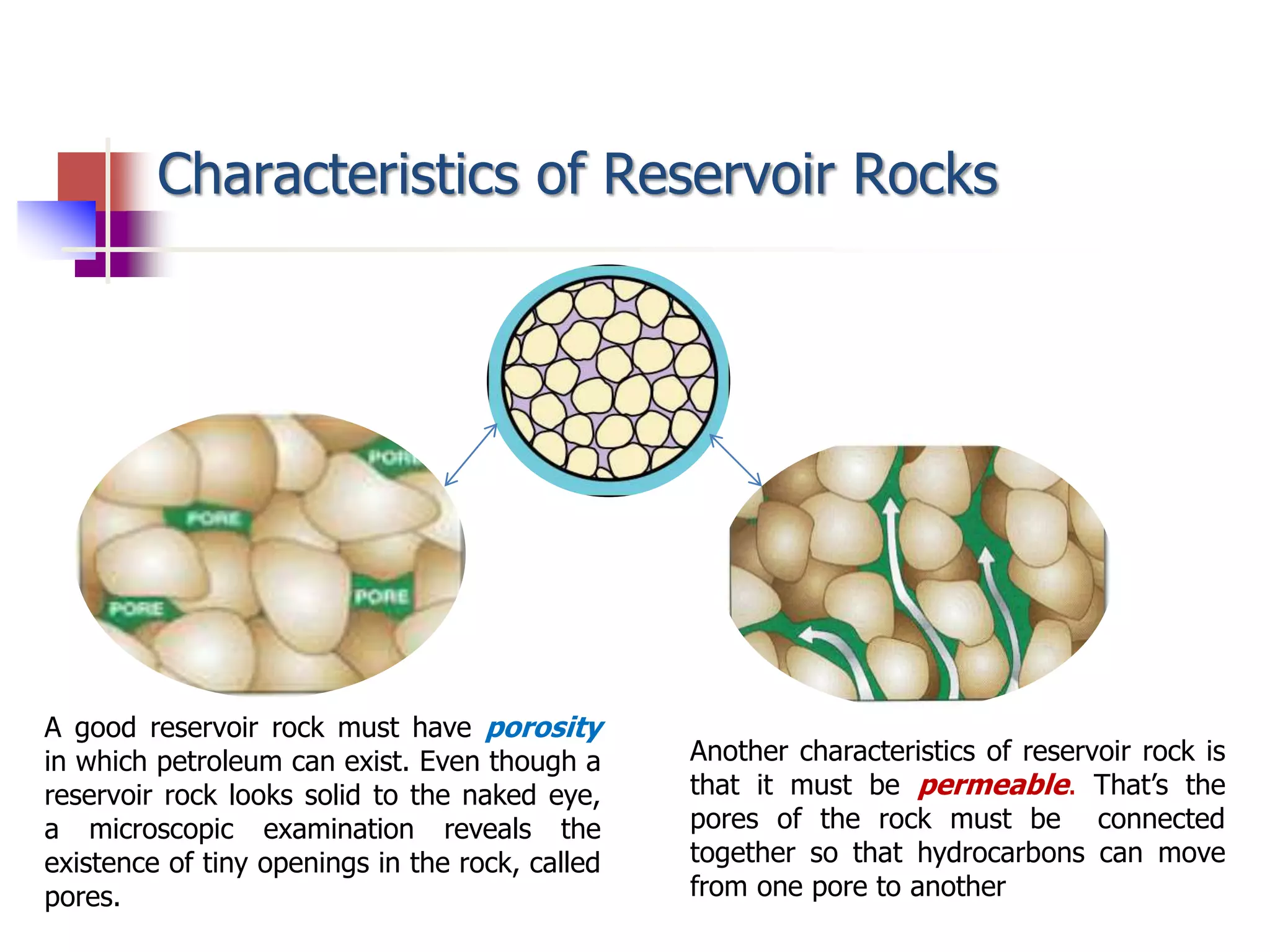
A good reservoir rock must have porosity 
in which petroleum can exist. Even though a 
reservoir rock looks solid to the naked eye, 
a microscopic examination reveals the 
existence of tiny openings in the rock, called 
pores. 
Another characteristics of reservoir rock is 
that it must be permeable. That’s the 
pores of the rock must be connected 
together so that hydrocarbons can move 
from one pore to another
Source of data: Coring 
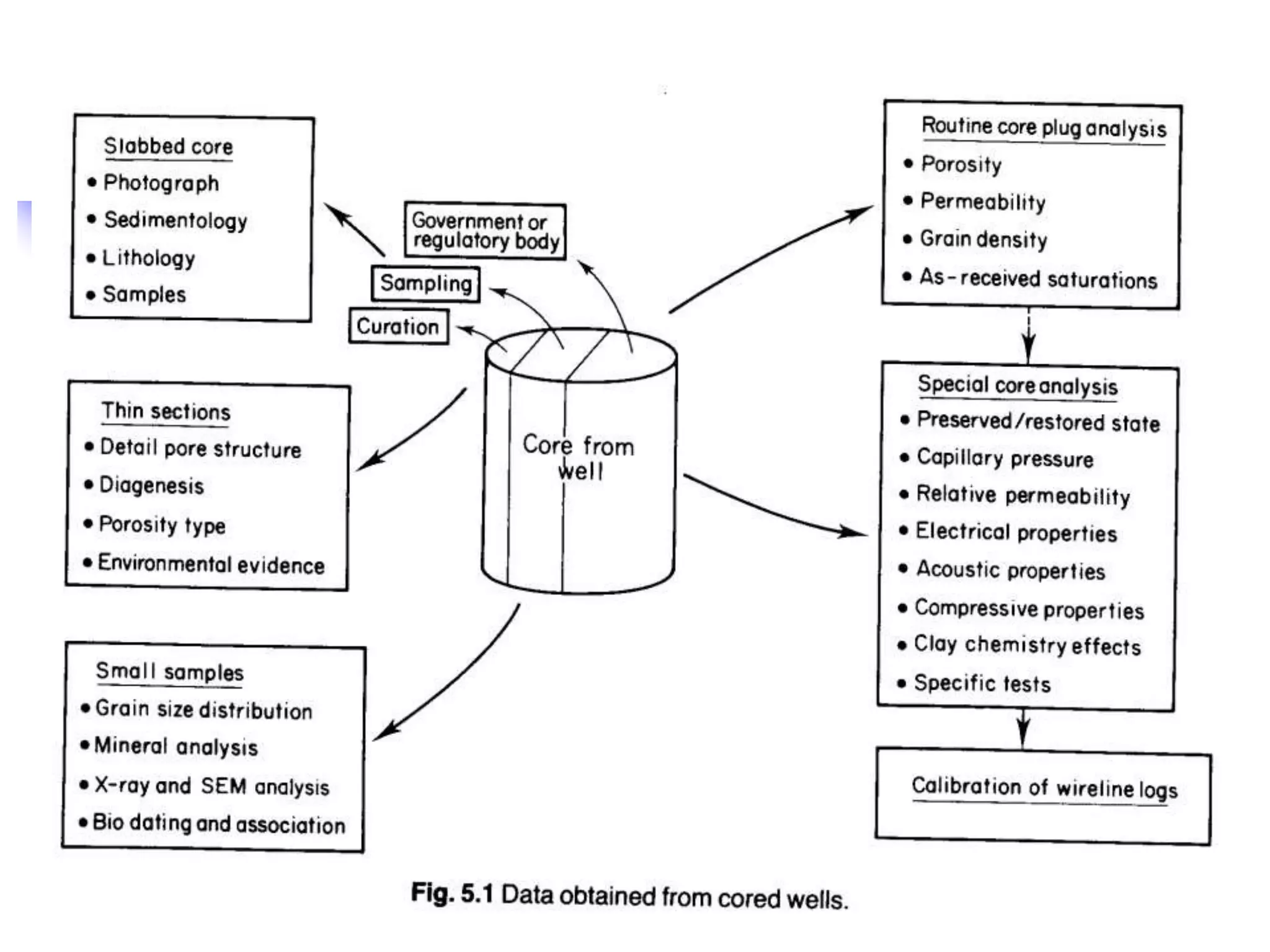
 Coring are processes used to recover formation samples from 
petroleum reservoirs. 
 Reservoir rock samples are used for reservoir description and 
definition, reservoir characterization and to enhance both geological 
petrophysical nature of the reservoir. 
 Physical sample of reservoir rock core is essential to evaluate the two 
most significant characteristics: 
 the capacity and ability of the reservoir rock to store and conduct 
petroleum fluids through the matrix. 
In addition, data on formation’s lithology and production potential 
are obtained through coring program.
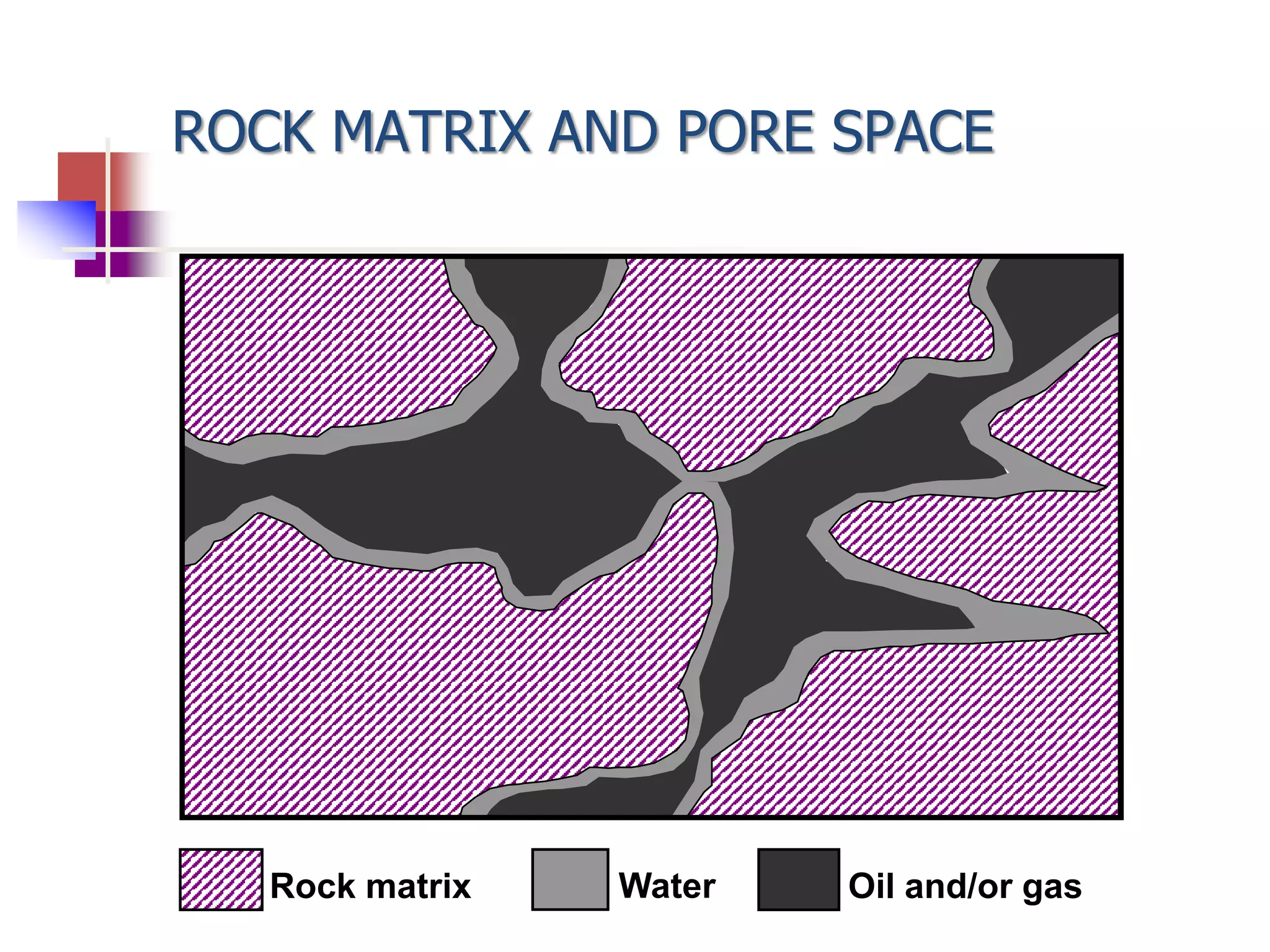
ROCK MATRIX AND PORE SPACE 
Rock matrix Water Oil and/or gas
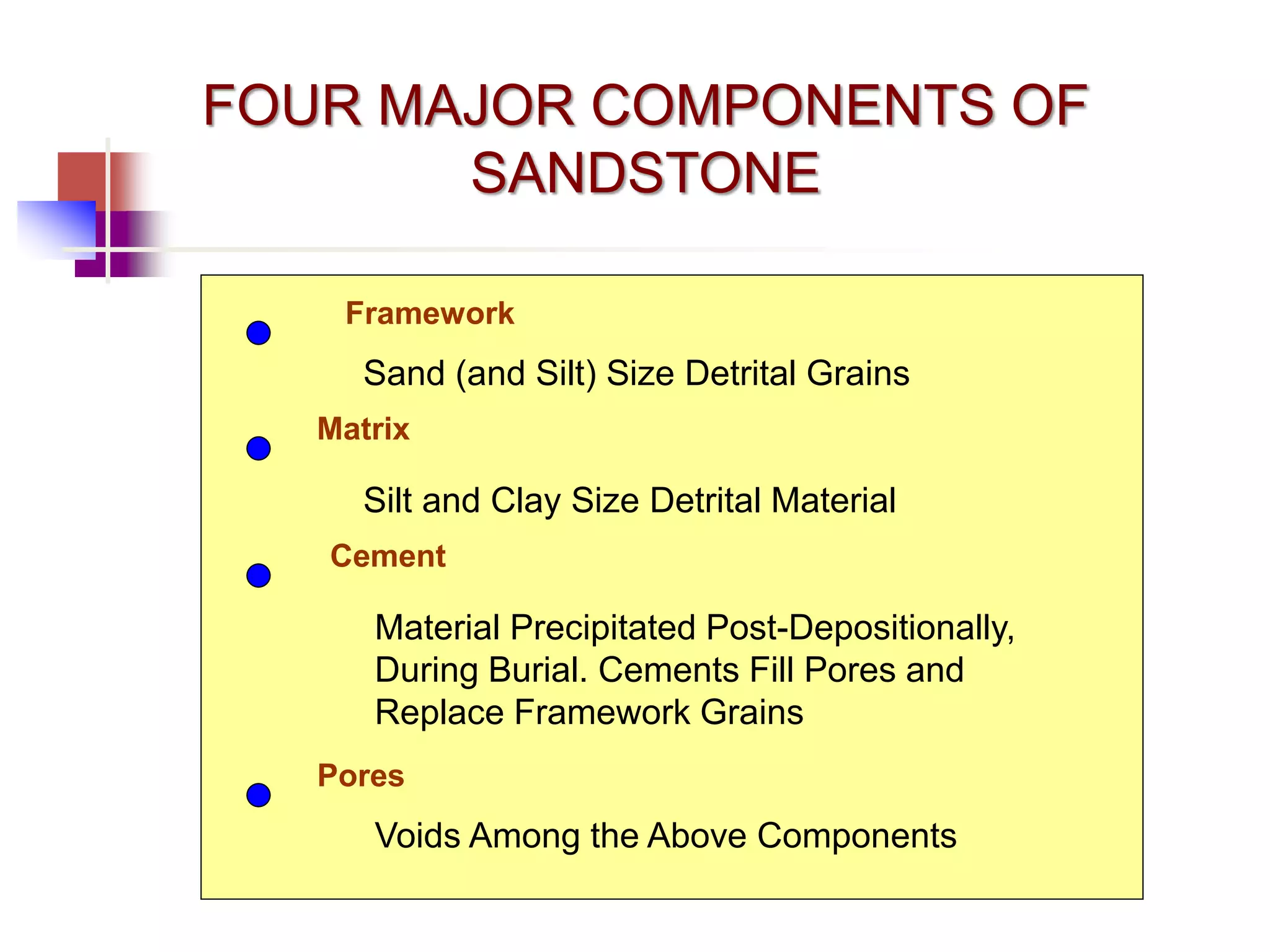
FOUR MAJOR COMPONENTS OF 
SANDSTONE 
Framework 
Sand (and Silt) Size Detrital Grains 
Matrix 
Silt and Clay Size Detrital Material 
Cement 
Material Precipitated Post-Depositionally, 
During Burial. Cements Fill Pores and 
Replace Framework Grains 
Pores 
Voids Among the Above Components
MATRIX 
FOUR COMPONENTS OF SANDSTONE 
FRAMEWORK 
(QUARTZ) 
FRAMEWORK 
(FELDSPAR) 
PORE 
0.25 mm 
CEMENT
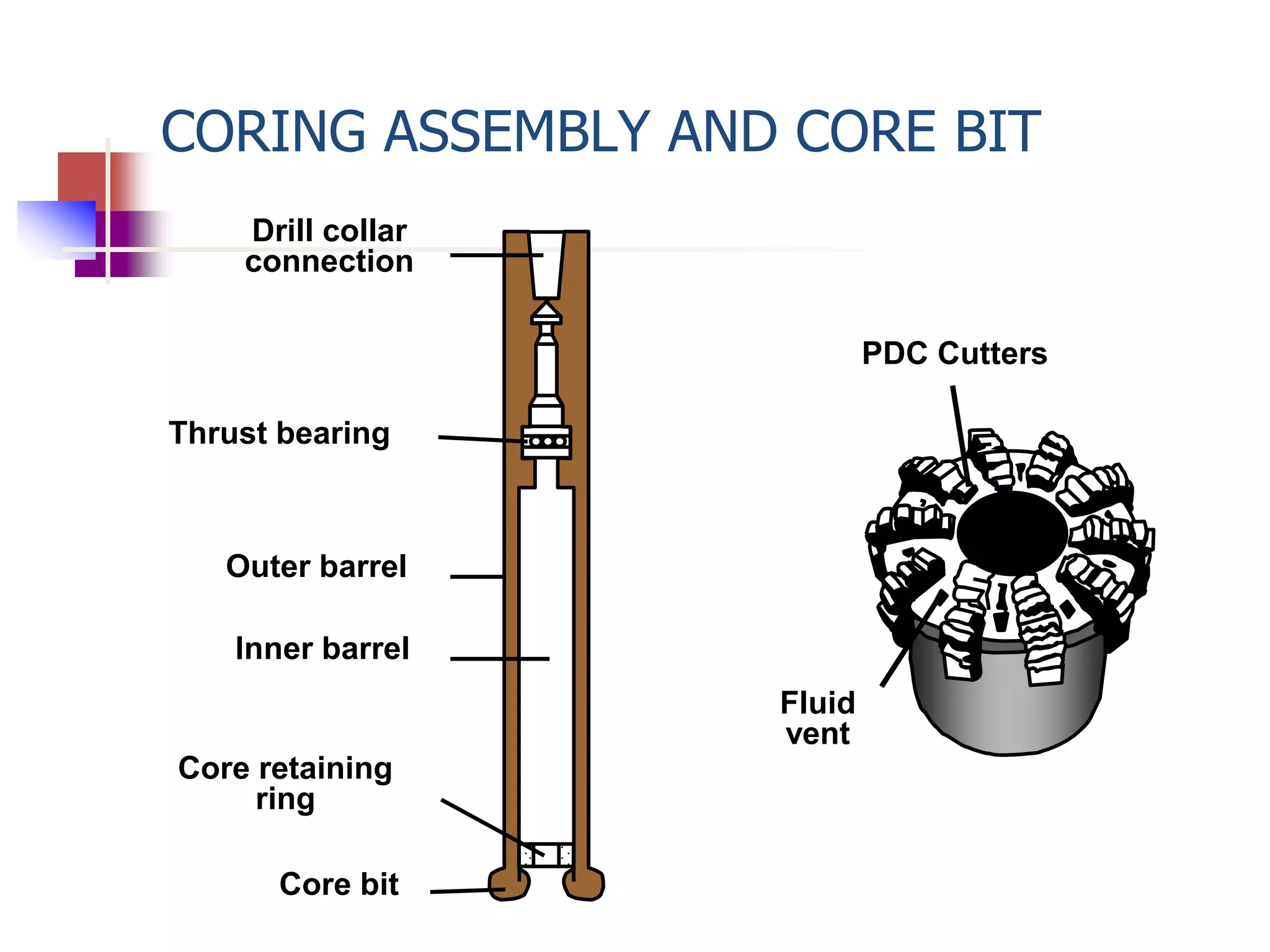
CORING ASSEMBLY AND CORE BIT 
PDC Cutters 
Fluid 
vent 
Drill collar 
connection 
Thrust bearing 
Outer barrel 
Inner barrel 
Core retaining 
ring 
Core bit
Coring 
Unlike a normal drill bit, which crushes 
the rock into small pieces, a core bit can 
be visualized as a hollow cylinder with 
cutters on the outside. 
The cylinder of rock that is cut by the bit 
is retained within the core barrel by an 
arrangement of steel fingers or slips. 
Core diameters are typically from three 
to seven inches and are usually about 90 
feet long. 
• Whole core sampler 
• Side-wall core sampler
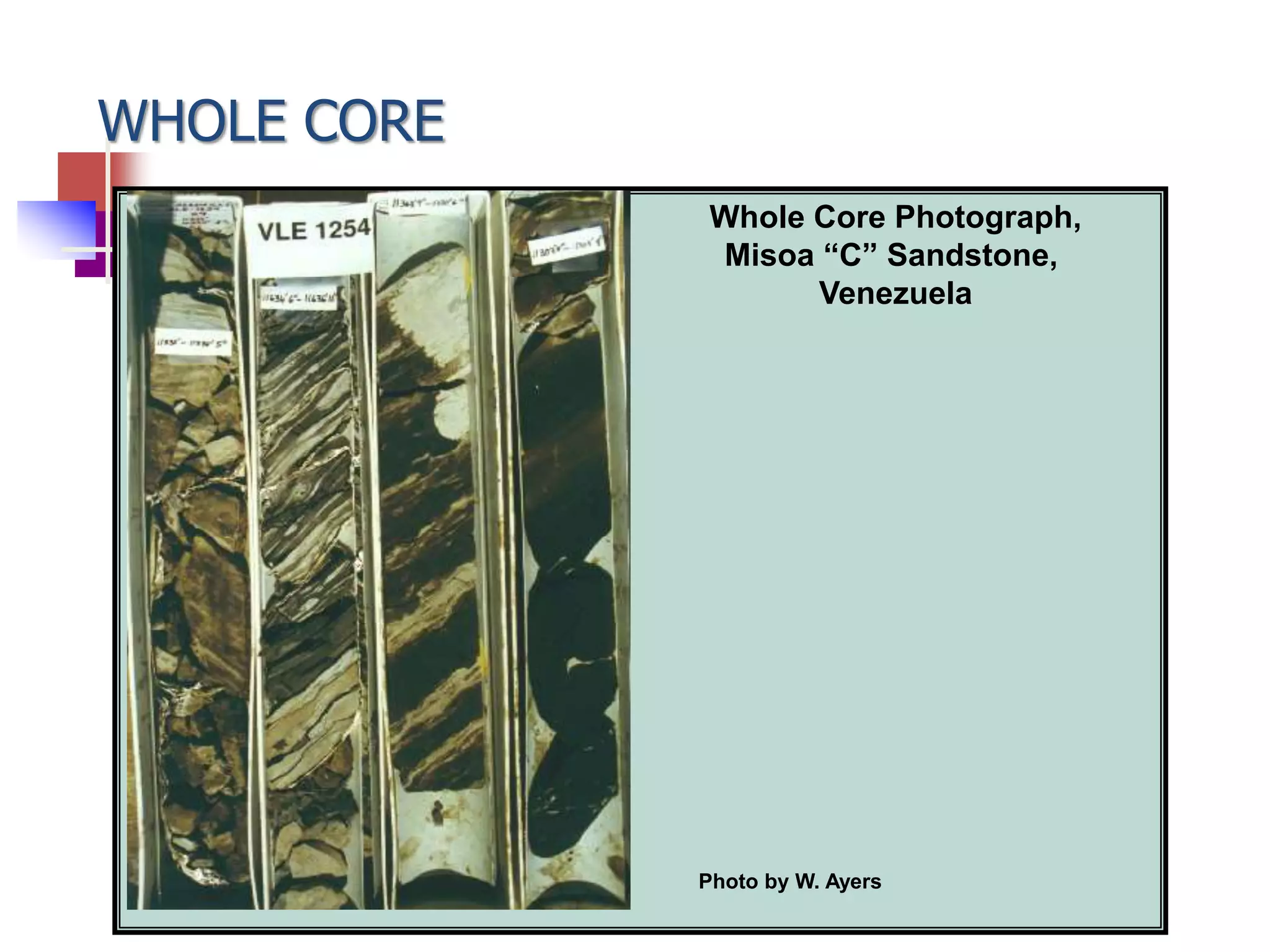
Whole Core Photograph, 
Misoa “C” Sandstone, 
Venezuela 
WHOLE CORE 
Photo by W. Ayers
SIDEWALL SAMPLING GUN 
Core bullets 
Formation rock 
Core sample 
The sidewall sampling tool can be used to 
obtain small plugs from the formation. 
The tool is run on a wireline after the hole 
has been drilled. Some 20 to 30 bullets 
are fired from each gun at different 
depths. 
The hollow bullet will penetrate the 
formation and a rock sample will be 
trapped inside the steel cylinder. When 
the tool is pulled upwards, wires 
connected to the gun pull the bullet and 
sample from the borehole wall. 
Sidewall cores are useful for identifying 
hydrocarbons zones, when viewed under 
UV light. Qualitative inspection of 
porosity is possible; however, the cores 
may have been crushed during the 
collection process, so quantitative 
sampling of porosity is questionable.
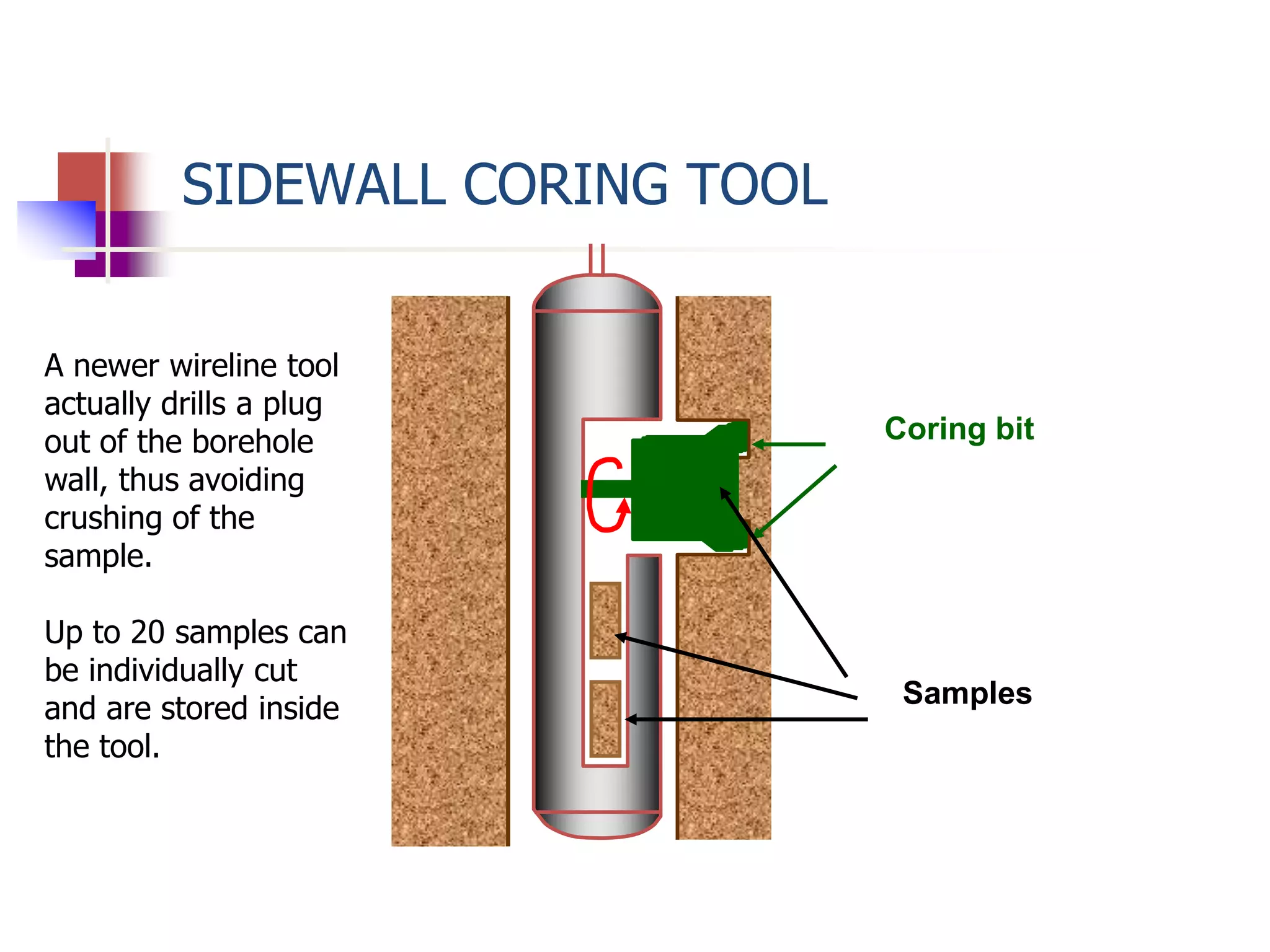
SIDEWALL CORING TOOL 
Coring bit 
Samples 
A newer wireline tool 
actually drills a plug 
out of the borehole 
wall, thus avoiding 
crushing of the 
sample. 
Up to 20 samples can 
be individually cut 
and are stored inside 
the tool.
WHOLE CORE ANALYSIS vs. 
PLUGS OR SIDEWALL CORES 
WHOLE CORE 
 Provides larger samples 
 Better and more consistent representation of 
formation 
 Better for heterogeneous rocks or for more complex 
lithologies
WHOLE CORE ANALYSIS vs. 
PLUGS OR SIDEWALL CORES 
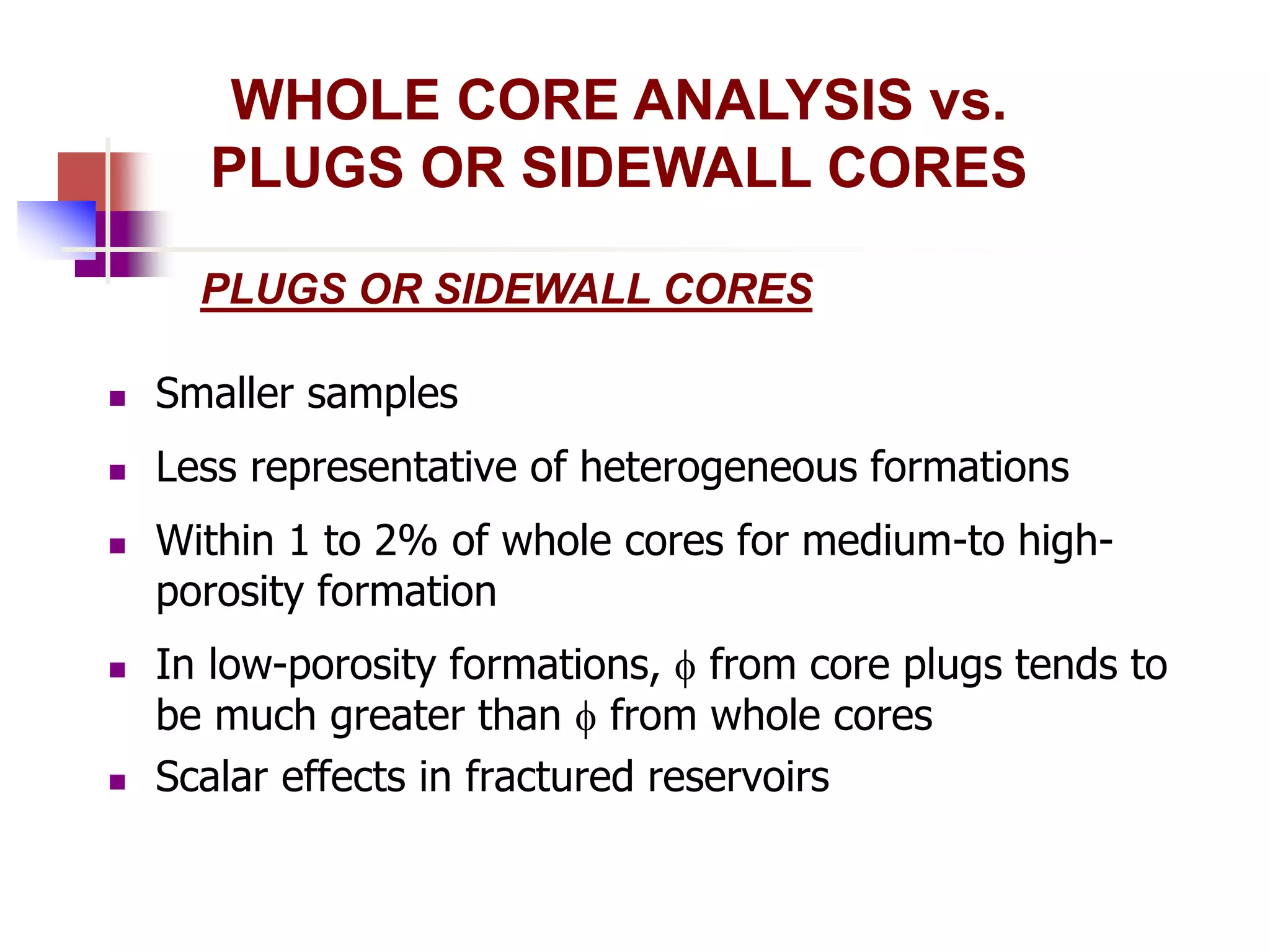
 Smaller samples 
 Less representative of heterogeneous formations 
 Within 1 to 2% of whole cores for medium-to high-porosity 
formation 
 In low-porosity formations,  from core plugs tends to 
be much greater than  from whole cores 
 Scalar effects in fractured reservoirs
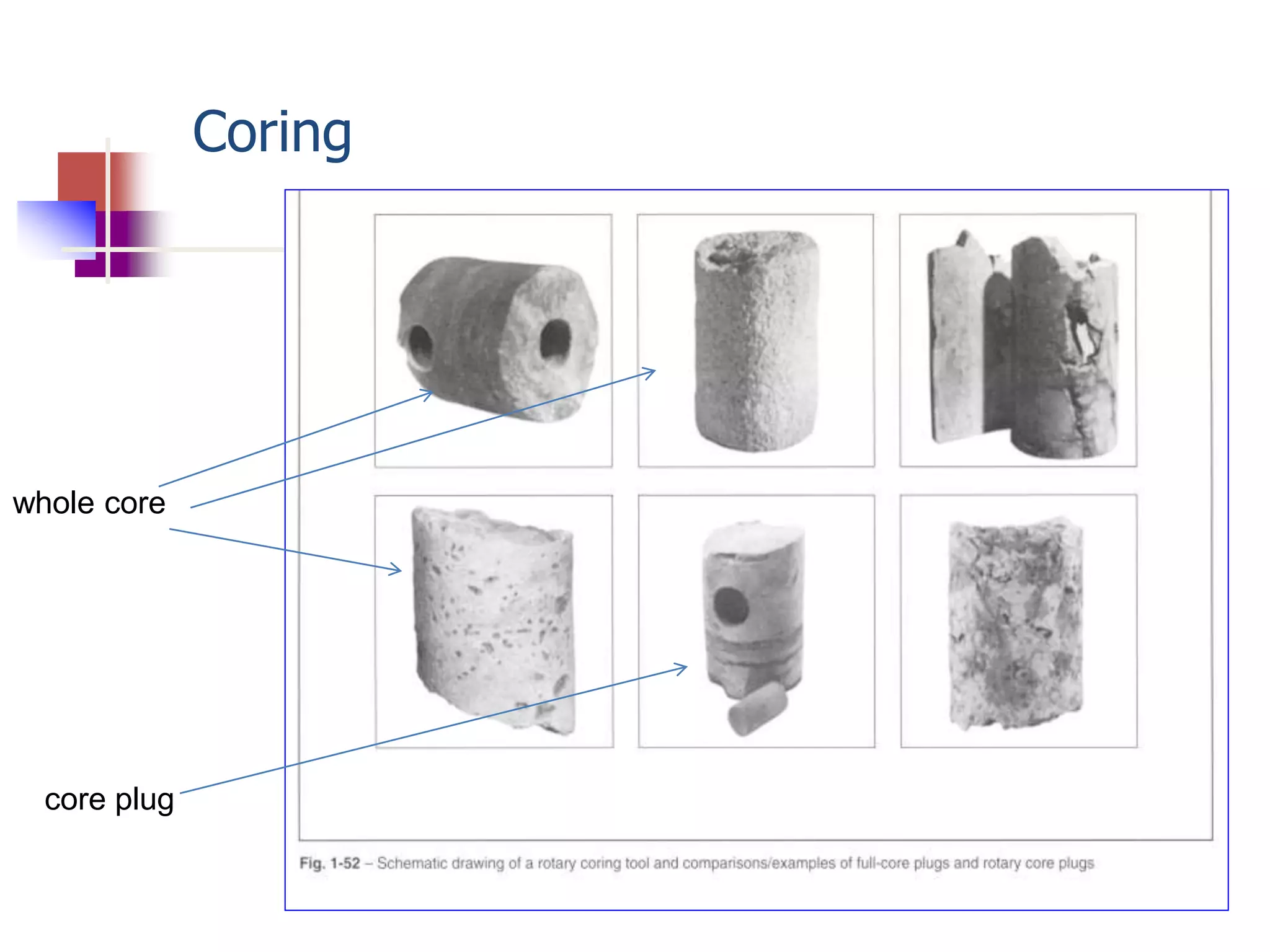
Coring 
whole core 
core plug
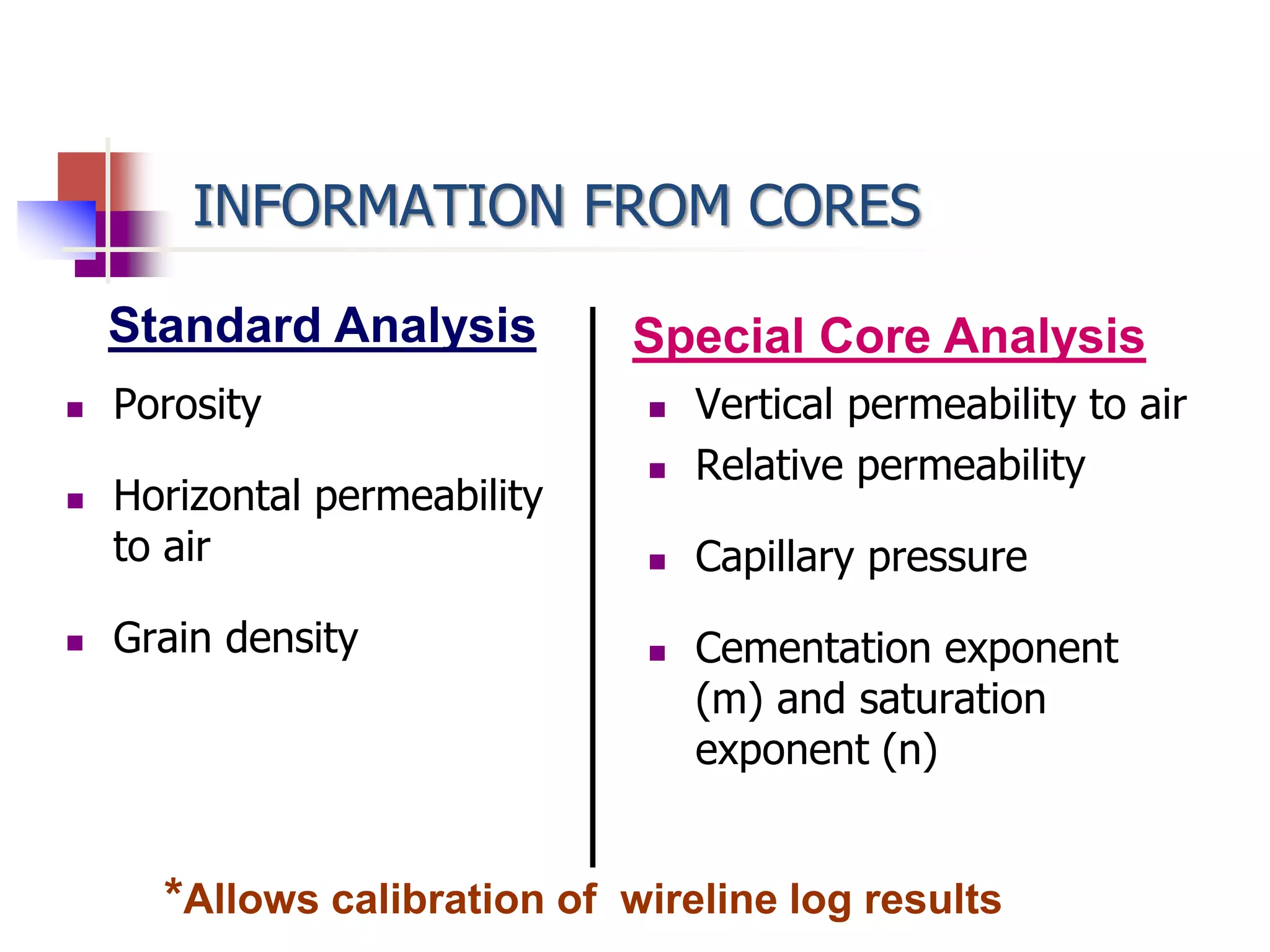
INFORMATION FROM CORES 
Standard Analysis Special Core Analysis 
 Porosity 
 Horizontal permeability 
to air 
 Grain density 
 Vertical permeability to air 
 Relative permeability 
 Capillary pressure 
 Cementation exponent 
(m) and saturation 
exponent (n) 
*Allows calibration of wireline log results

Introduction to Reservoir Rock & Fluid Properties

  • 1.
    Introduction  Whatare the reservoir rock properties?  The importance of reservoir rock & fluid properties  How fluids flow through the reservoir rock and how this flow can be altered to produce greater recovery and profits  Provides good understanding in reservoir management, Simulation and EOR, etc.
  • 2.
    Reservoir Fluid Properties?  What are reservoir fluids?  Crude oil  Natural gas or  Drinkable water?
  • 3.
    Reservoir Rocks Oil created by the source rock won’t be useful unless it winds up being stored in an easily accessible container, a rock that has room to “suck it up”  A reservoir rock is a place that oil migrates to and is held underground.  Examples of reservoir rocks includes:  Sandstones  Limestone and /or Carbonate rocks
  • 4.
    Characteristics of ReservoirRocks A good reservoir rock must have porosity in which petroleum can exist. Even though a reservoir rock looks solid to the naked eye, a microscopic examination reveals the existence of tiny openings in the rock, called pores. Another characteristics of reservoir rock is that it must be permeable. That’s the pores of the rock must be connected together so that hydrocarbons can move from one pore to another
  • 5.
    Source of data:Coring  Coring are processes used to recover formation samples from petroleum reservoirs.  Reservoir rock samples are used for reservoir description and definition, reservoir characterization and to enhance both geological petrophysical nature of the reservoir.  Physical sample of reservoir rock core is essential to evaluate the two most significant characteristics:  the capacity and ability of the reservoir rock to store and conduct petroleum fluids through the matrix. In addition, data on formation’s lithology and production potential are obtained through coring program.
  • 7.
    ROCK MATRIX ANDPORE SPACE Rock matrix Water Oil and/or gas
  • 8.
    FOUR MAJOR COMPONENTSOF SANDSTONE Framework Sand (and Silt) Size Detrital Grains Matrix Silt and Clay Size Detrital Material Cement Material Precipitated Post-Depositionally, During Burial. Cements Fill Pores and Replace Framework Grains Pores Voids Among the Above Components
  • 9.
    MATRIX FOUR COMPONENTSOF SANDSTONE FRAMEWORK (QUARTZ) FRAMEWORK (FELDSPAR) PORE 0.25 mm CEMENT
  • 10.
    CORING ASSEMBLY ANDCORE BIT PDC Cutters Fluid vent Drill collar connection Thrust bearing Outer barrel Inner barrel Core retaining ring Core bit
  • 11.
    Coring Unlike anormal drill bit, which crushes the rock into small pieces, a core bit can be visualized as a hollow cylinder with cutters on the outside. The cylinder of rock that is cut by the bit is retained within the core barrel by an arrangement of steel fingers or slips. Core diameters are typically from three to seven inches and are usually about 90 feet long. • Whole core sampler • Side-wall core sampler
  • 12.
    Whole Core Photograph, Misoa “C” Sandstone, Venezuela WHOLE CORE Photo by W. Ayers
  • 13.
    SIDEWALL SAMPLING GUN Core bullets Formation rock Core sample The sidewall sampling tool can be used to obtain small plugs from the formation. The tool is run on a wireline after the hole has been drilled. Some 20 to 30 bullets are fired from each gun at different depths. The hollow bullet will penetrate the formation and a rock sample will be trapped inside the steel cylinder. When the tool is pulled upwards, wires connected to the gun pull the bullet and sample from the borehole wall. Sidewall cores are useful for identifying hydrocarbons zones, when viewed under UV light. Qualitative inspection of porosity is possible; however, the cores may have been crushed during the collection process, so quantitative sampling of porosity is questionable.
  • 14.
    SIDEWALL CORING TOOL Coring bit Samples A newer wireline tool actually drills a plug out of the borehole wall, thus avoiding crushing of the sample. Up to 20 samples can be individually cut and are stored inside the tool.
  • 15.
    WHOLE CORE ANALYSISvs. PLUGS OR SIDEWALL CORES WHOLE CORE  Provides larger samples  Better and more consistent representation of formation  Better for heterogeneous rocks or for more complex lithologies
  • 16.
    WHOLE CORE ANALYSISvs. PLUGS OR SIDEWALL CORES PLUGS OR SIDEWALL CORES  Smaller samples  Less representative of heterogeneous formations  Within 1 to 2% of whole cores for medium-to high-porosity formation  In low-porosity formations,  from core plugs tends to be much greater than  from whole cores  Scalar effects in fractured reservoirs
  • 17.
  • 18.
    INFORMATION FROM CORES Standard Analysis Special Core Analysis  Porosity  Horizontal permeability to air  Grain density  Vertical permeability to air  Relative permeability  Capillary pressure  Cementation exponent (m) and saturation exponent (n) *Allows calibration of wireline log results