Presentation on
EOR- ENHANCED OIL
RECOVERY
Date of presentation: 27th MARCH 2019
Presented by
Mr. VIVEK Z. BHAJIPALE
M.Sc. Tech (Applied Geology)
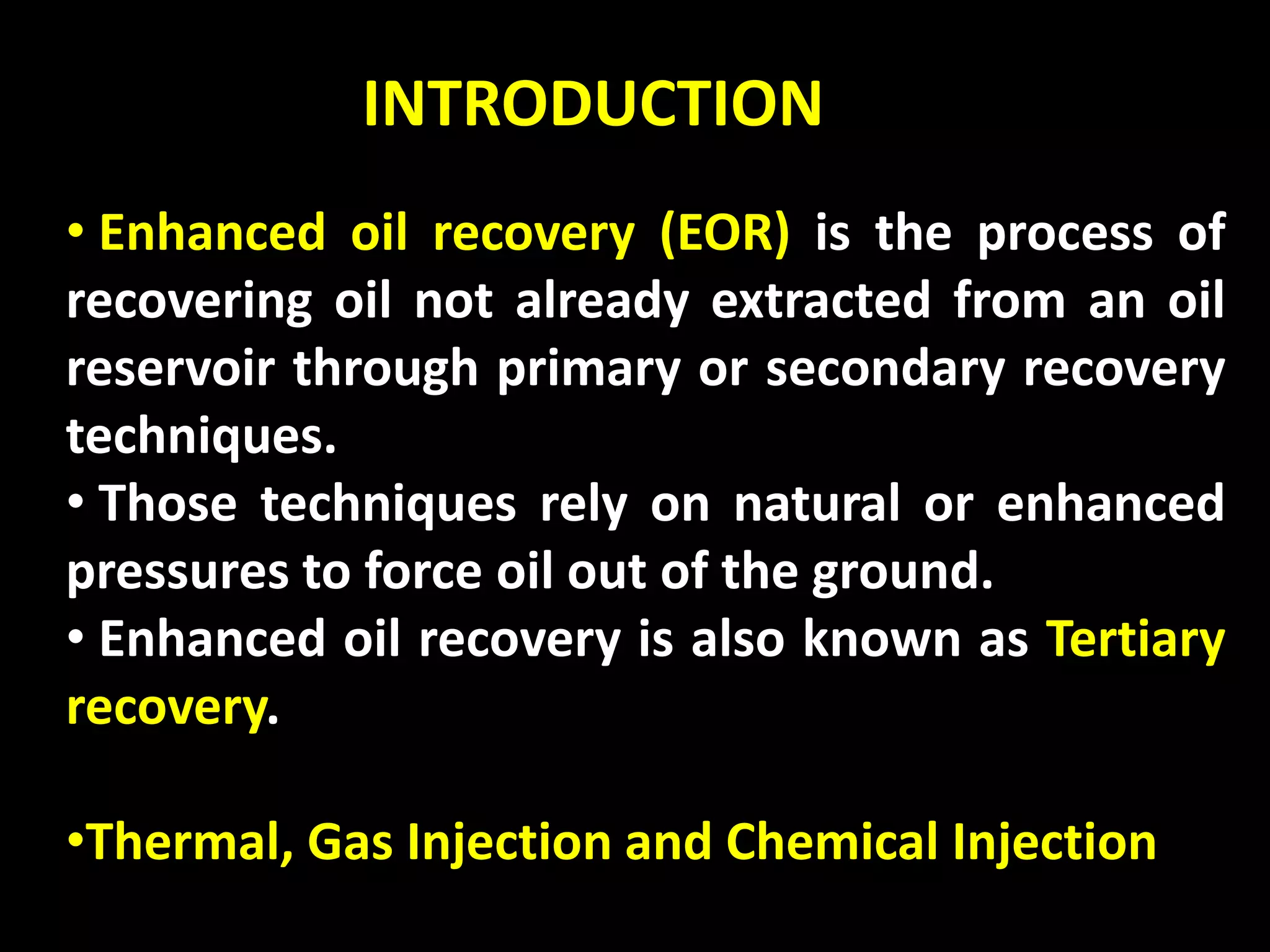
INTRODUCTION
• Enhanced oil recovery (EOR) is the process of
recovering oil not already extracted from an oil
reservoir through primary or secondary recovery
techniques.
• Those techniques rely on natural or enhanced
pressures to force oil out of the ground.
• Enhanced oil recovery is also known as Tertiary
recovery.
•Thermal, Gas Injection and Chemical Injection
OIL RECOVERY
PRIMARY RECOVERY
(NATURAL FORMATION
PRESURE)
SECONDORY RECOVERY
( WATER AND GAS)
TERTIARY RECOVERY (EOR)
(THERMAL, GAS, CHEMICALS)
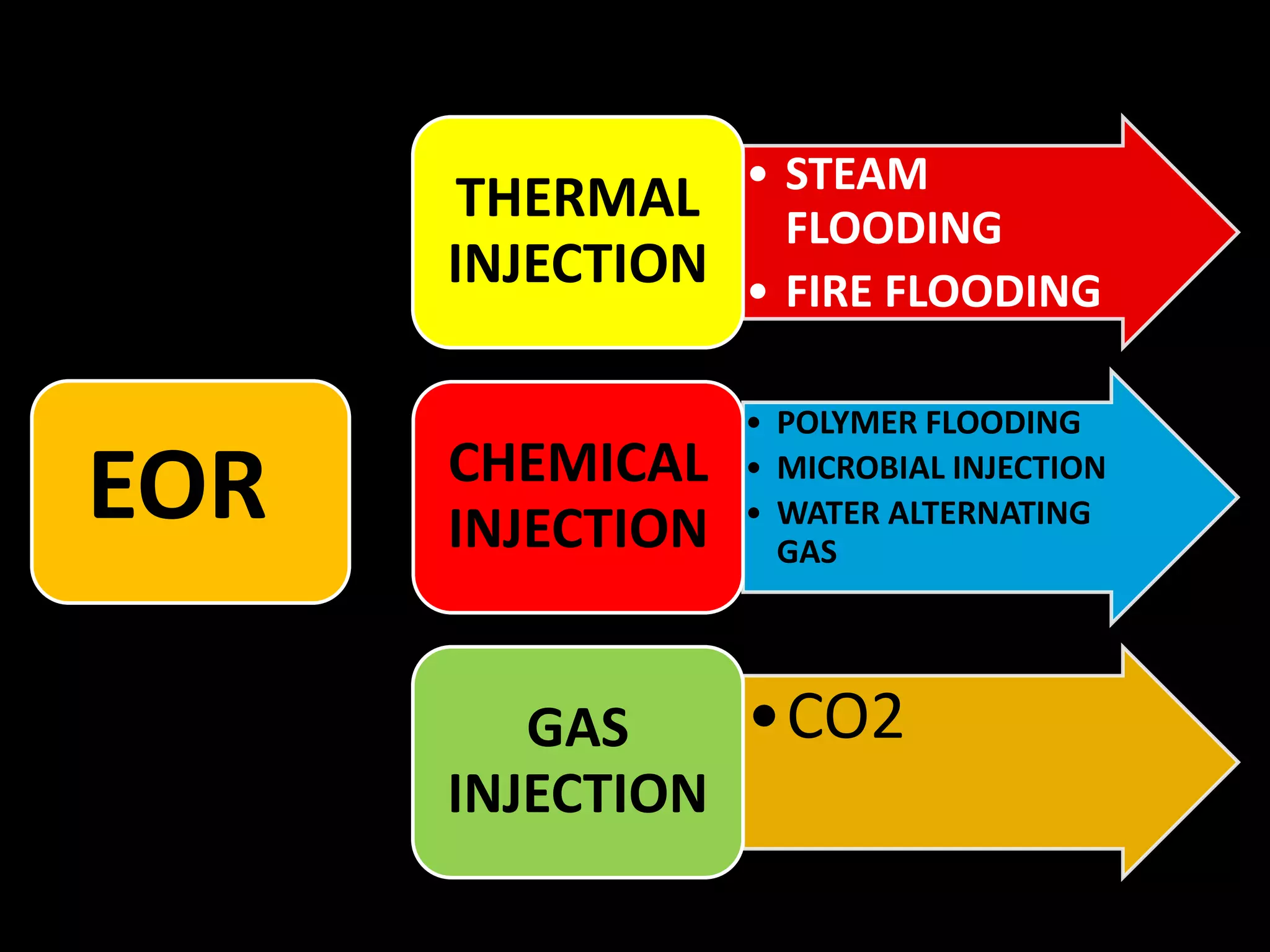
• STEAM
FLOODING
• FIRE FLOODING
THERMAL
INJECTION
• POLYMER FLOODING
• MICROBIAL INJECTION
• WATER ALTERNATING
GAS
CHEMICAL
INJECTION
•CO2
GAS
INJECTION
EOR
THERMAL INJECTION
STEAM FLOODING
•Most used technique, environmental friendly.
•Used in shallow reservoirs contain high viscosity crude oil.
•The injection of steam lets heat the crude oil in the
formation thus lowering its viscosity and vaporizing some of
the oil to increase its mobility
•Cyclic steam stimulation- same well used for injection and
oil production
•Steam flooding- steam flows through another well
FIRE FLOODING
•Where the reservoir is heated and an injected high-oxygen
gas mixture burns to create a combustion front.
Fig. showing thermal injection method
ADVANTAGES
•Economic
•Environmental friendly
•Implement this technology in different
countries, even with strict regulations.
•Easy availability of water
DISADVANTAGES
•When steam cools in the well it turns into water
which mixes with oil. This adds extra operational costs
since larger volumes of liquids must be handled
•Steam injection can sometimes severely damage the
underground well structure.
CHEMICAL INJECTION
•Injection of various chemicals.
•Used to aid mobility and the reduction in
surface tension.
•Dilute solutions of surfactants such as
petroleum sulfonates or biosurfactants such as
rhamnolipids may be injected to lower the
interfacial tension or capillary pressure that
impedes oil droplets from moving through a
reservoir.
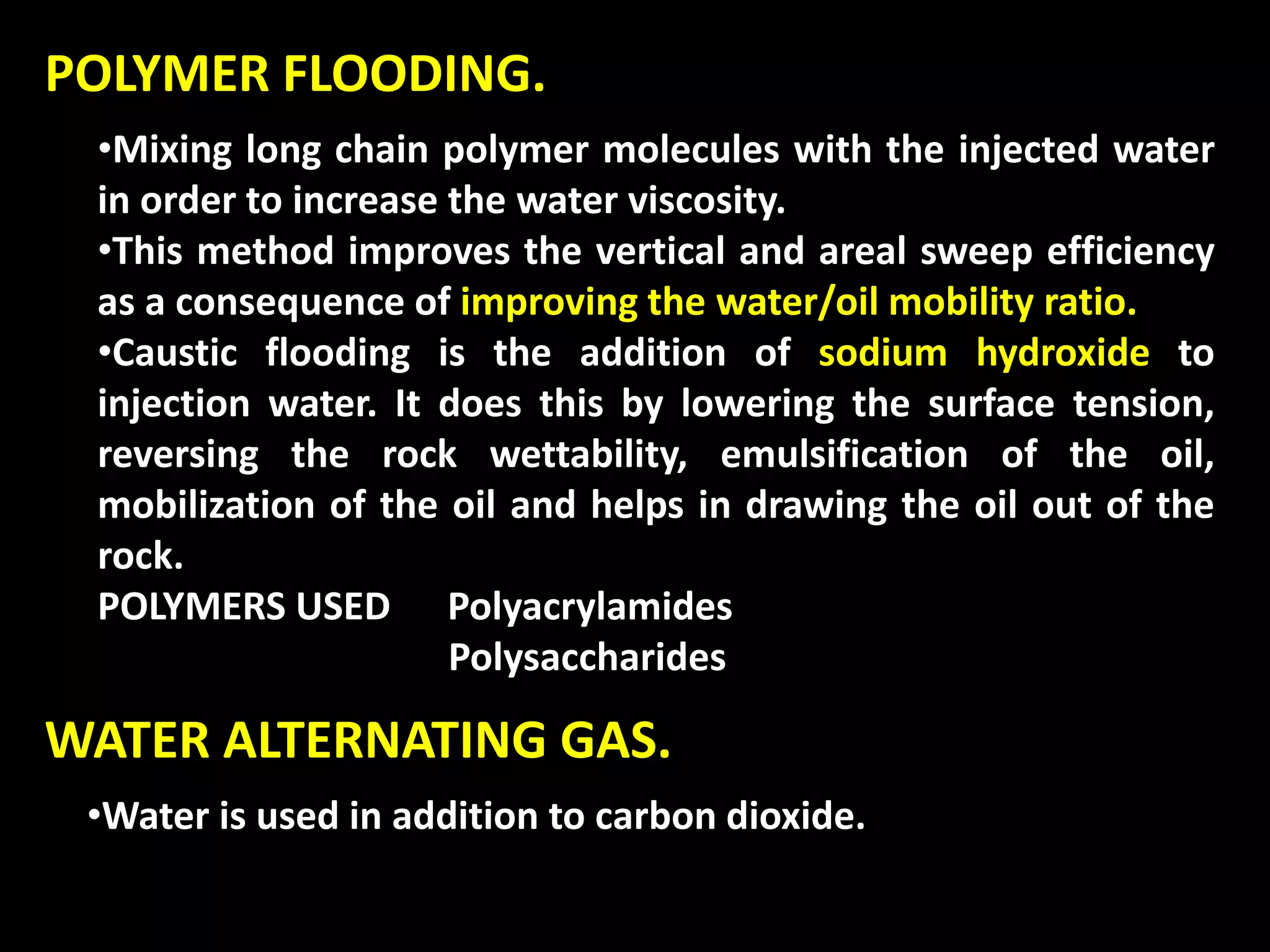
POLYMER FLOODING.
•Mixing long chain polymer molecules with the injected water
in order to increase the water viscosity.
•This method improves the vertical and areal sweep efficiency
as a consequence of improving the water/oil mobility ratio.
•Caustic flooding is the addition of sodium hydroxide to
injection water. It does this by lowering the surface tension,
reversing the rock wettability, emulsification of the oil,
mobilization of the oil and helps in drawing the oil out of the
rock.
POLYMERS USED Polyacrylamides
Polysaccharides
WATER ALTERNATING GAS.
•Water is used in addition to carbon dioxide.
Fig. Water alternating gas
GAS INJECTION
•which uses gases such as natural gas, nitrogen, or carbon
dioxide (CO2) that expand in a reservoir to push additional oil
to a production wellbore, or other gases that dissolve in the oil
to lower its viscosity and improves its flow rate
•One demonstration at the Dakota Gasification Company's
plant in Beulah, North Dakota is producing CO2 and delivering
it by a 204-mile pipeline to the Weyburn oil field in
Saskatchewan, Canada
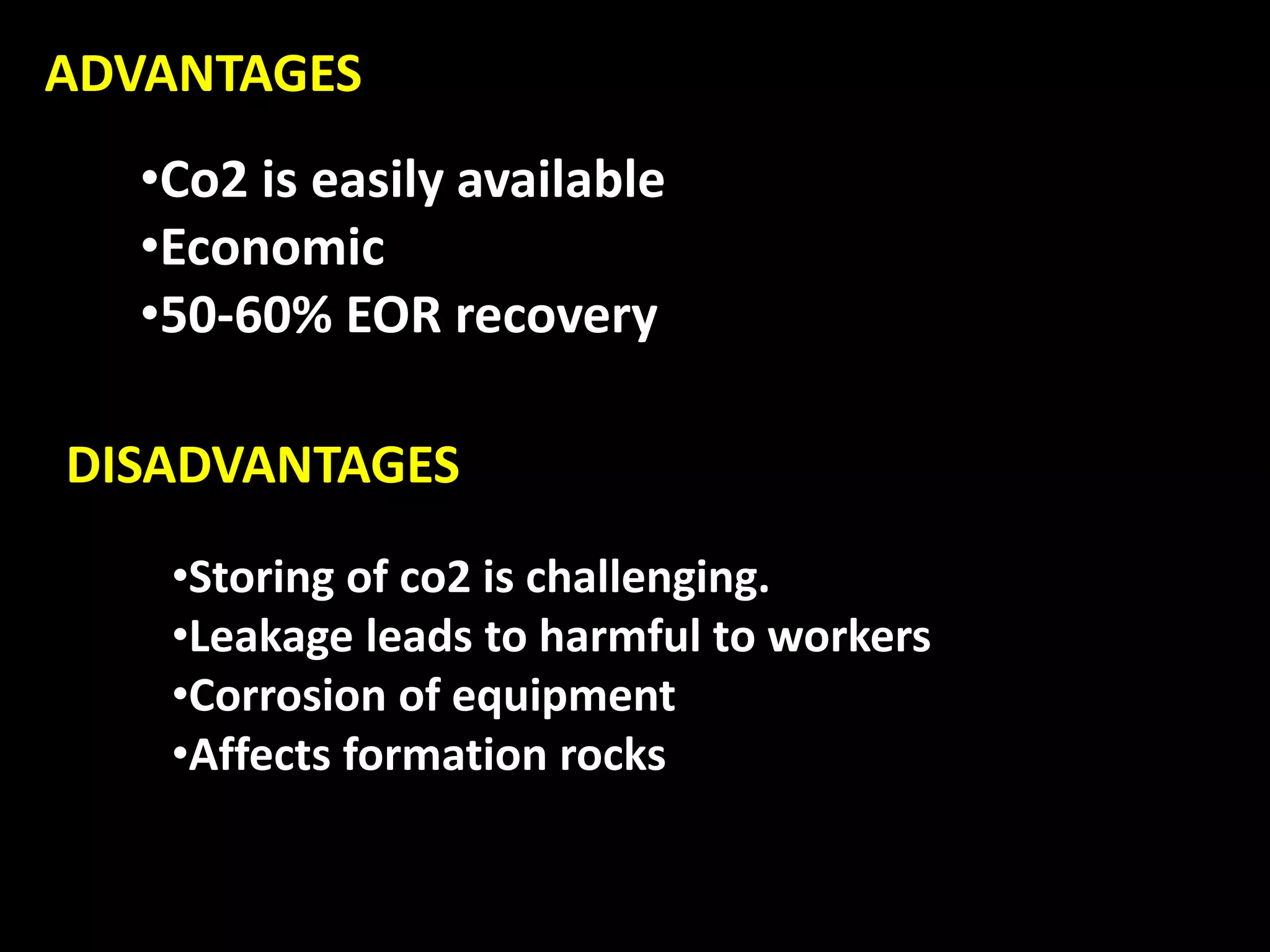
ADVANTAGES
•Co2 is easily available
•Economic
•50-60% EOR recovery
DISADVANTAGES
•Storing of co2 is challenging.
•Leakage leads to harmful to workers
•Corrosion of equipment
•Affects formation rocks
SUMMARY-
SAVE OIL SAVE FUTURE
THANK YOU

EOR- enhance oil recovery

  • 1.
    Presentation on EOR- ENHANCEDOIL RECOVERY Date of presentation: 27th MARCH 2019 Presented by Mr. VIVEK Z. BHAJIPALE M.Sc. Tech (Applied Geology)
  • 2.
    INTRODUCTION • Enhanced oilrecovery (EOR) is the process of recovering oil not already extracted from an oil reservoir through primary or secondary recovery techniques. • Those techniques rely on natural or enhanced pressures to force oil out of the ground. • Enhanced oil recovery is also known as Tertiary recovery. •Thermal, Gas Injection and Chemical Injection
  • 3.
    OIL RECOVERY PRIMARY RECOVERY (NATURALFORMATION PRESURE) SECONDORY RECOVERY ( WATER AND GAS) TERTIARY RECOVERY (EOR) (THERMAL, GAS, CHEMICALS)
  • 4.
    • STEAM FLOODING • FIREFLOODING THERMAL INJECTION • POLYMER FLOODING • MICROBIAL INJECTION • WATER ALTERNATING GAS CHEMICAL INJECTION •CO2 GAS INJECTION EOR
  • 5.
    THERMAL INJECTION STEAM FLOODING •Mostused technique, environmental friendly. •Used in shallow reservoirs contain high viscosity crude oil. •The injection of steam lets heat the crude oil in the formation thus lowering its viscosity and vaporizing some of the oil to increase its mobility •Cyclic steam stimulation- same well used for injection and oil production •Steam flooding- steam flows through another well FIRE FLOODING •Where the reservoir is heated and an injected high-oxygen gas mixture burns to create a combustion front.
  • 6.
    Fig. showing thermalinjection method
  • 7.
    ADVANTAGES •Economic •Environmental friendly •Implement thistechnology in different countries, even with strict regulations. •Easy availability of water DISADVANTAGES •When steam cools in the well it turns into water which mixes with oil. This adds extra operational costs since larger volumes of liquids must be handled •Steam injection can sometimes severely damage the underground well structure.
  • 8.
    CHEMICAL INJECTION •Injection ofvarious chemicals. •Used to aid mobility and the reduction in surface tension. •Dilute solutions of surfactants such as petroleum sulfonates or biosurfactants such as rhamnolipids may be injected to lower the interfacial tension or capillary pressure that impedes oil droplets from moving through a reservoir.
  • 9.
    POLYMER FLOODING. •Mixing longchain polymer molecules with the injected water in order to increase the water viscosity. •This method improves the vertical and areal sweep efficiency as a consequence of improving the water/oil mobility ratio. •Caustic flooding is the addition of sodium hydroxide to injection water. It does this by lowering the surface tension, reversing the rock wettability, emulsification of the oil, mobilization of the oil and helps in drawing the oil out of the rock. POLYMERS USED Polyacrylamides Polysaccharides WATER ALTERNATING GAS. •Water is used in addition to carbon dioxide.
  • 10.
  • 11.
    GAS INJECTION •which usesgases such as natural gas, nitrogen, or carbon dioxide (CO2) that expand in a reservoir to push additional oil to a production wellbore, or other gases that dissolve in the oil to lower its viscosity and improves its flow rate •One demonstration at the Dakota Gasification Company's plant in Beulah, North Dakota is producing CO2 and delivering it by a 204-mile pipeline to the Weyburn oil field in Saskatchewan, Canada
  • 12.
    ADVANTAGES •Co2 is easilyavailable •Economic •50-60% EOR recovery DISADVANTAGES •Storing of co2 is challenging. •Leakage leads to harmful to workers •Corrosion of equipment •Affects formation rocks
  • 13.
  • 14.
    SAVE OIL SAVEFUTURE THANK YOU