Primary Immunodeficiency
Nishitha A
4TH Term
Objectives
WHAT WILL
I LEARN
TODAY?
Immunodeficiencies:
Definition, cause and types
Primary
Immunodeficiencies:
Definition, types, diagnosis
and therapy
Examples:SCID, XLA,
DiGeorge’s syndrome, Ataxia-
teleangectesia, Wiskott-
Aldrich syndrome, CGD
Immunodeficiency
• Immune system’s ability to fight infectious
diseases is completely absent or
compromised.
• Types:
Primary Immunodeficiency
Secondary Immunodeficiency
Immunodeficiency
• Cause for Immunodeficiency:
Human Immune system:
Very specific
Dependent on memory of cells and
lymphocytes that recognise foreign antigen
and infected cells respectively.
• Any alterations in these functions
Immunodeficiency.
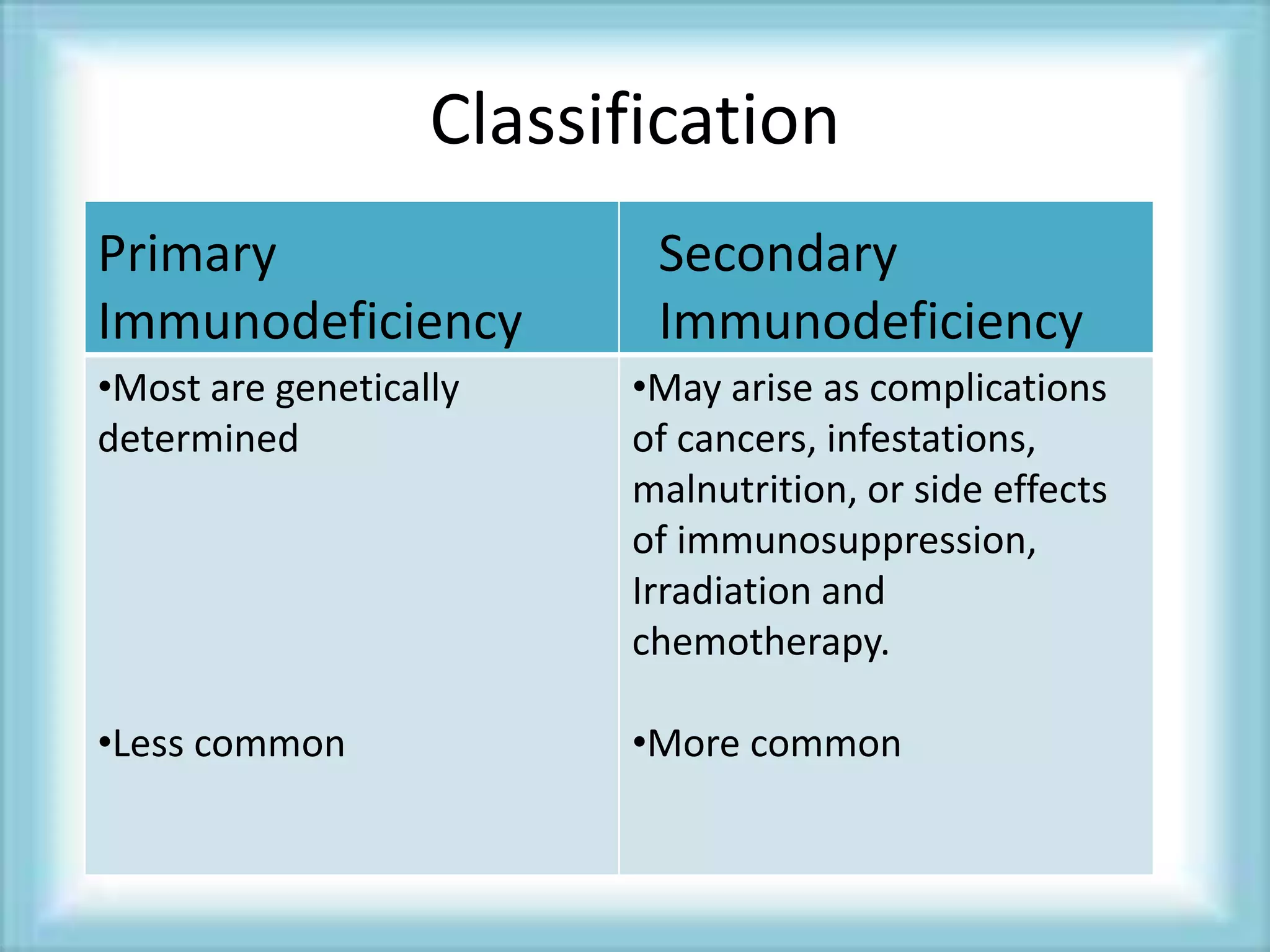
Classification
•Most are genetically
determined
•Less common
•May arise as complications
of cancers, infestations,
malnutrition, or side effects
of immunosuppression,
Irradiation and
chemotherapy.
•More common
Primary
Immunodeficiency
Secondary
Immunodeficiency
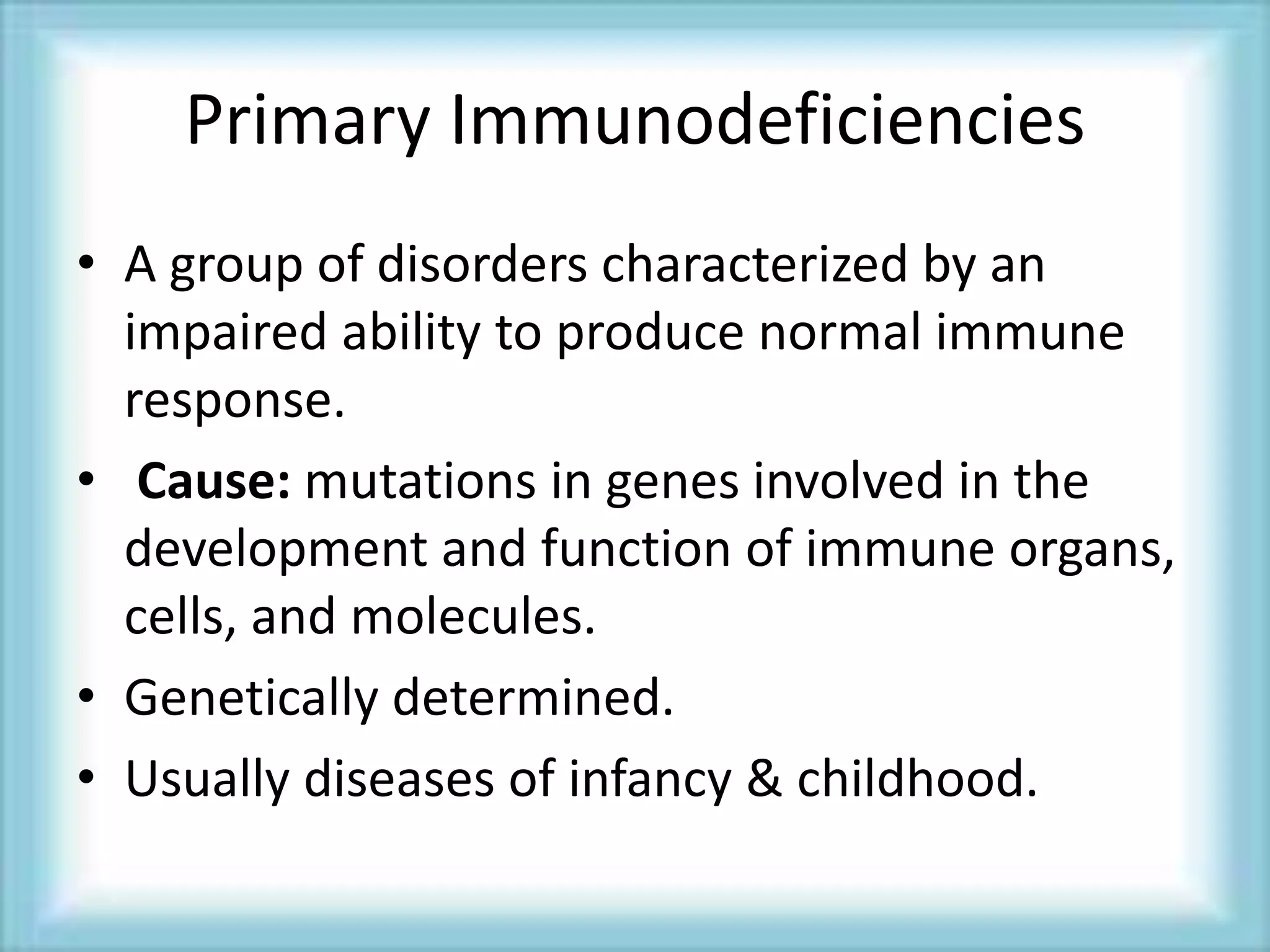
Primary Immunodeficiencies
• A group of disorders characterized by an
impaired ability to produce normal immune
response.
• Cause: mutations in genes involved in the
development and function of immune organs,
cells, and molecules.
• Genetically determined.
• Usually diseases of infancy & childhood.
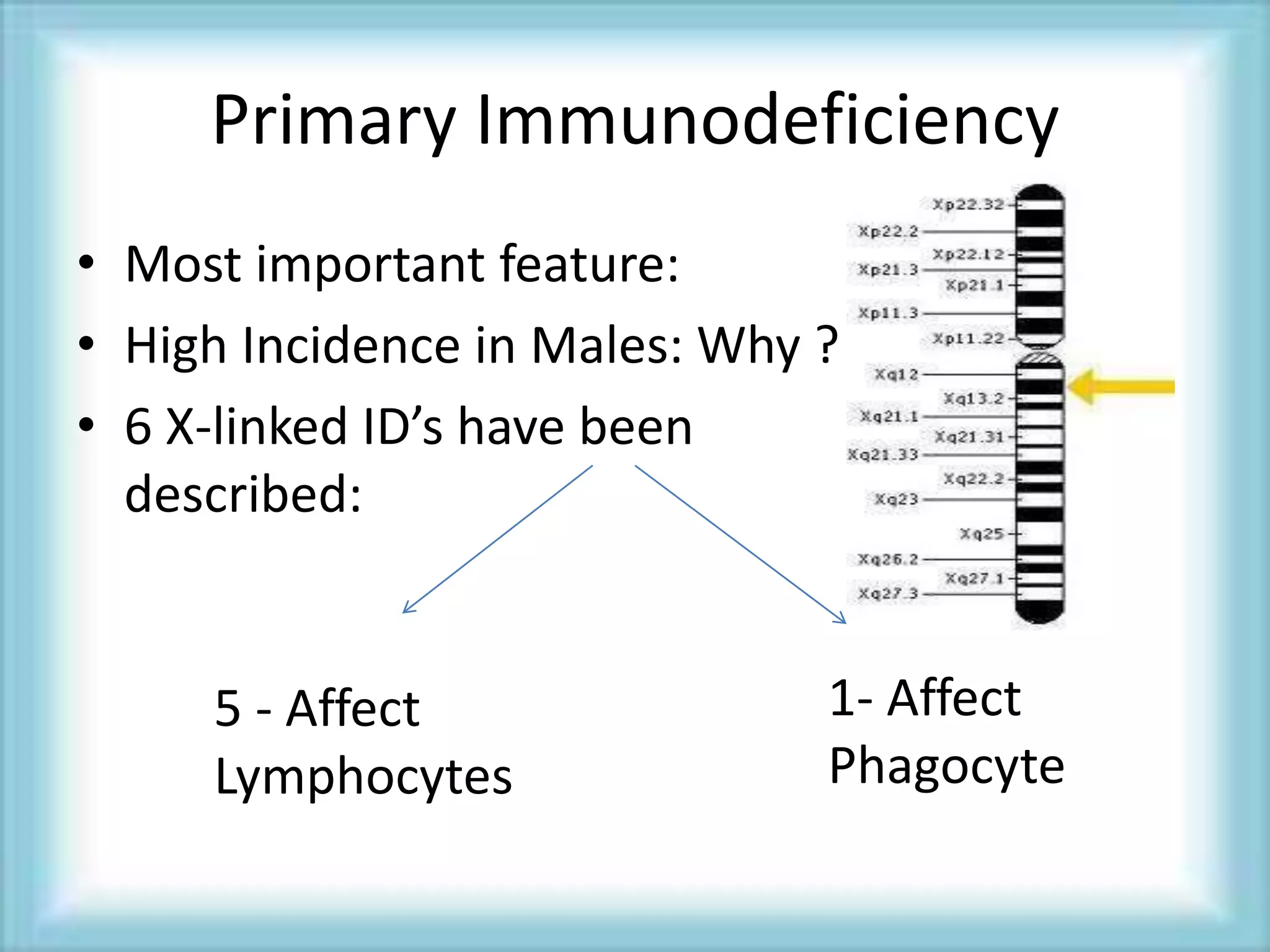
Primary Immunodeficiency
• Most important feature:
• High Incidence in Males: Why ?
• 6 X-linked ID’s have been
described:
5 - Affect
Lymphocytes
1- Affect
Phagocyte
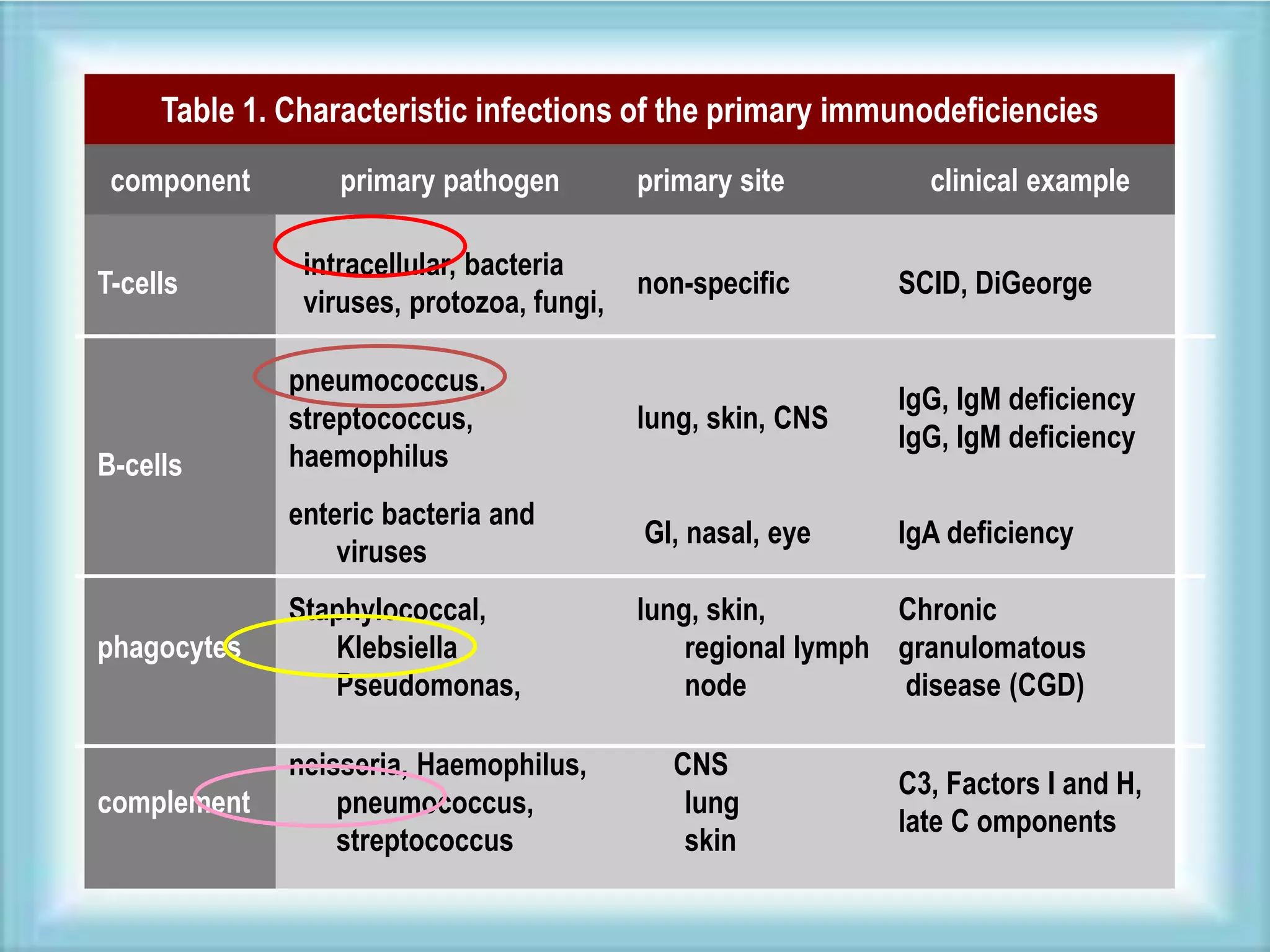
Table 1. Characteristic infections of the primary immunodeficiencies
component primary pathogen primary site clinical example
T-cells
intracellular, bacteria
viruses, protozoa, fungi,
non-specific SCID, DiGeorge
B-cells
pneumococcus,
streptococcus,
haemophilus
lung, skin, CNS
IgG, IgM deficiency
IgG, IgM deficiency
enteric bacteria and
viruses
GI, nasal, eye IgA deficiency
phagocytes
Staphylococcal,
Klebsiella
Pseudomonas,
lung, skin,
regional lymph
node
Chronic
granulomatous
disease (CGD)
complement
neisseria, Haemophilus,
pneumococcus,
streptococcus
CNS
lung
skin
C3, Factors I and H,
late C omponents
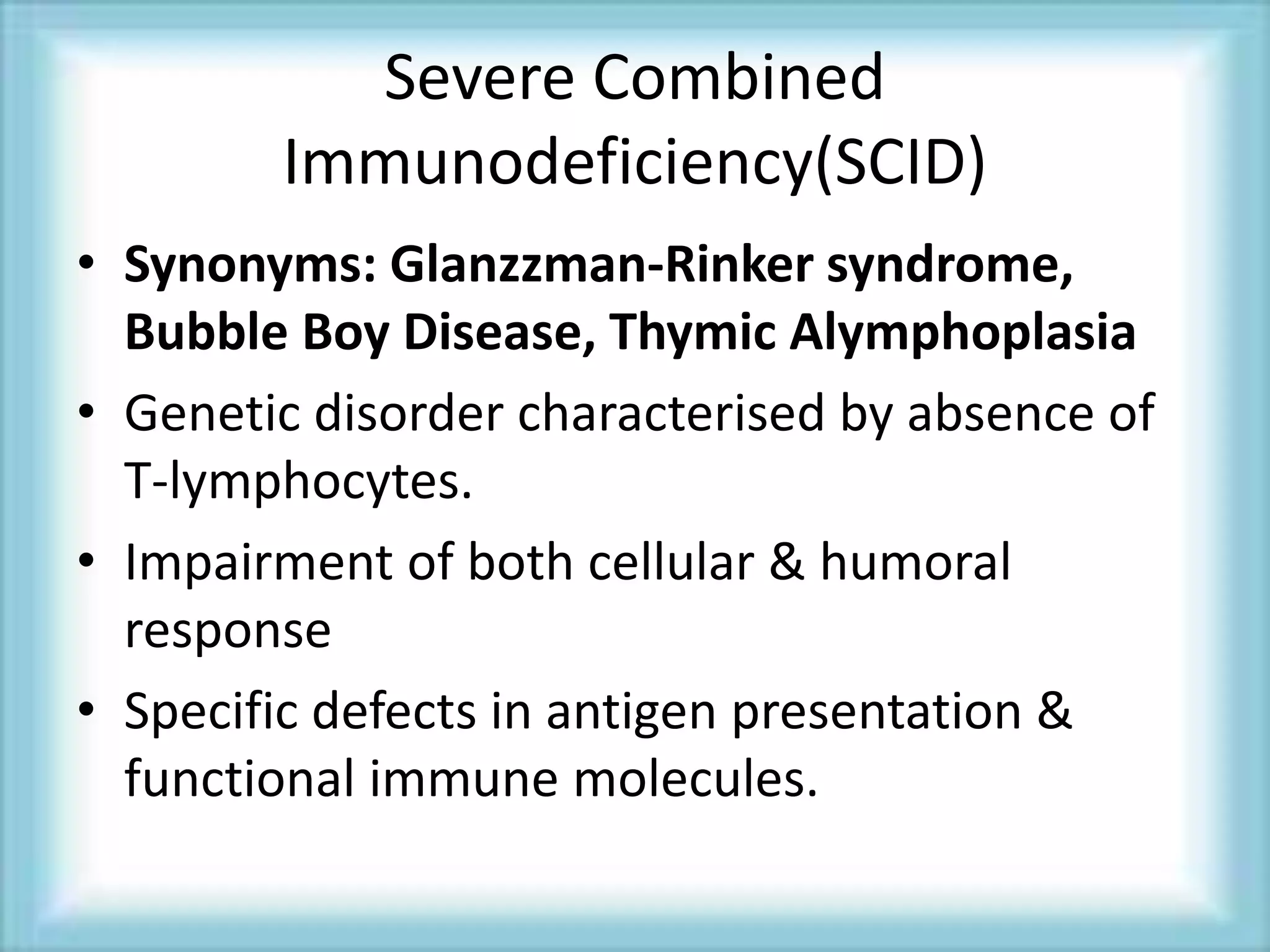
Severe Combined
Immunodeficiency(SCID)
• Synonyms: Glanzzman-Rinker syndrome,
Bubble Boy Disease, Thymic Alymphoplasia
• Genetic disorder characterised by absence of
T-lymphocytes.
• Impairment of both cellular & humoral
response
• Specific defects in antigen presentation &
functional immune molecules.
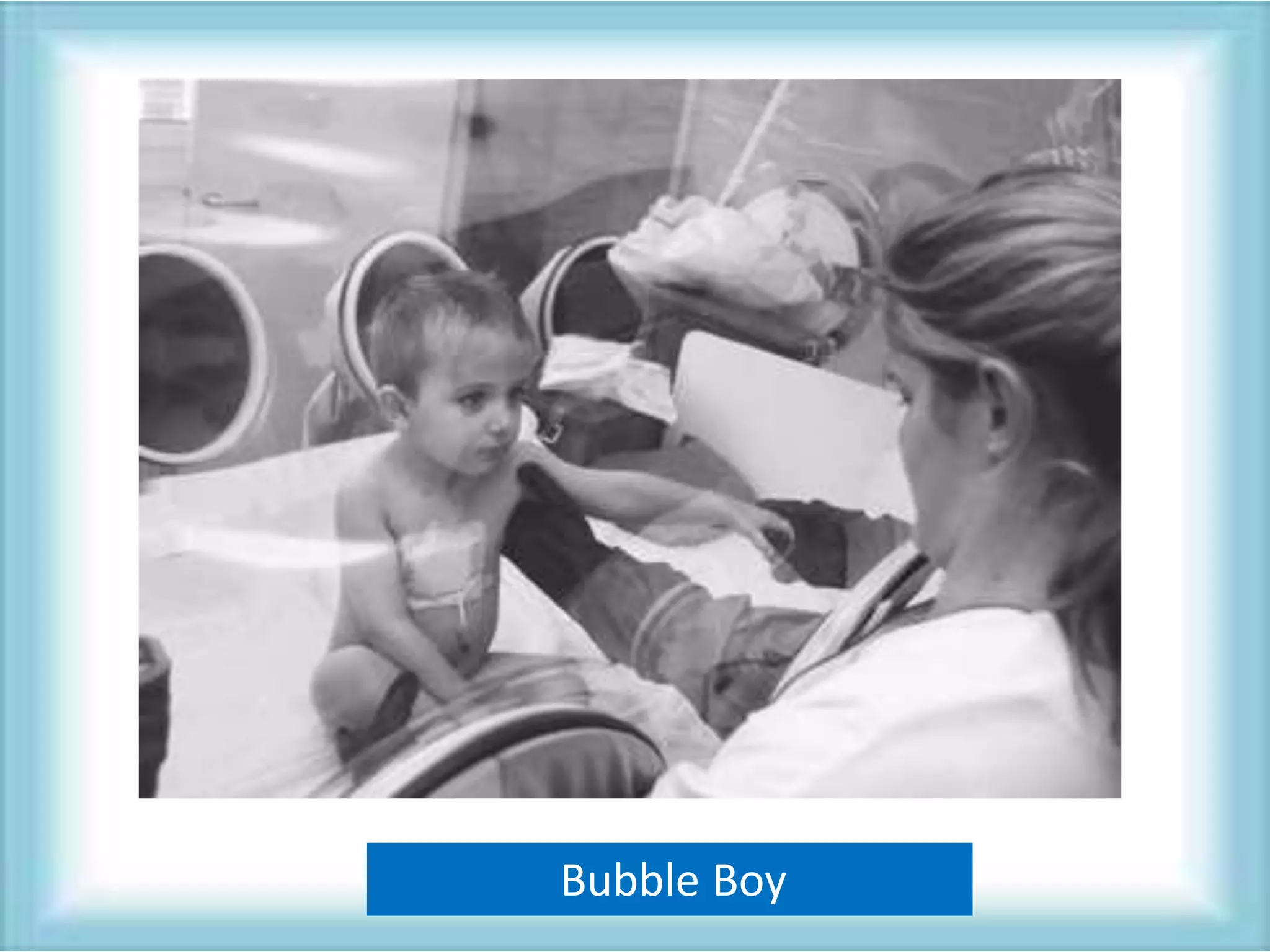
Bubble Boy
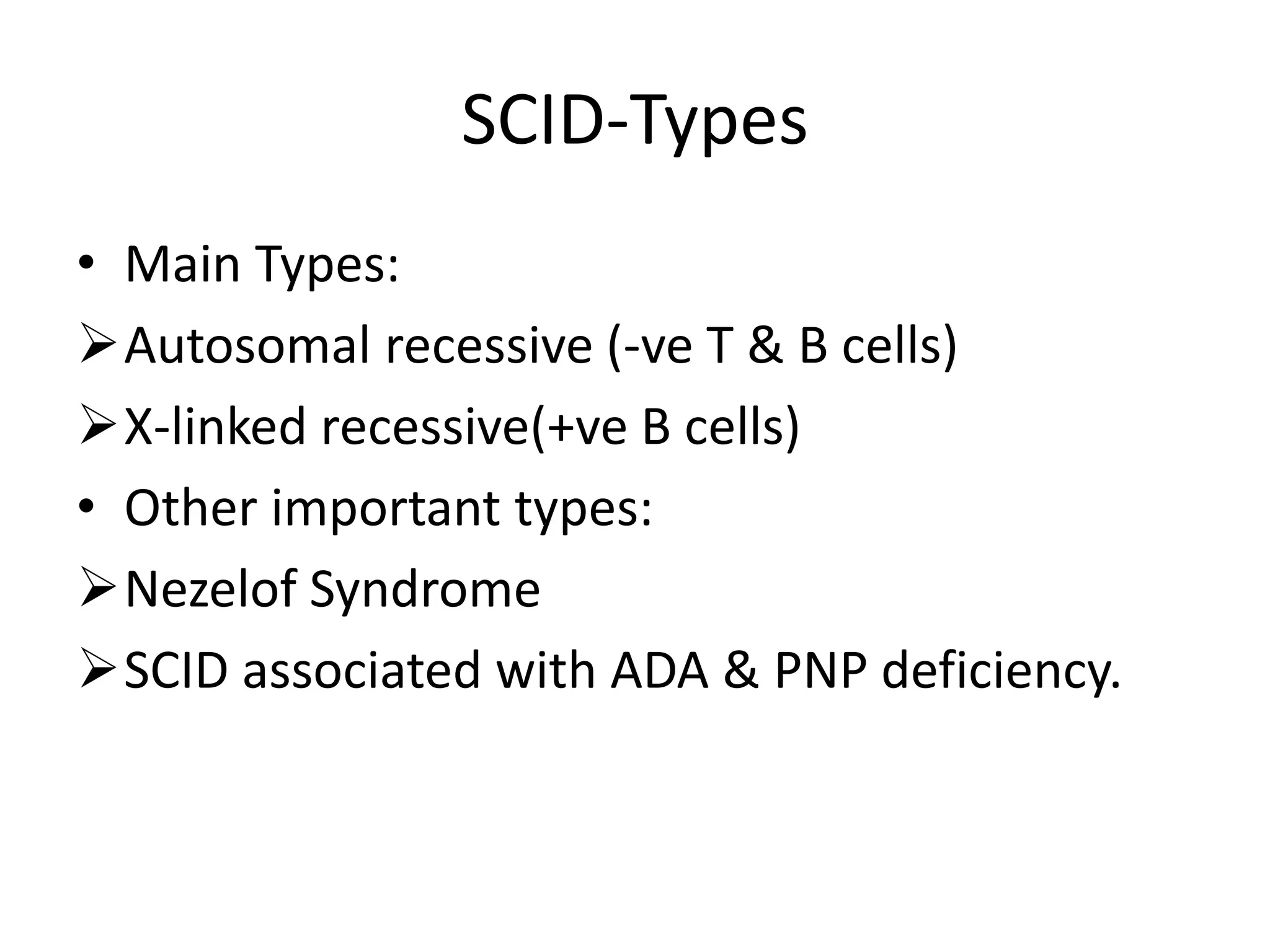
SCID-Types
• Main Types:
Autosomal recessive (-ve T & B cells)
X-linked recessive(+ve B cells)
• Other important types:
Nezelof Syndrome
SCID associated with ADA & PNP deficiency.
Features of SCID
• Absent tonsils
• Small or absent lymph nodes
• Absent thymic shadow
• Lymphopenias
• Decreased Number of T cells
• Severe agammaglobulinemia (Swiss type of
agammaglobulinemia)
• No IG’s usually present
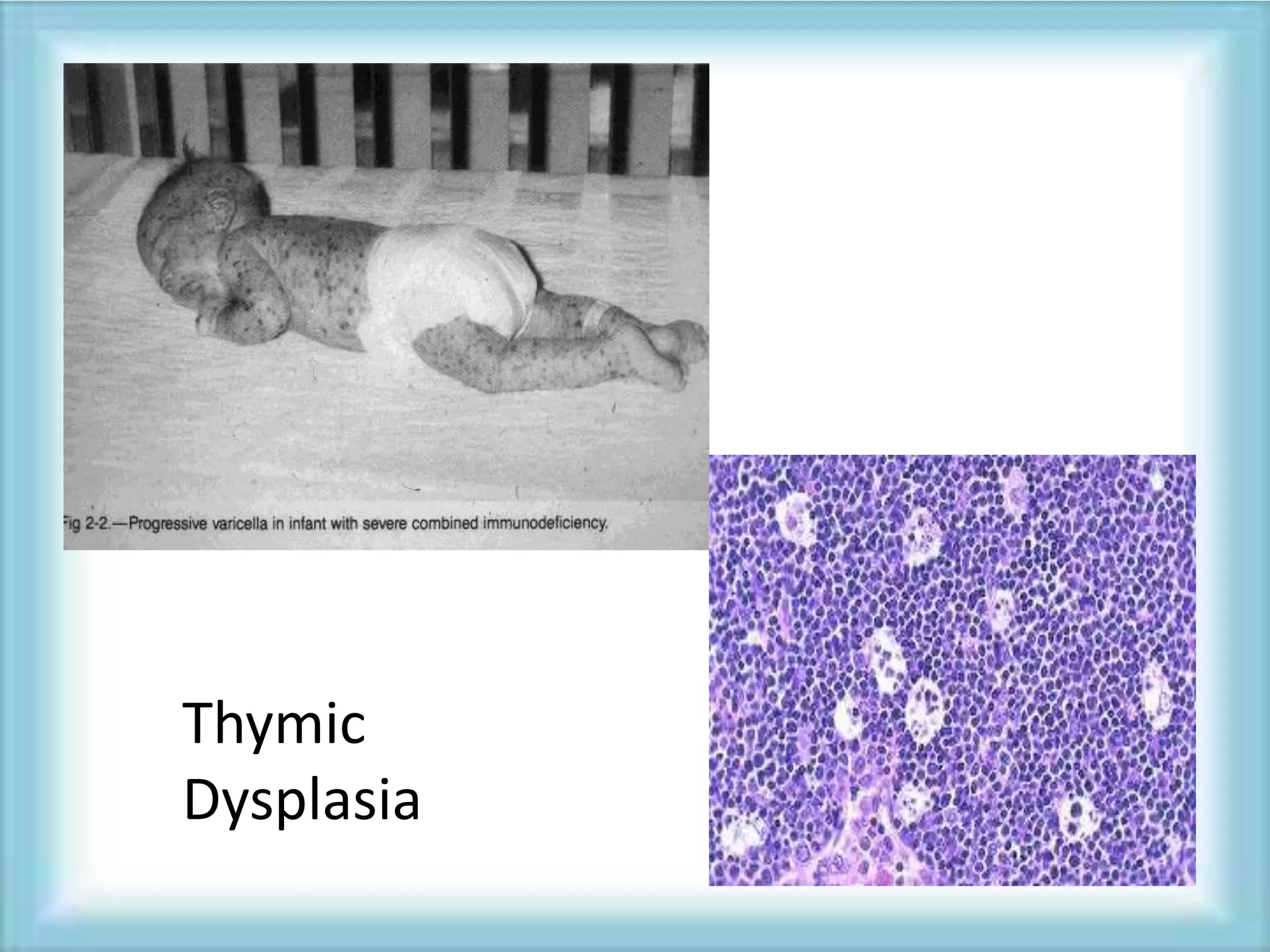
Thymic
Dysplasia
.
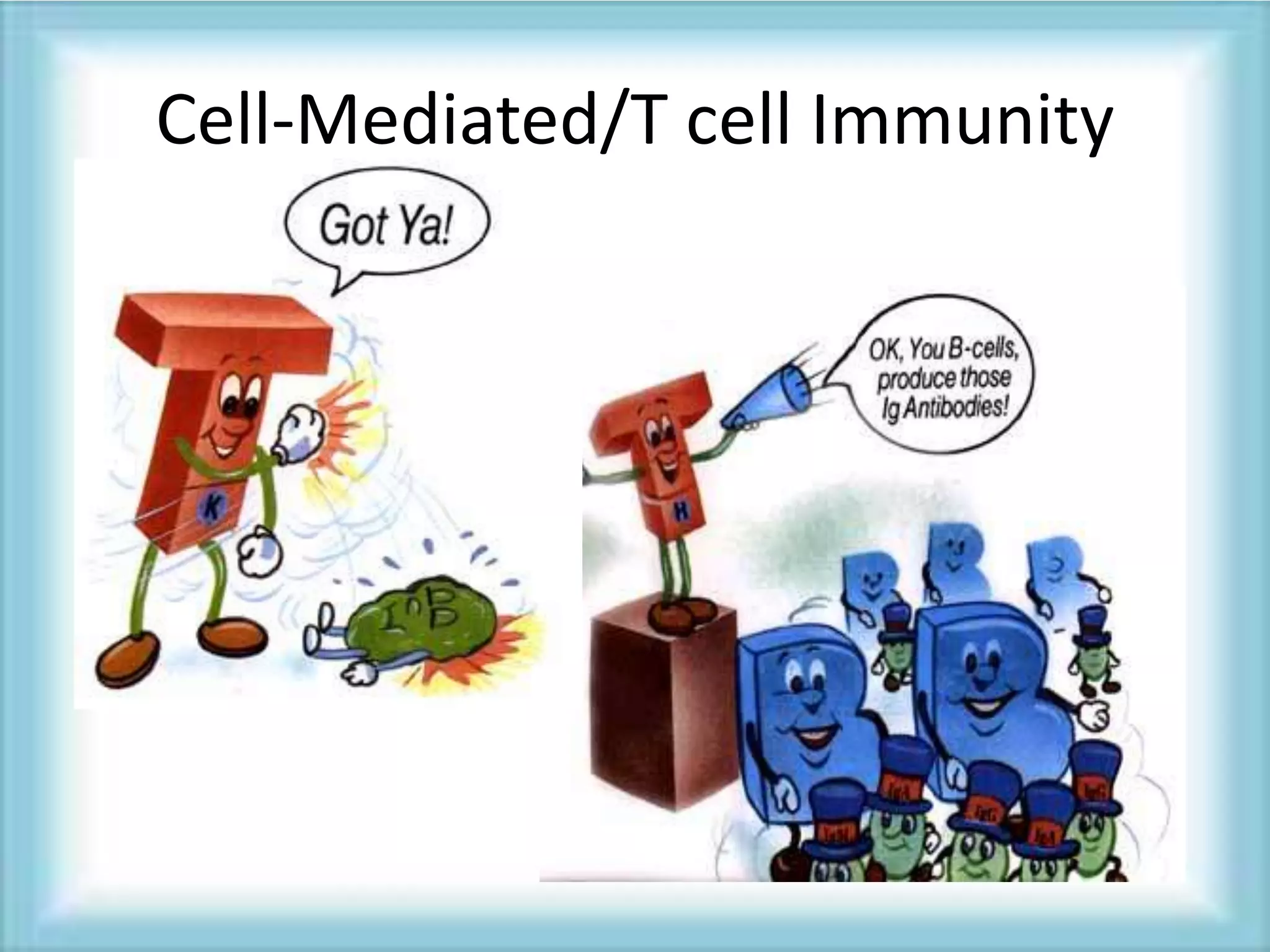
Cell-Mediated/T cell Immunity
Bruton’s X-linked Agammaglobuinemia
• Primarily B-cell defect
• Boys-more affected
• Severe reduction in γ-globulins
• IG’s, circulating and marrow B-cells.
• Probable cause: Molecular defect at
Xq22.Mutation of bruton tyrosine kinase.
• Therapy: IV IG’s.
DiGeorge’s syndrome
• Also called thymic hypoplasia
• Congenital disorder
• Abnormalities in structure derived from 3rd
and 4th pharyngeal pouches
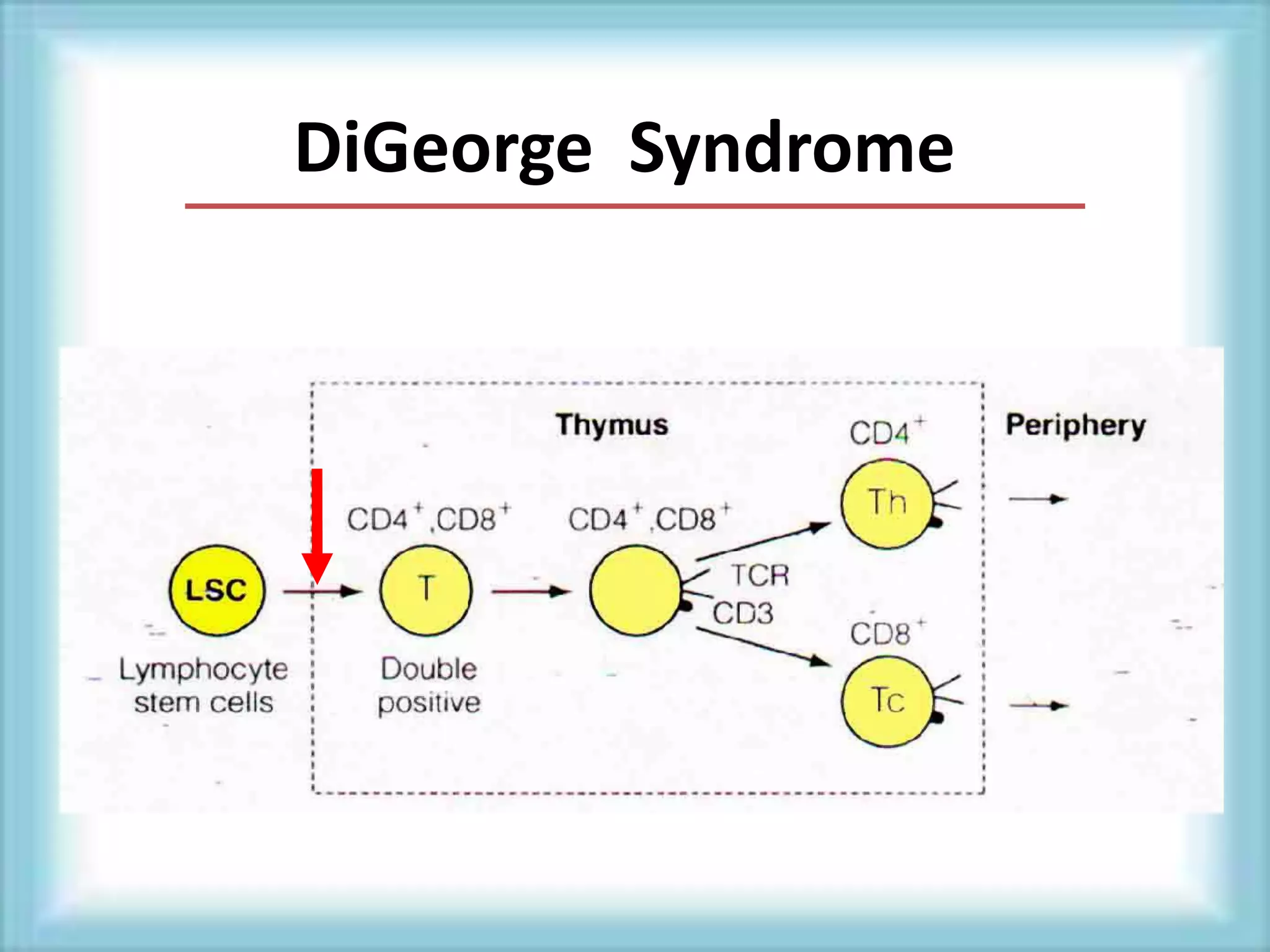
• Predominantly T cell defect
• Charactersitics: Neonatal tetany(absence of
parathyroid)
• Therapy: Thymic transplants
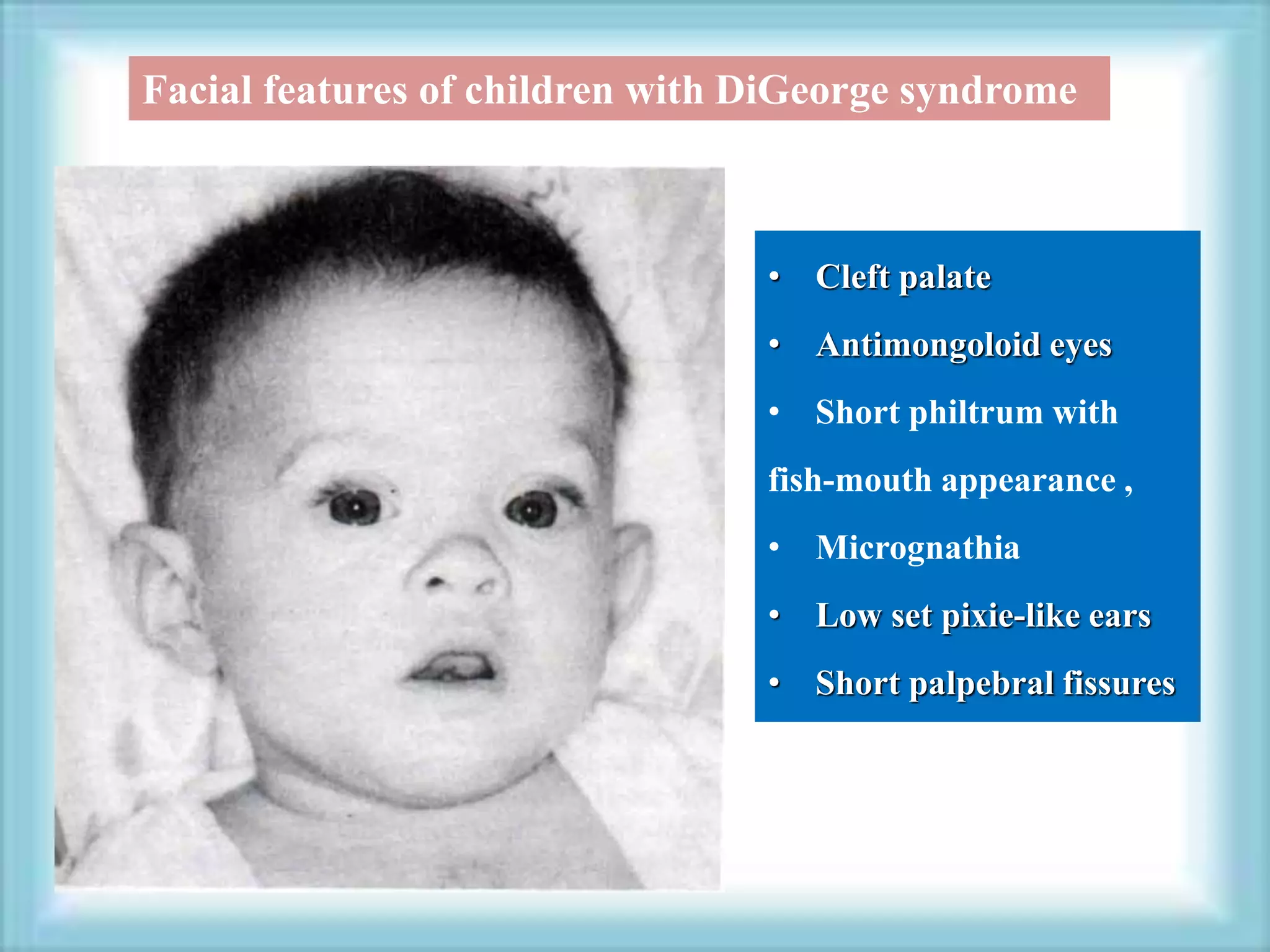
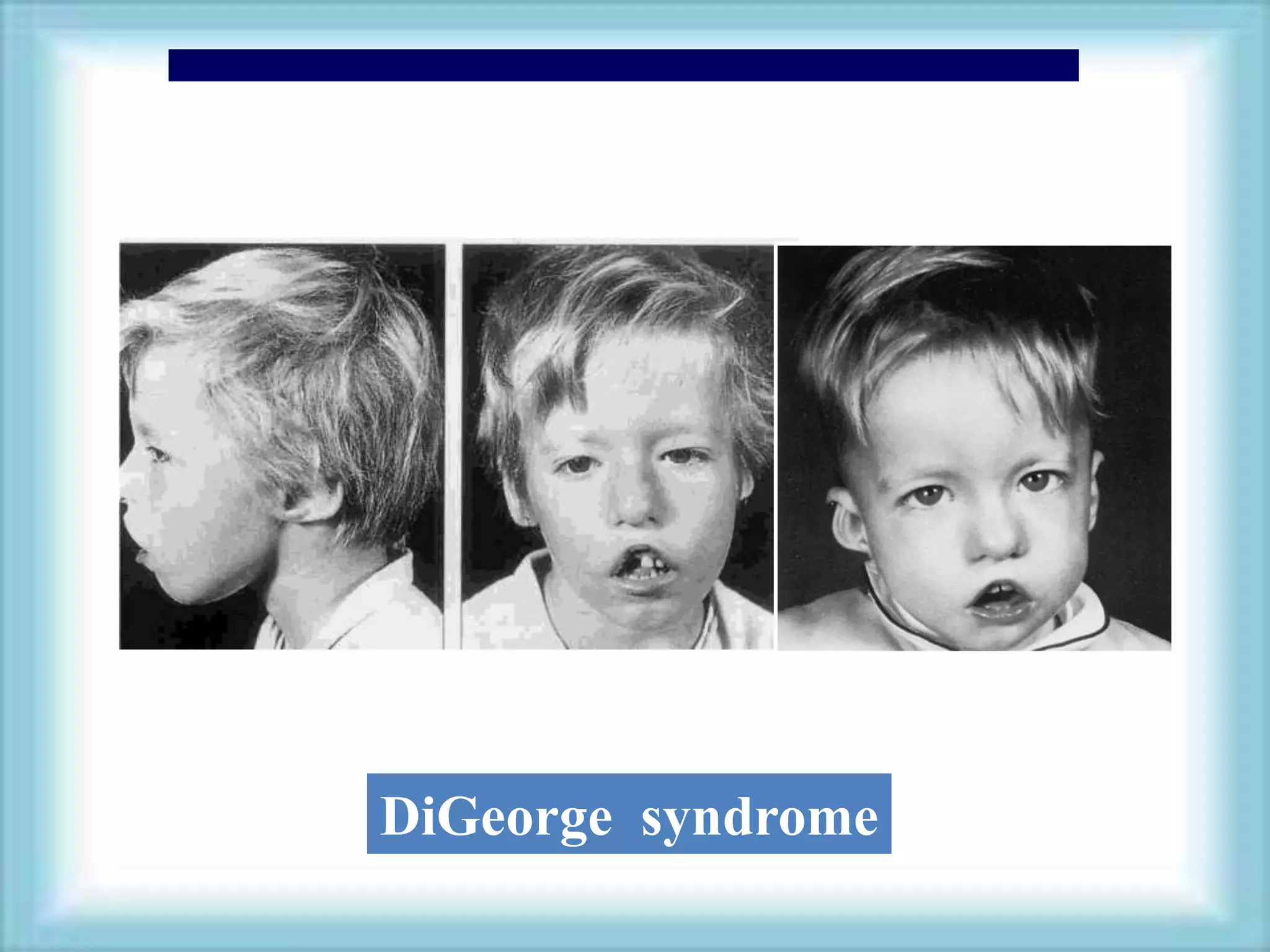
• Cleft palate
• Antimongoloid eyes
• Short philtrum with
fish-mouth appearance ,
• Micrognathia
• Low set pixie-like ears
• Short palpebral fissures
Facial features of children with DiGeorge syndrome
DiGeorge Syndrome
DiGeorge syndrome
Ataxia-telangiectasia
• Autosomal recessive
• Incidence: 25:10,00,000
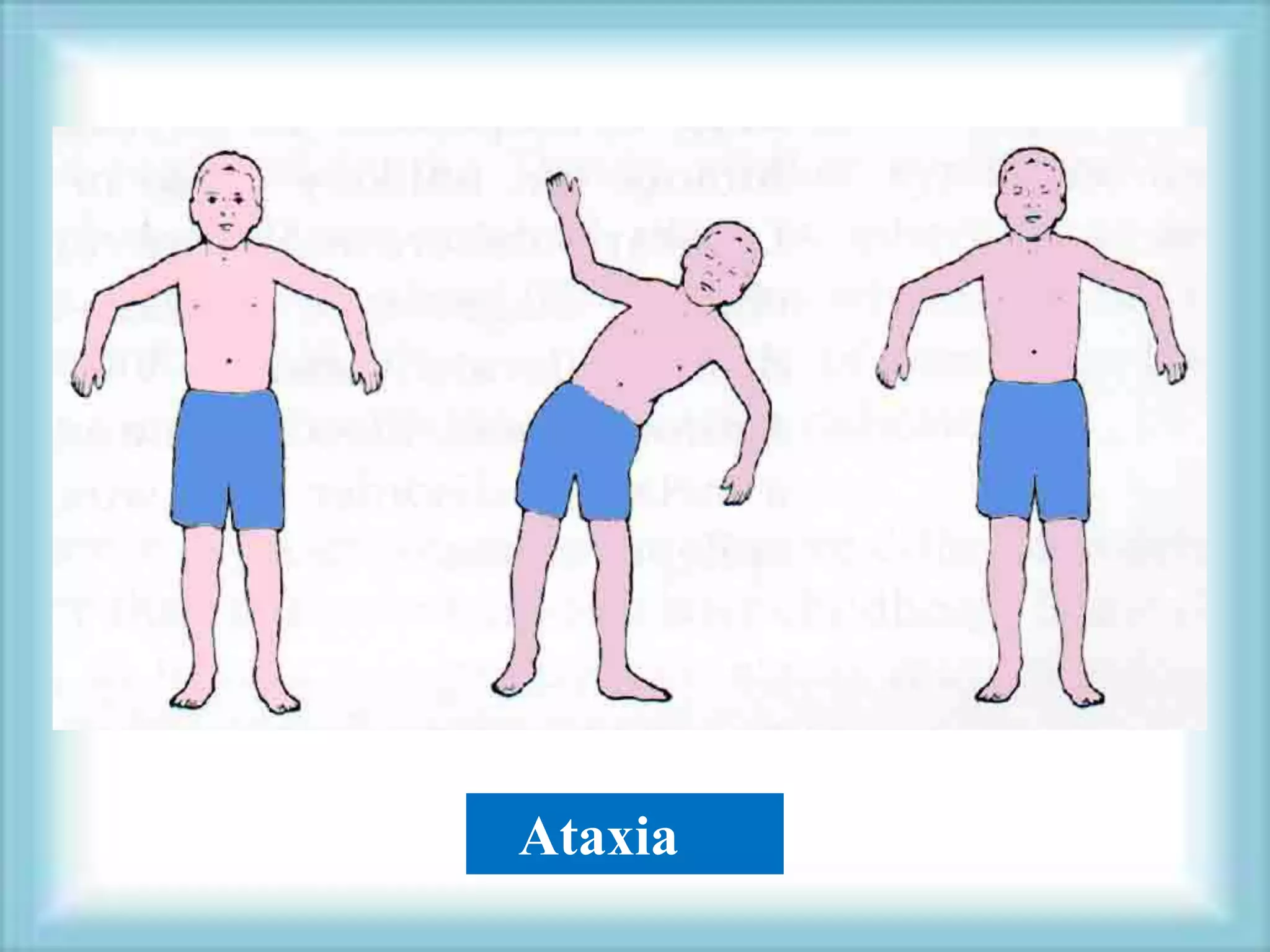
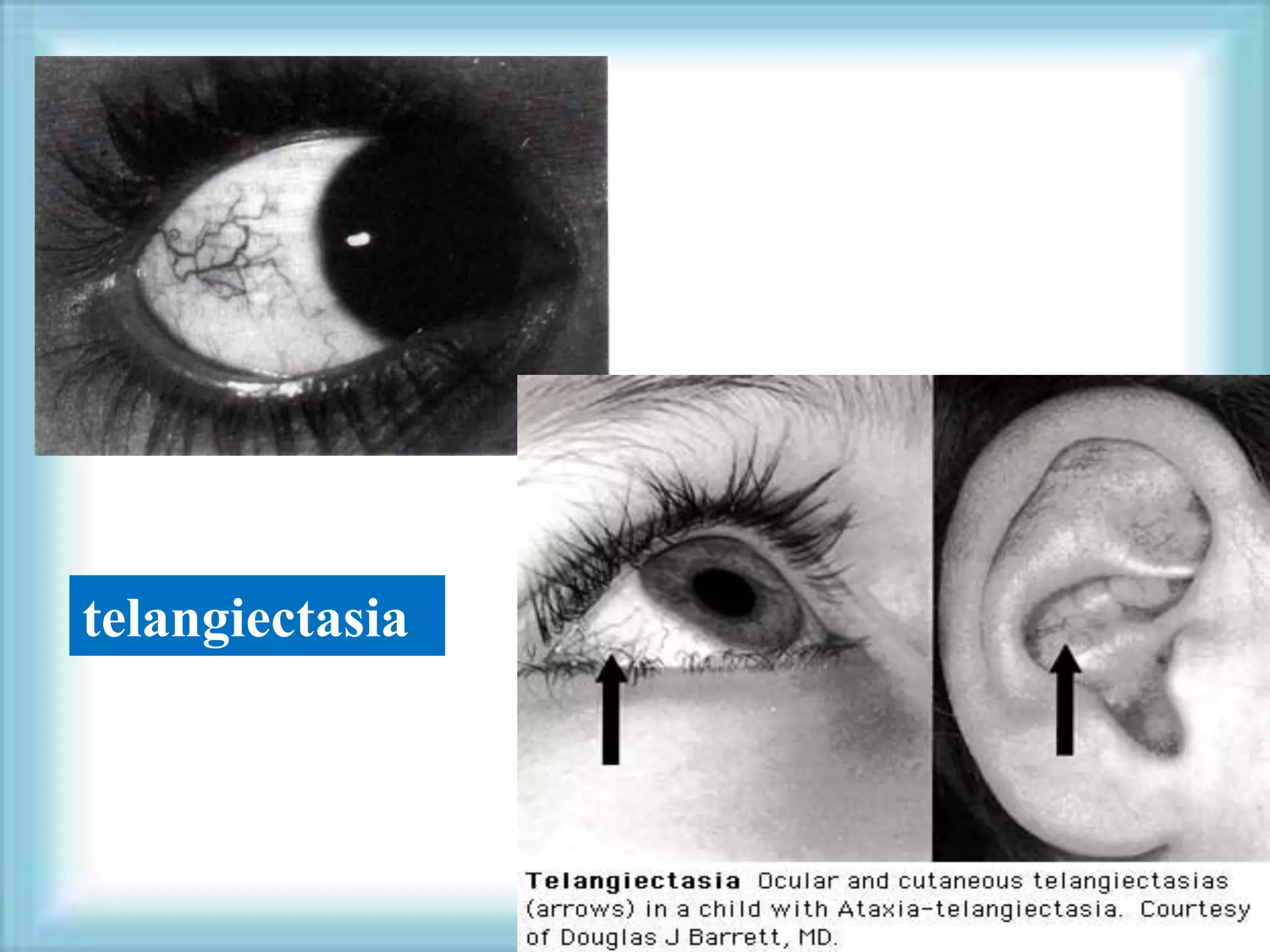
• Characteristics: Progressive cerebellar ataxia,
ocular and cutaneous telangiectasias, severe
sino-pulmonary infections, progeric changes,
sclerodermoid changes
• Thymus: fetal-like histological pattern.
• Translocation between 14 and 7
Ataxia
telangiectasia
Wiskott-Aldrich Syndrome
• X-linked condition
• Incidence: 4:10,00,000
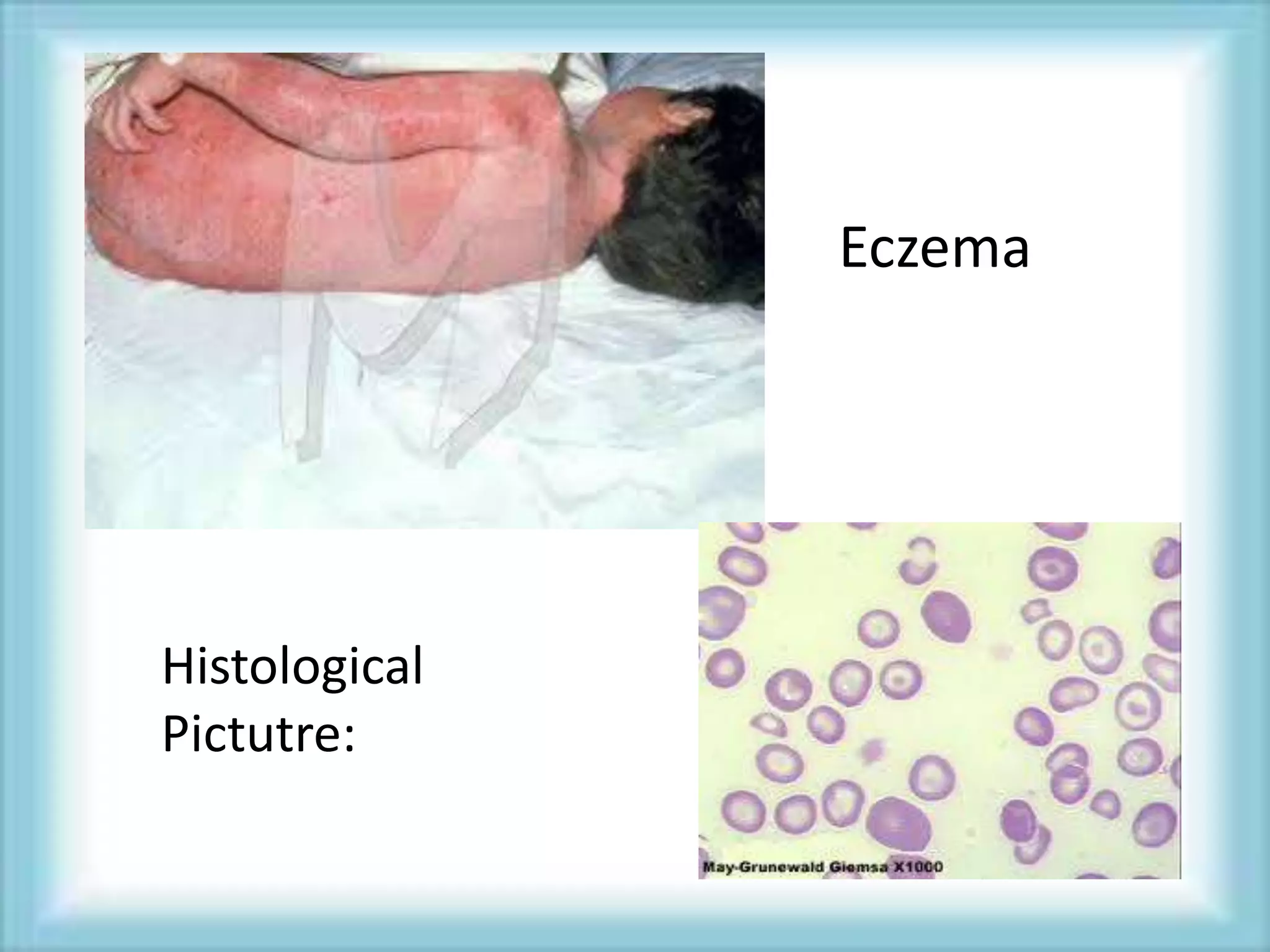
• Severe eczema, recurrent infections, Bloody
diarrhea, chronic otitis
• T cells appear bald :?
• Platelets: Decreased in number, small
• Failure to recognise polysaccharide antigens.
• Defect: Failure in expression of sialophorin.
Eczema
Histological
Pictutre:
Chronic Granulomatous Disease
• Incidence:1:10,00,000
• Defect: Inability of phagocytes to produce
superoxide ineffective reduction of O2.
• Failure to express respiratory burst associated
with phagocytosis.
• Central necrosis and granulomatoid response
in lung, liver, bone , skin and lymph nodes.
• Presence of numerous pigmented
macrophages.
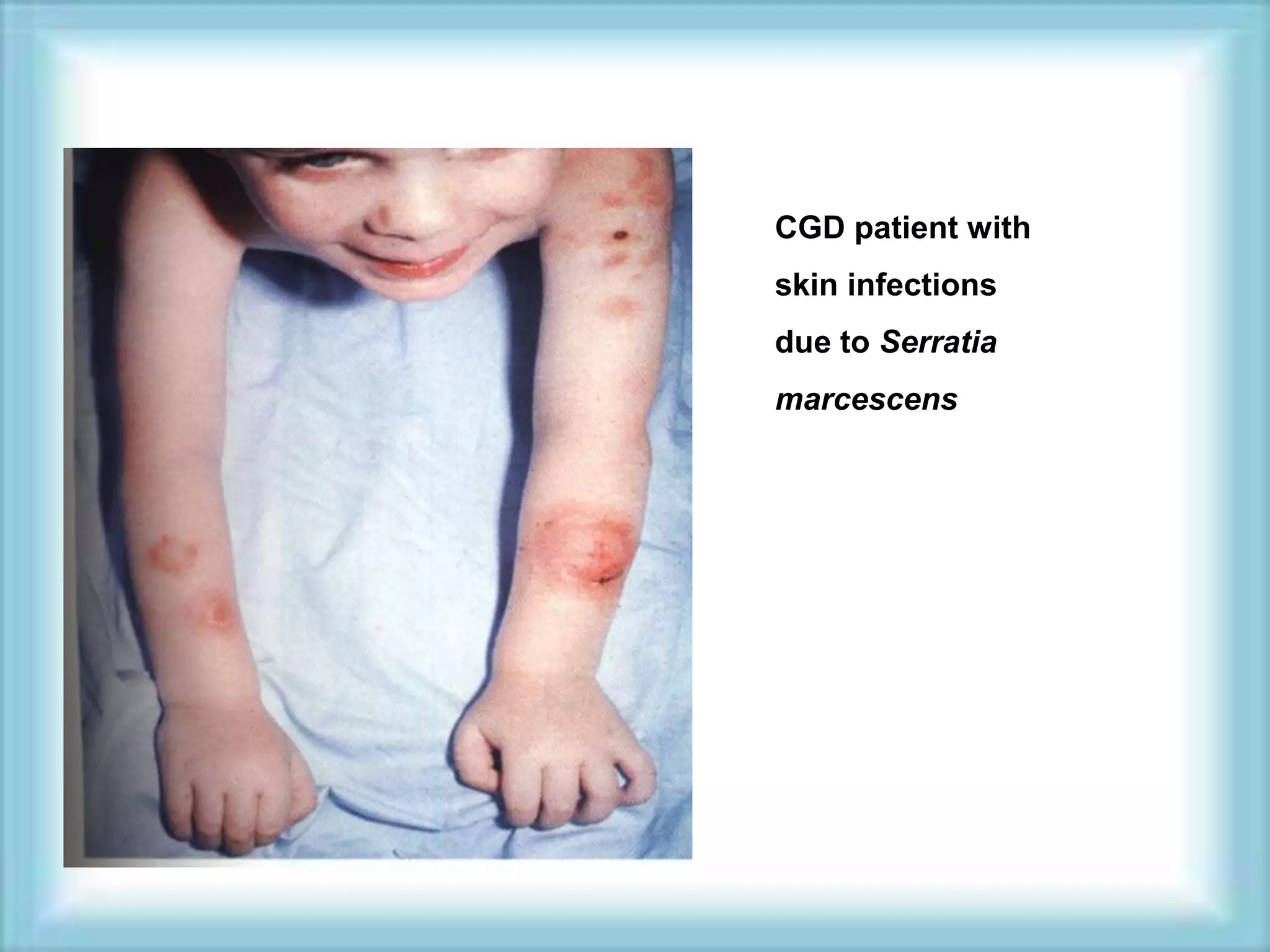
CGD patient with
skin infections
due to Serratia
marcescens
Chediak-Higashi Syndrome
• Rare autosomal disorder
• Abnormal large granules in leucocytes leading to:
– hypopigmentation/partial albinism
– severe immunodeficiency
– neurologic abnormalities
– mild bleeding tendencies
• Defective gene: CHS1
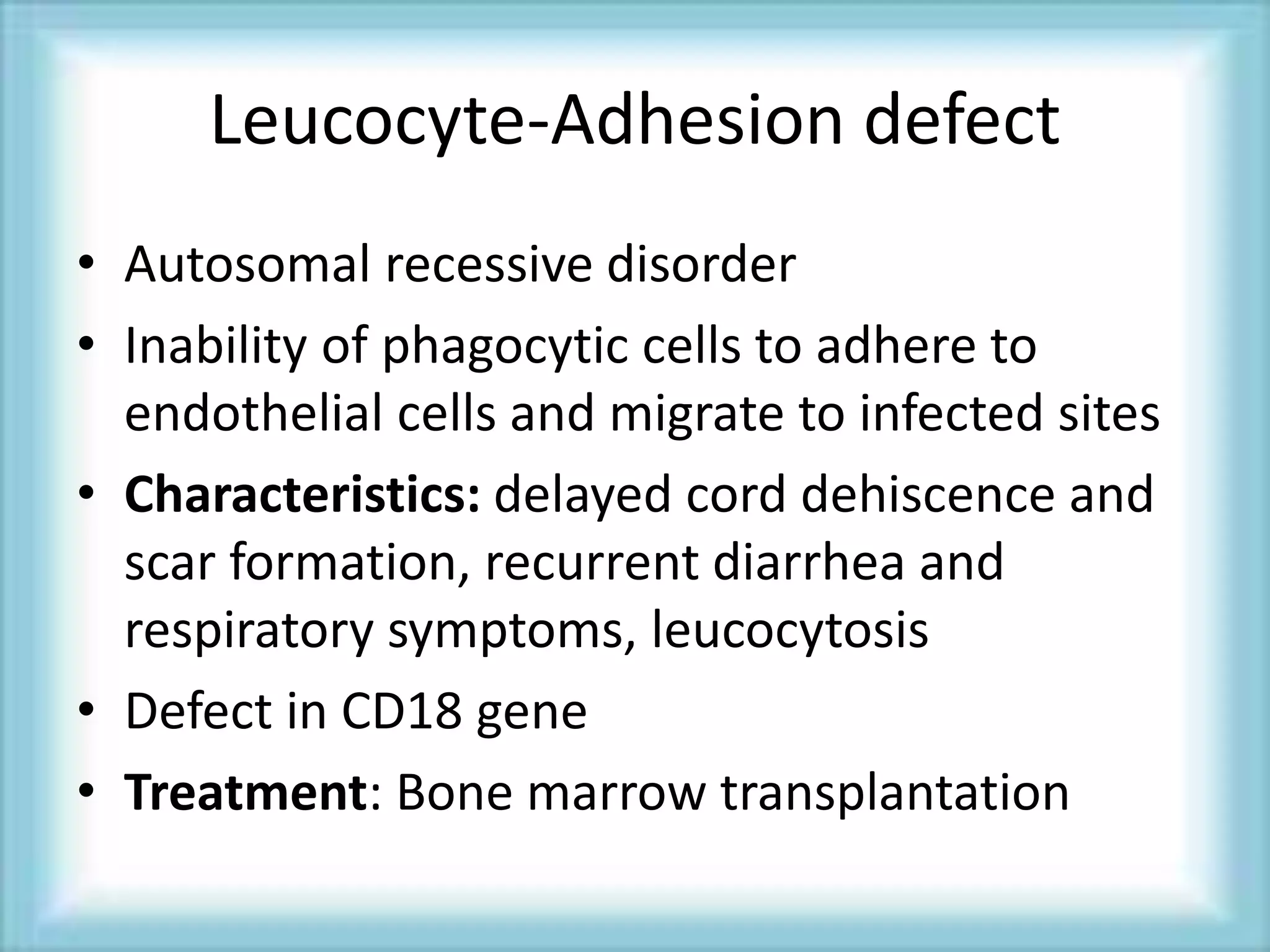
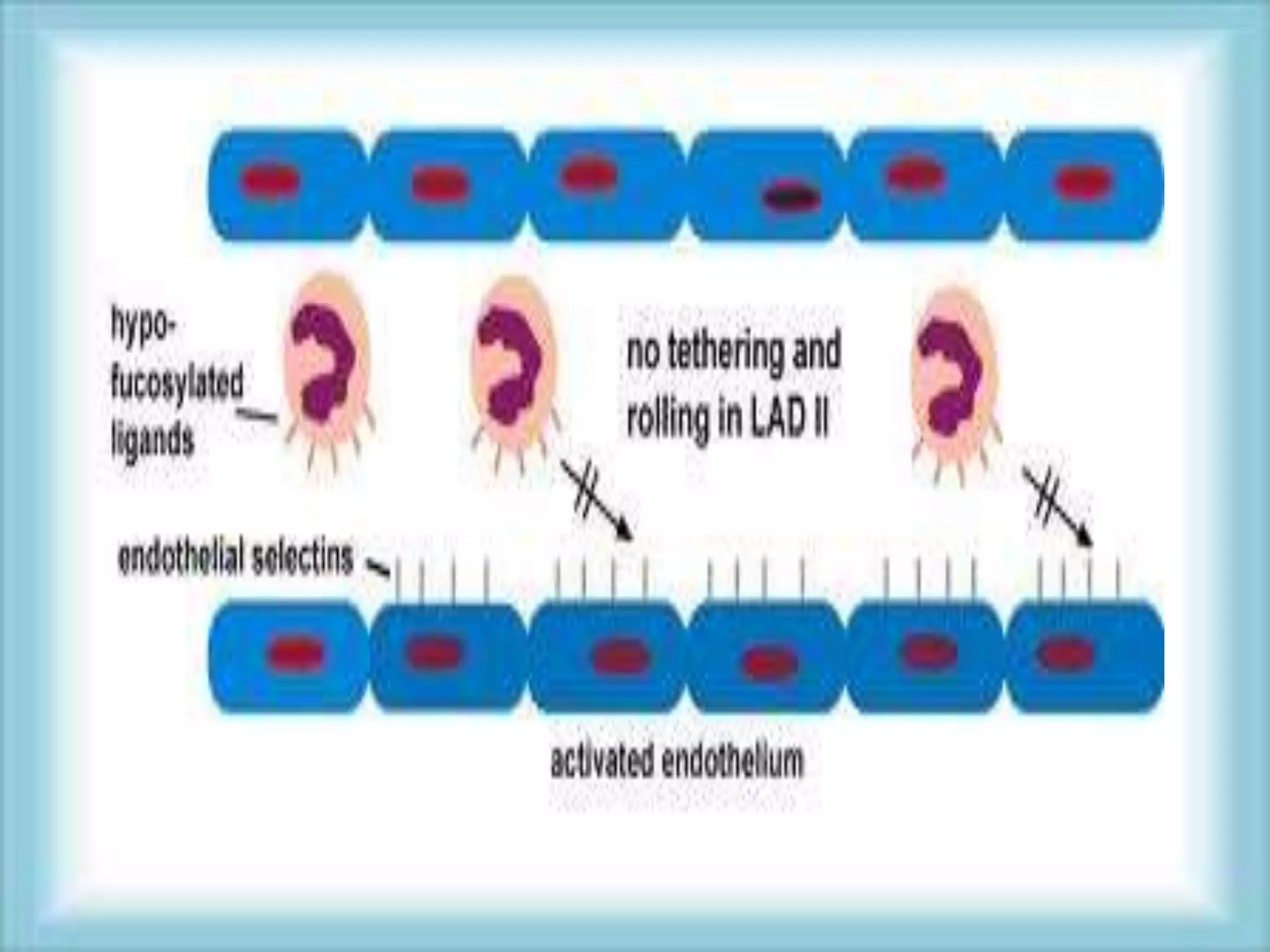
Leucocyte-Adhesion defect
• Autosomal recessive disorder
• Inability of phagocytic cells to adhere to
endothelial cells and migrate to infected sites
• Characteristics: delayed cord dehiscence and
scar formation, recurrent diarrhea and
respiratory symptoms, leucocytosis
• Defect in CD18 gene
• Treatment: Bone marrow transplantation
Other Primary ID’s
• Selective IgA deficiency
• Common variable Immunodeficiency
• X-linked lymphoproliferative disease
• Job’s syndrome
Complement deficiencies
• Involves 19 proteins:
11-classical, 3-alternate, 5-regulatory
• Alteration in the expression of these proteins
Autoimmune & Immunodeficiency diseases
Classical AI affecting vessels & glomeruli
Alternate Pyogenic infections
Regulatory Hereditary Angioneurotic edema
Diagnosis of Primary Immunodeficiencies
• Histopathology
• Immunohistochemistry
• Monoclonal Antibodies
• Cell separation by flow cytometry
• Insitu Hybridisation
Therapy
• Supportive therapy- antibiotics
• Replacement therapy-IV immunoglobulin
infusion, ADA-rich RBC infusions
• Definitive therapy- Fetal thymic grafts, bone
marrow transplantation
• Stem-cell therapy
• Gene therapy
Primary immunodeficiency

Primary immunodeficiency

  • 1.
  • 2.
    Objectives WHAT WILL I LEARN TODAY? Immunodeficiencies: Definition,cause and types Primary Immunodeficiencies: Definition, types, diagnosis and therapy Examples:SCID, XLA, DiGeorge’s syndrome, Ataxia- teleangectesia, Wiskott- Aldrich syndrome, CGD
  • 3.
    Immunodeficiency • Immune system’sability to fight infectious diseases is completely absent or compromised. • Types: Primary Immunodeficiency Secondary Immunodeficiency
  • 4.
    Immunodeficiency • Cause forImmunodeficiency: Human Immune system: Very specific Dependent on memory of cells and lymphocytes that recognise foreign antigen and infected cells respectively. • Any alterations in these functions Immunodeficiency.
  • 5.
    Classification •Most are genetically determined •Lesscommon •May arise as complications of cancers, infestations, malnutrition, or side effects of immunosuppression, Irradiation and chemotherapy. •More common Primary Immunodeficiency Secondary Immunodeficiency
  • 6.
    Primary Immunodeficiencies • Agroup of disorders characterized by an impaired ability to produce normal immune response. • Cause: mutations in genes involved in the development and function of immune organs, cells, and molecules. • Genetically determined. • Usually diseases of infancy & childhood.
  • 7.
    Primary Immunodeficiency • Mostimportant feature: • High Incidence in Males: Why ? • 6 X-linked ID’s have been described: 5 - Affect Lymphocytes 1- Affect Phagocyte
  • 9.
    Table 1. Characteristicinfections of the primary immunodeficiencies component primary pathogen primary site clinical example T-cells intracellular, bacteria viruses, protozoa, fungi, non-specific SCID, DiGeorge B-cells pneumococcus, streptococcus, haemophilus lung, skin, CNS IgG, IgM deficiency IgG, IgM deficiency enteric bacteria and viruses GI, nasal, eye IgA deficiency phagocytes Staphylococcal, Klebsiella Pseudomonas, lung, skin, regional lymph node Chronic granulomatous disease (CGD) complement neisseria, Haemophilus, pneumococcus, streptococcus CNS lung skin C3, Factors I and H, late C omponents
  • 10.
    Severe Combined Immunodeficiency(SCID) • Synonyms:Glanzzman-Rinker syndrome, Bubble Boy Disease, Thymic Alymphoplasia • Genetic disorder characterised by absence of T-lymphocytes. • Impairment of both cellular & humoral response • Specific defects in antigen presentation & functional immune molecules.
  • 11.
  • 12.
    SCID-Types • Main Types: Autosomalrecessive (-ve T & B cells) X-linked recessive(+ve B cells) • Other important types: Nezelof Syndrome SCID associated with ADA & PNP deficiency.
  • 13.
    Features of SCID •Absent tonsils • Small or absent lymph nodes • Absent thymic shadow • Lymphopenias • Decreased Number of T cells • Severe agammaglobulinemia (Swiss type of agammaglobulinemia) • No IG’s usually present
  • 14.
  • 15.
  • 16.
    Bruton’s X-linked Agammaglobuinemia •Primarily B-cell defect • Boys-more affected • Severe reduction in γ-globulins • IG’s, circulating and marrow B-cells. • Probable cause: Molecular defect at Xq22.Mutation of bruton tyrosine kinase. • Therapy: IV IG’s.
  • 17.
    DiGeorge’s syndrome • Alsocalled thymic hypoplasia • Congenital disorder • Abnormalities in structure derived from 3rd and 4th pharyngeal pouches • Predominantly T cell defect • Charactersitics: Neonatal tetany(absence of parathyroid) • Therapy: Thymic transplants
  • 18.
    • Cleft palate •Antimongoloid eyes • Short philtrum with fish-mouth appearance , • Micrognathia • Low set pixie-like ears • Short palpebral fissures Facial features of children with DiGeorge syndrome
  • 19.
  • 20.
  • 21.
    Ataxia-telangiectasia • Autosomal recessive •Incidence: 25:10,00,000 • Characteristics: Progressive cerebellar ataxia, ocular and cutaneous telangiectasias, severe sino-pulmonary infections, progeric changes, sclerodermoid changes • Thymus: fetal-like histological pattern. • Translocation between 14 and 7
  • 22.
  • 23.
  • 24.
    Wiskott-Aldrich Syndrome • X-linkedcondition • Incidence: 4:10,00,000 • Severe eczema, recurrent infections, Bloody diarrhea, chronic otitis • T cells appear bald :? • Platelets: Decreased in number, small • Failure to recognise polysaccharide antigens. • Defect: Failure in expression of sialophorin.
  • 25.
  • 26.
    Chronic Granulomatous Disease •Incidence:1:10,00,000 • Defect: Inability of phagocytes to produce superoxide ineffective reduction of O2. • Failure to express respiratory burst associated with phagocytosis. • Central necrosis and granulomatoid response in lung, liver, bone , skin and lymph nodes. • Presence of numerous pigmented macrophages.
  • 27.
    CGD patient with skininfections due to Serratia marcescens
  • 28.
    Chediak-Higashi Syndrome • Rareautosomal disorder • Abnormal large granules in leucocytes leading to: – hypopigmentation/partial albinism – severe immunodeficiency – neurologic abnormalities – mild bleeding tendencies • Defective gene: CHS1
  • 30.
    Leucocyte-Adhesion defect • Autosomalrecessive disorder • Inability of phagocytic cells to adhere to endothelial cells and migrate to infected sites • Characteristics: delayed cord dehiscence and scar formation, recurrent diarrhea and respiratory symptoms, leucocytosis • Defect in CD18 gene • Treatment: Bone marrow transplantation
  • 32.
    Other Primary ID’s •Selective IgA deficiency • Common variable Immunodeficiency • X-linked lymphoproliferative disease • Job’s syndrome
  • 33.
    Complement deficiencies • Involves19 proteins: 11-classical, 3-alternate, 5-regulatory • Alteration in the expression of these proteins Autoimmune & Immunodeficiency diseases Classical AI affecting vessels & glomeruli Alternate Pyogenic infections Regulatory Hereditary Angioneurotic edema
  • 34.
    Diagnosis of PrimaryImmunodeficiencies • Histopathology • Immunohistochemistry • Monoclonal Antibodies • Cell separation by flow cytometry • Insitu Hybridisation
  • 35.
    Therapy • Supportive therapy-antibiotics • Replacement therapy-IV immunoglobulin infusion, ADA-rich RBC infusions • Definitive therapy- Fetal thymic grafts, bone marrow transplantation • Stem-cell therapy • Gene therapy