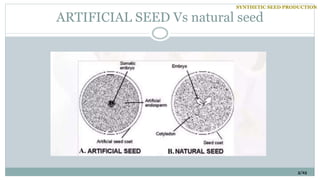
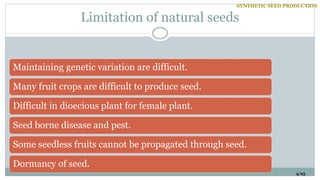
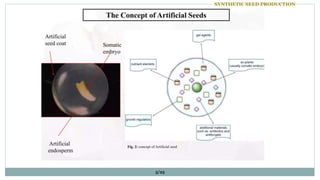
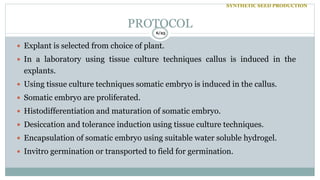
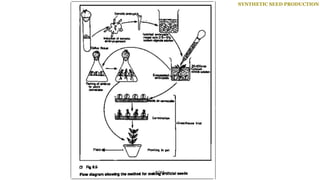
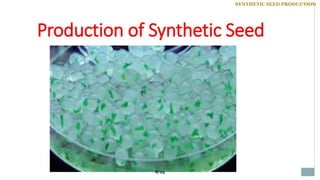
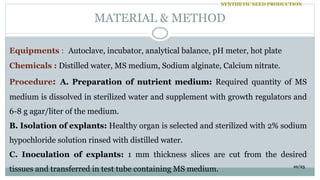
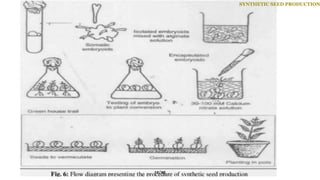
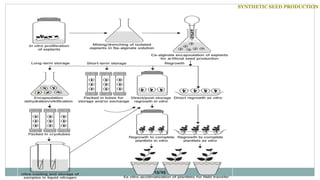
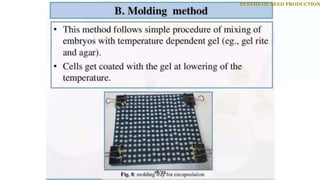
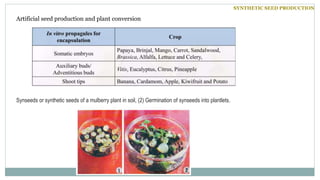
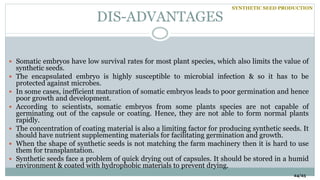
Synthetic seed production involves the artificial encapsulation of plant tissues capable of forming a plant, and offers advantages such as long-term storage and preserving genetic uniformity. The production process utilizes tissue culture techniques to induce and mature somatic embryos, leading to the encapsulation in hydrogels for protection. While synthetic seeds provide benefits for propagating hybrid and genetically modified plants, challenges include low survival rates and susceptibility to infection.