THYROID AND
PARATHYROID
DISORDERS
SHEEN MARKT. BILBAO, RN MAN
LEVEL 4 FACULTY
UNIVERSITY OF CEBU - BANILAD CAMPUS
COLLEGEOF NURSING
GOITER
GOITER
Enlargement of
the thyroid
gland
Usually caused
by an iodine-
deficient diet
Usually caused by an
iodine-deficient diet
• Foods rich in iodine:
Seaweeds
Most fresh fish
Sea salt
Iodized salt
TYPES OF
GOITER
• Toxic goiter – accompanied by
hyperthyroidism
• Non-toxic goiter – associated
with a euthyroid state
• Simple/colloid goiter – caused by
iron deficiency; usually
asymptomatic
• Nodular goiter – may be due to
hyperplasia; asymptomatic;
some may become malignant &
some associated with a
hyperthyroid state
HYPOTHYROIDISM
HYPOTHYROIDISM
Deficiency of the
thyroid hormones
Occurs most
frequently in older
women
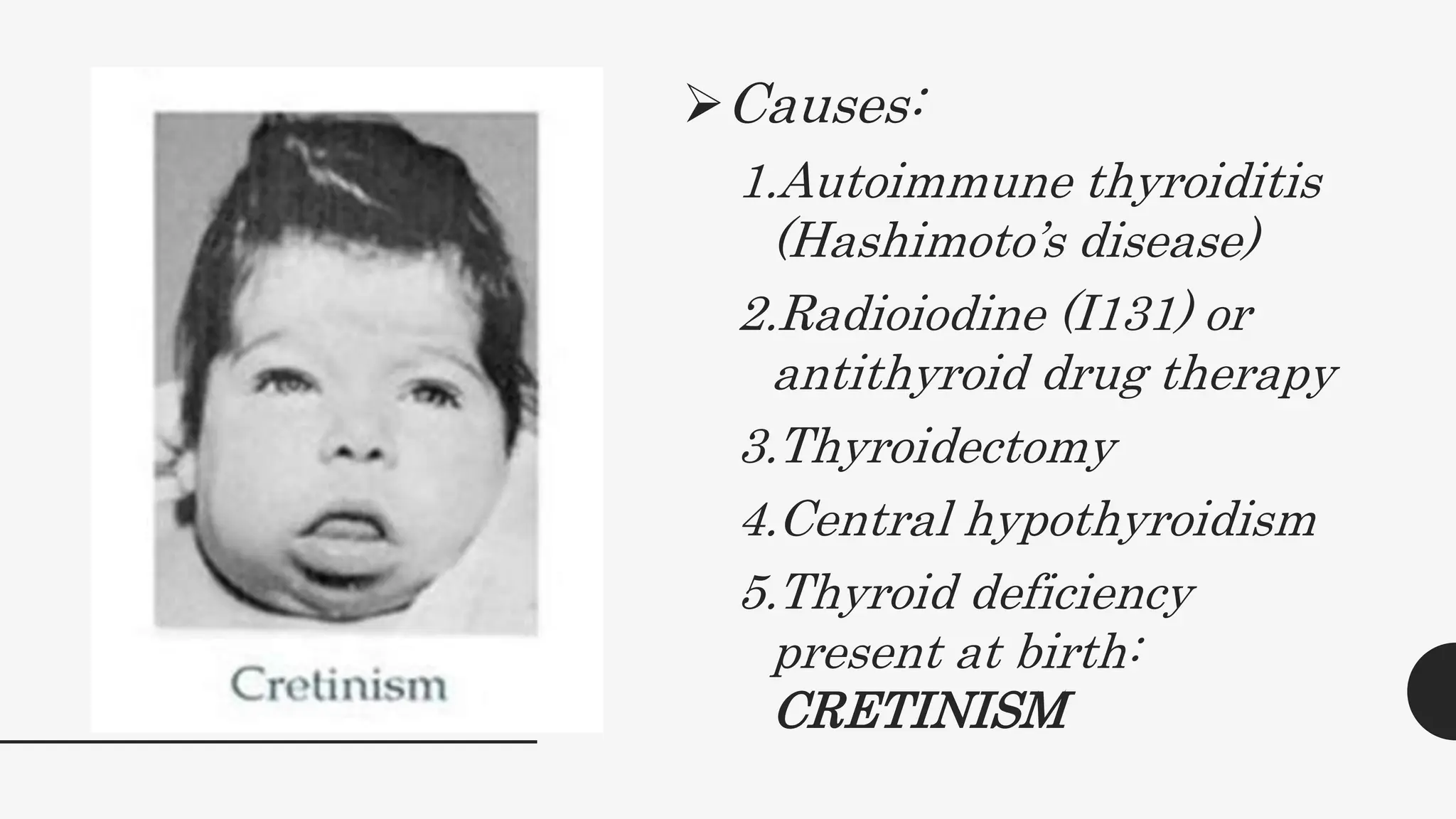
Causes:
1.Autoimmune thyroiditis
(Hashimoto’s disease)
2.Radioiodine (I131) or
antithyroid drug therapy
3.Thyroidectomy
4.Central hypothyroidism
5.Thyroid deficiency
present at birth:
CRETINISM
ASSESSMENT
Clinical manifestations (adults) are based on 3
concepts:
1. Decreased metabolic rate
2. Decreased body heat production
3. Hypercalcemia – leads to decreased
neuromuscular irritability
SIGNS & SYMPTOMS
- extreme fatigue
- hair loss, brittle nails & dry skin
- numbness & tingling of fingers
- menstrual disturbances, loss of libido
- Myxedema
- weight gain, subnormal temperature, & HR, cold intolerance
- thickened skin, hair thins &B falls out
- dulled mental processes, apathy
- slow speech, husky hoarse voice, enlarged tongue, hands &
feet; deafness may occur
- constipation
- personality and cognitive changes
- Myxedema coma – rare, life-threatening
- hypothermia
- depressed respiratory drive
- unconsciousness
-precipitated by infection/systemic disease, use of sedatives/opioid
analgesics, cold
Complications:
Pleural effusion, pericardial effusion, respiratory
muscle weakness, increased serum cholesterol level,
CAD, poor left ventricular function.
“Everything is low, slow and dry.”
In myxedema coma, all vital signs
are profoundly depressed. It is
potentially fatal.
NURSING
PROCESS
NURSING
DIAGNOSES
1.Activity intolerance r/t fatigue and depressed cognitive process
2.Risk for imbalanced body temperature
3.Constipation r/t depressed GI function
4.Deficient knowledge about therapeutic regimen for lifelong
thyroid replacement therapy
5.Ineffective breathing pattern r/t depressed ventilation
6.Disturbed thought processes r/t depressed metabolism and
altered cardiovascular and respiratory status
PLANNING
• Medical Management Goal: To restore a normal metabolic
state by replacing the missing hormone
a.Increased participation in activities & increased dependence
b.Maintenance of normal body temperature
c. Return of normal bowel function
d.Knowledge and acceptance of prescribed therapeutic regimen
e.Improved respiratory status and maintenance of normal breathing
pattern
f. Improved thought processes
g.Absence of complications
INTERVENTIONS
o Administer pharmacologic medication:
Synthetic levothyroxine (Synthroid or Levothyroid)
 monitor for s/s of angina, ⇧ BP & tachycardia
 Take in the morning without food
 May cause bone loss & osteoporosis
 IV administration (if myxedema coma) continued with oral therapy
 Drug interactions:
o increase: blood sugar levels, effects of digitalis glycosides, anticoagulants,
indomethacin
o phenytoin (Dilantin) & TCA’s increase effects of thyroid hormone meds
INTERVENTIONS
Corticosteroids
o Monitor vital functions
 ABG, pulse oximetry
 Administer fluids cautiously
 Deep breathing & coughing exercises, incentive spirometry
 Administer hypnotics and sedatives with caution
 Maintain patent airway through suction & ventilator support
INTERVENTIONS
• Corticosteroids con’t.
o Promote independence in self-care activities
o Provide extra layer of clothing or extra blanket
o Manage constipation
o Improve thought process
 orient to time, place, and person
 provide stimulation through conversation and nonthreatening
activities
 monitor cognitive & mental processes
INTERVENTIONS
• Corticosteroids con’t.
o Promote independence in self-care activities
o Provide extra layer of clothing or extra blanket
o Manage constipation
o Improve thought process
 orient to time, place, and person
 provide stimulation through conversation and nonthreatening
activities
 monitor cognitive & mental processes
INTERVENTIONS
• Corticosteroids con’t.
o Monitor & manage complications
 ⇩ LOC, dementia
 ⇩ V/S
 Difficulty in awakening patient
 Turn & reposition at intervals to avoid risks associated with
immobility
INTERVENTIONS
• Corticosteroids con’t.
o Teach patients on self-care
 desired action & side effects of meds
 importance of continuing meds as prescribed even after s/s improve
 nutrition & diet ( high fiber, low calorie, adequate fluid intake) to promote
weight loss & normal bowel patterns
 Foods that can inhibit thyrod secretion: strawberries, peaches, pears,
cabbage, turnips, spinach, Brussel sprouts, cauliflower, radish, peas
 Avoid infections
 Prevention: screening of TSH levels recommended for women >50 y.o.
with 1 or more symptoms
EVALUATION
 Reports decreased level of fatigue; no chest pain or
breathlessness
 Maintains baseline body temperature
 Reports normal bowel function
 Describes therapeutic regimen correctly
 Shows improved respiratory status & maintenance of normal
respiratory rate, depth, and pattern
 Shows improved cognitive functioning
HYPERTHYROIDISM
HYPERTHYROIDISM
Hypersecretion of thyroid hormones
Severe form:
THYROID STORM/
THYROTOXIC CRISIS (THYROTOXICOSIS)
Occurs most frequently in older women
CAUSES oGraves’ Disease (Toxic diffuse
goiter)
oToxic nodular goiter
oThyroiditis after irradiation of
the thyroid
oPresence of tumor
oExcessive ingestion of thyroid
hormone
oAssociated with emotional
shock, stress, or infection
ASSESSMENT • Clinical manifestations
are based on 3 concepts:
oIncreased metabolic rate
oIncreased body heat
production
oHyp0calcemia – leads to
increased neuromuscular
irritability
ASSESSMENT
Thyroid hormones increase response to catecholamines
 Presenting symptom: nervousness
 Emotionally hyperexcitable, irritable, and apprehensive
 Tachycardia, palpitations
 Heat intolerance
 Salmon skin
 Exophthalmos
ASSESSMENT
 Others: ⇧ appetite, progressive weight loss, abnormal muscular
fatigability & weakness, amenorrhea, changes in bowel function
 Enlarged thyroid gland
 Advanced cases: ⇩ serum TSH, increased free T4, increased
radioactive iodine uptake
ASSESSMENT
 THYROID STORM/THYROTOXIC CRISIS:
1. Hyperpyrexia (above 38.5°C)
2. extreme tachycardia (>130 bpm)
3. exaggerated s/s of hyperthyroidism with disturbances of a major
system
4. altered mental state
 Precipitated by stress – injury, infection, surgery, tooth
extraction, DKA, pregnancy abrupt withdrawal of
antithyroid meds
 Complications: dysrhythmias, heart failure, osteoporosis,
and fractures
“Everything is high, fast and wet.”
Eye manifestations (exopththalmos, lid lag,
bright-eyed stare
NURSING
PROCESS
NURSING
DIAGNOSES
1.Imbalanced nutrition: less than body
requirements r/t exaggerated metabolic
rate, excessive appetite, and increased
GI activity
2.Ineffective coping r/t irritability,
hyperexcitability, apprehension, and
emotional instability
3.Low self-esteem r/t changes in
appearance, excessive appetite, and
weight loss
4.Altered body temperature
PLANNING
• Medical Management Goal: To reduce thyroid
hyperactivity
a.Improve nutritional status
b.Improve coping ability
c. Improve self-esteem
d.Maintenance of normal body temperature
e.Absence of complications
INTERVENTIONS
oAdminister pharmacologic medications:
Radioactive Iodine Therapy
Use of irradiation with the radioisotope iodine 131
Monitor for hypothyroidism
Contraindicated during pregnancy & BF
Place pt on isolation for a few days – use gloves
when handling body secretions
INTERVENTIONS
Antithyroid medications
 Action: block the utilization of iodine by interfering with the
iodination of tyrosine and coupling of iodotyrosines in the
synthesis of thyroid hormones
 Agents:
a. Propylthiouracil (PTU)
b. Methimazole (Tapazole)
 Toxic complications: fever, rash, urticaria, agranulocytosis,
thrombocytopenia, pharyngitis, mouth ulcers
 Instruct not to use decongestants for nasal stuffiness
INTERVENTIONS
Iodine or Iodide compounds
suppresses release of thyroid hormone/ reduce activity
of thyroid hormone and the vascularity of the thyroid
gland
usually given with antithyroid meds to prepare the
patient for surgery
give with milk or fruit juice, using straw
avoid cough medications, expectorants, bronchodilators,
and salt substitutes
monitor for iodine toxicity (iodism): swelling of the
buccal mucosa, excessive salivation, coryza, skin
eruptions
Potassium
iodide (KI)
Lugol’s
solution
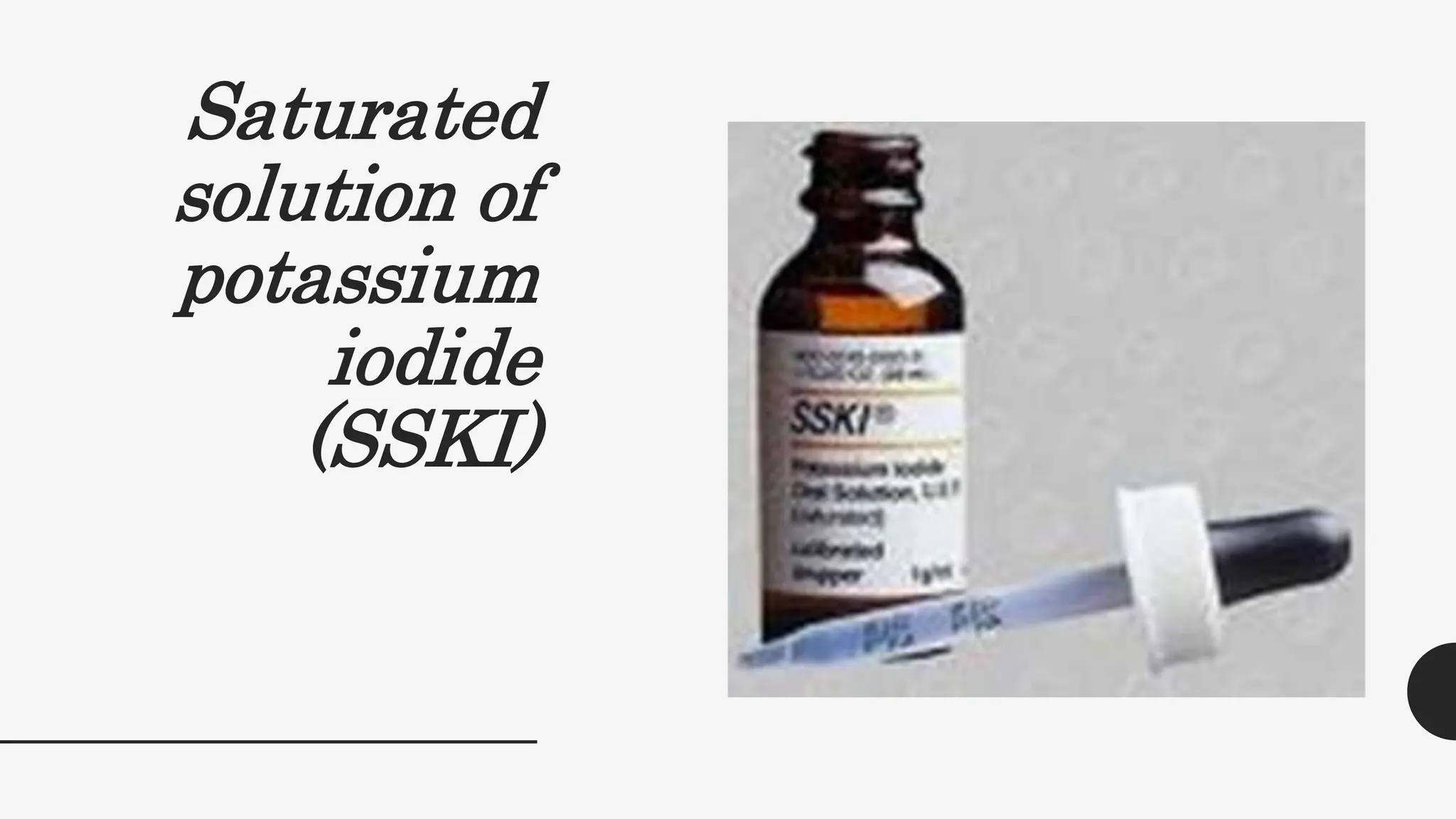
Saturated
solution of
potassium
iodide
(SSKI)
INTERVENTIONS
Other medications:
a. Beta-adrenergic blocking agents
- Reduces peripheral symptoms, myocardial oxygen
consumption, heart rate and improve myocardial efficiency
b. Glucocorticoids (dexamethasone)
SURGICAL
MANAGEMENT
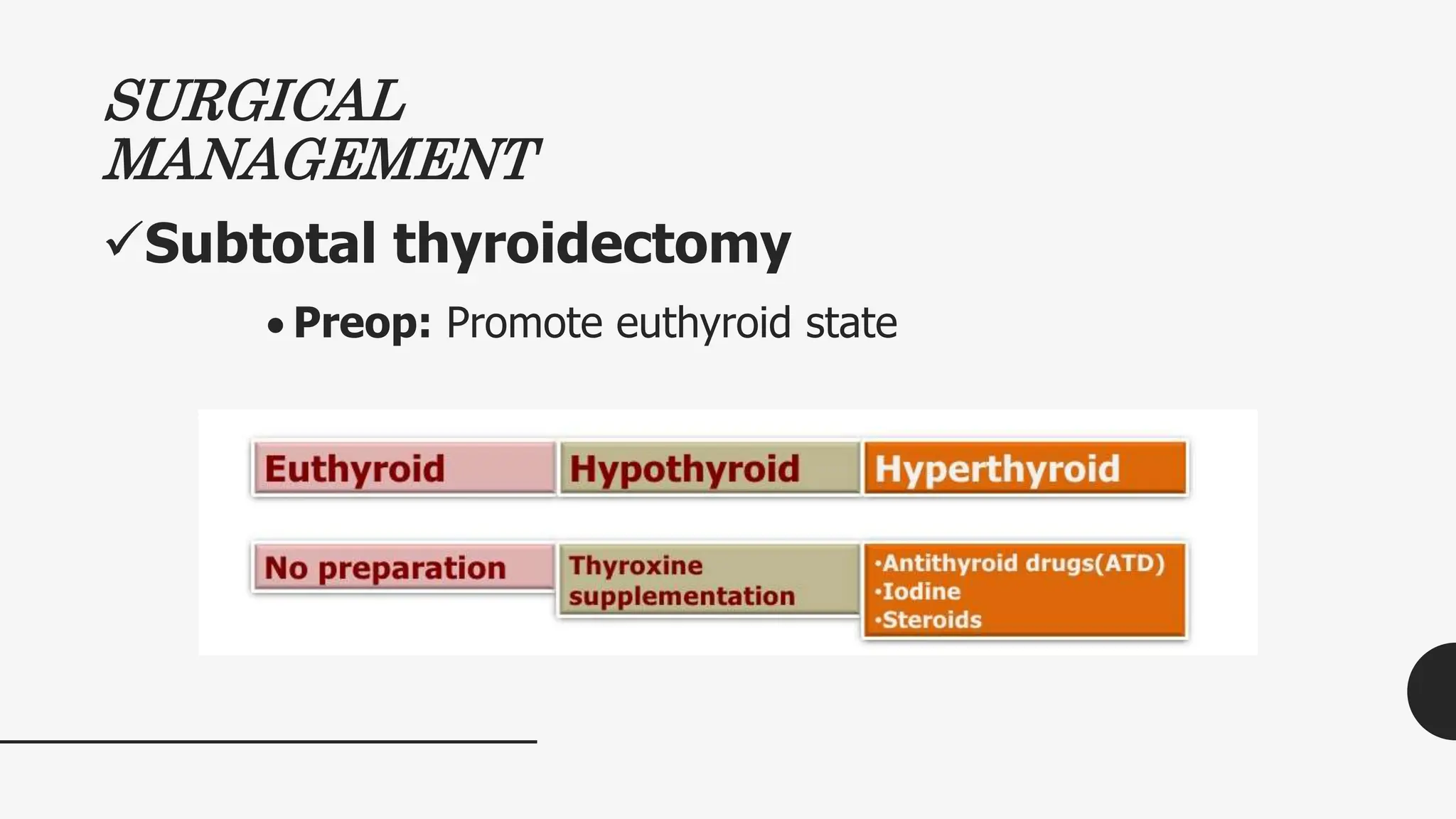
Subtotal thyroidectomy
 Preop: Promote euthyroid state
SURGICAL
MANAGEMENT
Subtotal thyroidectomy
 Postop:
oPosition: fowlers with head, neck, and shoulders erect
oMonitor for bleeding and edema
oMonitor for hypocalcemia
oAssess for recurrent laryngeal nerve damage
oMonitor for thyroid storm
o Improve nutritional status
 Small frequent feedings
 Replace fluids lost through diarrhea and diaphoresis
 Avoid highly-seasoned foods and stimulants such as coffee,
tea, cola, and alcohol
 High calorie, high protein foods
 Monitor weight and dietary intake
o Provide a non-stimulating, quiet, and cool
environment
o Change beddings & clothing as needed; give cool
baths, cool or cold fluids
o Improve self-esteem
o Eye care and protection for ocular changes – instill
artificial tears and wear dark sunglasses under the sun
o Monitor s/s of thyroid storm, cardiac and respiratory
function
 Monitor ECG, ABG, pulse oximetry
 Administer oxygen
o Teach patients on self-care
 desired action & side effects of meds
 importance of continuing meds indefinitely & consequences
of failing to take meds
 avoid stressful situations that may precipitate thyroid storm
 s/s of hypothyroidism
EVALUATION
 Shows improved nutritional
status
 Demonstrates effective
coping methods
 Achieves increased self-
esteem
HYPOPARATHYROIDISM
Hypoparathyroidism
• Hyposecretion of parathormone
• Characterized by: decreased intestinal
absorption of dietary calcium and
decreased resorption of calcium from
bone
Causes
1. Interruption in blood supply or surgical
removal of parathyroid gland after
thyroidectomy, parathyroidectomy, or
radical neck dissection
2. Atrophy of the parathyroid glands
Assessment
• Clinical manifestations are based on:
ohyperphosphatemia
oHypocalcemia: causes irritability of neuromuscular
system
Manifestations
Chief symptom: tetany
Latent tetany:
 Numbness, tingling, and cramps in the extremities;
 Stiffness in hands and feet
Manifestations
(+) Trousseau’s sign
 occluding blood flow to the arm for 3 mins with a
BP cuff induces carpopedal spasm
(+) Chvostek’s sign
 sharp tapping over the facial nerve just in front of
the parotid gland and anterior to the ear causes
spasm or twitching of the mouth, nose, and eye
Manifestations
Overt tetany:
 Bronchospasm
 laryngeal spasm
 carpopedal spasm
 dyphagia, photophobia
 cardiac dysrhythmias
 seizures
Anxiety, irritability, depression, delirium
ECG changes and hypotension
Laboratory Findings
Overt tetany:
 Bronchospasm
 laryngeal spasm
 carpopedal spasm
 dyphagia, photophobia
 cardiac dysrhythmias
 seizures
Anxiety, irritability, depression, delirium
ECG changes and hypotension
NURSING
PROCESS
NURSING
DIAGNOSES
1. Ineffective airway clearance r/t spasm of
airways
2. Risk for injury and aspiration r/t seizure
activity
3. Ineffective cardiac tissue perfusion r/t altered
rate and rhythm of contraction of the heart
PLANNING
a.Promote and maintain airway clearance
b.Promote safety and prevent injury
c.Absence of complications
INTERVENTIONS
• Medical management goal: To increase serum
Ca to 9 – 10 mg/dL and eliminate symptoms of
hypoparathyroidism and hypocalcemia
INTERVENTIONS
oFor hypocalcemia and tetany after thyroidectomy:
administer IV calcium gluconate slowly and
cautiously
place pt. on continuous cardiac monitoring for
cardiac dysrhythmias
oParenteral parathormone
INTERVENTIONS
oProvide an environment free of noise, drafts,
bright lights, or sudden movement
oPlace on seizure precaution
oPrepare for tracheostomy or mechanical
ventilation, plus bronchodilators
INTERVENTIONS
oDiet: high in calcium, low in phosphorus
 Avoid milk, milk products, and egg yolk
 Avoid spinach
 Oral calcium supplements
 Aluminum hydroxide (Gelusil, Amphojel)
 Vitamin D preparation (eg, dihydrotachysterol,
ergocalciferol, or cholecalciferol)
EVALUATION
 Absence of respiratory difficulties
 Free from injury and aspiration
 Absence of cardiac dysrhythmias
HYPERPARATHYROIDISM
Hyperparathyroidism
Overproduction of parathormone
Characterized by:
a.bone decalcification
b.high serum Ca levels ⇢ development of renal
calculi
Causes
1.Primary hyperparathyroidism (PHPT)
- Adenoma due to overgrowth of cells in one of the glands; 85%
- Hyperplasia in more than one gland; 15%
- Parathyroid cancer; <1% (rare)
2.Secondary hyperparathyroidism (SHPT)
- Excessive secretion of parathyroid hormone (PTH) in response to
hypocalcemia and associated hyperplasia
- Seen in patients with chronic renal failure (CRF)
Assessment
• Clinical manifestations are based on:
oHypercalcemia: decreases excitation potential of
nerve and muscle tissue
oBone demineralization
Manifestations
May have no symptoms
⇧ serum calcium level:
Apathy
Fatigue
Muscle weakness
Nausea, vomiting, constipation
Hypertension, cardiac dysrhythmias
Manifestations
Psychological effects: irritability and neurosis to
psychoses
Formation of renal stones, abdominal pain and
hematuria
Complication: renal damage – obstruction,
pyelonephritis, and renal failure
Manifestations
Musculoskeletal symptoms:
Skeletal pain and tenderness
Pain on weight-bearing
Pathologic fractures
Deformities
Shortening of body stature
Complication
• HYPERCALCEMIC CRISIS
o Serum Ca >15 mg/dL
o Life-threatening neurologic, CV, and renal
symptoms
NURSING
PROCESS
Nursing
Diagnoses 1.Risk for injury r/t
demineralization of bone
2.Impaired mobility r/t skeletal
pain and pain on weight-
bearing
3.Ineffective renal tissue
perfusion r/t presence of renal
stones
Planning
a.Promote safety
b.Improve mobility
c.Absence of renal
complications
Interventions
oPrepare patient for surgery
Parathyroidectomy: recommended
treatment for primary disease
Postop:
 constipation is common
 early postop complication: hypocalcemia –
monitor for s/s of tetany
Interventions
oHydration therapy
OFI of 2000 mL or more
Cranberry juice or cranberry extract tablets
Avoid dehydration
oAvoid thiazide diuretics
oMove patient slowly and carefully
Interventions
oEncourage mobilization
oAdminister oral phosphates – long-term use not
recommended due to risk of ectopic calcium
phosphate deposition in soft tissues
oAvoid a diet with restricted or excess calcium
Intervention (Hypercalcemic Crisis)
Rehydration with IV fluids
Diuretics
Phosphate therapy
 Biphosphonates (eg, etidronate [Didronel]) – prevent loss of
bone density
 Pamidronate [Aredia]) – to treat high blood calcium levels;
diseases that causes abnormal & weak bones
Cytotoxic agents ( Mithramycin), calcitonin (to decrease
skeletal Ca release and increase renal clearance of Ca),
and dialysis
Evaluation
 Free from injury and fractures, identifies
safety hazards and methods of injury
prevention
 Improved mobility
 Absence of renal complications
END

THYROID-PARATHYROID medical surgical nursing

  • 1.
    THYROID AND PARATHYROID DISORDERS SHEEN MARKT.BILBAO, RN MAN LEVEL 4 FACULTY UNIVERSITY OF CEBU - BANILAD CAMPUS COLLEGEOF NURSING
  • 2.
  • 3.
    GOITER Enlargement of the thyroid gland Usuallycaused by an iodine- deficient diet
  • 4.
    Usually caused byan iodine-deficient diet • Foods rich in iodine: Seaweeds Most fresh fish Sea salt Iodized salt
  • 5.
    TYPES OF GOITER • Toxicgoiter – accompanied by hyperthyroidism • Non-toxic goiter – associated with a euthyroid state • Simple/colloid goiter – caused by iron deficiency; usually asymptomatic • Nodular goiter – may be due to hyperplasia; asymptomatic; some may become malignant & some associated with a hyperthyroid state
  • 6.
  • 7.
    HYPOTHYROIDISM Deficiency of the thyroidhormones Occurs most frequently in older women
  • 8.
    Causes: 1.Autoimmune thyroiditis (Hashimoto’s disease) 2.Radioiodine(I131) or antithyroid drug therapy 3.Thyroidectomy 4.Central hypothyroidism 5.Thyroid deficiency present at birth: CRETINISM
  • 9.
    ASSESSMENT Clinical manifestations (adults)are based on 3 concepts: 1. Decreased metabolic rate 2. Decreased body heat production 3. Hypercalcemia – leads to decreased neuromuscular irritability
  • 10.
    SIGNS & SYMPTOMS -extreme fatigue - hair loss, brittle nails & dry skin - numbness & tingling of fingers - menstrual disturbances, loss of libido - Myxedema - weight gain, subnormal temperature, & HR, cold intolerance - thickened skin, hair thins &B falls out - dulled mental processes, apathy - slow speech, husky hoarse voice, enlarged tongue, hands & feet; deafness may occur - constipation - personality and cognitive changes
  • 11.
    - Myxedema coma– rare, life-threatening - hypothermia - depressed respiratory drive - unconsciousness -precipitated by infection/systemic disease, use of sedatives/opioid analgesics, cold Complications: Pleural effusion, pericardial effusion, respiratory muscle weakness, increased serum cholesterol level, CAD, poor left ventricular function.
  • 12.
    “Everything is low,slow and dry.” In myxedema coma, all vital signs are profoundly depressed. It is potentially fatal.
  • 13.
  • 14.
    NURSING DIAGNOSES 1.Activity intolerance r/tfatigue and depressed cognitive process 2.Risk for imbalanced body temperature 3.Constipation r/t depressed GI function 4.Deficient knowledge about therapeutic regimen for lifelong thyroid replacement therapy 5.Ineffective breathing pattern r/t depressed ventilation 6.Disturbed thought processes r/t depressed metabolism and altered cardiovascular and respiratory status
  • 15.
    PLANNING • Medical ManagementGoal: To restore a normal metabolic state by replacing the missing hormone a.Increased participation in activities & increased dependence b.Maintenance of normal body temperature c. Return of normal bowel function d.Knowledge and acceptance of prescribed therapeutic regimen e.Improved respiratory status and maintenance of normal breathing pattern f. Improved thought processes g.Absence of complications
  • 16.
    INTERVENTIONS o Administer pharmacologicmedication: Synthetic levothyroxine (Synthroid or Levothyroid)  monitor for s/s of angina, ⇧ BP & tachycardia  Take in the morning without food  May cause bone loss & osteoporosis  IV administration (if myxedema coma) continued with oral therapy  Drug interactions: o increase: blood sugar levels, effects of digitalis glycosides, anticoagulants, indomethacin o phenytoin (Dilantin) & TCA’s increase effects of thyroid hormone meds
  • 17.
    INTERVENTIONS Corticosteroids o Monitor vitalfunctions  ABG, pulse oximetry  Administer fluids cautiously  Deep breathing & coughing exercises, incentive spirometry  Administer hypnotics and sedatives with caution  Maintain patent airway through suction & ventilator support
  • 18.
    INTERVENTIONS • Corticosteroids con’t. oPromote independence in self-care activities o Provide extra layer of clothing or extra blanket o Manage constipation o Improve thought process  orient to time, place, and person  provide stimulation through conversation and nonthreatening activities  monitor cognitive & mental processes
  • 19.
    INTERVENTIONS • Corticosteroids con’t. oPromote independence in self-care activities o Provide extra layer of clothing or extra blanket o Manage constipation o Improve thought process  orient to time, place, and person  provide stimulation through conversation and nonthreatening activities  monitor cognitive & mental processes
  • 20.
    INTERVENTIONS • Corticosteroids con’t. oMonitor & manage complications  ⇩ LOC, dementia  ⇩ V/S  Difficulty in awakening patient  Turn & reposition at intervals to avoid risks associated with immobility
  • 21.
    INTERVENTIONS • Corticosteroids con’t. oTeach patients on self-care  desired action & side effects of meds  importance of continuing meds as prescribed even after s/s improve  nutrition & diet ( high fiber, low calorie, adequate fluid intake) to promote weight loss & normal bowel patterns  Foods that can inhibit thyrod secretion: strawberries, peaches, pears, cabbage, turnips, spinach, Brussel sprouts, cauliflower, radish, peas  Avoid infections  Prevention: screening of TSH levels recommended for women >50 y.o. with 1 or more symptoms
  • 22.
    EVALUATION  Reports decreasedlevel of fatigue; no chest pain or breathlessness  Maintains baseline body temperature  Reports normal bowel function  Describes therapeutic regimen correctly  Shows improved respiratory status & maintenance of normal respiratory rate, depth, and pattern  Shows improved cognitive functioning
  • 23.
  • 24.
    HYPERTHYROIDISM Hypersecretion of thyroidhormones Severe form: THYROID STORM/ THYROTOXIC CRISIS (THYROTOXICOSIS) Occurs most frequently in older women
  • 25.
    CAUSES oGraves’ Disease(Toxic diffuse goiter) oToxic nodular goiter oThyroiditis after irradiation of the thyroid oPresence of tumor oExcessive ingestion of thyroid hormone oAssociated with emotional shock, stress, or infection
  • 26.
    ASSESSMENT • Clinicalmanifestations are based on 3 concepts: oIncreased metabolic rate oIncreased body heat production oHyp0calcemia – leads to increased neuromuscular irritability
  • 27.
    ASSESSMENT Thyroid hormones increaseresponse to catecholamines  Presenting symptom: nervousness  Emotionally hyperexcitable, irritable, and apprehensive  Tachycardia, palpitations  Heat intolerance  Salmon skin  Exophthalmos
  • 28.
    ASSESSMENT  Others: ⇧appetite, progressive weight loss, abnormal muscular fatigability & weakness, amenorrhea, changes in bowel function  Enlarged thyroid gland  Advanced cases: ⇩ serum TSH, increased free T4, increased radioactive iodine uptake
  • 29.
    ASSESSMENT  THYROID STORM/THYROTOXICCRISIS: 1. Hyperpyrexia (above 38.5°C) 2. extreme tachycardia (>130 bpm) 3. exaggerated s/s of hyperthyroidism with disturbances of a major system 4. altered mental state  Precipitated by stress – injury, infection, surgery, tooth extraction, DKA, pregnancy abrupt withdrawal of antithyroid meds  Complications: dysrhythmias, heart failure, osteoporosis, and fractures
  • 30.
    “Everything is high,fast and wet.” Eye manifestations (exopththalmos, lid lag, bright-eyed stare
  • 31.
  • 32.
    NURSING DIAGNOSES 1.Imbalanced nutrition: lessthan body requirements r/t exaggerated metabolic rate, excessive appetite, and increased GI activity 2.Ineffective coping r/t irritability, hyperexcitability, apprehension, and emotional instability 3.Low self-esteem r/t changes in appearance, excessive appetite, and weight loss 4.Altered body temperature
  • 33.
    PLANNING • Medical ManagementGoal: To reduce thyroid hyperactivity a.Improve nutritional status b.Improve coping ability c. Improve self-esteem d.Maintenance of normal body temperature e.Absence of complications
  • 34.
    INTERVENTIONS oAdminister pharmacologic medications: RadioactiveIodine Therapy Use of irradiation with the radioisotope iodine 131 Monitor for hypothyroidism Contraindicated during pregnancy & BF Place pt on isolation for a few days – use gloves when handling body secretions
  • 35.
    INTERVENTIONS Antithyroid medications  Action:block the utilization of iodine by interfering with the iodination of tyrosine and coupling of iodotyrosines in the synthesis of thyroid hormones  Agents: a. Propylthiouracil (PTU) b. Methimazole (Tapazole)  Toxic complications: fever, rash, urticaria, agranulocytosis, thrombocytopenia, pharyngitis, mouth ulcers  Instruct not to use decongestants for nasal stuffiness
  • 36.
    INTERVENTIONS Iodine or Iodidecompounds suppresses release of thyroid hormone/ reduce activity of thyroid hormone and the vascularity of the thyroid gland usually given with antithyroid meds to prepare the patient for surgery give with milk or fruit juice, using straw avoid cough medications, expectorants, bronchodilators, and salt substitutes monitor for iodine toxicity (iodism): swelling of the buccal mucosa, excessive salivation, coryza, skin eruptions
  • 37.
  • 38.
  • 39.
  • 40.
    INTERVENTIONS Other medications: a. Beta-adrenergicblocking agents - Reduces peripheral symptoms, myocardial oxygen consumption, heart rate and improve myocardial efficiency b. Glucocorticoids (dexamethasone)
  • 41.
  • 42.
    SURGICAL MANAGEMENT Subtotal thyroidectomy  Postop: oPosition:fowlers with head, neck, and shoulders erect oMonitor for bleeding and edema oMonitor for hypocalcemia oAssess for recurrent laryngeal nerve damage oMonitor for thyroid storm
  • 43.
    o Improve nutritionalstatus  Small frequent feedings  Replace fluids lost through diarrhea and diaphoresis  Avoid highly-seasoned foods and stimulants such as coffee, tea, cola, and alcohol  High calorie, high protein foods  Monitor weight and dietary intake
  • 44.
    o Provide anon-stimulating, quiet, and cool environment o Change beddings & clothing as needed; give cool baths, cool or cold fluids o Improve self-esteem o Eye care and protection for ocular changes – instill artificial tears and wear dark sunglasses under the sun
  • 45.
    o Monitor s/sof thyroid storm, cardiac and respiratory function  Monitor ECG, ABG, pulse oximetry  Administer oxygen o Teach patients on self-care  desired action & side effects of meds  importance of continuing meds indefinitely & consequences of failing to take meds  avoid stressful situations that may precipitate thyroid storm  s/s of hypothyroidism
  • 46.
    EVALUATION  Shows improvednutritional status  Demonstrates effective coping methods  Achieves increased self- esteem
  • 47.
  • 48.
    Hypoparathyroidism • Hyposecretion ofparathormone • Characterized by: decreased intestinal absorption of dietary calcium and decreased resorption of calcium from bone
  • 49.
    Causes 1. Interruption inblood supply or surgical removal of parathyroid gland after thyroidectomy, parathyroidectomy, or radical neck dissection 2. Atrophy of the parathyroid glands
  • 50.
    Assessment • Clinical manifestationsare based on: ohyperphosphatemia oHypocalcemia: causes irritability of neuromuscular system
  • 51.
    Manifestations Chief symptom: tetany Latenttetany:  Numbness, tingling, and cramps in the extremities;  Stiffness in hands and feet
  • 52.
    Manifestations (+) Trousseau’s sign occluding blood flow to the arm for 3 mins with a BP cuff induces carpopedal spasm (+) Chvostek’s sign  sharp tapping over the facial nerve just in front of the parotid gland and anterior to the ear causes spasm or twitching of the mouth, nose, and eye
  • 53.
    Manifestations Overt tetany:  Bronchospasm laryngeal spasm  carpopedal spasm  dyphagia, photophobia  cardiac dysrhythmias  seizures Anxiety, irritability, depression, delirium ECG changes and hypotension
  • 54.
    Laboratory Findings Overt tetany: Bronchospasm  laryngeal spasm  carpopedal spasm  dyphagia, photophobia  cardiac dysrhythmias  seizures Anxiety, irritability, depression, delirium ECG changes and hypotension
  • 55.
  • 56.
    NURSING DIAGNOSES 1. Ineffective airwayclearance r/t spasm of airways 2. Risk for injury and aspiration r/t seizure activity 3. Ineffective cardiac tissue perfusion r/t altered rate and rhythm of contraction of the heart
  • 57.
    PLANNING a.Promote and maintainairway clearance b.Promote safety and prevent injury c.Absence of complications
  • 58.
    INTERVENTIONS • Medical managementgoal: To increase serum Ca to 9 – 10 mg/dL and eliminate symptoms of hypoparathyroidism and hypocalcemia
  • 59.
    INTERVENTIONS oFor hypocalcemia andtetany after thyroidectomy: administer IV calcium gluconate slowly and cautiously place pt. on continuous cardiac monitoring for cardiac dysrhythmias oParenteral parathormone
  • 60.
    INTERVENTIONS oProvide an environmentfree of noise, drafts, bright lights, or sudden movement oPlace on seizure precaution oPrepare for tracheostomy or mechanical ventilation, plus bronchodilators
  • 61.
    INTERVENTIONS oDiet: high incalcium, low in phosphorus  Avoid milk, milk products, and egg yolk  Avoid spinach  Oral calcium supplements  Aluminum hydroxide (Gelusil, Amphojel)  Vitamin D preparation (eg, dihydrotachysterol, ergocalciferol, or cholecalciferol)
  • 62.
    EVALUATION  Absence ofrespiratory difficulties  Free from injury and aspiration  Absence of cardiac dysrhythmias
  • 63.
  • 64.
    Hyperparathyroidism Overproduction of parathormone Characterizedby: a.bone decalcification b.high serum Ca levels ⇢ development of renal calculi
  • 65.
    Causes 1.Primary hyperparathyroidism (PHPT) -Adenoma due to overgrowth of cells in one of the glands; 85% - Hyperplasia in more than one gland; 15% - Parathyroid cancer; <1% (rare) 2.Secondary hyperparathyroidism (SHPT) - Excessive secretion of parathyroid hormone (PTH) in response to hypocalcemia and associated hyperplasia - Seen in patients with chronic renal failure (CRF)
  • 66.
    Assessment • Clinical manifestationsare based on: oHypercalcemia: decreases excitation potential of nerve and muscle tissue oBone demineralization
  • 67.
    Manifestations May have nosymptoms ⇧ serum calcium level: Apathy Fatigue Muscle weakness Nausea, vomiting, constipation Hypertension, cardiac dysrhythmias
  • 68.
    Manifestations Psychological effects: irritabilityand neurosis to psychoses Formation of renal stones, abdominal pain and hematuria Complication: renal damage – obstruction, pyelonephritis, and renal failure
  • 69.
    Manifestations Musculoskeletal symptoms: Skeletal painand tenderness Pain on weight-bearing Pathologic fractures Deformities Shortening of body stature
  • 70.
    Complication • HYPERCALCEMIC CRISIS oSerum Ca >15 mg/dL o Life-threatening neurologic, CV, and renal symptoms
  • 71.
  • 72.
    Nursing Diagnoses 1.Risk forinjury r/t demineralization of bone 2.Impaired mobility r/t skeletal pain and pain on weight- bearing 3.Ineffective renal tissue perfusion r/t presence of renal stones
  • 73.
  • 74.
    Interventions oPrepare patient forsurgery Parathyroidectomy: recommended treatment for primary disease Postop:  constipation is common  early postop complication: hypocalcemia – monitor for s/s of tetany
  • 75.
    Interventions oHydration therapy OFI of2000 mL or more Cranberry juice or cranberry extract tablets Avoid dehydration oAvoid thiazide diuretics oMove patient slowly and carefully
  • 76.
    Interventions oEncourage mobilization oAdminister oralphosphates – long-term use not recommended due to risk of ectopic calcium phosphate deposition in soft tissues oAvoid a diet with restricted or excess calcium
  • 77.
    Intervention (Hypercalcemic Crisis) Rehydrationwith IV fluids Diuretics Phosphate therapy  Biphosphonates (eg, etidronate [Didronel]) – prevent loss of bone density  Pamidronate [Aredia]) – to treat high blood calcium levels; diseases that causes abnormal & weak bones Cytotoxic agents ( Mithramycin), calcitonin (to decrease skeletal Ca release and increase renal clearance of Ca), and dialysis
  • 78.
    Evaluation  Free frominjury and fractures, identifies safety hazards and methods of injury prevention  Improved mobility  Absence of renal complications
  • 79.