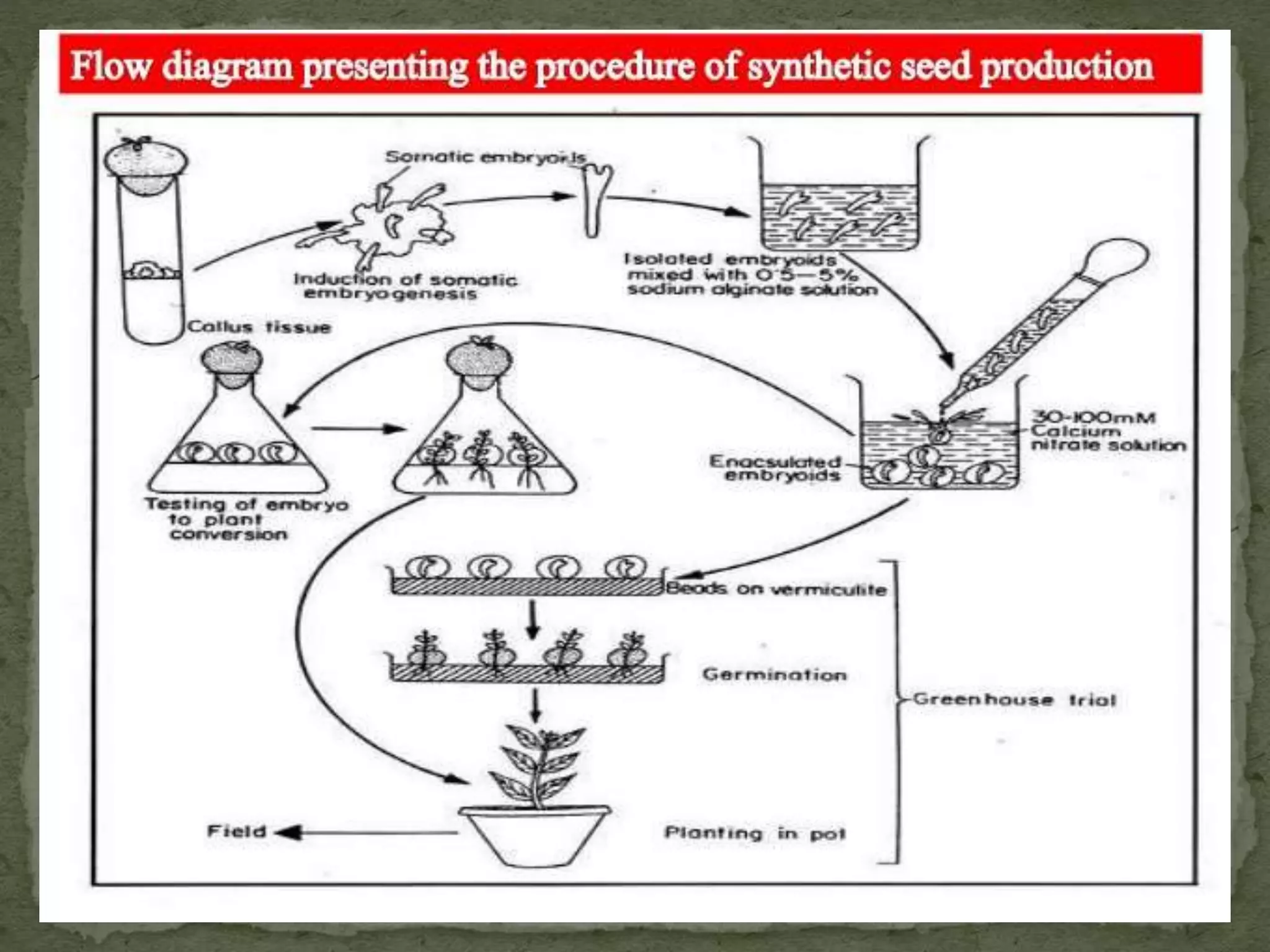
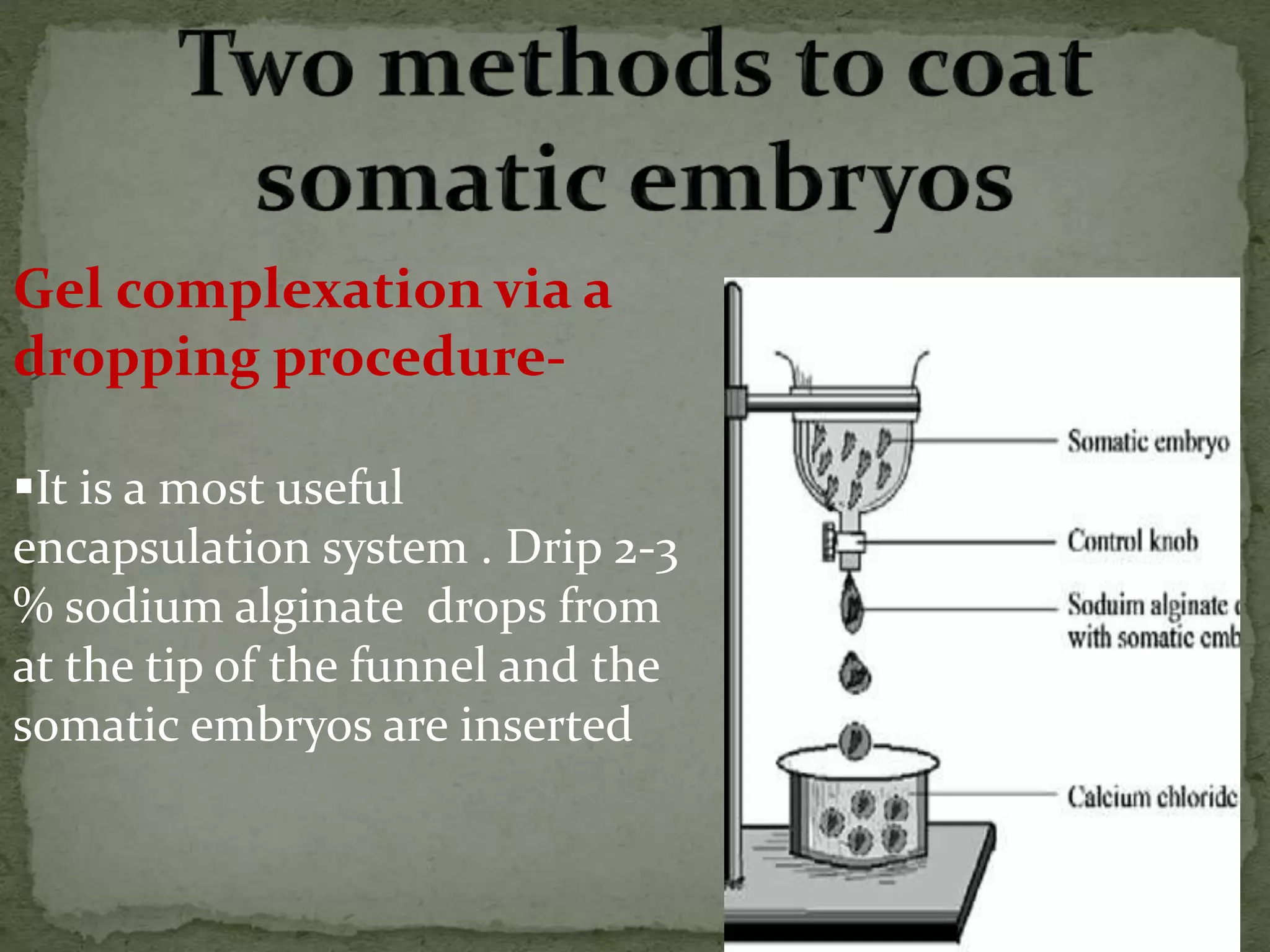
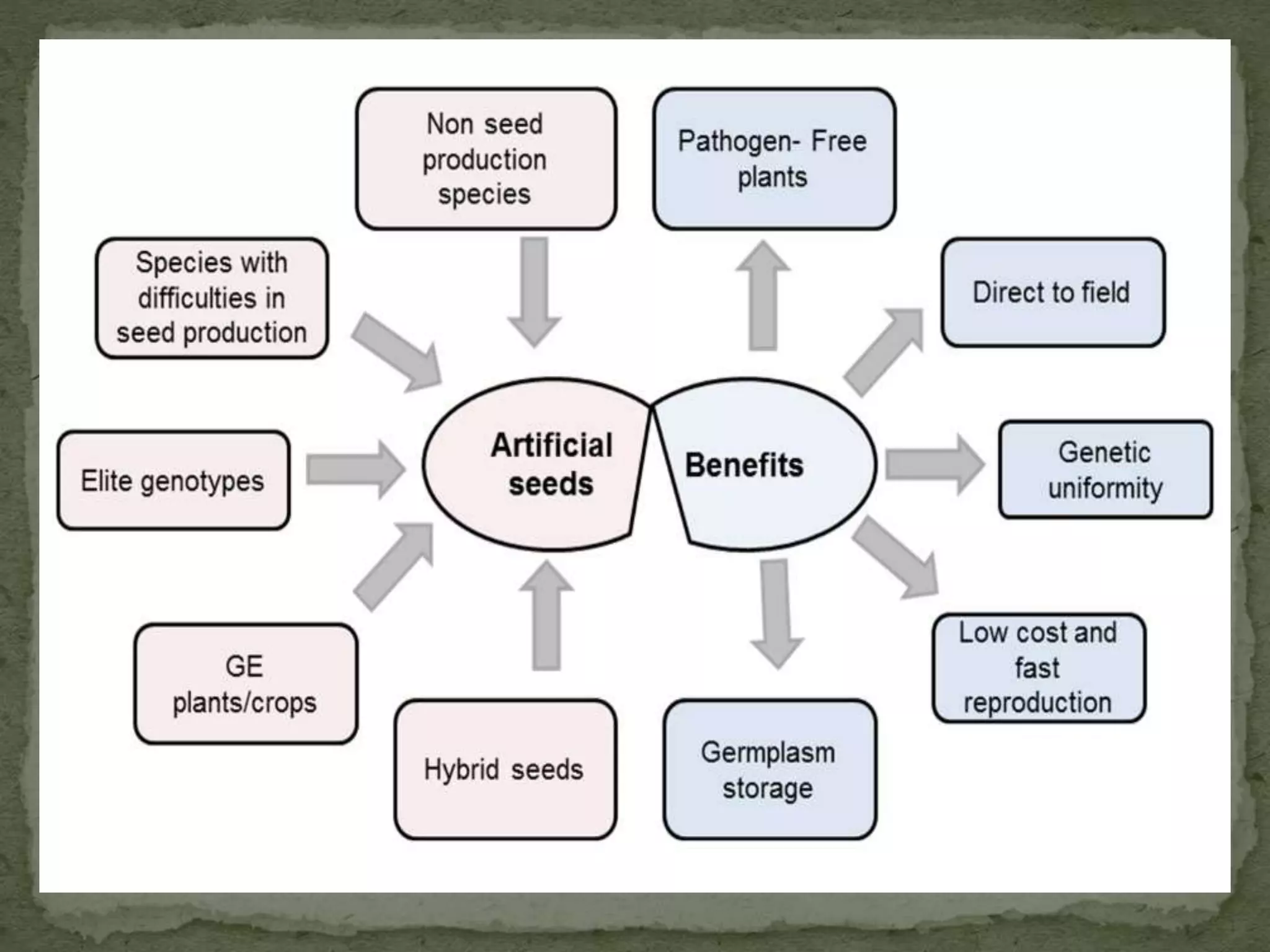
This document discusses synthetic seeds, which are artificially encapsulated plant materials like somatic embryos, shoot buds, or cell aggregates that can be used for sowing like natural seeds. Synthetic seeds were originally only referred to somatic embryos for economic crop production, but now include other micropropagules. The first successful synthetic seed was produced in 1982 in carrot. There are two main types - desiccated synthetic seeds which are produced from desiccation tolerant species and hydrated synthetic seeds which encapsulate somatic embryos or shoots in hydrogels like sodium alginate. The encapsulation process involves a plant propagule, a gelling matrix that can include nutrients, and an artificial seed coat to develop the encapsulation system. Common encapsulation