PRODUCTION OF
RECOMBINANT
VACCINES
Present by: Sristi Rajput
Roll No.: 201651
M.Sc. Biotechnology
III Semester
Central University of Haryana
INTRODUCTION
● Biological preparation that
provides active acquired
immunity
● Stimulates body’s immune
system
● First successful case of
vaccination was performed
by Edward Jenner in 1796
APPROACHES FOR VACCINEDEVELOPMENT
RECOMBINANT VACCINE
● Generated using recombinant DNA technology
● Manufactured with the assistance of expression systems
Escherichia coli
Ease of
bioprocessing and
scale-up
Strain engineering
Lower cost
Shorter production
time
Recombinant
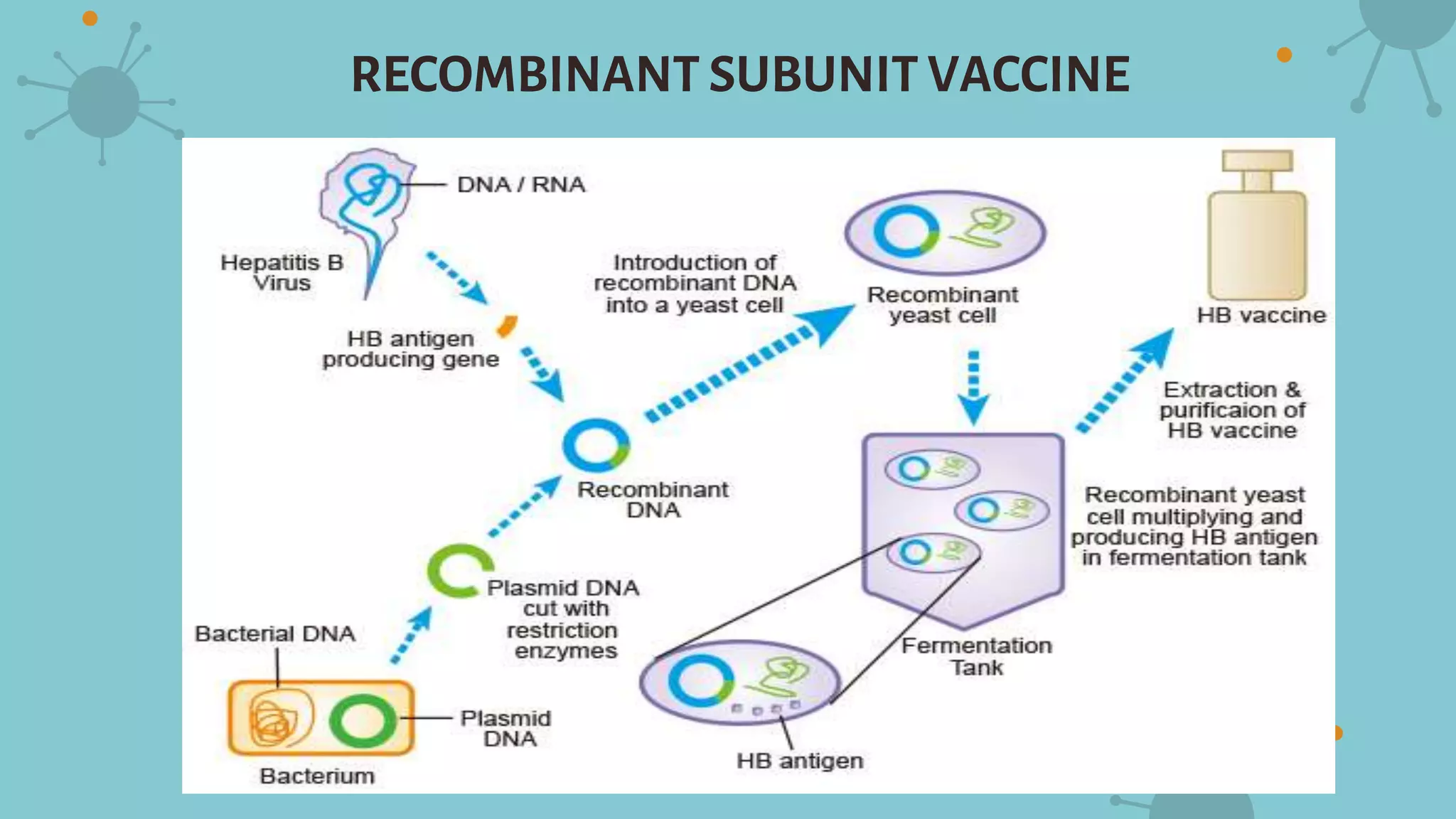
Subunit Vaccines
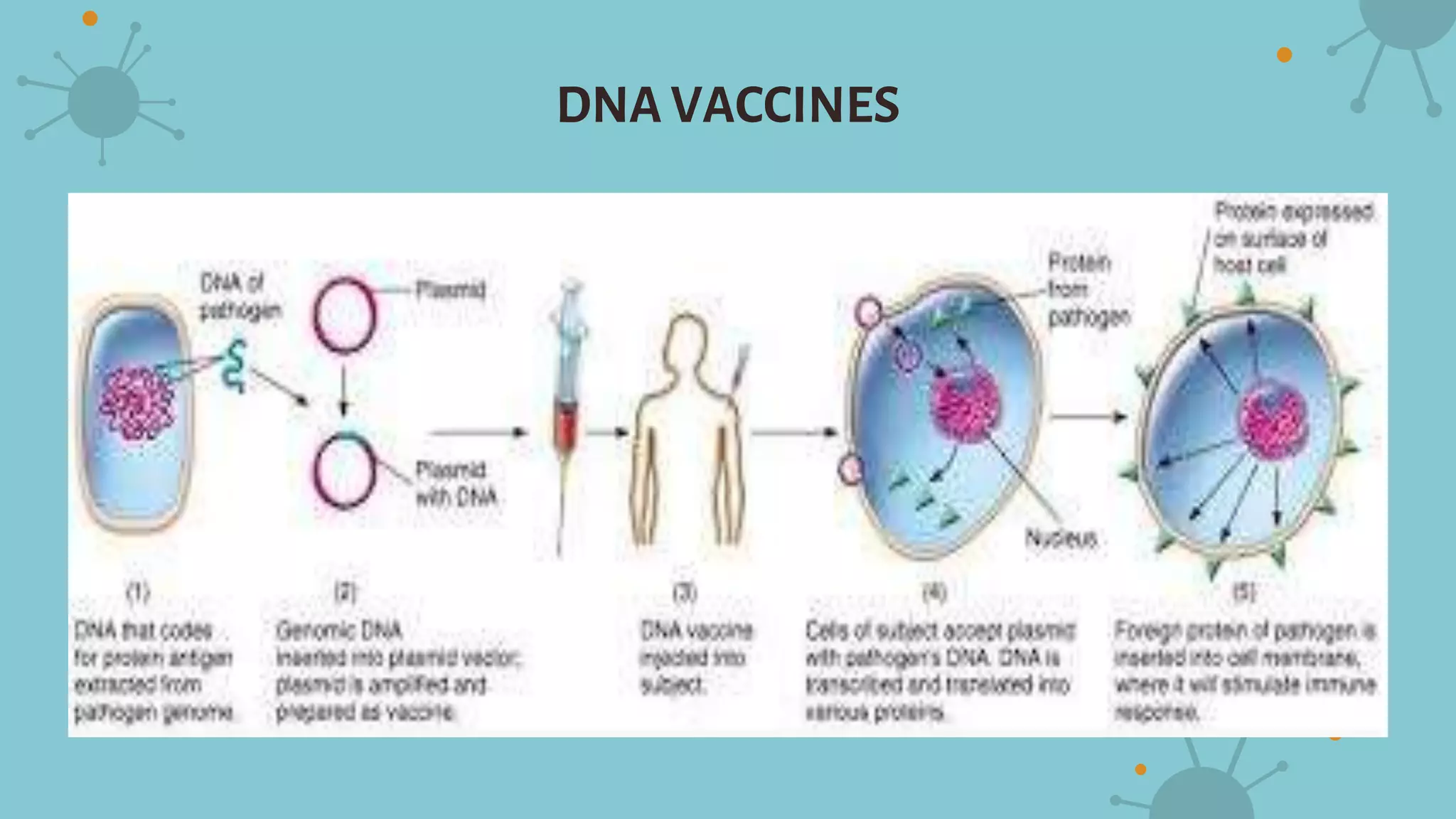
DNA Vaccines
Use the genetic material
of the pathogen itself to
immunize the individual
Recombinant
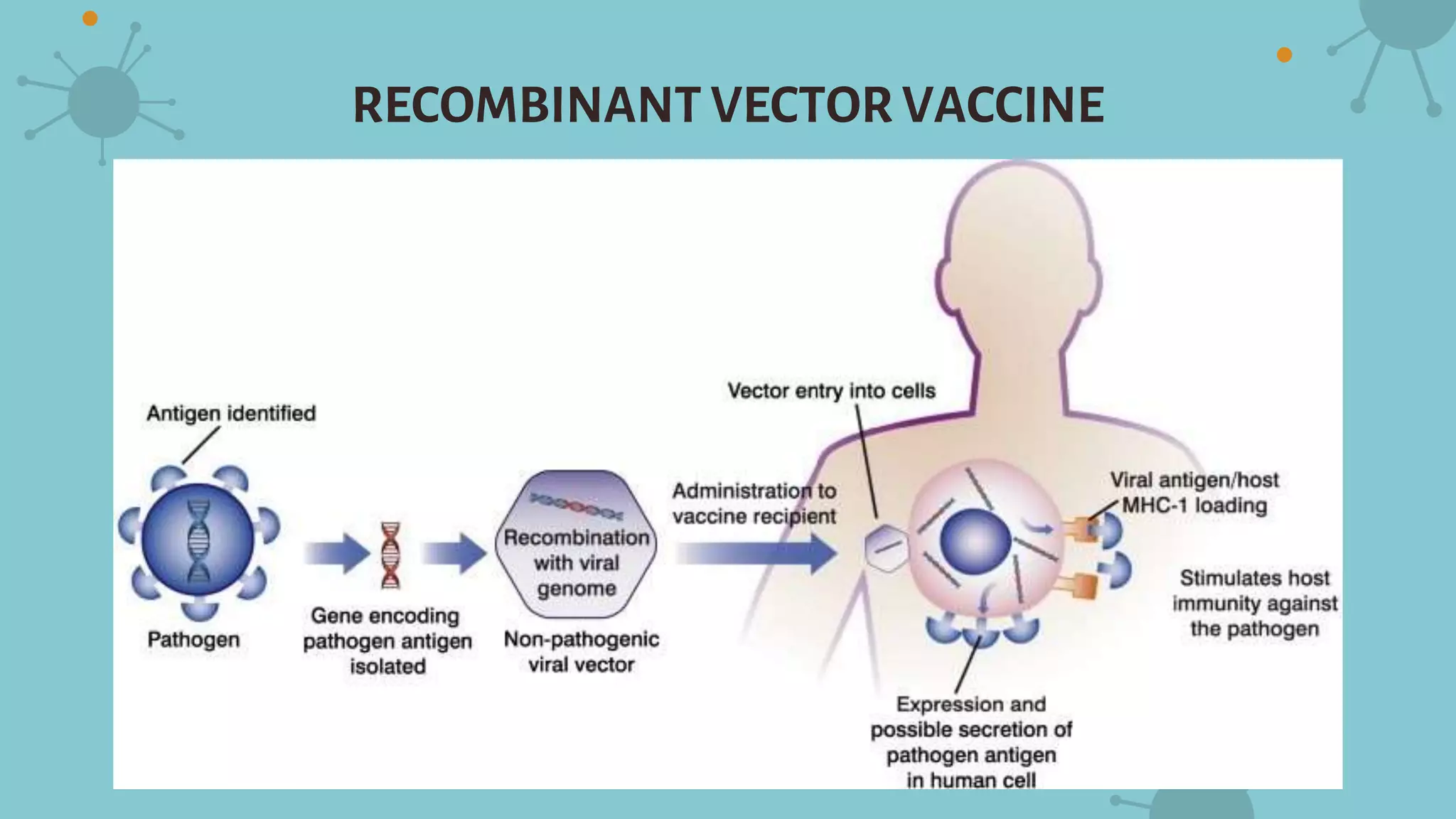
Vector Vaccines
Genes that encode
antigens isolated from
a pathogen can be
inserted into
nonvirulent viruses or
bacteria
TYPES OFRECOMBINANTVACCINE
Involves cloning of gene
encoding immunogenic
protein and its
expression in bacterial,
yeast or mammalian
cell
RECOMBINANT SUBUNIT VACCINE
DNA VACCINES
RECOMBINANT VECTOR VACCINE
PRODUCTION OF A RECOMBINANT VACCINE
Yeast
Bioreactor
Shaker Incubator
BMMY
YDP
Broth
YPD+Zeocin
Petri Plakasi
Clinical Studies
Purification
Filtration
Preclinical Studies Formulation
STAGES FORVACCINE DEVELOPMENT
PRODUCTIONAND
QUALITYCONTROL
APPROVAL
PRECLINICALSTUDIES
CLINICALSTUDIES
1
2
3
4
DISCOVERYSTEPS
5
● Humoral and T-helper cell
response
● Safe
● Antigen can be made more
immunogenic
● Inexpensive
ADVANTAGES
● No cytotoxic T-cell response
● Polysaccharide vaccines can
not be made
● Usually multiple doses
required
● Adjuvants are needed
DISADVANTAGES
REFERENCES
https://www.who.int/health-
topics/vaccines-and-
immunization#tab=tab_1
https://www.nature.com/art
icles/d41586-020-01221-y
https://www.youtube.com/w
atch?v=BujoT1ZejZM
https://www.ncbi.nlm.nih.go
v/pmc/articles/PMC385421
2/
https://www.genscript.com/
recombinant-vaccine.html
https://www.youtube.com/w
atch?v=9KmqRu6rs78
THANKS!

Recombinant vaccines