Computer
Peripherals &
Interfacing
Topic: Synchronous & Asynchronous data transmission
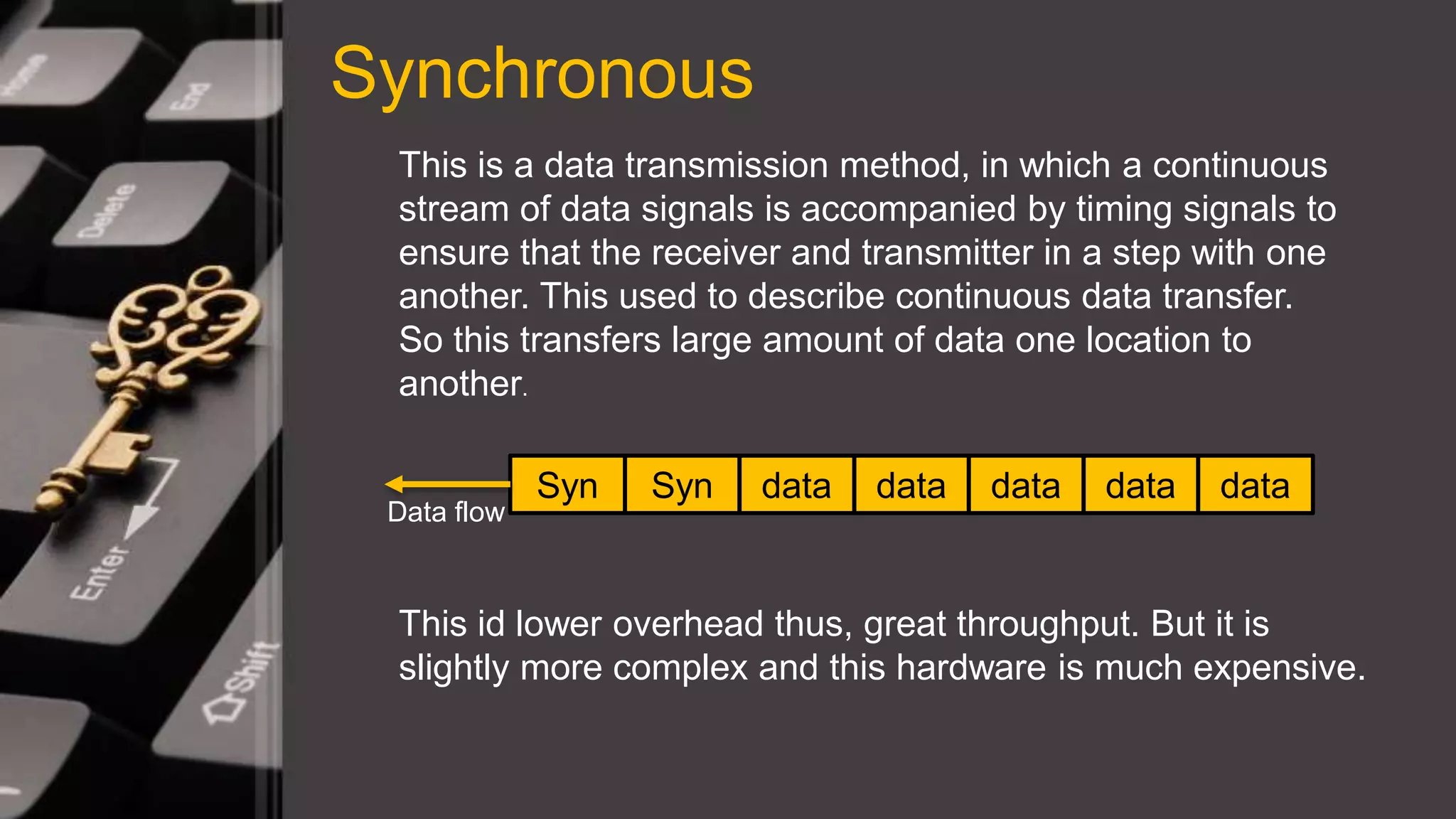
This is a data transmission method, in which a continuous
stream of data signals is accompanied by timing signals to
ensure that the receiver and transmitter in a step with one
another. This used to describe continuous data transfer.
So this transfers large amount of data one location to
another.
Synchronous
Syn Syn data data data data data
Data flow
This id lower overhead thus, great throughput. But it is
slightly more complex and this hardware is much expensive.
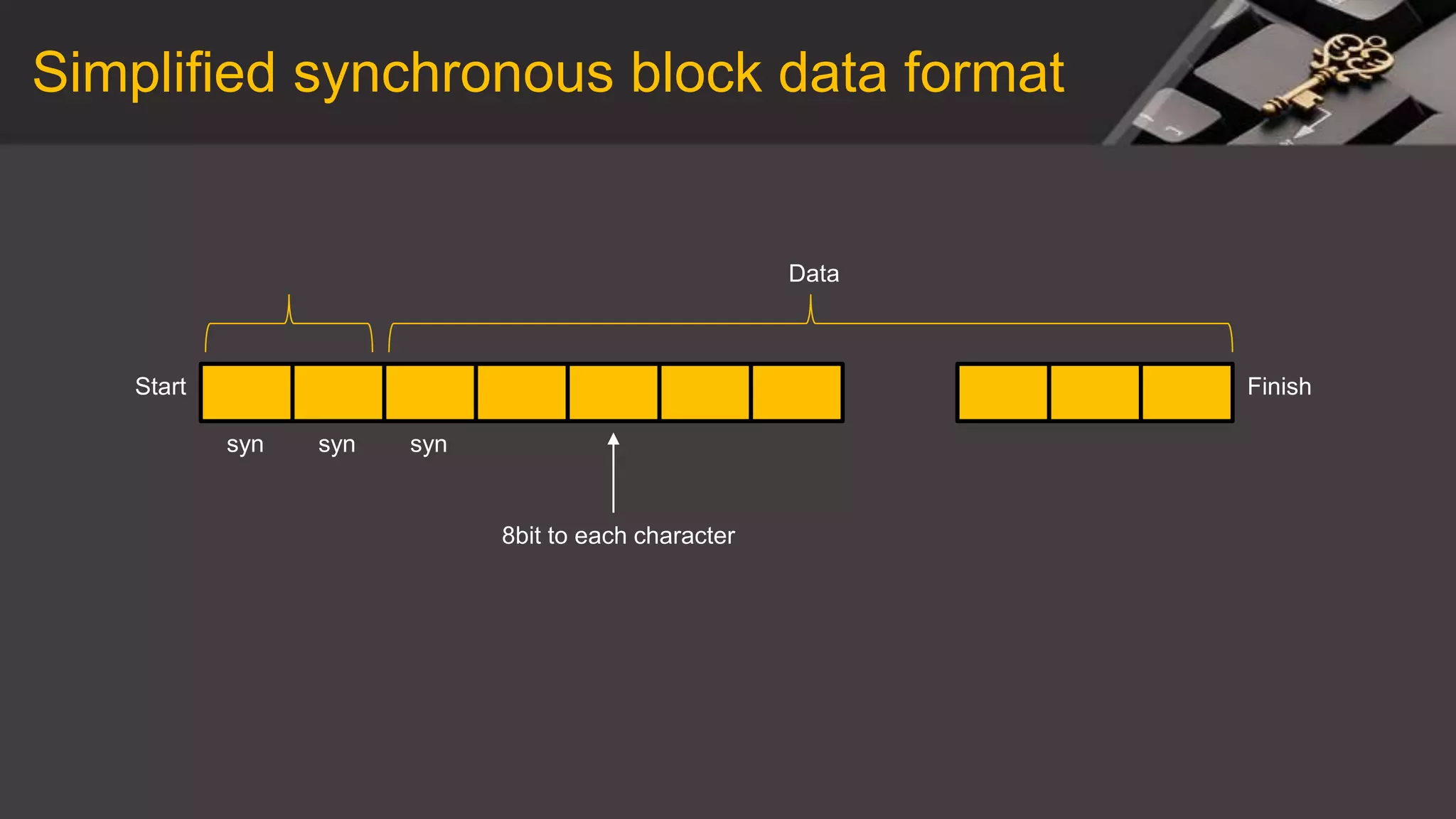
Simplified synchronous block data format
syn syn syn
FinishStart
8bit to each character
Data
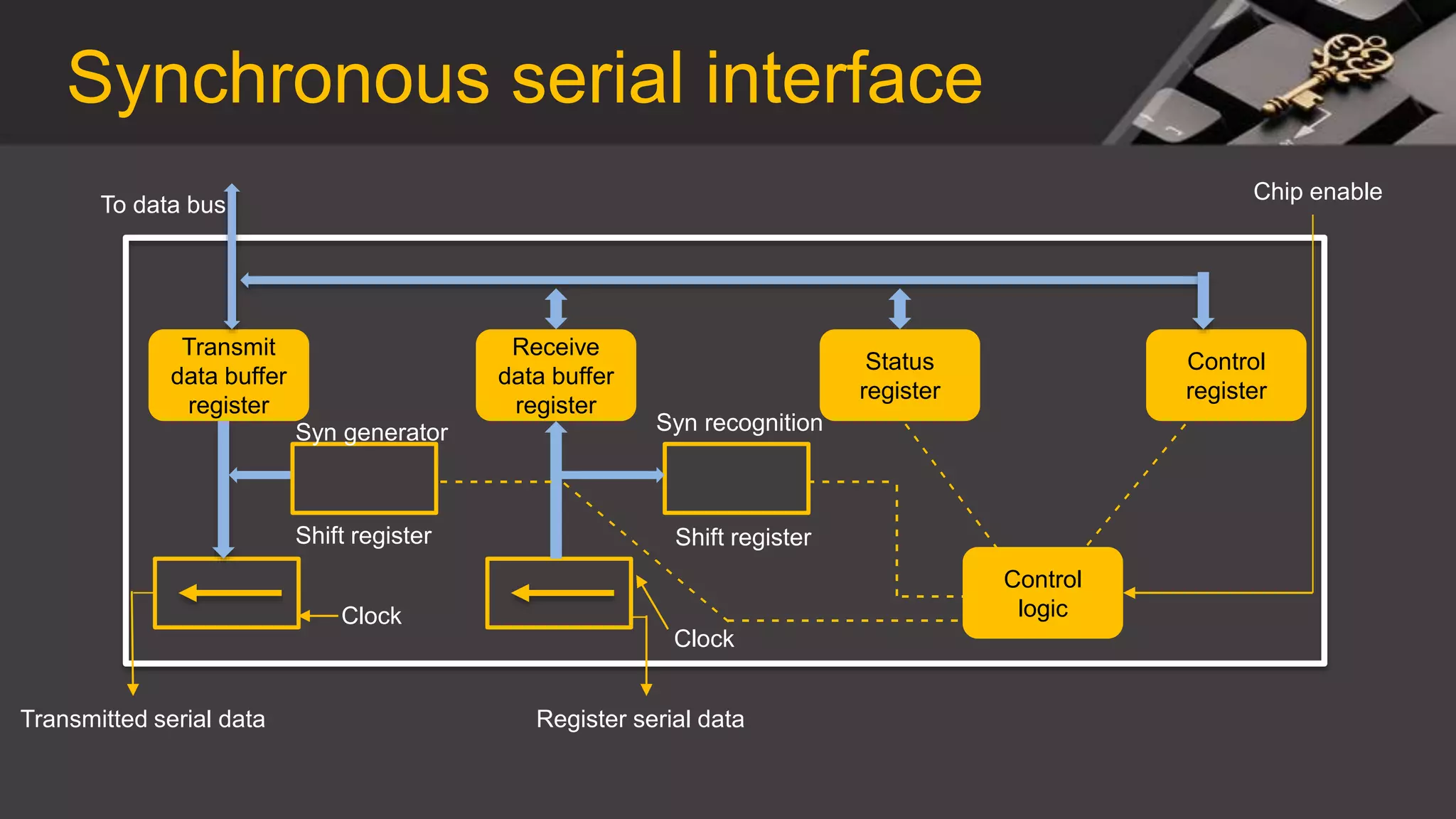
Synchronous serial interface
Transmit
data buffer
register
Receive
data buffer
register
Status
register
Control
register
Control
logic
To data bus
Chip enable
- - - - - - - - - - - -
--------
- - - - - -
- - - - - - - - - - - - - - - -
- - - - - - - -
Clock
Clock
Shift register Shift register
Syn generator Syn recognition
Transmitted serial data Register serial data
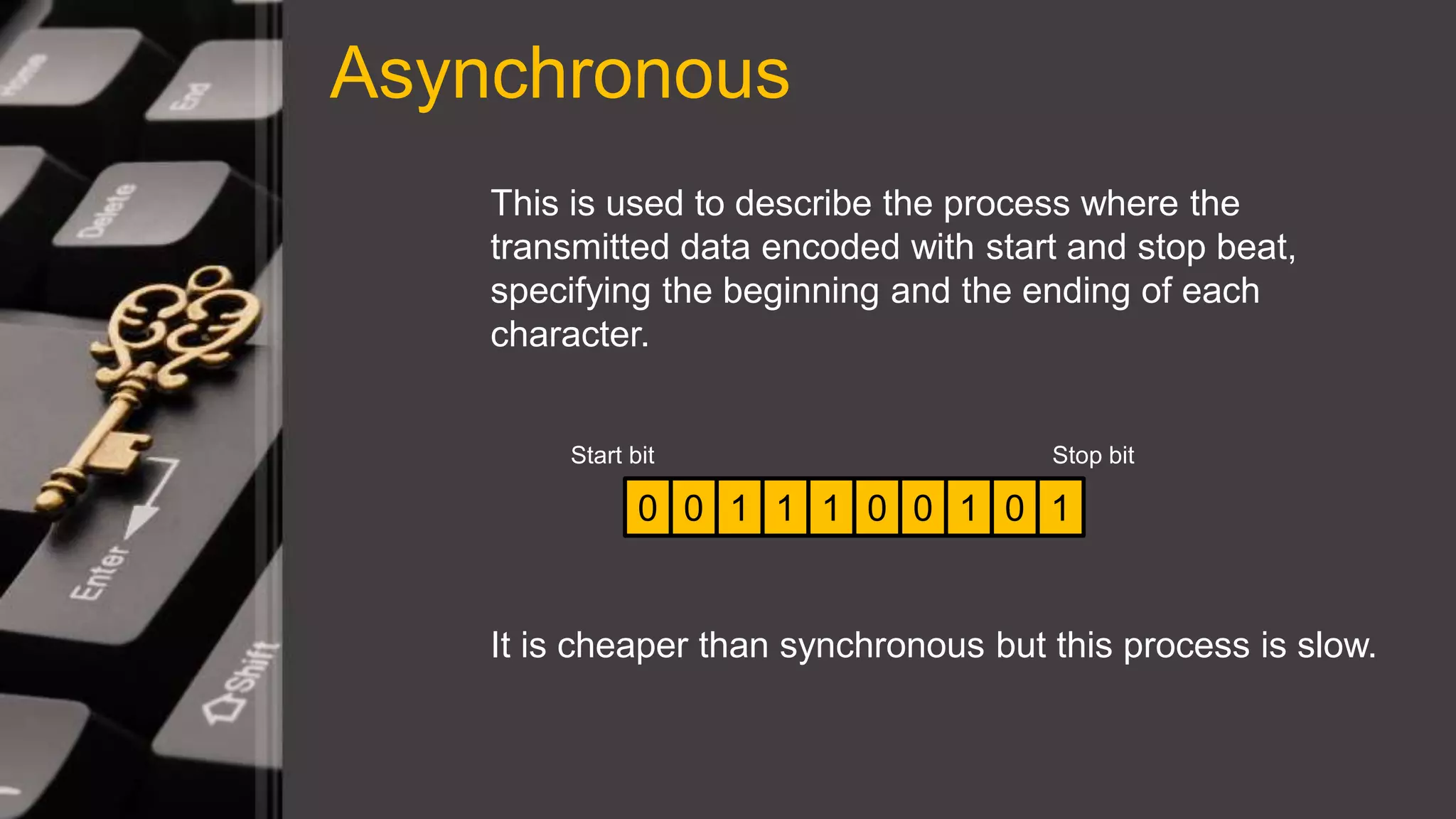
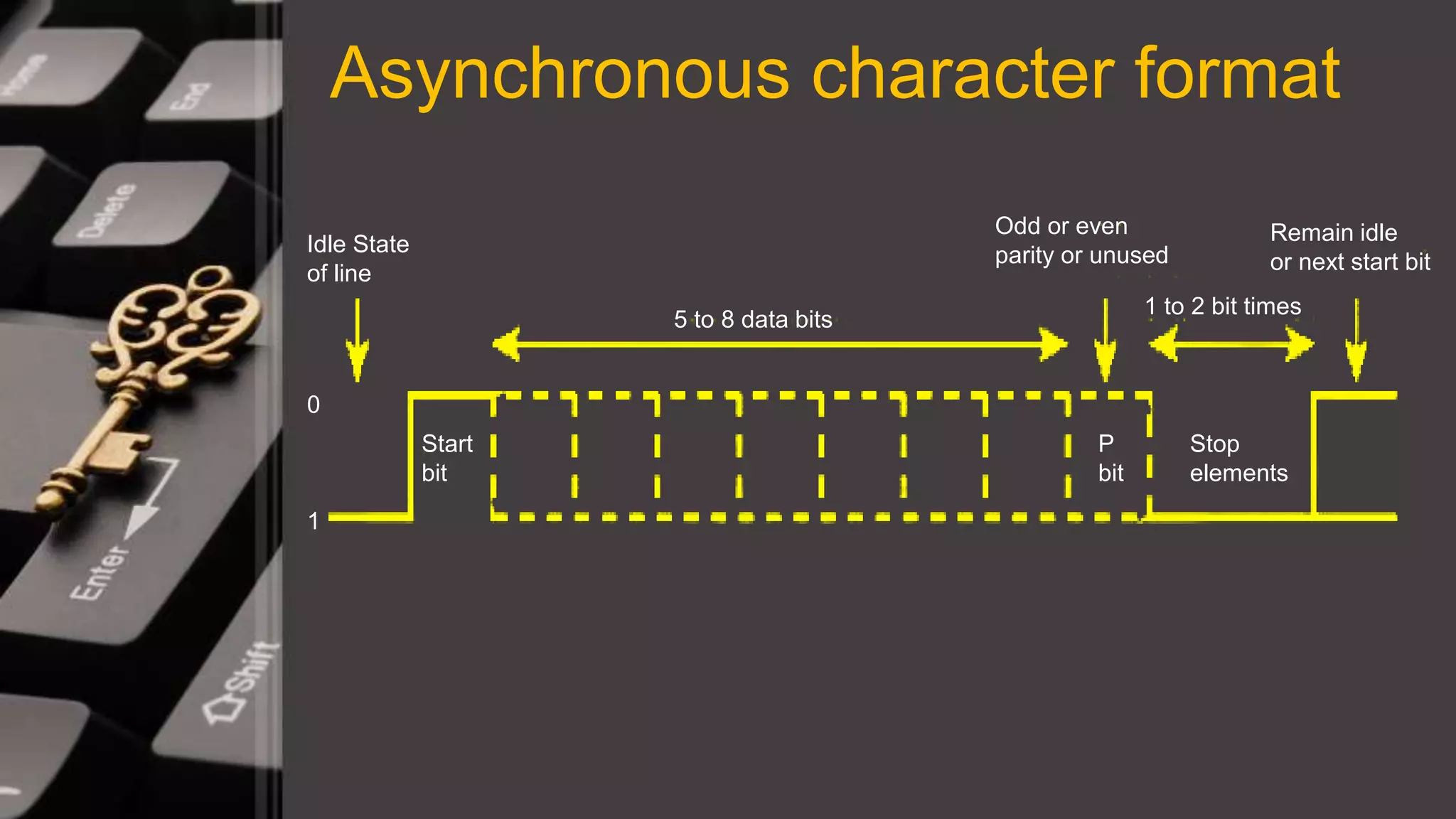
This is used to describe the process where the
transmitted data encoded with start and stop beat,
specifying the beginning and the ending of each
character.
Asynchronous
It is cheaper than synchronous but this process is slow.
0 0 1 1 1 0 0 1 0 1
Start bit Stop bit
Asynchronous character format
Idle State
of line
0
1
Start
bit
5 to 8 data bits
Odd or even
parity or unused
1 to 2 bit times
Stop
elements
Remain idle
or next start bit
P
bit
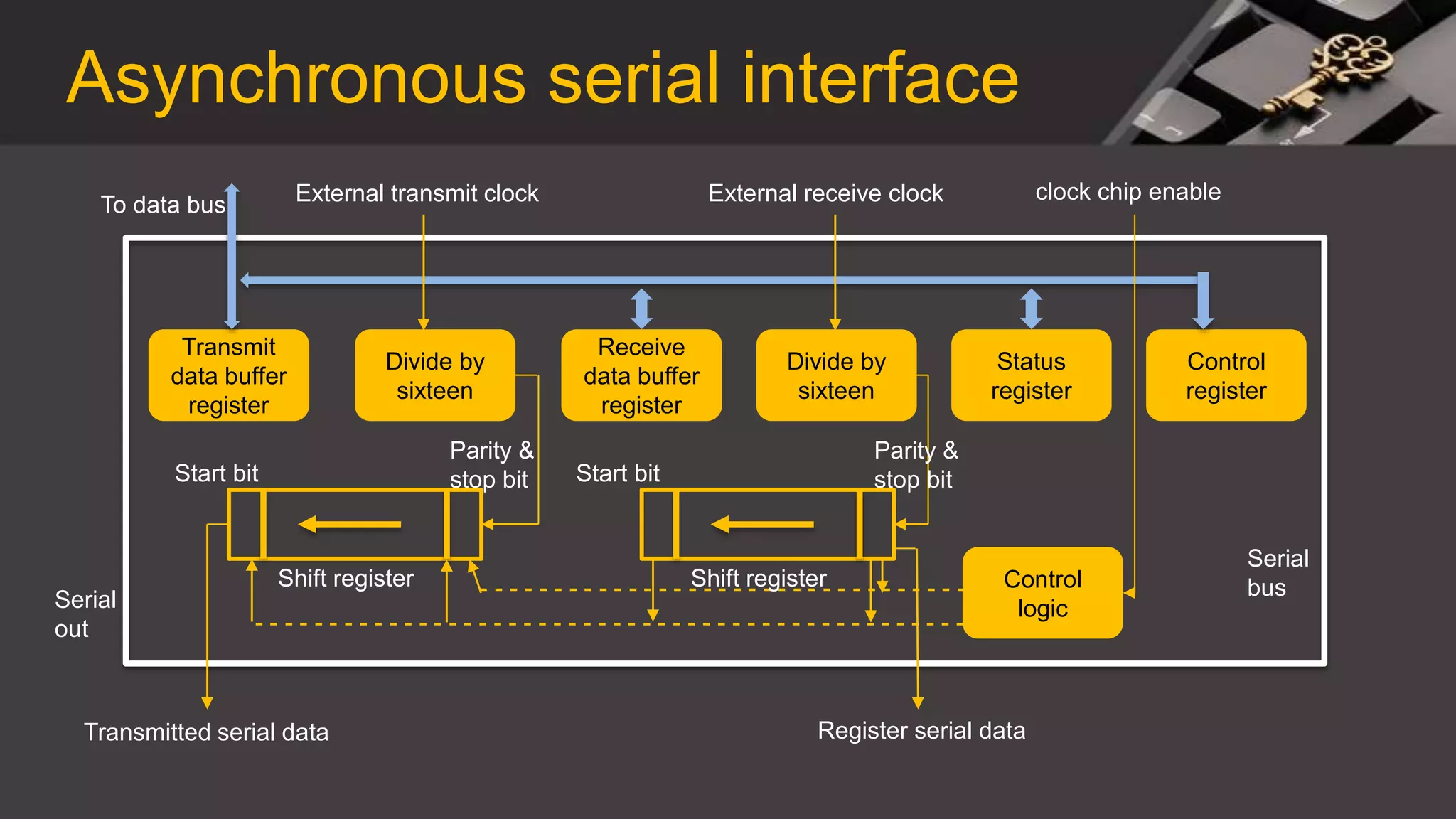
Asynchronous serial interface
Transmit
data buffer
register
Divide by
sixteen
Receive
data buffer
register
Divide by
sixteen
Status
register
Control
register
Control
logic
- - - - - - - - - - - - - - - - - - - - - - - - - - - - - - - - - - - - - - - - - - - - - - - -
- - - - - - - - - - - - - - - - - - - - - - - - - - - - - - - - -Shift register Shift register
Start bit Start bit
Parity &
stop bit
Parity &
stop bit
To data bus External transmit clock External receive clock clock chip enable
Transmitted serial data Register serial data
Serial
out
Serial
bus
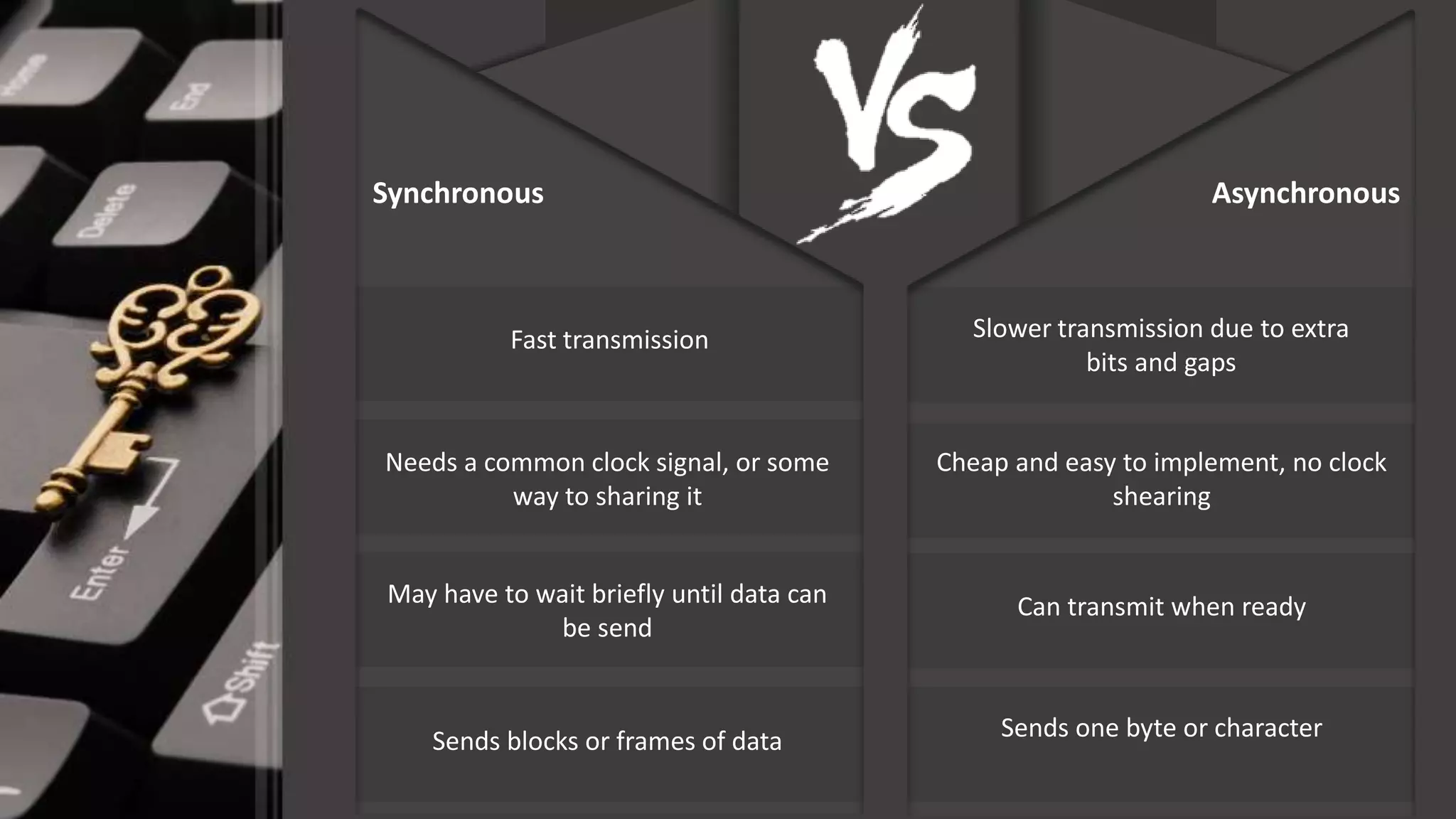
Sends blocks or frames of data
Fast transmission
Needs a common clock signal, or some
way to sharing it
May have to wait briefly until data can
be send
Synchronous Asynchronous
Sends one byte or character
Slower transmission due to extra
bits and gaps
Cheap and easy to implement, no clock
shearing
Can transmit when ready
Prepared by:
Ankon Gopal Banik
Front End Developer | WWF (Web With Friends)
m: +8801771981989
p: 027730402
e: agbanik2081@outlook.com
75-B, Kyetpara, Dhamrai, Dhaka, Bangladesh
www.wwfriends.org
Thank you

Synchronous & Asynchronous data transmission

  • 1.
  • 2.
    This is adata transmission method, in which a continuous stream of data signals is accompanied by timing signals to ensure that the receiver and transmitter in a step with one another. This used to describe continuous data transfer. So this transfers large amount of data one location to another. Synchronous Syn Syn data data data data data Data flow This id lower overhead thus, great throughput. But it is slightly more complex and this hardware is much expensive.
  • 3.
    Simplified synchronous blockdata format syn syn syn FinishStart 8bit to each character Data
  • 4.
    Synchronous serial interface Transmit databuffer register Receive data buffer register Status register Control register Control logic To data bus Chip enable - - - - - - - - - - - - -------- - - - - - - - - - - - - - - - - - - - - - - - - - - - - - - Clock Clock Shift register Shift register Syn generator Syn recognition Transmitted serial data Register serial data
  • 5.
    This is usedto describe the process where the transmitted data encoded with start and stop beat, specifying the beginning and the ending of each character. Asynchronous It is cheaper than synchronous but this process is slow. 0 0 1 1 1 0 0 1 0 1 Start bit Stop bit
  • 6.
    Asynchronous character format IdleState of line 0 1 Start bit 5 to 8 data bits Odd or even parity or unused 1 to 2 bit times Stop elements Remain idle or next start bit P bit
  • 7.
    Asynchronous serial interface Transmit databuffer register Divide by sixteen Receive data buffer register Divide by sixteen Status register Control register Control logic - - - - - - - - - - - - - - - - - - - - - - - - - - - - - - - - - - - - - - - - - - - - - - - - - - - - - - - - - - - - - - - - - - - - - - - - - - - - - - - - -Shift register Shift register Start bit Start bit Parity & stop bit Parity & stop bit To data bus External transmit clock External receive clock clock chip enable Transmitted serial data Register serial data Serial out Serial bus
  • 8.
    Sends blocks orframes of data Fast transmission Needs a common clock signal, or some way to sharing it May have to wait briefly until data can be send Synchronous Asynchronous Sends one byte or character Slower transmission due to extra bits and gaps Cheap and easy to implement, no clock shearing Can transmit when ready
  • 9.
    Prepared by: Ankon GopalBanik Front End Developer | WWF (Web With Friends) m: +8801771981989 p: 027730402 e: agbanik2081@outlook.com 75-B, Kyetpara, Dhamrai, Dhaka, Bangladesh www.wwfriends.org
  • 10.