Summary report: Survey & Review of
Digital Forensic
Aung Thu Rha Hein (g5536871)
1st February 2014
Content
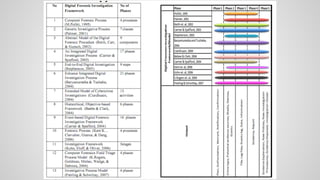
●
●
●
●
●

Papers Info
Paper objectives
Methodology
Challenges
Future Research
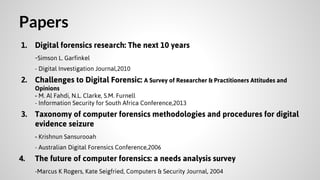
Papers
1. Digital forensics research: The next 10 years
-Simson L. Garfinkel
- Digital Investigation Journal,2010

2. Challenges to Digital Forensic: A Survey of Researcher & Practitioners Attitudes and
Opinions
- M. Al Fahdi, N.L. Clarke, S.M. Furnell
- Information Security for South Africa Conference,2013

3. Taxonomy of computer forensics methodologies and procedures for digital
evidence seizure
- Krishnun Sansurooah
- Australian Digital Forensics Conference,2006

4.

The future of computer forensics: a needs analysis survey
-Marcus K Rogers, Kate Seigfried, Computers & Security Journal, 2004
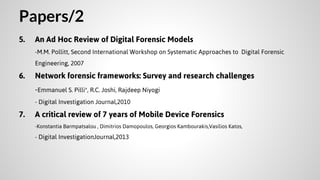
Papers/2
5.

An Ad Hoc Review of Digital Forensic Models
-M.M. Pollitt, Second International Workshop on Systematic Approaches to Digital Forensic
Engineering, 2007

6.

Network forensic frameworks: Survey and research challenges
-Emmanuel S. Pilli*, R.C. Joshi, Rajdeep Niyogi
- Digital Investigation Journal,2010

7.

A critical review of 7 years of Mobile Device Forensics
-Konstantia Barmpatsalou , Dimitrios Damopoulos, Georgios Kambourakis,Vasilios Katos,

- Digital InvestigationJournal,2013
Paper Objectives
1.

Digital forensics research: The next 10 years
- proposes a methodology to improve the digital forensic research
- point out today DF research challenges
- proposes a new research plan

2.

Challenges to Digital Forensic
- to understand the priority of challenges on Digital Forensic by taking a survey

3.

Taxonomy of computer forensics methodologies and procedures for
digital evidence seizure
- compare the forensic methodologies and propose a recommended methodology

4.

The future of computer forensics: a needs analysis survey
- makes a study on computer forensics to discover the challenge
Paper Objectives
5.

An Ad Hoc Review of Digital Forensic Models
- summary of 15 papers which represents about DF data models

6.

Network forensic frameworks: Survey and research challenges
-overview of network forensic field on tools & frameworks
-also point out Network Forensic research challenge

7.

A critical review of 7 years of Mobile Device Forensics
- through review of mobile device forensic by mobile platforms
Methodology
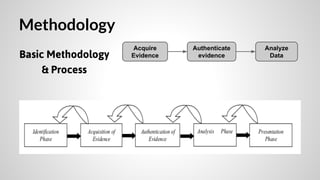
Basic Methodology
& Process

Acquire
Evidence

Authenticate
evidence

Analyze
Data
Methodology/2
●

●
●

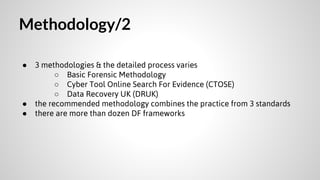
3 methodologies & the detailed process varies
○ Basic Forensic Methodology
○ Cyber Tool Online Search For Evidence (CTOSE)
○ Data Recovery UK (DRUK)
the recommended methodology combines the practice from 3 standards
there are more than dozen DF frameworks
Challenges
●
●

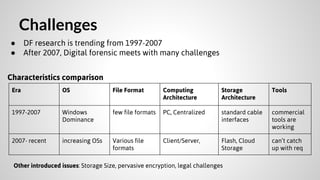
DF research is trending from 1997-2007
After 2007, Digital forensic meets with many challenges

Characteristics comparison
Era

OS

File Format

Computing
Architecture

Storage
Architecture

Tools

1997-2007

Windows
Dominance

few file formats

PC, Centralized

standard cable
interfaces

commercial
tools are
working

2007- recent

increasing OSs

Various file
formats

Client/Server,

Flash, Cloud
Storage

can’t catch
up with req

Other introduced issues: Storage Size, pervasive encryption, legal challenges
Challenges/2
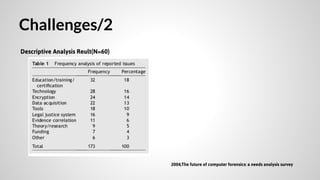
Descriptive Analysis Reult(N=60)

2004,The future of computer forensics: a needs analysis survey
Challenges/3
●

●

●
●
●

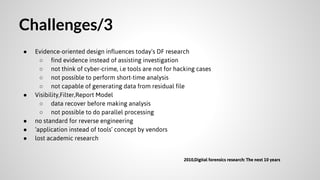
Evidence-oriented design influences today’s DF research
○ find evidence instead of assisting investigation
○ not think of cyber-crime, i.e tools are not for hacking cases
○ not possible to perform short-time analysis
○ not capable of generating data from residual file
Visibility,Filter,Report Model
○ data recover before making analysis
○ not possible to do parallel processing
no standard for reverse engineering
‘application instead of tools’ concept by vendors
lost academic research
2010,Digital forensics research: The next 10 years
Challenges/4
●
●
●

●
●

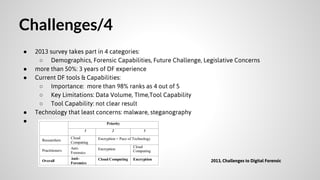
2013 survey takes part in 4 categories:
○ Demographics, Forensic Capabilities, Future Challenge, Legislative Concerns
more than 50%: 3 years of DF experience
Current DF tools & Capabilities:
○ Importance: more than 98% ranks as 4 out of 5
○ Key Limitations: Data Volume, TIme,Tool Capability
○ Tool Capability: not clear result
Technology that least concerns: malware, steganography

2013, Challenges to Digital Forensic
Future Research
●

Challenge: Investigation & Analysis Time

●

Mobile and Network Forensic will be trending

●

anticipated future challenge: Cloud Computing, Anti-forensic, Encryption,Social Networking

●

Should adopt standards for case data, data abstractions and composable models

●

more data abstractions should create

●

should standardise development diversity

●

alternative analysis model: parallel processing, stochastic analysis ...

●

doesn’t work in small-scale dataset

●

standardized test data

Survey & Review of Digital Forensic

  • 1.
    Summary report: Survey& Review of Digital Forensic Aung Thu Rha Hein (g5536871) 1st February 2014
  • 2.
  • 3.
    Papers 1. Digital forensicsresearch: The next 10 years -Simson L. Garfinkel - Digital Investigation Journal,2010 2. Challenges to Digital Forensic: A Survey of Researcher & Practitioners Attitudes and Opinions - M. Al Fahdi, N.L. Clarke, S.M. Furnell - Information Security for South Africa Conference,2013 3. Taxonomy of computer forensics methodologies and procedures for digital evidence seizure - Krishnun Sansurooah - Australian Digital Forensics Conference,2006 4. The future of computer forensics: a needs analysis survey -Marcus K Rogers, Kate Seigfried, Computers & Security Journal, 2004
  • 4.
    Papers/2 5. An Ad HocReview of Digital Forensic Models -M.M. Pollitt, Second International Workshop on Systematic Approaches to Digital Forensic Engineering, 2007 6. Network forensic frameworks: Survey and research challenges -Emmanuel S. Pilli*, R.C. Joshi, Rajdeep Niyogi - Digital Investigation Journal,2010 7. A critical review of 7 years of Mobile Device Forensics -Konstantia Barmpatsalou , Dimitrios Damopoulos, Georgios Kambourakis,Vasilios Katos, - Digital InvestigationJournal,2013
  • 5.
    Paper Objectives 1. Digital forensicsresearch: The next 10 years - proposes a methodology to improve the digital forensic research - point out today DF research challenges - proposes a new research plan 2. Challenges to Digital Forensic - to understand the priority of challenges on Digital Forensic by taking a survey 3. Taxonomy of computer forensics methodologies and procedures for digital evidence seizure - compare the forensic methodologies and propose a recommended methodology 4. The future of computer forensics: a needs analysis survey - makes a study on computer forensics to discover the challenge
  • 6.
    Paper Objectives 5. An AdHoc Review of Digital Forensic Models - summary of 15 papers which represents about DF data models 6. Network forensic frameworks: Survey and research challenges -overview of network forensic field on tools & frameworks -also point out Network Forensic research challenge 7. A critical review of 7 years of Mobile Device Forensics - through review of mobile device forensic by mobile platforms
  • 7.
  • 8.
    Methodology/2 ● ● ● 3 methodologies &the detailed process varies ○ Basic Forensic Methodology ○ Cyber Tool Online Search For Evidence (CTOSE) ○ Data Recovery UK (DRUK) the recommended methodology combines the practice from 3 standards there are more than dozen DF frameworks
  • 10.
    Challenges ● ● DF research istrending from 1997-2007 After 2007, Digital forensic meets with many challenges Characteristics comparison Era OS File Format Computing Architecture Storage Architecture Tools 1997-2007 Windows Dominance few file formats PC, Centralized standard cable interfaces commercial tools are working 2007- recent increasing OSs Various file formats Client/Server, Flash, Cloud Storage can’t catch up with req Other introduced issues: Storage Size, pervasive encryption, legal challenges
  • 11.
    Challenges/2 Descriptive Analysis Reult(N=60) 2004,Thefuture of computer forensics: a needs analysis survey
  • 12.
    Challenges/3 ● ● ● ● ● Evidence-oriented design influencestoday’s DF research ○ find evidence instead of assisting investigation ○ not think of cyber-crime, i.e tools are not for hacking cases ○ not possible to perform short-time analysis ○ not capable of generating data from residual file Visibility,Filter,Report Model ○ data recover before making analysis ○ not possible to do parallel processing no standard for reverse engineering ‘application instead of tools’ concept by vendors lost academic research 2010,Digital forensics research: The next 10 years
  • 13.
    Challenges/4 ● ● ● ● ● 2013 survey takespart in 4 categories: ○ Demographics, Forensic Capabilities, Future Challenge, Legislative Concerns more than 50%: 3 years of DF experience Current DF tools & Capabilities: ○ Importance: more than 98% ranks as 4 out of 5 ○ Key Limitations: Data Volume, TIme,Tool Capability ○ Tool Capability: not clear result Technology that least concerns: malware, steganography 2013, Challenges to Digital Forensic
  • 14.
    Future Research ● Challenge: Investigation& Analysis Time ● Mobile and Network Forensic will be trending ● anticipated future challenge: Cloud Computing, Anti-forensic, Encryption,Social Networking ● Should adopt standards for case data, data abstractions and composable models ● more data abstractions should create ● should standardise development diversity ● alternative analysis model: parallel processing, stochastic analysis ... ● doesn’t work in small-scale dataset ● standardized test data