BY :- VAIBHAV TAPSE
 Topics to be covered… 
 What is “computer Forensics” 
 Need of computer forensics 
 Goal of computer forensics 
 Components & Steps in computer forensics 
 Who uses Computer Forensics 
 Computer forensic tools 
 Computer forensic requirements 
 Applications
INTRODUCTION 
o Computer forensics is the process of identifying , 
preserving, analyzing and presenting the evidence in a 
manner that is legally acceptable. 
o Computer forensics is the application of computer 
investigation and analysis in the interest of 
determining potential legal evidence.
 NEED OF COMPUTER 
FORENSICS 
 To produce evidence in the court that 
can lead to the punishment of actual. 
 To ensure the integrity of the computer 
system. 
 To focus on the response to hi-tech 
ofenses, started to interwine.
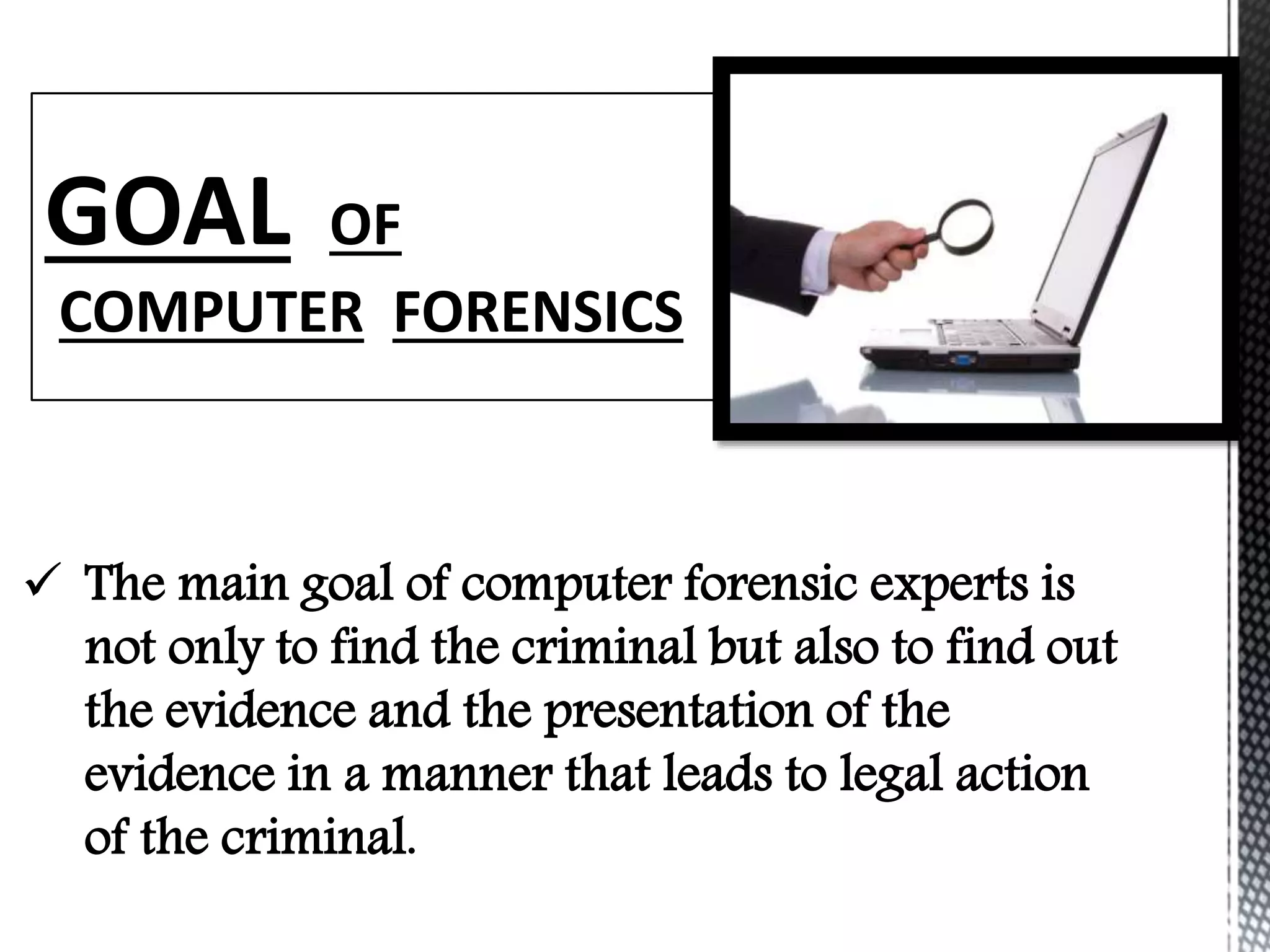
GOAL OF 
COMPUTER FORENSICS 
 The main goal of computer forensic experts is 
not only to find the criminal but also to find out 
the evidence and the presentation of the 
evidence in a manner that leads to legal action 
of the criminal.
Components and steps in computer 
forensics 
 Identifying (Acquisition) 
 Collecting 
 Preserving 
 Analyzing 
 Extracting 
 Documenting 
 Presenting
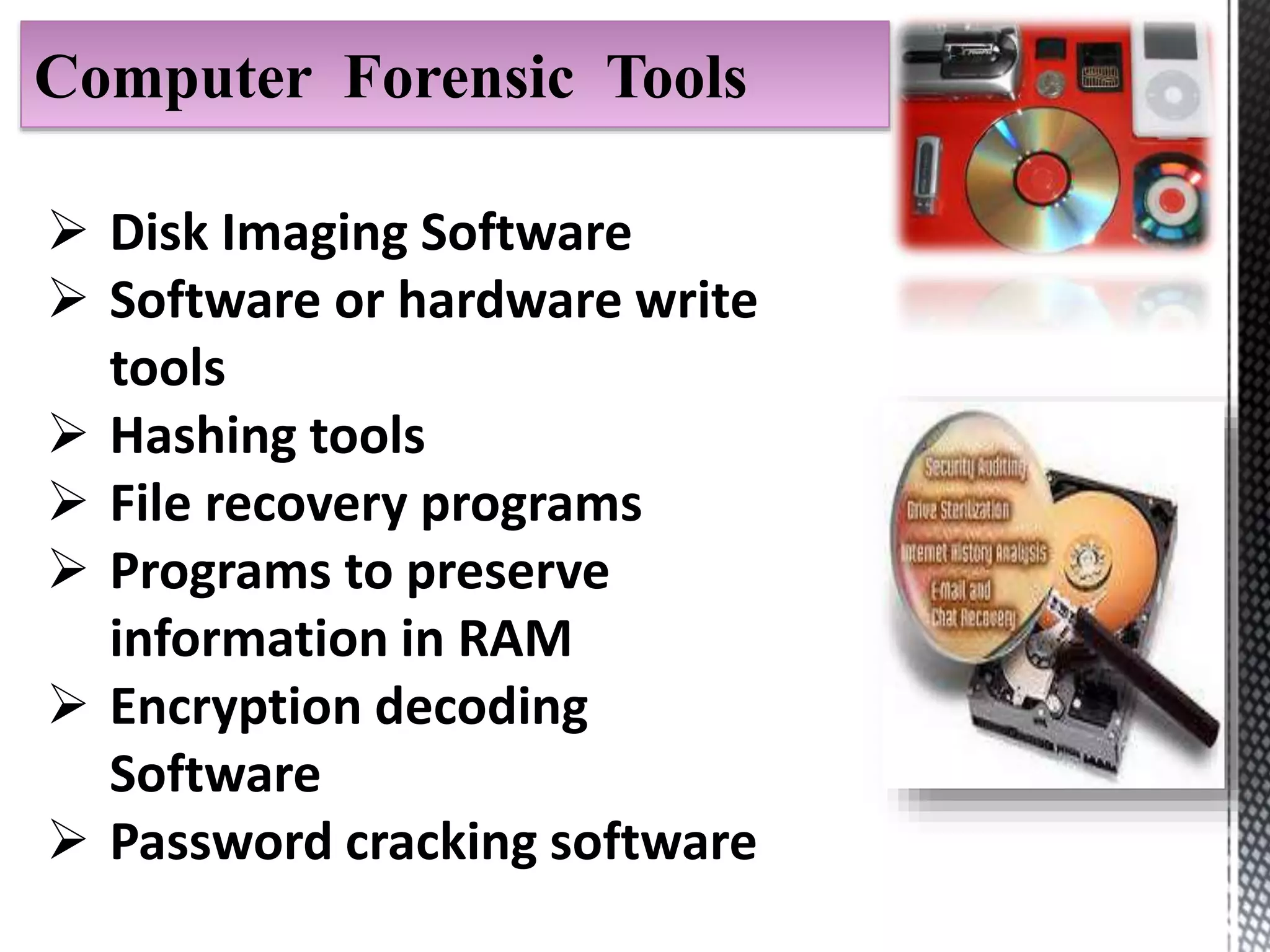
Computer Forensic Tools 
 Disk Imaging Software 
 Software or hardware write 
tools 
 Hashing tools 
 File recovery programs 
 Programs to preserve 
information in RAM 
 Encryption decoding 
Software 
 Password cracking software
 Hardware Requirement:- 
 Knowledge of BIOS:- 
 Operating System Requirements:- 
 Software requirements:- 
 Forensic Tools Requirements:-
Applications 
 Fianancial fraud detection 
 Criminal prosecution 
 Civil Litigation 
 Corporate security policy and acceptable use violations

computer forensics

  • 1.
  • 2.
     Topics tobe covered…  What is “computer Forensics”  Need of computer forensics  Goal of computer forensics  Components & Steps in computer forensics  Who uses Computer Forensics  Computer forensic tools  Computer forensic requirements  Applications
  • 3.
    INTRODUCTION o Computerforensics is the process of identifying , preserving, analyzing and presenting the evidence in a manner that is legally acceptable. o Computer forensics is the application of computer investigation and analysis in the interest of determining potential legal evidence.
  • 4.
     NEED OFCOMPUTER FORENSICS  To produce evidence in the court that can lead to the punishment of actual.  To ensure the integrity of the computer system.  To focus on the response to hi-tech ofenses, started to interwine.
  • 5.
    GOAL OF COMPUTERFORENSICS  The main goal of computer forensic experts is not only to find the criminal but also to find out the evidence and the presentation of the evidence in a manner that leads to legal action of the criminal.
  • 6.
    Components and stepsin computer forensics  Identifying (Acquisition)  Collecting  Preserving  Analyzing  Extracting  Documenting  Presenting
  • 9.
    Computer Forensic Tools  Disk Imaging Software  Software or hardware write tools  Hashing tools  File recovery programs  Programs to preserve information in RAM  Encryption decoding Software  Password cracking software
  • 10.
     Hardware Requirement:-  Knowledge of BIOS:-  Operating System Requirements:-  Software requirements:-  Forensic Tools Requirements:-
  • 11.
    Applications  Fianancialfraud detection  Criminal prosecution  Civil Litigation  Corporate security policy and acceptable use violations