DIGITAL FORENSICS :
PRINCIPLES AND
PROCEDURES
S1 Teknologi Informasi
UNIVERSITAS TEKNOKRAT INDONESIA
Maret 2022
Bandarlampung
By : Jupriyadi
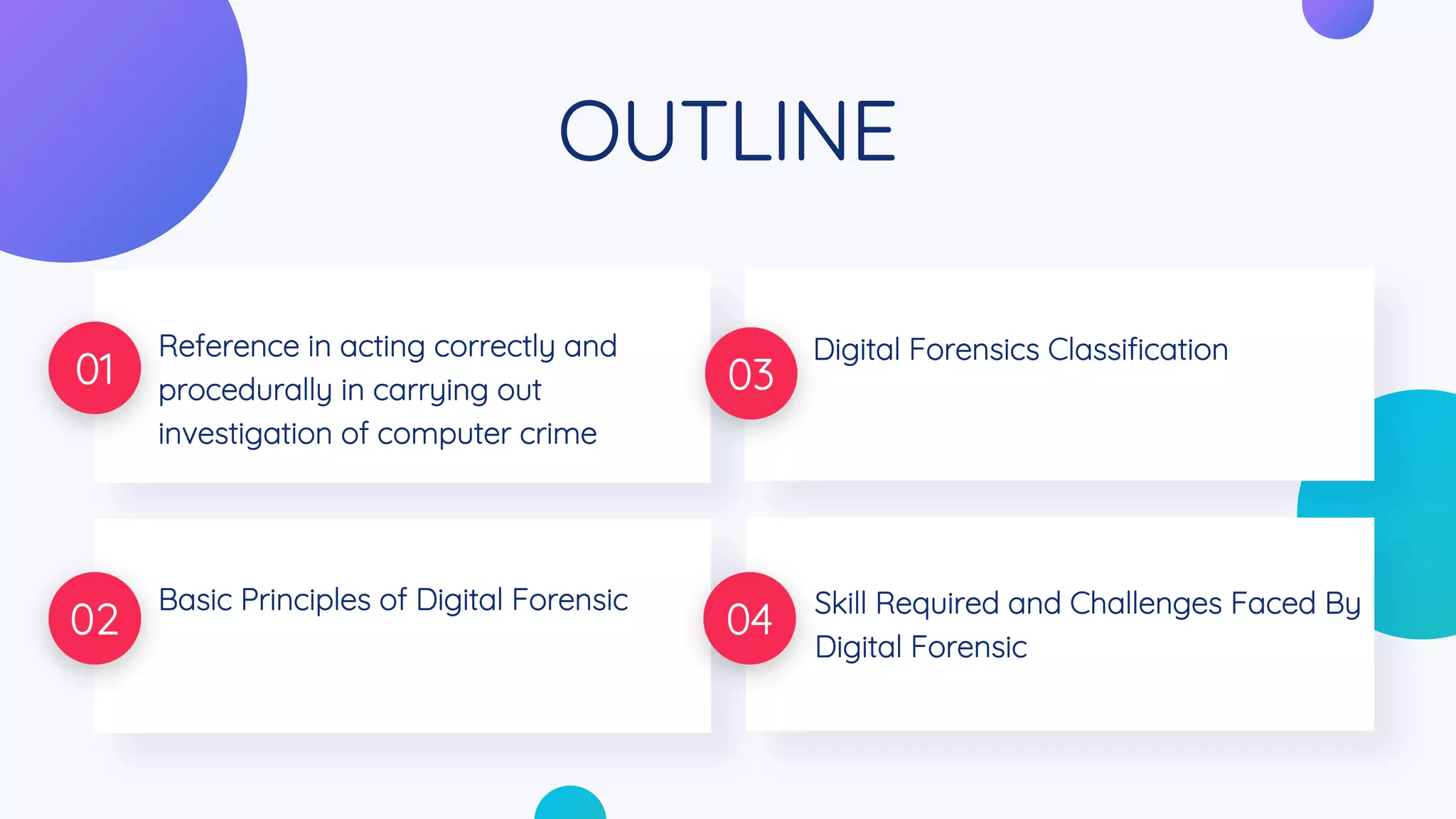
OUTLINE
Reference in acting correctly and
procedurally in carrying out
investigation of computer crime
01 03
Basic Principles of Digital Forensic
02 04
Digital Forensics Classification
Skill Required and Challenges Faced By
Digital Forensic
Reference in acting correctly and
procedurally in carrying out
investigation of computer crime
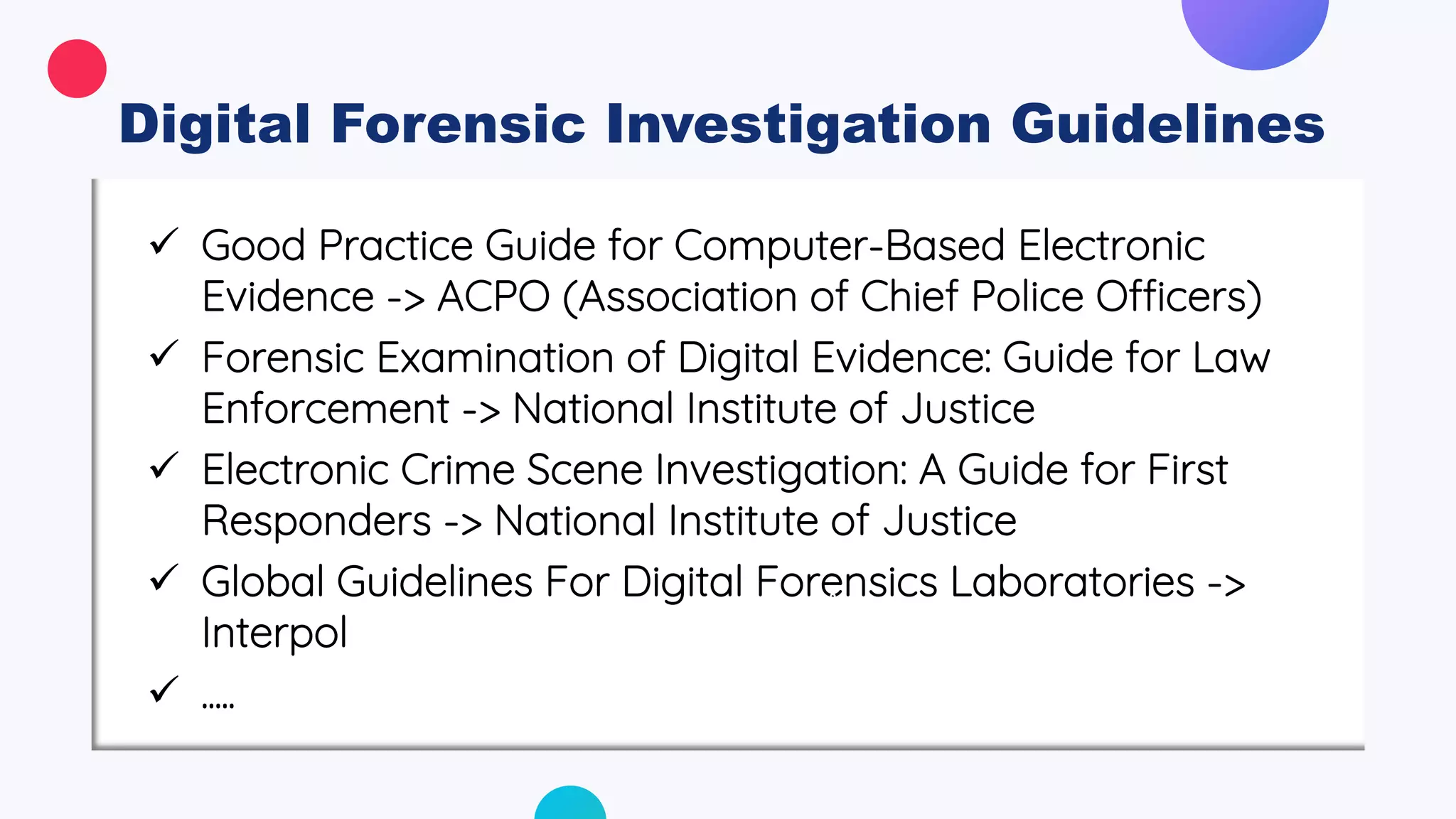
Digital Forensic Investigation Guidelines
 Good Practice Guide for Computer-Based Electronic
Evidence -> ACPO (Association of Chief Police Officers)
 Forensic Examination of Digital Evidence: Guide for Law
Enforcement -> National Institute of Justice
 Electronic Crime Scene Investigation: A Guide for First
Responders -> National Institute of Justice
 Global Guidelines For Digital Forensics Laboratories ->
Interpol
 .....
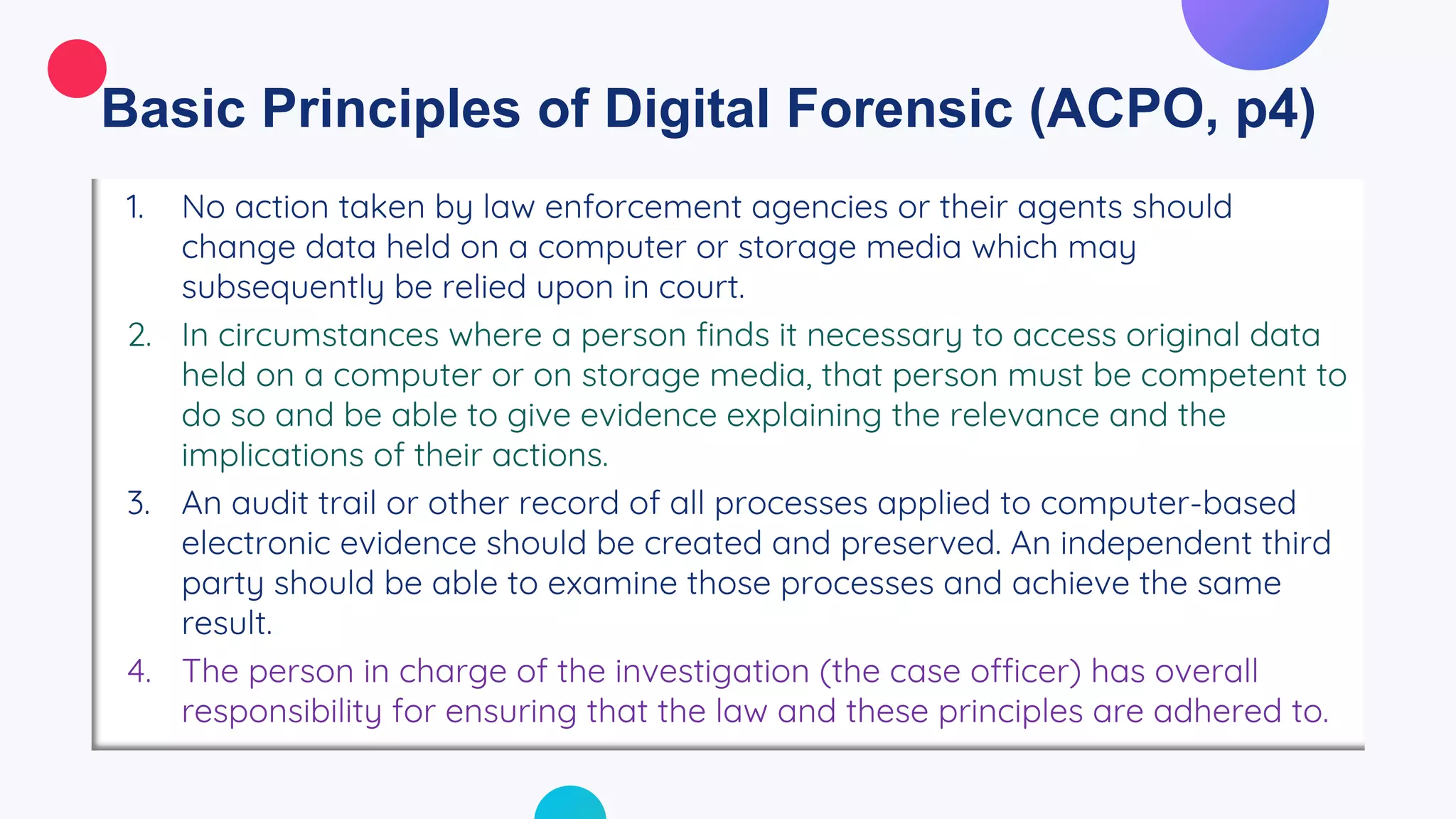
Basic Principles of Digital Forensic (ACPO, p4)
1. No action taken by law enforcement agencies or their agents should
change data held on a computer or storage media which may
subsequently be relied upon in court.
2. In circumstances where a person finds it necessary to access original data
held on a computer or on storage media, that person must be competent to
do so and be able to give evidence explaining the relevance and the
implications of their actions.
3. An audit trail or other record of all processes applied to computer-based
electronic evidence should be created and preserved. An independent third
party should be able to examine those processes and achieve the same
result.
4. The person in charge of the investigation (the case officer) has overall
responsibility for ensuring that the law and these principles are adhered to.
Digital Forensics Classification
• Computer Forensics
• Mobile Forensics
• Audio Forensics
• Video Forensics
• Image Forensics
• Cyber Forensics
Source : Muhammad Nuh Al Azhar
Digital Forensic : Practical Guidelines for Computer Investigation
Other :
• Network Forensics
• Database Forensics
• Wireless Forensics
• Malware Forensics
• Mobile Phone Forensics
• Memory Forensics
Digital Forensic Processes
Broad Process Steps :
1. Identification
2. Preservation
3. Analysis
4. Documentation
5. Presentation
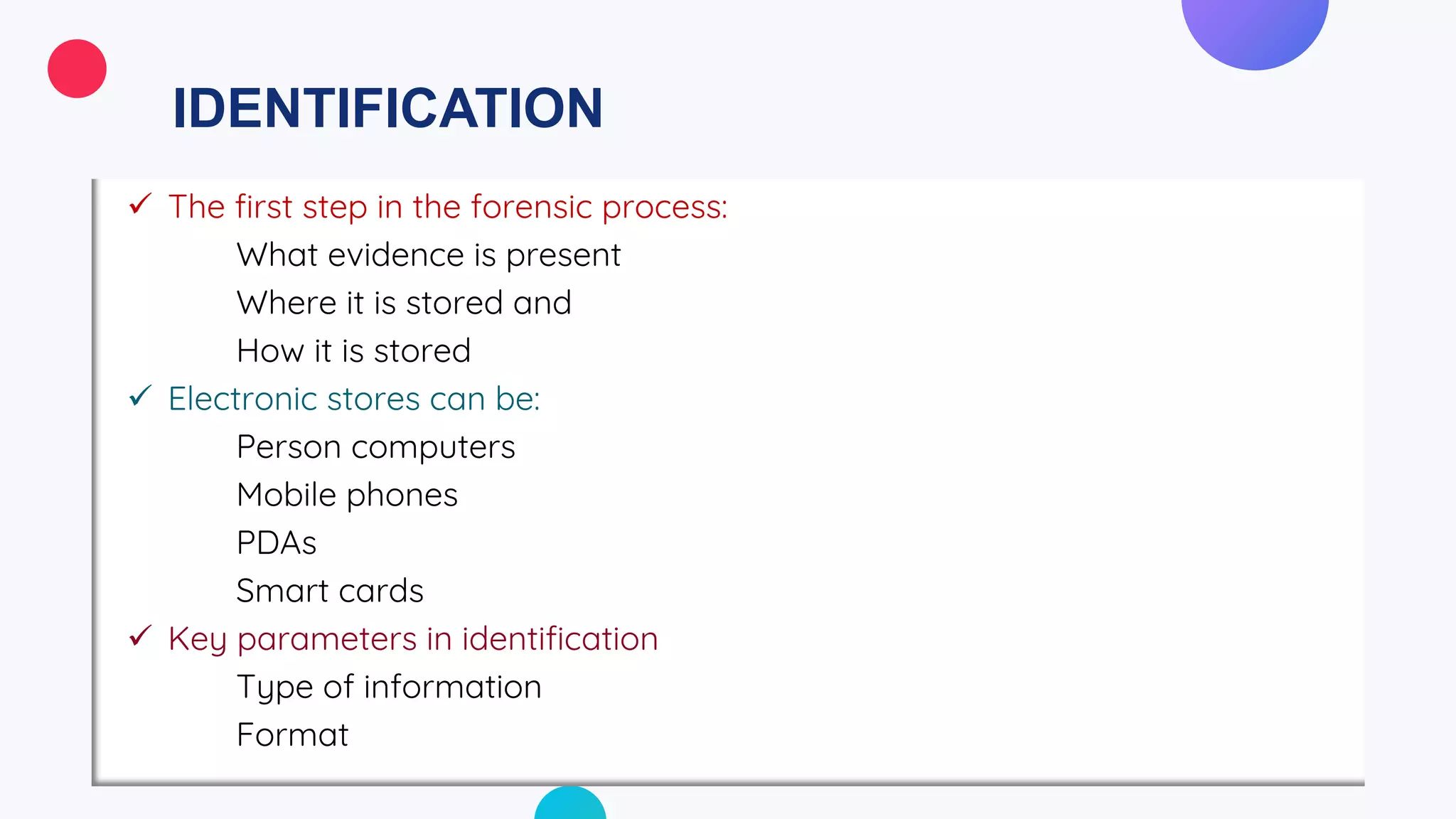
IDENTIFICATION
 The first step in the forensic process:
What evidence is present
Where it is stored and
How it is stored
 Electronic stores can be:
Person computers
Mobile phones
PDAs
Smart cards
 Key parameters in identification
Type of information
Format
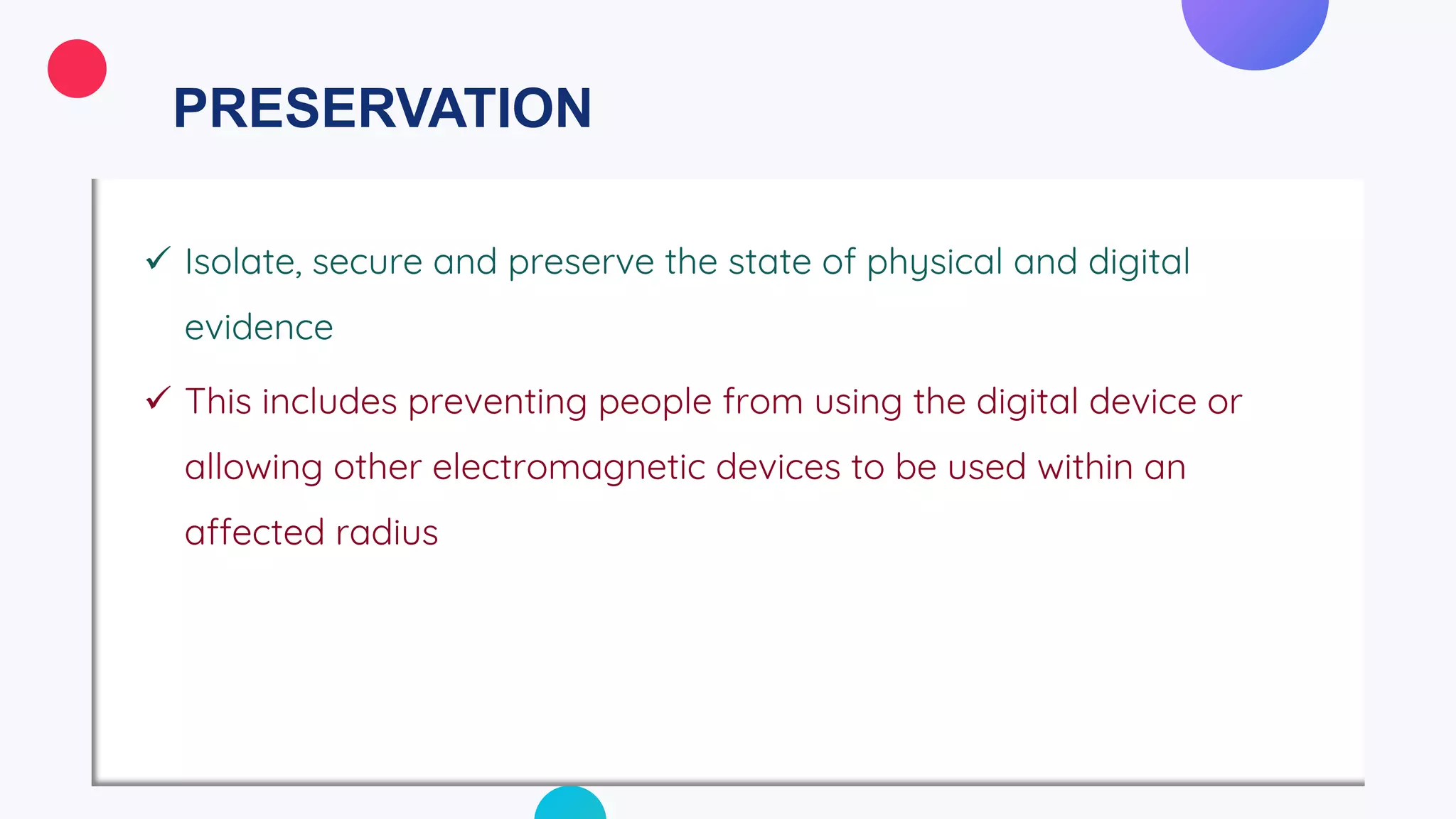
PRESERVATION
 Isolate, secure and preserve the state of physical and digital
evidence
 This includes preventing people from using the digital device or
allowing other electromagnetic devices to be used within an
affected radius
ANALYSIS
 Determine significance, reconstruct fragments of data and draw
conclusions based on evicence found
 It may take several iterations of examination and analysis to
support a crime theory
DOCUMENTATION
 A record of all visible data must be created, which helps in
recreating the scene and reviewing it any time
 Involves proper documentation of the crime scene along with
photographing, sketching and crime-scene mapping
PRESENTATION
 Summarize and provide explanation of conclusions
 This should be written in a layperson’s terms using abstracted
terminologies
 All abstracted terminologies should reference the specific
details
 7) Router, switch, hub
 8) Kamera video, cctv
 9) Kamera digital
 10) Digital recorder
 11) Music/video player, dan lain-lain
ELECTRONIC EVIDENCE
1) Komputer PC, laptop/notebook, netbook, tablet
2) Handphone, smartphone
3) Flashdisk/thumb drive
4) Floppydisk
5) Harddisk
6) CD/DVD
7) Router, switch, hub
8) Kamera video, cctv
9) Kamera digital
10) Digital recorder
11) Music/video player, etc....
 7) Router, switch, hub
 8) Kamera video, cctv
 9) Kamera digital
 10) Digital recorder
 11) Music/video player, dan lain-lain
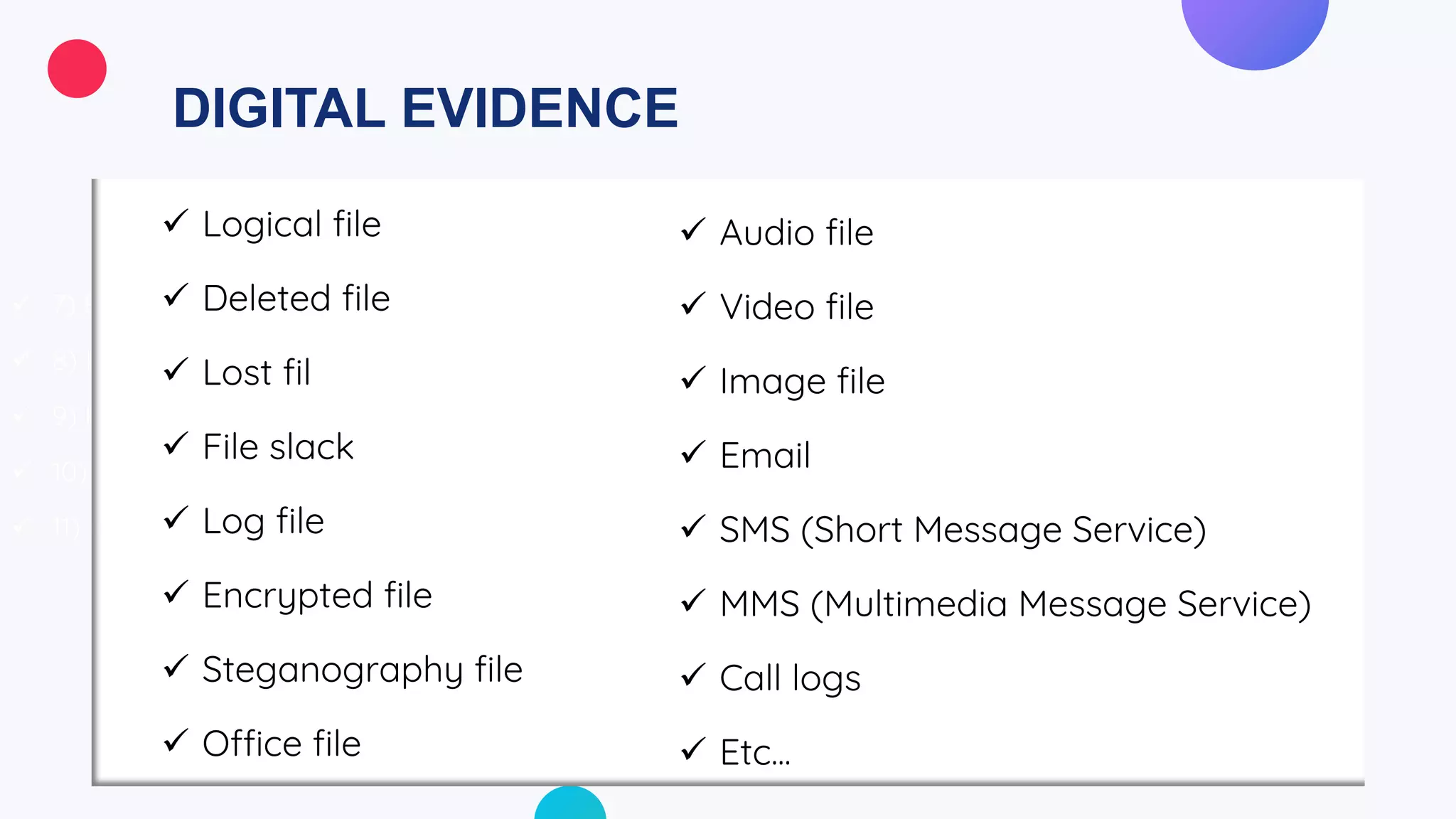
DIGITAL EVIDENCE
 Logical file
 Deleted file
 Lost fil
 File slack
 Log file
 Encrypted file
 Steganography file
 Office file
 Audio file
 Video file
 Image file
 Email
 SMS (Short Message Service)
 MMS (Multimedia Message Service)
 Call logs
 Etc...
TERIMAKASIH

Digital forensic principles and procedure

  • 1.
    DIGITAL FORENSICS : PRINCIPLESAND PROCEDURES S1 Teknologi Informasi UNIVERSITAS TEKNOKRAT INDONESIA Maret 2022 Bandarlampung By : Jupriyadi
  • 2.
    OUTLINE Reference in actingcorrectly and procedurally in carrying out investigation of computer crime 01 03 Basic Principles of Digital Forensic 02 04 Digital Forensics Classification Skill Required and Challenges Faced By Digital Forensic
  • 3.
    Reference in actingcorrectly and procedurally in carrying out investigation of computer crime
  • 4.
    Digital Forensic InvestigationGuidelines  Good Practice Guide for Computer-Based Electronic Evidence -> ACPO (Association of Chief Police Officers)  Forensic Examination of Digital Evidence: Guide for Law Enforcement -> National Institute of Justice  Electronic Crime Scene Investigation: A Guide for First Responders -> National Institute of Justice  Global Guidelines For Digital Forensics Laboratories -> Interpol  .....
  • 5.
    Basic Principles ofDigital Forensic (ACPO, p4) 1. No action taken by law enforcement agencies or their agents should change data held on a computer or storage media which may subsequently be relied upon in court. 2. In circumstances where a person finds it necessary to access original data held on a computer or on storage media, that person must be competent to do so and be able to give evidence explaining the relevance and the implications of their actions. 3. An audit trail or other record of all processes applied to computer-based electronic evidence should be created and preserved. An independent third party should be able to examine those processes and achieve the same result. 4. The person in charge of the investigation (the case officer) has overall responsibility for ensuring that the law and these principles are adhered to.
  • 6.
    Digital Forensics Classification •Computer Forensics • Mobile Forensics • Audio Forensics • Video Forensics • Image Forensics • Cyber Forensics Source : Muhammad Nuh Al Azhar Digital Forensic : Practical Guidelines for Computer Investigation Other : • Network Forensics • Database Forensics • Wireless Forensics • Malware Forensics • Mobile Phone Forensics • Memory Forensics
  • 7.
  • 8.
    Broad Process Steps: 1. Identification 2. Preservation 3. Analysis 4. Documentation 5. Presentation
  • 9.
    IDENTIFICATION  The firststep in the forensic process: What evidence is present Where it is stored and How it is stored  Electronic stores can be: Person computers Mobile phones PDAs Smart cards  Key parameters in identification Type of information Format
  • 10.
    PRESERVATION  Isolate, secureand preserve the state of physical and digital evidence  This includes preventing people from using the digital device or allowing other electromagnetic devices to be used within an affected radius
  • 11.
    ANALYSIS  Determine significance,reconstruct fragments of data and draw conclusions based on evicence found  It may take several iterations of examination and analysis to support a crime theory
  • 12.
    DOCUMENTATION  A recordof all visible data must be created, which helps in recreating the scene and reviewing it any time  Involves proper documentation of the crime scene along with photographing, sketching and crime-scene mapping
  • 13.
    PRESENTATION  Summarize andprovide explanation of conclusions  This should be written in a layperson’s terms using abstracted terminologies  All abstracted terminologies should reference the specific details
  • 14.
     7) Router,switch, hub  8) Kamera video, cctv  9) Kamera digital  10) Digital recorder  11) Music/video player, dan lain-lain ELECTRONIC EVIDENCE 1) Komputer PC, laptop/notebook, netbook, tablet 2) Handphone, smartphone 3) Flashdisk/thumb drive 4) Floppydisk 5) Harddisk 6) CD/DVD 7) Router, switch, hub 8) Kamera video, cctv 9) Kamera digital 10) Digital recorder 11) Music/video player, etc....
  • 15.
     7) Router,switch, hub  8) Kamera video, cctv  9) Kamera digital  10) Digital recorder  11) Music/video player, dan lain-lain DIGITAL EVIDENCE  Logical file  Deleted file  Lost fil  File slack  Log file  Encrypted file  Steganography file  Office file  Audio file  Video file  Image file  Email  SMS (Short Message Service)  MMS (Multimedia Message Service)  Call logs  Etc...
  • 16.