By:Ahmed Albayati
UG:1330089
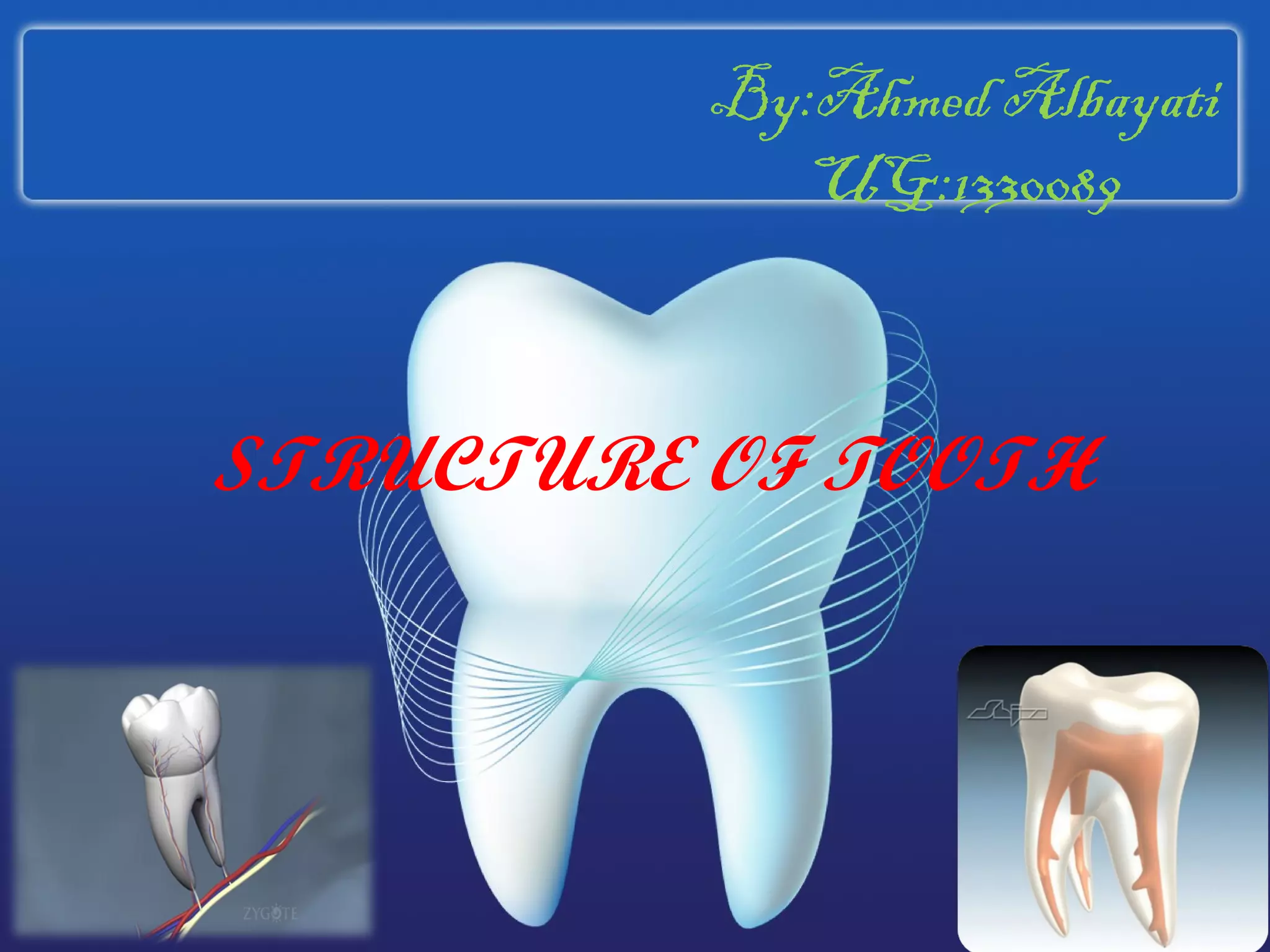
STRUCTURE OF TOOTH
Parts of Tooth
• Crown – top portion of the tooth covered by enamel.
– Clinical crown - portion of the tooth that is visible in the
mouth.
– Anatomical crown – the total portion of the crown that is
covered by the enamel.
• Root – bottom part of the tooth; may be single-,
double-, or triple-root.
– Clinical root – portion of the root covered by the gingival
(gum) tissue.
– Anatomical root – total portion of the root covered by the
cementum.
Parts of Tooth
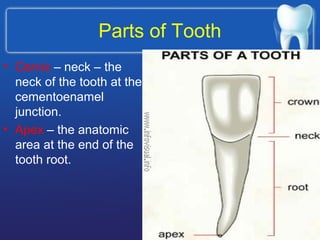
• Cervix – neck – the
neck of the tooth at the
cementoenamel
junction.
• Apex – the anatomic
area at the end of the
tooth root.
Tissues of the Tooth
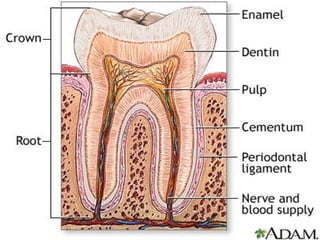
• Enamel – the hard tissue that covers the
crown portion of the tooth (hardest
substance in the body).
• Dentin – the material forming the main
inner portion of the tooth structure.
• Cementum – the substance covering the
root surface of the tooth.
Tissues of the Tooth
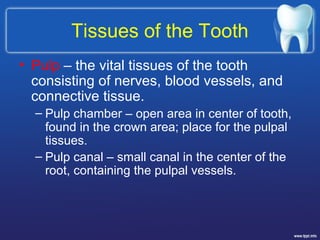
• Pulp – the vital tissues of the tooth
consisting of nerves, blood vessels, and
connective tissue.
– Pulp chamber – open area in center of tooth,
found in the crown area; place for the pulpal
tissues.
– Pulp canal – small canal in the center of the
root, containing the pulpal vessels.
Title
DISEASES OF Tissues of the
Tooth
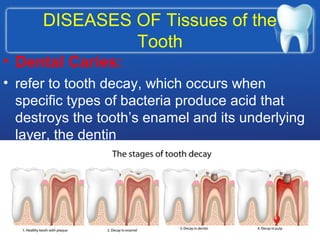
• Dental Caries:
• refer to tooth decay, which occurs when
specific types of bacteria produce acid that
destroys the tooth’s enamel and its underlying
layer, the dentin
DISEASES OF Tissues of the
Tooth
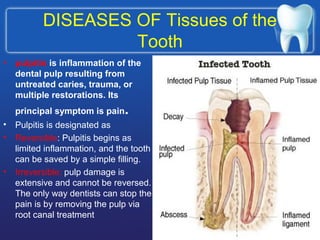
• pulpitis is inflammation of the
dental pulp resulting from
untreated caries, trauma, or
multiple restorations. Its
principal symptom is pain.
• Pulpitis is designated as
• Reversible: Pulpitis begins as
limited inflammation, and the tooth
can be saved by a simple filling.
• Irreversible: pulp damage is
extensive and cannot be reversed.
The only way dentists can stop the
pain is by removing the pulp via
root canal treatment
Tissues surrounding the Teeth
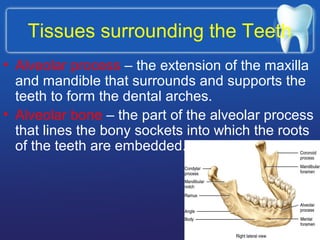
• Alveolar process – the extension of the maxilla
and mandible that surrounds and supports the
teeth to form the dental arches.
• Alveolar bone – the part of the alveolar process
that lines the bony sockets into which the roots
of the teeth are embedded.
Tissues surrounding the Teeth
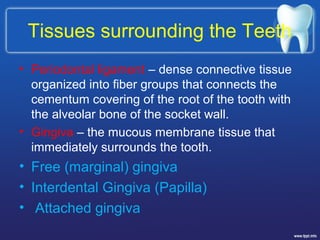
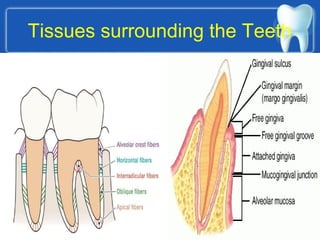
• Periodontal ligament – dense connective tissue
organized into fiber groups that connects the
cementum covering of the root of the tooth with
the alveolar bone of the socket wall.
• Gingiva – the mucous membrane tissue that
immediately surrounds the tooth.
• Free (marginal) gingiva
• Interdental Gingiva (Papilla)
• Attached gingiva
Tissues surrounding the Teeth
Diseases of gum
Periodontal disease:
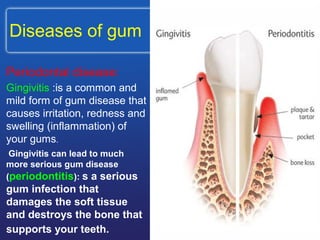
Gingivitis :is a common and
mild form of gum disease that
causes irritation, redness and
swelling (inflammation) of
your gums.
Gingivitis can lead to much
more serious gum disease
(periodontitis): s a serious
gum infection that
damages the soft tissue
and destroys the bone that
supports your teeth.
Surfaces of the Teeth
• Facial – pertaining to the surface of the
cheek and lips (face).
– Labial – pertaining to the lips: anterior surface
of the anterior teeth.
– Buccal – pertaining to the cheek: surface of
the posterior teeth touching the cheek.
• Lingual – surface of the tooth or area
touching the tongue.
Surfaces of the Teeth
• Incisal edge – cutting edge of the anterior
teeth.
• Occlusal – chewing surface of the posterior
teeth.
• Proximal – side wall of tooth which meet with
or touches the side wall of another tooth.
– Mesial – to the middle: side surface closest to the
middle of the face.
– Distal – pertaining to the far or away side: side
farthest from the midline of the face.
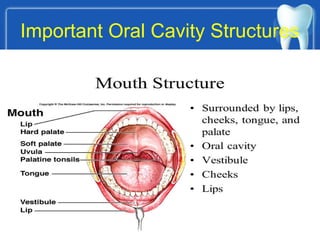
Important Oral Cavity Structures
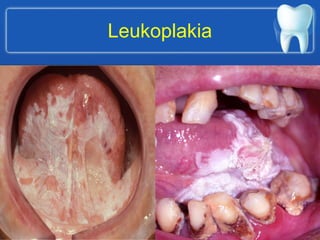
Leukoplakia
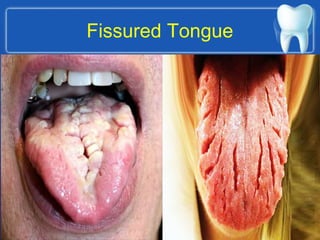
Fissured Tongue
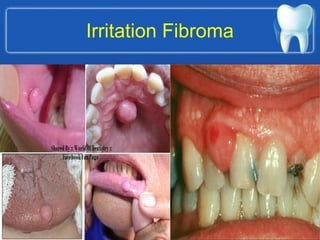
Irritation Fibroma
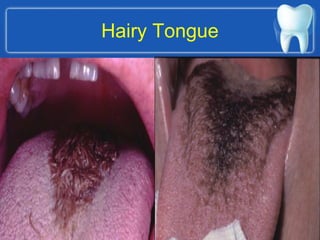
Hairy Tongue
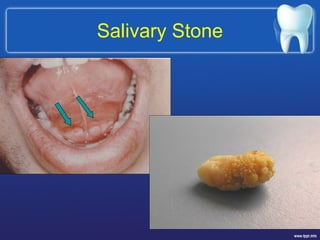
Salivary Stone
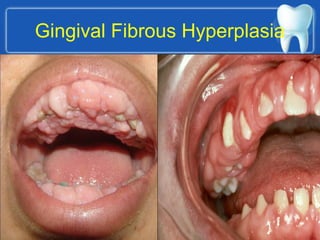
Gingival Fibrous Hyperplasia
Sturcture of tooth

Sturcture of tooth

  • 1.
  • 2.
    Parts of Tooth •Crown – top portion of the tooth covered by enamel. – Clinical crown - portion of the tooth that is visible in the mouth. – Anatomical crown – the total portion of the crown that is covered by the enamel. • Root – bottom part of the tooth; may be single-, double-, or triple-root. – Clinical root – portion of the root covered by the gingival (gum) tissue. – Anatomical root – total portion of the root covered by the cementum.
  • 3.
    Parts of Tooth •Cervix – neck – the neck of the tooth at the cementoenamel junction. • Apex – the anatomic area at the end of the tooth root.
  • 4.
    Tissues of theTooth • Enamel – the hard tissue that covers the crown portion of the tooth (hardest substance in the body). • Dentin – the material forming the main inner portion of the tooth structure. • Cementum – the substance covering the root surface of the tooth.
  • 5.
    Tissues of theTooth • Pulp – the vital tissues of the tooth consisting of nerves, blood vessels, and connective tissue. – Pulp chamber – open area in center of tooth, found in the crown area; place for the pulpal tissues. – Pulp canal – small canal in the center of the root, containing the pulpal vessels.
  • 6.
  • 7.
    DISEASES OF Tissuesof the Tooth • Dental Caries: • refer to tooth decay, which occurs when specific types of bacteria produce acid that destroys the tooth’s enamel and its underlying layer, the dentin
  • 8.
    DISEASES OF Tissuesof the Tooth • pulpitis is inflammation of the dental pulp resulting from untreated caries, trauma, or multiple restorations. Its principal symptom is pain. • Pulpitis is designated as • Reversible: Pulpitis begins as limited inflammation, and the tooth can be saved by a simple filling. • Irreversible: pulp damage is extensive and cannot be reversed. The only way dentists can stop the pain is by removing the pulp via root canal treatment
  • 9.
    Tissues surrounding theTeeth • Alveolar process – the extension of the maxilla and mandible that surrounds and supports the teeth to form the dental arches. • Alveolar bone – the part of the alveolar process that lines the bony sockets into which the roots of the teeth are embedded.
  • 10.
    Tissues surrounding theTeeth • Periodontal ligament – dense connective tissue organized into fiber groups that connects the cementum covering of the root of the tooth with the alveolar bone of the socket wall. • Gingiva – the mucous membrane tissue that immediately surrounds the tooth. • Free (marginal) gingiva • Interdental Gingiva (Papilla) • Attached gingiva
  • 11.
  • 12.
    Diseases of gum Periodontaldisease: Gingivitis :is a common and mild form of gum disease that causes irritation, redness and swelling (inflammation) of your gums. Gingivitis can lead to much more serious gum disease (periodontitis): s a serious gum infection that damages the soft tissue and destroys the bone that supports your teeth.
  • 13.
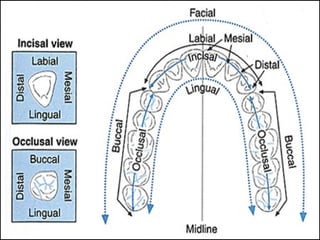
    Surfaces of theTeeth • Facial – pertaining to the surface of the cheek and lips (face). – Labial – pertaining to the lips: anterior surface of the anterior teeth. – Buccal – pertaining to the cheek: surface of the posterior teeth touching the cheek. • Lingual – surface of the tooth or area touching the tongue.
  • 14.
    Surfaces of theTeeth • Incisal edge – cutting edge of the anterior teeth. • Occlusal – chewing surface of the posterior teeth. • Proximal – side wall of tooth which meet with or touches the side wall of another tooth. – Mesial – to the middle: side surface closest to the middle of the face. – Distal – pertaining to the far or away side: side farthest from the midline of the face.
  • 16.
  • 17.
  • 18.
  • 19.
  • 20.
  • 21.
  • 22.